Category Archives: mass media

When a Society Loses its Mind

“It is not famine, not earthquakes, not microbes, not cancer, but man himself who is man’s greatest danger to man, for the simple reason that there is no adequate protection against psychic epidemics, which are infinitely more devastating than the worst of natural catastrophes.”
— Carl Gustav Jung, “The Undiscovered Self” (1957)

There’s a virus spreading faster than any we’ve seen before. It doesn’t attack the body, but the mind.
It’s called collective insanity, where whole groups of people begin to share the same irrational beliefs, emotions, and behaviors, drifting further and further from reality.

This kind of madness takes hold when critical thinking collapses and a free press is silenced or controlled. When truth becomes inconvenient, emotion and ideology take over. Falsehoods repeated often enough start to sound like truth, and soon, everyone is echoing the same slogans without stopping to ask, “Does this make sense?”

Collective insanity usually begins in times of deep economic and social uncertainty. The world feels unstable and frightening. During social unrest, war, economic turmoil, or disease, people crave certainty. They long for simple answers to complex problems, and for someone who promises to make everything right again.

That’s when a charismatic leader often appears, offering clear, emotionally charged explanations that seem to restore order. Dictators like Hitler, Mao, and Mussolini understood this perfectly. They demanded total obedience, convincing millions to surrender personal freedom, conscience, and judgment.

Strong emotions like anger, hate, and retribution spread quickly, almost like an infection of the soul.
We “catch” emotions from one another through something psychologists call emotional contagion. The more a narrative is repeated, the more real it begins to feel.

In authoritarian systems or cult-like movements, people learn to silence their doubts. To question is to risk punishment or exclusion, and so they conform. In time, they begin to believe the very lies they once only pretended to accept. (Experiments have shown this again and again, most famously by Solomon Asch, who proved that people will deny what they see if everyone around them disagrees.)

Collective insanity thrives where access to truth is restricted. It becomes especially dangerous when a small handful of billionaires control the flow of information or when social media algorithms feed us only what confirms our existing beliefs. These echo chambers create entire worlds of illusion, each reinforcing its own version of “truth.”

And once a society defines an enemy — witches, heretics, another race, or “the corrupt elite” — violence begins to feel justified, even noble. We see this pattern today in the growing attacks on politicians, judges, and journalists who dare to hold opposing views. The moral compass spins wildly when truth and empathy are lost.

The Way Out

History shows us that collective insanity inevitably ends, but often only after great suffering and when the truth finally comes out. The cult leader is exposed when there is no longer any denying of his sexual abuse. There is no longer any denying the authoritarian leader’s corruption, inept leadership and personal enrichment.
In Germany, the delusion collapsed when the war was lost, millions of lives had been lost, and the truth could no longer be denied. Putin’s Russia is possibly facing a similar scenario.
In South Africa, the Truth and Reconciliation Commission forced the nation to face the horrors of apartheid, allowing confession, grief, and healing to begin.

The path back to sanity always begins with truth-telling and with courage.
It takes brave souls, compassionate communities, and civic action groups to speak truth, even when it’s unpopular or dangerous. It takes emotional honesty and the willingness to face the grief, guilt, and fear without turning away.

When this is done collectively, something powerful happens. Healing begins.
We rediscover our shared humanity. Sanity and peace begin in the heart of each person who chooses truth, faith, and courage over fear.

Reino Gevers – Host of the LivingToBe podcast

P.S.: If you enjoyed this article, you might be interested in my latest book, Sages, Saints, and Sinners. Get it today on Amazon, Barnes & Noble, and wherever good books are sold.

Leave a comment

Filed under happiness, humanity, mass media, mental health, psychology, purpose

Minds captured by Fanaticism

A right-wing media ecosystem fueled by resentment and anger is capturing millions of minds with a steady stream of alternate realities, stoking division, and delivering a daily narrative designed to reinforce grievance and distrust.

Social media is becoming an even more integral part of daily life, particularly for younger generations, as highlighted by Pew Research. While extremist platforms like Rumble remain smaller than giants like YouTube, they still attract millions of followers, spreading a wide array of conspiracy theories and disinformation.

Driven by a core message of fear and anxiety, these “hate entrepreneurs” pin blame for personal and collective challenges on a shifting cast of internal and external enemies, further exacerbating divisions.

Doom prophecies have long been a typical playbook of cults and populist political leaders.

It appears that once a person has invested huge time and energy resources in a particular belief, it becomes part of their identity. Even the best argument or scientific study will not dissuade the person from adopting a different perspective. They become locked in a particular mindset. Different perspectives or beliefs are radically rejected and some even turn to violent behavior to defend their mindset.

During medieval times when the black plague decimated much of the European population, rumor and superstition spread just as fast. A rumor that the Jews were responsible for the plague by poisoning water wells led to a mass pogrom in the French city of Strasbourg. About 2,000 Jews were burned alive on a platform constructed in a Jewish cemetery on Valentine’s Day in 1349.

Leon Festinger, a social psychologist, made groundbreaking contributions in the 1950s to understanding belief systems. He based much of his findings on studying a cult led by Dorothy Martin (alias Marian Keech), who claimed to receive messages from extraterrestrial beings about a catastrophic flood that would destroy the Earth on a specific date.

In some of his key findings he found that members of the cult were so committed to their belief that they abandoned jobs, loved ones and possessions in preparation for the flood. When the prophecy failed, instead of abandoning their belief, the cult members rationalized the failure by claiming that their prayers had “saved the world.”


Festinger found that cognitive dissonance was highest among those who had made the most significant personal sacrifices for the cult, doubling down on their belief and reinforcing their fanaticism.

In a digital world it becomes far easier for cults and extremist groups to maintain cohesion by withdrawing into information silos that cement beliefs such as:

  • Climate change denial
  • Vaccines are a conspiracy by the pharmaceutical industry
  • The “chemtrails” conspiracy theory posits that the condensation trails left by aircraft—are chemicals intentionally sprayed into the atmosphere for nefarious purposes. The rumor has persisted since the early 1990s despite the lack of clear scientific evidence.

Fixed belief and fanaticism ultimately creates a toxic emotional state, blending fear, anxiety, and anger. It fosters dehumanization, deepens political polarization, and fractures social cohesion.

On a personal level, it becomes a significant barrier to self-growth and spiritual evolution. In a rapidly changing world, adapting is essential for survival. Clinging to rigid beliefs not only limits personal transformation but also blinds you to the new opportunities and possibilities the universe continually offers.

Reino Gevers – Author – Mentor – Speaker

P.S. If you enjoyed this article you will be interested in my books available where all good books are sold.

Leave a comment

Filed under mass media, mental health, psychology, raised consciousness, self-development, social media, Uncategorized

You are the master of your destiny

“The great cease to rule when the small cease to grovel.” (Friedrich Schiller 1759-1805)

Dictators, demagogues, and cult leaders excel at convincing decent, ordinary people that blind obedience and unwavering loyalty will miraculously transform their lives. The rude awakening inevitably comes.

Once in power autocrats and dictators inevitably exploit the weak and vulnerable for their own selfish needs. Russian leader Vladimir Putin is a typical example. He is purported to be one of the wealthiest people on earth. Meanwhile, his country’s infra-structure, health, and education system are collapsing while state resources are spent on imperialist wars.

In the recent U.S. Elections the power grab by wealthy oligarchs has been more subtle. Elon Musk, probably the world’s second wealthiest man, together with other billionaires (Peter Thiel, David Sachs, Rupert Murdoch etc.) control a large part of the nation’s tech and media industry (Twitter/X, Fox News). They injected more than two billion dollars into the Trump election campaign and now have a major influence on the country’s political agenda.

We are seeing an unprecedented symbiosis of politics, power and capital in the United States, German Professor Bernhard Pörksen, a media analyst, said in an interview with ZDF television. These libertarian ideologues “who despise the weak” are “pursuing their agenda on their own media platforms with extreme aggression, despising classic journalism and clearly threatening their enemies.”

Historian Timothy Snyder in his book On Tyranny, describes how democracies often erode not through sudden collapse but through gradual undermining of norms, laws, and institutions.

“The mistake is to assume that rulers who came to power through institutions cannot change or destroy those very institutions—leaving democracy in ruins.”

Spreading disinformation on their media platforms is part of the agenda. When the truth is turned into a lie and the lie into the truth the ordinary citizen, confused by conflicting information overload, switches off from politics, ultimately surrendering his basic freedoms and liberty.

In the short-term autocracies create the impression of stability through strong control of dissent and internal conflict. The reality is that without the checks and balances of a democracy power is inevitably abused, leading to inefficiency, corruption, and exploitation. Suppression of dissent and free thought stifles creativity, critical feedback, and innovation.

When the powerful become too powerful and economic promises don’t materialize, frustration can reach a tipping point. A single, galvanizing event can ignite existing frustrations and unify disparate groups against the regime, such as blatant corruption or fraudulent elections. Rebellion becomes possible when the population collectively believes change is achievable such as in the peaceful revolutions in communist East Germany, Czechoslovakia and Poland.

Nothing is more powerful than when individuals arise collectively in the realization that they can be masters of their own destiny. The pain becomes so powerful that people overcome their apathy, fear, and disempowerment, embracing a collective cause.

Mahatma Gandhi’s peaceful struggle of collective civil disobedience against imperialist British rule remains a shining example of collective power that built momentum through incremental successes with strikes, protests, and legal rulings.

You as an individual collectively will hold enormous power in shaping your destiny when overcoming fear, and believe in the possibility of change.

The poem “Invictus” by William Ernest Henley, remains a powerful declaration of resilience and self-mastery, speaking of the indomitable human spirit in the face of adversity and the ability to control one’s fate:

“Out of the night that covers me,
Black as the pit from pole to pole,
I thank whatever gods may be
For my unconquerable soul.

In the fell clutch of circumstance
I have not winced nor cried aloud.
Under the bludgeonings of chance
My head is bloody, but unbowed.

Beyond this place of wrath and tears
Looms but the Horror of the shade,
And yet the menace of the years
Finds and shall find me unafraid.

It matters not how strait the gate,
How charged with punishments the scroll,
I am the master of my fate,
I am the captain of my soul.”

Reino Gevers – Author – Mentor – Speaker

P.S. If you enjoyed this article you will be interested in my books available where all good books are sold.

Leave a comment

Filed under demagogues, extremism, happiness, mass media, self-development, Uncategorized

The words we use matter

Words have a powerful impact on both mental and physical health, and leaders bear a significant responsibility in choosing words that resonate within a nation’s collective consciousness, either undermining or strengthening social cohesion.

When political or thought leaders normalize belittling, insulting, or threatening language, it sets a precedent for their followers to do the same. It has now become almost impossible to discuss an emotional or controversial topic on social media without it devolving into personal attacks.

Positive words can uplift mood, foster a sense of connection, and enhance self-esteem, while negative words can lead to feelings of anxiety, depression, and stress.

Repetition of negative words impacts your health

Repeated repetition of words that trigger anger and fear reinforces harmful beliefs and thought patterns, cementing a pessimistic or fearful worldview. They turn on the body’s fight-or-flight response, leading to increased heart rate, elevated cortisol levels, and muscle tension.

A well-known study published in 2015 in the journal Psychological Science analyzed Twitter language from different counties across the United States. The researchers found that the frequency of negative words related to anger, stress, and fatigue was a strong predictor of heart disease mortality in those areas. This predictive power was even stronger than traditional factors like smoking and obesity rates.

Negative social media interactions can turn on stress pathways in the body, leading to chronic inflammation, higher blood pressure, and other risk factors.

Positive affirmations promote mental well-being

In contrast, repeated positive affirmations or mindfulness practices involving positive language can lead to lasting changes in brain pathways, promoting greater mental well-being.

Kind, supportive, and empathetic language strengthens relationships and builds social bonds, which are crucial for mental health. Positive words turn on reward centers in the brain, while negative words trigger fear and pain.

Words can trigger the release of feel-good hormones like dopamine and oxytocin, reduce stress levels, and promote relaxation. Here are just some examples of many: love, peace, stillness, breath, kind, smile, cheer, kind, value, and gratitude.

The Power of Mantras and Prayer

Various studies have revealed that recitation of certain prayers and mantras has a particularly positive effect on heart rate variability and cardiovascular health.

The song “Ave Maria,” particularly in its various classical renditions like those by Franz Schubert or Charles Gounod, is known to have a profound calming, and soothing effect on the body and mind. The spiritual connection can evoke feelings of comfort, protection, and spiritual upliftment, quietening the mind and reducing mental chatter.

One of the most widely used and revered mantras in Tibetan Buddhism is “Om Mani Padme Hung”. The mantra is particularly helpful in purifying negative emotions like anger, jealousy, and attachment. Practitioners can cultivate a more compassionate and loving mindset, leading to greater emotional balance and resilience. Chanting the mantra typically involves deep, rhythmic breathing, which can improve oxygenation of the body, enhance lung capacity, and promote a sense of physical calm.

In summary, the words we hear and use in our vocabulary shape who we are, impacting our relationships and our physiological and psychological health.

In moments when the external world pulses with negativity, it’s crucial to establish healthy boundaries and elevate your own vibrational energy. Cultivating a space of stillness, positivity, joy, and self-care becomes essential.

Reino Gevers – Author – Mentor – Speaker

P.S. If you enjoyed this article you might be interested in my books available where all good books are sold.

Leave a comment

Filed under mass media, meditation, mental health, mental-health

Scapegoating and Misinformation: A Lethal Combination

Minds consumed by fear, anxiety, and thoughts of retribution are easily captured by hate preachers and demagogues. The scenes unfolding in the UK—right-wing extremists burning businesses of small shop-owners, targeting mosques, and attacking innocent bystanders of color—are tragic repetitions of history.

What distinguishes the current situation is the dramatically enhanced tools available to extremists, amplifying their impact. Over the weekend, at least 30 violent protests erupted across the UK, largely fueled by misinformation spread on social media claiming that an illegal Muslim immigrant was responsible for killing three young girls and injuring several others.

An account called Europe Invasion, known to publish Islamophobic and anti-immigrant content, posted on X, formerly Twitter, that the suspect was “alleged to be a Muslim immigrant”. The post was viewed more than six million times. And as the post was accruing views, crowds of far-right protesters were swelling in Southport, ready to charge local mosques.

The truth was that the attacker in Southport was identified by police as a 17-year-old, Axel Rudakubana, who was born in Britain, and that the attack was not terrorist-related. The motive for the attack remains unclear.

Scapegoating during times of crisis

Countless similar incidents can be cited throughout history where minority groups have been targetted by hysterical crowds, falling prey to rumors, misinformation, and hate speech. During the Black Death in Europe in the 14th-century thousands of innocent people were killed for allegedly spreading the pestilence. Jews were blamed for poisoning drinking wells. The baseless accusations led to widespread violence and massacres against Jewish communities throughout Europe, including the Strasbourg massacre in 1349, where around 2,000 Jews were burned alive.

In 1779, anti-Catholic riots were incited by Lord George Gordon in London, spreading fears that the Papists Act of 1778 would lead to Catholic dominance. The resulting violence lasted several days, leading to widespread destruction, looting, and the deaths of around 300 people.

Social media platforms must bear responsibility

The difference is that misinformation in our age can spread globally within seconds, reaching millions of people. Social media platforms must bear responsibility for failing or unwilling to remove obviously false information. As we have seen in the latest riots in the UK, the consequences can be devastating.

During times of crisis, there is a need to seek simple answers to complex problems. Cognitive closure and confirmation bias make people dismiss facts and contradictory evidence. Scapegoating provides psychological relief and an outlet for fear, anger, and underlying grievance culture.

Exclusion of outsiders by Group and tribal-think

“Group” and “tribal-think” views all those outside the “tribe” as outsiders. During times of economic and social crises, the in-group/out-group dynamic becomes more pronounced, leading to the vilification of those perceived as different or threatening.

Responsible leadership and fact-checking journalism become more important than ever. Individuals and social media platforms should be made accountable on a global level for spreading hate and misinformation.

Reino Gevers – Author – Mentor – Speaker

P.S. If you enjoyed this article you might be interested in my books available where all good books are sold.

Leave a comment

Filed under demagogues, extremism, humanity, ideology, mass media

Political Divisions in America: Concerns from a Global Perspective

Many Americans in rural Georgia, Kansas, or Texas may not realize that people in Europe and around the world are closely watching events in the United States with growing concern as political divisions deepen.

The assassination attempt on former President Donald Trump seems likely to intensify extremism and further entrench these divisions.

People like me, living on an island in the Mediterranean, are perplexed. I talk to many friends and family in the United States and have noticed in recent times families breaking up and lifelong friendships being terminated over political differences.

The perception has always been that the United States is a creatively free, dynamic, tolerant, multi-cultural nation of boundless opportunity and human endeavor. You have gifted the world with some of the best music, art, and technological tools.

How is it possible that the world’s arguably most powerful and successful nation in economic and military terms can so lose the plot over issues such as basic democratic norms, women’s rights, and religious freedom?

The United States remains the only superpower

Events in the United States have vast geopolitical consequences considering the military and political power wielded by the person sitting in the White House. With a GDP of 26 trillion dollars in 2023 the U.S. economy far surpassed the world’s second-largest economy China with a GDP of 19 trillion dollars followed by the economies of Germany, Japan, and India.

The U.S. defense budget of about 813 billion dollars is the largest in the world. For fiscal year 2023, it was approximately $813 billion. Compared to Russia, China, and India the U.S. military is by far the most powerful, and technologically advanced.

As an outsider looking at events in the United States from afar, here are some thoughts:

  • Despite a booming economy, it appears that a significant portion of Americans are living paycheck to paycheck. There is a perception that they will never live the American dream and that the system is rigged against them by elites in Washington and New York. These people are particularly prone to nostalgia rhetoric that promotes the idea that America was once a great country that has degenerated into chaos.
  • American media, especially local and regional newspapers, were once prime examples of good journalism and fact-checking. There was a clear distinction between news and editorial comment or opinion. The digital revolution has basically killed-off professional journalism. Mass media in America earns its revenues with entertainment and drama, rather than educating and informing. News channels from the left and the right are propagandistic and serve two different perceptions of reality.
  • The tribal bubbles are served by algorithms on social media, emphasizing confirmation bias and grievance culture. Beliefs are cemented, and other viewpoints and even solid science are rejected as fake news.
  • Russian and Chinese bot factories have played significant roles in fanning divisions, fears, hate, and anxieties, through social media as part of their broad information warfare. Russian bots were particularly successful in promoting the Russian narrative on the war in Ukraine with U.S. congressmen on the right.

Devastating consequences for an inward-looking America

When America turns ever more inward with an “America First” philosophy and withdraws from such established institutions as NATO, the consequences are too ghastly to contemplate. The globalized economy has become increasingly intertwined. Disruptions of markets elsewhere will inevitably have a major impact on the man in the street in Detroit or Phoenix. The power void will be filled by other forces such as China and Russia, gaining control of major natural resources and trade routes.

Of particular concern in Europe is a possible withdrawal of U.S. military support for Ukraine. Retired U.S. commanding officer of U.S. forces in Europe, Ben Hodges, paints a devastating scenario if Ukraine should lose the war against Russia or be forced into an unacceptable peace agreement. Millions of Ukrainian refugees would massively disrupt the social order in Western Europe.

“Failure of Ukraine will have devastating consequences for Europe and for the United States. If Ukraine fails, Russia will absorb tens of thousands of Ukrainian troops into their ranks. They’ll be forced into the service and then they’ll be used as cannon fodder on the next phase of what Russia attempts. This will most likely be against Moldova, or against Lithuania or maybe even Poland,” according to Hodges.

To my American friends, I say: Your decision in November will have a major impact on lives all over the world. Who ultimately benefits from the hatred and division? Will you serve as a beacon for the rule of law, tolerance, and democratic norms or serve as a template for the dictatorships of Russia, China, Iran, and North Korea on why democracy does not work?

Reino Gevers – Author – Mentor – Speaker

P.S. If you enjoyed this article you might be interested in my books available where all good books are sold.

Leave a comment

Filed under extremism, humanity, ideology, mass media, social media, trump presidency, Uncategorized

What is living your authenticity?

In a recent conversation, someone asked about the essence of “living your authenticity,” the central theme of my podcast and YouTube channel. While it typically entails remaining faithful to one’s core values and identity, its scope is more intricate.

How can you discern when you’re not living authentically?

Embarking on the journey of fulfilling your destiny and purpose tends to engender a sense of natural alignment, accompanied by feelings of flow, joy, and passion. You will be operating on a higher vibrational frequency, naturally radiating an allure in your relationships and interactions.

Choosing happiness and masterminding your thoughts is a conscious choice.

In a conversation with the Pharisees, the Jewish clergymen of the time, Jesus admonishes them for seeking the kingdom of heaven in the external world, telling them: “Neither shall they say, Lo here! or, lo there! for, behold, the kingdom of God is within you.” (Luke 17:21)

Living your authenticity is not a destination or procrastinating in some utopia.

The whole purpose of life is to keep on growing and elevating your consciousness. The activities that you pursue with a passion and where you stay in the flow will ultimately shape you into the person you are destined to be.

Living authentically does not mean you won’t have setbacks but how fast you can bounce back into the flow after the experience of loss, pain, or shame. It is the courage to stand up for what you believe in and to pursue your goals, even in the face of adversity especially if it gets difficult or you are unpopular.

Photo by Maria Orlova on Pexels.com

You might lose friends, family members, and what you believed was your support network. But very often those people closest to you are those that pull you back to their low vibrational field because they can’t bear one of their “tribal members” pursuing their dream. It would, in their mind, expose them as weak and a failure.

Most unhappiness and much of the depression epidemic we are seeing is when there is addiction to a false identity that feeds on external validation.

Especially the passive consumption of mass media is designed to make you unhappy. Their whole purpose is to generate profit for someone else, and they can literally suck out your lifeblood if you allow their messaging to shape an identity that is far removed from authentic soul purpose. You become a mere consumer instead of a creative shaper of your destiny.

If you are addicted to a mindset that is fixated on external gratification and where you are dependent on flaunting your status and possessions you will fall into a spiral of unhappiness. For there will always be someone more successful, younger, more beautiful, more famous, and happier than you are.

It is the reason why lottery winners end up bankrupt or commit suicide. Or film or sports stars at the height of their success fall prey to substance abuse, as they desperately try to avoid an underlying emptiness.

Cultivating a sense of self-love, gratitude, and awareness is key.

Your body will at an early stage send warning signals if you need to change something, like feeling stress, anxiety, and sleeplessness. Your gut feeling will tell you that something needs to change. The high-value man or woman you meet might show all the right credentials for a good partnership but something inside tells you that he/she is just not the right fit or that something is wrong.

You might be doing something where you consistently have to compromise your core values, beliefs, and feelings. When external voices have led you astray on the wrong path you will consistently face obstacles, setbacks, and disappointment. When you are on the right path you feel instinctively that wind in the sails where the universe has your back, and everything falls into place like meeting the right people at the right time.

You might just be going through the motions without feeling any sense of passion or purpose. You feel like you’re wearing a mask and pretending to be someone you are not. You might want to drown that underlying growing feeling of unhappiness by accumulating more and more things with the novelty wearing off after only a few minutes.

Experiencing a profound “flat-on-the-ground” moment can often serve as the catalyst for seeking a deeper reconnection with the essence of existence. Authenticity and true meaning come into focus when you realize that your purpose is intertwined with the universal fabric of life and its inherent wholeness.

Following the estrangement from nature, humanity faces the formidable task of recognizing this avenue of reconnection through an experiential spirituality that transcends the confines of religious dogma, belief systems, and political or ideological barriers.

Reino Gevers – Author – Mentor – Speaker

P.S. I’m excited to announce the release of my latest book, “The Turning of the Circle: Embracing Nature’s Wisdom for Purposeful Living.” If you enjoy it, you might also be interested in my previous works, “Deep Walking for Body, Mind and Soul” and “Walking on Edge: A Pilgrimage to Santiago.” You can find all of these titles at reputable bookstores near you.

Leave a comment

Filed under mass media, meditation, mental health, mental-health, psychology, purpose, self-development

Pity the nation whose people are sheep

“Pity the nation whose people are sheep,
and whose shepherds mislead them.
Pity the nation whose leaders are liars, whose sages are silenced,
and whose bigots haunt the airwaves…” – Lawrence Ferlinghetti –

Voters in more than 60 countries are going to the polls this year, as the ominous tide of extremism gains momentum globally, fostering a toxic atmosphere of xenophobia, fear, and division, and undermining basic democratic principles.

The central African country of Rwanda serves as an extreme example of what is possible when extremism captures the minds of an entire nation. About one million people of the Tutsi minority and Hutu moderates were slaughtered in the genocide in April 1994.

In an unprecedented wild frenzy of killings, people grabbed machetes, clubs, firearms, and other crude weapons turning on neighbors, colleagues, and even family members. Many of the key perpetrators were well-educated, having studied at elite Western universities.

The role of mass media in a genocide

Weeks before the genocide radio stations and media outlets stepped up their hate speech and then turned to incitement of direct violence against the Tutsi population, encouraging ordinary citizens to take up arms and participate in the killings.

If you think this is not possible in modern Western societies, think again. Germany was a democratic country in the 1920s with a well-educated middle class until the Nazis seized control. Yugoslavia descended into a genocidal civil war in the 1990s.

When the dark shadows of the collective subconscious are captured, anything is possible. The Swiss psychiatrist Carl Gustav Jung warned that nothing is more dangerous than a psychic epidemic fanned by toxic emotions.

A simple but effective message of hate and fear

We are seeing much of the same narrative toward immigrants and refugees in the United States, Europe, and other countries. The message is simple but highly effective: Illegal immigrants are swamping our society, coming to take your job, and ramping up crime. Dysfunctional behavior by an individual or a crime committed by an individual is boxed into a behavior pattern of a certain group or minority.

Extremist fringe groups riding the wave of xenophobia, fear, and anxiety have become mainstream in formerly tolerant countries such as the Netherlands, Italy, Sweden, Britain, and Germany. The conservative Republican party in the United States has basically been hijacked by MAGA Trump extremists.

The real facts on immigration

Few media outlets take the trouble to look at the real facts in the hysterical debate on immigration, refugees, and undocumented immigrants and to expose the lies of the demagogues.

Despite the media and political narrative in the United States crime among undocumented immigrants is much lower than in the native population, according to several studies, notably in the U.S. state of Texas.

What is true in the United States also applies to many European countries. Crime among foreign immigrants or refugees is much lower than in the native population. This is because the consequences such as deportation are much harsher and immigrant communities normally have a healthy community network.

Photo by Ahmed akacha on Pexels.com

A study published in the Journal of Ethnicity in Criminal Justice in 2018 even found that undocumented immigration was associated with decreased violent crime rates.

The mortal fear that societies will be swamped by foreigners also needs to be put into perspective. As of 2021, the 10.5 million unauthorized immigrants in the United States represented only about three percent of the total U.S. population and 22 percent of the foreign-born population. These percentages were among the lowest since the 1990s, according to the Pew Research Center.

In Europe, the estimates indicate that there were around 3.9 to 4.8 million irregular migrants living in the European Union as of 2017 with a total population of around 512 million. This equals only about 0.76 to 0.94 percent of the total population.

If we compare Jordan’s population of around ten million people the proportion of Syrian refugees alone is about 6.5 per cent. Lebanon’s population of around six million people hosts over 1.5 million Syrian refugees.

Despite language and cultural differences more than half of the Syrian refugees who came to Germany six years ago have a job, two-thirds of them work full-time and 70 percent of them have a qualified job.

Nearly half of the people currently receiving social welfare are foreigners in Germany but this has to be put into perspective when you consider that most of them are people who fled Ukraine. It is much the same in the UK and other Western European countries bearing the brunt of providing food and shelter for people who fled Ukraine after the Russian invasion in 2022.

Why are people migrating from their home countries?

The debate on immigration is missing the key aspects of why people are leaving their home countries. If you or your family are threatened with persecution by an authoritarian regime, or your children have no food to eat, you will do everything to save them from starvation or death.

Millions of people will continue to leave their home countries if the socio-economic conditions in these countries are not addressed, especially if a growing number of autocrats and dictators in these countries live in luxury while their populations starve. With the impact of climate change, especially affecting poorer countries severe droughts, floods, and other extreme weather events are exacerbating the situation.

On the positive side migrants often bring valuable skills, talents, and expertise that benefit the economy, leading to higher productivity and competitiveness. Cultural exchange also fosters creativity, cross-cultural understanding, tolerance, and appreciation of diversity as a principle of creation.

Racism, hate and xenophobia goes against the very principle of creation based on diversity, adaptation to change, creativity and evolution of conciousness. It is the very opposite of our ultimate purpose on earth – spreading kindness, love and compassion.

Immigrants are often highly motivated and entrepreneurial, leading to the creation of new businesses, industries, and jobs. Several studies currently point to the generally growth-promoting effects of migration on international trade and investment.

As Lawrence Ferlinghetti so succinctly puts it: “Pity the nation that knows no other language but its own and no other culture but its own. Pity the nation whose breath is money and sleeps the sleep of the too-well-fed. Pity the nation – oh, pity the people who allow their rights to erode.”

Reino Gevers – Author – Mentor – Speaker

P.S. I’m excited to announce the release of my latest book, “The Turning of the Circle: Embracing Nature’s Wisdom for Purposeful Living.” If you enjoy it, you might also be interested in my previous works, “Deep Walking for Body, Mind and Soul” and “Walking on Edge: A Pilgrimage to Santiago.” You can find all of these titles at reputable bookstores near you.

Leave a comment

Filed under humanity, mass media, mental health, mental-health

Dealing with anxiety and fear

Our mind is primarily programmed to focus on the negative. It is part of our survival toolkit as a human species. We are magically drawn to sensational news and images of catastrophes. During this time it is particularly important to protect your mental health and to guard your mind against fear and anxiety.

Guarding the mind against fear and anxiety

The constant dosage of coronavirus trackers with updates on infections and deaths, the lockdowns and drastic measures taken by many countries with the accompanying huge economic fallout is already having a major effect on mental health.

We should be mindful and look after our health during every influenza epidemic because it always has a major impact on the elderly with a weak immune system and those people with a history of poor health.  Bear in mind that we are not reading much about two-thirds of the people who fell ill with the coronavirus who only had mild symptoms and have recovered. 

Learning the lessons from a crisis

Every crisis teaches us something.  We need to look beyond the surface. As a humanity we need to go into deep introspection on what we are doing to our earth and our fellow living beings.  Nature is teaching us that we need to move away from an exploitative to a more sustainable economic model.  Short-term external gratification cannot replace the soul’s yearning for spiritual growth and meaning.

The worst and the best of mankind

A crisis triggers both the worst and the best in mankind. While some folk are fighting over toilet paper and hoarding grocery items others are discovering an entirely new sense of community. We are social animals and need the cooperative support of each other. The image of the Italians singing from the balconies of their homes will be of lasting impact. China is finally clamping down on the meat trade of endangered species, with growing evidence that the virus probably emanated from the endangered pangolin. 

spring flower

Hope springs

Practicing control of emotion and thought

Being locked down in our homes gives us time for reflection on what truly matters. If we stay calm, centered and in alignment with the higher self we can be of much more support to those loved ones around us.  Here are some tips on how to stand guard at the doorway to your soul.

  • Whenever you have a negative thought or feel a negative emotion such as fear replace it with a good thought or happy moment. What image or memory makes your heart expand or makes you laugh?
  • Breathing meditation. Focus your mind on your breathing. At the count of one I inhale and at the count of one I exhale – counting until 21.  Check out my immune-boosting meditation on Podcast.
  • Take a walk in nature – if you can. Find a spot where you can focus your attention on one sound that you find comforting such as a bird singing, rustling of leaves in a tree or water running over a stone in a creek. Just concentrate on that one sound for several minutes.
  • Our environment, our associations and our thoughts have a major impact on our mental well-being.  Radically reduce associations with people who bombard you with negativity. Reduce the consumption of negative media to a minimum. What we read, watch and think is what we become.

Reino Gevers – Author, Mentor, and Consultant

https://www.reinogevers.com

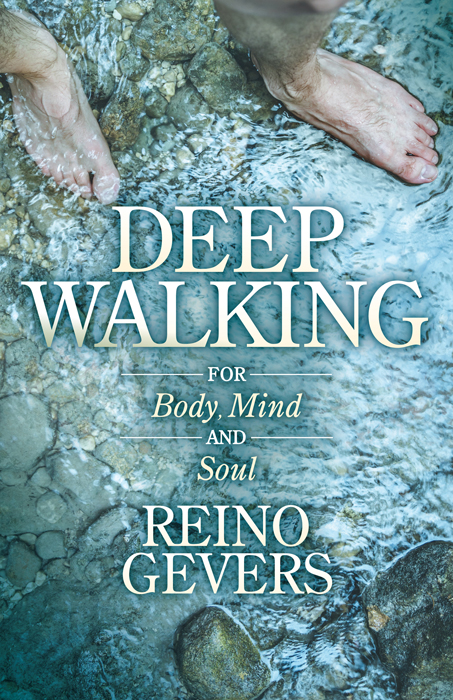
Gevers-DeepWalking CVR.indd               paperback_cover_1

Order here

applepodcast         


Leave a comment

Filed under lifestyle management, mass media, meditation, mental-health, self-development, spirituality, Uncategorized

When the shadow takes over

The ancient teachers of Jewish mysticism and self-development warned their students to be very watchful of the shadow side of character taking hold the further they walked the spiritual path.

shadow

The universe has a way of rewarding the “enlightened spirit” with power, wealth and influence. Whether these tools are used for the betterment of all living things and the raising of collective consciousness depends on character.

True character shows itself when man or woman is entrusted with influence and power over others. Some film, sports and rock stars have realized that with fame comes responsibility. Too many others have succumbed to substance and alcohol abuse.

Current world leaders appear to be driven by narcissism and self-aggrandizement, taking humanity many steps backwards at a time when vision and sense of purpose are required to address the challenges of our time.

But it is too easy to blame these leaders for “our misery”. They merely reflect what is happening with human consciousness at a deeper level. These leaders did not just happen. Democracy is a fragile plant that needs to be nurtured and protected.

We are living in an age where the shadow side of humanity such as narcissism and xenophobia are fueled by social media. Sound science, research and historical facts are buried in an avalanche of fake news.  Don’t get me wrong. Social media also has many positives with the ordinary person able to access information to an extent, unimaginable two decades ago and connecting people over continents.

But we need to be guardians at the gateway of our soul just as much as we need to be watchful of what our leader are doing to our world. We are living in an interesting and dangerous time.

“Walking on Edge – A Pilgrimage to Santiago” available both in Kindle and paperback.

http://www.reinogevers.space

Start your day by adding turmeric to your meals – one of the best ways to boost your immune system.


Leave a comment

Filed under happiness, mass media, meditation, mental-health, personal choice and happiness, raised consciousness, social media, spirituality, Uncategorized