
Much of social media has become a global ghetto-blaster of hate speech and vile language. We should not be surprised that deranged minds run amok with assault weapons in mosques, synagogues, churches and schools.
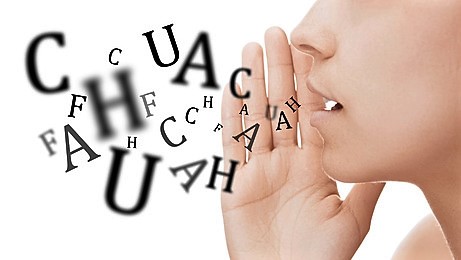
The language we speak can either unite or divide. A thought brings forth words and words trigger action. It is a frightening reality that there is a thin line between language that stirs toxic emotions and the violence on innocent people. Masses can be manipulated at will by fear-mongering demagogues.

Hate speech is dividing communities across the globe. It is the downside of the digital revolution. The seeds of genocide are planted by the seeds of hate speech. Psychology has determined seven stages of hate speech leading to the final stage of killing. The boundary has been crossed in several countries with scapegoating of refugees, racial groups, religious minorities and ethnic minorities.
History has taught us lessons that cannot be repeated. There is an old black and white news documentary film of chief Nazi propagandist Josef Goebbels stirring the masses in Berlin with fanatical screams of, “we want total war!” that cost the lives of about 50 million people in World War II.
The Nazi party in Germany was initially seen as a joke when it started parading through the streets of German cities in the 1920s, blaming the Jews for the economic ills of the country. But the hate speech escalated. Jewish shops were ransacked, then synagogues were torched before the mass-killing started at an unprecedented industrial scale.
Negative language not only spreads the fans of hate. It also does something to those who utter vile language. We can and should defuse hate language with words that have a healing energy.
In differential language analysis psychologists have found a correlation between language in social media and general well-being and health. Words such as “human, beings, nature, spiritual” suggested something larger than oneself and an important determinant of psychological well-being.” Happiness is contagious:
There is a stronger feeling of happiness living in a community with people who influence each other in their general feeling of well-being. Through geolocation researchers also determined a link between cardiovascular disease and language used in tweets. https.aaai.org/ocs/index
Negative words associated with disengagement and a feeling of lack of meaning and purpose in life were defined as “sick, hate, bored, chill, wtf, bored, soooo, freakin…” The karmic effect of hate language is that it will eventually trigger serious mental and health issues in the body of the perpetrator.
We know from our own experience that words with a harmonious ring such as love, harmony, beauty and light trigger an expansive energy, especially if they find expression in a choir sung with other people.
Humming the syllable OM has a particularly strong vibrational power. Many of the ancient Sanskrit, Aramaic and Latin syllables are known to have immense healing power across time and space. They also create a matrix of positive neuronal links in the brain and the vital body functions.
Hate language divides, separates and destroys. Positive language unites, heals and transforms.
Reino Gevers – Author, Mentor and Consultant










 I fall into the trap every time, knowing full well that no matter what information I provide, it will not convince the other person to adapt or change his or her mind.


 ReinosBlog