Category Archives: spirituality

Escaping the treadmill

On the Camino recently I met an Italian pilgrim who has walked the northwestern Spanish pilgrimage route several times. He explained to me why he just couldn’t stop walking.

“I was feeling like part of this big machine that just keeps going.  I realized. If you want to know who you are, you have to get out of this big machine,” he said.

It’s one of the reasons a growing number of people are walking the Camino. There is a deep spiritual yearning for the discovery of the true self, of looking within. Treading the treadmill is spending most of your life in the accumulation of things. After a while, things lose their shine. The urge is to buy more things, which for many people means a never-ending spiral of debt and frustration.

When we are treading the treadmill of the big machine there is little time for reflection as we hurry through life instead of aligning ourselves with life. For me walking the Camino each year is taking time out to digest, to reflect and to cleanse body and mind.

Why is the Camino so different than an ordinary hike?

But why not walk the Appalachian Trail in the eastern United States or the Bruce Trail in Canada or some of the many other famous nature trails?

The many conversations, I have had with the pilgrims passing through the pilgrims’ hostel in Najera the past two weeks,  however, confirmed my impression that the Camino is in so many ways different than a normal hike.

The Camino works on many different subtle levels. For one thing, you are literally walking through a history book with every town and village along the Camino steeped in centuries of human architectural and artistic marvel.

A unique cultural and architectural heritage 

Najera, the little village that is the eighth stage of the Camino starting from the little French hamlet of Saint-Jean-Pied-Le-Port, dates back to Roman times, strategically located along the Najerilla river with the hilltop offering a perfect military observation area. It was the capital of the Kingdom of Navarre until it was conquered by the Muslims and then later recaptured by the Christians.

IMG_2519

         Bridge leading into the town of Najera, monastery to the right 
IMG_2438 - Copy


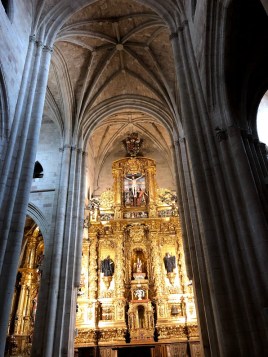
And, right in the middle of this small town of hardly 3,000 people, you will find one of the most marvelous monasteries on the Camino.

It is believed that the Camino pilgrimage path even predates the Christian era when Celtic priests celebrated ritual walks.  “I started walking the Camino as a sporting adventure and ended it as a pilgrim,”  a young man said in sharing the experience many people make on the Camino.

Celebrating the moment

A precondition to really internalizing the magic of the Camino is in the celebration of the present moment which comes after several days of walking and if you are able to avoid the treadmill trap and falling into the robot and monkey mind by constantly checking your cell phone.

It is the one big advice I would give to pilgrims starting their walk. Limit the use of your cell phone to 15 minutes a day.  So often I’ve observed people talking for hours on their cell phones while walking the Camino, robbing themselves of a truly magical experience.

Walking alone and in nature is a challenge initially. It’s about learning to accept the company of self with all its light and shadow. The feelings and emotions can at times be overwhelming but are part of the process of opening the doorway to within.

Reino Gevers – Author, Mentor, and Consultant

https://www.reinogevers.com

                                             applepodcast         


2 Comments

Filed under happiness, humanity, Pilgrimage, psychology, self-development, spirituality, Uncategorized

Camino hostels: Love them or hate them

After serving for two weeks as a volunteer in a pilgrims hostel on the Spanish Camino, I was wondering why hardly any Germans were staying overnight in the Municipal Albergue in Najera – until I coincidentally stumbled upon a comment in a popular German Camino guide book.

The description: “A hall of snorers with 90 bunk beds. Only four toilets and four showers.”

Albergues are run by volunteers

In reality, this could be said about any of the public hostels on the Camino. The places are run by mainly local volunteers. The funds for the upkeep are provided by the local municipality and donations from other pilgrims. The Albergues are usually clean but provide no more than a very basic shelter for the night in line with the pilgrimage tradition going back hundreds of years.

IMG_2494

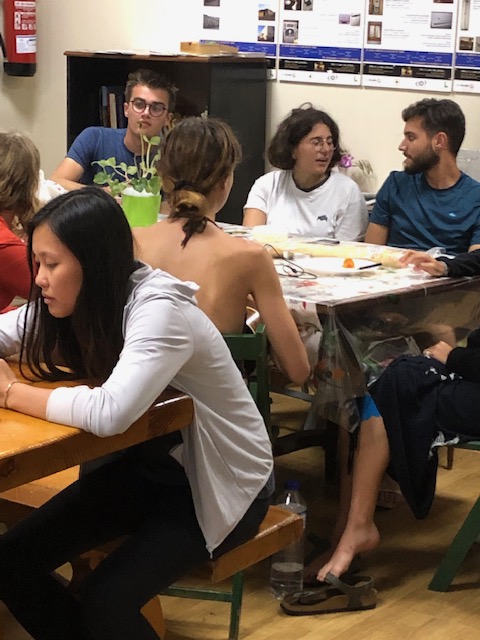
Sharing a meal in an Albergue is one of the joys of the day on the Camino 

But why go through the discomfort of sharing a stuffy dormitory with up to 90 other pilgrims, where some individuals ride roughshod over the sleeping needs of everyone else in setting their alarm clocks at 3.30 a.m and then noisily go about packing their backpack. Inevitably, there are two or three loud snorers who would keep everyone awake.

Popular Camino makes staying in an Albergue the only alternative

Sometimes there is no other choice. With more than 300,000 people now walking the Camino annually, the municipal Albergues are often the only places with beds available. Towns have had to open sports halls in the summer months to cater for the influx of pilgrims.

Such situations are real testing times for humility. What you make out of the situation in an Albergue is always a reflection of where you are at mentally.  I recall meeting a very moody and sleepy-eyed pilgrim in an Albergue last year who threatened all sorts of “warning letters to the authorities” about conditions in the Albergue. Then I noticed that her general negativity was creating an invisible wall between her and everyone else in the room.

Nothing beats the bonding spirit in an Albergue

Some pilgrims, who could easily afford better accommodation, make it a point to choose an Albergue. For, nothing beats the bonding spirit between pilgrims in an Albergue on the Camino. Meals are shared, over sometimes very intimate and emotional conversations. Blisters need to be attended to, and sometimes a doctors’ appointment has to be arranged. Impromptu singing and prayer are common on such evenings.

For low-budget pilgrims and also for those coming from countries with a poor exchange rate to the euro, the Camino would not be possible without the municipal Albergues.  The Camino is becoming more international from year to year with more South Americans and people from far-flung eastern European countries on the Path.

And, it is a joy to watch the Camino uniting people of very diverse national and cultural backgrounds. It is one of the many reasons why the Camino becomes addictive and some people walk it dozens of times.

Reino Gevers – Author, Mentor, and Consultant

https://www.reinogevers.com

                                             applepodcast         

2 Comments

Filed under Camino de Santiago, lifestyle management, Pilgrimage, psychology, spirituality, Uncategorized

A journey and its lessons

A group of tired young Russian pilgrims from St.Petersburg arrived late last night in the Municipal Albergue, or pilgrims’ hostel, in Najera.  It was the last group we registered before we concluded our 14-day term as a four-member volunteer team.

During these two weeks, we registered some 805 pilgrims who stayed overnight in the hostel.

The Camino is becoming an international experience

When I walked my first Camino in 2007,  most people walking the path seemed to be middle-aged Germans, Dutch or Scandinavian.  The pilgrims arriving in Najera were from a far more international diversity.  Apart from the Europeans, the largest groups were from Asia and the Americas.

Together with my fellow three Hospitaleros Pedro from France, Carmen from Toledo in Spain and Ebo from Argentina we were responsible for keeping the hostel clean, and catering to the needs of the between 50-70 pilgrims arriving each day.  A good part of the day we spent scrubbing bathrooms, cleaning floors and washing bed sheets.

IMG_2507

Pilgrims sharing a meal and the experiences of the day in the Municipal Albergue in Najera. Pilgrims are only asked to donate a small fee for the use of the utilities.

Najera is the eighth stage of the Camino Frances, starting in the French village of Saint-Pied-de-Port,  and taking the pilgrim on a more than 727 kilometers (451 miles) journey across northwestern Spain to Santiago de Compostela.

An adventure turns into a spiritual journey

It was a privilege to converse with many of these people and to hear their different stories and motivations in walking the path. Some people start the Camino as a sporting adventure that then turns into a spiritual journey.  An American pilgrim I walked with some years ago said to me: “If you don’t approach the Camino with humility it will humiliate you.”

The Camino is telling you that this journey is not about accomplishing something but in un-becoming from everything that you thought you were and touching that place deep in the soul who you are truly meant to be.

Is the Camino part of the bigger journey of humanity seeking a common spirituality that transcends the boundaries of religious dogma?

A test of emotional and physical resolve

When I spoke to a British man, leaving the Albergue in the morning he confided that “this very emotional journey” was much more than he had anticipated.

After a good week on the Camino, it is a real testing time for physical and emotional resolve. The Camino is in many ways an analogy of life. If you can deal with the roller-coaster of the walk’s trials and tribulations, you will be steeled for whatever challenges life throws at your feet in the acceptance of the impermanence of all things.

Reino Gevers – Author, Mentor, and Consultant

https://www.reinogevers.com

                                             applepodcast         

Leave a comment

Filed under meditation, Pilgrimage, psychology, raised consciousness, self-development, spirituality, Uncategorized

Tales from a pilgrims’ hostel

An 85-year old Dutch guy arrived here at the pilgrims’ hostel in Najera, northwestern Spain, pulling a 100-kilogram cart. While all the other arriving pilgrims were walking toward Santiago, Johannes van der Pas was going the other direction back home.

Johannes celebrated his 100th day on the Camino and has become quite a celebrity. Passing motorists have been seen waving to him. Strangers are inviting him to stay overnight after he was featured on Portuguese television while on his way to the famous pilgrimage town of Fatima.

He started walking from Eindhoven, Netherlands, then stopped in Lourdes and from there walked via Santiago to Fatima.

Pilgrim-najera1

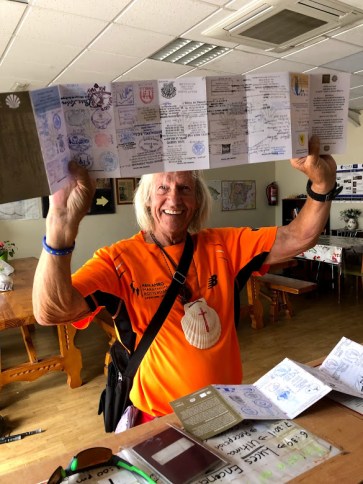
Johannes van der Pas with his credential or pilgrim’s pass displaying all the stamps from the towns he has visited along the way.

It’s a remarkable achievement for any person, but this guy is not letting the old man in and is in better physical shape than most men half his age. He has according to my calculation, so far walked 3,340 kilometers, averaging 33.4 kilometers a day.

On occasions, he has walked all night in the rain in the remote areas of France where, in contrast to Spain, there are hardly any pilgrims hostels.

Johannes is living proof that it’s possible to remain mentally and physically active up to a high age. His recipe is simply doing a good walk every day, and shakes his head at the many people starting their walk on the Camino with little training and then complaining about sore knees and feet.

It’s my fourth day serving as a voluntary hospitalero in this town. The hostel is run by the local municipality and pilgrims are just asked to provide a donation to offset electricity and water costs. Locals living along the Camino have for centuries been generous hosts to pilgrims walking to Santiago de Compostela. The marker stones with yellow arrows on the path are almost entirely put up by local volunteers, paying for them with their own money. It is therefore sad to see that some of these markers are defaced by “Killroy was bere”  ego-minded “bypassing tourists.”

We voluntary hospitaleros are being greeted here with exceptional kindness. Restaurants have refused taking money for meals. Entry to the local museum and monastery is free of charge.

On the third day, we registered 58 pilgrims including seven from South Korea, one from Taiwan, two from South Africa, two from Bulgaria, one from Hungary, one from Venezuela, three from Japan and six from the United States and Canada. Most people are from Spain, Italy, and France as this is the main vacation period in these countries.

And, just as I’m finishing the Blog for the day two women from Greenland arrive at the door, saying that they will stay for the night as they are not used to the warm temperatures.
Reino Gevers – Author, Mentor, and Consultant

https://www.reinogevers.com

                                             applepodcast         

Leave a comment

Filed under Camino de Santiago, lifestyle management, longevity, psychology, self-development, spirituality, Uncategorized

Lessons from the Camino: Winding down

Many a pilgrim doing a walk for the first time on the Camino in northwestern Spain underestimates the physical and emotional challenges.

Most hikers start on the French Route, or Camino Frances, from Saint Jean Pied Le Port, the small French town straddling the Spanish border.  It’s a steep walk up the Pyrenees mountains. For the inexperienced hiker, this in itself can be challenging.

pilgrim_najeriaBut in the last few days, summer temperatures were touching 40 degrees Celcius in much of southwestern Europe.  A walk in the midday sun can be life-threatening and some albergues, or pilgrims’ hostels, have put up signboards, warning pilgrims not to walk between 11.00 and 3 p.m.

A path of crucifixtion?

A few pilgrims in the Albergue of Najera, where I’m serving as a volunteer for the next two weeks, are arriving with blistered feet, swollen knees and other body ailments. I always tell them that this is not a path of the crucifixion and that nobody will chop their head off if they take a break, a taxi or a bus to the next destination if their body is clearly telling them: “Slow down, take a rest, go easy.”

Subtle whispers from the universe

The Camino has so many life lessons to tell the pilgrim. Walking is an ideal way of reconnecting with body, mind, and soul. In the rat-race of day-to-day distractions, we often ignore the body’s subtle whispers telling us to slow down, to recuperate and take a time-out. If we fail to listen, these whispers will get louder, and if we still fail to heed that inner voice, the body will at some point force you to stop. It’s very much the same when we reach a deadlock during a particular life situation when the universe is telling us with obstacle after obstacle to change something.

The higher perspective

Reaching a destination should not be the objective. The real miracles happen in opening the senses to the here and now while walking. This morning I took a walk with two of my fellow volunteers, Ebi from Argentina and Carmen from Spain to the next village, Azofra.

A beautiful bird of prey took flight from a tree in the vineyard nearby, circling overhead. This animal messenger from the spirit world appeared to tell us to remain focused on the task at hand and to keep the higher perspective in mind.

Reino Gevers – Author, Mentor, and Consultant

https://www.reinogevers.com

                                             applepodcast         

Leave a comment

Filed under Camino de Santiago, lifestyle management, spirituality, Uncategorized

Nature and the Respect of the Sacred

Respect for that which is holy and sacred is closely aligned to respect for the self and self-love.

It is telling for humanity that the sacred house in which we live is being treated with such lack of mindfulness.

When you hike for hours along a country road you soon begin to notice the huge amount of trash such as plastic bags, tin cans, plastic bottles and cigarette butts that are carelessly thrown out of car windows by passing motorists.

IMG_2135It has a devastating effect on other living beings. I’ve seen cows munch plastic bags and hedgehogs trapped in rubbish.
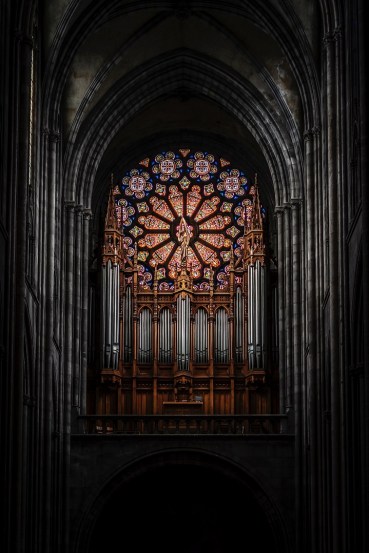
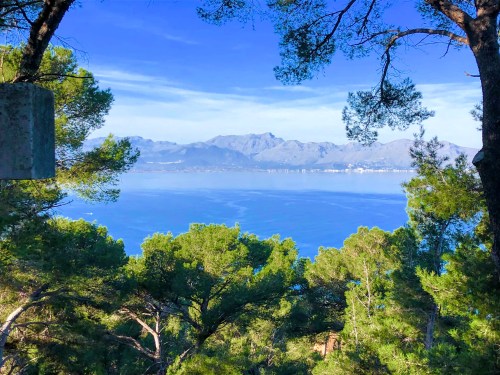
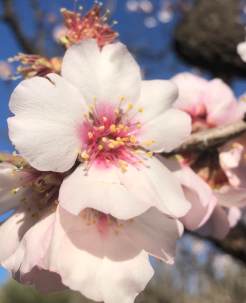
Much can be attributed to the disconnect of modern man to his natural surroundings. Nature is a manifestation of God and not without reason have the wise teachers of old described time spent in nature as our best healer.

Any person who has spent alone time in the African bush or hiked alone for hours in pristine nature will soon become aware of the awesome marvel of creation and the interconnection of all living beings. God can be seen live and working in slow motion.

But never before in the history of mankind are we seeing such a rate of extinction of biological and animal species. The ocean waters are being polluted with plastics and the atmosphere brought into imbalance with excess burning of fossil fuels.

Humanity will only survive when we recognize that the sacred within is also the sacred without.

For centuries Christianity has had a false understanding of man’s role in nature based on misinterpretation of the old testament of the bible in Genesis 1:28 in which man is given the cultural mandate to subdue and rule over the earth.

The lost gospel of St. Thomas, that was discovered in Egypt in the 1940s, has a far more mystical interpretation of many of the biblical interpretations. Rather waiting for the Second Coming of the Christ, the lesson espoused here is all about nurturing and discovering the Christ Within−closely resembling what is described in Buddhism as discovering the Buddha Nature.

The Medieval interpretation of Nature was that of a harsh alien environment, that needed to be conquered. Paradise and a life of bliss could only be expected after death and resurrection.

In contrast the eastern Daoist tradition is all about the yielding to the laws of nature. The philosophy of the Five Elements in essence is about the right timing in accordance with the laws of nature. The harmony of objects and things in Feng Shui, the cultivation of the life-force energy of Chi in the body with nutrition, Qi Gong and Tai Chi and the ancient Book of Wisdom, the I Qing, all are built on these foundations.

We desperately need to revive the sacred places of old to help realign human consciousness. We need places of solitude, and places for meditation to quieten the mind. These also includes saving the sacred buildings of old that were often built at places with a high natural energy frequency.

Maps of medieval towns show how mindful our ancestors went about in planning their cities. The place of worship was always built on the highest plateau or center with all the other buildings in circular form around it. Shamans and geomancers were consulted so that the buildings conformed to the harmony principles of the universe.

We seem to have lost something elementary in sacrificing so much on the altar of materialism.

Reino Gevers – Author, Mentor and Consultant

https://www.reinogevers.com


Leave a comment

Filed under lifestyle management, meditation, nature, outdoor coaching, psychology, self-development, spirituality, Uncategorized

Money for Notre Dame? A skewed debate

Why donate for a building when millions are going hungry?

With almost a billion euros donated for the restoration of Notre Dame cathedral, which was almost destroyed by fire last week, the political moralists on the gallery are crying foul.

thomas-millot-1082160-unsplash

Photo by Thomas Millot on Unsplash

France’s super wealthy families opened their pockets for Notre Dame, triggering a heated debate on the wealth gap. The money should’ve gone to the hungry, to the poor, to the refugees etc.

Such a debate is comparing apples with oranges. In comparing things that cannot be compared with each other, the divisiveness in society is being fanned. It is the game of the ego-driven populists. They care less for the poor than for their own aggrandizement.

Notre Dame is much more than just another cathedral. It symbolizes the ingenuity, innate spirituality and genius of man over centuries. It is a powerful symbol that unites mankind beyond the confines of a single religion. The outpouring of horror and grief as the flames engulfed the ancient cathedral, is indicative of the power of Notre Dame.

I referred in my previous blog to why the ancient builders chose this particular spot where once stood an ancient Roman temple and before that probably a Celtic worship site. When such a sacred site is harmed, it tears at the heartstrings at a deeper level.

Victor Hugo, who played a key role in saving Notre Dame with his novel “The Hunchback of Notre Dame” in the early 19th century, wrote:

“Great buildings, like great mountains, are the work of centuries.”

Notre Dame embodies the best of man’s creativity and higher sense of purpose over centuries. It is an achievement of many individuals embodied in one work of art, with the common goal transcending individual glorification. It is not a building belonging to the church or an institution but to all of mankind.

Notre Dame will be restored. And, at some time in the distant future it will continue to inspire, unite, and excite generations to come. The narrow-minded current debate will be but a forgotten footnote in history.

Reino Gevers – Author, Mentor and Consultant

https://www.reinogevers.com


Leave a comment

Filed under humanity, notre dame, self-development, spirituality, Uncategorized

Walking alone

The ancient masters of all the great religions recommended time alone as a crucial means of discovering true self.

It was the 40 days that Jesus took for time alone in the desert to confront his own shadow and the demons of temptation.  Moses removed himself alone to Mount Sinai to receive the ten commandments from God.

It is in the time spent alone that we come closest to the divine and our life purpose, especially if it is time alone in nature.

IMG_1676 (1)

The Chinese masters of the body arts such as Tai Chi and Qi Gong called the empty space between the spokes of the wheel more important than the spoke itself.

It is in that empty dark space between the stars where you touch the divine.

We as a society are obsessed with what the wise ancients called the distractions of the 10,000 things.

The news media feed on negative news, the constant subliminal messages working our emotions instill a need for material things we mostly don’t need. There is confusion between necessity and want.

It is no coincidence that with the addiction to distraction there are very few people who can truly bear to spend time alone.

We are thus constantly seeking the accolades through social media as a reassurance. But it will seldom lead you onto the path of deeper spiritual experience.

It is during the walk alone, the time-out during a silent retreat and the alone time in nature where the gateway to the soul opens and you begin to realize who you truly are.

It is during the alone time that we discover the heart, the love and the divine within. It is who we truly are and that which soul wants to illuminate.

Reino Gevers – Author, Mentor and Consultant

https://www.reinogevers.com


Leave a comment

Filed under gratitude, happiness, lifestyle management, psychology, raised consciousness, self-development, spirituality, Uncategorized

Dragon from the underground

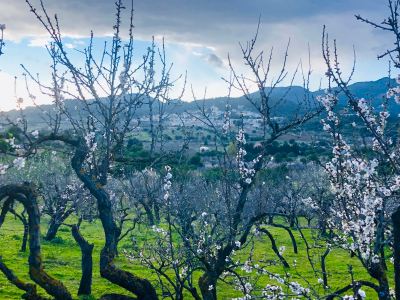
While much of North America is experiencing Arctic temperatures we here on the island of Majorca are seeing the valleys below the Tramuntana mountains covered in the “snow”  of blooming almond trees that signal the  first signs of spring.

IMG_1826  IMG_1827

Chinese mythology compares spring to a gigantic dragon rising from the depths of the underground. It is symbolic of the powerful earth energy that rises from deep below, expanding and finding space to express its true beauty and power.

The Majorcan legend tells us that a king brought his beloved to the island from a snowy country. Problem was that the poor lady got very homesick, missing the snow this time of the year.  So the king went about planting almond trees all over the island that indeed look like the valleys are covered in snow when they start blooming in February.

We can learn so much from nature if we really observe and hear her whisper.  The Chinese teaching of the Five Elements, deeply rooted in Daoist philosophy, is all about the yielding to nature, and finding the right time and place for every action.

Spring is the time of year when energies are expanding, and action is called for. Any vision or dream will remain a dream if we don’t take concrete action. If we want a harvest we need to prepare the soil and plant the seeds.

In the cycle of the elements, Spring is associated with the element of wood, like a tree sucking up the juices from the roots deep below, expanding and feeding the sprouting blossoms and leaves.

If we want to become what we are destined to become, we need to have that room and space to expand. All too often the voices of parents, friends, teachers and family members want to push us into a direction that might fulfill society’s image of what success is, but not what intuition and heart desire are yearning for.

Spring is therefore a good time of the year to do check list on whether you are being true to yourself.  Look into the mirror and ask yourself:

  • Am I taking daily action, even  with small things to pursue my dream?
  • Do I have a support group of friends and family positively empowering me?
  • Am I being distracted by other things such as a job that is taking so much energy from my life that I don’t have any energy left for anything else?

Taming the dragon is about harnessing its power in moving forward in the expression of our true and unique individuality.

Reino Gevers – Author, Mentor and Consultant

https://www.reinogevers.com

      Yield_and_Overcome_Cover_for_Kindle (2)


3 Comments

Filed under happiness, humanity, lifestyle management, self-development, spirituality, Uncategorized

Thought control? Hope springs

The Trump administration released the dire warning of its own climate scientists from 13 agencies during Thanksgiving, hoping it would be buried at a time when most people in the US are spending time with their families and eating Turkey.

Trump told reporters that he did not believe the study from the 300 climate experts after reading “some” of their conclusions. But  instead of hiding the bad news, Trump succeeded in really focusing attention on the matter.

At about the same time the Brazilian government published data telling us that deforestation in the Amazon rain forest had jumped to its worst rate in a decade. The New York Times also published an in-depth report on how fast the rain forests in Asia are disappearing to fulfill an insatiable demand for palm oil.

A huge consensus of the world’s best climate scientists have been telling us for years that we have a serious problem and that the earth will become uninhabitable for humans in half a century if humanity does not gets its act together in the next few years in doing something about climate change.

The climate scientists are telling us that limiting global warming to 1.5 degrees Celsius above pre-industrial levels is essential. Planting more trees, and keeping existing trees in the ground is essential if we want to meet that goal.

Only a small group of pseudo-scientists – nearly all of them funded by the fossil fuel industry- are in denial and pumping us with “thought control” fake news. It is much the same scenario that the world saw in the early 1960s when the tobacco industry paid “researchers” to deny the overwhelming evidence that smoking caused cancer. I don’t know how these people sleep at night or whether they really believe their own lies.

The danger is that when we hear all this bad news, it makes us fall into a paralytic state of in-action. What the anti-environmentalist governments in Brazil and the U.S. do is out of our control. The Amazon or Borneo is far away. We aren’t inhaling – yet – the smoke from all the burning forests.

Fact is that in our little worlds we can all do something. Here are only a few suggestions:

  • Each time we pick up a shampoo or cosmetic item in the supermarket we can check whether it contains palm oil.
  • Refuse to buy products equity or stock from agro-companies that are involved in deforestation. Check for the FSC label on sustainable forestry.
  • A vegan diet and food from the local organic farmer leaves the smallest carbon footprint. Mass animal production farms are dependent on monoculture farming that is destroying biodiversity.  For me personally a mainly vegetarian diet with a little organic meat every now and then is the best option.

Amid all the bad news, hope springs that we might after all get this climate issue solved if we really supported some very innovative ideas out there:

  • Dr. David Vaughan is a scientist who has achieved a breakthrough technology in bringing coral reefs back to life by making them grow up to 40 times faster than in the wild. Coral reefs are key to the ocean ecosystem and are major carbon sinks.
  •  Creating green roofs on skyscrapers in the major cities of the world could have a really positive effect in changing the micro-climate in urban areas and reducing carbon dioxide emissions.
  • Vertical farming in skyscrapers is a very effective way of providing fresh organic produce in cities, requiring much less land than conventional farming that is the second-largest emitter of carbon dioxide after the energy sector.  The Swedish company Plantagon is working on making a first prototype by constructing a 16-story building called The World Food Building that could serve as an international model for industrial urban farming.

Reino Gevers – Author, Mentor and Consultant

https://www.reinogevers.com


Leave a comment

Filed under climate, energy, lifestyle management, nutrition, spirituality, Thanksgiving, Uncategorized