
Category Archives: trump presidency

Reclaiming Democracy: A Call for Moral Action

Authoritarian movements are not historical accidents. They are the outcome of a long, steady erosion of the moral and spiritual foundations that once underpinned Western societies. The Judaic-Christian values that emphasized community, compassion, and responsibility have weakened, leaving a vacuum filled by grievance culture and divisive tribalism.

A growing number of people feel frustrated, aggrieved, and desperate as societies fracture between the privileged and the left-behind. Rapid technological disruption and sweeping social changes have upended long-held certainties. Entire communities have been dislocated, and the Covid-19 pandemic only deepened the sense of instability and loss.

Traditional institutions in education, religion, media, and politics have not addressed the alienation felt by millions. Students of history will recognize these conditions. Today’s authoritarian movements bear an uncanny resemblance to the turmoil and mass manipulation of the late 1920s and 1930s.

In A Preface to Morals (1929), Walter Lippmann foresaw the dangers of moral relativism and cultural drift:

“When men can no longer be the slaves of tradition, they must be the slaves of reason. If they will not be slaves of reason, they must be the slaves of their passions… And if each man is to judge for himself what is true and false, right and wrong, then we are already at the end of civilization.”

Authoritarian movements offer the illusion of safety and belonging. But instead, they further tear apart the fabric of civil society. Families, communities, and congregations fracture into warring factions, each loyal to its own tribe, and its own version of truth.

The Role of Media

Traditional media once acted as a civic compass, a watchdog of power. But in the digital age, social media algorithms amplify the most extreme, emotional, and divisive content. Outrage sells; nuance does not. Facts struggle to compete with feelings. In this climate, truth is no longer a shared destination but a weapon of personal or political gain.

The Sacrifice of Traditional Values

This is fertile ground for demagogues who distort Judaic-Christian values beyond recognition. Empathy is rebranded as a fatal flaw. Power is idolized; the weak and vulnerable are mocked as “parasites.” Even the medieval theology of ordo amoris—originally a call to rightly ordered love—is weaponized to justify a hierarchy of compassion: prioritize citizens over foreigners, neighbors over strangers. In this logic, cutting humanitarian aid for millions of people becomes not just acceptable, but righteous.

Yet most theologians, including Pope Francis, have challenged this interpretation. He reminds us that unconditional love lies at the heart of the Christian faith, and that true morality cannot be confined to borders or tribal interests. The parable of the Good Samaritan teaches that love recognizes no boundary.

As former U.S. President Jimmy Carter once put it:

“It is the weak nation that must behave with bluster, boasting, rashness, and other signs of insecurity.”
Strong societies practice humility. They uphold compassion, generosity, and justice—especially toward the most vulnerable.

The Choice Before Us

With traditional norms under siege and authoritarianism corroding democratic institutions, the burden of responsibility falls on we the people, every one of us. Troubled times, however grim, present a profound opportunity for reflection and moral clarity. There will come the realization that there is no hero coming and no savior on the horizon.

Change begins within—when individuals reclaim their agency, resist distraction, and choose courage over comfort. But it cannot end there. Lasting transformation happens when people come together, organize with purpose, and hold power to account.

For democracy to endure, it must do more than preserve procedures. It must recover its soul and the shared commitment to truth, moral responsibility, and compassion.

A democracy worthy of its name serves all people, not just the powerful elite. It confronts inequality, ensures access to healthcare, housing, and education, and defends the dignity of every human being. It protects the environment not as an afterthought, but as a sacred trust, recognizing that the future of life itself depends on how we care for the Earth today.

Democracy ultimately is not merely a system of governance. It is an expression of our collective values. And its survival depends on whether we are willing to live them.

Reino Gevers – Author – Mentor –Speaker

P.S: If you enjoyed this article you might be interested in my very latest book: Sages, Saints and Sinners Get it today on Amazon, Barnes & Noble and where all good books are sold.

Leave a comment

Filed under happiness, psychology, religion, social media, trump presidency

The Dark Forces Behind Trump’s Ascent

Outside the United States, the dominant narrative often ridicules Donald Trump as a bumbling demagogue, rambling, incoherent, and detached from the nuances of governance. But this portrayal misses the deeper forces at play.

Trump’s rise was not accidental; it was engineered with the backing of ultra-conservative oligarchs who possess both vast resources and a strategic vision. These were not grassroots movements but top-down maneuvers with ideological roots and economic interests.

Read also my Blogs, some written well before the events currently unfolding

Sleepwalking into authoritarianism

You are the master of your destiny

The evolutionary advantage of empathy

The erosion of the political center

The erosion of the political center and the rise of polarization in the U.S. have been profoundly shaped by libertarian and conservative factions endowed with virtually unlimited funds. Billionaires like Peter Thiel and Elon Musk have openly stated that Trump’s ascent would not have been possible without their support. And their motivations are far from altruistic.

Both Thiel and others in this elite class have cited Ayn Rand as a formative influence. Her novels, widely read across the U.S., present a moral universe where self-interest is a virtue and government is the enemy. Rand’s rejection of regulation and welfare has nurtured a radical anti-state ideology that now animates the far right with their “deep state” conspiracy narratives. In her worldview, society’s value lies with the so-called “makers”—a few brilliant individuals who create wealth and innovation, while the majority are portrayed as burdensome “losers.” Here is an interesting background report to Thiel’s philosophy.

The disturbing elitist anti-democratic instinct

This elitist framing feeds into a disturbing anti-democratic instinct, where the “masses” are seen as lazy, entitled, and undeserving of political agency. It justifies an authoritarian approach under the guise of meritocracy.

Yet Rand’s extreme individualism stands in stark contrast to the core values that have historically bound societies together, such as empathy, community, shared responsibility, and spirituality. Her ethical framework, which pits rational selfishness against what she paints as servile altruism, ignores the vast moral terrain between those extremes. Most philosophers reject her ideology as an inadequate foundation for a just society. It fails to account for justice, compassion, and the relational fabric that makes us human.

Rand’s capitalism is idealized as a flawless, self-correcting system—blind to monopolistic power, environmental destruction, labor exploitation, and corporate manipulation. Within this context, the so-called crusade by Elon Musk’s “Doge team” to dismantle the “deep state” is easier to understand. It is not a battle for freedom—it is a push to eliminate oversight, regulation, and democratic checks and balances that constrain oligarchic power.

Truth is the first casualty

This becomes especially alarming when such immense power is concentrated in individuals who can bend public opinion to their will through control of social platforms and narratives. Truth is often the first casualty of authoritarian ambition, and we are witnessing this erosion in real time. Media outlets that deviate from the approved script are threatened with lawsuits or delegitimized outright.

What is unfolding in the United States will reverberate globally. Liberal democracies—already struggling to maintain the credibility of their institutions—are on the defensive. The far-right argument is gaining traction: that democracy is inefficient, corrupt, and too cumbersome to solve today’s challenges. Bureaucracy is cast as inept; public service is derided; the concept of government itself is being hollowed out.

This narrative is not unique to the U.S. During the Brexit debate, the cry of “freedom from Europe” resonated with voters convinced that Brussels was squandering British taxpayers’ money. That campaign triumphed, but the aftermath has been devastating. Brexit has curtailed travel, limited residency rights, and is expected to shrink the U.K.’s GDP by at least four per cent annually in the years ahead. It is one of the most self-destructive political decisions in modern European history.

The argument from the extreme right is increasingly explicit: benevolent authoritarianism is superior to democracy. But history tells a different story.

Vladimir Putin rose to power promising order after the chaos of the Yeltsin years. Over time, he dismantled Russia’s democratic structures entirely. Today, the wealth of the nation is concentrated in the hands of Putin and a small cadre of oligarchs, while dissenters are imprisoned, exiled, or killed.

Even so-called reformist authoritarians come with deep costs. Mustafa Kemal Atatürk modernized Turkey and established a secular state, but did so through repression of opposition and suppression of civil liberties. Deng Xiaoping lifted millions out of poverty in China, but maintained strict one-party rule and oversaw brutal crackdowns, including Tiananmen Square.

Ultimately, the question facing millions in this age of disorientation and instability is stark:

How much personal freedom are we willing to trade for the promise of economic stability and safety?

Authoritarians offer a compelling message: democracy is messy, crime-ridden, and overly tolerant of “the other.” They promise law, order, and security. But this is a mirage. There is no true safety in an authoritarian state. Free expression becomes a privilege of conformity. Those who think differently, worship differently, or challenge the status quo are criminalized, dehumanized, imprisoned, or worse.

Such regimes give birth to dystopias devoid of creativity, individuality, and hope. Citizens are reduced to obedient subjects, forced to idolize leaders who, in truth, hold them in contempt.

Authoritarianism doesn’t just erode the soul of a society but rewires its moral compass, hollowing out the institutions that hold truth, justice, and human dignity in place. Once that unraveling begins, rebuilding becomes a generational challenge.

It often follows in the aftermath of economic ruin, fractured communities, and the silencing of critical thought. The cost is not merely political; it is spiritual and cultural. What is lost is not easily recovered: the ability to dream freely, to dissent without fear, to imagine a shared future that belongs to all. The true danger lies in the kind of people we become under authoritarian rule.

Reino Gevers – Author – Mentor –Speaker

P.S: If you enjoyed this article you might be interested in my very latest book: Sages, Saints and Sinners Get it today on Amazon, Barnes & Noble and where all good books are sold.

Leave a comment

Filed under extremism, happiness, humanity, ideology, trump presidency

The Illusion of Benevolent Authoritarianism

A rightwing media ecosystem has created the dangerous illusion that a benevolent authoritarian regime creates a more stable, equal, and prosperous society.

A common misconception is that strong, centralized rule brings order and stability. The reality is far bleaker. Having grown up in apartheid South Africa and visited communist East Germany multiple times, I’ve seen firsthand how authoritarian rule breeds fear, stagnation, and deep societal misery.

Police brutality and oppression of dissent are commonplace

Although a small minority of white people in South Africa benefited from apartheid, it came at a huge price. With growing dissent and unrest coming from the oppressed black majority, state-sanctioned police brutality and oppression of opposition movements were commonplace. Every young white South African male was conscripted for military service after graduating from school. Many, including some of my own family members, are still traumatized today from fighting a senseless war in Angola.

Both South Africa and more so communist East Germany relied on heavy policing and informant networks. Friends, neighbors and even family members spied on each other.

When I first visited East Germany in the late 1980s, I was struck by the pervasive presence of the Stasi secret police, whose surveillance began the moment we crossed the border. The atmosphere was stifling—grey skies, empty stores, and a palpable fear that made any interaction with locals feel tense and uncomfortable. The waiters in the restaurants were unfriendly and even rude.

Scars remain etched in the collective psyche for generations

After the fall of the Iron Curtain and the reunification of East and West Germany, the scars of the communist era remained deeply etched in the collective psyche. The loss of national identity, coupled with an education system that falsely pinned the blame for Nazi atrocities on West Germany, contributed to a resurgence of fascist nationalism in the former communist regions, leaving a legacy of division and disillusionment.

When power dominates over kindness and compassion, it can take generations for a country to heal. People often adopt a survival mindset, prioritizing self-interest over community well-being. Corruption becomes normalized, and moral considerations take a backseat to personal gain, particularly prevalent in the former Soviet Union and its satellite countries.

Democratic countries in the long-term are far more successful economically. Free speech encourages artistic creativity. Free societies and open markets create a competitive environment with new innovations and technological advancement.

Democratic freedoms create happy societies

It is not surprising that the Scandinavian countries with strong workers’ rights, excellent social welfare, and lower income inequality, also find themselves on the top of the global happiness index. Finland has maintained the top position for six consecutive years, reflecting its strong social support systems, high levels of trust, and overall quality of life.

It appears that strong community bonds and supportive communities play a crucial part when it comes to longevity, mental and physical health. People thrive in democracies that are more sustainable, innovative, and equitable.

A system where the powerful rule, without checks and balances such as free media and rule of law, typically are prone to corruption, mismanagement, and crony capitalism. Control over media and education stifles critical thinking and creativity, slowing technological progress. In Nazi Germany, scientific research was distorted by racial theories with disastrous consequences.

Authoritarianism destroys human dignity

Authoritarianism may offer short-term order, but ultimately leads to oppression, destruction of all human dignity, social fragmentation, economic stagnation, and instability. Fear, oppression, and lack of autonomy contribute to widespread psychological distress. Political oppression, imprisonment, and violence leave lasting psychological scars, often lasting for generations.

Democracy despite all its flaws is the oxygen where humans thrive. The freedoms and values we enjoy in democratic societies are all too seldom cherished. To quote Martin Luther King: “The arc of the moral universe is long, but it bends toward justice.”

Reino Gevers – Author – Mentor – Speaker

If you enjoyed this article you will be interested in my books available where all good books are sold.
Leave a comment

Filed under happiness, humanity, longevity, mental-health, psychology, trump presidency

Stupidity and Evil: Bonhoeffer’s Insights

“Stupidity is a more dangerous enemy of the good than malice, because malice can be exposed and prevented by the use of force, but against stupidity we are defenseless.”- Dietrich Bonhoeffer –

The German theologian and dissident Dietrich Bonhoeffer is renowned for his unwavering faith, ethical convictions, and reflections on what it means to be a Christian in times of crisis. Sentenced to death in a sham trial by the Nazis, his philosophy on stupidity and evil remains strikingly relevant today, amid the resurgence of rightwing extremism.

In the weeks leading up to his execution, Bonhoeffer deeply reflected. He considered how ordinary, decent people abandoned independent thought and passively accepted horrific evil.

Bonhoeffer was arrested by the Nazis in April 1943 and held in a Berlin prison until his execution in April 1945 only weeks before the end of World War II. During his time in prison he outlined in his Letters and Prayers from Prison, a compelling view on the moral failings of a society leading up to authoritarian rule.

It is a stark warning to developments in today’s world marked by misinformation and the erosion of democratic norms and values in Western democracies.

Stupidity is more dangerous than evil?

He argued that stupidity was even more dangerous than evil because people were blind to reason and resistant to correction. Unlike an evil person, the stupid person is unaware of his own ignorance and can easily be manipulated by dark forces. A stupid person or a person stuck in an ego personality will also never admit that they made a mistake.

The theologian observed that individuals become even more foolish when becoming part of “group-think”, especially under authoritarian regimes. When individuals surrender independent thought to a group they become incapable of critical self-reflection, making them susceptible to propaganda.

People become particularly susceptible to stupidity and evil if they surrender their moral and intellectual independence to an external authority.

To resist this, according to Bonhoeffer individuals must be liberated through self-reflection and self-work:

  • Develop a strong ethical foundation based on conscience rather than blind obedience. He warned that authoritarian regimes manipulate people by dulling their moral senses. Behavior that would never have been tolerated under normal circumstances becomes the norm.
  • As a Christian theologian, Bonhoeffer emphasized that faith in God should lead to courage and resistance against injustice. True discipleship means refusing to be complicit with evil.
  • In oppressive systems people stop thinking for themselves. Encouraging education, open dialogue, and debate can counteract this.

Developing internal and external freedom

Bonhoeffer also recognized that internal liberation needed to be aligned at the same time with external freedom. He advocated for:

  • A just society required strong institutions that upheld justice and human dignity.
  • Bonhoeffer himself took direct action against the Nazi regime, arguing that when a state becomes oppressive, Christians and moral individuals must resist, even at great personal cost.
  • Oppressive systems isolate individuals to maintain control. Bonhoeffer emphasized the importance of ethical communities that support and empower individuals to act against injustice.

Bonhoeffer deeply believed in the interconnection between internal and external freedom. A society that values fundamental democratic freedoms will create conditions where moral and intellectual independence thrive.

People who are empowered by taking personal responsibility will challenge unjust systems rather than surrender to conformity. It is a powerful argument for the role of ethics, faith, and personal responsibility in protecting democracy.

Reino Gevers – Author – Mentor – Speaker

P.S. If you enjoyed this article you will be interested in my books available where all good books are sold.

You can watch the podcast interview with Katharine Giovanni here and also on the Youtube channel Living to BE

Leave a comment

Filed under mental health, mental-health, psychology, religion, self-development, spirituality, trump presidency

Leadership matters: The Strong vs the Wise

Whether it’s the captain of a ship, a school principal, a company manager, or the president of a nation, leadership makes a difference. The character and values a leader demonstrates through words and actions can have a profound impact.

For more than a decade, I’ve had the opportunity to work with hundreds of companies, gaining much insight into the challenges and success stories when it comes to people management, motivation, creativity and well-being.

Ultimately, leadership plays a huge role. It determines how a family, a company, an institution, or even a country adapts and navigates tumultuous times.

Brute strength and fear never work

It’s not brute strength that counts, but wisdom. A “strong” leader, is often authoritarian and surrounded by sycophants, refuses to take good advice and relies on fear-based tactics.

This approach is often seen in leaders driven by ego or even malignant narcissism. It can lead to immense, lasting harm. Such leaders tend to belittle others to mask their own insecurities and deficiencies.

The wise leader, by contrast, has a bigger vision, grounded in social intelligence and deep listening. They pick up early signals before issues escalate into crises, navigating with a calm, compassionate demeanor. Wise leadership is marked by patience, thoughtfulness, and humility, creating an atmosphere where people feel valued and respected.

Mandela exemplified compassionate leadership

Nelson Mandela exemplified this. After being unjustly imprisoned for 27 years, he had every reason to harbor bitterness. Yet, when I met Mandela shortly after his release from prison in 1990, he showed a profound sense of forgiveness. He realized that hate and retribution would only hinder a peaceful, democratic future for South Africa. He recognized that his true strength lay in bringing together opposite sides in building one nation.

Body language tells the truth

To grasp the distinction between effective and ineffective leadership, we should pay attention not just to words but to body language. Wise leaders convey a natural authority through measured movements, creating an environment of stability and composure even in high-stress scenarios. Their expressions are often accompanied by a gentle smile that signals warmth and approachability. They nod or offer affirmations while others speak, embodying active listening and respect.

In contrast, ego-driven leaders tend to use body language to assert control. They may invade personal space, exhibit forceful gestures like pointing or chopping the air, and maintain scowling or emotionless expressions, creating an atmosphere of intimidation and tension rather than collaboration and respect.

This distinction is crucial because effective leadership directly shapes workplace culture, employee engagement, and job satisfaction—all key factors influencing absenteeism and work-related stress.

Bad leadership destroys health and well-being

Research supports this, such as the Health and Well-being at Work report from the Chartered Institute of Personnel and Development (CIPD) in the UK. This 2019 study found that 37 percent of employees cited “management style” as a major source of workplace stress, a significant factor in absenteeism.

  • Organizations with supportive managers reported lower absenteeism rates, as employees felt valued and connected to their work.
  • Furthermore, the report highlighted how companies with inclusive, communicative, and supportive cultures see fewer absences.
  • When leadership invests in employee well-being, absenteeism rates can drop by nearly 25 percent, significantly reducing burnout and fostering resilience, health and satisfaction.

What does this mean for national leadership? Leaders at the helm of a country have an outsize influence. They can incite division, demean, and fragment society. Do they bring out the worst in the human being in emanating fear, intolerance, anger and retribution? Or, do they heal, unite, respect, and motivate a nation, elevating it to a higher state of consciousness.

The character and values of a nation are mirrored in its chosen leaders, as the philosopher and writer Joseph de Maistre, (1753–1821) once said:

“Every nation gets the government it deserves.”

Reino Gevers – Author – Mentor – Speaker

P.S. If you enjoyed this article you will be interested in my books available where all good books are sold.
Leave a comment

Filed under mental health, psychology, self-development, trump presidency, Uncategorized

Understanding Authoritarian Tactics: Lessons from History

Authoritarianism is gaining momentum on a global level. It is undermining core democratic principles during a period of heightened insecurity, fueled by rapid social and economic upheaval. History teaches us that populist demagogues consistently use similar deceitful tactics designed to manipulate, subjugate, and control.

Is the world we know in danger? Could we be sliding into the type of dictatorships we saw in Europe during the early part of the last century? It is a real possibility if we study the rise of Nazism in Germany during the late 1920s.

Germany was beginning to recover from the after-effects of World War I during the early 1920s. This was an era of new optimism and cultural renewal. Berlin was a vibrant cultural epicenter. It was undergoing a period of artistic and intellectual flourishing often referred to as the “Golden Twenties.”

Artists like George Grosz and Otto Dix created striking works in the Neue Sachlichkeit (New Objectivity) movement. The Bauhaus School, led by Walter Gropius, was revolutionary in design and architecture, blending modernism with functionality, and influencing aesthetics globally. Berlin’s nightlife reflected the city’s atmosphere of liberation and experimentation, attracting writers and artists from many countries.

During this time, Adolf Hitler’s Nazi party was a small fringe group. Nevertheless, they had already started laying the groundwork for their future dominance. After the failure of their Beer Hall putsch in Munich, Hitler began infiltrating the political system from within. By the late 1920s, their ideology of anti-Semitism had become mainstream. Their support base of alienated groups also became mainstream. This paved their way to power after the Great Depression.

We need to examine more closely the authoritarian agendas of Trumpism in the United States, We also need to look at Orbanism in Hungary and Putinism in Russia to help us understand their real threat to democracy.

Viktor Orban in Hungary is idolized as a hero by authoritarian movements in democratic countries. Donald Trump described him as a “smart” and “tough person” in the television debate with presidential opponent Kamala Harris. However, Hungary today is only nominally a democratic country. Orban has incrementally reshaped his country’s constitution, judiciary, media and academic system after obtaining a supermajority in parliament in 2010. The playbook of authoritarianism follows set patterns:

  • Fear-mongering by demonizing minorities
  • Undermining the judiciary and mainstream media
  • Electoral manipulation
  • Attacks on academics and cultural institutions
  • Erosion of civil society

Authoritarianism needs an external enemy. Their rhetoric is designed to vilify minority groups, including Jews, Muslims, immigrants, and refugees. Their speeches are saturated with hate, anger, and calls for retribution. Political opponents and those with differing views are systematically dehumanized and belittled, reducing discourse to contempt and division.

Orbán has used state media and propaganda campaigns to paint migrants, particularly Muslims, as threats to Hungarian sovereignty and culture. Germany’s extremist AfD party plans to deport all non-Germans back to their home countries. Trump has called for mass deportation camps wrongfully accusing migrants of a rising crime rate.

Orban has reshaped Hungary’s judiciary, essentially replacing judges with those aligned with his ruling party. He created a National Judicial Office, giving it control over court appointments and transfers, bypassing traditional judicial self-governance. Much as in Vladimir Putin’s Russia, Orban has turned state-owned media into a propaganda arm of the government. Private media outlets were either bought by pro-government oligarchs or forced out of business through financial pressure or regulatory changes.

Sound familiar when extremists pronounce you only have to vote for them once? Orbán’s government has redrawn electoral boundaries in ways that benefit his ruling Fidesz party. Districts were gerrymandered to ensure that even with a minority of votes, the party could win a majority of seats in parliament.

Civil society organizations, particularly those focused on human rights and government accountability, have been targeted by the Orbán government. Laws were passed requiring NGOs that receive foreign funding to register as “foreign agents,” echoing tactics used by Russia to discredit and marginalize NGOs.

Orbán’s government has also targeted Academia. and the country’s educational system. Critical thinking, independence, and certain academic freedoms have been curtailed, especially in humanities and social sciences.

Democracy can only endure when it is grounded in a robust system of checks and balances, supported by a vigilant and critical civil society. The authoritarian regimes of the last century unleashed unimaginable catastrophes, including two world wars and a genocide unparalleled in human history.

At its core, democracy champions freedom of expression, individual liberty, and tolerance. It allows you to fully express and live your potential without fearing repression and control by a state. Yet, these very values are increasingly vulnerable to exploitation by extremists. Before we fully recognize the threat, power can fall into the hands of individuals whose sole aim is personal advantage, subjugation and control.

Reino Gevers – Author – Mentor – Speaker

P.S. If you enjoyed this article you will be interested in my books available where all good books are sold.

Check out also the recent episode on the Living to BE podcast and Youtube with our special guest Matt O’Neill. The topic: Happiness is a Choice.

Leave a comment

Filed under extremism, mental health, self-development, trump presidency

Political Divisions in America: Concerns from a Global Perspective

Many Americans in rural Georgia, Kansas, or Texas may not realize that people in Europe and around the world are closely watching events in the United States with growing concern as political divisions deepen.

The assassination attempt on former President Donald Trump seems likely to intensify extremism and further entrench these divisions.

People like me, living on an island in the Mediterranean, are perplexed. I talk to many friends and family in the United States and have noticed in recent times families breaking up and lifelong friendships being terminated over political differences.

The perception has always been that the United States is a creatively free, dynamic, tolerant, multi-cultural nation of boundless opportunity and human endeavor. You have gifted the world with some of the best music, art, and technological tools.

How is it possible that the world’s arguably most powerful and successful nation in economic and military terms can so lose the plot over issues such as basic democratic norms, women’s rights, and religious freedom?

The United States remains the only superpower

Events in the United States have vast geopolitical consequences considering the military and political power wielded by the person sitting in the White House. With a GDP of 26 trillion dollars in 2023 the U.S. economy far surpassed the world’s second-largest economy China with a GDP of 19 trillion dollars followed by the economies of Germany, Japan, and India.

The U.S. defense budget of about 813 billion dollars is the largest in the world. For fiscal year 2023, it was approximately $813 billion. Compared to Russia, China, and India the U.S. military is by far the most powerful, and technologically advanced.

As an outsider looking at events in the United States from afar, here are some thoughts:

  • Despite a booming economy, it appears that a significant portion of Americans are living paycheck to paycheck. There is a perception that they will never live the American dream and that the system is rigged against them by elites in Washington and New York. These people are particularly prone to nostalgia rhetoric that promotes the idea that America was once a great country that has degenerated into chaos.
  • American media, especially local and regional newspapers, were once prime examples of good journalism and fact-checking. There was a clear distinction between news and editorial comment or opinion. The digital revolution has basically killed-off professional journalism. Mass media in America earns its revenues with entertainment and drama, rather than educating and informing. News channels from the left and the right are propagandistic and serve two different perceptions of reality.
  • The tribal bubbles are served by algorithms on social media, emphasizing confirmation bias and grievance culture. Beliefs are cemented, and other viewpoints and even solid science are rejected as fake news.
  • Russian and Chinese bot factories have played significant roles in fanning divisions, fears, hate, and anxieties, through social media as part of their broad information warfare. Russian bots were particularly successful in promoting the Russian narrative on the war in Ukraine with U.S. congressmen on the right.

Devastating consequences for an inward-looking America

When America turns ever more inward with an “America First” philosophy and withdraws from such established institutions as NATO, the consequences are too ghastly to contemplate. The globalized economy has become increasingly intertwined. Disruptions of markets elsewhere will inevitably have a major impact on the man in the street in Detroit or Phoenix. The power void will be filled by other forces such as China and Russia, gaining control of major natural resources and trade routes.

Of particular concern in Europe is a possible withdrawal of U.S. military support for Ukraine. Retired U.S. commanding officer of U.S. forces in Europe, Ben Hodges, paints a devastating scenario if Ukraine should lose the war against Russia or be forced into an unacceptable peace agreement. Millions of Ukrainian refugees would massively disrupt the social order in Western Europe.

“Failure of Ukraine will have devastating consequences for Europe and for the United States. If Ukraine fails, Russia will absorb tens of thousands of Ukrainian troops into their ranks. They’ll be forced into the service and then they’ll be used as cannon fodder on the next phase of what Russia attempts. This will most likely be against Moldova, or against Lithuania or maybe even Poland,” according to Hodges.

To my American friends, I say: Your decision in November will have a major impact on lives all over the world. Who ultimately benefits from the hatred and division? Will you serve as a beacon for the rule of law, tolerance, and democratic norms or serve as a template for the dictatorships of Russia, China, Iran, and North Korea on why democracy does not work?

Reino Gevers – Author – Mentor – Speaker

P.S. If you enjoyed this article you might be interested in my books available where all good books are sold.

Leave a comment

Filed under extremism, humanity, ideology, mass media, social media, trump presidency, Uncategorized

Pushback from dark forces

You don’t need to be a conspiracy theorist to see that extremist groups are exploiting global fears and uncertainties to push an agenda that threatens basic freedoms and hinders humanity’s collective progress.

Despite significant advancements over the past two decades, there is rising resistance from forces entrenched in primordial ideologies, where power is maintained through subjugation and conflict.

For your own peace of mind, it is important not to be overwhelmed by the voices of negativity emanating from the external world, but at the same time be aware of the manipulative forces trying to lure you into a false reality.

Fear and anxiety create an imagined threat

When in fear and anxiety you not only become susceptible to a false narrative but you will be held back to the next level of growth and consciousness. The natural human survival mechanism of freeze, flight, or fight mode is triggered by the primitive or “reptilian brain” when a real or imagined threat is perceived.

Those regions of the brain playing a significant part in decision-making, creativity, and problem-solving such as the prefrontal cortex, parietal cortex, and portions of the temporal and occipital lobes are literally put on hold.

Evil forces are masters at creating and manipulating grievance culture

If you are unable to reflect and put those fears and anxieties in perspective or when emotions from past trauma are suppressed, you are easy prey for manipulation by external forces. Political demagogues are masters at building a grievance culture based on existing collective fears, shame, or humiliation.

Photo by Andrea Piacquadio on Pexels.com

These simple but highly effective techniques have been used by dictators, authoritarians, and cult leaders throughout history:

  • Reshaping public opinion by spreading a false and misleading narrative. Quality media and journalism characterized by in-depth reporting and fact-checking is slammed as fake news. Followers are increasingly lured into a “group-think” mentality where all other perspectives are vilified as disloyalty and betrayal.
  • The charismatic leader presents himself as a “messianic figure” promising to solve all problems and fulfill people’s needs. They promote an image of themselves as infallible leaders cultivating a cult-like devotion among followers.
  • Certain groups, individuals, parties, and minorities are scapegoated to deflect blame and to unite followers behind the leader, deflecting from their own failings and weaknesses.
  • They manipulate historical narratives to legitimize their rule and justify their actions. This can involve glorifying past achievements, whitewashing atrocities, or demonizing political opponents.
  • Independent institutions such as the judiciary, legislature, and civil society organizations are usurped to prevent checks and balances in the system. It took Adolf Hitler and his Nazi party less than three months to replace the entire German civil service with loyalists after coming to power in a democratic election in 1933.
  • Loyalists are rewarded with a combination of rewards and punishments to discourage dissent. Critics are either forced into exile, imprisoned or litigated into bankruptcy.

The Maga Republicans in the United States, Viktor Orbán’s Fidesz party in Hungary, Germany’s extremist AfD party, the Putinist movement in Russia or the Erdogan program in Turkey, all show similar totalitarian characteristics and have a common agenda.

Extremist movements are adept at creating a nostalgic and glorified view of the past where in their view “there was more prosperity, less crime, less social unrest, and the woman knew her place in the social hierarchy.”

Present realities are painted darker than they actually are. Our parents and grandfathers by far did not have the same opportunities as we have today: Here a few examples:

  • Global poverty rates have declined significantly over the past two decades. Many countries, particularly in Asia, have experienced rapid economic growth, lifting millions out of poverty.
  • Technological advancements have transformed communication and access to information, enabling greater connectivity and social mobilization. Can you imagine a world today without Internet and a cell phone in your hand with all the information in the world at your fingertips?
  • Renewable energy sources have become more prominent, creating cheaper energy and boosting economic prosperity.
  • There is a growing recognition of the interconnectedness of all life and the importance of environmental sustainability, social justice, and ethical living. Many spiritual and religious traditions emphasize values such as compassion, empathy, and stewardship of the Earth.
  • There has been a proliferation of spiritual movements, beliefs, and practices, reflecting diverse cultural, religious, and philosophical traditions. We are fast embracing a more tolerant and universal “cosmic religion.”

These changes could only take place with more freedoms, room for expression and acceptance of diversity and change as a fundamental part of human evolvement and advancement. It is worth fighting to protect these freedoms.

Let’s acknowledge the historical truth: extremist, fascist movements inflicted the most catastrophic human tragedy and loss of life during World War II.

Today, we stand at a critical juncture where concerted action is imperative to thwart Russia’s advances in Ukraine, a crucial player in global food exports. If the United States, were to cease armament support to Ukraine and inadvertently aid Putin’s aggression, the consequences would be dire. We could witness a mass displacement of many millions of people towards Western Europe, destabilizing societies on a global scale.

Furthermore, intelligence assessments suggest that Putin’s ambitions extend far beyond Ukraine. There are concerns of potential Russian expansion into the Baltic states and even Poland, effectively redrawing geopolitical boundaries.

Simultaneously, Putin’s regime propagates an insidious information war, sowing seeds of hatred and division in numerous countries. Alarmingly, elements within the Maga Republican movement have been parroting verbatim Russian disinformation.

However, a successful defense by Ukraine against Russian forces would not only safeguard its sovereignty but also channel resources to long-term global goals of environmental conservation, public health, poverty alleviation, and securing a brighter and more peaceful future for generations to come.

When confronted with dark forces, you have a choice: Will you follow the path of hate, division, anger, and conflict, or will you embrace your own inner truth and humanity of joy, kindness,and compassion?

Reino Gevers – Author – Mentor – Speaker

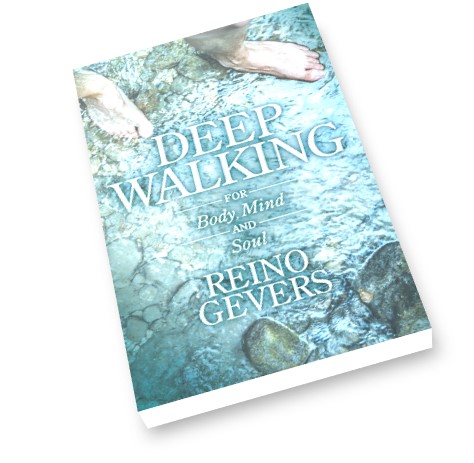
P.S. I’m excited to announce the release of my latest book, “The Turning of the Circle: Embracing Nature’s Wisdom for Purposeful Living.” If you enjoy it, you might also be interested in my previous works, “Deep Walking for Body, Mind and Soul” and “Walking on Edge: A Pilgrimage to Santiago.” You can find all of these titles at reputable bookstores near you.

Leave a comment

Filed under mental health, mental-health, psychology, purpose, raised consciousness, self-development, social media, trump presidency

Feeding the narcissist

We are living in the age of the narcissist. Social media has opened a Pandora’s Box which has provided the ideal tool for the narcissist personality to tap into toxic emotions that have swept him into political power.

Narcissists are obsessed with attention

The narcissist first and foremost feeds on attention. He is obsessed with it and will do anything to be the talk of the town. He will rant and insult with every tweet, knowing that this will keep fueling the fire of the boiling cauldron.

Narcissist leaders are especially dangerous because they are unaware of what effect their words have on certain ears. The rightwing extremist will read a tweet by the person in authority ranting about immigrants as validation to take a gun and open fire on innocent people of color in a supermarket.

manyu-varma-aDXV4GbqHcQ-unsplash

Photo by Manyu Varma on Unsplash

Insulting indigenous people for their calls to protect the Amazon rainforest is seen as the green light by illegal loggers and miners to set fire to the earth’s largest still intact ecosystem.  It gets to the point where a British prime minister and his supporters would rather take into account an unprecedented economic disaster than losing face on their commitment to leaving the European Union.

The narcissist is only in love with himself

The larger consequences for a country, society and our planet are of secondary importance to the narcissist. He is only in love with himself and in his self-aggrandizement.

A narcissist feels that it is his right to vent anger no matter what effect this has on everyone around. He is on a mission in dividing and polarizing a society, family, political party or religious group. It is a hallmark of this personality that they are immune to the effects their actions have on everyone else. The primary purpose is to keep on churning the marketing machine of name recognition.

Narcissist culture turns the lie into truth 

We are living in dangerous times where part of the narcissist culture is to turn the lie into a truth. Scientists are defamed as messengers of “fake news” and lose their jobs. Narcissists are experts at gaslighting where the truth is manipulated in such a way that the recipient of the message will start having doubts about his/her own sanity.  They are experts at changing the narrative to serve their own truth. Sowing confusion and spreading disinformation is part of the methodology of the narcissist who then postulates himself onto the stage as the only purveyor of the truth.  Their charisma will enchant people into their orbit but the narcissist will dump them like a useless object when they are no longer needed. Those who have the audacity to reveal the lies and deceit will find themselves at the receiving end of personal insult and bullying. The narcissist is very good at dishing out but is very thin-skinned when at the receiving end.

The Narcissist feeds on toxic emotion and drama 

The current crop of narcissist leaders will stop at nothing and have no problem in leaving scorched earth in their wake.  Especially the news media needs to stop falling for the bait that is thrown at them with every rant and tweet. We need to be mindful of the angry conversations centering around these disturbed personalities. It is the energy they are feeding on and that keeps them dictating the narrative of the day.

Smokescreens are thrown at us while the forest is burning. Narcissists are experts at tapping into the undercurrent of anger and drama that in most cases has its roots in bad personal choices or family history.  It is painful and a long process of self-introspection to accept responsibility for one’s own actions that have directly been responsible for a predicament.  But it is the precondition to the start of the healing process that needs to take place both individually and on a global level.

Reino Gevers – Author, Mentor, and Consultant

https://www.reinogevers.com

                                             applepodcast         


Leave a comment

Filed under ideology, lifestyle management, psychology, self-development, trump presidency, Uncategorized

The choices we make

By Reino Gevers
trump__clintonIts official: Donald Trump has been chosen as the 45th U.S. president, like it or not. Here in Europe and elsewhere in the world most people woke up to the news with absolute disbelief and shock.  Only about five per cent of Germans would have voted for him, according to one opinion poll.

A lot of sincere, honest and good people I know in the U.S. have voted for Trump. I see a lot of similarity to the Brexit vote in the United Kingdom. Defying all the pollsters and predictions from political analysts, a lot of people out there are very angry and frustrated with the political establishment. It appears that a large percentage of the Trump and the Brexit voters can be found  among blue collar workers, people who have lost their jobs in once booming manufacturing industries and who are not getting by financially in new badly paid services jobs or dont have a job at all.

When societies undergo tumultuous changes, where all the old values certainties start crumbling, toxic emotions are triggered. Where fear reigns, the demagogue appealing to basic survival instincts, has easy play.

Trump is promising to make America great again and to double economic growth. Disappointment is inevitable. I remember very well the euphoria after Barack Obama was chosen as the first black American president. Did it change the lives of the ordinary working family in the U.S. or the rest of the world? And a Trump presidency won’t be working miracles either. Nor would a Hillary Clinton have worked wonders for that matter.

Its an illusion that a government,  a president, an employer, a parent or anyone else out there can make you a happier, healthier and a more contented person. Unfortunately politics is massively fuelling this deception and creating a culture of entitlement.  My take on this is that the world has become far too complex for any one government or leader to make a difference. We need a major cultural change of attitude.

Whether you become a happier, more successful, healthier and contented person is a result of the personal choices you make. And  the first step is taking over responsibility for everything that happens in your life:

  • We cannot control external events but we do control our reaction to them.
  • We do have a choice of what people we surround ourselves with. Who are your friends? Are they upbeat, positive or have a preominantly negative outlook on life? We become the sum of the five people we surround ourselves most with.
  • What do you feed your mind and body with?
  • What are your five most cherished values and who is the person you know who emanates them the most?

Life is a learning curve and we cannot delegate resonsibility to others.  I love that famous quote from John F. Kennedy at his inaugural speech on January 20th 1961: “My fellow Americans, ask not what your country can do for you, ask what you can do for your country.”

Reino Gevers – Mentoring for Leaders and Achievers

http://www.reinogevers.com


Leave a comment

Filed under demagogues, john f. kennedy, personal choice and happiness, trump and hillary, trump presidency, Uncategorized