Tag Archives: Camino de Santiago

Walking like a pilgrim

Ancient cultures and religions for thousands of years worshipped nature as an expression of the divine. With technological progress has come a disconnect with mankind primarily seeing the external world as a means of exploitation and subjugation.

In order to survive as a species we need to reconnect to nature and our spiritual purpose. One of the most underestimated and effective means of realigning body, mind and soul is by taking a walk.

You could either see a walk as a daily physical activity to stay fit or alternatively go for a deep walk with a higher intention. Or, you could go on a meditative pilgrimage walk lasting several weeks with deep spiritual significance.

A hike is generally goal orientated. You are aiming to reach a certain destination, walk a number of steps a day or just carry out a recreational activity.

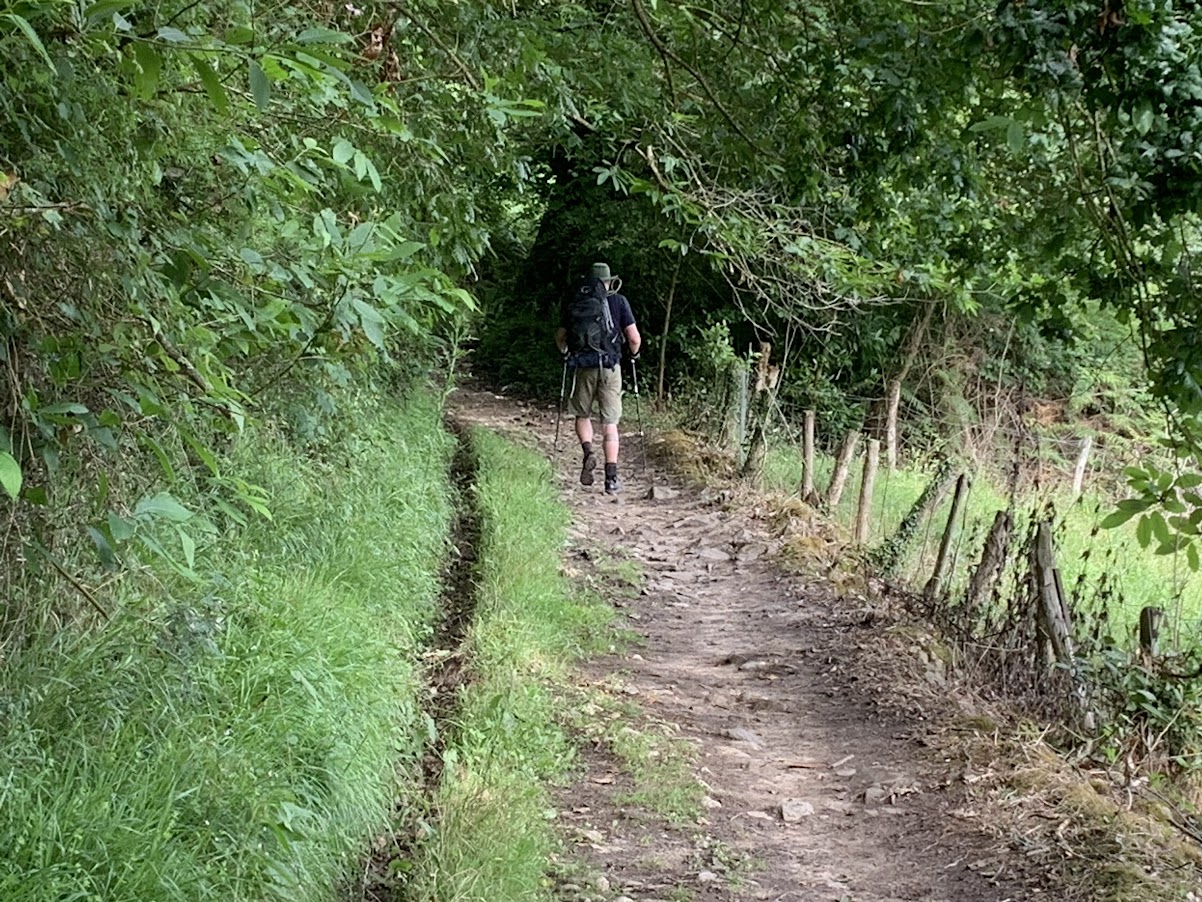
Over the years on my pilgrimage walks on the Camino de Santiago in northwestern Spain it is interesting to observe people starting the 500-mile (800-kilometer) walk as hikers purely as a physical endeavor or adventure and then transitioning into pilgrims.

There is a deep mystery about these ancient pilgrimage paths and walking in the footsteps of people who have walked these paths for hundreds of years. Their collective traces and memories seem etched into the cobblestones, waymarkers, dusty paths, and old chapels.

“It doesn’t take long for the Camino to start walking you,” a pilgrim said to me on one of my first walks.

As you find your natural rhythm and walk off the distractions of the “monkey-mind” caught in thoughts of the past or the future, you become increasingly connected to the natural world around you.

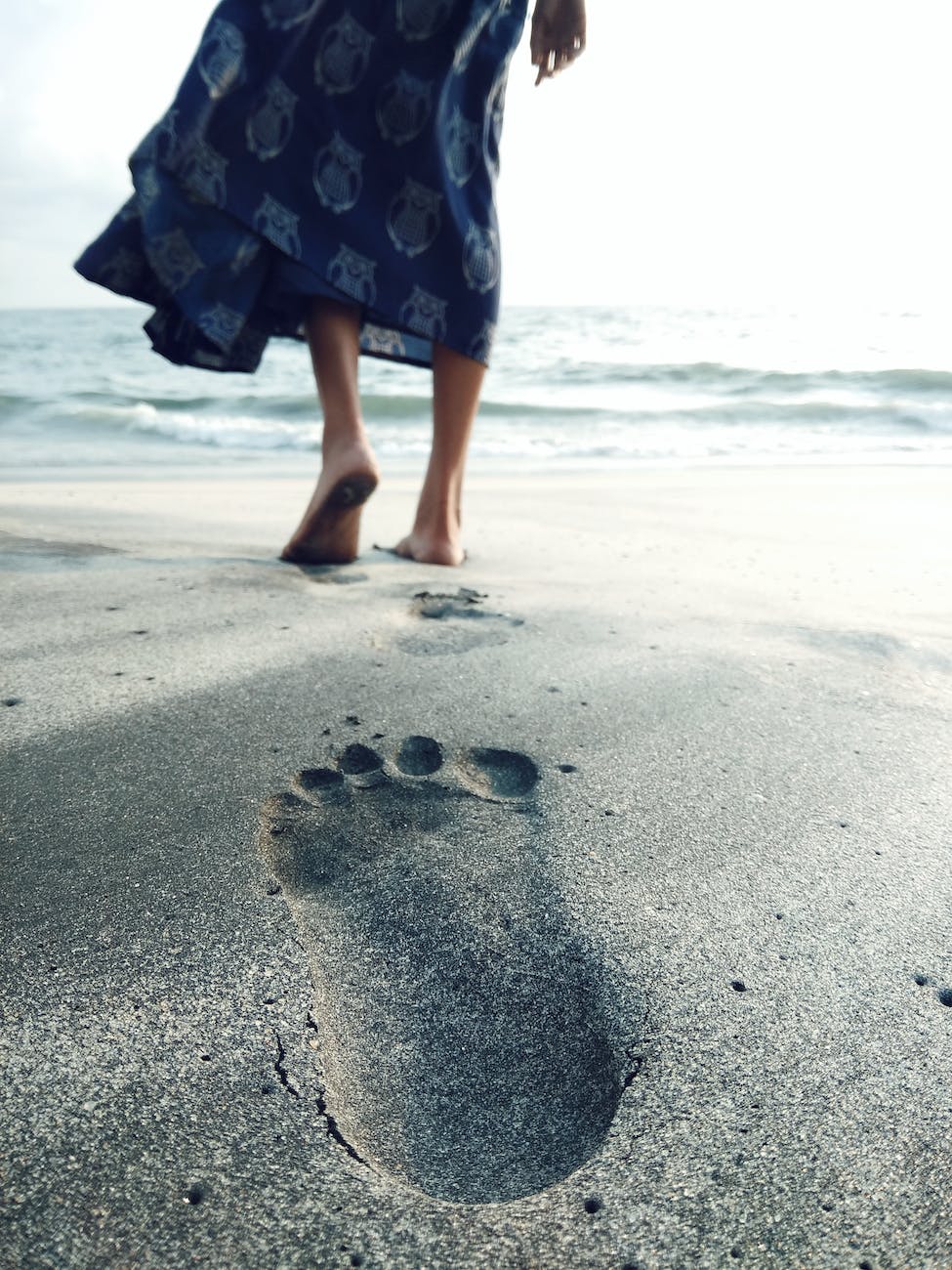
Photo by Akshaya Premjith on Pexels.com

Walking like a pilgrim

You don’t have to walk long distances to walk like a pilgrim. Instead of being goal-orientated it is all about walking with mindfulness, taking in the aroma of herbs along the path through your nostrils, hearing the water of a creek in the distance, enjoying the morning song of a blackbird, feeling the warmth of the sun on your skin and opening your eyes to what you see around you.

A pilgrimage walk is a destination with meaning, like walking from the magnificent 14th-century Wells Cathedral, Somerset England, to Glastonbury Tor – a significant spiritual place of worship since the time of the Celtics. But it could also be walking between an ancient oak tree and a bridge crossing a river.

It can also be a walk to resolve a particular question, an unresolved problem, or to say a prayer of gratitude. You could ask the universe for an answer as you do your walking and open yourself to the whispers from the universe in the form of signs and symbols. Sometimes the answer would come in a casual remark made by a stranger.

Many philosophers, writers, artists, and poets have found inspiration while walking. According to legend the Greek philosopher Aristotele taught his students while walking. The composer Johan Sebastian Bach in 1705 walked 205 miles from Arnstadt to Lübeck along the Baltic coast to find inspiration. The great Persian philosopher Rumi said about walking:

“Keep walking, though there is no place to get to. Don’t try to see through the distances. That’s not for human beings. Move within. But don’t move the way fear makes you move.”

Reino Gevers – Author – Mentor – Speaker

One more thing...If you have found this article interesting you might want to subscribe with the “follow” button above or recommend my FREE weekly Blog to friends and family. My books can be ordered at all places that sell good books in both paperback and kindle.

Leave a comment

Filed under mental health, mental-health

The Mystery of Easter and the Shroud of Turin

The Shroud of Turin believed to depict an image of Jesus continues to baffle researchers. Neither a painting nor a photograph, its origins remain unclear. Scientists have undertaken rigorous research, employing methods such as short bursts of ultraviolet light and laser technology to unravel its secrets. At the same time, it continues to keep believers in awe.

The impossibility of recreating a forgery

The scientists managed to re-create a small section of the cloth with some of the properties at a microscopic level, concluding that “some form of electromagnetic energy” such as a flash of light created the image.   Ultraviolet lasers were not available to medieval forgers thus opening the possibility that the Shroud is actually Jesus’ burial cloth, with the image created at the point of resurrection.

Some ancient paintings depict the Roman soldiers guarding the grave of Jesus being blinded by a flash of lightning as he rises from the grave but there is no mention of this in the biblical scriptures. The story of the crucifixion and the resurrection is the reason why we celebrate Easter in the Christian tradition.

Why we celebrate Easter

The exact details of the events after Jesus’ crucifixion vary slightly. After dying on the cross his followers wrapped him in a cloth and buried him in a tomb. A group of women went to the tomb on the third day to anoint his body with spices. When they arrived, they found the stone covering the entrance to the tomb had been rolled away and the tomb was empty. An angel appeared to them and told them that Jesus had risen from the dead.

Later that same day, Jesus appeared to two of his followers on the road to Emmaus, and then to the rest of his disciples, who were gathered in a locked room. He showed them his wounds and ate with them to prove that he was not a ghost, but had risen bodily from the dead.

One of the Italian scientists who examined the shroud, Professor Paolo Di Lazzaro, said:

“When one talks about a flash of light being able to color a piece of linen in the same way as the shroud, discussion inevitably touches on things like miracles and resurrection. But as scientists, we were concerned only with verifiable scientific processes. We hope our results can open up a philosophical and theological debate but we will leave the conclusions to the experts, and ultimately to the conscience of individuals.”

Carbon dating tests conducted in 1988 indicated that the shroud was created between 1260 and 1390 AD, leading many to conclude that it was a medieval forgery. However, these results have been disputed by other researchers who argue that if it was a forgery it would have to be possible to replicate it easily with modern methods.

Fake or forgery?

During the Middle Ages, the trade in Christian relics was a thriving industry that involved the buying, selling, and exchanging of objects that were believed to have belonged to saints, martyrs, or other holy figures. These objects included fragments of bone, pieces of clothing, and other personal items, which were often housed in ornate reliquaries and venerated by believers as objects of spiritual power. The Crown of Thorns that was placed on Jesus’ head as a means of torture was housed in the Notre-Dame Cathedral in Paris, where it has been on public display since the 19th century and dramatically rescued during the fire of April 2019.

The bones that are believed to be those of St. James the Apostle, also known as Santiago, are kept in the Cathedral of Santiago de Compostela in Spain. According to tradition, the remains of St. James were discovered in the 9th century by a hermit named Pelagius, who saw a bright light shining over a field near the town of Iria Flavia. The discovery of the bones led to the establishment of the shrine in the Cathedral of Santiago which has become one of the most important pilgrimage sites in Europe.

Trade in religious relics goes back to the earliest times. Relics were considered sacred objects imbued with spiritual powers, possessing a direct connection to the divine and serving as a conduit for blessings, healing protection, and power.

Is it important whether the bones of St. James are real or whether the Shroud of Turin is an authentic image of Jesus? What we do know is that some of the world’s most beautiful architectural creations have been built to house relics. As long as there is a mysterious aura about them we will continue to be stimulated by them on a deep spiritual level.

For most of the tens of thousands of pilgrims who have rediscovered the ancient pilgrimage route to Santiago, it is unimportant whether the apostle ever lived or was buried in Spain. The shared experience of veneration, the common search for meaning, and the individual spiritual experience while walking on an ancient path is of greater significance.

Likewise, the Shroud of Turin with the life-size image of the man with stains of blood on the cloth, appearing to be consistent with the wounds that Jesus suffered on the cross, will continue to fascinate. Believers feel a deep sense of awe and reverence, leading to peace, comfort, and inspiration during difficult times. More than ever we need those quiet places of power to explore the inner world of who we really are.

Reino Gevers – Author – Mentor – Speaker

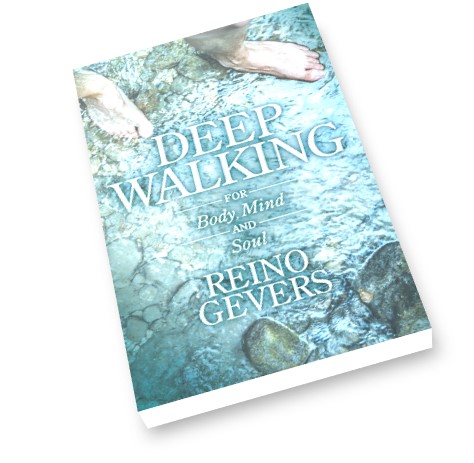
P.S. I’m excited to announce the release of my latest book, “The Turning of the Circle: Embracing Nature’s Wisdom for Purposeful Living.” If you enjoy it, you might also be interested in my previous works, “Deep Walking for Body, Mind and Soul” and “Walking on Edge: A Pilgrimage to Santiago.” You can find all of these titles at reputable bookstores near you.

Leave a comment

Filed under spirituality, Uncategorized

Life is not meant to be easy

“It’s the difficult years that make you ready for a phenomenal life.”
― Hiral Nagda

Our culture is obsessed with youth, happiness, and distraction. Much pain and suffering are caused when we compare ourselves with the “wonderful” lives most people seem to be leading when we read their posts on social media. Very few people admit publicly that they are going through a rough time.

Like the law of nature’s seasons, life goes through cycles of birth, maturity, decay, and death. Conflict, suffering, pain, problems and difficulties are as much part of life as bliss, joy, happiness and abundance.

Our ideas of suffering and pain stem much from religion. Most church-practiced Christianity, today has lost its way into an empty ritual. The earliest of Christian, Buddhist, Taoist, Judaic and other teachings were rooted in an archetypical reality and experiential spirituality.

Moving away from empty ritual

Post-reformation Christian teachings particularly emphasize the inherently “sinful” ways of man with Jesus having to sacrifice himself on the cross for the ultimate salvation of all of mankind. Unfortunately, it has led to some denominations and religions causing incalculable harm to the self-worth of many an individual with their definition of “sin” fixated on how to behave and what to believe.

In the archetypical and mystical traditions, the cross itself is deeply symbolic linking life on earth with the non-physical heavenly dimension. The above and below, the left and the right conjoined in the center signify the number five in numerology. The number 5 in the biblical sense symbolizes God’s grace, goodness, and favor toward humans. It is mentioned 318 times in the bible. In Judaism, there are five books of the Torah and the commandments were written five each on two tablets.

The deeper meaning of the crucifixion

The image of Jesus’ death on the Cross in a metaphysical sense represents the dying of personality and ego consciousness attached to form and the transition into Christ-consciousness of the immortal, the dissolving of the physical body into the resurrected spiritual body. It is a powerful image of a complete cleansing of the ego mind during suffering.

It is during these “flat-on-the-ground” moments, in the complete surrender of the mind that the gateway to the soul is ripped wide open. We are forced by the pain, the suffering, and the despair into deep introspection. Procrastination, lethargy, and comfort zones inevitably lead to stagnation, decay, and melancholy fixation on what was and is no more.

The Camino de Santiago: An analogy of life

The ancient pilgrimage route, the Camino de Santiago in northwestern Spain, has become so popular in recent years because more and more people are seeking a new spiritual truth. The 500-mile route traversed by pilgrims for centuries is very much an analogy of life. In the solitude of lonely walks, the climbing of mountains, and the physical and emotional pains experienced on the route many a pilgrim – after experiencing the trauma of divorce, loss, health crisis, or job burnout – finds liberation from all attachment and new purpose and meaning while walking. Sometimes the revelation happens on the path, sometimes months after the walk.

Leading French thinker and philosopher Frédéric Gros writes that “walking is exploring the mystery of presence. Presence to the world, to others, and to yourself… You discover when you walk that it emancipates you from space and time…”

Abraham Lincoln is quoted as saying: “I am a slow walker, but I never walk back.”

You are passaging your path on the Camino of life “paso a paso” – step by step. On this path, you will be experiencing bad days and good days, realizing in that moment of crisis when you feel lonely, tired, and exhausted that “this too shall pass.” Ultimately you will be losing the fear of death when form passes into formlessness.

Reino Gevers – Author – Mentor – Speaker

One more thing...If you have found this article interesting you might want to subscribe with the “follow” button above or recommend my FREE weekly Blog to friends and family. My books can be ordered at all places that sell good books in both paperback and kindle.

1 Comment

Filed under Camino de Santiago, mental health, mental-health

Finding purpose with deep walking

Living a modern sedentary lifestyle glued to a screen rebels against our very human nature that is designed from the dawn of mankind to walk. Homo Sapiens has populated the planet walking, which is today one of the most underrated, yet most effective ways of keeping body, mind, and soul healthy.

A body of research has meanwhile confirmed the many positive effects only a moderate amount of walking per day can positively impact your health.

The Harvard Nurses’ Health Study, which has been tracking the health behaviors of more than 200,000 women for more than three decades, has revealed that walking for an average of 30 minutes a day can lower the risk of heart disease, stroke, and diabetes by 30 to 40 percent.

Walking at this rate can also lower the risk of breast cancer by 20 to 30 percent.

A 2018 study by UCLA researchers has found that a sedentary lifestyle is also bad for mental health.

The researchers did brain scans of 35 people aged 45 to 75, finding that those who sat the most had more thinning in an area of the brain involved with memory, a change that may be linked to cognitive decline and dementia.

Living a sedentary lifestyle surrounded by things created by the “head mind” will never make you feel the same sense of aliveness and awareness that you will feel through the intuitive “heart-mind” when walking in nature. The universe, or God, finds expression through nature.

In my latest “Living to BE” podcast I discussed with my pilgrim friend Kevin Considine the many life lessons deep pilgrimage walking has to offer. Kevin has walked more than 14,000 kilometers on ancient pilgrimage paths since he retired eight years ago.

Scientists have found that exposure to blue spaces such as lakes, rivers, and the sea are particularly beneficial to mental health.

A team from the Barcelona Institute for Global Health (ISGlobal) undertook the first international review of 35 studies on “blue spaces.” They concluded that outdoor blue spaces not only reduce stress levels, but also improve general well-being.

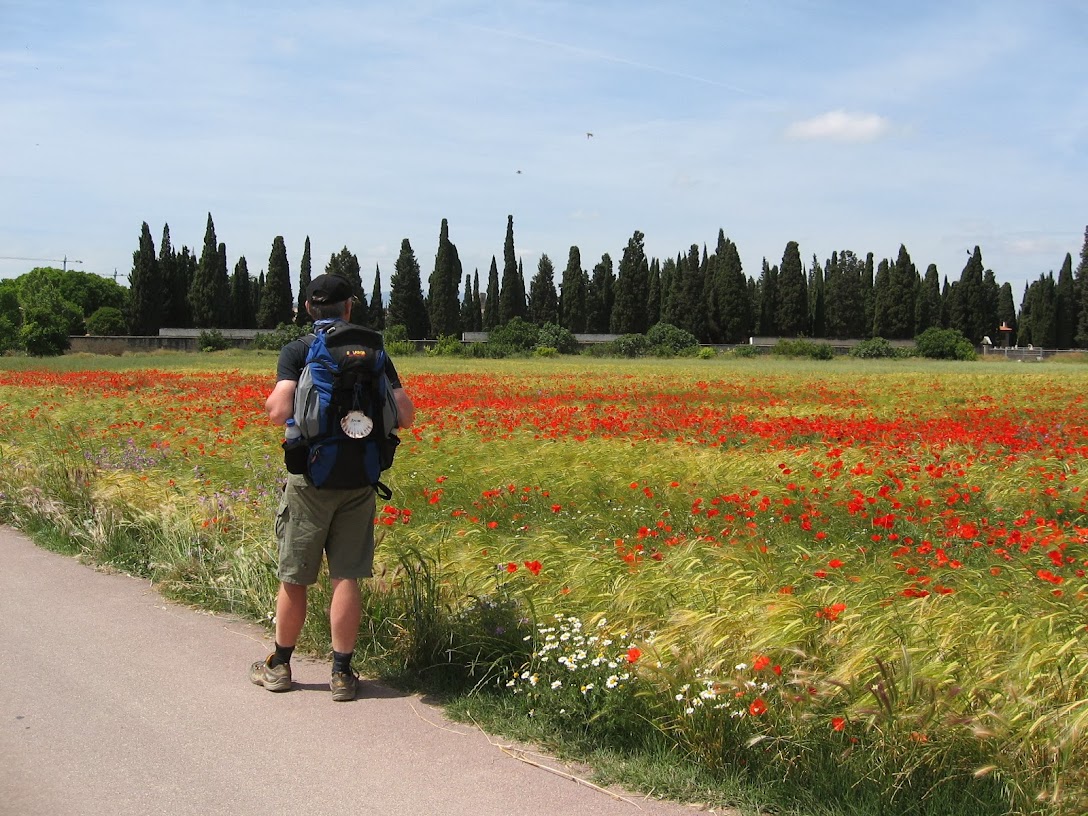
Crossing the Pyrenees mountains from France to Spain on one of my pilgrimage walks

The difference between a hike and a deep-walking pilgrimage experience

One of the most popular paths is the Camino de Santiago in northwestern Spain, which has been traversed by pilgrims for centuries. In recent years, it has been rediscovered by tens of thousands of people from all walks of life as a path of healing and self-discovery.

Some of the world’s most creative and talented artists, including Johann Sebastian Bach, William Blake, and Jean-Jacques Rousseau explored their inner worlds on long walks, acutely aware of the positive effects in opening the senses to nature.

The conservationist John Muir, tormented by nightmares and anxiety after nearly going blind in a work accident, immersed himself in nature on a 1,000-mile journey on foot from the banks of the Ohio River to the Gulf of Mexico.

On my first pilgrimage walk to Santiago, I too was tormented by a dysfunctional relationship, a stressed-out job and childhood trauma that I had suppressed for many years. Any amount of therapy did not have the same effect as facing those inner demons on long, lonely walks of solitude in nature. I have described in detail my journey in my two books: Walking on Edge and Deep Walking for Body, Mind and Soul.

Experiential spirituality at its best

The universe speaks to us in many ways but nowhere more than with such clarity when body, mind, and soul are completely immersed in nature and not distracted by the pull of countless things in our daily, modern lives. It is experiential spirituality at its best.

A particular fascination with the Camino de Santiago in northwestern Spain is that these ancient pilgrimage paths have been walked by pilgrims for many centuries. It is marked by numerous crosses and symbols left by the pilgrims of old, many of whom did not survive the long trip. I would concur with my pilgrim friend Kevin that the route is filled with the spirits of pilgrims who have gone before, who guide us on the way.

Many a person has started the more than 800-kilometer walk from Jean Pied de Port in France to Santiago de Compostela as a hiking or sporting endeavor but ended the walk as a pilgrim. It is a part of the Camino mystery. It has a different impact on every individual, awakening channels to the soul that you had never dreamed possible.

Reino Gevers – Author – Mentor – Speaker

One more thing...If you have found this article interesting you might want to subscribe with the “follow” button above or recommend my FREE weekly Blog to friends and family. My books can be ordered at all places that sell good books in both paperback and kindle.

Leave a comment

Filed under Camino de Santiago, deep walking, exercise mental health

One journey ends

The journey is never-ending

This weekend we finally managed to hold the memorial service for my father in South Africa two years after he had passed away in a retirement home at the age of 89. Even after such a time, it felt right to have a ritualized formal closure to remember a life and its final destination.

Dad’s journey through life was at times shaken with the pain of losing loved ones, confronting his own mental winters of depression, and financial challenges. The relationship between fathers and sons has a special dynamic and my relationship with him can be described as difficult at times.

As a young man, I had a problem understanding why Dad’s brothers were dynamic, outspoken, and self-confident men who had built successful businesses and careers while he in contrast preferred to take a backseat role unable to really make decisions, often faraway in thought and not really present during conversations.  He could withdraw for weeks into a moody silence.

It was only in his twilight years that he opened up and it began to dawn that the seeds of depression and nervous breakdown had already been sown in the regimental and bullying educational culture of the 1940s in South Africa, coupled with overly high expectations from his own father.

Having emigrated from South Africa to Europe in 1981, I could only come for sporadic family visits, surprised at his gradual transition to a stoic reflection and meditation on the multitude of lessons that life has to offer. He retained a sharp mental focus until his dying hours that we could witness only by remote with Covid travel bans having taken effect a few days earlier.

The pilgrimage: An analogy of life

Sifting through a few memorabilia and fading photographs my thoughts turned to the Camino. The ancient pilgrimage in northwestern Spain has become a popular modern-day path of self-discovery and spiritual renewal because it is in so many respects an analogy of life.

The pilgrim faces “winter days” of emotional and physical pain. A route and day are carefully planned but inevitably turn out with pleasant and also nasty surprises.

Lesson: Take each day as it comes. It’s necessary to plan but assume that you will have to adapt and change your plan. Accept external circumstances out of your control but control how you react to them.

On the path, you will meet and bond with people in a way as if they were old friends and family. You will share deep experiences and feelings. Some will become lifelong friends, even partners. Others you will never see again and not even know their surnames.

Lesson: The impermanence of life. Some people and family will walk with you for a lifetime. Others only share with you a short chapter but will most likely have left a lasting impression, precious memory, or lesson in self-awareness.

Life is a roller-coaster of spring, summer, autumn, and winter – sometimes even in one day. But when reaching the destination, walking into the cathedral in Santiago de Compostela you experience the immense joy of having accomplished your journey. The cathedral and all its artwork, sculptures, and lighting are an expression of ultimate joy and rebirth. It is not only the joy of the pilgrim having accomplished the journey.

Life is a spiritual journey of meaning and purpose. It is a journey of grace and faith in the truth of an ultimate journey where one day the walls of the physical fall away, leaving just space for the soul that is eternity.

Reino Gevers – Author – Mentor – Speaker
One more thing...If you have found this article interesting you might want to read more in my books that can be ordered at all places that sell good books in both paperback and kindle.

Leave a comment

Filed under mental health, mental-health

Lessons from the Camino

Walking the Camino in northwestern Spain and Portugal this year was in many respects very different from previous walks on this ancient pilgrimage path that has been massively impacted by the repercussions of the pandemic.

First and foremost the Camino has lost nothing of its magic that has become for hundreds of thousands of modern-day pilgrims, a path of introspection, healing and transformation. About half as many people arrive at the destination in Santiago de Compostela compared to normal years. The good news is that with good planning you can still walk it!

We walked from Porto in Portugal to Santiago, alternating between the coastal and central routes, but booking our accommodation two to three days in advance as most pilgrims’ hostels are still closed and will possibly only reopen next year. Unless you are walking the less popular routes cheap accommodation is very limited for pilgrims with a limited budget.

Can you still stay in a pilgrims’ hostel?

Staying overnight in a pilgrims’ hostel is so much part of the Camino experience where stories are shared over a meal cooked together and often lasting friendships are formed. Although a little more expensive than the municipal albergues, some of the better private albergues are a definite must.

We had one of our most enjoyable evenings with fellow pilgrims at Casa da Fernanda with dancing, singing, great food and good conversations. This was all on a donation basis. Certainly one of the most beautifully run private albergues is the La Cala Pilgrims Inn in Oia run by Tanya Valdes. Tanya is a lovely soul from the U.S. who moved to Spain, fulfilling a heart wish in serving pilgrims in her beautifully renovated albergue, overlooking the monastery in Oia.

The chilling effects of the pandemic

Having had to break off last year’s walk on the Via Francigena in Italy because of another lockdown, walking the Camino Portugues was the first longer walk since 2019. It was at times a chilly experience walking through the small villages where public notice boards bear portraits of locals who have died from Covid and bypassing dozens of closed pilgrims’ hostels, restaurants and curio shops.

Families in the local villages along the Camino route have for centuries earned their income from passing pilgrims and obviously many small businesses have not survived the pandemic. Some had invested all their funds in the expectation of a boom on the Camino for this year’s holy year.

The revival of the Camino pilgrimage in modern days can be largely attributed to Don Elías (1929-1989), the parish priest in O Cebreiro near Lugo. Up to the early 1980s only dozens of pilgrims at the most walked the Camino. But Don Elías had a dream that one day tens of thousands of pilgrims would again be walking the Camino. According to the story Don Elías drove across the whole north of Spain in his old  Citroën packed with tins of yellow paint, marking arrows leading to Santiago.

We were very much aware that this year we were also walking the Camino on behalf of the many pilgrims from other countries who could not walk the path this year because of Covid-related travel restrictions. The Camino can become an addictive ritual and many walkers on the Camino have been doing it several times over. Many pilgrims, who have been unable to walk this year, have been reliving their past walks in the popular Camino forums and social media groups.

Arriving in Santiago

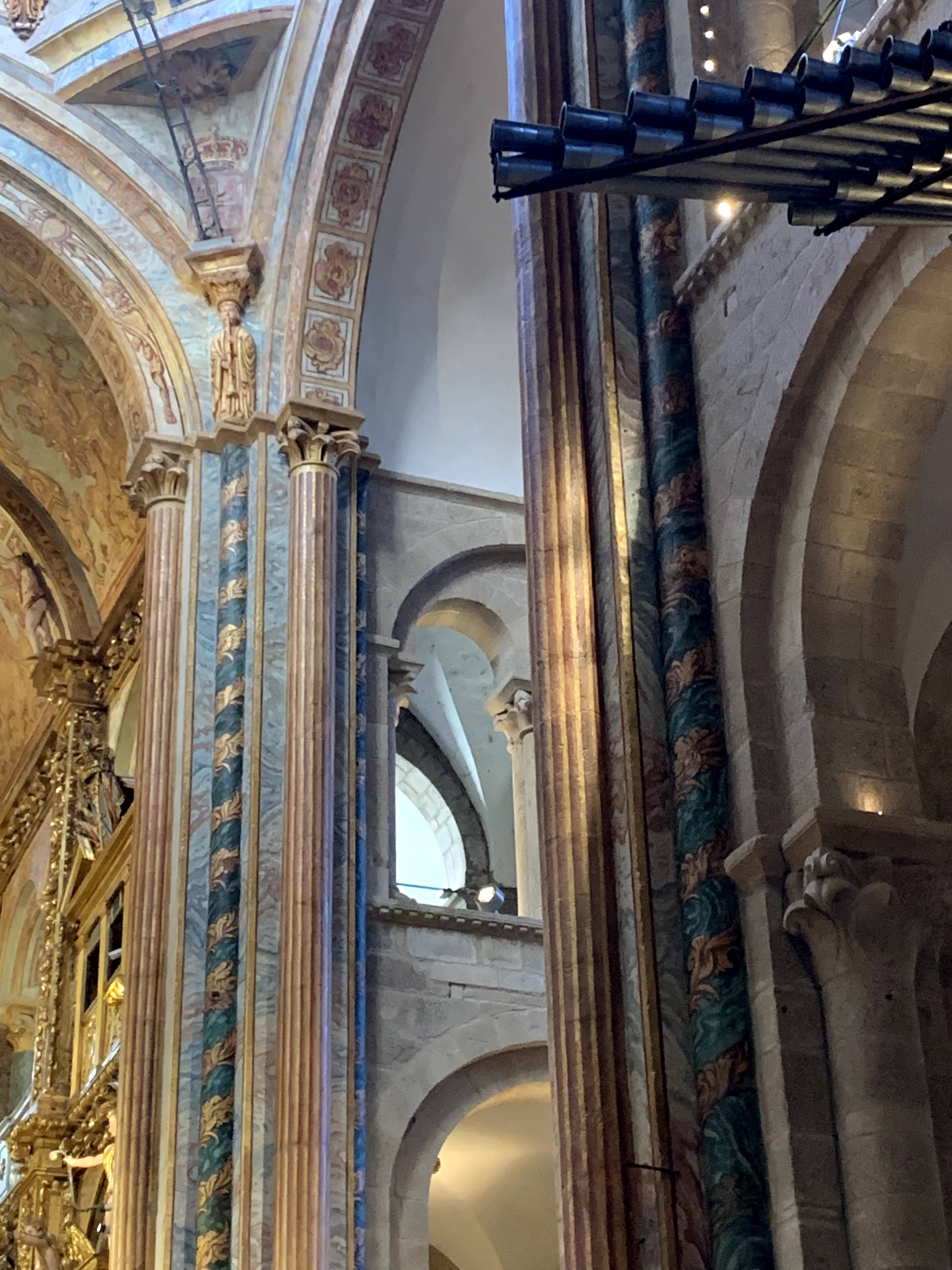
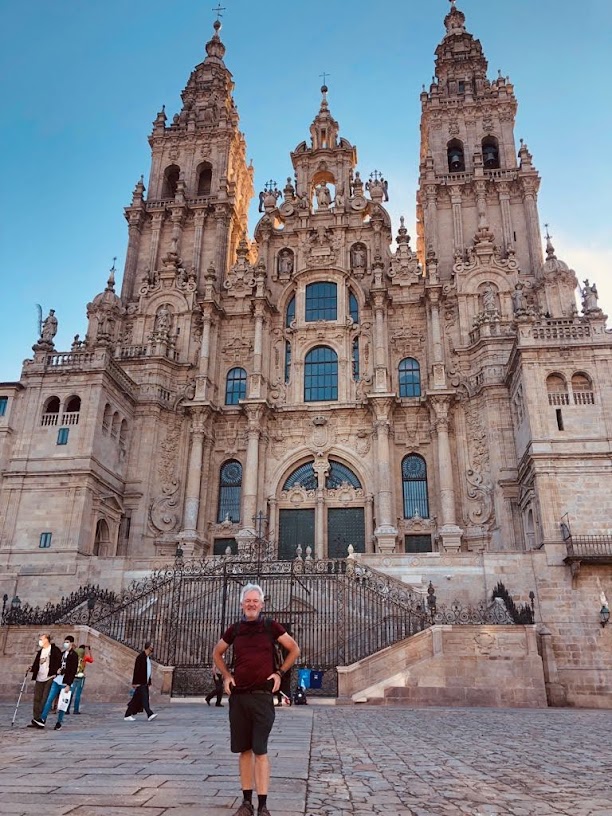
Arriving at the destination in Santiago is always a special occasion. The Cathedral can be seen in all its glory with most of exterior scaffolding removed after years of painstaking renovation work. The interior is especially stunning: Based on the candle-light from medieval times the naves, transept and the Pórtico de la Gloria have been fitted with new lighting. Social distancing still applies and the number of visitors are limited.

The journey begins after the journey

Every journey at some point has to end. You return home but you will not be the same person. A pilgrimage on the Camino takes months to digest. The real transformation begins at home. Life takes on a different meaning when you are in a different rhythm and feel connected to your higher-self. As Marcel Proust is quoted as saying: “My destination is no longer a place, rather a new way of seeing.”

Reino Gevers – Author – Mentor – Speaker
One more thing...If you have found this article interesting you might want to check out our courses, retreats and books and ask others to also subscribe to this Blog.

2 Comments

Filed under Camino de Santiago, mental health, mental-health, spirituality, Uncategorized

Another hill to climb

Strength and growth come only through continuous effort and struggle.” – Napoleon Hill –

It is much easier to climb a mountain if you take it one step at a time instead of looking at the steep peak ahead of you.

Several times I had to tell myself this during the last couple of days walking the Camino de Santiago in northwestern Spain.

There is also a saying on the Camino that the last few kilometers are the hardest. You climb one hill and then you find you have to climb another at the next bend.

Obstacles – the blessings in disguise

Just reflect a little on your life so far. It is mostly the obstacles, the setbacks, and those down on the ground moments that have triggered the biggest transformation.

Sadly, we often throw in the towel before we have learned the lesson or just before we are about to achieve the biggest breakthrough.

Life is not meant to be easy. We whither and die spiritually and physically if we procrastinate in a comfort zone.

A crisis, whether in an institution, in the job or in a personal relationship, is a message from the universe telling us that something is out of balance and needs to change.

The journey has to continue

We can for a moment look back on the winding steep road that we have climbed, appreciating the view and the accomplishment. But at some point we will have to continue the journey.

We human beings are hardwired to explore, and discover. As long as we live on this earth we will constantly be challenged to redefine purpose and meaning.

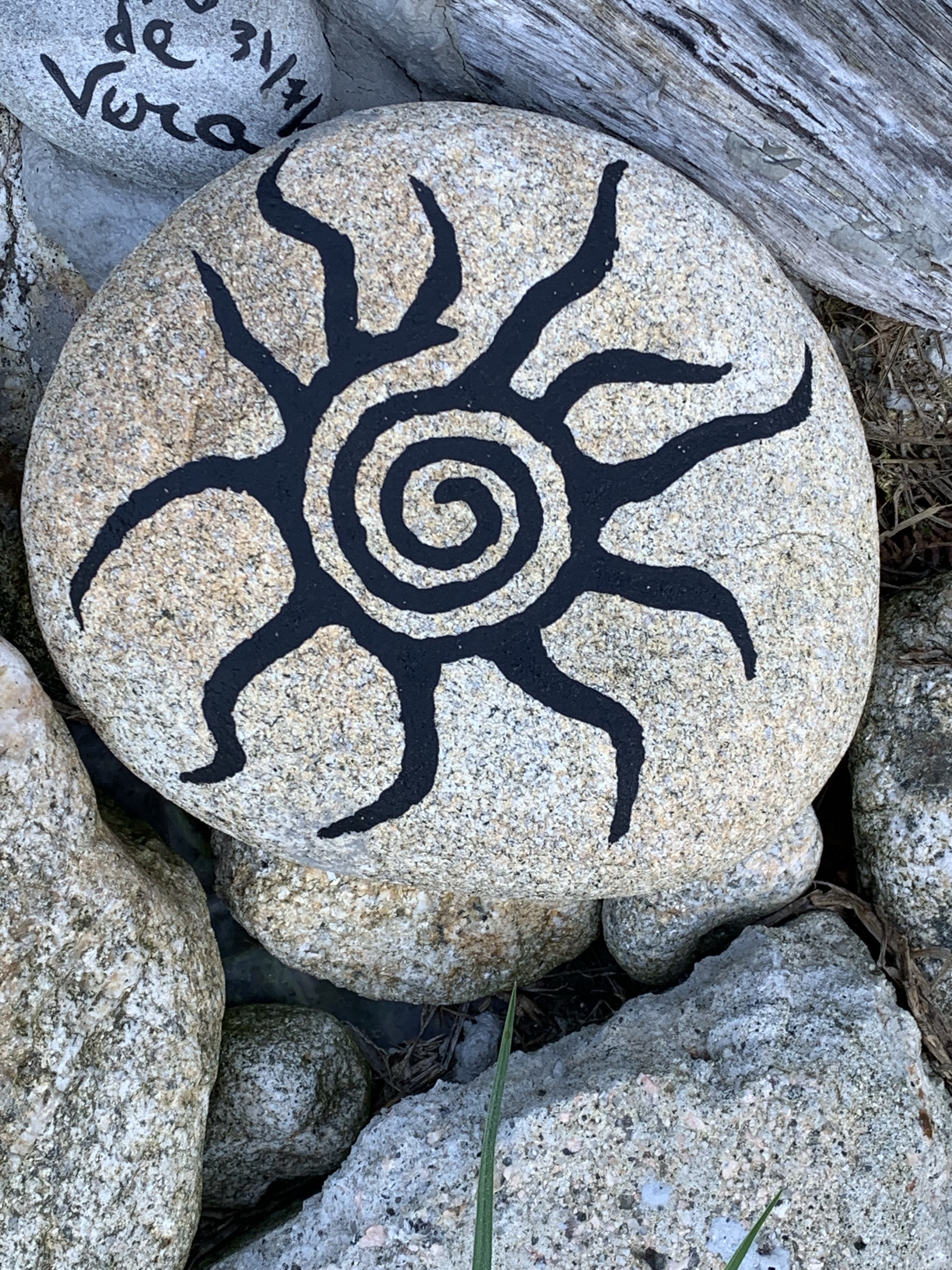
This morning I found a spiral etched into stone by the ancient Celtic inhabitants of Galicia. The rock site was perfectly aligned to the rising morning sun. Obviously the area had been a place of religious significance eons ago.

The ancient people were acutely aware of the laws of the seasons, closely studying nature. Beyond the perceived chaos of natural phenomenon lies a naural order of all things. The spiral is found in miniscule shells and flowers, and our DNA but also in the shape of our expanding galaxy.

Spiritually the spiral motif represents the path of the soul from the outer ego personality to the divine unity. It is the symbol of constant evolution and growth – a divine song of renewal moving from age to age.

Reino Gevers – Author – Mentor – Speaker

One more thing...If you have found this article interesting you might want to check out our courses, retreats and books

and ask others to also subscribe to this Blog.

Leave a comment

Filed under mental health, mental-health, Pilgrimage, self-development, Uncategorized

Your sacred path

All the people you have met throughout your life and the experiences you have had up to this moment in time have made you into the person who you are today. Yet, there still might be that inner voice whispering that there is more to life than you have been taught or have learned.

Caroline Myss is quoted as saying that “as a vital part of a larger, universal spirit, we each have been put here on earth to fulfill a sacred contract that enhances our personal spiritual growth while contributing to the evolution of the entire global soul.”

Connecting with the global soul

Our individual souls are connected to a global soul comprising all life on the planet. Each person has a unique destiny and soul purpose and it’s not about what kind of job you are doing or the things you own. These might be a manifestation of what you become in the becoming of who you really are.

It is almost essential to find alone time for contemplation and inner reflection and to walk your sacred path alone. The urge to walk a pilgrimage first starts as a whisper and becomes ever more louder. The need to go on this soul adventure is sometimes met with strong resistance by the loved ones or family members around you. They will sense that you are in a process of shifting your consciousness and will confront you with all sorts of arguments to dissuade you from walking.

The universe will test your willpower

In a way it is the universe testing your willpower but the sad truth is also that most people are too afraid to make the changes necessary to improve their lives. Family members or partners want you to stay in the tribe and share the same beliefs, mannerisms and habits. Often they will be projecting their own fears onto you if you decide to go on a journey of untrodden paths. Partners in this way often block each other instead of lending support and encouragement to the other.

On the Camino Aragonese between Jaca and Puenta La Reina, Spain

In a few days time I will start my 14th pilgrimage walk, walking for the second time from Porto in Portugal to Santiago and then to Cabo Finisterre, the westernmost point of the Iberian Peninsular. Each walk has been different, and unique. Looking back these walks have proven to be truly transformational not only in the way they have led me in making major changes to my external life but what has happened on a spiritual level. My two books on the Camino in essence tell this story that began in early 2007.

When I served in a pilgrims’ hostel as a volunteer in 2019 I had the opportunity of literally talking to hundreds of pilgrims from all walks of life and nationalities on what motivated them to walk this ancient path that at times can be truly challenging both emotionally and physically.

Why do people go on a pilgrimage walk?

Some people start the Camino as a sporting adventure that then turns into a spiritual journey.  An American pilgrim I walked with some years ago said to me: “If you don’t approach the Camino with humility it will humiliate you.”

The Camino is telling you that this journey is not about accomplishing something but in un-becoming from everything that you thought you were and touching that place deep in the soul who you are truly meant to be.

Is the Camino part of the bigger journey of humanity seeking a common spirituality that transcends the boundaries of religious dogma?

The Camino is an analogy of life

The Camino is in many ways an analogy of life. If you can deal with the roller-coaster of the walk’s trials and tribulations, you will be steeled for whatever challenges life throws at your feet in the acceptance of the impermanence of all things.

I’ve heard stories from pilgrims who have suffered terrible personal hurt and tragedy. Others were walking while defying a life threatening medical diagnosis or who had just survived cancer.

Experiential spirituality reveals itself in helping and supportive hands, in the recognition of fellow souls going through tough trials and tribulations. There is a deep sense of that one truth that we are all one humanity.

Reino Gevers – Author – Mentor – Speaker

One more thing...If you have found this article interesting you might want to check out our courses, retreats and books

Leave a comment

Filed under Camino de Santiago, deep walking, Pilgrimage, self-development, spirituality

Humility and the lessons of adversity

“It was pride that changed angels into devils; it is humility that makes men as angels”

Saint Augustine

Humility seems to have lost the battle against pride. Our world of social media has provided the perfect stage for narcissism and self-aggrandizement with the world of illusion taking precedence over what is real and a fake.

On one of my Camino walks in northwestern Spain I met a pilgrim who told me: “If you don’t walk the Path with humility it will force you into humility.”

Walking the Camino is in so many ways walking through life. Every day the path has new lessons to learn where the pilgrim is confronted with new and old emotional demons.

The last section before reaching a destination is sometimes the most difficult. You are relieved that you have reached the top of a mountain and then you find that you still have another even bigger mountain to climb.

It is why so many people who started walking the Camino as hikers ended their journey as pilgrims, learning on the Path that when going slow and finding that inner rhythm, external personality merges with the internal needs of the soul.

An emotional and physical breakdown leads to the breakthrough

When we are confronted with adversity and almost insurmountable challenges, the path of life forces us from pride into humility. The wounded soul is cracked open for the light to shine into that inner truth.

Sometimes you have to shut a door and walk away from everything in order to rediscover who you really are. You are forced into falling forward and opening a new door.

David Bowie once said that “aging is an extraordinary process where you become the person you always should have been.”

The elderly person surrenders to the cycle of life, the inevitability of death. There is nothing more to prove. There is a quiet solitude and acceptance. It is the same when an identity built on the weak foundations of personality breaks apart after a financial disaster, the loss of a job or a divorce.

Transformation begins where the world of certainty crumbles

There is a deep human need to be seen, to be heard and to have certainty. But when the world of certainty crumbles truth is revealed. This is the opportunity for real transformation and recognition of soul.

Pride and narcissism is about self-interest while humility is focused on being of service. If people are in search of their calling and having difficulty in finding an answer the clue is always in finding that niche where individual talent finds expression in the act of service for the bigger whole. You will have surrendered to that bigger plan that the universe has in store for you.

What is humility and what is pride?

Humble people are unafraid of expressing their vulnerability, and pain, and to seek help. They are listeners rather than talkers. They accept the transitions of life and are willing to learn from them while the narcissist in his pride is always right and is immersed in the illusion that the world is owing to him. He will always blame other people for his failures and take accolades for accomplishments that were none of his doing. Too many of such people find themselves in leadership positions causing much pain and suffering to all those around and ultimately to themselves.

Humility and adversity teach us that we always have another mountain to climb during life’s up-and-down cycles. Climbing those mountains make us more resilient. As long as we are alive we are never done as human beings. It is during those moments when we think that we are done that life inevitably throws another lesson at our feet.

Reino Gevers – Author – Mentor – Speaker
One more thing…

If you have found this article useful please share to spread the message. Check out the latest online courses for you to download and our special Retreat on the island of Majorca in October this year.

1 Comment

Filed under mental health

Unlock your mind: Take a walk

Time spent in the stillness of nature unlocks the mind, reconnecting mind, soul, and body with the greater whole.

I’ve just come back from my annual pilgrimage walk on the Camino in northwestern Spain.

There are few things so healing and rejuvenating as spending time in the green and blue spaces of nature.

My very first walk on the Camino de Santiago was in 2006. I needed time out after feeling totally stressed out from job and relationship challenges.

Nature is a healing place

That first walk opened a window that completely changed my life. The first big epiphany: Reconnecting with nature liberates the mind from the treadmill of the same thoughts, fears, and feelings.

On the Camino Primitivo

When body and mind go into synchronicity with nature, self-important ego thoughts are transmuted into calmness and stillness.

You feel part of a bigger whole. The universe starts whispering to the truth of the soul.

Let your breathing follow the natural rhythm of waves breaking to shore. Feel the calming effects of crystal clear waters swirling around a rock. Hear the choir of birds in the woods. Each with a different song, forming that symphony of unity.

Your body tells the truth

Your body is the collective memory of all that you have experienced. The seeds of underlying tension and pain can go far back to a traumatic childhood experience.

It’s those suppressed feelings from the past that deplete the energy that you need to accomplish your dreams. When you do a pilgrimage you may walk more than 20 kilometers (12 miles a day) with a backpack.

Your body goes through a cleansing process both physically and emotionally. You will be letting go of old stuff, walking things off, with every step.

Uncontrolled emotions could surface. You have those flat-on-the-ground moments when you question everything in your life and why you are doing a strenuous walk in unknown territory and sometimes in bad weather conditions.

A pilgrimage walk is no wellness holiday. It can be taxing physically and emotionally. But also pure bliss, joy, and exuberance. There are always lessons to be learned. The Camino de Santiago is a fast-track analogy of life.

You eventually surrender and accept the impermanence of all things. There is no story without a struggle. You have moments of bliss and moments of sadness.

Life is a rollercoaster. Life is grace as you take that walk into the morning light after the darkest of nights.

Reino Gevers – Author – Mentor – Speaker

One more thing...If you have found this article interesting you might want to subscribe or recommend my FREE weekly Blog to friends and family. My books can be ordered at all places that sell good books in both paperback and kindle.

Leave a comment

Filed under mental health, mental-health