Our ancestors from centuries ago might be influencing our lives in more ways than we might be aware of.
Cultures steeped in tradition and ritual, place great value on their history and ancestral roots. Much of this has been lost in the modern materialist world−which then finds an unhealthy avenue in extreme nationalism.

There is a long tradition on the Camino in Spain that reminded me a lot of the Zulu culture in South Africa.
The Zulu greeting “sawbona” means “I see you” to which the fellow being greeted responds with “yebo”, or yes and I see you too.
In the rural Zululand of my childhood the conversation would then continue with strangers exchanging their names and asking each other the names of their parents and grandparents and from what village they came from so that the ancestral tree to the tribe or clan could be recognized.
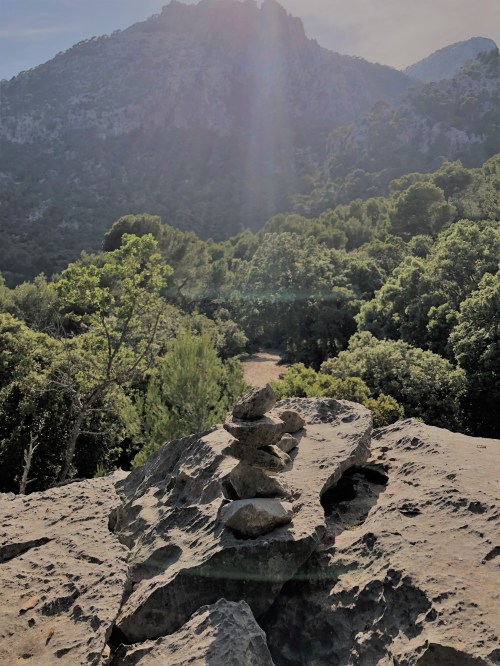
The Zulus journeyed mostly on foot, and would pile stone cairns at key junctions as a mark of respect to the ancestors and asking them for a safe journey. In the Umfolozi Game Reserve in KwaZulu-Natal there is a massive stone cairn that dates back to the stone ages.
I was surprised to find this tradition also on the Camino and learned that similar rituals also exist in other cultures such as the Inuit, American Indians and Celts from which the practice probably came in Spain.
In medieval times it was common for one member of a family to walk the Camino to atone for the sins of the entire clan. The family would in return collect funds to finance the pilgrimage.
The pilgrimage began after crossing the threshold of his front door, and after being granted permission to leave by his local religious authorities. Before leaving he had attended mass where his staff and scrip were blessed by the priest.
It would be months, sometimes more than a year before he returned−if he was lucky. Many pilgrims did not survive the journey, making the ultimate sacrifice.
Along the Camino, the pilgrim would add a rock to the cairns at the wayside, saying a prayer for a member of the family going down the line of the family tree, starting with the parents, siblings, grandparents, great-grandparents, and all the other members of the clan.
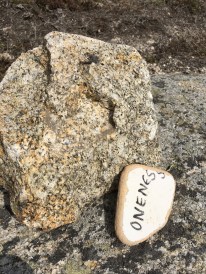
Today the tradition continues and many of the cairns have rocks with prayer inscriptions for a deceased loved one, someone going through a serious illness or a special wish.
Genetic research is still a young science but some scientists believe that some of our habits, traumas, memories and survival instincts are imprinted in our genes from our ancestors. An ancestor born centuries ago could still be impacting your life. Ancestral memories could be passed on for 14 generations, according to one body of research.
We are who we are not only because of the influences from our immediate friends and the environment in which we live but it also appears, that some of our habits, fears and talents are inherited from our ancestors.
Reino Gevers – Author, Mentor and Consultant




 Within the word Home, is one of the most powerful mantras OM. In the Sanskrit origin it translates as the vibrational Source and connection to the Supreme. Peace of mind and contentment can only be found With-In. You always take yourself with you wherever you are and with all that with which your mind is preoccupied with.
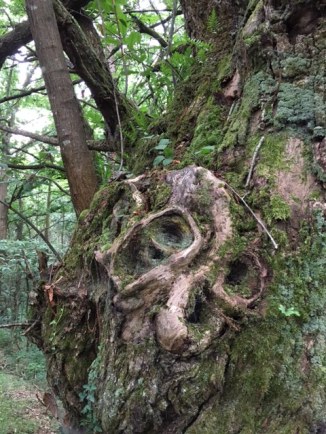 When walking the Camino you will be confronted by obstacles. The first biggest challenge is mental. You are thirsty, exhausted and your feet are hurting. You push yourself to the summit of that mountain only to find that you have an even steeper hill to climb further ahead. Your mood sinks to rock bottom.
 In our modern world our energies are constantly being depleted by countless distractions that make us forget who we are and what soul purpose we have. Worse still: We imitate “role models” hyped by mass media, making us look foolishly unauthentic.
 The Camino in Spain has in many respects been a life-changing experience for me. The lessons learned on the pilgrimage are in so many ways an analogy of life. My book “