Just because you have walked through a dark past does not mean your story ends there. Christmas carries a deep and enduring message of hope.
The ancient mystics understood that time is an illusion, teaching full presence as eternity touching the present moment.
The days between Christmas and the New Year were honoured as the in-between time where endings soften and new beginnings quietly form.
Christmas is an invitation into this holy simplicity. The birth of Christ did not take place in a palace but in an unremarkable shelter, rough with straw and shadow. Yet kings traveled great distances to kneel there and pay homage.
This is the great paradox of Christmas: divinity arrives hidden in the ordinary. Love reveals itself not in grandeur, but in humility. The sacred is often found exactly where you least expect it.
In this season, you are gently reminded of your own worth. You are worthy of love. You can learn to love yourself, even the parts shaped by fear and survival. When you dare to face your fears with compassion, you begin to gather the tools for healing and growth. Peace is uncovered from within.
The Christmas story is also a story of clearing space. The stable had to be emptied and prepared to receive new life. In the same way, this season invites you to release old entanglements, to lay down burdens that are no longer of service, and to allow the soul to breathe.
As you learn to care for yourself with gentleness, you become more capable of caring for others in the wider human family.
This is the quiet miracle of Christmas: when love is born within, it radiates outward, warming a broken world in need of hope.
All the ancient sages and saints return to one non-negotiable truth: the law of impermanence. It is the invisible thread that runs through the fabric of life, weaving and shifting in cycles that shape every experience, identity, and attachment to what once was and is no more.
In Buddhist teachings, the very nature of all phenomena is this: it arises, it changes, and it then passes away. Resisting such impermanence is like trying to dam a river with your bare hands. You only exhaust yourself, and the water still finds its way through. You get wet!
Yet in our materialist culture, we are indoctrinated with the false belief that self-worth is equal to possessions, status, and the glitter of external achievement. The blueprint is enticing: When I have a million in the bank, the perfect home, and a Ferrari in the garage, then I will be happy.When I retire. I will do ... As if life only starts with retirement?
But sooner or later, you discover that what you want is not always what you need, especially when the outer trappings are disconnected from the soul’s true purpose. The more you own, the more you may fear losing it. There is a real danger that you become obsessed with thoughts on what might happen, forgetting that no insurance policy, stock strategy, or health plan can shield you from the law of impermanence.
Paradoxically, the mystics embrace impermanence because it reveals what does not change: the permanence of the soul and its unbroken connection to God, the Source, the Tao, the Universal Consciousness. By meditating on the transient world, the Mystics learned to anchor themselves in what transcends time.
Meister Eckhart, the 14th-century Christian mystic, taught a similar truth when he said, “To be full of things is to be empty of God. To be empty of things is to be full of God.” For Eckhart, the art of detachment was not withdrawal from life, but freedom within it. It is releasing the need to grasp at what inevitably passes so that the soul can rest in what is eternal. In letting go of form, the formless Presence is discovered.
In mystical thinking, endings are thresholds to new beginnings, with death merely being a passage to another dimension. Just as autumn clears the ground for spring’s blossoms, life’s losses make space for new insights, relationships, and states of being. The Sufi poet Hafiz reminds us: “Don’t get lost in your pain; know that one day your pain will become your cure.”
The mystics teach that surrendering to the law of impermanence brings peace of mind, dissolving fear at its root. We are travelers on the journey called life and only guests in the house of time. Like the river that does not mourn the stone it passes, everything you touch, everything you experience, is a moment flowing by.
So let your walk be soft and light. Love deeply. Release gently. You lose nothing, because the current carries you, steadily, inevitably, toward the eternal ocean.
“The meaning of life is to find your gift. The purpose of life is to give it away.” — Pablo Picasso
Every soul incarnates with a unique purpose, and life itself is a journey of becoming who you truly are. Yet, from an early age, societal conditioning often obscures the soul’s inner calling, leading to discontent and unhappiness.
The Oracle of Delphi, inscribed at the Temple of Apollo, imparted the timeless wisdom: “Know Thyself.” This maxim reminds us that true purpose and wisdom emerge through deep self-reflection—by peeling away illusions, pretenses, and the false identities imposed by the world, we uncover our authentic essence.
Several sages have expanded on the maxim of Delphi by adding: “Know who you are not”, aligning with the practice of Neti Neti (“not this, not that”) in Advaita Vedanta, a Hindu philosophy. It seeks to understand the self by negating all that is not the true self. Perceiving the divine comes after self-reflection of “knowing thyself” and then “knowing who you are not”. The Islamic hadith states, “He who knows himself knows his Lord.”
From early childhood, we are subtly shaped by influences that can obscure our true nature and pull us away from our unique path in life. The hidden traps come in the form of societal norms, expectations, and fears.
Social Conditioning & External Expectations
From early childhood, we absorb the values, beliefs, and expectations of the family we were born into. Parents often make the mistake of carving out a career path for their child without sensing its deeper yearning. Many realize only later in life that the ladder has been placed against the wrong wall. This often occurs during a midlife crisis.
Self-Deception & Ego
Through self-talk, we often construct identities based on what we want in life rather than who we truly are. Uncomfortable truths are avoided with the ego protecting itself with rational justifications. The mind creates stories, but identifying too much with them keeps us trapped in illusions.
Fear of Change or Truth
Human beings are creatures of habit. Making fundamental changes like creating distance to family members or friends pulling us down to a lower vibrational level requires brave decisions and honest self-reflection.
Seeking Validation from Others
When we rely on external approval, we shape our identity based on how others perceive us rather than our own inner truth. Social media amplifies certain images of “success” and “happiness” mostly by encouraging consumerism.
Finding Stillness
To truly discover who you are, you must create space for stillness. In quiet moments, especially in nature, your senses open to the whispers of the soul. Here, you can seek guidance from God, a higher intelligence, or your higher self. Yet, these answers can only reach your heart when you free yourself from the endless noise of external distractions.
Without solitude, self-awareness remains shallow. Cultivating a meditation practice can help deepen your connection to your inner self. There is no single perfect way to meditate—it might be sitting in stillness, walking mindfully in nature, listening to spiritual music, or engaging in slow, flowing movements like Tai Chi or Qi Gong. The key is to find what brings you into presence and alignment with your true essence and purpose.
Reino Gevers – Author – Mentor – Speaker
If you enjoyed this article you will be interested in my books available where all good books are sold.
“A comfort zone is a really beautiful place, but nothing grows there”~ Anonymous
We are living in the most prosperous and exciting era of mankind, yet if we look and hear around us many people seem stuck in the grievance culture of anger and unhappiness.
During the past centuries, mankind has made groundbreaking discoveries in discoveries in physics, astronomy, and biology. In the latter half of the 20th century computers and the invention of the Internet have led to an unprecedented acceleration of knowledge and information on a global level.
In 1982, futurist and inventor R. Buckminster Fuller estimated that up until 1900, human knowledge doubled approximately every century, but by 1945 it was doubling every 25 years. And by 1982, it was doubling every 12-13 months. Current estimates predict that with the revolution of AI technology human knowledge will double every 12 hours.
At the same time, the cultural gap between technological progress and the ability of human consciousness to process these changes has increased. Rapid change produces uncertainty with the unknown perceived as a threat.
A natural aversion to change
Evolutionary psychology suggests that humans have developed a natural aversion to risk as a survival mechanism. Change is inherently associated with uncertainty and risk, triggering a “walling off” from potential harm. Changing habits and routines requires effort and the ability to adapt.
While, some people thrive in a new environment of innovation, and see every new challenge as an opportunity for growth and evolution, others are gripped by fear and retreat into the cave of their comfort zone, not realizing that if they don’t adapt, their lives will be changed for them anyway.
The grievance culture feeding on toxic emotions
As we enter 2024 with elections scheduled in several major countries there is a real danger of the public narrative being hijacked by “grievance culture” feeding on innate human fears, anxiety, and anger. Fanatacists promise a return to the “golden era” of the past by building walls, creating the illusion that the comfort zone can be protected from “external threat”.
You will be comfortably resting in your “comfort zone” if a demagogue is telling you that all your grievances and unhappiness have been caused by the opposing political party, a minority group, a foreign nation, or an institution. He is telling you that you can comfortably sit back while I will sort out these problems. Meanwhile, backstage your basic liberties and freedom of expression are being eroded.
We are at the cusp of embracing a bright new future or falling back into old divisions of intolerance and xenophobia
Much of the unhappiness is caused by cultural indoctrination and addiction to the accumulation of “things”. It has replaced the spiritual void left by institutional religion with ever more people questioning its emphasis on what to believe and how to behave. When you define yourself by the “things” you own, you will never be happy because you are missing out on the BEING of life. And life is constantly in motion and evolution.
With the growth of spiritual awareness comes the recognition that evolution and change are inherently part of the divine plan. Everything in the universe is ultimately interconnected and composed of Divine Oneness.
When born there is separation from the Oneness and a natural tendency to separate from the body only to yearn and strive for the reconnection with the Whole.
The American poet Louise Erdrich describes how life will break and heal you during this process … “Nobody can protect you from that, and being alone won’t either, for solitude will also break you with its yearning. You have to love. You have to feel. It is the reason you are here on earth. You have to risk your heart. You are here to be swallowed up. And when it happens that you are broken, or betrayed, or left, or hurt, or death brushes too near, let yourself sit by an apple tree and listen to the apples falling all around you in heaps, wasting their sweetness. Tell yourself that you tasted as many as you could.“
Forgetting to live the experience
We are constantly chasing after happiness and forgetting to live the experience. At that moment when we have achieved what we have been striving for all along, we feel a sense of loss and emptiness. Grievance culture feeds on what is lacking in life or what is under threat of being taken away from you.
Practicing a gratitude ritual elevates consciousness and creates an abundance mindset. If you are healthy, have food on your table, and a warm home with electricity, you are already better off than most people in the world.
Reconnecting with body and soul
Reconnecting with body and soul is more important than ever when the pull of grievance culture is trying to pull you away from your center. Life is meant to be difficult and challenging. We only grow when we confront those challenges and obstacles. And, you will be better equipped to deal with those challenges if you nurture your mind and body. When you change your perspective with a gratitude mindset the universe will conspire creating more happiness, joy, and energy in your life.
Reino Gevers – Author – Mentor – Speaker
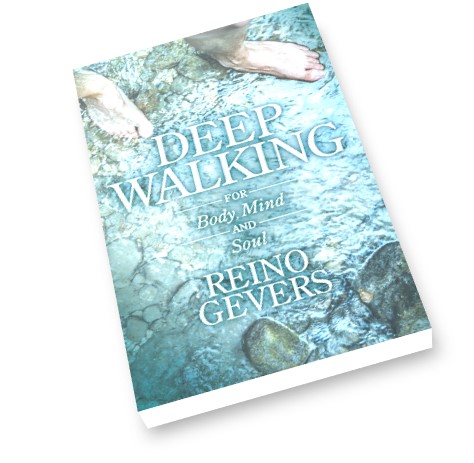
P.S. I’m excited to announce the release of my latest book, “The Turning of the Circle: Embracing Nature’s Wisdom for Purposeful Living.” If you enjoy it, you might also be interested in my previous works, “Deep Walking for Body, Mind and Soul” and “Walking on Edge: A Pilgrimage to Santiago.” You can find all of these titles at reputable bookstores near you.
“It does not matter how slowly you go so long as you do not stop.”
– Confucius
A spider will seldom build its web between two hard objects, rather choosing flexible places such as blades of grass or corn so that when a strong wind comes it will not tear the masterpiece asunder. It will go with the flow, bending and finding balance with the forces of nature.
In the same way body and mind need to find connection with the internal rhythm that is soul purpose and meaning. Sadly, what we are currently seeing in the collective mindset is very much the hardening of attitudes and beliefs.
The fixed mindset and fear
A fixed mindset and fanaticism of all persuasion come from a place of darkness, fear and uncontrolled toxic emotion. The fear is rooted in fear of change that results in the desperate clinging and hardening of position to an illusory place of safety. The dancing monkeys in the head are preoccupied with thousands of thoughts a day revolving around the fear of loss and fulfilling basic external needs.
As we face the challenges of an ever more dynamic world with massive economic, social, institutional, and psychological change, resistance to the disruption of the status quo is increasing.
But this is also a time of great opportunity. There is elevation of consciousness if the fear can be transmuted into courage, and opportunity can be seen in creating a new earth.
In the words of Suzy Kassem: “Sometimes we have to soak ourselves in the tears and fears of the past to water our future gardens.”
Living a life in the Having or BEING
The ego mindset is preoccupied with having and chasing after someplace in the distant future when life can start happening, and a life of happiness can finally be lived. The heart mindset is about living to BE. In BEING fully in the present moment connection to soul purpose and meaning can be found. Our beliefs and values provide the roadmap of the path we choose to walk.
Discontent, resentment, and anger reveal that values and beliefs are misplaced and that they need to be reconfigured and realigned. The higher senses are muted. The general energy frequency of mind and body is lowered and fail to perceive the whispers from the universe. Hardened attitudes and beliefs separate from true being and soul connection.
There is a wonderful phrase from Jesus in the original Aramaic version of the Beatitude: “Tubwehun I’ makiche d’hinon nertun arha.” This roughly translates to: “Renewal to those in emotional turmoil and blessed are those who can soften that which has hardened in their bodies.”
Moving forward from a place of unhappiness can be the biggest change motivator. Remaining flexible and bowing with the wind to find that equilibrium is what nature teaches us. Our destiny is ultimately elevation of consciousness and growth. It’s opening the window to the soul and allowing the light of beauty, harmony and love to enter the room.
During the past week I received reels of video footage from friends and family in South Africa revealing horrifying images of carnage and destruction. Thousands of looters were burning and destroying shopping malls and vital infra-structure with a government obviously too weak or incompetent to restore order.
It appeared as if all social order was collapsing. But amid all the chaos were signs of hope. Communities of all races got together to defend their homes and properties, gathering together for prayer, giving each other hope and volunteering to clean up in the aftermath.
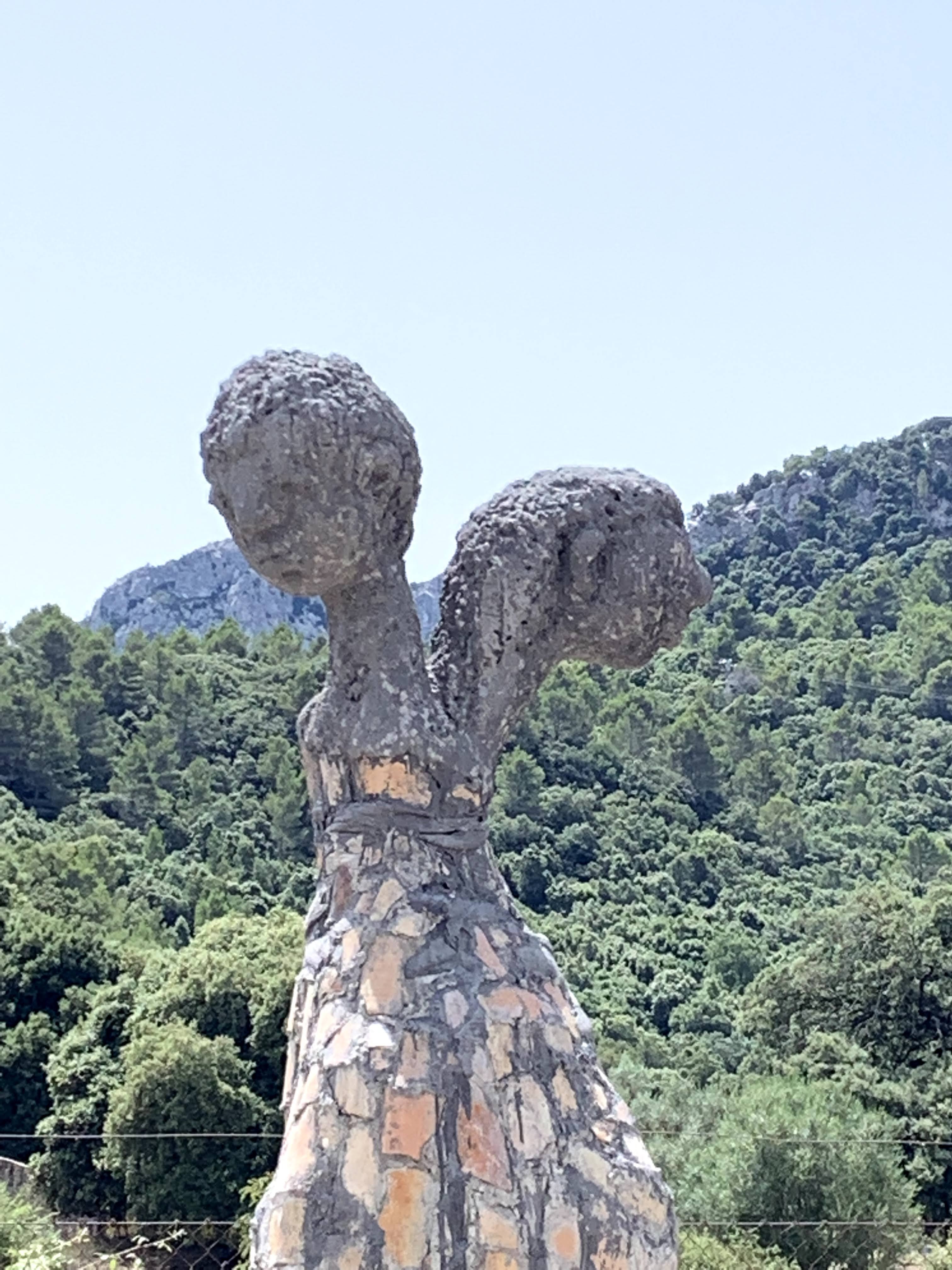
Works by the Majorcan artist Joan Bennassar
South Africa is in many respects a microcosm of global problems highlighting race and gender issues, cultural diversity, and the huge disparity been rich and poor. The economic fallout from the pandemic has entrenched deeply underlying social and political frictions.
Inflection points bring out the best and the worst in humanity
Sharp inflection points, challenges and conflicts inevitably bring out the best and the worst in humanity. During my years as a reporter in South Africa I witnessed clergymen selflessly serving the poor and downtrodden in the poorest township slums. The country has brought forth leaders, poets, authors, musicians, sports and film stars admired all over the world. But some of its people were also responsible for terrible human rights violations and could be described as “the very personification of evil.”
Sometimes such contrasts can be found in individual persons. In the final years of apartheid Adriaan Vlok was the minister of police. He was the man responsible for bombing the headquarters of the South African Council of Churches and trying to assassinate its secretary general. He later publicly apologized for his actions, washed the feet of his former enemies and later ran a child feeding charity funding it mostly with his own pension.
Major paradigm shifts are underway
At the start of the 21st century we are seeing major social, political and economic paradigm shifts. Human knowledge and change has increased exponentially compared to previous generations. The American inventor and futurist Ray Kurzweil argues that whenever a technology approaches a barrier, a new technology is invented crossing that barrier. He predicts that such evolutionary shifts will continue to become increasingly common, leading to profound technological change and rupturing old orders.
Digital technology is at the forefront of a doubling of human knowledge every 13 months. Just to put this into perspective: In the year 1900 it took about a century and by 1945 it had been reduced to every 25 years. This “Knowledge Doubling Curve” was first created by Buckminster Fuller in 1982.
Cultural leaps are not integrated mentally and psychologically
Such “cultural leaps” pushed by technological advances create enormous opportunity for the educated, computer-savvy middle classes with access to high-speed Internet. But we are left with less time to cope and integrate such changes mentally and psychologically. More knowledge does not mean more wisdom. A growing number of people respond to the massive cultural and economic changes by walling themselves off in radical political and religious “tribal bubbles.”
The large pool of people employed in manual jobs are no longer needed in an increasingly automated economy. Whether we are looking at the unemployed in the former industrial cities of the United States, the coal-mining areas of northern England, or the “yellow vest” citizens in low-paying jobs in France the picture is very similar. There is a growing populace feeling left out, having nothing to lose and who are open to the rhetoric of the professional deceivers and demagogues.
Those tech concerns who have reaped the most benefit from the digital revolution will have to learn to share their wealth by at least paying taxes in proportion to their earnings. This revenue can be used to invest in improved education, infra-structure, health and upliftment of poor communities.
The law of yin and yang
When things fall apart during times of crisis it is a wake-up call. It is not a time to blame so-called “instigators” but to look at the bigger picture. We need to ask questions and seek answers as to why there are so many very disgruntled, angry and unhappy people around us.
In the Chinese philosophy of yin and yang an illness always manifests itself when there is an imbalance between the polar laws of life. An imbalance causes first disharmony, then conflict and ultimately leads to destruction. When the scales tip into one or the other extreme we get to a tipping point.
Nature inevitably tries to restore the balance so that all within the system can survive – in the case of the human body, the different organs interrelating and working in harmony with each other to maintain physical health.
Humanity is currently not only battling a deadly virus but also having to deal with huge environmental, economic and social challenges. I would like to believe that humanity is edging ever closer to breaking through that barrier toward a new horizon of elevated consciousness and opportunity.