Tag Archives: humanity

Your Superpower in a Loud Society

Knowing yourself is the beginning of all wisdom.”— Aristotle

Standing guard at the doorway of your mind has become essential to maintaining spiritual and mental health in an age where our minds are drowning in information but thirsting for wisdom.

What you feed your mind, you ultimately become. A few careless minutes scrolling on your smartphone can trigger a cascade of emotions that can shape your entire day.

If you are reading this, you are likely one of the few who is actively reflecting on what is happening to us collectively.

Conflict and social disruption will always be part of the human condition—we are imperfect beings, after all. But we also carry within us the profound power of choice.

When the fringe becomes the megaphone

My impression is that the darker impulses of humanity are being amplified through the very technology meant to connect us. Fanatical fringe groups and those consumed by malice spend countless hours attacking others with hate-filled messages. Social media companies do little to halt this simply because emotionally charged content fuels engagement—and engagement fuels profit.

We may believe we are in control of what enters our minds, but for most people this is not true. Social media and search engine algorithms quietly track our behavior and serve up the content we are most likely to consume. In doing so, they shape not only our preferences, but our thinking.

Echo chambers of belief

Beliefs and opinions are constantly being reaffirmed within separate realities—information bubbles where each group hears only the echoes of its own worldview. Families, friendships, communities, and even congregations are fracturing along these invisible but powerful dividing lines.

What we need is a collective pushback from the quiet majority: the rational, thoughtful, grounded people who do not fall for emotional manipulation. That resistance begins by asking simple but profound questions:

Is this information expanding my energy or diminishing it?

Is it helping me grow, evolve, and reach my full potential?

A common misconception is that knowledge, information, and education alone equal wisdom. Yet many highly intelligent people refuse to learn from their mistakes, cling to fixed mindsets, and resist deeper reflection—never realizing they have been backing the wrong horse all along.

The power of who and what you surround yourself with

True wisdom is innate knowledge shaped through experience. It is the quiet confidence of intuition and higher consciousness. When you choose to surround yourself with wise friends, nourish your mind with spiritual teachings, and seek guidance from grounded mentors, you naturally grow in wisdom.

Equally essential is practicing self-care by setting firm boundaries with people, media, and environments that deplete your mind, body, and soul. Self-care is not indulgence—it is alignment. It is taking time for silence, contemplation, and reconnection with your inner life.

Choosing this path gradually fills your life with greater happiness and contentment because you begin building a bridge to your soul. Your actions shift from serving the ego to serving the greater whole.

Reino Gevers – Host of the LivingToBe podcast

P.S.: If you enjoyed this article, you might be interested in my latest book, Sages, Saints, and Sinners. Get it today on Amazon, Barnes & Noble, and wherever good books are sold.
Leave a comment

Filed under meditation, mental health, psychology, purpose, spirituality, Uncategorized

Regression or Awakening?

Is humanity sliding back into conflict and cultural regression or are we standing at the threshold of, an era of peace, prosperity, and progress on every level?

I’ve been reading The Changing World Order by Ray Dalio, whose research into the cyclical rise and fall of empires is both sobering and fascinating. History, it’s said, never repeats itself—but patterns do. And for thousands of years, they have shaped the destiny of nations and civilizations.

Today, we find ourselves in a remarkable moment. Humanity is literally creating a parallel intelligence through AI—an evolution that will profoundly transform our world. Since the 19th century, the global economy has gone through repeated waves of disruption, followed by bursts of innovation and rapid growth.

According to Dalio, those who recognize these cycles early tend to emerge stronger, while those clinging to the past often struggle. History shows that generations shaped by hardship and resilience create wealth and progress—only for their descendants, raised in comfort, to grow complacent and begin the downward turn. The result? Rising inequality, social unrest, political polarization, and eventual fragmentation. Sound familiar?

The good news, as Dalio notes, is that downward cycles tend to be shorter than the long upward phases of creativity, optimism, and expansion. Each decline, though painful, clears the way for renewal.

So how can we prepare on a personal level?

Embrace change. Disruption is often a cleansing force, clearing the old to make space for the new. Shift your mindset. See the universe as working for you, not against you. Trust the seasons. Nature teaches us that endings are never final—they are part of a larger rhythm of rebirth and growth.

If we learn to move with the current rather than resist it, we may discover that what looks like decline is really transformation. Go with the flow of the river—and you’ll find yourself carried forward into the next great awakening.

Reino Gevers – Host of the LivingToBe podcast

P.S.: If you enjoyed this article, you might be interested in my latest book, Sages, Saints, and Sinners. Get it today on Amazon, Barnes & Noble, and wherever good books are sold.
Leave a comment

Filed under organisational structure, psychology, Uncategorized

Art as a Lens: Exploring History and Human Experience

Great artists possess the rare ability to pierce through the veil of the ordinary, revealing the deeper truths that lie beneath life’s surface. In times when power distorts reality and fear stifles truth, their work becomes a courageous act of revelation.

A few days ago, I was vividly reminded of this while visiting the Tate Britain gallery in London. Entrance to most of London’s famous galleries is free, and it’s a great way to spend a few quiet hours in a big city.

I was particularly struck by the works of the late 17th and 18th centuries. The expanding British Empire was marked by conflict, built by the sacrifices of soldiers and the toil of slaves and factory workers. Child labour was common, and women were condemned to giving birth and running the household.

Subtle hints beneath the surface

Artists were often commissioned to glorify the king and the empire, yet beneath the surface of landscape paintings, market scenes, and depictions of mixed-status couples, subtle traces of class divisions and social tensions quietly emerge.

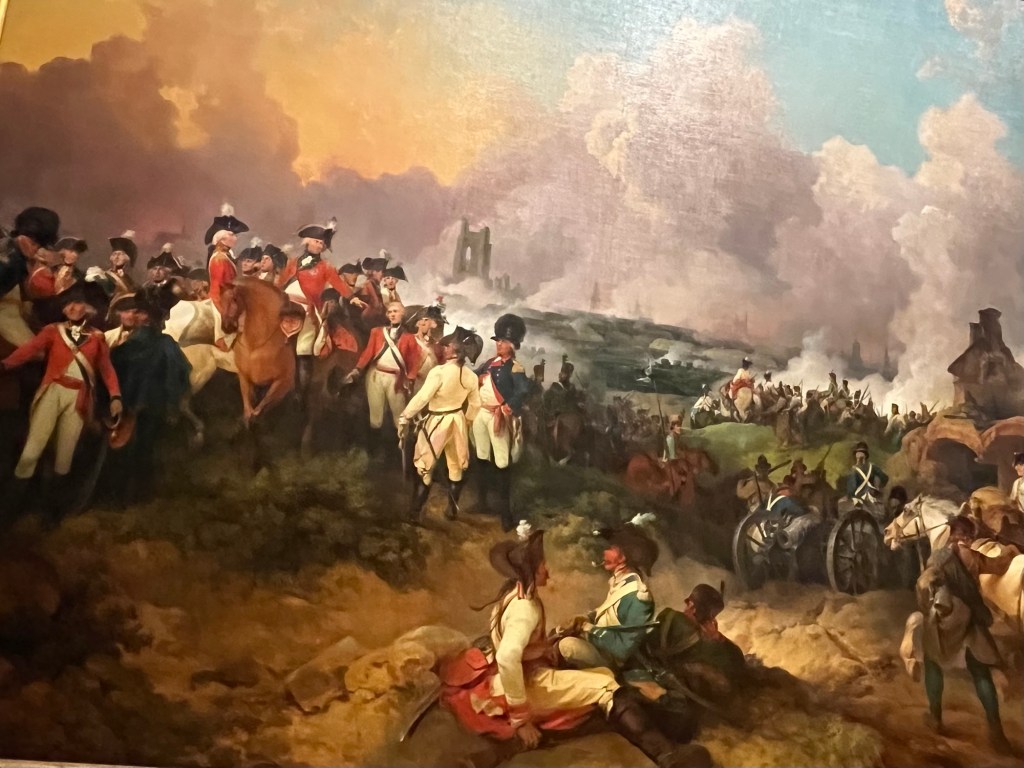
The tumultuous times of the late 18th and 19th centuries, along with global wars, came at a huge cost, marked by massive taxation for ordinary people, widening wealth gaps, poverty, and unemployment. Artists responded by painting dramatic battle scenes or images that either evoke a Romantic past or feelings of awe and terror.

Art and spirituality

Much of religious art was commissioned by monasteries in medieval times to convey the gospel because most people were illiterate. In contemplation of the art, the individual had a unique gateway to experiential spirituality.

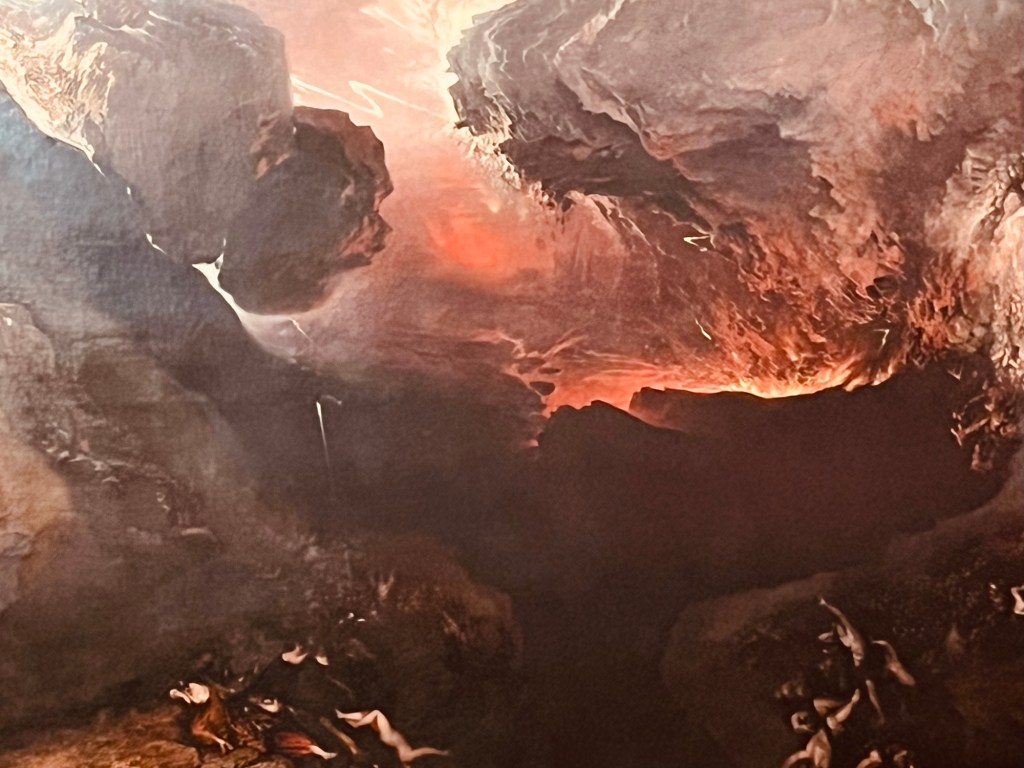
Apocalyptic imagery from the Book of Revelation reflects the deep anxieties of a time when rapid technological and social upheaval left many feeling unmoored. Long-held certainties, norms, and values were beginning to crumble. In many ways, these ancient fears echo our own and mirror the disruptions in today’s world.

Artists sensing underlying tensions

Major social and political shifts are often preceded by conflict and upheaval. Artists sense these underlying tensions long before they burst into the open ,but also give some cues to a brighter future.

Art offers us a unique lens through which to view the past, revealing not just historical waymarkers but the deeper rhythms of human experience.

History moves in cycles. Out of hardship and resilience emerges renewal and growth, only to give way once more to seasons of disruption and decline. Yet, from each winter of decay, a new spring is born, reminding us that regeneration is woven into the very fabric of life.

Reino Gevers – Author – Mentor –Speaker

P.S: If you enjoyed this article you might be interested in my very latest book: Sages, Saints and Sinners Get it today on Amazon, Barnes & Noble and where all good books are sold.

Leave a comment

Filed under art, Uncategorized

The tree of life

Some 2,000 years ago a soul incarnated into the family of a simple carpenter and his wife in the town of Nazareth of what was then part of the Roman province of Judaea.

Jesus of Nazareth was to change the world for generations to come and elevate human consciousness to a new level.

From an early age, the scriptures tell us, Jesus astounded the temple priests with his knowledge and wisdom. By the time he was a young man his revolutionary teachings and miracle healings were drawing huge crowds and followers.

The threatened priesthood

The priesthood of the day saw him as a grave threat when he exposed their hypocrisy and their literal interpretation of the scriptures.

Jesus led by example showing us that service for the downtrodden, the sick, the vulnerable, and the discriminated minorities was the stepping stone to creating a life of bliss.

The God-given meaning and purpose of life is closely intertwined with the unraveling of the veils covering the soul and living who you were born to become.

It was far removed from abiding to the rules and regulations of a belief structure controlled and imposed by the priesthood.

Photo by Pixabay on Pexels.com

Ancient scriptures revealed

The long hidden texts of St. Thomas, discovered only in recent times, reveal early Christian teachings deeply embedded in experiential Spirituality and multi-layered interpretation that read much like Zen Koans of Buddhist tradition. Jesus is quoted as saying:

“Rather, the kingdom is inside of you, and it is outside of you. When you come to know yourselves, then you will become known, and you will realize that it is you who are the sons of the living father. But if you will not know yourselves, you dwell in poverty and it is you who are that poverty.”

This reminds much of the inscription in the Ancient Greek Temple of Delphi: Knowing Thyself, Knowing who you are not and then finding the God within – or your truth

Jesus was crucified in a place called Calvary in Jerusalem at the age of 33. In Kabbalistic teaching 33 is a magical number. It is the number of steps on Jacob’s ladder on which the angels walked bringing the wisdom of heaven unto earth or aligning with the higher (Christ) self.

Calvary in its original Hebrew form means “place of the skull.”

The arbor vitae in the brain is also described as the tree of life. It lies within the center of the cerebellum and helps provide valuable sensory information to the brain, protruding from the skull.

In Kundalini Yoga energy rises up the 33 vertebrae of the spinal cord to the seventh chakra located at the crown of the head, illuminating the third eye or pineal gland, your spiritual consciousness.

Jesus’ crucifixion and resurrection after three days is ultimately a story of salvation from suffering, after transgressing through the dark night of the soul.

There is a surrendering to forgiveness and grace. After a point of great suffering and doubt Jesus could look upon the people causing his suffering and forgive, knowing that it all ultimately had a higher meaning.

Sacrifice and expansion of consciousness

Making sacrifices expands your conscious awareness. When you transmute the lower energy vibrations rooted in the emotions of fear, anxiety, greed and hate, you achieve Christ consciousness – the 33rd degree of consciousness – unconditional love.

According to the Mystics God is un­separated from all things, for God is in all things and is more inwardly in them than they are in themselves.

St. Augustine is quoted as saying that the soul has within her all knowledge, and whatever we practice outwardly serves only to awaken that knowledge.

In places of solitude and in the quiet spaces of nature the cracks open to the wisdom and window of your soul’s longing, to the depths of your purpose and destiny – to the Christ within.

Reino Gevers – Author – Speaker – Mentor

One more thing...If you have found this article interesting you might want to subscribe with the “follow” button above or recommend my FREE weekly Blog to friends and family. My books can be ordered at all places that sell good books in both paperback and kindle.

Leave a comment

Filed under happiness, lifestyle management, mental health, self-development, Uncategorized

One step forward, five steps backward

Recent events create the impression that humanity is moving five steps backward to a dark era dominated by tribal allegiances, superstition, xenophobia, and intolerance. But are things really so bad and what lessons can we learn from history?

Russia invades a sovereign country triggering the largest refugee crisis in Europe since World War II. There is the mindless bombing of civilian targets, and wanton destruction of cities, towns, and villages.

At the same time, nearly every country in the world is feeling the impact of human-induced climate change with unprecedented heat waves, floods, and other extreme weather conditions.

 A sizeable minority of people have retreated into tribal bubbles, affirming each other in the most outlandish conspiracy theories, lies, and pseudo-scientific postulations.

We’ve been there before

It’s small comfort but humanity has been there before. Evolution takes place in cyclical seasons and we have much to learn from history and past response to unforseen external events.

Individuals respond to a crisis that they cannot control in different ways, often seeking simple explanations to complex problems. When humanity had to deal with the black death, or bubonic plague, in the Middle Ages, there followed a wave of pogroms against Jews and the burning of thousands of innocent people at the stake. External catastrophes were interpreted as a punishment from God for “sins” committed mainly in their view by minorities and those who dared to differ from the mainstream.

Photo by Pixabay on Pexels.com

Humanity currently finds itself at a similar inflection point where the environmental crisis, economic hardships, and mental health challenges are painful to process. But we are a long way from burning people at the stake.

The resurgence of 18th and 19th-century nationalism in many countries is merely the last desperate battle of a macho culture that has long outlived its purpose. The new humanity has a softer, feminine side that emphasizes restoration rather than exploitation, resolution of conflict through peaceful dialogue instead of autocratic dominance, and diversity of race, color, and gender. The new spring already sees a growing movement of experiential spirituality liberated from institutional religion that tells people what to believe and how to behave.

Major external and internal changes always go hand-in-hand with pain linked to the difficulty of releasing that which once was and is no more. If you want to really grow and expand your life on all levels you have to release that which is holding you back.

The hurt that comes with change is short-lived compared to a life not lived, and years spent suffering in quiet misery of escapism that includes addiction,  procrastination, and external distraction.

At some point, the pain gets too much. That is when you take the five steps backward to gather the momentum that catapults you forward. A relationship has reached a stage when only separation is a solution. A safe and secure job has become so stressful that different and more fulfilling alternatives are sought to earn a living.

The body and mind send early signals when something is not in synchronicity with soul destiny. A tightness, pain, or hollow feeling in the gut is often the first indication “that something does not feel right.”

You will have lost control when you are on the treadmill of external distractions or in the fight or flight response of the brain’s limbic system.

Seizing back control  

“I am the master of my fate, I am the captain of my soul.” The words of William Ernest Henley’s famous poem “Invictus” is a rallying cry when times are rough and seemingly insurmountable adversity looms.

Practicing awareness sharpens the mind’s toolkit. You will be getting much better at differentiating between what is truth and authenticity and what is manipulation, and deception.   

  More than ever you need to stand guard at the doorway of mind and body:

  • What foods nourish and boost my immune system?
  • Which friends positively uplift, support and affirm?
  • What information that I hear, see and read is helping me grow spiritually into a better human being?

Reino Gevers – Author – Mentor – Speaker

One more thing...If you have found this article interesting you might want to subscribe or recommend my FREE weekly Blog to friends and family. My books can be ordered at all places that sell good books in both paperback and kindle.

2 Comments

Filed under mental health, mental-health

Is humanity doomed?

A crew of fishermen sailed far onto the ocean. They waited patiently to pull in their catch when one of the men suddenly started punching a hole in the boat with an ax. Aghast the others pleaded with him to stop as they would all sink and drown. Unperturbed the man responded: “But this is my spot and I can do here as I please.”

The analogy is fitting when I read and hear arguments from friends who are still refusing to get vaccinated against COVID. Apart from arguments that it is “all a plot from big pharma” to the many side effects a vaccine could have, I’m also hearing that “it’s my body and my choice.”

Almost certainly you will also have such friends and family members. Engaging in an argument with them is wasted energy. You can only hope that they will at some point change their mindset.

Once an opinion becomes a belief and part of ego-identity, people hardly ever change their minds. An ego-mind will never admit that it was wrong and had all the time placed its bets on the wrong horse.

The pandemic has many lessons for humanity

The pandemic has many lessons for humanity as it transitions to the higher consciousness and the realization that we are one humanity. At the same time, we are seeing massive pushback from that side of humanity that refuses to progress into the new era and is clasping to outlived egocentric ideologies.

The virus is showing little regard for geographic boundaries and rich nations are beginning to realize that vaccines can’t be hoarded and should be made available to every human being on the planet. Societies are at the same time being torn apart over the question of how much we are willing to sacrifice our individual liberties and freedom of movement to protect the most vulnerable amongst us.

Like the man trying to cut a hole in the boat, there are limits to our high western ideal of individual liberty and freedom. It stops at that cutting edge where individual behavior and choice negatively impact society and humanity as a whole. Our societies would indeed be poorer on multiple levels if we lose our compassion for the weakest amongst us.

Our other big challenge, the climate crisis and humanity’s impact on entire ecosystems, is likewise showing us that we can only survive if we agree on some basic values and truths on how to keep the boat afloat.

Photo by Nuno Obey on Pexels.com

The fear of change

Every crisis at the same time lays bare where action needs to be taken. The solutions to winning the war over the pandemic and solving the climate crisis are well known. But humans are naturally averse to making changes, especially taking action that involves personal sacrifice.

In the same way, people will remain in notoriously dysfunctional relationships for years or stay in unhappy jobs because they are more afraid of change than remaining in the status quo. For, at its lowest denominator it remains a “predictable place of safety.”

However, there inevitably comes a point where the pain of the status quo becomes so painful that you will be galvanized into action. It’s like the alcoholic denying he has a real problem for many years until that one experience or epiphany has such impact that it pivots him into going into rehab.

You do not have to wait for that big moment of pain and darkest night of the soul moment. The universe, God, or divine intelligence, will always be dropping waymarkers along the way when you are moving in the wrong direction.

When you try to force the boat upstream you will eventually lose willpower and energy. By imposing or forcing an issue you inevitably go into tension. A solution can never be found during a stressed-out state of mind. A high level of stress hormones puts the body in a fight or flight mode. The solution might be right in front of you and you will not see it.

This is why we need a good balance between stress and recuperation cycles. Your mind will answer the most vexing question if you learn to put those dancing monkeys in the head at rest by learning to relax body, mind, and spirit.

Stress always begins with a thought and mostly it is about things outside of your control. If you adopt the attitude that ultimately everything serves a purpose and in some way happens for you instead of against you, everything becomes easier to deal with.

Alignment exercises can be a huge help. These could be anything from taking a deep walking nature meditation, alternate breathing, yoga, qi gong, and tai chi. The ancient low-impact body arts are becoming ever more popular methods of reconnection and alignment into that inner space of truth and authenticity.

Reino Gevers – Author – Mentor – Speaker

One more thing...If you have found this article interesting you might want to check out our courses, retreats and books and ask others to also subscribe to this Blog.

Leave a comment

Filed under mental health, mental-health

Accepting the enemy within

Societal divisions along cultural, racial, gender, financial, political, and religious friction points become particularly pronounced during times of crisis when the fear demon gets stoked by the professional deceiver.

In the confrontation with the opposite, identity and belief are defined. There is good and bad, black and white, rich and poor, Christian and Muslim. Reality is far more complex and in myriad colors and shades of grey.

Neither yin or yang is absolute 

This is why the yin and yang symbol from the Daoist/Taoist tradition is such a beautiful concept of two halves forming the whole. Neither yin or yang is absolute. Each contains the beginning aspect of the other in a constant flow like night turning into day and day turning into night. The female aspect also has male aspects and the male aspect something of the female.

Too much yin or too much yang in any system creates an imbalance, whether in nature, body functions, or economic or political structures.

Accepting the shadow

Swiss psychiatrist Carl Gustav Jung wrote, “Unfortunately, there can be no doubt that man is, on the whole, less good than he imagines himself or wants himself to be.  Everyone carries a shadow, and the less it is embodied in the individual’s conscious life, the blacker and denser it is.”

We are all susceptible to burying parts of our character that we find unacceptable in the subconscious mind. The problem is that if we don’t face the shadow aspect at the doorway to our mind, it becomes too big to control.

For millennia the question arises: “If there is a God, why does he allow evil?”  Defining evil and recognizing evil can also be a difficult undertaking where the lie is sold as truth and truth gets turned into a lie.

Self-love and the acceptance of the human condition

When going into a meditation on the self you will soon find at least half a dozen positive as well as negative attributes of your own character. This is why it is so dangerous to fall into the trap of labeling an individual, a nation, a race, or a religious grouping. What Jung tried to tell us is that if you don’t accept this duality of light and shadow within, you will soon find yourself on a path of much self-created pain and suffering.

Only in unconditional acceptance of the imperfect human condition, and self-love of all aspects of the personality can grow the seeds of forgiveness, tolerance, and compassion.  This is at the heart of the teachings of Jesus and the ancient Mystics. The fundamentalist Christian concept of original sin meanwhile has been distorted into a culture of guilt and self-mortification. It is the perfect breeding ground for hypocrisy and intolerance.

The enemy is also the teacher 

In the pull between the identity of the opposites, spiritual growth and the evolution of character takes place. Are you kind, generous, compassionate, and loving?  Or are you rude, greedy, inconsiderate, spewing hate and anger? The decisions and habits we make on a daily and hourly basis can tip the scales in either direction.

We need the enemy, and the opposite perspective to gain clarity on our own core values and choices. Humankind has been given the power of choice. Are you falling into the shadow or going with the light?

The tragedy is that the character once held by the stranglehold of the shadow finds himself incapable of self-reflection. The phenomenon is widespread in some of the populist leaders of our time, trapped by their own ego and narcissism.

The image of self has become so clouded that the narrative is turned into its own truth. The deception of the emperor’s new clothes is revealed when it’s too late, and tragedy is upon us. At times it can be useful to turn the pages of that old history book to understand the events of recent months.

Reino Gevers – Author, Mentor, and Consultant

Resiliencepic

Subscribe and get my FREE Booklet:

“Resilience: What makes you strong during times of crisis?


Leave a comment

Filed under mental health, mental-health, Uncategorized

Why I despise racism

“No one is born hating another person because of the color of his skin or his background or his religion. People must learn to hate, and if they can learn to hate, they can be taught to love, for love comes more naturally to the human heart than its opposite.”

– Nelson Mandela – 

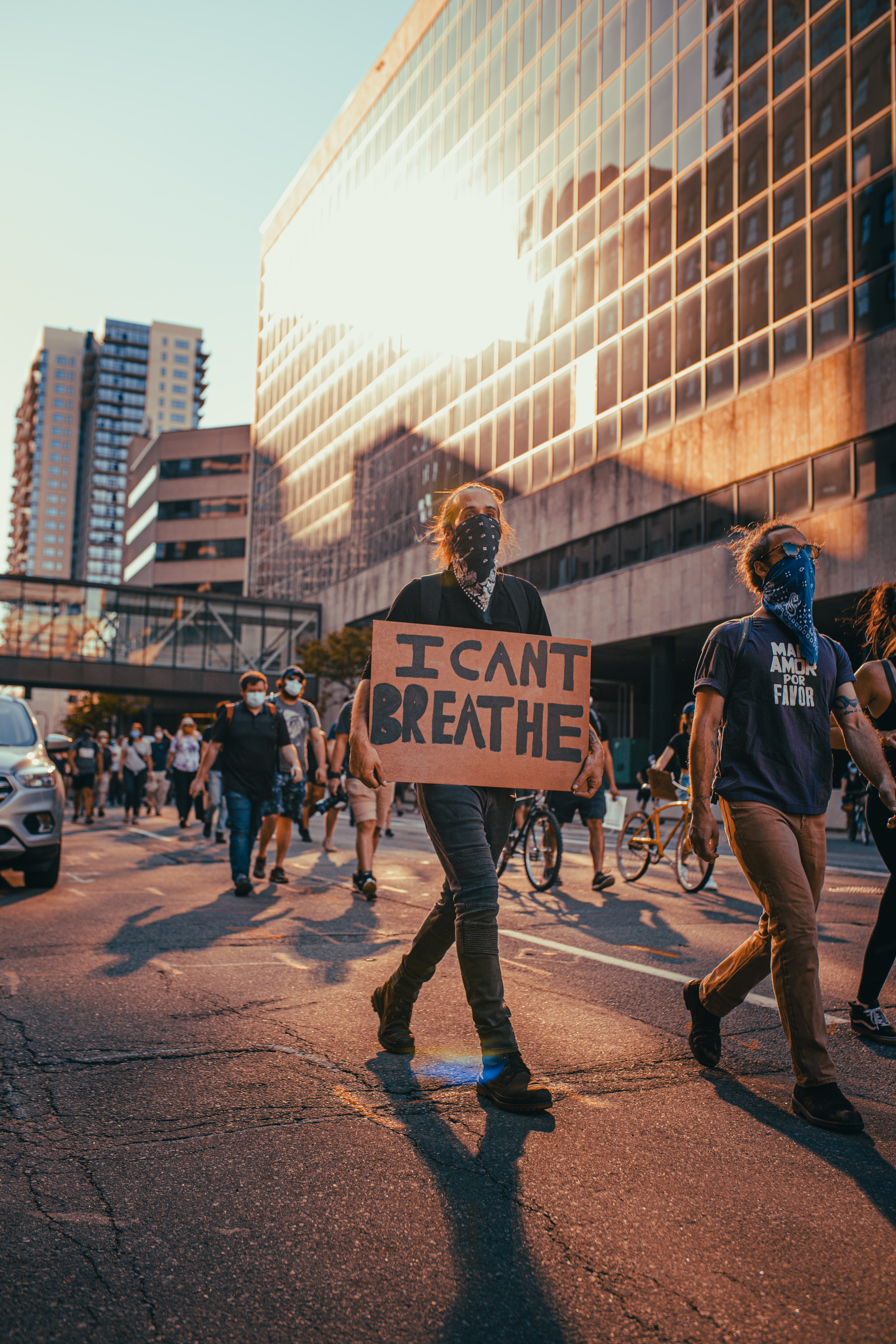
The image of a white policeman pressing his knee against the neck of a black man pleading for his life has triggered many emotions and memories from my own childhood growing up in apartheid South Africa.

To put it bluntly. Racism is wrong. It is evil and it comes from the lowest depths of human behavior.

Blog_June2020

Photo by Josh Hild on Unsplash

Born as a white person, I never questioned why blacks did not attend the same good schools that I attended, why blacks were refused entry to restaurants, had a different entrance at the post office, were arrested for breaking a night curfew in white areas or could not sit on the same benches as white people in the parks.

But some things happened where even as a child I started questioning the world in which I lived. I witnessed a farmer whipping one of his laborers. He showed no mercy as the man screamed in pain. This was the same man who only hours earlier attended holy communion in church and made a point of emphasizing how good a Christian he was.

Some years later the Lutheran pastor of our white church invited his fellow black pastor and his brass band choir to play in the white church. Despite the pleas from the pastor that this was not the apocalypse and that Jesus would not tolerate racism, the choir was met with extreme antagonism by white congregation members. I never understood the hatred spewing from the mouths of these people who all called themselves Christian.

Years later while working as a reporter for a newspaper in Durban,  I attended a court case where two black politicians, detained under the country’s emergency laws, explained in great detail how the white security policemen sitting in the same court meted out electroshock and other torture methods on them. I will never forget the smug grins of those stocky policemen who seemed very sure of themselves that they would never be investigated for their crimes.

I remember the sad and resigned expressions in the faces of the aged black women and men forced to leave their ancestral lands because a government had designated their luscious agricultural land as a “white” area.

I recall the terrible rage of a white shopkeeper when I walked into the black entrance of his shop.

Years later after returning to my home country for a visit, I drove through what I remember as a staunch white-only community.  The children were out in the playground. There were white, black, mixed-race, and Asian children playing together in what would have been unheard of in my childhood.

And, I remembered Nelson Mandela’s famous quote that nobody is born to hate. It is what the societies in which we live make of us. They can fuel the flames of the worst part of human character or sow the seeds of compassion, love, empathy, and the meeting of hearts that recognize the humanity within beyond the pigmentation of a man’s skin.

Reino Gevers – Author, Mentor, and Consultant

Resiliencepic

Subscribe and get my FREE Booklet:

“Resilience: What makes you strong during times of crisis?


1 Comment

Filed under mental health, mental-health, Uncategorized

Covid-19 and empty spaces

Thirty spokes meet in the hub, but the empty space between them is the essence of the wheel.” – Lao Tse – 

In the hurried rat race of our modern culture, we have become so used to treading the treadmill of HAVING that we have forgotten all about the BEING. The spokes of the wheel are what is visible but what is really the essence is that which is invisible and holds everything together.

Foto

It is in those quiet moments of loneliness where we are finally separated from the drumbeat of distraction that we find connection.

Western culture is in a state of spiritual disconnect, expressing itself in the fraying of economic, social, religious and other institutions and the pandemic rise of mental illness. The Covid-19 pandemic was just the trigger. The foundations of the house we have been building has been on shaky ground for some time in the constant pull between externation gratification and inner soul yearning.

Resilience is built from a good sprint and recovery cycle 

A life in imbalance with high stress not compensated by recuperation periods of empty space inevitably leads to a breakdown of the body’s natural defence systems. A healthy sprint and recovery system makes a body resilient to the storms of life. Check out my booklet on Resilience: What makes you strong?

These changes are leaving people anxious, scared, disorientated and confused. The first thing people do in such situations is to find someone to blame: The Chinese having started it all with lack of safety measures in a laboratory in Wuhan, politicians not having reacted early enough or having responded too harshly.

Making the best out of the current situation

If you are a spiritually orientated person you will find that such a mindset won’t get you far and make you feel even more miserable. On a personal level you can start by reflecting on your own mindset:

  • What opportunity lies waiting in the current situation?
  • What friends and associations can I cultivate via zoom or skype?
  • What clutter needs cleared in my immediate surroundings?

On a global level the universe is telling humanity with a major jolt to wake up. We cannot continue with the ways of old. We have to question our mobility patterns and what it means for the environment. We have to move from an exploitative economic system to a sustainable, restorative system.

In terms of the ancient Five Element philosophy, which finds many of its roots in Lao Tse’s teachings, gigantic natural or political disruptions do not come from nowhere but are unavoidable when we fail to see the signs of the elements being in imbalance. Nature is merely trying to restore balance when we initially only see the burned grounds before us. But with time grow the first seedlings from the ashes.

In our HAVING culture we have tried too hard to feed the hungry ghosts, exploiting nature to such a degree that major ecosystems and our entire global climate is in danger of collapse.

Living a life of BEING is being open again for those empty spaces where soul evolution takes place. Before our eyes we are seeing our world changing. Transmuting the emotions of fear and anxiousness and seizing the moment with courage and hope is the challenge.
Reino Gevers – Author, Mentor, and Consultant

https://www.reinogevers.com

Gevers-DeepWalking CVR.indd               paperback_cover_1

Order here

Leave a comment

Filed under lifestyle management, psychology, self-development, spirituality, Uncategorized, yin and yang

Lessons from nature on Covid-19

Even if I knew that tomorrow the world would go to pieces, I would still plant my apple tree – Martin Luther – 

From a spiritual dimension, everything has purpose and meaning.

When we look at the coronavirus or Covid-19 crisis from the perspective of the Five Elements, the metal element comes into play.

scott-webb-r4gqCg1iies-unsplash

Photo by Scott Webb on Unsplash

Covid-19 is attacking us where we are most vulnerable

We are seeing that the virus is spreading especially fast through contact and touch between humans with most of the deaths caused by an infection of the lung.

The metal element represents the body organs of the lung and large intestine on a physical level. They find expression in the nose, the breathing aspect, and the skin – the sense that we go into contact with our external world. The virus is ignoring boundaries of nations, ethnicity and religion. We are all in this together as a human race.

The insidious nature of the virus is that it is attacking us at the very essence of our behavior patterns. We greet each other with our hands as a gesture of politeness and friendship. We hug and kiss the people we love. We touch hands when we give comfort.

A time for introspection during lockdown?

The metal element moves the body energies inward.  This element represents the season of autumn when nature itself starts contracting. It reaches completion with the water element with plant life withdrawing into the roots and animals going into hibernation.

On the emotional level when the Element Metal is weakened we go into grief. Grief is much about the sadness about that which was and is no more. Our very world has changed and will never be the same.  There is much grief, sadness and fear (fear is the emotion of the water element) over that which has changed in our world and is no more.

Humanity has broken the code of nature

Our skin, which is the outer expression of the large intestine, is about setting and accepting boundaries whether we choose or deny body contact and what we inhale and exhale in energy around us. What we inhale we become. What are we inhaling in negative thoughts, news, and distractions? How much have we broken the code of nature in exploiting and destroying our own and the life systems of other living beings?

Moving from grief into courage 

Metal energy that is in balance has courage. Despite the fear, anxiety and melancholy sadness we are seeing many people rediscovering community. Health workers are working tirelessly to help others. Groups are helping to do the shopping for the elderly. Courage is facing the truth of the moment and regaining control. We don’t have control over the external circumstances but we have control over our reactions to them. Staying in the moment is the big challenge. It is acknowledging what is happening in the world, acknowledging our fears, our grief, and sadness, then to transmute those emotions into courage.
Reino Gevers – Author, Mentor, and Consultant

https://www.reinogevers.com

Gevers-DeepWalking CVR.indd               paperback_cover_1

Order here

applepodcast         

4 Comments

Filed under happiness, psychology, self-development, spirituality, Uncategorized