Tag Archives: nature

Fire out of control: A lesson from nature

A warrior finds a sharp stone, which he uses to sharpen the tip of an arrow. The stone slips hits another stone, and causes a spark that ignites the dry grass around. The warrior stares in fascination at the stone in his hand, then at the fire.

Like many inventions that heralded a new dawn in the evolution of mankind, the art of making fire probably resulted by accident.

Those people who could use stones to make fire made enormous headway. They could migrate to colder and darker areas of the world. Some developed a communication system with smoke signals, enabling them to control large tracts of land.

The art of making fire, at any place and time, and the smelting of iron, triggered numerous other inventions. Woodland was burned to make way for agricultural land.

Other people let the fire burn uncontrolled, destroying everything in their wake. Numerous myths, legends, and stories originated around fire. If left to its own devices, fire could indeed become a dangerous demon indeed.

In the Chinese teaching of the Five Elements, the fire element is where the heart, perikard, and small intestine are at play on both the physical and mental levels. People with balanced fire energy are good communicators and express themselves with vitality.

Inspirational leaders with heart energy

Some of the world’s great personalities stand out with a balanced heart energy, serving the greater whole and ideal rather than selfish needs: Jeanne d’Arc, Mahatma Gandhi, Florence Nightingale, Nelson Mandela, and the Dalai Lama, just to mention a few.

Much more mundane is constant irritability, disappointment with life, and apportioning blame to everyone else but the self for the miserable condition one feels. People who are unaware of their heart wish, because they are bombarded with the noise of the external world, often have an imbalanced heart element.

The fire element is much in imbalance when we see the rocketing numbers of people falling into mental and physical exhaustion with burnout. Stress starts with a thought and is a flight-or-fight survival mechanism ingrained in our DNA. It is indicative also of the epidemic numbers in cardiac diseases.

Humans are responsible for heating the atmosphere

On the macro level, we are depleting our natural resources as if there is no tomorrow. At the same time, we are putting the body and mind under constant stress, and robbing it of vital nutrients.

Looking at the broader macroscopic level, the fire element has, in the recent past, brought huge changes to our planet. Extracting fossil fuels that have been in the ground for millions of years and “burning” them in an unprecedented scale over the past two centuries has led to a massive increase of carbon dioxide concentration in the atmosphere. The science is sobering and will make the planet uninhabitable for humans within a generation if nothing is done.

Photo by Pixabay on Pexels.com

Today’s global warming is happening at a much faster rate today than it did in the warm periods between ice ages over the last million years. The massive forest fires in northern America and in southern Europe with summer temperatures averaging over 40 degrees Celcius this year is telling. The Fire Element is out of balance. In terms of the Five Element Philosophy nature always seeks a balance between the elements of wood, fire, earth, metal, and water. Interestingly we are experiencing flash flooding in other parts of the world at the same as the heat waves. Water is the balancing and controlling element of fire.

In Chinese mythology, the god of fire is called Hu Shun. Shu and Hu are the lightning. When it strikes, creating light amid chaos, new life is created. Images of the god of fire paint him with flowing long red hair and a beard, sweeping through the streets at night and seeking out the next house to be burned.

Because this God of fire is rather forgetful, he carries a list in his left hand of all the houses that are to be burned. In his right hand, he bears a fiery ball that unleashes the flaming terror. Picturing such an awesome figure, there was only one thing left to do. This god had to be pacified, come what may.

The scientist James Lovelock described our planet as a complex interacting and living organism in his Gaia hypothesis. In his book, A New Look at Life on Earth, Lovelock explores the theory that the Earth’s living matter—air, ocean, and land surfaces—forms a complex system that has the capacity to keep Earth a place fit for life.

“The self-regulation of climate and chemical composition is a process that emerges from the rightly coupled evolution of rocks, air, and the ocean—in addition to that of organisms. Such interlocking self-regulation, while rarely optimal—consider the cold and hot places of the earth, the wet and the dry—nevertheless keeps the Earth a place fit for life,” he writes. Lovelock argues that “if we see the world as a super organism of which we are a part—not the owner, nor the tenant, not even a passenger—we could have a long time ahead of us and our species might survive for its ‘allotted span’

Reino Gevers – Author – Mentor – Speaker

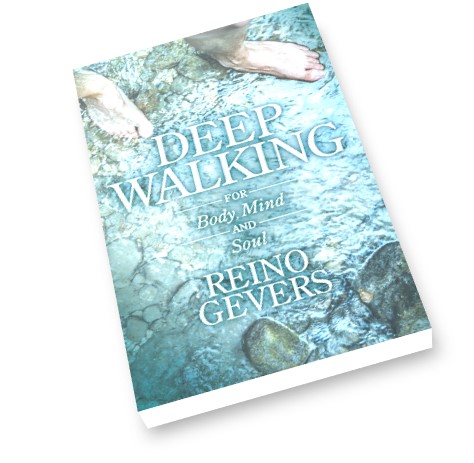
P.S. This is an extract from “The Turning of the Circle: Embracing Nature’s Wisdom for Purposeful Living” which has just been published. You might also find my other books “Deep Walking for Body, Mind and Soul” and “Walking on Edge: A Pilgrimage to Santiago” of interest – available where all good books are sold.

Leave a comment

Filed under mental health, mental-health

Celebrating community on a pilgrimage

One of the reasons I‘m hooked on making an annual pilgrimage walk on the Camino de Santiago is the wonderful people you meet on the way and the celebration of community with people from very different cultures, and religious backgrounds.

It is one of the few places left on earth where you meet individuals who open their hearts, discussing intimate details of their life with you, at times only minutes after meeting for the first time.

The hospitality of the locals on the Camino plays a role. Much of rural Spain still has healthy supportive communities where people meet in cafes and bars on a daily basis to have a chat.

The owner of a bar-hotel and restaurant business confided to me that the cafe part of his business was not really profitable but „closing this place for the winter months would be like closing the local church.“

A sense of belonging

While talking to fellow pilgrims in Santiago we agreed that many spiritual seekers on the Camino were finding a community and sense of belonging on this ancient path they were no longer finding in traditional religions.

As humans, we are hard-wired as social beings. Our relationships and social connections determine who we are. Strong connections and relationships are created when we share our feelings, inner wounds, and vulnerabilities.

Many people walking the Camino have seen their lives come apart on some level. Relationships that have broken down, the death of a loved one, financial loss, or having to deal with the diagnosis of a life-threatening disease. In sharing their stories pilgrims no longer feel “alone.”

Photo by Pavel Danilyuk on Pexels.com

There is experiential spirituality felt in a healthy community that emanates empathy, love, and kindness. Community is not only felt in a relationship with others, a higher deity but also in a commune with nature and the world around you.

It is walking in nature and bonding with people at the same time that makes the Camino such a magnet for spiritual seekers. This year will again register a record number of pilgrims on the path.

The celebration of the communal ritual

For this reason since ancient times humanity has embedded the celebration of community in religious rituals. Communal meals or rituals involving the sharing of food and drink can be found in ancient Greek and Roman religions, where a communal meal with the gods was seen as a means of establishing a bond or connection.

The Jewish Passover festival and the holy communion ceremony in Roman Catholic, Protestant, and Orthodox religions are celebrated as rituals of sacrifice.

The word “commune” has its roots in Latin, derived from the word “communis,” meaning “common” or “shared.”

In our modern era, we are seeing an explosion of “sharing” and “connection” on social media across continents – the result of a human yearning. Urban lifestyle without connection to natural surroundings and friendly neighbors increasingly leads to individuation, self-isolation, loneliness, and mental health issues.

Online “tribes or families” can never be a replacement for the physical community where there is unconditional physical contact – the holding of hands, a hug, and a kiss on the cheek. This became acutely obvious during the recent pandemic.

Ultimately we all yearn to be seen, to be heard, and to be validated in a positive sense. We want to belong and in that belonging, we find purpose and meaning.

Reino Gevers – Author – Mentor – Speaker

One more thing...My new book “The Turning of the Circle: Embracing Nature’s Wisdom for Purposeful Living” can now be ordered on Amazon and where all good books are sold. You might also find my other books “Deep Walking for Body, Mind and Soul” and “Walking on Edge: A pilgrimage to Santiago” of interest.

Leave a comment

Filed under Camino de Santiago, mental health, mental-health, Uncategorized

Finding purpose by realigning with nature

Taking a walk each day and realigning with the green and blue spaces of nature is very likely to bring about multiple positive shifts in your body, mind, and spirit. We are gradually becoming aware that we have lost something essential en route to modernity.

We have reshaped the external environment with roads, cities, and buildings in a way that is in disharmony with nature and harming our own health and well-being. It is time for a major rethink.

A study of 300 cities released by North Carolina State University in 2019 revealed that there was fewer crime and aggression in city areas close to parks and green areas.

According to Lincoln Larson, assistant professor at the university, “We learned that more green space was associated with lower risk of crime across neighborhoods in all 300 cities we studied. Burglaries, larceny, auto theft, and other property crimes occur less often in greener neighborhoods in every city in our sample. Violent crimes like murder and armed robbery were also less common in greener neighborhoods in nearly all the cities we studied.”

Being closer to nature reduces stress, bringing neighbors together and creating a sense of community.

The energy of subduing and conquering nature is a hallmark of the ruling patriarch. The male energy is rational, while the female energy is receptive and more intuitive. An imbalance between the male and the female aspect, the Yin and the Yang, has been responsible for an exploitation and declaration of war on Mother Earth.

It reached its pinnacle in the Inquisition of the Middle Ages when hundreds of thousands of women were burned at the stake. Women were much more closely aligned with nature, especially if they were healers and midwives. But their secret knowledge, passed on over generations in the female lineage, obviously was a threat to the male patriarch.

At a time of great poverty, war and diseases like the plague, these women often were at the forefront of healing, comforting and helping the distressed. Fennel seeds were great at releasing cramps, digestive problems, and increasing the milk supply of breastfeeding mothers. Mint leaves were used as antidepressants and for the treatment of asthma and nausea.

By the 15th century, the church started intervening, forcing the midwives to report every birth to the local parish, especially illegitimate and retarded children.

With their knowledge of contraception, and how to terminate pregnancies, the church saw the midwives as a huge threat to their authority, and sexual morale.

The herbal healers or “witches” and midwives lived dangerous lives in the 15th century as the church started dominating every aspect of the human life from childbirth to death. The Christian cross became the symbol for the suppression and oppression of the female aspect. Women were excluded from the priesthood and holding any higher rank in the church until this day in many denominations.

Interestingly, in the Spanish province of Galicia, we find a version of the cross that finds its roots in Celtic, pre-Christian times. On the one side we find the crucified Christ, while on the other side stands the female goddess, the Madonna. We have the male and female aspects equally depicted on both sides of the cross.

The discovery of ancient Christian scripts, including the Dead Sea Scrolls and the Gospel of St. Thomas, tells us that there was a time when women were at the forefront of spreading the early Christian gospels. Mary Magdalene, one of the apostles closest to Jesus, played a major leadership role in early Christianity.

There is no historical record that Mary Magdalene was ever a former prostitute possessed by demons as claimed in some of the scriptures.

Around the period 500 AD, the male patriarch systems started throwing the Yin and Yang, the natural complementation of energy between the male and the female, seriously out of balance. It has had a profound effect on the world that we have today.

The dominating male aspect has undoubtedly led to huge technological and material advances, unimaginable to the generations before us. But it has come at a huge price where we are exploiting Mother Earth to such an extent that most species, including our own, will not survive without a major shift in human consciousness.

It’s a common belief that during times of crisis, the thin veneer of civilization collapses with most people falling into egotistical and anti-social behavior.

But Dutch philosopher Rutger Bregman, author of the bestseller Utopia for Realists: And How We Can Get There, claims that humans are fundamentally good and want to do good.

“For every panic buyer, there are a thousand nurses working as hard as they can. For every hoarder, there are a thousand civilians setting up WhatsApp groups and Facebook groups and people in the neighborhood trying to help each other. I’ve been really astonished to see this explosion of cooperation and altruism in a very short period of time,” Bregman said in an interview with Deutsche Welle.

A global crisis such as the pandemic also leads to the realization that other global issues, such as the climate crisis that affects us all, can only be solved in cooperation at a global level.

Reino Gevers – Author – Mentor – Speaker

One more thing...This is an extract from my new book “The Turning of the Circle: Embracing Nature’s Wisdom for Purposeful Living”. It can now be preordered as a Kindle edition on Amazon. Paperback and Hardback versions will be available in July 2023.

Leave a comment

Filed under mental health, mental-health, Uncategorized

Nature and purposeful living

“No man ever steps in the same river twice, for it’s not the same river and he’s not the same man. Time is a game played beautifully by children.”—Heraclitus.

The seasons of life are in a constant state of expansion and contraction. Like the systolic and diastolic beating of a heart, we cannot escape the impermanence of life. During spring there is birth, growth in the summer, harvest in fall, and withdrawal in winter.

The notion that we are an integral part of nature and its natural laws was never questioned by the hunter and gatherer societies, and even so-called “primitive” societies today.

The ancient Chinese teaching of the Five Elements is very much about yielding to and synchronizing with the natural cycle of the seasons. The tenets of this philosophy is rooted in Taoist philosophy, dating back thousands of years when humanity did not see the world around us as a separate entity.

Timing with nature’s seasonal cycles

Great respect was given to the timing and expressed in elaborate ritual. There was a time to plant, a time to harvest, and a time to rest. This is still applicable today even though the necessity is clouded by the demands of modern life and its luring distractions.

Modern man has severed his ties to the natural order of things in his mad striving for material wealth and prosperity. Cut off from his spiritual roots and the natural order of things, he is filled with a deep sense of loneliness and fear, which seeks compensation for that void in boundless greed and substance abuse.

We know from numerous neurological studies that the sounds of nature, green meadows, and trees, or the gentle sound of waves breaking on the shore calm the mind.

The permanent hum of traffic noise in cities and crowded living conditions in the concrete jungles of an urban environment is alien to the human condition.

So what has led us to today’s disconnect? Paradoxically, religion, which is meant to align us with God or the universal intelligence has been abused in large parts by the institutions.

The Role of concept-based religion

A misunderstood Christianity has played a huge role in the estrangement of man from the natural world. The mystical part of Christianity was exorcised in the Council of Nicaea in AD 325. Roman Emperor Constantine I presided over the Council which defined the Christian belief and doctrine. While the mystical part of early Christianity left much room for individual spiritual experience, the doctrine clearly defined what had to be believed and what religious rules had to be followed. One of the consequences is that for centuries Christianity has had a false understanding of man’s role in nature based on the misinterpretation of the Old Testament in Genesis 1:28, in which man is given the cultural mandate to subdue and rule over the earth.

As in ancient Chinese philosophy, the old Greek, Egyptian, and Roman worlds, applied nature’s golden rule in the arts, architecture, and many other endeavors, striving to create synchronicity with nature.

On a collective level, we have to face the question of whether we have enough time to transform a system based on greed and exploitation, where only a small minority reap the rewards, into a value-based restorative nature-based system that serves the betterment of all living beings.

Reino Gevers – Author – Mentor – Speaker

One more thing...This article is an extract from my new book “The Turning of the Circle: Embracing Nature’s Wisdom for Purposeful Living”. You can preorder a Kindle edition on Amazon. Both Kindle and Paperback versions will be available in July 2023.

Leave a comment

Filed under meditation, mental health, mental-health, Uncategorized

Doing or Being?

Some years ago I was not in a very good place stuck in a dysfunctional relationship and a stressed-out job. My thoughts revolved around starting to live at some point in the distant future. A friend who took pity on me advised me to walk the famous pilgrimage route, the Camino de Santiago in northwestern Spain.

Like many first-time walkers on the Camino, I was obsessed about reaching my destination at a certain time in order to secure my place in a bunk bed in a pilgrims’ hostel. The Camino is in so many ways an analogy of life which is why it has become such a popular destination for modern-day spiritual seekers.

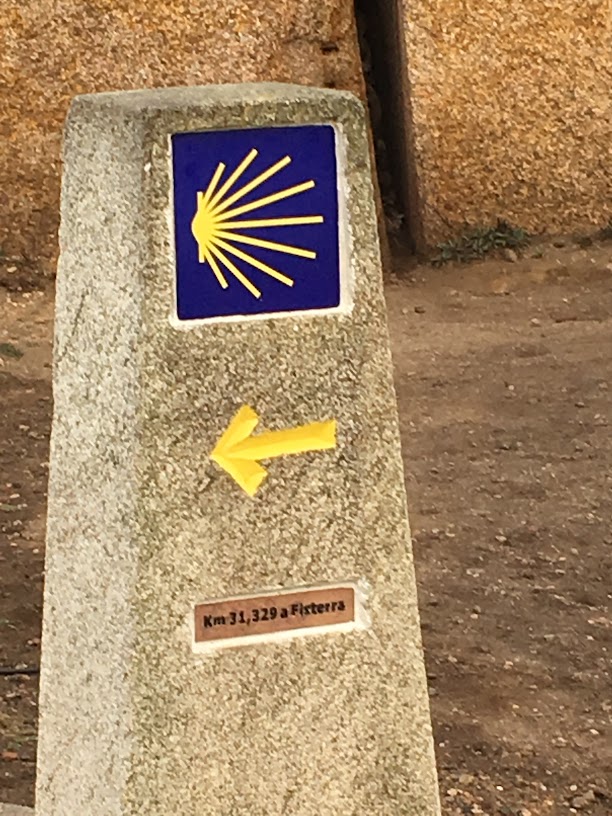
Walking too fast and missing the waymarker

With a backpack much too heavy, poor-quality hiking boots, and a hurting foot I was battling both physically and emotionally. There is a saying that if you walk the Camino like a hiker with physical intent it will force you into humility. While walking too fast, I missed the waymarkers and got horribly lost. At one point I had to seek refuge in a grotto during a heavy thunderstorm in the Pyrenees mountains, far off my route.

How many times in life does the universe send warning whispers that we have missed a waymarker and are on the wrong path? How obsessed are we with things we think we need but insist on keeping them in our backpack?

Forced to go much slower, I gradually felt my senses reawakening to the magic of the moment. I started inhaling the aroma of wild thyme, rosemary and oregano. I added mint to my water bottle. A singing blackbird followed me for part of the way. I befriended stray dogs and cats and met wonderful people who are still friends today. For the first time in many years, I felt an aliveness and vibrancy in my body.

Trapped in doing rather than BEING

Over the years, I’ve observed other pilgrims going through the same process. Hikers would pride themselves on the number of kilometers they had done that day. People doing the route on a bicycle would go into tunnel vision, oblivious to the sights and sounds around them. If you are trapped in the rat race of doing rather than BEING it is difficult to push the reset button overnight. At the end of the day, slow and mindful walkers would converse on the magical experiences they had that day while those in a race would look at them in disbelief.

So much of our lives are wasted carrying the weight of the past, and living in some distant future working for time-off at the weekend, the annual vacation, and the years when we can start living when retiring from a job we always hated. When the day finally comes, we live the final years of our life in regretful grumpiness of what was and is no more.

It helps to train your awareness that life is finite and that you will die one day. With your last breath, you will leave this earth into formlessness. You won’t be taking any of your precious earthly possessions with you. All that remains will be consciousness.

So you might as well stick around a little longer and enjoy the moment. Practicing mindfulness is ideally done in the stillness of nature.

  • Focus your attention on your breath. Observe your thoughts and sensations without judgment. By consistently practicing mindfulness, you can cultivate a heightened sense of awareness and presence in your everyday life.
  • Engage Your Senses: Pause and notice the sights, sounds, smells, tastes, and physical sensations around you. Fully immerse yourself in the present moment by bringing awareness to the details of your sensory experiences.
  • Slow Down and pay attention: Challenge yourself to slow down and be fully present in each moment. Whether you’re eating, walking, or engaging in any other daily activity, do it with intention and attentiveness.

Reino Gevers – Author – Mentor – Speaker

One more thing...If you have found this article interesting you might want to subscribe with the “follow” button above or recommend my FREE weekly Blog to friends and family. My books can be ordered at all places that sell good books in both paperback and kindle.

Leave a comment

Filed under Camino de Santiago, mental health, mental-health, self-development, spirituality

Walking like a pilgrim

Ancient cultures and religions for thousands of years worshipped nature as an expression of the divine. With technological progress has come a disconnect with mankind primarily seeing the external world as a means of exploitation and subjugation.

In order to survive as a species we need to reconnect to nature and our spiritual purpose. One of the most underestimated and effective means of realigning body, mind and soul is by taking a walk.

You could either see a walk as a daily physical activity to stay fit or alternatively go for a deep walk with a higher intention. Or, you could go on a meditative pilgrimage walk lasting several weeks with deep spiritual significance.

A hike is generally goal orientated. You are aiming to reach a certain destination, walk a number of steps a day or just carry out a recreational activity.

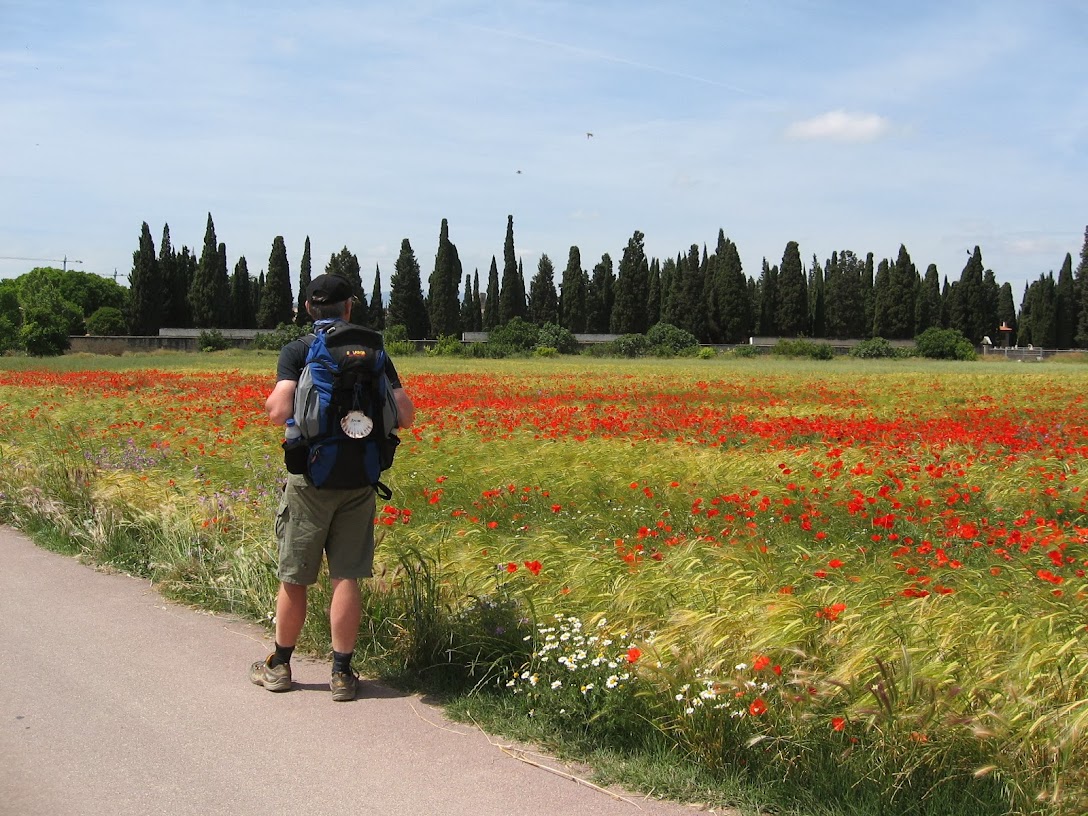
Over the years on my pilgrimage walks on the Camino de Santiago in northwestern Spain it is interesting to observe people starting the 500-mile (800-kilometer) walk as hikers purely as a physical endeavor or adventure and then transitioning into pilgrims.

There is a deep mystery about these ancient pilgrimage paths and walking in the footsteps of people who have walked these paths for hundreds of years. Their collective traces and memories seem etched into the cobblestones, waymarkers, dusty paths, and old chapels.

“It doesn’t take long for the Camino to start walking you,” a pilgrim said to me on one of my first walks.

As you find your natural rhythm and walk off the distractions of the “monkey-mind” caught in thoughts of the past or the future, you become increasingly connected to the natural world around you.

Photo by Akshaya Premjith on Pexels.com

Walking like a pilgrim

You don’t have to walk long distances to walk like a pilgrim. Instead of being goal-orientated it is all about walking with mindfulness, taking in the aroma of herbs along the path through your nostrils, hearing the water of a creek in the distance, enjoying the morning song of a blackbird, feeling the warmth of the sun on your skin and opening your eyes to what you see around you.

A pilgrimage walk is a destination with meaning, like walking from the magnificent 14th-century Wells Cathedral, Somerset England, to Glastonbury Tor – a significant spiritual place of worship since the time of the Celtics. But it could also be walking between an ancient oak tree and a bridge crossing a river.

It can also be a walk to resolve a particular question, an unresolved problem, or to say a prayer of gratitude. You could ask the universe for an answer as you do your walking and open yourself to the whispers from the universe in the form of signs and symbols. Sometimes the answer would come in a casual remark made by a stranger.

Many philosophers, writers, artists, and poets have found inspiration while walking. According to legend the Greek philosopher Aristotele taught his students while walking. The composer Johan Sebastian Bach in 1705 walked 205 miles from Arnstadt to Lübeck along the Baltic coast to find inspiration. The great Persian philosopher Rumi said about walking:

“Keep walking, though there is no place to get to. Don’t try to see through the distances. That’s not for human beings. Move within. But don’t move the way fear makes you move.”

Reino Gevers – Author – Mentor – Speaker

One more thing...If you have found this article interesting you might want to subscribe with the “follow” button above or recommend my FREE weekly Blog to friends and family. My books can be ordered at all places that sell good books in both paperback and kindle.

Leave a comment

Filed under mental health, mental-health

You are not alone

Our culture is dominated by the emphasis on the individual hero’s journey to fulfillment, self-expression, and success. It comes at a huge price, leading to social alienation, spiritual disconnect, and mental illness. For we humans are in essence a species whose survival can be attributed to successful group interaction and relationships with each other.

The seeds of this disconnect can be found in the philosophies and theologies underpinning the mindset that led to the industrial revolution in the mid-18th century. Individualism became the core ideology in the United States in the late 19th century heavily influenced by the “survival of the fittest” doctrine of Charles Darwin.

The “lone wolf” hero

The philosophies of Jean-Jacques Rousseau, Friedrich Nietzsche, and others had a huge influence on modern economic, political and educational thought. The “lone wolf hero” coming out victorious against all odds remains a central theme in the sports arena, movies, books, and plays.

What is not taken into account is that the hero in real life will almost always have relied on a network of support from others.

It belies the fact that from the day you were born you were fed, clothed, educated, and shaped into the person you are today by your closest associations. In his meditations, the 16th-century English scholar and poet John Donne emphasizes this point with the famous poem: “No man is an island.”

Photo by Pixabay on Pexels.com

The “relationship crisis” has led to the exploitation of the environment but in essence has its roots in the disconnect to the spiritual self. We cannot solve the environmental crisis without looking within.

Prior to the industrial revolution most of mankind was in sync with the natural world. Even today the still existing hunter and gatherer societies see themselves as an integral part of nature. The natural world is seen as a manifestation of the Creator of which mankind is one part.

Buber: I and Thou

German philosopher Martin Buber in his book Ich und Du (translated as I and Thou) finds that human life essentially finds meaning and purpose in relationships.

In this view, all our relationships ultimately bring us into a relationship with God or our Creator.

In the Christian mystic tradition, it is about finding God within. We are part of the creation matrix and not separate from it.

In the Gospel of St. Thomas, discovered at Nag Hammadi in Egypt in 1945, Jesus is quoted as saying:

“See, the kingdom is in the sky, then the birds of the sky will precede you. If they say to you, ‘It is in the sea,’ then the fish will precede you. Rather, the kingdom is inside of you, and it is outside of you. When you come to know yourselves, then you will become known, and you will realize that it is you who are the sons of the living father (Saying 3, p. 654.9-21).

This is closely related to the words of the Greek philosopher Pythagoras:

“Man, know thyself: then thou shalt know the Universe and God.”

When you know yourself and especially your shadow you create the foundation for going into an authentic relationship. Most relationships fail because the shadow of the subconscious is triggered by the “other”. This is when ego takes over with typical self-talk such as “my needs aren’t being met”, or “I don’t have space for myself”, and all the other sentences that start with “I need…”

Buber describes the “I and though” authentic relationship as going far beyond two people interacting. It is based on mutuality, directness, and intensity where an “in-between” becomes manifest. The relationship has a greater dimension than the individual contributions of those involved.

When one meets the other as Thou, the unique and separate qualities of the other are acknowledged within the framework of the commonality of humanness.

Buber saw human development within a relational context as social beings who need love and care from others to survive from infancy and throughout a lifetime. Human isolation and the absence of these relationional needs inevitably impact mental health.

Reino Gevers – Author – Mentor – Speaker

One more thing...If you have found this article interesting you might want to subscribe with the “follow” button above or recommend my FREE weekly Blog to friends and family. My books can be ordered at all places that sell good books in both paperback and kindle.

Leave a comment

Filed under mental health, mental-health

Managing your life with clear intention

It’s the time of year again when wishes are expressed and ambitious goals are set but when looking back at the same time the previous year. How many of those goals did you realistically achieve? Most New Year intentions are scuttled before the month of January is over.

Here is how you can better manage your goals and set out a clear plan of action for the coming months without falling into the typical traps.

All those “positive-thinking” self-help books are telling you to dream big and that nothing is impossible. Visualize your perfect life send the message out to the universe and voila your wishes shall be fulfilled. The disappointment is big when reality catches up. Sometimes also the dream come true can turn out to be a nightmare if it is not in sync with your soul purpose.

There are several steps that you can follow in better managing your life instead of blaming everyone from the government to your boss, spouse, or colleagues for being responsible for your dire situation.

Create a plan of action

Without a clear plan of action e.g. to exercise daily at a certain time to reduce weight or to set aside a certain amount in a savings plan per month, your intention will remain vague and merely a wish. See every small step of the plan of action as building the first bridge of many bridges toward what will one day manifest into that big dream.

Keep it simple and realistic

When writing down your goals you have to look at the baseline from where you are coming from. Is the goal a realistic objective for the coming months? Is it really achievable? Is the timeline realistic? If you set the goalposts too high you will soon get frustrated and surrender into self-blame and self-pity.

Clarify your intention

You need to be very clear on why you want something or why you want to achieve a certain goal. Do you want to earn a million dollars a year just to impress the nasty neighbor across the road? Or do you need more money to leave a positive footprint for the greater good? Do you want to lose weight to impress others or because you want to lead a healthier life so that you can see your grandchildren grow up?

Intention and soul purpose

Every individual has a unique purpose and destiny. The more connected you become to your soul through meditation or taking time out for silence or deep walking in nature the more you will become aware that the universe or God is always there, leading, protecting, and guiding you. We as a society have become so indoctrinated by false images that we have become disconnected from real BEING. It is mostly about accumulating external glitter. Real happiness comes from within. Connection to authenticity manifests in all other areas of life such as family, relationships, interaction with the world, and all it has to offer.

As a regular subscriber to my Blog you can download my FREE vision board that will help you map out your goals and intentions for the coming months.

Reino Gevers – Author – Mentor – Speaker

One more thing...If you have found this article interesting you might want to check out our courses, retreats and books and ask others to also subscribe to this Blog.

Leave a comment

Filed under mental health, mental-health

When nature moves closer

Nature does not hurry, yet everything is accomplished.

—Lao Tzu

Relationship to the self defines the relationship to nature. For too long we as humans have defined ourselves as a separate entity to the natural world that needed to be controlled, exploited, and subjugated. Gradually the realization is dawning that nature is an expression of the divine and that we are an integral part of the whole.

Feeling, breathing, and aligning with nature during a deep walking experience is one of the most underrated and best forms of healing, especially when you might be feeling overwhelmed and frustrated by all the negativity of the external world.

Aligning and healing with the help of nature

Some years ago I had a profound experience on one of my pilgrimage walks on the Camino de Santiago in northwestern Spain. I started the walk feeling exhausted and stressed out. Inevitably my thoughts would wander back to the daily treadmill of life.

Then, in the following days, as I found my natural walking rhythm I noticed nature coming closer. I was starting to smell the grasses and herbs along the path. Birds would fly close by, stray dogs would follow me for part of the way. On the mountain tops of the Camino Primitivo giant vultures sat motionless a mere two arms lengths away.

I started practicing going in sync with my surroundings by attuning my senses to one element in nature at a time. It would either be the butterflies dancing ahead of me, the calming sound of a creek nearby or just feeling the sensation of a breeze against my skin.

Immersing in nature in this way, I found, has an enormously regenerative and calming effect on all senses. I practice these exercises in nature now as often as I can, having the added benefit of living on a beautiful island in the Mediterranean.

Science confirms the positive effects of the green and blue spaces

Several scientific studies have meanwhile confirmed that the connection with the blue and green spaces in nature has many positive physical and psychological effects. Humans are naturally drawn to a beautiful river or lake.

The Japanese practice of shinrin yoku, or Forest Bathing, has been proven to reduce stress hormone levels and lower heart rate and blood pressure. Trees and plants emit substances called phytoncides which have been found to boost the immune system. 

Studies by Qing Li, a Japanese scientist who has been carrying out shinrin yoku research for many years, showed that Forest Bathing increases the Natural Killer cell activity in people, with at least some of this effect coming from phytoncides.

David Strayer, a psychology professor at the University of Utah, conducted a study in which participants saw a 50 percent improvement in creative problem solving after only three days immersed in nature with all access to modern technology removed.

We are very much a species that has lost its way, having become disconnected from nature while emphasizing technological advancement. It has become more pronounced in recent years with the addiction to digital gadgets with the average person in the United States spending about ten hours a day glued to a computer, smartphone, or television screen.

The sages of old, the Mystics and Shamans, have all tought us that nature offers so many important lessons if we would only stop and listen. Every significant place and and animal has a story and a legend. By reconnecting with nature we return to ancient wisdom, to a place of solitude deep inside – the power of the present moment.

Reino Gevers – Author – Mentor – Speaker

One more thing...If you have found this article interesting you might want to check out our courses, retreats and books and ask others to also subscribe to this Blog.

Leave a comment

Filed under mental health, mental-health

Another hill to climb

Strength and growth come only through continuous effort and struggle.” – Napoleon Hill –

It is much easier to climb a mountain if you take it one step at a time instead of looking at the steep peak ahead of you.

Several times I had to tell myself this during the last couple of days walking the Camino de Santiago in northwestern Spain.

There is also a saying on the Camino that the last few kilometers are the hardest. You climb one hill and then you find you have to climb another at the next bend.

Obstacles – the blessings in disguise

Just reflect a little on your life so far. It is mostly the obstacles, the setbacks, and those down on the ground moments that have triggered the biggest transformation.

Sadly, we often throw in the towel before we have learned the lesson or just before we are about to achieve the biggest breakthrough.

Life is not meant to be easy. We whither and die spiritually and physically if we procrastinate in a comfort zone.

A crisis, whether in an institution, in the job or in a personal relationship, is a message from the universe telling us that something is out of balance and needs to change.

The journey has to continue

We can for a moment look back on the winding steep road that we have climbed, appreciating the view and the accomplishment. But at some point we will have to continue the journey.

We human beings are hardwired to explore, and discover. As long as we live on this earth we will constantly be challenged to redefine purpose and meaning.

This morning I found a spiral etched into stone by the ancient Celtic inhabitants of Galicia. The rock site was perfectly aligned to the rising morning sun. Obviously the area had been a place of religious significance eons ago.

The ancient people were acutely aware of the laws of the seasons, closely studying nature. Beyond the perceived chaos of natural phenomenon lies a naural order of all things. The spiral is found in miniscule shells and flowers, and our DNA but also in the shape of our expanding galaxy.

Spiritually the spiral motif represents the path of the soul from the outer ego personality to the divine unity. It is the symbol of constant evolution and growth – a divine song of renewal moving from age to age.

Reino Gevers – Author – Mentor – Speaker

One more thing...If you have found this article interesting you might want to check out our courses, retreats and books

and ask others to also subscribe to this Blog.

Leave a comment

Filed under mental health, mental-health, Pilgrimage, self-development, Uncategorized