Just because you have walked through a dark past does not mean your story ends there. Christmas carries a deep and enduring message of hope.
The ancient mystics understood that time is an illusion, teaching full presence as eternity touching the present moment.
The days between Christmas and the New Year were honoured as the in-between time where endings soften and new beginnings quietly form.
Christmas is an invitation into this holy simplicity. The birth of Christ did not take place in a palace but in an unremarkable shelter, rough with straw and shadow. Yet kings traveled great distances to kneel there and pay homage.
This is the great paradox of Christmas: divinity arrives hidden in the ordinary. Love reveals itself not in grandeur, but in humility. The sacred is often found exactly where you least expect it.
In this season, you are gently reminded of your own worth. You are worthy of love. You can learn to love yourself, even the parts shaped by fear and survival. When you dare to face your fears with compassion, you begin to gather the tools for healing and growth. Peace is uncovered from within.
The Christmas story is also a story of clearing space. The stable had to be emptied and prepared to receive new life. In the same way, this season invites you to release old entanglements, to lay down burdens that are no longer of service, and to allow the soul to breathe.
As you learn to care for yourself with gentleness, you become more capable of caring for others in the wider human family.
This is the quiet miracle of Christmas: when love is born within, it radiates outward, warming a broken world in need of hope.
In a relentless storm of external distractions, it’s easy to lose yourself in a maze of illusions, false hopes, and misleading perceptions that steer you away from your true destiny and purpose.
The messaging from the world out there is primarily that happiness is created by „having“ rather than „being“.
Abundance and prosperity, if used mindfully, are useful tools to make an impact, but if they are the primary motive of all your efforts you will never have enough, falling into the trap of postponing the good life to some distant future.
Here is the hard truth: That moment will never come if you fail to live fully in the present moment, and practice gratitude for all the blessings that you already have.
Accepting Responsibility
Victimhood is one of the biggest obstacles to growth and personal fulfillment. By blaming your partner, your parents, your boss and the government for all that has gone wrong in your life you stay at a low vibrational energy where you will miss all the opportunities offered by the universe.
When the language you speak to yourself and others is mainly one of anger, retribution and hate you will attract much of the same dark energy around you. What you emanate to the world you will receive. You will remain trapped in an endless cycle of unhappiness.
We are all victims to some degree. The storms of life can unsettle in countless unpredictable ways. External events, accidents, personal loss and natural catastrophes are not under your control. But how you deal with these unexpected events make all the difference.
Like the seasons in nature nothing is permanent. The natural cycle dictates a time of spring and summer for birth, growth, and harvesting before we enter again a season of autumn and winter. The dark cold seasons of life are a time for introspection, recalibration and renewal. It means letting go of people that keep you at a low frequency, changing a job, a location or even a country. Fear of the unknown often leads to procrastination in the comfort zone but moving ahead also presents the greatest opportunity for growth and personal fulfillment.
Follow your aspirations and dreams
Never give up on your values, purpose and your why. You will intuitively sense that you are on the right path if everything falls into place. You meet the right people at the right time at the place at the right time. You feel a surge of energy and passion when you are doing the things that are in sync with your values and dreams.
Societal norms and expectations
There will always be other people who are seemingly happier, healthier and wealthier than you are. What you see on social media is not the reality. Sometimes those people who seemingly have everything in terms of fame and fortune are deeply unhappy because happiness is a state of mind.
Taking time for solitude
In a noisy and hurried world it has become more essential than ever to take time out for solitude and contemplation. When you take time for a quiet walk in nature the noise of the world recedes into the background. You will sense an innate harmony beyond the seemingly chaotic. In the natural world everything is interconnected and has its place and purpose within the totality of wholeness.
Reino Gevers – Author – Mentor – Speaker
P.S. If you enjoyed this article you will be interested in my books available where all good books are sold.
Check out also the recent episode on the Living to BE podcast and Youtube with our special guest Matt O’Neill. The topic: Happiness is a Choice.
Just having completed the Camino Aragonese pilgrimage route in northwestern Spain, I was deeply inspired by the diverse landscapes, rich vegetation, and the symphony of nature that emerges when human noise recedes.
Immersing oneself in nature reveals the interconnectedness of all living beings. Nature is an expression of the divine, with diversity as a fundamental principle of creation.
In times when external voices grow increasingly loud with hate-filled tribalism and ethnocentricity, the truth of the heart becomes paramount.
Monoculture is lifeless
Compare a lifeless monoculture with a meadow buzzing with the sound of birds, insects and the aroma of wild herbs and a multitude of flowers.
Thoughts and beliefs – religious, philosophical or political – have become so much part of tribalist identity that some people would rather die than admit that they have all along placed the ladder against the wrong wall.
Attachment to fanaticism in all shape and form hardens mind and body, and is one of the biggest obstacles to personal growth and elevation of consciousness.
One humanity or chaotic tribalism
Currently humanity is at the cusp of an elevation of consciousness of a one humanity or regressing into another chaotic age of divisive tribalism, nationalism, and intolerance.
There have been brief periods of enlightenment in the past when faith was more experiential in nature, with individuals gaining higher insight through contemplation, art and music.
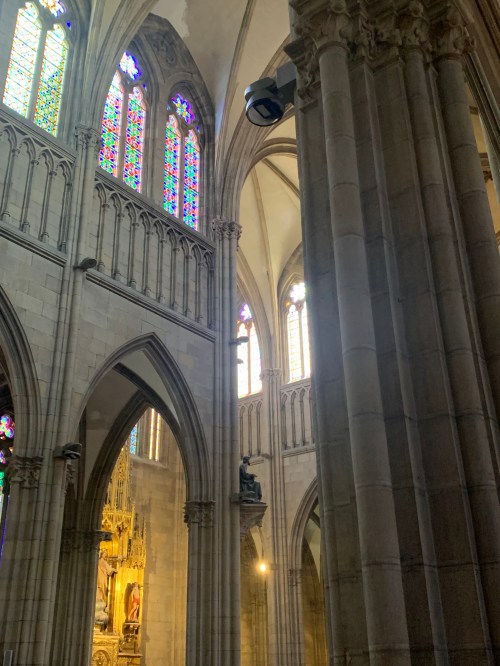
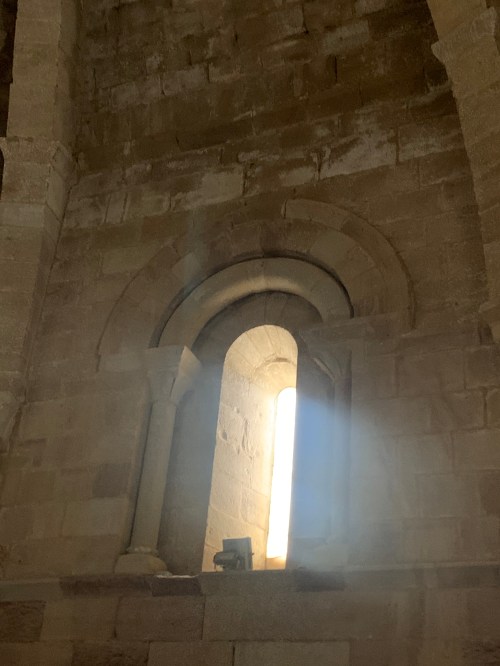
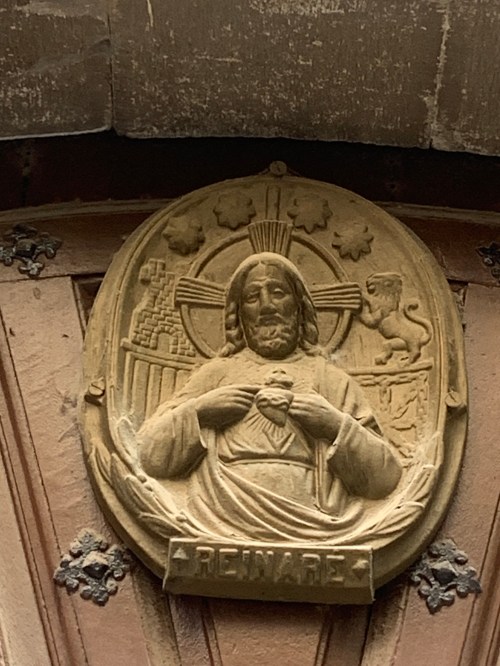
Beautifully restored Romanesque cathedrals, especially in Jaca and Sanguesa, on the Aragonese route provided sanctuary in medieval times for quiet contemplation and inspiration from sculpture at a time when most people were illiterate.
Divinely inspired music and art
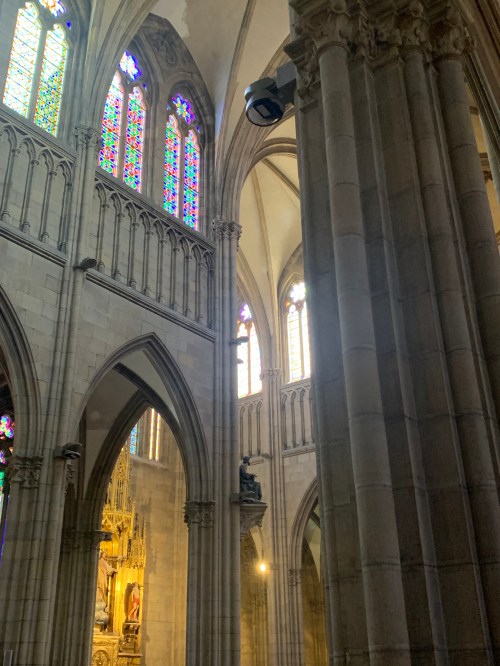
Later construction of the grand cathedrals such as Notre-Dame in Paris and Chartres, with their stunning stained glass windows inspired awe and devotion.
During the Renaissance era religious art with masterpieces by artists such as Michelangelo, Leonardo da Vinci, and Raphael communicated complex theological ideas through visual means.
Sacred music by composers such as Johann Sebastian Bach, and Beethoven created elaborate musical compositions elevating the liturgical experience and deepening the spiritual experience, connecting with the divine in profound sensory-rich ways.
When a religion degenerates into claiming the ultimate truth, subjugating its members into what to believe and how to behave, there is empty ritual and stagnation. The head-mind closes the door to the heart-mind and the whispers to the soul.
Reino Gevers – Author – Mentor – Speaker
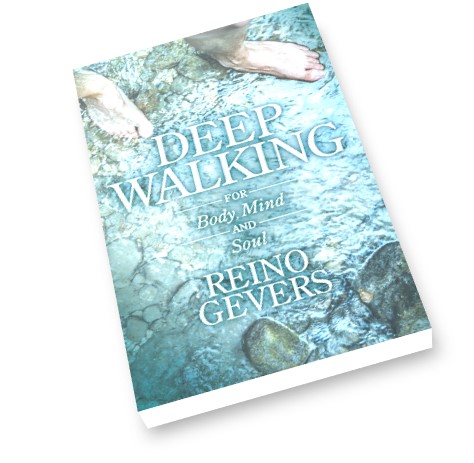
P.S. I’m excited to announce the release of my latest book, “The Turning of the Circle: Embracing Nature’s Wisdom for Purposeful Living.” If you enjoy it, you might also be interested in my previous works, “Deep Walking for Body, Mind and Soul” and “Walking on Edge: A Pilgrimage to Santiago.” You can find all of these titles at reputable bookstores near you.
“How you love yourself is how you teach others to love you”
– Rupi Kaur
How you think about yourself and how you talk with yourself is key to how you see the world, and how you interact with others.
Much of the divisive anger we see around us each day can be traced to shame, and lack of self-esteem that has its roots in the hurt experienced by the inner child. The quality of all your relationships is determined by how you feel about yourself. The sad truth is that you will never experience a truly fulfilling, loving relationship unless you learn to love yourself.
Loving yourself is such an important command that we find it eight times in the Bible. The most famous is in a quote from Jesus in Mark 12:30-31: “..Love your neighbor as yourself. There is no commandment greater than these.”
In the same vein, the Buddha said: “You, yourself, as much as anybody in the entire universe, deserve your love and affection.”
However, the lines between nurturing self-love and loving the ego often become blurred in our narcissistic culture. We are more concerned about how we are perceived and validated in the outside world than really doing the hard work of growing on a physical, mental, and spiritual level.
So what is the difference between loving the self and loving the ego?
In self-love, you will be in acceptance of who you are including all your challenges, weaknesses, hurts, and needs. The mantra is: “I love and accept myself the way I am.” It is a loving and humble submission to the self that is beyond the personality caught in external ideas and concepts.
When the release of “false Gods” or illusory concepts of the self takes place it is almost paradoxical, according to Eckart Tolle, that the general conditions of your life, the outer forms, tend to improve greatly. Things, people, or conditions that you thought you needed for your happiness now come to you without struggle or effort.
The work starts with getting to know yourself and acknowledging who you are not.
Taking time out for meditation and reflection is crucial. Tolerating alone time with the self is probably one of the hardest lessons for modern man pulled by the distraction of the 10,000 things. The voice of the inner child is often drowned by addictions and the obsession with immediate gratification.
Transmuting the pain of the inner child is a lifelong process. We are never done in the becoming of who we really are. Tracing the curveball emotions that hinder inner growth is best done with guidance from an experienced teacher or mentor who has taken a similar journey through the pain.
In an entitlement-driven culture, the ego-mind is held captive by the hungry ghosts that are never satisfied. The ego-mind is highly judgemental of others. How you are talking to yourself is an indicator of how harshly you judge yourself and others: “Why is this always happening to me?” Why am I always broke?” “Why does everyone hate me?” “Why am I not as beautiful, rich, and successful as…?”
Gratitude: The antidote to negative self-talk
A perfect antidote to negative self-talk is to switch that inner voice to something positive such as gratitude. When you change the perspective your mood will change instantly. Starting the day and ending the day with at least three things that you are immensely grateful for will set the course for how your day or night will be. No matter how bad your current situation might be there will always be things that you can be truly grateful for. We are blessed by the universe with countless things each and every minute of the day. It could be a simple thing such as being grateful to your body for all the work it is doing in sustaining you during your life on this earth. Basking in that feeling of gratitude and really feeling it on a mental and physical level does the trick.
Staying on the path
On the Camino de Santiago pilgrimage route, yellow waymarkers painted on walls, roads, and lamp posts prevent pilgrims from getting lost. It is not simply a way marker but a symbol reminding the pilgrim that during the walk of life you need to stay on course by showing loving kindness. Over centuries locals greet the pilgrims with the words: “Buen Camino” – a good path. After weeks on the road, the pilgrim will have been blessed in this way thousands of times. It reminded me on my own walks on the Camino that the simple things in life are often the most valuable.
Being greeted by a kind and smiling face from a stranger while struggling up a rugged mountain path makes all the difference. It costs nothing to be kind. Purpose and meaning in life can simply be spreading love and kindness to one’s fellow human being.
Are you struggling to forgive yourself and others? The biblical story of Joseph is one of the most powerful teachings of how the ways of the universe or God can be very different from the plans we often make in life.
Joseph was slandered, beaten, and sold into slavery by his own brothers because of jealousy. Joseph could have easily succumbed to his fate but he never lost faith that everything in life had purpose and meaning.
Only from such a perspective could he forgive his brothers and move out of the trap of the blame game. He made the best out of his situation to such an extent that Potiphar, the man who bought him on the slave market in Egypt, soon promoted him to a higher position. Later he was put in charge of managing Potiphar’s huge estate.
Potiphar had taken a liking to Joseph and must have been impressed by his kindness, wisdom, and humility. For all intents and purposes, Joseph had made it. But Potiphar’s bored wife had taken just as much a liking to the handsome young Joseph. Realizing that he would betray his master who had done so much for him, Joseph avoided the advances of Potiphar’s wife who became so upset that she accused him of rape. Joseph was thrown into prison losing everything. He could again have succumbed to despondency.
But it so happens that he meets in prison two of the Pharaoh’s ministers who had lost favor with the ruler. One of them was eventually released from prison and restored to his old position. Only when the Pharaoh had a strange dream did the minister remember the time in prison with Joseph who had impressed him as an interpreter of dreams. Long story short, Joseph gets released from prison to interpret the Pharaoh’s dream. The essence of the dream was that the ruler had to prepare the country for seven years of drought. Amazingly Joseph’s fortune changed in an instant when the Pharaoh recognized the wisdom of the man he was dealing with. Joseph gets made viceroy of all of Egypt as the righthand man of the most powerful ruler of the world at the time.
Life comes in strange twists and turns
True to the dream interpretation the drought did come and only by wise management of the food and grain resources could countless lives be saved including those of Joseph’s brother and aging father Jacob.
Life comes often in strange twists and turns. Fortunes can be earned and lost overnight. High positions of political power and influence may be gone tomorrow. The amazing story of Joseph is that he never lost trust and faith. By forgiving his brothers and Potiphar’s wife for falsely accusing him, he made peace with himself and could go into trust and humility. From that energy grew his wisdom and incredible foresight to prevent a catastrophe.
Forgiving does not mean approval of wrongdoing
Forgiving does not mean that you are approving of wrongdoing, of abuse, and all the terrible things that humans do to each other. It is making peace with the past in the knowledge that you are the person today because of all of that which you have experienced. The famous Austrian psychiatrist Victor Frankl only survived the Nazi death camps by telling himself that “everything can be taken from a man but one thing: the last of human freedoms – to choose one’s attitude in any given set of circumstances, to choose one’s one way.”
Nelson Mandela was often asked why he did not seek retribution from the white apartheid rulers who imprisoned him for 27 years. His answer: “Forgiveness liberates the soul, it removes fear. That’s why it’s such a powerful weapon.”
How often have we started the New Year with a resolution to make some lifestyle change? Be it the will to do more exercise, stop smoking or spending less valuable life-time watching meaningless TV shows, most New Year resolutions seldom last through the first month of the year.
Very few of us seem to have the strength and the willpower to change habits that we know from a rational point are doing us harm. We then end up being frustrated and angry at ourselves for not making the change we feel is really necessary.
In principle most of us find it pretty safe to stay in a “comfort zone” because making a change requires effort and energy. Sometimes we are even afraid that the changes we implement might rock the boat too much, requiring even more energy and input. We fail to realise that such a “comfort zone” has actually become pretty uncomfortable or even painful for a long, long time.
Experts at the Harvard Medical School believe that the chances of making lifestyle changes succeed are much greater if they are specific, measurable, achievable, realistic and time based. I would add that the factor loving self-care is just as important. The more we care for ourselves, the more this will manifest itself in our habits and dealings with our immediate surroundings.
So lets take the idea of getting more exercise because we know from all the information out there that it improves our health on all mental and physical levels. First of all I would choose a physical activity which appeals to me and sounds like fun. If it is running, then start choosing a place where you would have fun going for a run. It should be measurable, achievable and realistic. Find a realistic time commitment which you know will have a realistic chance of working . So why not start off by going for a short run of say ten or 15 minutes with a slow walk included so that you don’t over-exert. You can always extend your routine a little as you go along.
Better still: Find a friend or partner who shares your commitment or resolution. You could motivate each other and discuss a reward you would give each other for keeping at it for say two weeks, like spending a day at a spa. Keeping up a regular exercise or diet routine over 40 days has a much more lasting effect. If you have managed to keep at it for 40 days you will definitely feel a lot healthier physically and mentally. Friends or colleagues may start commenting positively on the visible change they see in you which is an additional motivation to keep up with your training programme.
More importantly: You will notice yourself how much the quality of your life has improved. You would not want to go back to the situation most people in the industrialized world currently find themselves – an uncomfortable “inbetween-state” of not really being healthy nor really ill.
Falling into positive health habits impacts our lives more than we realize. It is enormously liberating to know that we have the freedom of choice in order to live a healthy life by looking closely at such factors as exercise, sleep, food, emotional stress factors, addictions and time management. Genes are only a small part of our destiny. Making necessary lifestyle changes has a major impact on obesity, heart disease, cancer, diabetes and many of our modern-age scourges, according to many recent studies:










 ReinosBlog