Tag Archives: spirituality

Difficulty finding your purpose?

“The purpose of life is not to be happy. It is to be useful, to be honorable, to be compassionate, to have it make some difference that you have lived and lived well.”
― Ralph Waldo Emerson

A great many people are confused by the plethora of literature on finding your purpose in life as if there is one clear trajectory just waiting to be discovered so that you can live the life of your dreams of world fame in a beautiful home with an ocean view and a dozen sports cars parked in the garage.

There is nothing wrong in obtaining material abundance if you have a clear purpose for what you are using it for. The emphasis would be all wrong when there is a craving for the “having” instead of the “giving.”

Every so often I have a person telling me in exasperation: “I just seem to have no clue about finding my purpose in life!”

For most of us, it will be highly unlikely that we will end up being famous movie stars in Hollywood earning tens of millions of dollars. But some of the literature out there is telling people that all you need to do is to create a vision board and to trust in the universe fulfilling that dream.

It’s creating much unhappiness and frustration when hard reality sets in. The divine might have a completely different path set out for you than the outward symbols of what our culture defines as success. Some people who have spent all their life energy on external gratification find themselves in a deeply unhappy state when everything rings hollow and nothing can bring them joy. For, living somone else’s identity be it that of a parent, spouse or societal image would be a betrayal of your own authenticity.

Finding purpose is never done

Finding your purpose in life is a process that is never done. You have to rediscover anew every day your meaning, your authenticity, and your truth. Should I have big dreams? Of course you should. But be sure those dreams are in alignment with your core values and authenticity.

Material abundance is an important element but only one aspect of living your best life. If you are aware that you are an eternal spiritual being having a human experience a lifetime is but one stage in the evolution of soul nature.

“It is not that we have so little time but that we lose so much. …

The life we receive is not short but we make it so;

we are not ill provided but use what we have wastefully.” – Seneca

Outer symbols of success are merely an emanation of an internal success mindset. In order to have abundance you need to have a mindset of abundance. Your “doing” and your creative nature need to be filled with a meaning that will serve both the world and the elevation of your consciousness.

There is a deep human need connected to soul nature that constantly strives to grow and develop in a creative process that is life’s journey. During the various stages of life we follow different way markers. It’s indeed a rarity when a person has an epiphany in early childhood that sets it on a clearly defined path of blooming into full potential.

Photo by MART PRODUCTION on Pexels.com

These people have been fortunate enough to be guided by peers with the experience to help nurture with great care that inner light waiting to illuminate the world. For most of us finding purpose is a journey taken on different paths in difficult terrain, getting lost, retracing one’s footsteps, and at some point finding that road converging into a clearly marked route.

The antidote to a scarcity mindset

A first step to finding purpose and meaning is the self-realization that “I am worthy.” “I have a voice and I have something to give”. A materially obsessed culture is infected with the scarcity mindset, the fear that the little I have will be taken away by someone.

Building a gratitude habit is the antidote to a scarcity mindset. It keeps you aligned and keeps building the bridge to your bigger goal:

  • Start your day reflecting on what is good in your life right now. Recognize your wins and what you are grateful for. Share with friends and family what you are grateful for.
  • Taking time out for reflection, play and recuperation is essential. Sometimes we just need time to sit in an armchair doing nothing or to play with the dog. It frees the mind for the bigger things.

The amount of positive vibration that you send out is really what matters. Becoming aligned with your core values is essentially a learning process of when to say “yes” and when to say “no”. When making a decision ask yourself:

  • Is this really aligned with my higher purpose?
  • Will this expand or deplete my energy?
  • Is this my ego seeking validation or does it serve the common good?

Standing guard at the doorway of your soul is key. What distracting and fear-induced voices are trying to pull me into a direction that is completely alien to my inner voice? Most of the time we sense intuitively what is happening but we fail to heed that voice because there is too much noise around.

When you resort to humility. When you fall still as you stand in awe at the beauty of creation, you may hear that whisper that is your destiny.

Reino Gevers – Author – Mentor – Speaker

One more thing...If you have found this article interesting you might want to check out our courses, retreats and books and ask others to also subscribe to this Blog.

Leave a comment

Filed under mental health, mental-health

Do you really love yourself?

“How you love yourself is how you teach others to love you”

– Rupi Kaur

How you think about yourself and how you talk with yourself is key to how you see the world, and how you interact with others.

Much of the divisive anger we see around us each day can be traced to shame, and lack of self-esteem that has its roots in the hurt experienced by the inner child. The quality of all your relationships is determined by how you feel about yourself. The sad truth is that you will never experience a truly fulfilling, loving relationship unless you learn to love yourself.

Photo by Rodolfo Clix on Pexels.com

Loving yourself is such an important command that we find it eight times in the Bible. The most famous is in a quote from Jesus in Mark 12:30-31: “..Love your neighbor as yourself. There is no commandment greater than these.”

In the same vein, the Buddha said: You, yourself, as much as anybody in the entire universe, deserve your love and affection.”

However, the lines between nurturing self-love and loving the ego often become blurred in our narcissistic culture. We are more concerned about how we are perceived and validated in the outside world than really doing the hard work of growing on a physical, mental, and spiritual level.

So what is the difference between loving the self and loving the ego?

In self-love, you will be in acceptance of who you are including all your challenges, weaknesses, hurts, and needs. The mantra is: “I love and accept myself the way I am.” It is a loving and humble submission to the self that is beyond the personality caught in external ideas and concepts.

When the release of “false Gods” or illusory concepts of the self takes place it is almost paradoxical, according to Eckart Tolle, that the general conditions of your life, the outer forms, tend to improve greatly. Things, people, or conditions that you thought you needed for your happiness now come to you without struggle or effort.

The work starts with getting to know yourself and acknowledging who you are not.

Taking time out for meditation and reflection is crucial. Tolerating alone time with the self is probably one of the hardest lessons for modern man pulled by the distraction of the 10,000 things. The voice of the inner child is often drowned by addictions and the obsession with immediate gratification.

Transmuting the pain of the inner child is a lifelong process. We are never done in the becoming of who we really are. Tracing the curveball emotions that hinder inner growth is best done with guidance from an experienced teacher or mentor who has taken a similar journey through the pain.

In an entitlement-driven culture, the ego-mind is held captive by the hungry ghosts that are never satisfied. The ego-mind is highly judgemental of others. How you are talking to yourself is an indicator of how harshly you judge yourself and others: “Why is this always happening to me?” Why am I always broke?” “Why does everyone hate me?” “Why am I not as beautiful, rich, and successful as…?”

Gratitude: The antidote to negative self-talk

A perfect antidote to negative self-talk is to switch that inner voice to something positive such as gratitude. When you change the perspective your mood will change instantly. Starting the day and ending the day with at least three things that you are immensely grateful for will set the course for how your day or night will be. No matter how bad your current situation might be there will always be things that you can be truly grateful for. We are blessed by the universe with countless things each and every minute of the day. It could be a simple thing such as being grateful to your body for all the work it is doing in sustaining you during your life on this earth. Basking in that feeling of gratitude and really feeling it on a mental and physical level does the trick.

Staying on the path

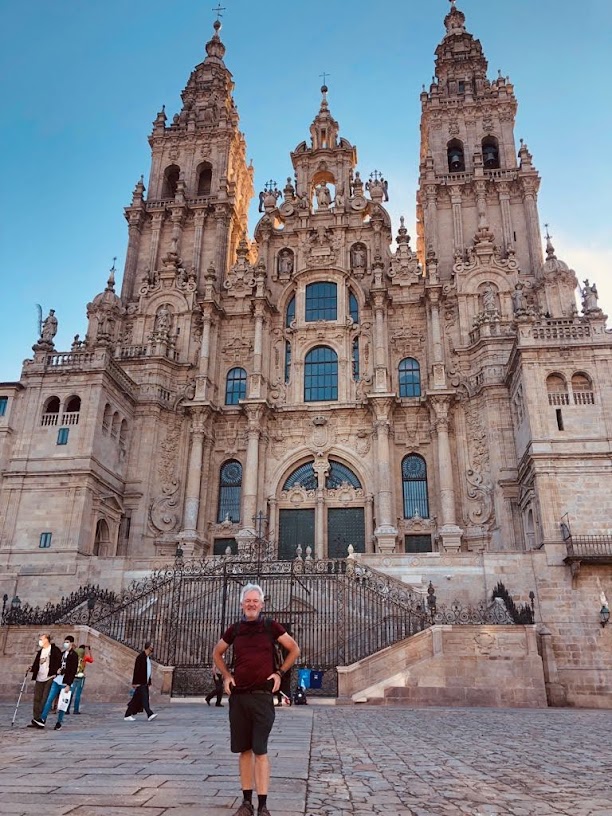
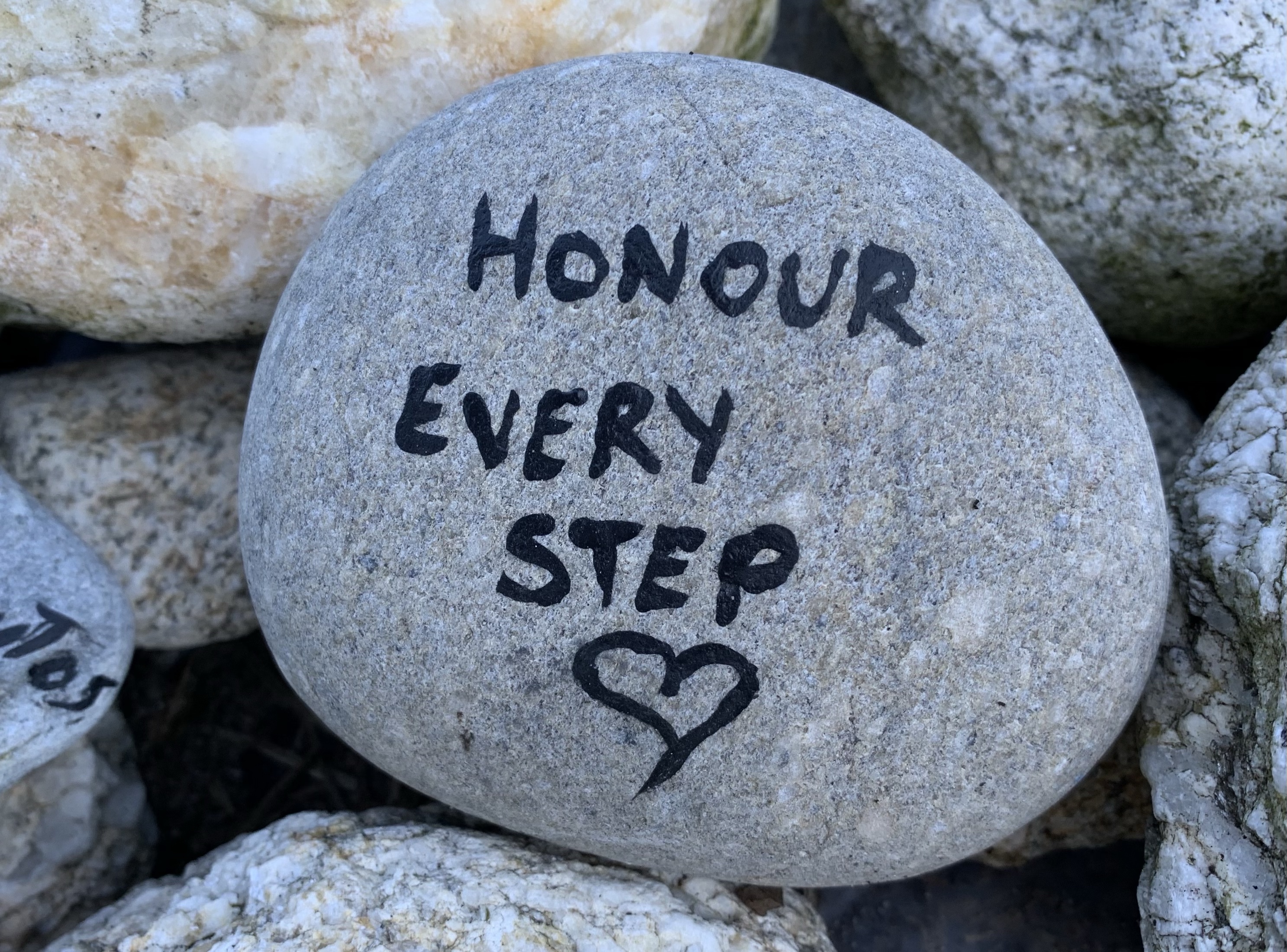
On the Camino de Santiago pilgrimage route, yellow waymarkers painted on walls, roads, and lamp posts prevent pilgrims from getting lost. It is not simply a way marker but a symbol reminding the pilgrim that during the walk of life you need to stay on course by showing loving kindness. Over centuries locals greet the pilgrims with the words: “Buen Camino” – a good path. After weeks on the road, the pilgrim will have been blessed in this way thousands of times. It reminded me on my own walks on the Camino that the simple things in life are often the most valuable.

Being greeted by a kind and smiling face from a stranger while struggling up a rugged mountain path makes all the difference. It costs nothing to be kind. Purpose and meaning in life can simply be spreading love and kindness to one’s fellow human being.

Reino Gevers – Author – Mentor – Speaker

One more thing...If you have found this article interesting you might want to check out our courses, retreats and books and ask others to also subscribe to this Blog.

Leave a comment

Filed under mental health, mental-health

What is your unique thumbprint?

„The meaning of life is to find your gift. The purpose of life is to give it away.”

-Pablo Picasso-

There is an ancient story that tells us of the wanderer, who after a long journey arrives in a town. First he comes across a crippled and blind beggar, then he sees an old woman being beaten, and a funeral procession. Witnessing all this suffering in succession, the wanderer runs out into the desert in desperation, screaming at God: “Why, if you are so powerful do you allow all this suffering and pain? Why don’t you do something?”

After a long silence, the wanderer finally hears the words of the Divine: “I did do something. I created you.”

The story is revealing in that what we see and what we hear is often determined by our current state of .consciousness. In our world of polarity with the constant pull between yin and yang, light and shadow, beauty and ugliness, violence and peace it is easy to make judgmental statements that are seldom congruent with the true facts.

Photo by Pixabay on Pexels.com

You have been born with a unique gift

It is part of human nature to make the Divine or any other entity responsible for all the misery of one’s own state of affairs or that of the world. According to the ancient Mystics we have each been born with a divine purpose, and been handed the gift of a free will.

Surrendering control to external forces for one’s circumstances is one of the big fallacies of our time. We are to a great extent shaped by the culture and place where we are born. But at the same time we must take responsibility for our thoughts and actions.

The true calling often lies in the wounds of the past that have sculptured us into the human beings that we are destined to become. When reflecting on the past it often becomes obvious how the pain, and the obstacles that we have had to overcome gave us the skillset needed to fulfill divine purpose.

The Hero’s Journey is riddled with obstacles

The Hero’s journey through life is riddled by failures, making the wrong decisions and losing the way on the wrong path.  At the point of complete surrender, when we are completely empty, when we choose to give up everything that once defined identity, we become open to the whispers from the Divine.

It is at this juncture that we can forgive those people that have wronged us or inflicted great pain onto us. When we transmute our “enemies” into positive agents that have catapulted us toward major transformational change and elevation of consciousness, it is much easier to forgive.

Getting stuck in the grievances and the sorrow over that which once was and is no more, is the root cause of much of the collective anger we see currently being played out on the political stage. It is also symbolic of the disconnect between external and internal needs. External gratification is never fulfilling when it is out of line with soul purpose.

What is your unique song?

How we share our unique talents and abilities with the world, is as diverse as creation itself. We each carry the seed pf a divine song within that is awaiting to play its part in the concert hall of creation.

It is what moves and inspires you, to which you are magically drawn and where you fell in rhythm with the heartbeat of the universe. It is what Rumi describes as surrendering to that “deeper pull of what you truly love.”

Reino Gevers – Author – Mentor – Speaker

One more thing...If you have found this article interesting you might want to check out our courses, retreats and books and ask others to also subscribe to this Blog.

1 Comment

Filed under spirituality

Lessons from the Camino

Walking the Camino in northwestern Spain and Portugal this year was in many respects very different from previous walks on this ancient pilgrimage path that has been massively impacted by the repercussions of the pandemic.

First and foremost the Camino has lost nothing of its magic that has become for hundreds of thousands of modern-day pilgrims, a path of introspection, healing and transformation. About half as many people arrive at the destination in Santiago de Compostela compared to normal years. The good news is that with good planning you can still walk it!

We walked from Porto in Portugal to Santiago, alternating between the coastal and central routes, but booking our accommodation two to three days in advance as most pilgrims’ hostels are still closed and will possibly only reopen next year. Unless you are walking the less popular routes cheap accommodation is very limited for pilgrims with a limited budget.

Can you still stay in a pilgrims’ hostel?

Staying overnight in a pilgrims’ hostel is so much part of the Camino experience where stories are shared over a meal cooked together and often lasting friendships are formed. Although a little more expensive than the municipal albergues, some of the better private albergues are a definite must.

We had one of our most enjoyable evenings with fellow pilgrims at Casa da Fernanda with dancing, singing, great food and good conversations. This was all on a donation basis. Certainly one of the most beautifully run private albergues is the La Cala Pilgrims Inn in Oia run by Tanya Valdes. Tanya is a lovely soul from the U.S. who moved to Spain, fulfilling a heart wish in serving pilgrims in her beautifully renovated albergue, overlooking the monastery in Oia.

The chilling effects of the pandemic

Having had to break off last year’s walk on the Via Francigena in Italy because of another lockdown, walking the Camino Portugues was the first longer walk since 2019. It was at times a chilly experience walking through the small villages where public notice boards bear portraits of locals who have died from Covid and bypassing dozens of closed pilgrims’ hostels, restaurants and curio shops.

Families in the local villages along the Camino route have for centuries earned their income from passing pilgrims and obviously many small businesses have not survived the pandemic. Some had invested all their funds in the expectation of a boom on the Camino for this year’s holy year.

The revival of the Camino pilgrimage in modern days can be largely attributed to Don Elías (1929-1989), the parish priest in O Cebreiro near Lugo. Up to the early 1980s only dozens of pilgrims at the most walked the Camino. But Don Elías had a dream that one day tens of thousands of pilgrims would again be walking the Camino. According to the story Don Elías drove across the whole north of Spain in his old  Citroën packed with tins of yellow paint, marking arrows leading to Santiago.

We were very much aware that this year we were also walking the Camino on behalf of the many pilgrims from other countries who could not walk the path this year because of Covid-related travel restrictions. The Camino can become an addictive ritual and many walkers on the Camino have been doing it several times over. Many pilgrims, who have been unable to walk this year, have been reliving their past walks in the popular Camino forums and social media groups.

Arriving in Santiago

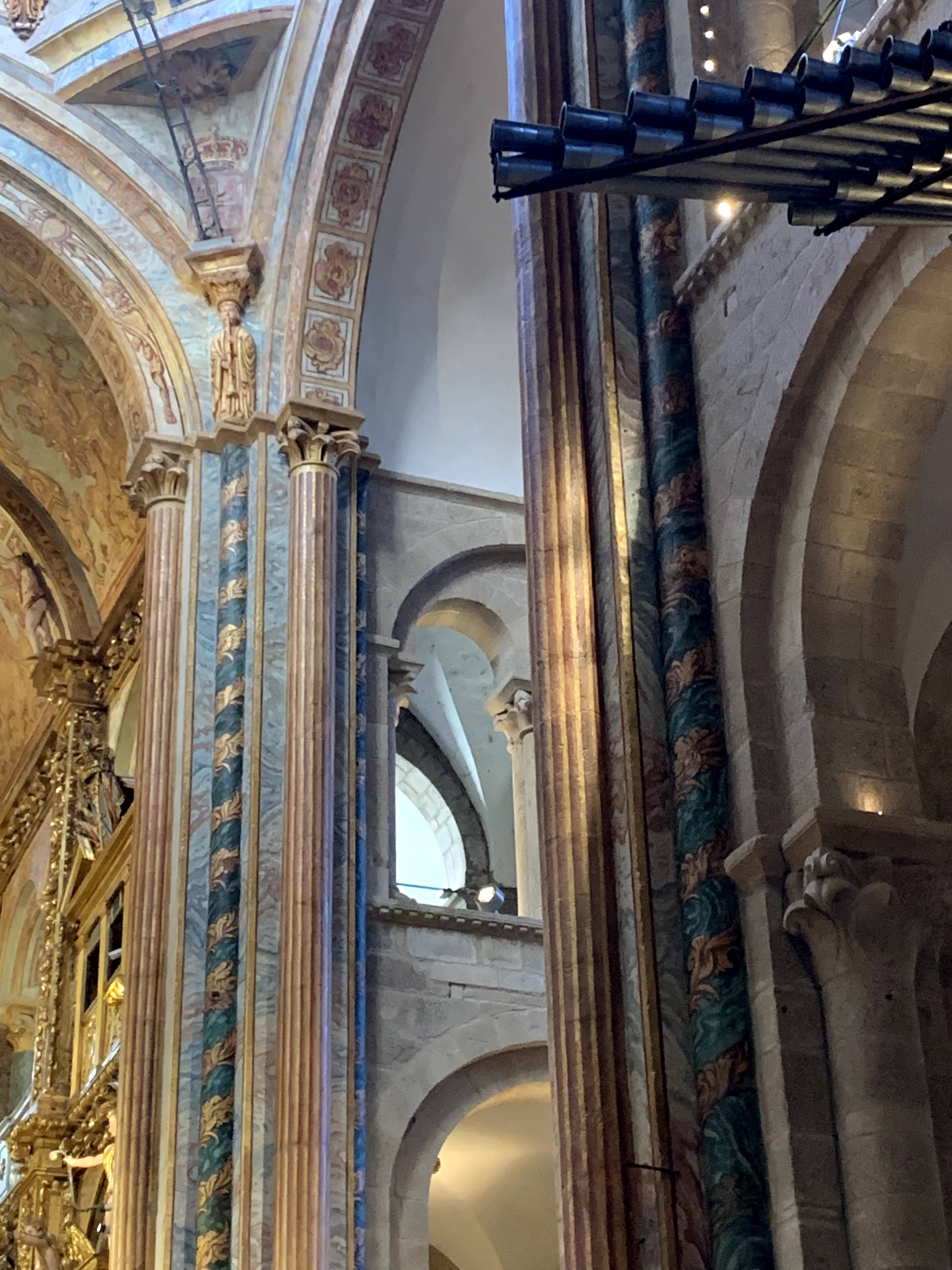
Arriving at the destination in Santiago is always a special occasion. The Cathedral can be seen in all its glory with most of exterior scaffolding removed after years of painstaking renovation work. The interior is especially stunning: Based on the candle-light from medieval times the naves, transept and the Pórtico de la Gloria have been fitted with new lighting. Social distancing still applies and the number of visitors are limited.

The journey begins after the journey

Every journey at some point has to end. You return home but you will not be the same person. A pilgrimage on the Camino takes months to digest. The real transformation begins at home. Life takes on a different meaning when you are in a different rhythm and feel connected to your higher-self. As Marcel Proust is quoted as saying: “My destination is no longer a place, rather a new way of seeing.”

Reino Gevers – Author – Mentor – Speaker

One more thing...If you have found this article interesting you might want to check out our courses, retreats and books and ask others to also subscribe to this Blog.

2 Comments

Filed under Camino de Santiago, mental health, mental-health, spirituality, Uncategorized

Another hill to climb

Strength and growth come only through continuous effort and struggle.” – Napoleon Hill –

It is much easier to climb a mountain if you take it one step at a time instead of looking at the steep peak ahead of you.

Several times I had to tell myself this during the last couple of days walking the Camino de Santiago in northwestern Spain.

There is also a saying on the Camino that the last few kilometers are the hardest. You climb one hill and then you find you have to climb another at the next bend.

Obstacles – the blessings in disguise

Just reflect a little on your life so far. It is mostly the obstacles, the setbacks, and those down on the ground moments that have triggered the biggest transformation.

Sadly, we often throw in the towel before we have learned the lesson or just before we are about to achieve the biggest breakthrough.

Life is not meant to be easy. We whither and die spiritually and physically if we procrastinate in a comfort zone.

A crisis, whether in an institution, in the job or in a personal relationship, is a message from the universe telling us that something is out of balance and needs to change.

The journey has to continue

We can for a moment look back on the winding steep road that we have climbed, appreciating the view and the accomplishment. But at some point we will have to continue the journey.

We human beings are hardwired to explore, and discover. As long as we live on this earth we will constantly be challenged to redefine purpose and meaning.

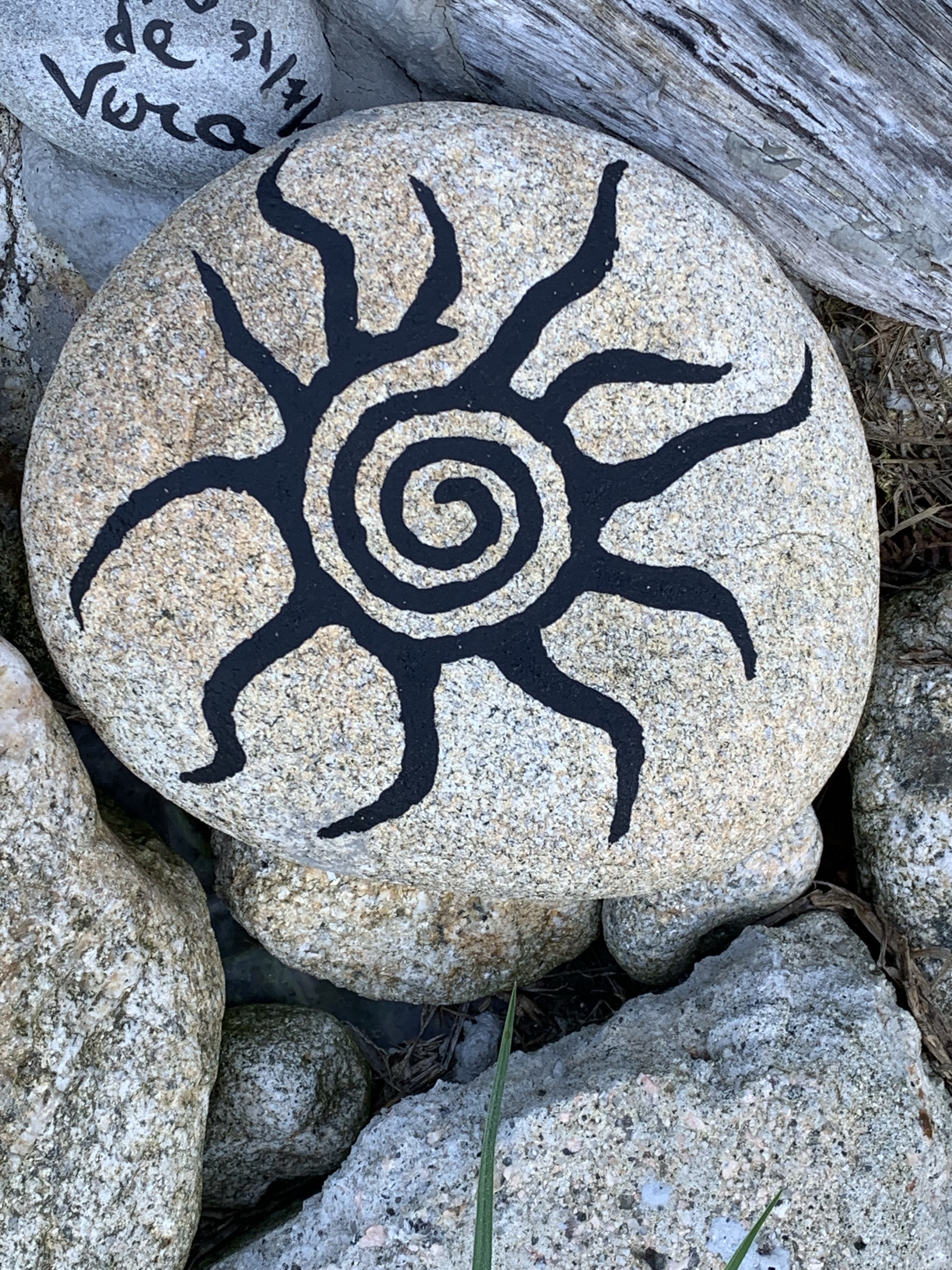
This morning I found a spiral etched into stone by the ancient Celtic inhabitants of Galicia. The rock site was perfectly aligned to the rising morning sun. Obviously the area had been a place of religious significance eons ago.

The ancient people were acutely aware of the laws of the seasons, closely studying nature. Beyond the perceived chaos of natural phenomenon lies a naural order of all things. The spiral is found in miniscule shells and flowers, and our DNA but also in the shape of our expanding galaxy.

Spiritually the spiral motif represents the path of the soul from the outer ego personality to the divine unity. It is the symbol of constant evolution and growth – a divine song of renewal moving from age to age.

Reino Gevers – Author – Mentor – Speaker

One more thing...If you have found this article interesting you might want to check out our courses, retreats and books

and ask others to also subscribe to this Blog.
Leave a comment

Filed under mental health, mental-health, Pilgrimage, self-development, Uncategorized

You are not your opinion

The English writer and philosopher Aldous Huxley once pointed out that “at least two thirds of our miseries spring from human stupidity, human malice and those great motivators and justifiers of malice and stupidity, idealism, dogmatism and proselytizing zeal on behalf of religious or political idols.”

It pretty much describes the current Zeitgeist where “tribal bubbles” confront each other on almost every major issue of our time. Its either true or false, black or white, red or blue with a nuanced debate taking cognizance of the complexity of most issues becoming almost impossible. It is causing the break-up of families, friendships and relationships. What you may be asking is happening?

What we see and believe is selective reality

An opinion or belief is mostly based on a past experience that does not necessarily conform to the true events and is colored by perception of what we believe to have been reality. We know from numerous psychological studies that we humans have the tendency to believe what we want to believe.

What we see and what information we select can be very selective as Daniel Simons and Christopher Chabris revealed and their classic test of the gorilla walking through the room.

The platforms offered by social media are fodder for the ego-mind which needs constant validation and attention. An ego-mind is rooted in all the external trappings that come with status, fame, personality, titles and wealth. We fail to grow and expand because the ego-mind has built an image of the self that is an illusion. Opinions and beliefs merge with the personality. Anything that threatens such a carefully crafted “avatar” of the self is seen as a threat. Tribal survival instincts are triggered. Its “us or them” and all sense of a common humanity gets lost as the battle lines are drawn. Fixed belief and opinion is the reason people slide into that fatal abyss of fanaticism and ultimately engage in violence and war.

Ego-mind versus heart-mind

Political and religious demagogues are extremely adept at stoking the underlying fears and insecurities of the ego-mind. An ego-mind refuses to look inward, refuses to take responsibility for self-inflicted wounds and projects all its own shortcomings in fanatic rage onto those opposites that reflect the weaknesses. No rational argument or scientific fact on the ground will persuade the ego-mind from changing its opinion. It is too proud to come down from that ladder once it has been positioned firmly against a wall.

We are seeing at a global dramatic changes on all levels that is very scary for the ego-minded personality. Deep down the ego-mind desperately wants to hold onto an illusion, a world, that was and is no more. Religious dogma prescribes certain doctrines, obligations and rules of obedience that can be particularly attractive to persons battling with the uncertainties and up-and-down cycles of life.

The heart-minded person however sees change as opportunity for growth, and transition into new consciousness.

It is rooted in a child-like humility. It is why Jesus rebuked his disciples when they tried to prevent the children from seeing him, saying: “Let the children come to me; do not hinder them, for to such belongs the kingdom of God”

He was making his disciples aware that spiritual elevation, finding the Kingdom of God, could only be attained through a childlike humility. Just prior to becoming aware of the self, children are still free from an agenda in a down to earth honesty before pride and position come into play as personality takes shape.

A key principle of creation is diversity with the universe in a constant spiral of expansion and growth. If we are to survive as a species we will have to learn from nature which is an expression of God. Throughout the eons only those species that have learned to adapt quickly to changing circumstances have survived.

We are spiritual beings having a human experience

An inward-looking heart-mind is mindful of the impermanence of all things external and the eternity of soul. The French philosopher, paleontologist, and Jesuit priest Teilhard de Chardin is quoted as saying that “we are not human beings having a spiritual experience; we are spiritual beings having a human experience.”

In those quiet moments of reflection and meditation we can reconnect with soul nature, that divine spark within and the remembrance of the eternal.

Experiential spirituality is an individual path of exploration and discovery. It is a reconnection to the soul where unconditional love, compassion, harmony, forgiveness, peace and joy reside. From within the true nature is crafted that tool for divine intention and the humility and acceptance that we are born into this life to walk a pilgrimage path of constant growth, creativity, adventure and new insight.

Reino Gevers – Author – Mentor – Speaker

One more thing...If you have found this article interesting you might want to check out our courses, retreats and books

and ask others to also subscribe to this Blog.

Leave a comment

Filed under mental health, mental-health, spirituality

Your sacred path

All the people you have met throughout your life and the experiences you have had up to this moment in time have made you into the person who you are today. Yet, there still might be that inner voice whispering that there is more to life than you have been taught or have learned.

Caroline Myss is quoted as saying that “as a vital part of a larger, universal spirit, we each have been put here on earth to fulfill a sacred contract that enhances our personal spiritual growth while contributing to the evolution of the entire global soul.”

Connecting with the global soul

Our individual souls are connected to a global soul comprising all life on the planet. Each person has a unique destiny and soul purpose and it’s not about what kind of job you are doing or the things you own. These might be a manifestation of what you become in the becoming of who you really are.

It is almost essential to find alone time for contemplation and inner reflection and to walk your sacred path alone. The urge to walk a pilgrimage first starts as a whisper and becomes ever more louder. The need to go on this soul adventure is sometimes met with strong resistance by the loved ones or family members around you. They will sense that you are in a process of shifting your consciousness and will confront you with all sorts of arguments to dissuade you from walking.

The universe will test your willpower

In a way it is the universe testing your willpower but the sad truth is also that most people are too afraid to make the changes necessary to improve their lives. Family members or partners want you to stay in the tribe and share the same beliefs, mannerisms and habits. Often they will be projecting their own fears onto you if you decide to go on a journey of untrodden paths. Partners in this way often block each other instead of lending support and encouragement to the other.

On the Camino Aragonese between Jaca and Puenta La Reina, Spain

In a few days time I will start my 14th pilgrimage walk, walking for the second time from Porto in Portugal to Santiago and then to Cabo Finisterre, the westernmost point of the Iberian Peninsular. Each walk has been different, and unique. Looking back these walks have proven to be truly transformational not only in the way they have led me in making major changes to my external life but what has happened on a spiritual level. My two books on the Camino in essence tell this story that began in early 2007.

When I served in a pilgrims’ hostel as a volunteer in 2019 I had the opportunity of literally talking to hundreds of pilgrims from all walks of life and nationalities on what motivated them to walk this ancient path that at times can be truly challenging both emotionally and physically.

Why do people go on a pilgrimage walk?

Some people start the Camino as a sporting adventure that then turns into a spiritual journey.  An American pilgrim I walked with some years ago said to me: “If you don’t approach the Camino with humility it will humiliate you.”

The Camino is telling you that this journey is not about accomplishing something but in un-becoming from everything that you thought you were and touching that place deep in the soul who you are truly meant to be.

Is the Camino part of the bigger journey of humanity seeking a common spirituality that transcends the boundaries of religious dogma?

The Camino is an analogy of life

The Camino is in many ways an analogy of life. If you can deal with the roller-coaster of the walk’s trials and tribulations, you will be steeled for whatever challenges life throws at your feet in the acceptance of the impermanence of all things.

I’ve heard stories from pilgrims who have suffered terrible personal hurt and tragedy. Others were walking while defying a life threatening medical diagnosis or who had just survived cancer.

Experiential spirituality reveals itself in helping and supportive hands, in the recognition of fellow souls going through tough trials and tribulations. There is a deep sense of that one truth that we are all one humanity.

Reino Gevers – Author – Mentor – Speaker

One more thing...If you have found this article interesting you might want to check out our courses, retreats and books

Leave a comment

Filed under Camino de Santiago, deep walking, Pilgrimage, self-development, spirituality

Breathing into health and wellbeing

“Breathing in, I calm body and mind. Breathing out, I smile. Dwelling in the present moment I know this is the only moment.” – Thich Nhat Hanh

Groundbreaking research is revealing that a simple thing like how you breathe can be hugely transformational. Healthy breathing techniques embedded in ancient religious practice improves body posture, sleep, general wellbeing and spiritual growth.

In our stressed out modern lives we as a species have lost the ability to breathe as nature has designed. When the body is flooded with stress hormones we tend to breathe in fast short bursts from the upper throat and chest area with grave consequences for our immune system, mental and cardiological health.

Our ancestors knew better

Western medicine for a long time believed that the nose was more or less an ancillary organ and that it was no problem just breathing through the mouth. But the latest research is revealing that our ancestors had more expansive sinus cavities and larger mouths, creating wider airways for breathing. This is not only related to the better diet where people were forced to chew their food more than the processed food eaten by most people today but by breathing primarily through the nose.

Photo by Alexandr Podvalny on Pexels.com

Scientists, studying the shapes of jaws and mouth cavities from skulls several hundred thousands years old were surprised by the quality of the teeth and jawbones meaning that our ancestors probably never suffered from chronic respiratory problems, sleep apnea, snoring, sinusitis, or allergies so common today.

Rituals performed by ancient peoples and the old religions have always understood the power of breathing and that certain breathing techniques are essential in experiential spirituality and elevation of consciousness.

The power of prayer

Researchers at the University of Pavia in Italy measured blood flow, heart rate and nervous system feedback of dozens of people reciting the popular Buddhist mantra Om Mani Padme Hum and the Latin version of the Catholic Ave Maria prayer. The breathing pattern changed instantly with blood flow to the brain increasing with functions of the heart circulation and nervous system reaching peak efficiency. Both prayer and mantra caused striking, powerful, and synchronous increases in existing cardiovascular rhythms when recited six times a minute.

Breathing through the nose

Inhaling and exhaling naturally through the nose is what you should be doing. As you inhale the nose warms and moisturizes the air. Your nose releases nitric oxide which widens the blood vessels allowing for better transportation of oxygen to vital organs. Your breathing will be deeper and slower increasing the volume of your lungs and diaphragm.

Conscious and focused deep breathing through the nose can instantly bring you from a state of high tension into a relaxed state of mind.

  • Sit upright holding one hand on your lower belly and the other in the heart area.
  • At the count of one inhale and exhale through your nose.
  • Continue until the count of twelve then switch your hands
  • Continue until the count of 24
  • Close by placing both your hands on your belly

You can learn more such breathing techniques in my online video course on mindful breathing exercises.

Low impact body exercises such as yoga, tai chi, qi gong and deep walking in nature will do wonders in reducing stress hormones in the body. When you focus on nasal breathing your body posture will also improve naturally. Especially when walking the key is finding a natural rhythm where you go into synchronicity with your body movement and with your surroundings as you breathe through the nose.

Reino Gevers – Author – Mentor – Speaker

Leave a comment

Filed under mental health, mental-health

Prioritizing your core values

I recently had the privilege of visiting one of the most stunning chapels in the United Kingdom. Positioned in the Surrey Hills southwest of London, Watts Chapel is a masterpiece of architecture, Celtic imagery and terracotta clay artwork.

The interior design follows the medieval notion of God in heaven and moving downward to earth with the dome of the chapel representing heaven with God depicted in the form of a circle with no beginning and no end. Four messenger angels closest to God have their arms raised in blessing each representing values and symbolizing the divine connection to these principles.

The non-negotiable principles

Your values should be non-negotiable and define who you really are. It as an ideal to strive for and commonly referred to as virtues in past generations.

Pope Gregory the Great first defined a set of seven values in the 6th century based on older Greek religious values. These are:

Faith the belief doing the right things
Hope a trust that good will prevail
Charity a voluntary giving and help for others
Fortitude overcoming fear and remaining in trust even when facing obstacles
Justice being fair and equitable with others
Prudence exercising moderation and caution
Temperance moderation and self-control, especially regarding toxic emotions

There are several methods in defining those three to five core values most important to you. They could be some of those above or such values as dependability, reliability, positivity, integrity, kindness, authenticity or loyalty.

Passing decision-making through the filter of your core values

If your core values and principles are not congruent with the work you do on a daily basis or in your relationships you will become increasingly fatigued and exhausted. Soul purpose is closely aligned with your principles. Your five key core values, essentially define the ideal you are striving for in life.

We are almost faced daily with important decision-making. At times we are at the crossroads of having to change jobs ,undertaking an important business venture or to go deeper in a relationship. We mull over the decision-making process for days but it all becomes a lot easier when you pass the “yes” or “no” through the filter of your core values.

During a time when we are experiencing a gradual elevation of consciousness as a humanity an increasing number of people are questioning their roles in corporations or institutions. Especially, when values, actions and statements of a company are no longer congruent with personal values and norms we have an increase of job burnout among the employees.

It might be time to move the ladder

If you are feeling over a lengthy period of time this inconsistency of public and individual ideal you need to make a change. In my case I got clarity over my future and my personal core values after taking a time out on a pilgrimage walk lasting several weeks. I knew that I had to get out of a dysfunctional marriage and leave my journalist job that once enabled me to live my ideals but was no longer doing so in the digital world.

You could well also be in a situation where you realize that you have placed the ladder against the wrong wall for many years and that its time to move it to another space. After hosting numerous stress-management workshops in the corporate world I compiled the essentials in a 40-day online course: “Stepping into authenticity. Living to BE”

Typically when illness, constant obstacles and frustrations come your way, it would often be the universe telling you to make that change. On the other hand if you are congruent with your innermost values everything seems to fall into place. The universe enables you meet the right people at the right time who help open the door for you to a new beginning. Or you realize in an instant that you are just in the right place at the right time. You just happen to come across that book that opens up an entirely new perspective.

American entrepreneur, speaker and author Jim Rohn once said: “The major value in life is not what you get. The major value in life is what you become.” And the Greek philosopher Aristotle defined the ultimate value in life as “awareness and the power of contemplation rather than upon mere survival.”

Reino Gevers – Author – Mentor – Speaker

One more thing: If you have found this article useful please share to spread the message. Check out also the latest online courses for you to download my books and our retreats on the island of Majorca.

Leave a comment

Filed under spirituality

Totalitarianism: What comes next?

It’s getting increasingly difficult to discern truth from fiction as public opinion is tipping dangerously close to totalitarianism.

Swiss psychiatrist Carl Gustav Jung spent much time studying this dangerous disease of the human psyche prior to World War II.

Jung vividly warned of the looming catastrophe and Adolf Hitler’s potential for evil and destruction after coming to power in a democratic election with many political leaders at the time believing he could be appeased by making political concessions.

In the mid-1930s, Jung observed a dangerous „collective psychosis“ taking hold in Germany, a society-wide state of psychic possession that seemed to affect normal decent citizens

When moral judgment becomes clouded

Moral judgment had become clouded by martial rituals and subconscious „religious“ worship of the Germanic war god Wotan, triggering irrational and primitive behavior.

Totalitarianism flourishes, according to Jung, when people lose their ability to discern fact from fiction and minds become captured in a bubble of an alternate reality.

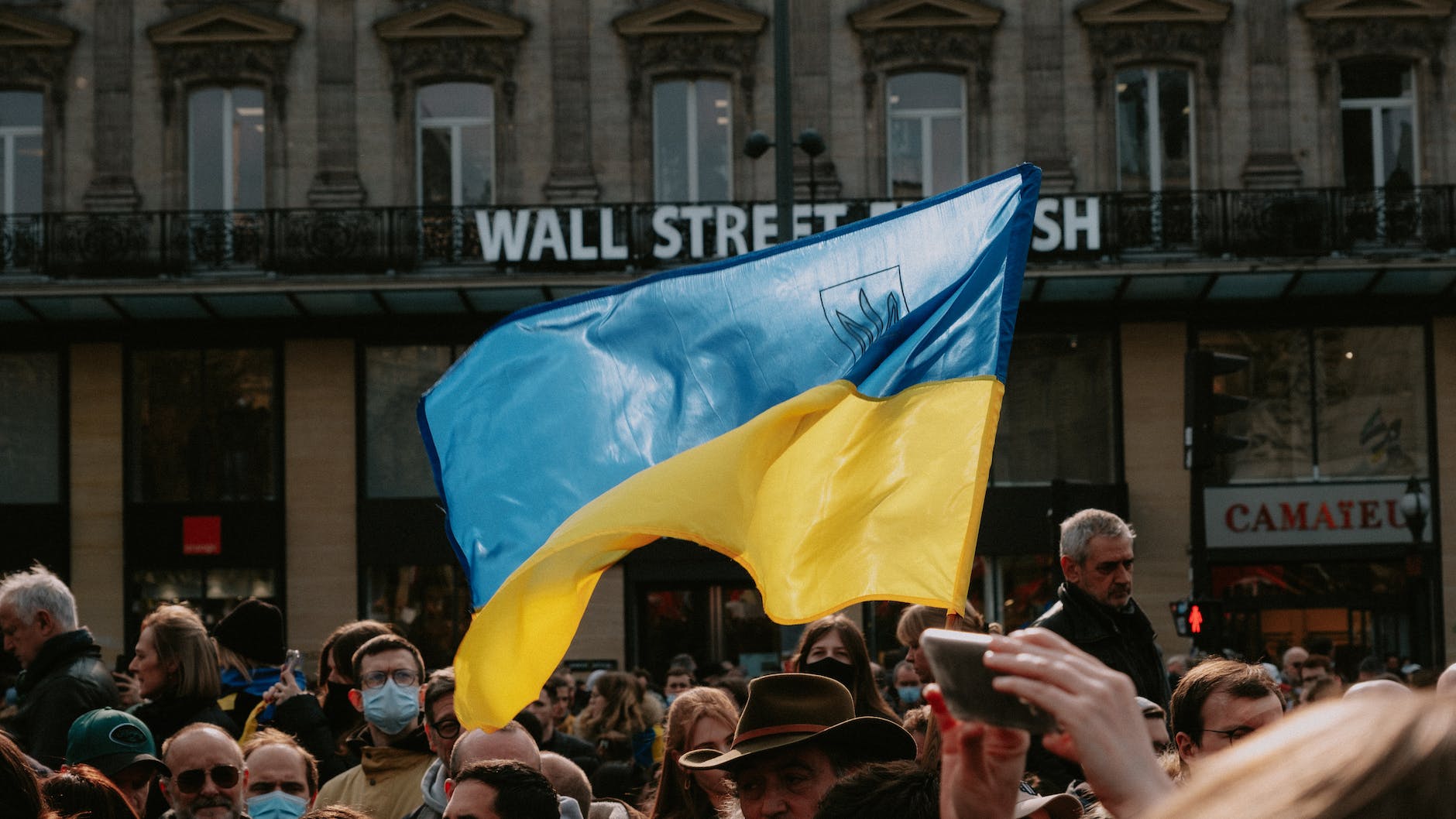
Jung‘s teachings appear more relevant than ever as we observe Vladimir Putin‘s escalation of the war in Ukraine. Russian nationalism and imperialist thinking are in many ways comparable to Hitler‘s national socialism. It exploits a culture of grievance and perceived humiliation, embedded in the mysticism of the Russian Orthodox religion.

Manipulation of the grievance culture

Dictators and extremist political demagogues do not exist by themselves. They relate to a mass psyche of people coerced into lying to themselves. They have become disconnected from their soul purpose by a grievance culture. Their minds have been usurped by the totalitarian leader telling them what to believe and how to behave.

Photo by Mathias Reding on Pexels.com

Human beings cannot look “above” for what is right and wrong, good and evil; we must struggle with these questions and recognize that, while there are no clear answers, it is still crucial to continue probing further and refining our judgments and inner thought process.

Humanity faces a constant challenge of moral reflection. Jung considered this to be central to the exploration of the human mind. The price for getting it wrong can be catastrophic as we learn when Hitler calls for total war or Putin threatens with a nuclear option.

What we would describe as well-intentioned individuals within the Third Reich ended up serving evil with their sense of loyalty and obedience.

How do we discern reality from perception and belief? How do we become more aware and immune to manipulation?

According to Jung, the first step is in training your awareness about your own shadow. Where are your toxic emotions triggered? Can you step back and reflect before reacting? If you cling rigidly to certain thoughts and beliefs you can also be easily manipulated.

Connecting to your inner BEING and authenticity is connecting to your soul purpose. It is best done in a space of quiet solitude. Connecting to your BEING is connecting to your Creator, your God. And, your Creator is unconditional Love and becoming a servant for the well-being of all living things.

What is the language of reconciliation, truth, and love as opposed to a confrontational language that divides and separates us and them, fanning the flames of venom and hate?

Reino Gevers – Author – Mentor – Speaker

One more thing...If you have found this article interesting you might want to subscribe with the “follow” button above or recommend my FREE weekly Blog to friends and family. My books can be ordered at all places that sell good books in both paperback and kindle.

Leave a comment

Filed under mental health, mental-health