Category Archives: extremism

The Dark Forces Behind Trump’s Ascent

Outside the United States, the dominant narrative often ridicules Donald Trump as a bumbling demagogue, rambling, incoherent, and detached from the nuances of governance. But this portrayal misses the deeper forces at play.

Trump’s rise was not accidental; it was engineered with the backing of ultra-conservative oligarchs who possess both vast resources and a strategic vision. These were not grassroots movements but top-down maneuvers with ideological roots and economic interests.

Read also my Blogs, some written well before the events currently unfolding

Sleepwalking into authoritarianism

You are the master of your destiny

The evolutionary advantage of empathy

The erosion of the political center

The erosion of the political center and the rise of polarization in the U.S. have been profoundly shaped by libertarian and conservative factions endowed with virtually unlimited funds. Billionaires like Peter Thiel and Elon Musk have openly stated that Trump’s ascent would not have been possible without their support. And their motivations are far from altruistic.

Both Thiel and others in this elite class have cited Ayn Rand as a formative influence. Her novels, widely read across the U.S., present a moral universe where self-interest is a virtue and government is the enemy. Rand’s rejection of regulation and welfare has nurtured a radical anti-state ideology that now animates the far right with their “deep state” conspiracy narratives. In her worldview, society’s value lies with the so-called “makers”—a few brilliant individuals who create wealth and innovation, while the majority are portrayed as burdensome “losers.” Here is an interesting background report to Thiel’s philosophy.

The disturbing elitist anti-democratic instinct

This elitist framing feeds into a disturbing anti-democratic instinct, where the “masses” are seen as lazy, entitled, and undeserving of political agency. It justifies an authoritarian approach under the guise of meritocracy.

Yet Rand’s extreme individualism stands in stark contrast to the core values that have historically bound societies together, such as empathy, community, shared responsibility, and spirituality. Her ethical framework, which pits rational selfishness against what she paints as servile altruism, ignores the vast moral terrain between those extremes. Most philosophers reject her ideology as an inadequate foundation for a just society. It fails to account for justice, compassion, and the relational fabric that makes us human.

Rand’s capitalism is idealized as a flawless, self-correcting system—blind to monopolistic power, environmental destruction, labor exploitation, and corporate manipulation. Within this context, the so-called crusade by Elon Musk’s “Doge team” to dismantle the “deep state” is easier to understand. It is not a battle for freedom—it is a push to eliminate oversight, regulation, and democratic checks and balances that constrain oligarchic power.

Truth is the first casualty

This becomes especially alarming when such immense power is concentrated in individuals who can bend public opinion to their will through control of social platforms and narratives. Truth is often the first casualty of authoritarian ambition, and we are witnessing this erosion in real time. Media outlets that deviate from the approved script are threatened with lawsuits or delegitimized outright.

What is unfolding in the United States will reverberate globally. Liberal democracies—already struggling to maintain the credibility of their institutions—are on the defensive. The far-right argument is gaining traction: that democracy is inefficient, corrupt, and too cumbersome to solve today’s challenges. Bureaucracy is cast as inept; public service is derided; the concept of government itself is being hollowed out.

This narrative is not unique to the U.S. During the Brexit debate, the cry of “freedom from Europe” resonated with voters convinced that Brussels was squandering British taxpayers’ money. That campaign triumphed, but the aftermath has been devastating. Brexit has curtailed travel, limited residency rights, and is expected to shrink the U.K.’s GDP by at least four per cent annually in the years ahead. It is one of the most self-destructive political decisions in modern European history.

The argument from the extreme right is increasingly explicit: benevolent authoritarianism is superior to democracy. But history tells a different story.

Vladimir Putin rose to power promising order after the chaos of the Yeltsin years. Over time, he dismantled Russia’s democratic structures entirely. Today, the wealth of the nation is concentrated in the hands of Putin and a small cadre of oligarchs, while dissenters are imprisoned, exiled, or killed.

Even so-called reformist authoritarians come with deep costs. Mustafa Kemal Atatürk modernized Turkey and established a secular state, but did so through repression of opposition and suppression of civil liberties. Deng Xiaoping lifted millions out of poverty in China, but maintained strict one-party rule and oversaw brutal crackdowns, including Tiananmen Square.

Ultimately, the question facing millions in this age of disorientation and instability is stark:

How much personal freedom are we willing to trade for the promise of economic stability and safety?

Authoritarians offer a compelling message: democracy is messy, crime-ridden, and overly tolerant of “the other.” They promise law, order, and security. But this is a mirage. There is no true safety in an authoritarian state. Free expression becomes a privilege of conformity. Those who think differently, worship differently, or challenge the status quo are criminalized, dehumanized, imprisoned, or worse.

Such regimes give birth to dystopias devoid of creativity, individuality, and hope. Citizens are reduced to obedient subjects, forced to idolize leaders who, in truth, hold them in contempt.

Authoritarianism doesn’t just erode the soul of a society but rewires its moral compass, hollowing out the institutions that hold truth, justice, and human dignity in place. Once that unraveling begins, rebuilding becomes a generational challenge.

It often follows in the aftermath of economic ruin, fractured communities, and the silencing of critical thought. The cost is not merely political; it is spiritual and cultural. What is lost is not easily recovered: the ability to dream freely, to dissent without fear, to imagine a shared future that belongs to all. The true danger lies in the kind of people we become under authoritarian rule.

Reino Gevers – Author – Mentor –Speaker

P.S: If you enjoyed this article you might be interested in my very latest book: Sages, Saints and Sinners Get it today on Amazon, Barnes & Noble and where all good books are sold.

Leave a comment

Filed under extremism, happiness, humanity, ideology, trump presidency

Free Trade vs. Protectionism: Lessons from History

Humans are inherently wired for connection and cooperation. Our mental, emotional, and even physical health depends on it. Prolonged isolation, whether personal or collective, challenges our capacity to thrive. When nations retreat into isolationist protectionism, they may gain short-term relief but risk long-term stagnation, weakened innovation, and social fragmentation.

Historically isolationist economic policies leads to stagnation, inefficiency, and missed opportunities. One of the best examples of a nation falling behind in naval, military, and industrial technology was the Chinese Ming and Qing dynasties of the 14th century. Fearing foreign influence and cultural impurity, the rulers severely restricted trade, costing China its competitive edge for centuries.

Industries become bloated and inefficient under protectionism

Post-independence, India adopted a protectionist, centrally planned economy. Foreign goods and investment were restricted, and most industries heavily regulated. The result: industries became bloated and inefficient. India nearly defaulted on its debt in 1991 and was forced to liberalize its economy.

Throughout history, we can find countless examples of nations thriving when they get together to form a common economic space, standardize rules and break down commercial barriers.

The success story of Hanseatic League of medieval merchant cities

The Hanseatic League (from the 13th to 17th century) was a confederation of merchant towns that collaborated for mutual benefit, and in many ways was a precursor to the European Union. Located along the North Sea and Baltic sea routes cities like Hamburg, Bremen, Lübeck, Danzig created an economic powerhouse based on shared interests, smart geopolitics, and commercial innovation.

The European Union stands as a remarkable testament to the power of unity, bringing together nations like France and Germany, once bitter enemies in centuries of war, into a partnership of peace and collaboration.

Countries once marked by poverty, such as Spain and Portugal, along with former Soviet Bloc nations like the Czech Republic, Poland, the Baltic states, and Romania, have found profound benefits in their EU membership—economically, politically, and socially. The EU has not only transformed these nations but has also reshaped the very idea of cooperation, showing how shared purpose can overcome history’s deepest divisions.

The notion that free trade is beneficial for all was first mooted by David Ricardo, a 19th-century British political economist. Ricardo introduced in 1817 the theory of comparative advantage in his book “On the Principles of Political Economy and Taxation.” His idea was that even if one country is more efficient at producing all goods than another country, both can still benefit from trade if they specialize in the goods they produce relatively more efficiently.

Factories in Bangladesh, Vietnam or China can for instance produce clothing much cheaper than in the United States, Canada or Europe. Consumers in these countries again can buy such imported clothing at a much cheaper price than if they were produced at home.

Key Points of Ricardo’s Concept:

  • Comparative advantage (not absolute advantage) determines what a country should specialize in.
  • By each country focusing on producing goods where they have the lowest opportunity cost, total global production increases.
  • Then, through trade, all countries can consume more than they could in isolation.

Before Ricardo, Adam Smith had also praised free trade in his 1776 book “The Wealth of Nations,” arguing for absolute advantage—that countries should produce what they’re best at. But Ricardo’s theory was more powerful because it showed how even less efficient countries can benefit from trade.

Open markets push companies to innovate or die. Exposure to international competition fosters dynamic economies and technological advancement. Countries that trade together are less likely to go to war with trade interdependence promoting diplomatic ties and global stability. Free trade has lifted millions of people out of poverty especially in east Asia.

Most economists agree that tariffs or quotas should only be used selectively such as protecting key sectors during economic transitions. Free trade should also include safety nets such as retraining programs and unemployment benefits.

Brexit is one of the most compelling modern case studies on free trade vs. protectionism, and more broadly, economic integration vs. sovereignty. The United Kingdom (UK) was a member of the European Union from 1973 until 2020. It decided to leave the EU, known as “Brexit” following a referendum in 2016. The populist call for protectionism and sovereignty gained more traction than rational economic arguments. Economists and analysts at Cambridge Econometrics found that, by 2035, the UK will be 311 billion pounds worse off and is anticipated to have three million fewer jobs. Other estimates put the annual loss in GDP at four per cent annually.

In summary, at the micro level, individuals who come together in a community experience greater mental and physical well-being. Human connection fosters resilience, purpose, and meaning. At the macro level, nations that cultivate shared values, mutual cooperation, and strategic alliances lay the foundation for lasting prosperity and peace. Connection is based on trust and courage. Isolationism however is marked by fear, divisive tribalism, and conflict.

Reino Gevers – Author – Mentor –Speaker

If you enjoyed this article you might be interested in my latest book: Sages, Saints and Sinners to be launched globally on April 8th, 2025.

Leave a comment

Filed under connection, contentment, extremism, happiness, happiness research

You are the master of your destiny

“The great cease to rule when the small cease to grovel.” (Friedrich Schiller 1759-1805)

Dictators, demagogues, and cult leaders excel at convincing decent, ordinary people that blind obedience and unwavering loyalty will miraculously transform their lives. The rude awakening inevitably comes.

Once in power autocrats and dictators inevitably exploit the weak and vulnerable for their own selfish needs. Russian leader Vladimir Putin is a typical example. He is purported to be one of the wealthiest people on earth. Meanwhile, his country’s infra-structure, health, and education system are collapsing while state resources are spent on imperialist wars.

In the recent U.S. Elections the power grab by wealthy oligarchs has been more subtle. Elon Musk, probably the world’s second wealthiest man, together with other billionaires (Peter Thiel, David Sachs, Rupert Murdoch etc.) control a large part of the nation’s tech and media industry (Twitter/X, Fox News). They injected more than two billion dollars into the Trump election campaign and now have a major influence on the country’s political agenda.

We are seeing an unprecedented symbiosis of politics, power and capital in the United States, German Professor Bernhard Pörksen, a media analyst, said in an interview with ZDF television. These libertarian ideologues “who despise the weak” are “pursuing their agenda on their own media platforms with extreme aggression, despising classic journalism and clearly threatening their enemies.”

Historian Timothy Snyder in his book On Tyranny, describes how democracies often erode not through sudden collapse but through gradual undermining of norms, laws, and institutions.

“The mistake is to assume that rulers who came to power through institutions cannot change or destroy those very institutions—leaving democracy in ruins.”

Spreading disinformation on their media platforms is part of the agenda. When the truth is turned into a lie and the lie into the truth the ordinary citizen, confused by conflicting information overload, switches off from politics, ultimately surrendering his basic freedoms and liberty.

In the short-term autocracies create the impression of stability through strong control of dissent and internal conflict. The reality is that without the checks and balances of a democracy power is inevitably abused, leading to inefficiency, corruption, and exploitation. Suppression of dissent and free thought stifles creativity, critical feedback, and innovation.

When the powerful become too powerful and economic promises don’t materialize, frustration can reach a tipping point. A single, galvanizing event can ignite existing frustrations and unify disparate groups against the regime, such as blatant corruption or fraudulent elections. Rebellion becomes possible when the population collectively believes change is achievable such as in the peaceful revolutions in communist East Germany, Czechoslovakia and Poland.

Nothing is more powerful than when individuals arise collectively in the realization that they can be masters of their own destiny. The pain becomes so powerful that people overcome their apathy, fear, and disempowerment, embracing a collective cause.

Mahatma Gandhi’s peaceful struggle of collective civil disobedience against imperialist British rule remains a shining example of collective power that built momentum through incremental successes with strikes, protests, and legal rulings.

You as an individual collectively will hold enormous power in shaping your destiny when overcoming fear, and believe in the possibility of change.

The poem “Invictus” by William Ernest Henley, remains a powerful declaration of resilience and self-mastery, speaking of the indomitable human spirit in the face of adversity and the ability to control one’s fate:

“Out of the night that covers me,
Black as the pit from pole to pole,
I thank whatever gods may be
For my unconquerable soul.

In the fell clutch of circumstance
I have not winced nor cried aloud.
Under the bludgeonings of chance
My head is bloody, but unbowed.

Beyond this place of wrath and tears
Looms but the Horror of the shade,
And yet the menace of the years
Finds and shall find me unafraid.

It matters not how strait the gate,
How charged with punishments the scroll,
I am the master of my fate,
I am the captain of my soul.”

Reino Gevers – Author – Mentor – Speaker

P.S. If you enjoyed this article you will be interested in my books available where all good books are sold.

Leave a comment

Filed under demagogues, extremism, happiness, mass media, self-development, Uncategorized

From religion to the political cult

For centuries, organized religion shaped people’s beliefs, provided meaning, and defined purpose in life. However, in today’s increasingly secular world, political parties are stepping into this void, offering a “gospel” that vilifies and divides.

Genuine political debate and the exchange of ideas have taken a back seat, as leaders of political movements are elevated to “cult” status, portrayed as messianic figures who claim to hold the ultimate truth.

Political cults manipulate and coerce

Many self-proclaimed religious prophets and sects inevitably faded into obscurity amid financial scandals and sexual abuse. Political cults meanwhile seem to have a field day seek in coercing followers into submission while draining them of their material resources.

Cult members are notorious for defending and excusing the misdeeds, bad behavior, and extravagance of their leaders. Devotion becomes an addiction to belief. Identity is entirely tied to cult membership.

It is only after a long process of “detoxification” that individuals may realize that true happiness cannot be outsourced. No one else is responsible for creating your happiness or unhappiness—ultimately, it is the choices you make that shape a fulfilling life..

The similarities between organized religion and political parties with a cult-like following are compelling. They both provide members with community, identity and a sense of belonging. Membership of a “tribe” shapes your friendships and beliefs. Political ideologies can become just as dogmatic as religious orthodoxy, with little room for compromise or divergent views.

The political cult uses party symbols, flags, and slogans in a similar way as religious iconography, reinforcing group identity and loyalty.

In the “Us vs. Them Mentality” political cults foster a binary division between “us” (the faithful) and “them” (the heretical or the non-believers). It ultimately leads to increased division and social fragmentation.

Historical parallels

In the mid 20th-century the fascist movements in Italy and Germany took on religious-like fervor. Mussolini and Hitler were literally worshipped as messianic figures, built around powerful symbols such as swastikas, chanting of slogans at mass rallies with oaths of allegiance.

History teaches us that when organized religion retreats into orthodoxy and forms a toxic alliance with political radicalism, the consequences are devastating.

The Thirty Years’ War (1618–1648) was one of the most destructive and complex conflicts in European history, involving many of the major powers and resulting in significant political, social, and religious upheavels across the continent. While starting out as an ideological conflict between Catholics and Protestants, it was also driven by political, dynastic, and territorial ambitions.

The conflict was only solved in The Peace of Westphalia treaty establishing the principle of religious tolerance within the Holy Roman Empire, effectively ending large-scale religious wars in Europe. This came after The Holy Roman Empire lost between 15-20 percent of its population. In some regions, such as Germany, where most of the fighting took place, certain areas lost up to half of their inhabitants.

Most concerning are current development in countries such as the United States and India where religious fundamentalism forms an alliance with political radicalism. There is a breakdown of democracy, intolerance of dissent, a breakdown in constructive dialogue, and ultimately social fragmentation and disintegration.

A political religion is centered on building a tribe of like-minded followers who can be swayed and manipulated by those seeking power and personal gain. While it fosters a sense of identity and community, it demands unwavering loyalty to its self-constructed ideology, silencing dissent and, in the end, stripping the followers of their freedom and happiness.

The 13th-century Mystic Meister Eckart, in warning of the false prophets, said: “Let us observe first, therefore, that there are some who follow God. These are the perfect. Others walk close by God, at His side. These are the imperfect. But there are others who run in front of God, and these are the wicked.”

The new “cosmic” religion

Albert Einstein envisioned a new “cosmic religion” not tied to any particular religious creed or doctrine. Instead of being bound to specific religious institutions or deities, the “cosmic religion” would be rooted in a sense of awe, wonder, and reverence for the universe itself—what he called the “cosmic mystery.”

Einstein felt that science, by revealing the beauty, interconnection and complexity of nature, could evoke a profound spiritual response, that could unify humanity beyond traditional religious divides. He emphasized moral responsibility, interconnectedness, and an appreciation for the mysteries of existence, without reliance on traditional religious structures or personal gods.

Experiential spirituality in contrast to organized religion is rooted in direct, personal experience of the divine, or a sense of connection to the universe. It is an inward, subjective journey where each individual seeks their own spiritual truths through spiritual practises such as meditation, deep walking in nature and personal reflection. Individual spiritual experience is the ultimate authority.

Happiness is a state of mind

Happiness is a state of mind and perspective. Most humans spend a large portion of their day thinking of that which was and is no more or in anxiousness and fear of an uncertain future. A negative mindset opens your mind to manipulation by external forces. The only reality is the present moment.

What do you have in your life for which you can be truly grateful?

Why not practice a gratitude ritual for the small blessings and miracles of life? What brings you authentic joy and happiness?

If you have electricity, clean water, a roof over your head, and food on the table, you are incredibly fortunate compared to a significant portion of humanity. These basic amenities, which many take for granted in developed parts of the world, remain out of reach for millions of people globally.

Access to these resources gives you much better economic security and educational opportunities. You have the ability to improve your life and the lives of future generations. You are fortunate to have greater freedom to pursue personal goals, education, and self-improvement, and don’t need to struggle for survival like most people on earth.

Reino Gevers – Author – Mentor – Speaker

P.S. If you enjoyed this article you will be interested in my books available where all good books are sold.
Leave a comment

Filed under extremism, gratitude, happiness, religion, spirituality

Understanding Authoritarian Tactics: Lessons from History

Authoritarianism is gaining momentum on a global level. It is undermining core democratic principles during a period of heightened insecurity, fueled by rapid social and economic upheaval. History teaches us that populist demagogues consistently use similar deceitful tactics designed to manipulate, subjugate, and control.

Is the world we know in danger? Could we be sliding into the type of dictatorships we saw in Europe during the early part of the last century? It is a real possibility if we study the rise of Nazism in Germany during the late 1920s.

Germany was beginning to recover from the after-effects of World War I during the early 1920s. This was an era of new optimism and cultural renewal. Berlin was a vibrant cultural epicenter. It was undergoing a period of artistic and intellectual flourishing often referred to as the “Golden Twenties.”

Artists like George Grosz and Otto Dix created striking works in the Neue Sachlichkeit (New Objectivity) movement. The Bauhaus School, led by Walter Gropius, was revolutionary in design and architecture, blending modernism with functionality, and influencing aesthetics globally. Berlin’s nightlife reflected the city’s atmosphere of liberation and experimentation, attracting writers and artists from many countries.

During this time, Adolf Hitler’s Nazi party was a small fringe group. Nevertheless, they had already started laying the groundwork for their future dominance. After the failure of their Beer Hall putsch in Munich, Hitler began infiltrating the political system from within. By the late 1920s, their ideology of anti-Semitism had become mainstream. Their support base of alienated groups also became mainstream. This paved their way to power after the Great Depression.

We need to examine more closely the authoritarian agendas of Trumpism in the United States, We also need to look at Orbanism in Hungary and Putinism in Russia to help us understand their real threat to democracy.

Viktor Orban in Hungary is idolized as a hero by authoritarian movements in democratic countries. Donald Trump described him as a “smart” and “tough person” in the television debate with presidential opponent Kamala Harris. However, Hungary today is only nominally a democratic country. Orban has incrementally reshaped his country’s constitution, judiciary, media and academic system after obtaining a supermajority in parliament in 2010. The playbook of authoritarianism follows set patterns:

  • Fear-mongering by demonizing minorities
  • Undermining the judiciary and mainstream media
  • Electoral manipulation
  • Attacks on academics and cultural institutions
  • Erosion of civil society

Authoritarianism needs an external enemy. Their rhetoric is designed to vilify minority groups, including Jews, Muslims, immigrants, and refugees. Their speeches are saturated with hate, anger, and calls for retribution. Political opponents and those with differing views are systematically dehumanized and belittled, reducing discourse to contempt and division.

Orbán has used state media and propaganda campaigns to paint migrants, particularly Muslims, as threats to Hungarian sovereignty and culture. Germany’s extremist AfD party plans to deport all non-Germans back to their home countries. Trump has called for mass deportation camps wrongfully accusing migrants of a rising crime rate.

Orban has reshaped Hungary’s judiciary, essentially replacing judges with those aligned with his ruling party. He created a National Judicial Office, giving it control over court appointments and transfers, bypassing traditional judicial self-governance. Much as in Vladimir Putin’s Russia, Orban has turned state-owned media into a propaganda arm of the government. Private media outlets were either bought by pro-government oligarchs or forced out of business through financial pressure or regulatory changes.

Sound familiar when extremists pronounce you only have to vote for them once? Orbán’s government has redrawn electoral boundaries in ways that benefit his ruling Fidesz party. Districts were gerrymandered to ensure that even with a minority of votes, the party could win a majority of seats in parliament.

Civil society organizations, particularly those focused on human rights and government accountability, have been targeted by the Orbán government. Laws were passed requiring NGOs that receive foreign funding to register as “foreign agents,” echoing tactics used by Russia to discredit and marginalize NGOs.

Orbán’s government has also targeted Academia. and the country’s educational system. Critical thinking, independence, and certain academic freedoms have been curtailed, especially in humanities and social sciences.

Democracy can only endure when it is grounded in a robust system of checks and balances, supported by a vigilant and critical civil society. The authoritarian regimes of the last century unleashed unimaginable catastrophes, including two world wars and a genocide unparalleled in human history.

At its core, democracy champions freedom of expression, individual liberty, and tolerance. It allows you to fully express and live your potential without fearing repression and control by a state. Yet, these very values are increasingly vulnerable to exploitation by extremists. Before we fully recognize the threat, power can fall into the hands of individuals whose sole aim is personal advantage, subjugation and control.

Reino Gevers – Author – Mentor – Speaker

P.S. If you enjoyed this article you will be interested in my books available where all good books are sold.

Check out also the recent episode on the Living to BE podcast and Youtube with our special guest Matt O’Neill. The topic: Happiness is a Choice.

Leave a comment

Filed under extremism, mental health, self-development, trump presidency

Scapegoating and Misinformation: A Lethal Combination

Minds consumed by fear, anxiety, and thoughts of retribution are easily captured by hate preachers and demagogues. The scenes unfolding in the UK—right-wing extremists burning businesses of small shop-owners, targeting mosques, and attacking innocent bystanders of color—are tragic repetitions of history.

What distinguishes the current situation is the dramatically enhanced tools available to extremists, amplifying their impact. Over the weekend, at least 30 violent protests erupted across the UK, largely fueled by misinformation spread on social media claiming that an illegal Muslim immigrant was responsible for killing three young girls and injuring several others.

An account called Europe Invasion, known to publish Islamophobic and anti-immigrant content, posted on X, formerly Twitter, that the suspect was “alleged to be a Muslim immigrant”. The post was viewed more than six million times. And as the post was accruing views, crowds of far-right protesters were swelling in Southport, ready to charge local mosques.

The truth was that the attacker in Southport was identified by police as a 17-year-old, Axel Rudakubana, who was born in Britain, and that the attack was not terrorist-related. The motive for the attack remains unclear.

Scapegoating during times of crisis

Countless similar incidents can be cited throughout history where minority groups have been targetted by hysterical crowds, falling prey to rumors, misinformation, and hate speech. During the Black Death in Europe in the 14th-century thousands of innocent people were killed for allegedly spreading the pestilence. Jews were blamed for poisoning drinking wells. The baseless accusations led to widespread violence and massacres against Jewish communities throughout Europe, including the Strasbourg massacre in 1349, where around 2,000 Jews were burned alive.

In 1779, anti-Catholic riots were incited by Lord George Gordon in London, spreading fears that the Papists Act of 1778 would lead to Catholic dominance. The resulting violence lasted several days, leading to widespread destruction, looting, and the deaths of around 300 people.

Social media platforms must bear responsibility

The difference is that misinformation in our age can spread globally within seconds, reaching millions of people. Social media platforms must bear responsibility for failing or unwilling to remove obviously false information. As we have seen in the latest riots in the UK, the consequences can be devastating.

During times of crisis, there is a need to seek simple answers to complex problems. Cognitive closure and confirmation bias make people dismiss facts and contradictory evidence. Scapegoating provides psychological relief and an outlet for fear, anger, and underlying grievance culture.

Exclusion of outsiders by Group and tribal-think

“Group” and “tribal-think” views all those outside the “tribe” as outsiders. During times of economic and social crises, the in-group/out-group dynamic becomes more pronounced, leading to the vilification of those perceived as different or threatening.

Responsible leadership and fact-checking journalism become more important than ever. Individuals and social media platforms should be made accountable on a global level for spreading hate and misinformation.

Reino Gevers – Author – Mentor – Speaker

P.S. If you enjoyed this article you might be interested in my books available where all good books are sold.
Leave a comment

Filed under demagogues, extremism, humanity, ideology, mass media

Political Divisions in America: Concerns from a Global Perspective

Many Americans in rural Georgia, Kansas, or Texas may not realize that people in Europe and around the world are closely watching events in the United States with growing concern as political divisions deepen.

The assassination attempt on former President Donald Trump seems likely to intensify extremism and further entrench these divisions.

People like me, living on an island in the Mediterranean, are perplexed. I talk to many friends and family in the United States and have noticed in recent times families breaking up and lifelong friendships being terminated over political differences.

The perception has always been that the United States is a creatively free, dynamic, tolerant, multi-cultural nation of boundless opportunity and human endeavor. You have gifted the world with some of the best music, art, and technological tools.

How is it possible that the world’s arguably most powerful and successful nation in economic and military terms can so lose the plot over issues such as basic democratic norms, women’s rights, and religious freedom?

The United States remains the only superpower

Events in the United States have vast geopolitical consequences considering the military and political power wielded by the person sitting in the White House. With a GDP of 26 trillion dollars in 2023 the U.S. economy far surpassed the world’s second-largest economy China with a GDP of 19 trillion dollars followed by the economies of Germany, Japan, and India.

The U.S. defense budget of about 813 billion dollars is the largest in the world. For fiscal year 2023, it was approximately $813 billion. Compared to Russia, China, and India the U.S. military is by far the most powerful, and technologically advanced.

As an outsider looking at events in the United States from afar, here are some thoughts:

  • Despite a booming economy, it appears that a significant portion of Americans are living paycheck to paycheck. There is a perception that they will never live the American dream and that the system is rigged against them by elites in Washington and New York. These people are particularly prone to nostalgia rhetoric that promotes the idea that America was once a great country that has degenerated into chaos.
  • American media, especially local and regional newspapers, were once prime examples of good journalism and fact-checking. There was a clear distinction between news and editorial comment or opinion. The digital revolution has basically killed-off professional journalism. Mass media in America earns its revenues with entertainment and drama, rather than educating and informing. News channels from the left and the right are propagandistic and serve two different perceptions of reality.
  • The tribal bubbles are served by algorithms on social media, emphasizing confirmation bias and grievance culture. Beliefs are cemented, and other viewpoints and even solid science are rejected as fake news.
  • Russian and Chinese bot factories have played significant roles in fanning divisions, fears, hate, and anxieties, through social media as part of their broad information warfare. Russian bots were particularly successful in promoting the Russian narrative on the war in Ukraine with U.S. congressmen on the right.

Devastating consequences for an inward-looking America

When America turns ever more inward with an “America First” philosophy and withdraws from such established institutions as NATO, the consequences are too ghastly to contemplate. The globalized economy has become increasingly intertwined. Disruptions of markets elsewhere will inevitably have a major impact on the man in the street in Detroit or Phoenix. The power void will be filled by other forces such as China and Russia, gaining control of major natural resources and trade routes.

Of particular concern in Europe is a possible withdrawal of U.S. military support for Ukraine. Retired U.S. commanding officer of U.S. forces in Europe, Ben Hodges, paints a devastating scenario if Ukraine should lose the war against Russia or be forced into an unacceptable peace agreement. Millions of Ukrainian refugees would massively disrupt the social order in Western Europe.

“Failure of Ukraine will have devastating consequences for Europe and for the United States. If Ukraine fails, Russia will absorb tens of thousands of Ukrainian troops into their ranks. They’ll be forced into the service and then they’ll be used as cannon fodder on the next phase of what Russia attempts. This will most likely be against Moldova, or against Lithuania or maybe even Poland,” according to Hodges.

To my American friends, I say: Your decision in November will have a major impact on lives all over the world. Who ultimately benefits from the hatred and division? Will you serve as a beacon for the rule of law, tolerance, and democratic norms or serve as a template for the dictatorships of Russia, China, Iran, and North Korea on why democracy does not work?

Reino Gevers – Author – Mentor – Speaker

P.S. If you enjoyed this article you might be interested in my books available where all good books are sold.

Leave a comment

Filed under extremism, humanity, ideology, mass media, social media, trump presidency, Uncategorized

Sleepwalking into authoritarianism

Democracy is not a spectator sport, it’s a participatory event. If we don’t participate in it, it ceases to be a democracy.” – Michael Moore

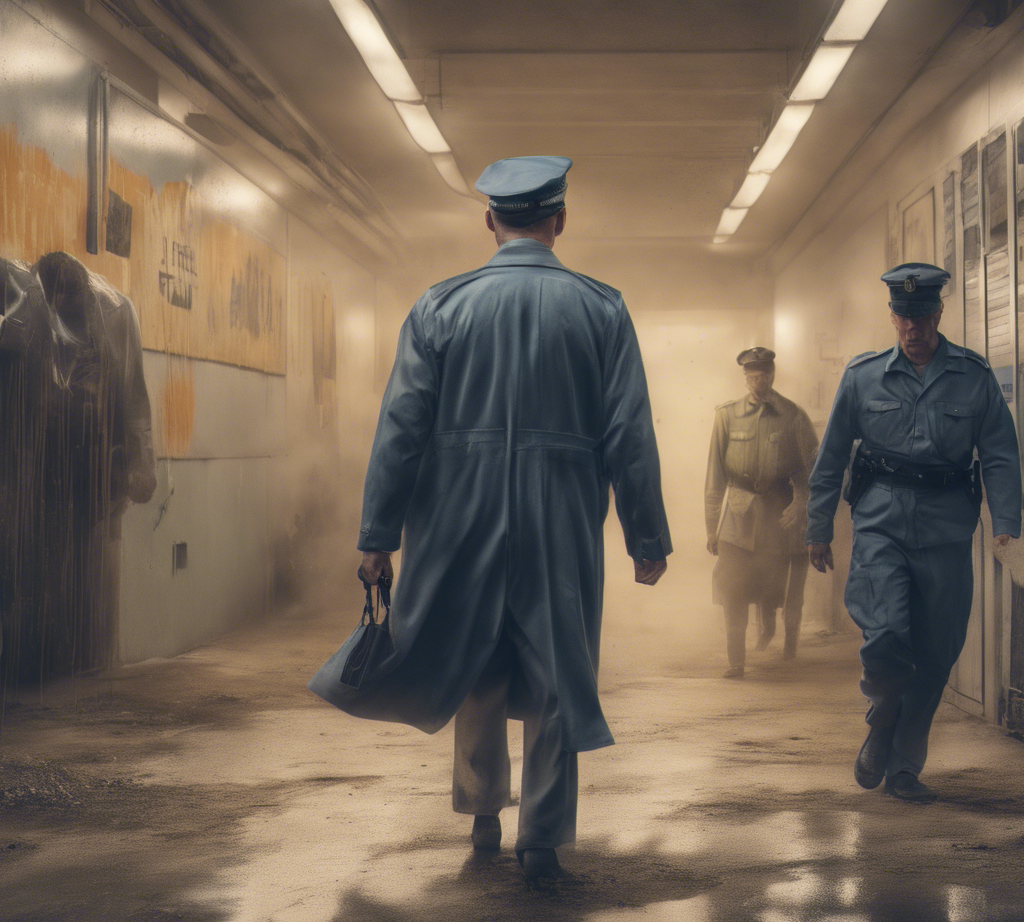
Envision yourself living in a country where even the mildest critique of the ruler could land you behind bars or strip you of your livelihood. The airwaves echo incessant hymns of praise for the leader, while simultaneously stoking hate towards both real and imagined adversaries. Meanwhile, your son lives in constant fear, knowing he could be conscripted at any moment into a futile war.

This is a grim reality in Russia and a growing number of countries, casting a shadow over the lives of its citizens. Alarmingly, this pattern could potentially spread to numerous democratic nations where generations have relished unparalleled freedoms, blissfully unaware of the true implications of authoritarian rule and its pervasive influence on society.

Across the globe, we witness a gradual erosion of fundamental liberties and democratic principles. Even within Western democracies long considered bastions of stability, nefarious political factions are becoming mainstream, posing a major threat to the established order

Democratic backsliding across the globe

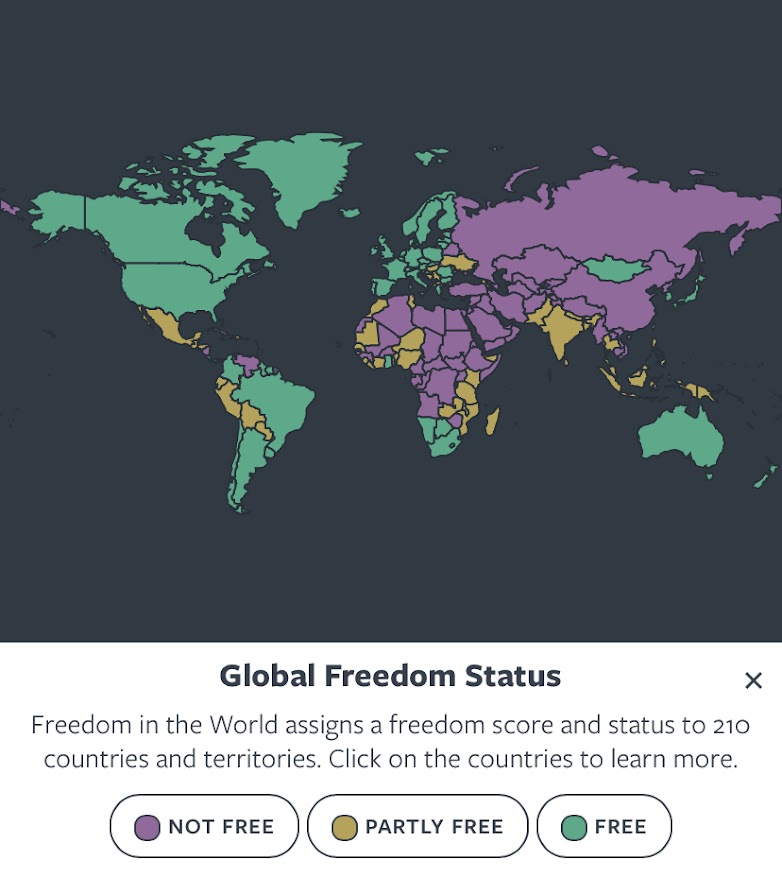
The Democracy Index for 2019 found that democratic backsliding across the world has led to the worst score since the index was first produced in 2006, with only 5.7 percent of the global population living in what could be considered a “full democracy.”

Far-right parties bent on eroding democratic checks and balances

A Berlin-based leading Civil liberties network has warned that the rule of law is declining across the European Union as far-right parties continue to weaken legal and democratic checks and balances. Liberties in entrenched democracies such as Sweden and Italy are in a gradual process of retreat and risk becoming systematic, according to the 2024 Liberties Rule of Law Report.

The U.S. presidential elections this year are bearing up to become a real test in democracy with a significant portion of election denialism having taken hold among a large section of voters. Donald Trump’s claim that the last election was stolen has led to a wholesale attack on the entire democratic election process.

In the past, the United States has relied on state and local election officials, regardless of party, to count votes fairly and to accurately report results—but that can no longer be taken for granted, according to a detailed report in The Atlantic.

The rightwing Heritage Foundation has drawn up detailed plans to purge government agencies and to replace non-partisan civil servants with Trump loyalists if they win the 2024 election. Agencies and offices responsible for enforcing civil rights laws are to be replaced with right-wing ideologues throughout the federal government, making their agenda on women’s and LGBQT rights permanent.

Democracy and civil liberties take many decades to be entrenched in society while it takes only one government to dismantle everything. Freedom of the press can be stifled overnight, opposition parties banned or intimidated, and judges and civil service members replaced with regime-friendly acolytes.  

The frightening scenario is that the process takes place gradually and incrementally with an electorate sleepwalking into authoritarianism.

Recent examples where this has happened are Turkey, Russia, Hungary, and Poland with ominous signs that things might be going the same way in the United States. In Poland, the tide was turned with the election of a new coalition government.

However, it might take a generation to rebuild the Polish judiciary and civil service into neutral bodies after the previous right-wing government had reshaped them into partisan instruments over eight years. The first priority was “to turn off the factory of hate,” said the new head of Poland’s highly influential public television network TVP, Tomasz Sygut, replacing party political propagandists with real journalists. Two of the main TVP channels were abruptly taken off the air by new managers. The channels had openly campaigned for the previous right-wing government and churned out hate toward migrants, the European Union, Germany, political opponents, LGBTQ people, and minorities.

We need only to look at history to understand how quickly basic freedoms can be usurped when a society fails to heed the warning signs. Adolf Hitler’s ultimate plan to extinguish the Jewish population with a German Reich controlling all of Europe was clearly outlined in his 1925 autobiographical manifesto “Mein Kampf”, compounding existing beliefs, fears, and xenophobia.

When opinion becomes an entrenched belief when the mind refuses to accept an alternative idea or reality, and people with other viewpoints are dehumanized it is but a short road to authoritarianism.

Hitler’s explicit racial theories were openly portrayed in “Mein Kampf” and in his speeches before coming to power: Jews, Slavs, and other non-Aryan groups were described as subhuman and deserving of extermination or subjugation. His vision for a racially pure society involved the systematic elimination of “undesirable” populations that eventually culminated in the Holocaust. People in the mid-1920s failed to fully comprehend Hitler’s intentions for territorial expansion (Lebensraum) and the establishment of a racially pure Aryan state.

The suppression of dissent, the elimination of political opposition, and the manipulation of propaganda to indoctrinate the German population with Nazi ideology was introduced gradually. The policy of appeasement with influential groups of Nazi sympathizers in the United States, Britain, and other countries, eventually paved the way for one of the darkest periods in human history.

Currently, the global battle between authoritarian dictatorship and democracy is symbolized by Ukraine defending itself against Russia determined to destroy the country as a nation-state and to integrate it into a new authoritarian Russian empire with “Tsar” Vladimir Putin having complete control.

The Russian narrative is revealing itself as very effective in falsifying history by arguing that Ukraine was always part of Russia. Ukraine has a long cultural history and was forcibly integrated into the Soviet Union by Stalin. Russia’s distortion of history is finding track, especially among right-wing parties who see the dictator Putin as a defender against the “immorality” of Western liberalism.

Authoritarianism goes against all human dignity and essentially gives power to a single ruler or small clique that inevitably ends up enriching itself at a terrible cost to the majority of the population. It is a one-way street where everyone loses.

Democracy and basic freedom are by far the best instruments for human creativity and innovation. It is not something you believe or accept unconditionally. It demands constant action, participation, innovation, and adaptation to changing circumstances.

“The only sure bulwark of continuing liberty is a government strong enough to protect the interests of the people, and a people strong enough and well enough informed to maintain its sovereign control over the government.” – Franklin D. Roosevelt

Reino Gevers – Author – Mentor – Speaker

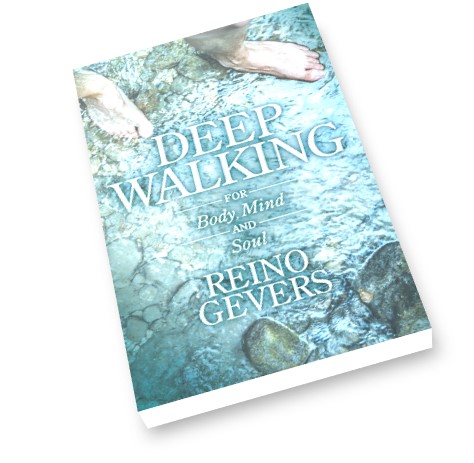
P.S. I’m excited to announce the release of my latest book, “The Turning of the Circle: Embracing Nature’s Wisdom for Purposeful Living.” If you enjoy it, you might also be interested in my previous works, “Deep Walking for Body, Mind and Soul” and “Walking on Edge: A Pilgrimage to Santiago.” You can find all of these titles at reputable bookstores near you.

Leave a comment

Filed under extremism, psychology, social media

Mastering the Mundane

Sometimes political events starkly reveal the current nature of the collective mind.

What is playing out in the current midterm elections in the United States is much related to a deeply suppressed shadow. The nation appears at the edge between two opposites of a raging river cutting through the heart of America.

The tendency to extremist positions is often rooted in deep uncertainties and fears, in the U.S. probably stemming from the times of the civil war. On the fringes of society you will then see the triggering of the pent-up fury of disturbed personalities – dispatching pipe bombs or going on a killing spree in a synagogue

The challenge in the law of opposites is finding the middle ground−that difficult territory where the truth has many shades of grey.

The Chinese masters placed great emphasis on this aspect−not only as crucial in the martial arts but as a life philosophy.

Without solid foundation in dealing with the everyday mundane any type of self-development will come to naught.

The ancient Jewish sages went further in teaching that if we failed to master the normal daily activities such as looking after our health, nutrition, relationships and livelihood−we couldn’t hope to advance to higher spiritual experience.

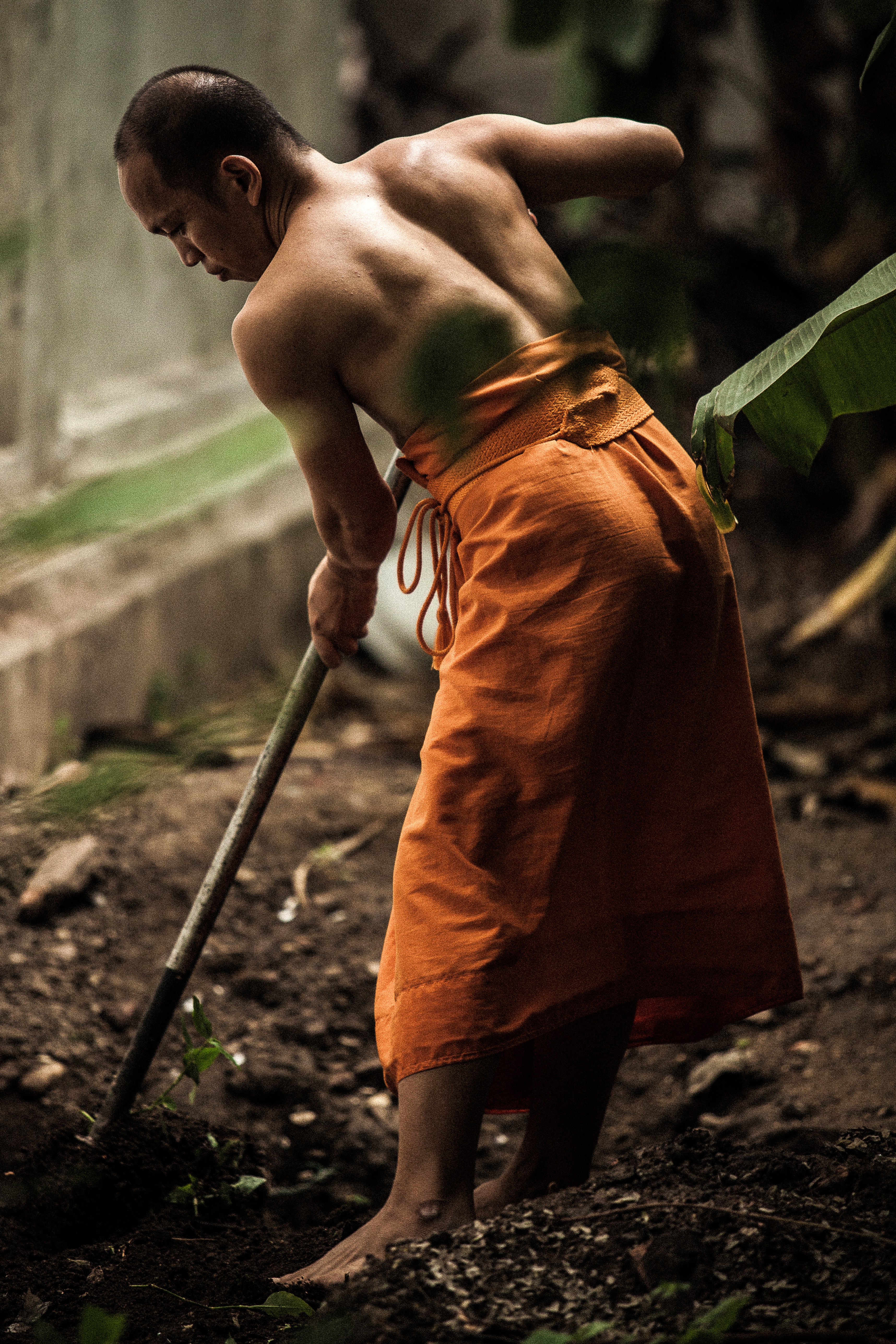
Thus, a good portion of life in the monastery is spent in cleaning, gardening and other menial chores. It is not only a practice in humility but stems from the knowledge that mastering the mundane is the gateway to loftier spheres.

eduardo-prim-377962-unsplash

Photo by Eduardo Prim on Unsplash

Physical exercise and the mindful carrying out of mundane chores are excellent for grounding. If your work is mostly in a sitting position in an office it is crucial to use breaks for walking or other exercises.

The “Yoga  tree routine” is especially effective as a grounding morning exercise.

  • Fold your hands with the forefingers touching each other.
  • Ground yourself with your right foot, imagining roots like those of a tree growing from the center of your foot deep into the earth.
  • Place your left foot at the height of your right knee and then lift your hands with forefingers pointed to the sky above the focal point of your skull.
  • Imgine that you are mentally connected by a stream of energy to the sky above your head and the earth below your foot.
  • Repeat the exercise with the left foot.
  • You can close the exercise with a powerful mantra or prayer aligning all your activities of the day with what God, the universe or any other deity has planned for you that day.

Reino Gevers – Author, Mentor and Consultant

https://www.reinogevers.com


Leave a comment

Filed under demagogues, extremism, lifestyle management, mental-health, raised consciousness, Uncategorized

Are you being brainwashed?

I’m sure you’ve  had the experience recently. You are talking to someone when you  notice they have switched off with their “cemented opinion”.  But you continue talking, still hoping to convince that person with your “rational argument.”

Donna parla con lettere su sfondo biancoI fall into the trap every time, knowing full well that no matter what information I provide, it will not convince the other person to adapt or change his or her mind.

A medical doctor friend of mine recently vented frustration at the growing number of patients questioning his diagnosis with information they had found on the Internet. It is mind boggling that the expertise of scientists, who have spent a good part of their lives becoming experts in their fields, is ridiculed by persons with only scant knowledge at best of the topic they are talking about.

We surround ourselves with friends and associates who share our opinions and mannerisms. We subscribe to media that feed us with information we want to hear. Its human nature. A questioning of our belief system is perceived as so “dangerous” that it might alienate us from our tribe and leave us cold and alone. The unfortunate part of this human trait is that it makes us prone to manipulation, especially if the perceived threat to group identity is threatened.

What happens to the individual manifests itself into what I call the mass brainwashing and fogging of minds. Political strategists and the master manipulators understand this part of the working of the human mind very well.

Take for example my home country South Africa. The media is churning out almost daily evidence of the looting of the country’s state-owned enterprises and national treasury by the ruling president and his cronies. In any normal situation President Jacob Zuma would have been booted out of office and sentenced to a long prison term for crimes ranging from massive tax evasion to personal enrichment and treason.  He is only getting away with it because he has convinced his electorate that they are poor because the wealth of the country is controlled by “white monopoly capitalism.” Worse still, the media controlled by this “monopoly” is spreading lies in a bid to re-install apartheid.  That is all you need to communicate in a country still deeply divided along racial lines.

Feed into already existing prejudices or fears by spreading half-truths, lies and misleading information and you control the masses who believe what they want to believe. Adolf Hitler understood this mechanism perfectly by feeding into existing anti-Semitic prejudices of a highly educated society until he had them all screaming “Sieg Heil” as the rail carriages rolled into the death camps of Auschwitz.  The economy of the oil-rich country of Venezuela was ruined by a despot riding the mantra that all the troubles could be attributed to American imperialism.

This is why I find the rising nationalism in so many countries so dangerous. It appeals to the most basic of human instincts, whispering into the ears of the masses: “Someone is out there taking or denying from you something that you regard as very precious and dear.”

The wise teachers from all the major religious traditions teach us that you need to “neutralize” your mind in order to open yourself to true spiritual experience. It sounds so easy but is probably one of the hardest things to do. Don’t we all have toxic emotions, prejudices and fears that we desperately hold on to?

A first step toward neutralizing the mind is the admission of those existing pre-conceived ideas, or emotions and in analyzing their origins.

  • What made you think the way you are thinking?
  • Do you really have an open mind to a new angle or perspective?
  • Are you versed in the art of listening?

Inside each human lie embedded the seeds of doing either good or evil. What you feed your mind with on a daily basis is what you become. You make your decisions based on your belief system.

Reino Gevers – Mentor for Leaders and Achievers – Your Health Matters

Awakening the Fire Within – key principles of health and success. Enrolling now will give you a 25 per cent discount.

http://www.reinogevers.com

//ws-na.amazon-adsystem.com/widgets/q?ServiceVersion=20070822&OneJS=1&Operation=GetAdHtml&MarketPlace=US&source=ac&ref=qf_sp_asin_til&ad_type=product_link&tracking_id=reinosblog53-20&marketplace=amazon&region=US&placement=1546685650&asins=1546685650&linkId=ddf1f52227c6037f25cc4dd75d2f8f24&show_border=false&link_opens_in_new_window=false&price_color=333333&title_color=0066c0&bg_color=ffffff

Leave a comment

Filed under exercise mental health, extremism, happiness, lifestyle management, psychology, raised consciousness, spirituality, Uncategorized