Category Archives: meditation

Walking on Edge

Walking_on_Edge_Cover_for_Kindle The Camino in Spain has in many respects been a life-changing experience for me.  The lessons learned on the pilgrimage are in so many ways an analogy of life. My book “Walking on Edge”, a work of fiction, takes up many autobiographical cues and is dedicated to some of the most amazing people I have met on the Path.

For many centuries Christian pilgrims walked thousands of kilometres from the doorstep of their homes throughout Europe to the Spanish city of Santiago de Compostela, where according to legend lie the remains of one of Jesus apostles St. James. Fear of landing in the fires of hell after death was deeply entrenched in the minds of the people of the Middle Ages. The church at the time promised those folk that they and their families would be cleansed of all sin and have a wonderful afterlife in heaven if they did the pilgrimage at least once in their lifetime.

Today hundreds of thousands of people are rediscovering this ancient route as a wonderful way of self discovery and through that deep look inside, finding their own inner spirituality and soul purpose.

In my book I have changed the characters but some of those modern day miracles are based on true experience.  Yes, I am convinced that miracles are still happening, if we open our senses and look around us. For me the Camino was not one massive bolt of enlightenment striking on a hill, but the sum of many exceptional experiences over a period of several walks on different paths in Spain and France.

Since the days of my childhood I have agonised over the teachings of religion telling us to believe this or that or to follow this or that teaching. It’s all external. One major lesson I have taken from the Camino is that there is a major difference between religion and personal spiritual experience. In my book the pilgrim Chuck calls it the difference between head and heart mind. The soul path cannot be understood with rational thought and can only be felt with the heart. And, a growing number of people are saying: “Let me go out and seek an answer to why I am here and who I really am.” Through this self-recognition comes what I will call “God recognition” and what  is a very personal and individual experience.

Suffering inevitably leads us to go out looking for answers. A lot of people are getting lost and feeling left behind in the digital revolution. In some ways mankind is facing a similar dilemma as the people in the Middle Ages. Its no longer the church that rules over our lives but the information overload of countless distractions polluting our minds with clutter we don’t need.

Ronaldo was one of those pilgrims “walking things off” by going at a pace most others could not keep up with, avoiding all conversation as the emotional clutter gradually released itself, opening up space for new experience.

And it was that space, as Chuck called it “that can then be nourished with inner peace, forgiveness and compassion. You in fact are working on becoming a better human being.”

Reino Gevers – Mentor for Leaders and Achievers – Your Health Matters

http://www.reinogevers.com

“Walking on Edge – A Pilgrimage to Santiago” available both in Kindle and paperback.


Leave a comment

Filed under gratitude, happiness, meditation, Pilgrimage, spirituality, Uncategorized

Goal setting with the magical 40

Exuberant young woman celebrating her vacationEver thought about why fasting is most effective after 40 days? Modern neuroscience is confirming the positive effects of  “the magical 40” which is a special number in ancient biblical traditions.
The “40” symbolized in many instances a time of trial, testing and probation.

Moses spent 40 days and 40 nights on Mount Sinai to receive the Ten Commandments. He led the people of Israel through the desert for 40 years. Jesus spent 40 days in the desert to fight the temptations of Satan. Many of the Jewish kings ruled for an epoch of 40 years.

So, is it surprising that positive habit forming rituals like starting a healthy new diet, an exercise sequence or the practising of a personal mantra, really starts to manifest in a life-changing way after 40 days.

This is also one reason why most New Year Resolutions don’t work. People give up too easily. They don’t stick it through for an uninterrupted period of 40 days!

Modern Neuroscience is once again confirming what ancient masters learned through observation and practise.

Martin Dresler at Radboud University Medical Centre in Nijmegen, the Netherlands, and his colleagues used functional magnetic resonance imaging (MRI) to scan the brains of 23 of the top 50 athletes and compared the scans with those of untrained people. The team then used a technique popular among memory athletes to train the control group daily over 40 days. The researchers found that those in the control group roughly doubled the number of words they could recall, remembering up to 60 from a list of 72 — nearly matching the performance of some athletes.

Changes in brain connectivity patterns in the control group before and after training looked similar to the differences between untrained volunteers and memory champions.

The conclusion reached is that connections in the brain grow stronger between key areas of the cortex involved in learning, memory processing and the linking of new and old knowledge when practised over an uninterrupted period of 40 days.

Reino Gevers – Mentor for Leaders and Achievers – Your Health Matters

http://www.reinogevers.com

Get my free E-Booklet “Resilience: What makes us strong”.


Leave a comment

Filed under biblical 40, energy, exercise mental health, happiness, lifestyle management, meditation, Uncategorized

The ear to the ground

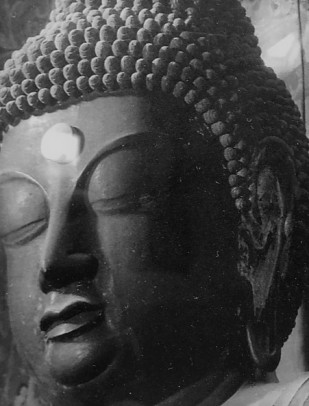
IMG_4181In sculptures and paintings the great teachers, like the Buddha, are often depicted with large ears to symbolise their wisdom and ability to go with the old saying of keeping, “the ear to the ground”, in being fully aware of what is happening and what people are saying.


In ancient scriptures the ear is also described as the “gateway to the soul”. The ear not only has the exceptional ability of picking up fine nuances of a musical instrument but also to listen to “With-In.

Our ears are already open before we are born in hearing the heartbeat of the mother in an embryonic stage and it is the last organ to depart when we leave this life.

An ancient legend tells us that Maria conceived Jesus through the ear because it is the most sensitive organ and closest to BEING and original sound.

In Chinese medicine the kidney opens itself in the ears. Not suprisingly the ears are shaped like kidneys and regarded as the foundation of good health and vitality. All of the body’s functions rely on the heat provided by kidney qi and the gate of life.

The ability to really “listen” is becoming drowned by the cocophony of the multitude of noisy voices bombarding us.  When under too much stress our body often reacts with tinnitus, or a ringing and buzzing in the ears. An ideal way of winding down is to go out into nature and do the following:

Listen and become aware of your breathing. Then listen through that breathing, become aware of the space around you. Hear the birds singing, then focus your mind on that one bird song or the wind rustling through the leaves. And, behind those natural, healing sound is nothing but open space and silence With-In.

Reino Gevers – Mentor for Leaders and Achievers – Your Health Matters

http://www.reinogevers.com

Get my free E-Booklet “Resilience: What makes us strong”.

Leave a comment

Filed under blood pressure, exercise mental health, healing nature, immune system, meditation, mental-health, psychology, raised consciousness, spirituality, Uncategorized

Stress: A curse or a blessing?

We hear it all the time: People complaining that they are stressed out, attributing all sorts of health problems to stress. It’s a myth. Stress is not the problem – lack of rejuvenation is.

Stress hormones flooding our system are crucial to our survival instincts. Let’s just go back thousands of years to our ancestral past. Uma the hunter is out in the jungle following the tracks of an antelope that he hopes to bring home to his clan living in a cave nearby.

Then a huge tiger blocks his path. Uma freezes. Within a split second the hypothalamus in the brain   sends a message to the adrenal glands on the kidneys that instantly floods the body with the stress hormone adrenaline.

mentoring8.jpg

Adrenaline binds to receptors on the heart, arteries, pancreas, liver, muscles and fatty tissue. In effect adrenaline increases heart rate and respiration, and by binding to receptors on the pancreas, liver, muscles and fatty tissue, it inhibits the production of insulin and stimulates the synthesis of sugar and fat, which the body can use as extra energy.

Uma needs to decide for his own survival: Do I head for the nearest tree or fight the tiger?

Stress hormones enable us to focus all our energies and mental capacities to that one task that needs to be addressed. Whether the threat is real or imagined the body reaction is the same. Singers or speakers know this body reaction as stage fright, moments prior to their act. But when it comes to the actual show, they deliver a starring performance with nobody in the audience having had an inkling of what the performer went through.

Adrenaline and other stress hormones start becoming a problem when the imagined threat is more or less a permanent condition. The constant pressure on arteries weakens the heart muscle eventually leading to heart failure or a heart attack. It can also impair the brain’s memory function and weaken the kidneys. Vital nutrients are extracted from the body to feed the constant adrenaline rush, eventually leading to chronic fatigue or even skeletal problems.

Our stressful modern lives have us more or less constantly facing the tiger. After Uma frightens away the tiger with his spear, he even manages to bring home the antelope for dinner. All the hormones fall back to normal after he has had sumptuous meal and the clan has celebrated him as a hero around the fire.

Stress becomes a problem where there is no longer a balance between activity and recuperation. Even in so-called recuperation periods we often tend to go for strenuous exercise routines that don’t really bring down our stress hormone levels.  So what calms the mind and body most effectively?

Exercises that synchronize body and mind very effectively are those that calm your breathing and relax the entire muscular system from within. A daily meditation of between five and ten minutes is a good way to start. All the body arts such as yoga, qi gong or taiji have an enormously positive effect on the immune system. Even a gentle walk in the park where you concentrate on mindful breathing will bring down your stress levels.

Reino Gevers – Mentor for Leaders and Achievers – Your Health Matters

http://www.reinogevers.com

Get my free E-Booklet “Resilience: What makes us strong”.


Leave a comment

Filed under blood pressure, body arts, exercise mental health, meditation, mental-health, stress hormones, Uncategorized

The battlelines are drawn. Which side are you falling on?

View of the planet Earth in space

By Reino Gevers

As humanity moves on into a next dimension of raised consciousness the shadow side of lower consciousness inevitably rears its ugly head. It can be particularly observed in the current highly toxic polarised political climate in many countries.

But what holds true for the public discourse is also a battle within and taking place in daily inter-personal interaction. Here is my own, albeit incomplete list of the battlelines. So which side are you falling on?

Raised Consciousness Lower Consciousness
Global perspective. Concern for the well-being of humanity as a whole. Only if we help and support each other in solving our problems can we survive as a species. Concern limited to the nation or members of ones own ethnic group. Persons outside this group are perceived as the enemy.
Alignment with the higher consciousness. Core values: love, peace, integrity, service. Disalignment. Driven by toxic emotions such as hatred, fear, greed, anger.
Timeline of thinking: Service for what is good for generations to come? Short-term self-gratification.
I need to change if the world is going to change. Ability for critical self-reflection and correction. Narcissism: Everyone else is responsible for my problems, except me. I am right, everyone else is wrong!
Non-ideological. Multi-facetted approach to problem-solving. Probagation of „easy solutions“ based on „ism“ ideologies such as nationalism, communism, capitalism
Asking questions rather than having ready answers. Active listening ability. Dogmatic belief system. Unwillingness to adapt to changing circumstances. Inability to accept other views than ones own.
Givers Gain. What can I contribute to my village, my country and the world. Long-term trust in universal justice Entitlement attitude. The world owes me. I will grab for me what I can get.
Energised active participation I couldn’t be bothered
Appreciation and gratitude Needy and disrespectful. Its never enough
High self-esteem Low self-esteem

1 Comment

Filed under healing nature, humanity, life vision, lifestyle management, meditation, mental-health, psychology, raised consciousness, spirituality

Lessons learned on the Camino

Why walk several hundred kilometres on a path in Spain with a back pack? For an outsider it seems difficult to understand why thousands of people from all walks of life are resdiscovering this ancient pilgrimage route as a personal journey of self-discovery.

After walking the Camino Primitivo from Oviedo to Finisterre this year I would like to share some of the insights that might motivate you to put the Camino on your bucket list. First and foremost I see a walk on the Camino as a fast-track opportunity of learning many of life’s important lessons:

img_3658

  • Walking alone for hours a day in nature is the perfect opportunity for self reflection and to disengage from daily distractions that under normal circumstances prevent you from looking deep inside of you. You will go into sync with your own rhythm at a deeper level. What thoughts, fears, emotions are you dealing with at this moment in time?img_3781
  • Walking with a back pack forces you to slow down. If you go too fast you will lose your way and you will take much longer to get to your destination.You might even have to end your journey because your feet, back and knees have been over-exerted.
  • If you see it as a mere physical exercise of doing so many kilometres each day and reaching a certain destination by a certain time, you won’t see and discover any of the miracles around you. Its the difference between head-mind and heart-mind.
  • Every day is walking into an unknown territory. You don’t know what will come around the next bend and what you will have to deal with. The weather sometimes changes every hour and you just have to deal with the situation that is at hand and that you don’t have any control over.
  • There are Highs- and Lows every day in life. You just have to accept this as a natural order of ebb and flow. Attachment to either is a cause of unhappiness.
  • The more you carry with you the harder your walk. Free yourself of the clutter that you don’t really need. Focus on the essentials.
  • If you get lost don’t hesitate to ask for help. Most people are only too willing to be of assistance.
  • Be humble and the Path will lead you.

Last but not least: Why are you here? What is your soul purpose and what are you doing for the rest of the days in your life that is of service to the bigger WHOLE? You have all the time in the world and yet no time to lose!

Reino Gevers – coach, trainer, author

http://www.reinogevers.com


2 Comments

Filed under life vision, lifestyle management, meditation, outdoor coaching, spirituality, Uncategorized

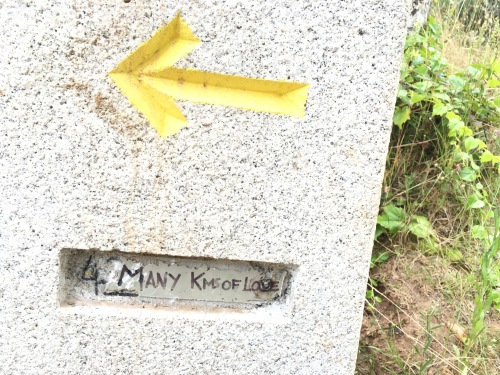
On the Way – the Camino Primitivo

Tomorrow I’m leaving for Oviedo on the Spanish west coast to start my walk on the Camino Primitivo – the oldest part of this ancient pilgrimage path. It will take me 320 kilometres through the mountains and to Santiago which I hope to reach during the first week of August.

Camino

People often ask me why its now the eighth time that I’m walking sections of the Camino which I first walked in 2006 at a time in my life when I was at the crossroads of making difficult relationship and career decisions.

From personal experience and the many interesting conversations I’ve had with fellow pilgrims on the Way, the Camino is and will remain a mystery. During the Middle Ages it was mainly a religious pilgrimage. At least one member of the family was expected to walk the Camino to repent on behalf of all the other family members.

Today the motives why people walk the Camino are different with every individual. But there are few people I know. including myself, whose lives have not been deeply affected while walking the Camino.

“This is just a hike and I certainly know nicer places. I don’t even know why I’m doing this,” a grunty man said to me on one of the walks. After many days of walking with blisters, a hurt knee and other physical afflictions, I noticed him retreating more and more into inner solitude. Its what we all learn on the Way. The Camino teaches us to be humble in more ways than one.

Part of the Camino fascination is that you meet people from all walks of life from many different nationalities and age groups. The personal motivation why people decide to walk 20-25 kilometres per day for several weeks are often deeply moving, in many cases after going through traumatic and life-changing events where answers are being sought.

I’ve walked alone, led small groups, did a longer walk with a good friend, walked with my wife. Each of those walks was rich and beautiful in its own right.

Even when you walk with a partner, a family member or a good friend, I would advise to walk sections alone. It is this alone time when the deepest experiences are made. This is about finding that inner rhythm and alignment that gets diluted in the daily rat race of information overload and the challenges of just living life. And what I find most importantly, nurturing ones own inner and authentic spirituality.

Reino Gevers – coach, trainer, author

http://www.reinogevers.com


1 Comment

Filed under exercise mental health, healing nature, life vision, lifestyle management, meditation, outdoor coaching, spirituality, Uncategorized

Which side are you on? Lessons from Brexit

Losing Brain Function

I have learned a lesson from all the controversy surrounding the British Brexit referendum to leave the European Union. When people have made up their mind on a highly emotionally-charged issue, there is nothing in the world that you can do to convince them to think otherwise.

When strong feelings such as national identity and perceived lack of sovereignty override any logical argument that economists, bureaucrats, mathematicians, historians or political scientists put forward, the emotional argument always wins hands down.

Every so often I fall into the same trap of participating in some social media debate, realising afterwards that it was a complete waste of my time. I will not convince someone else to change his or her opinion. Its like trying to persuade someone to give up a religious faith.

We are constantly being manipulated by  emotion. You will hardly sell a soft drink by revealing how much sugar and other toxic ingredients it contains. You call it an “energy drink” and nurture an image advertising it in the hands of handsome and beautiful sport or movie stars.   Its the image and emotion that do the trick. The cigarette industry was a master of such manipulation and so are the political demagogues.

The human mind works like this: Once a thought or an idea becomes an “emotionally charged” belief it will find examples from past experience,  the Internet, chat rooms or from whatever source available to confirm that belief. You will choose friends and associates confirming your viewpoint. That belief becomes unshakeable.  Any other information that contradicts your opinion will be censored by the mind, ignored, attacked or denied because it is perceived as a threat to self-identity.

Amazingly you will find  that many people believe the twin towers collapsed  because of explosive devices and not because of the planes that crashed into them. A significant portion believe the moon landing was a hoax. And so it goes on.  Simply dismissing these folk as a lunatic fringe is too simple. It just tells us that we all are victim to emotional reactions and responses in different forms and patterns and that we are susceptible to falling into the “belief trap” even if all the evidence tells us otherwise.

There is obviously a deep alienation between a large section of the population and what is deemed as the “establishment” – those up there making all the decisions. Or those scientists or mass media knowing all the answers. You will find few dissenters in groups and communities holding the same view because of course you want to “belong” to your tribe or group.

What makes the current situation so dangerous is that in a world of information overload – and often an overload of unsourced and misleading information – more and more people are  following “false prophets” offering simple solutions to complex problems. We seem to have forgotten how all the  “belief systems” “isms” and thin ideologies have so tragically misled humanity in the past.

ITS TIME TO WAKE UP and lift the veil behind all the delusion.

Reino Gevers – coach, author, trainer

http://www.reinogevers.com


Leave a comment

Filed under exercise mental health, lifestyle management, meditation, mental-health, psychology, spirituality, Uncategorized

The healing power of language

Thank You Word Cloud concept background in many languages Monks and wise teachers from the times of yore knew of the power and resonance of language in formulating the first mantras and healing prayers.

Recent psychological reasearch has confirmed that there is a direct link between the use of language and health. Thus there seems to be a correlation between cardiovascular disease and the use of negative language found on Twitter accounts in the northwestern United States.

Language patterns reflecting negative social relationships, disengagement, and negative emotions—especially anger—emerged as risk factors. On the other hand positive emotions and psychological engagement emerged as protective factors.

It’s sad to observe a growing lack of mindfulness in the use of language, especially on social media sites. I have taken to blocking those people on facebook who have a habit of constantly posting “negativity”. Hate speech, gossip and xenophobia seem the norm. Extremist politicians, following their own agenda, are feeding into this shadow side of human nature, especially in countries where the issues of migrants, religious tolerance and wealth distribution are being debated with strong emotion.

Why not focus on those postings, information and images that serve  the common good, that create a positive wave and healing enerty. This too is part of our reality.

In this context I find the words of the Kalu Rinpoche (excerpt from the Dharma) particularly poignant:

“Mere words, which have no ultimate reality, can determine our happiness and suffering. We create pleasure and pain through our fundamental clinging to sound and speech.”

Ancient languages such as Sanskrit, Latin and Aramaic, the lingua franca in the Middle East during the time of Jesus, are particularly powerful. Mantras and healing prayers in these languages are known to create a strong healing vibration in the body.

In the ancient Chinese body arts of Qi Gong we have the healing sounds for each cycle of the Five Elements:

  • Tzue for the element wood (liver)
  • Haaa for the element fire (heart)
  • Huuu for the element earth (spleen and stomach)
  • Zzzzz for the elemnt metal (lungs)
  • Chuwayy for the element water (kidneys, lower back and bladder)
  • Seeee for harmonizing the central meridian

On the mindset level, the mantra Om Mani Padme Hum, has a particularly strong cleansing effect:

Om – representing the divine universal energy

Mani – the pure jewel of compassion and love

Padme – the lotus symbolizing wisdom

Hung or Hum – establishing wisdom and removing attachment to hatred.


Reino Gevers – coach, trainer, author

http://www.reinogevers.com


Leave a comment

Filed under exercise mental health, healing nature, immune system, lifestyle management, meditation, monks, psychology, spirituality, stress hormones, Uncategorized

Why you need to take a break

IMG_1197With work pressure increasing in practically all sectors its not uncommen for people to remain stuck at their desk for hours and taking their “lunch” while tapping away at the computer or taking a call. On the long term this is wreaking havoc on concentration levels, health and productivity.

Under stress your sympathetic nervous system is on alert flooding your body with stress hormones that accelerate your heart beat, increase your blood pressure, dilate your pupils and inhibit other body functions like your digestion. At some stage however the calming side of your body, the parasympathetic nervous system, will want to reduce the arousal system, bringing everything back into balance and tiredness creeping in. Its a natural body reaction that you can’t control.

We need a good balance between the sympathetic and parasympathetic nervous system – between the arousal and recuperation phases.

Research has indicated that most concentration levels start sinking rapidly after about 50 minutes of uninterrupted work on a computer. At the latest after 70 minutes your parasympathetic nervous system will start taking over. This is the time to take a short 5-10 minute break. And a break is only really a break if you interrupt your work and do something completely different, like opening a window, taking a deep breath, looking at the bird in the tree across the road or chatting to a colleague.

If you have an office job you will have spent some 80,000 hours of your lifetime in a sitting position until you reach retirement age. This is an enormous strain on your back, neck, skeletal and body alignment system. Interrupting your work for 15-20 minutes a day to do some active stretching movements, will work wonders for your health, your mood and your concentration and work ability.

Pushing your break of say half an hour until the end of the work day practically has no recuperation effect. Regular shorter breaks after every hour are far more effective. Taking a power nap of between 15-20 minutes in the early afternoon works very well for some people. It should however not be longer as you then fall into the deep-sleep mode and will wake up more fatigued.

If you have had days, weeks or months of high stress, your body will very likely have high cortisol levels. It means vital organs in your body are being undernourished because your body is in a “fight or flight” mode. You need recuperation, a time out, to bring those stress hormones back to normal. Best you choose a place where you can lock away your cell phone and focus your mind on anything else but work. Check out also our outdoor coaching programmes.

Reino Gevers, coach, trainer, author

PowerBodyMind – Gevers Consulting

http://www.reinogevers.com


2 Comments

Filed under blood pressure, corporate health, cortisol, exercise mental health, healing nature, lifestyle management, meditation, outdoor coaching, psychology, stress hormones, Uncategorized, work environment