“The weak can never forgive. Forgiveness is the attribute of the strong.“
– Mahatma Gandhi-
Many misconceptions surround the act of forgiveness, especially when it involves those who have caused you the most pain. However, when practiced with true intention, forgiveness is not about excusing harm but about freeing yourself from the emotional weight of resentment and anger. By embracing forgiveness the right way, you elevate your vibrational energy, fostering inner peace, and a greater sense of emotional and spiritual well-being.
Holding onto a grudge, hate or resentment creates stress while forgiveness creates inner peace and restores the trust in human connections.
Most spiritual traditions emphasize forgiveness as a path to enlightenment, inner peace, and a sense of purpose but there are many misconceptions about forgiveness, often amplified by religious doctrine.
Studies show that forgiveness can lower blood pressure, improve heart health, and reduce chronic stress. The body and mind are deeply connected, and forgiveness can lead to measurable health improvements.
It does not mean that you have to restore a relationship with the person who has caused you much pain but releasing yourself from the toxic emotions related to that incident.
Common misconceptions about forgiveness are that you are excusing the behavior of the person who has hurt you or that you must reconcile with the offender. Forgiveness is not weakness but takes takes strength and courage in facing your own shadow.
In a recent conversation on my Living to BE podcast with forgiveness expert Katharine Giovanni we delved into the typical misconceptions about forgiveness, many of them stemming from early childhood patterns. The key takeaways from her new book “The Ultimate Path to Forgiveness”:
Emotional freedom and harmony is a long-term process
Forgiveness is a step-by-step process that can transform the soul
You can practice forgiveness without physically meeting the person who has caused you pain and even with those who have long passed.
Reino Gevers – Author – Mentor – Speaker
P.S. If you enjoyed this article you will be interested in my books available where all good books are sold.
You can watch the podcast interview with Katharine Giovanni here and also on the Youtube channel Living to BE
“Stupidity is a more dangerous enemy of the good than malice, because malice can be exposed and prevented by the use of force, but against stupidity we are defenseless.”- Dietrich Bonhoeffer –
The German theologian and dissident Dietrich Bonhoeffer is renowned for his unwavering faith, ethical convictions, and reflections on what it means to be a Christian in times of crisis. Sentenced to death in a sham trial by the Nazis, his philosophy on stupidity and evil remains strikingly relevant today, amid the resurgence of rightwing extremism.
In the weeks leading up to his execution, Bonhoeffer deeply reflected. He considered how ordinary, decent people abandoned independent thought and passively accepted horrific evil.
Bonhoeffer was arrested by the Nazis in April 1943 and held in a Berlin prison until his execution in April 1945 only weeks before the end of World War II. During his time in prison he outlined in his Letters and Prayers from Prison, a compelling view on the moral failings of a society leading up to authoritarian rule.
It is a stark warning to developments in today’s world marked by misinformation and the erosion of democratic norms and values in Western democracies.
Stupidity is more dangerous than evil?
He argued that stupidity was even more dangerous than evil because people were blind to reason and resistant to correction. Unlike an evil person, the stupid person is unaware of his own ignorance and can easily be manipulated by dark forces. A stupid person or a person stuck in an ego personality will also never admit that they made a mistake.
The theologian observed that individuals become even more foolish when becoming part of “group-think”, especially under authoritarian regimes. When individuals surrender independent thought to a group they become incapable of critical self-reflection, making them susceptible to propaganda.
People become particularly susceptible to stupidity and evil if they surrender their moral and intellectual independence to an external authority.
To resist this, according to Bonhoeffer individuals must be liberated through self-reflection and self-work:
Develop a strong ethical foundation based on conscience rather than blind obedience. He warned that authoritarian regimes manipulate people by dulling their moral senses. Behavior that would never have been tolerated under normal circumstances becomes the norm.
As a Christian theologian, Bonhoeffer emphasized that faith in God should lead to courage and resistance against injustice. True discipleship means refusing to be complicit with evil.
In oppressive systems people stop thinking for themselves. Encouraging education, open dialogue, and debate can counteract this.
Developing internal and external freedom
Bonhoeffer also recognized that internal liberation needed to be aligned at the same time with external freedom. He advocated for:
A just society required strong institutions that upheld justice and human dignity.
Bonhoeffer himself took direct action against the Nazi regime, arguing that when a state becomes oppressive, Christians and moral individuals must resist, even at great personal cost.
Oppressive systems isolate individuals to maintain control. Bonhoeffer emphasized the importance of ethical communities that support and empower individuals to act against injustice.
Bonhoeffer deeply believed in the interconnection between internal and external freedom. A society that values fundamental democratic freedoms will create conditions where moral and intellectual independence thrive.
People who are empowered by taking personal responsibility will challenge unjust systems rather than surrender to conformity. It is a powerful argument for the role of ethics, faith, and personal responsibility in protecting democracy.
Reino Gevers – Author – Mentor – Speaker
P.S. If you enjoyed this article you will be interested in my books available where all good books are sold.
You can watch the podcast interview with Katharine Giovanni here and also on the Youtube channel Living to BE
You may call God love, you may call God goodness. But the best name for God is compassion.
– Meister Eckart 13-th century Mystic –
A society has lost its moral compass when the powerful are worshiped and calls for “mercy” and “compassion” provoke anger, hate and death threats.
Yet, showing mercy and compassion toward the weakest in society are fundamental to Jewish and Christian teachings.
Jesus’ words in the Sermon of the Mount: “Blessed are the merciful, for they shall obtain mercy,” (Matthew 5:7) is a call on the faithful to demonstrate a higher standard of moral and spiritual practice.
Layered words of meaning
Mercy is not just about forgiving others but also about showing compassion and kindness to those in need. Jesus spoke the ancient language of Aramaic and the original text reads: “Tubwehun lamrachmane dalehun nechwun rachme.”
They evoke a nurturing, active compassion rooted in the divine nature of God and mirrored in human relationships. By living mercifully, individuals not only transform their communities but also open themselves to God’s mercy and love, embodying the heart of Jesus’ teachings.
The words “lamrachmane” and “rachme” are richly layered in meaning:
Mercy is reciprocal: when you show rachme to others, you align yourself with God’s nature, and His rachme flows back to you.
Mercy is not merely about forgiveness but encompasses a way of being that prioritizes compassion and care for the vulnerable.
Being merciful is a daily commitment to help those in need—feeding the hungry, caring for the sick, or welcoming the stranger.
How we treat others mirrors who we are
It offers guidance to all human interactions. Believers are called upon to actively embody God’s mercy by being patient, forgiving, and generous in all their relationships.
Mercy is also central to teachings in the Jewish tradition of the Old Testament, particularly in the Psalms and Prophets.
Micah 6:8: “He has shown you, O mortal, what is good. And what does the Lord require of you? To act justly and to love mercy and to walk humbly with your God.
“Psalm 103:8: “The Lord is compassionate and gracious, slow to anger, abounding in love.”
The absence of God and the manifestation of evil can generally be understood as the absence of goodness, moral corruption, or harm done to others. Sin is separation from God, leading to spiritual darkness, alienation, and suffering.
When individuals, a society or groups of individuals turn away from God’s moral law, they lose the moral compass that aligns with goodness. It leads to selfishness, violence, and neglect of others.
A society where the all-powerful define “truth and values”, there is inevitably moral and ethical decay. A survival of the fittest philosophy does something to the moral fabric of society as a whole.
Whether from a religious or philosophical perspective the presence of evil is a call to reflect on one’s own fundamental values and ethics, by resisting harm to others, promoting justice, and cultivating love, kindness and compassion.
Reino Gevers – Author – Mentor – Speaker
P.S. If you enjoyed this article you will be interested in my books available where all good books are sold.
Walking the Camino is a spiritual journey that mirrors the journey of life, unfolding in three profound stages: a beginning, a middle, and an end. Kierkegaard describes these three stages of life as the aesthetic, the ethical, and the religious.
The first stage—the crucifixion—represents the struggle and hardship of making mistakes, forcing the boat upstream, and losing your way on the wrong path. During the first stage in life we face trial and error, effort often feels futile. You sometimes engage in aimless wandering and deviations. You may easily lose your way with countless distractions in the monkey mind.
The middle stage, symbolized by the Valley of Death or the Meseta, is a surrender of the ego to a higher purpose and deeper meaning. Here, the ego must die for the soul to awaken to its inner truth, allowing for transformation and clarity.
According to Kierkegaard the appeal during this “ethical stage” lies in walking the path with confidence, even though it may be monotonous and exhausting at times.
The final stage—the resurrection—is a state of flow, where you align with the current of life and begin to see that every experience, even the challenges, has been an expression of divine grace, sculpting you into the BEING you were always meant to become.
You feel the ecstasy in the dance of life. Your walk is a gentle surfing of the path without a sense of gravity. There is an unspoken faith in the journey that drives you forward, and quickens your pace.
Reaching the Cathedral of Santiago is a celebration of joy and homecoming, marking the soul’s return to its true essence. Ultimately, the Camino is a journey of the soul, finding its way back home.
Reino Gevers – Author – Mentor – Speaker
P.S. If you enjoyed this article you will be interested in my books available where all good books are sold.
The rebirth of Paris’s Notre-Dame Cathedral, five years after a devastating fire, serves as a striking beacon of hope during a time marked by division, uncertainty, and fear. It is a powerful testament to what humanity can achieve when united in a shared purpose.
Europe’s great cathedrals, such as Chartres and Notre-Dame, were more than architectural marvels. They were profound expressions of faith, creativity, and communal spirit. These towering structures, built to reflect heavenly glory, continue to inspire awe and remind us of the enduring power of collective endeavor.
What unites people around a common purpose fosters trust and transcends individual interests. For millennia, religious rituals and practices have served this unifying function, binding communities to shared values, goals, and principles. Religion has also provided a framework for understanding suffering and adversity, offering solace and resilience in times of need.
Religion and the sense of belonging
As inherently social beings, humans find strength in connection. Participating in religious ceremonies has historically reinforced a sense of belonging and strengthened the social fabric of communities. Modern studies affirm this, linking faith and religious involvement to lower levels of depression and anxiety, underscoring the vital role of shared spirituality in nurturing mental and emotional well-being.
Hill and Pargament (2003) concluded that spirituality fosters resilience by enhancing hope and optimism, even in highly stressful situations.
But paradoxically the affiliation to a specific religion, community or faith often strengthens the divide between “them and us”. Religion can bring out the best and the worst in humanity. Friendships, humanity and service may be restricted to the “in group” while those outside the group were often villified and dehumanized.
In my recent podcast on LivingtoBE, I discussed with psychologist Katie Turner, on when spirituality or religion becomes toxic and in some cases cause long-lasting trauma.
When clergy, therapists or spiritual teachers have not done the the self-work by transmuting their own shadows they will project these on their followers.
Some religious beliefs discourage seeking professional help, claiming that prayer or faith alone should suffice.
Religion is then abused as a tool of manipulation, coercion, control and exclusion. Overemphasis on sin, punishment, or unachievable standards of moral purity can lead to chronic guilt and shame.
Toxic religion often revolves around charismatic leaders who demand absolute loyalty and discourage critical thinking or questioning.
When members of a religious community feel compelled to suppress their individuality, religion can even alienate them from their authentic spiritual path and soul purpose.
Religious platitudes may hinder personal growth and self-discovery, with fixed beliefs locking individuals into a singular worldview obstructing the evolution of spiritual awareness and consciousness.
What Can Help?
Set Boundaries: Establish clear limits on how much influence religion exerts over your life and well-being.
Seek Broader Perspectives: Explore spiritual practices and belief systems that prioritize love, tolerance, acceptance, and personal growth.
Consider Professional Support: Therapy or counseling can provide a safe space for healing from spiritual abuse or the effects of toxic religious experiences.
At its best, religion offers sanctuary, love, and compassion during times of need. At its worst, it can inflict profound physical and emotional harm. Cultivating a grounded connection to your own intuitive senses and spiritual needs will help you discern and navigate the difference, empowering you to recognize and avoid toxic expressions of faith.
Reino Gevers – Author – Mentor – Speaker
P.S. If you enjoyed this article you will be interested in my books available where all good books are sold.
For centuries, organized religion shaped people’s beliefs, provided meaning, and defined purpose in life. However, in today’s increasingly secular world, political parties are stepping into this void, offering a “gospel” that vilifies and divides.
Genuine political debate and the exchange of ideas have taken a back seat, as leaders of political movements are elevated to “cult” status, portrayed as messianic figures who claim to hold the ultimate truth.
Political cults manipulate and coerce
Many self-proclaimed religious prophets and sects inevitably faded into obscurity amid financial scandals and sexual abuse. Political cults meanwhile seem to have a field day seek in coercing followers into submission while draining them of their material resources.
Cult members are notorious for defending and excusing the misdeeds, bad behavior, and extravagance of their leaders. Devotion becomes an addiction to belief. Identity is entirely tied to cult membership.
It is only after a long process of “detoxification” that individuals may realize that true happiness cannot be outsourced. No one else is responsible for creating your happiness or unhappiness—ultimately, it is the choices you make that shape a fulfilling life..
The similarities between organized religion and political parties with a cult-like following are compelling. They both provide members with community, identity and a sense of belonging. Membership of a “tribe” shapes your friendships and beliefs. Political ideologies can become just as dogmatic as religious orthodoxy, with little room for compromise or divergent views.
The political cult uses party symbols, flags, and slogans in a similar way as religious iconography, reinforcing group identity and loyalty.
In the “Us vs. Them Mentality” political cults foster a binary division between “us” (the faithful) and “them” (the heretical or the non-believers). It ultimately leads to increased division and social fragmentation.
Historical parallels
In the mid 20th-century the fascist movements in Italy and Germany took on religious-like fervor. Mussolini and Hitler were literally worshipped as messianic figures, built around powerful symbols such as swastikas, chanting of slogans at mass rallies with oaths of allegiance.
History teaches us that when organized religion retreats into orthodoxy and forms a toxic alliance with political radicalism, the consequences are devastating.
The Thirty Years’ War (1618–1648) was one of the most destructive and complex conflicts in European history, involving many of the major powers and resulting in significant political, social, and religious upheavels across the continent. While starting out as an ideological conflict between Catholics and Protestants, it was also driven by political, dynastic, and territorial ambitions.
The conflict was only solved in The Peace of Westphalia treaty establishing the principle of religious tolerance within the Holy Roman Empire, effectively ending large-scale religious wars in Europe. This came after The Holy Roman Empire lost between 15-20 percent of its population. In some regions, such as Germany, where most of the fighting took place, certain areas lost up to half of their inhabitants.
Most concerning are current development in countries such as the United States and India where religious fundamentalism forms an alliance with political radicalism. There is a breakdown of democracy, intolerance of dissent, a breakdown in constructive dialogue, and ultimately social fragmentation and disintegration.
A political religion is centered on building a tribe of like-minded followers who can be swayed and manipulated by those seeking power and personal gain. While it fosters a sense of identity and community, it demands unwavering loyalty to its self-constructed ideology, silencing dissent and, in the end, stripping the followers of their freedom and happiness.
The 13th-century Mystic Meister Eckart, in warning of the false prophets, said: “Let us observe first, therefore, that there are some who follow God. These are the perfect. Others walk close by God, at His side. These are the imperfect. But there are others who run in front of God, and these are the wicked.”
The new “cosmic” religion
Albert Einstein envisioned a new “cosmic religion” not tied to any particular religious creed or doctrine. Instead of being bound to specific religious institutions or deities, the “cosmic religion” would be rooted in a sense of awe, wonder, and reverence for the universe itself—what he called the “cosmic mystery.”
Einstein felt that science, by revealing the beauty, interconnection and complexity of nature, could evoke a profound spiritual response, that could unify humanity beyond traditional religious divides. He emphasized moral responsibility, interconnectedness, and an appreciation for the mysteries of existence, without reliance on traditional religious structures or personal gods.
Experiential spirituality in contrast to organized religion is rooted in direct, personal experience of the divine, or a sense of connection to the universe. It is an inward, subjective journey where each individual seeks their own spiritual truths through spiritual practises such as meditation, deep walking in nature and personal reflection. Individual spiritual experience is the ultimate authority.
Happiness is a state of mind
Happiness is a state of mind and perspective. Most humans spend a large portion of their day thinking of that which was and is no more or in anxiousness and fear of an uncertain future. A negative mindset opens your mind to manipulation by external forces. The only reality is the present moment.
What do you have in your life for which you can be truly grateful?
Why not practice a gratitude ritual for the small blessings and miracles of life? What brings you authentic joy and happiness?
If you have electricity, clean water, a roof over your head, and food on the table, you are incredibly fortunate compared to a significant portion of humanity. These basic amenities, which many take for granted in developed parts of the world, remain out of reach for millions of people globally.
Access to these resources gives you much better economic security and educational opportunities. You have the ability to improve your life and the lives of future generations. You are fortunate to have greater freedom to pursue personal goals, education, and self-improvement, and don’t need to struggle for survival like most people on earth.
Reino Gevers – Author – Mentor – Speaker
P.S. If you enjoyed this article you will be interested in my books available where all good books are sold.
Times of uncertainty and rapid social and economic change provide fertile ground for a proliferation of religious and political cults offering „easy solutions“ for deeper underlying issues.
In a positive sense religion can offer sanctuary for like-minded people providing a framework of meaning in a chaotic world. Codes of behavior are offered as a means of salvation from an often unbearable life in the here and now.
It becomes unhealthy where it turns into an addiction characterized by compulsive behaviors and the inability to perceive or discuss any other perspective or alternative.
Adherents might engage in activities to the point where it disrupts their daily life, relationships, work and responsibilities – common to all addictions.
It becomes a coping mechanism, deflecting an underlying past trauma, loss or hurt. Sect and cult leaders are particularly successful in recruiting individuals going through a particularly vulnerable period in their life.
Control and Isolation
The control mechanisms of a cult can be on a very subtle emotional level. Once the member has gone all-in by severing long-term relationships, it becomes very difficult to return to the old life. Few people will admit to having made a mistake or having made the wrong decision after sacrificing the best years of their life and donated all their money to the “movement” or “cause.” We are hard-wired as social beings and it gets very difficult to leave “the cult family”. Those who leave are vilified as traitors to the cause, threatened and in extreme cases harmed physically and mentally.
Group-Think, Lies and Deception
Once in the cult or religious movement you are part of the „group-think bubble“ . Members expressing the faintest doubts or engaging in a critical discourse about the objectives of the movement or the leader are shamed, coerced and brought into line. They will be told that they are “in their ego”, have sinned or strayed from the path. They will be playing on a core fear of most humans – the fear of being excommunicated from the safety of the tribe.
Financial Exploitation
A common denominator of all cults is the financial exploitation of their members. They will be asked to contribute membership fees, provide funds for a new temple, pay for the private jet or the legal fees of the cult leader. At times members would have to donate all their assets to the movement for “the common good” as a sign of their commitment and loyalty. A small portion might be channeled to real charities as a marketing ploy while the major portion will be kept by the cult leader for his personal needs.
Exploitation of vulnerabilities
The political cult and charismatic leader at its head will ensnare you if you haven’t dealt with your shadows such as anger and fear or transmuted a traumatic experience.
Addiction to a belief has to be treated like any other addiction. First and forement there is the need for an honest recognition and acceptance of the problem. What lifestyle changes, support groups and therapy are necessary? What would my life look like without the addiction? What freedoms would I be enjoying? How can I prevent relapse and find supportive friends with a higher vibrational energy?
If you are drawn to a charismatic leader with a hate-filled, and vindictive messaging, ask yourself: “What anger within me is he tapping into? What can I positively change in my life now, instead of placing my hopes in the “political messiah.”?
Walking the path of your highest calling in personal freedom and liberty is foundational to fulfilling your soul destiny and living a life of bliss. You can pick and learn from the gems and wisdom of many teachers past and present. But if you should run into that religion, sect or cult offering the one and only perfect solution, it might just sound too good to be true.
Experiential spirituality
While experiential spirituality can exist within the context of organized religions, it transcends traditional religious boundaries of what to believe, and how to behave. There is a direct personal experience of the divine, through a sacred, or transcendent state of consciousness, and cannot be defined.
Practices closely associated with experiential spirituality include meditation, prayer, music, contemplating sacred art, and deepwalking pilgrimages.
On the path of experiential spirituality, you are never truly done. You continuously grow, make mistakes, learn, and discover along the way. Rather than adhering to a fixed moral code, you develop an intuitive situational awareness that guides you toward higher or lower vibrational paths.
Once on the journey, it fosters a profound sense of connection with the cosmic order and the essence of life, kindling a deeper feeling of peace, love, and interconnectedness that transcend doctrine or belief.
In the words of 13th-century Mystic Meister Eckart:
“The knower and the known are one. Simple people imagine that they should see God as if he stood there and they here. This is not so. God and I, we are one in knowledge.”
Reino Gevers – Author – Mentor – Speaker
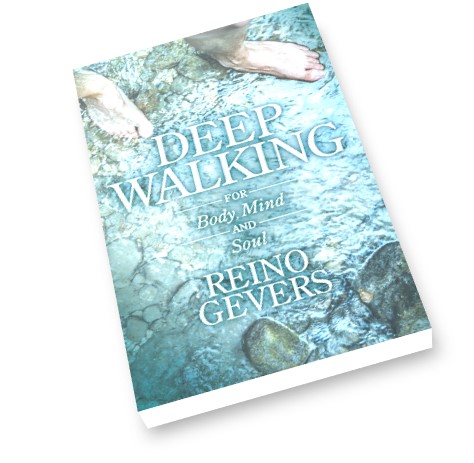
P.S. I’m excited to announce the release of my latest book, “The Turning of the Circle: Embracing Nature’s Wisdom for Purposeful Living.” If you enjoy it, you might also be interested in my previous works, “Deep Walking for Body, Mind and Soul” and “Walking on Edge: A Pilgrimage to Santiago.” You can find all of these titles at reputable bookstores near you.





 ReinosBlog