
Tag Archives: mental health

Is religion stifling spiritual growth?

During my childhood in South Africa, I started having my first doubts about religion when clergy defended from the pulpit the abhorrent policy of apartheid and prevented a devout black priest from attending a church ceremony.

The message of salvation failed to resonate in the obligatory Sunday services which I found to be extraordinarily melancholy and joyless occasions, steeped in empty ritual. It did however serve the purpose of sending me onto a path of intensive ongoing spiritual exploration.

If you are one of those people who left the church in frustration after being shamed for thinking differently or questioning doctrine, then welcome to the club.

For centuries religious institutions have stifled spiritual growth and prevented people from living their divine purpose by telling them how to behave, what to believe, and even what politicians to vote for. This, for me at least, is the ultimate sin for which the church needs to take responsibility.

Spiritual but not religious

Especially younger people in Western countries are seeing through the hypocrisy and leaving the church in droves. But does that mean that more people are becoming agnostic, atheist, or have lost their belief in the divine?

Seven out of ten Americans describe themselves as spiritual in some way including 22 percent who say they are spiritual but not religious.

Even the first Christian communities were often divided between legalistic interpretations of the Gospel and experiential spirituality. There is a lovely passage in Galatians 5 of the New Testament of the Bible where St. Paul criticizes an early church in today’s Turkey.

Paul underscores the centrality of the Gospel, calling on the faithful to practice love, joy, peace, patience, kindness, goodness, faithfulness, gentleness, and self-control as opposed to the legalism of what foods to eat and what could and could not be done on a Sabbath.

Jesus, the ultimate revolutionary

Some 2,000 years ago Jesus broke all religious conventions by healing the sick on the Sabbath. He was eventually crucified when openly exposing the hypocrisy of the clergy, by dining with sinners, tax collectors, prostitutes, and other outcasts – who were excluded from the Temple.

Jesus never had plans to establish an institution or a church and would probably be horrified by what people are saying and practicing in his name today. When someone starts confronting me with the words: “Have you found the real Jesus?” it is for me a signal to run.

Temples, churches, and places of worship could be turned into sanctuaries of peace by opening their doors to people of all faiths. Many Christian churches however are stuck in tribalistic doctrine, especially when it comes to who is entitled to holy communion, abortion, or whether women can be ordained as priests.

Thriving churches, however, are vibrant meeting places for people joyfully dancing, singing, praying, and sharing meals together. In a positive sense, they can cement the community spirit, especially in urban environments where we have an epidemic of isolation and loneliness. These church members practice a living faith by visiting the aged, providing comfort to prison inmates, and refugees, and establishing food banks for the hungry.

Spiritual growth comes from a place of brokenness

There is a saying that religion is for those who fear hell while spirituality is for those who have been there. The seeds of spiritual growth come from a place of brokenness.

On my more than a dozen walks on the Camino in Spain I have met countless people who have gone through the hell of losing loved ones, confronted life-threatening illnesses, the dark holes of depression, financial ruin, and relationship breakdown. What I can say about all these people I’ve met on the Camino is that such life-changing events made them come out stronger, forcing them into deep introspection on the purpose and meaning of life.

A cosmic religion of the future

Experiential spirituality is a process whereby the shutters of the soul window are opened. It is a feeling of connection with the divine, and the mystery of creation. The great scientist Albert Einstein once said that the religion of the future will be cosmic in nature. 

“The most beautiful and deepest experience a man can have is the sense of the mysterious. It is the underlying principle of religion as well as all serious endeavors in art and science. He who never had this experience seems to me, if not dead, then at least blind,” Einstein is quoted as saying.

The Dalai Lama, the spiritual leader of Tibetan Buddhism, encourages individuals to go beyond the superficial differences among religions and recognize the deeper essence of spirituality and morality that can be found in all faith traditions. 

The fundamental principles of compassion, love, and ethics are not limited to any particular religious tradition or belief system. These principles, the Dalai Lama believes, are universal.

Already early into this year, a record number of pilgrims are walking the Camino. All share the common quest that has resonated through the ages:

“From whence do I hail? Whither do I journey? What purpose guides my days ahead?”

In echoing the ancient Sages and Mystics, emphasizing the innate spirit of man: Where there is a lighthearted spirit of joy, peace, positivity, and kindness, negativity and darkness recede.

Reino Gevers – Author – Mentor – Speaker

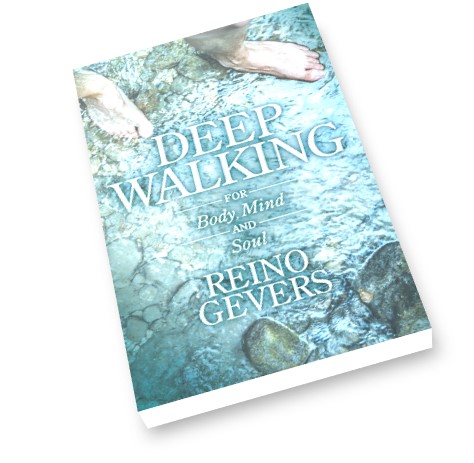
P.S. I’m excited to announce the release of my latest book, “The Turning of the Circle: Embracing Nature’s Wisdom for Purposeful Living.” If you enjoy it, you might also be interested in my previous works, “Deep Walking for Body, Mind and Soul” and “Walking on Edge: A Pilgrimage to Santiago.” You can find all of these titles at reputable bookstores near you.

Leave a comment

Filed under Camino de Santiago, happiness, humanity, meditation, mental health, psychology, self-development, spirituality

Evil is created, not born

Russian President Vladimir Putin’s unprovoked invasion of Ukraine has inflicted devastation upon millions of lives and dramatically altered geopolitical realities. Analysts speculate that Putin’s actions may be rooted in a traumatic childhood, a common denominator of some of the world’s most brutal dictators.

Adverse childhood experiences and trauma are sometimes passed on for generations, and if not transmuted can create particularly destructive adults who are incapable of showing compassion, empathy, or love.

Putin himself is probably unaware that his behavior is driven by unresolved “inner childhood” trauma but his convoluted argument on national television that the invasion of Ukraine was justified to fight “Nazis” offer some clues to his actions.

Ukraine is led by a Jewish leader and Putin’s argument that the country’s government is led by Nazis is absurd. Lately, the argument of fighting “Nazis” in Ukraine has been changed into a fight against the West as a whole “intent on destroying Russia.”

Putin, judging from his many unhinged statements in state-controlled media, obviously feels threatened and considers himself the victim seemingly oblivious to the suffering he has unleashed.

A former profiler from the U.S. Central Intelligence Agency (CIA), Dr. Jerrold Post, who later became a professor of psychiatry has suggested that Putin’s anxieties possibly stemmed from his early experiences in life.

Putin grew up as a street kid in a rough neighborhood of Leningrad, a city devastated by the Nazis during World War II. Most of the population died in the war and Putin’s father was badly injured, inheriting from his parents their wartime trauma. Growing up without any loving adults around him, Putin was forced to fend for himself on the streets and was badly bullied by other children.

It produced a macho personality, deep distrust of others, unpredictability, and a man willing to advance his own power agenda walking over killing fields in the process. Putin has had his most vocal opponents assassinated or imprisoned, started wars in several neighboring countries, and is sowing division and hate with an information war of fake news on a global level. We are seeing evil at play on multiple levels.

Photo by Keira Burton on Pexels.com

Dr. Post explained in an essay that Putin’s steely surface is directly linked to being bullied as a child which led him to take up martial arts.

“He (Putin) took up martial arts so as not to be pushed around by other kids. We are seeing the same behavior in his leadership,” Post wrote.

The psychologist Alice Miller writes that there “is no confirmation of the widespread assertion that there are people who are born evil. On the contrary. The deciding factor is the reception they were given when they came into the world and the way they were treated later.”

Her summary of how evil is created and what she learned from the common denominator of childhoods from dictators is particularly poignant:

“These children will tend to glorify the violence inflicted upon them and later take advantage of every possible opportunity to exercise such violence, possibly on a gigantic scale. Hitler, Stalin, and Mao all had particularly traumatic childhoods during which they were repeatedly beaten and shamed by adults.

“Children learn by imitation. Their bodies do not learn what we try to instill in them through words but what they have experienced physically. Battered, injured children will learn to batter and injure others; sheltered, respected children will learn to respect and protect those weaker than themselves. Children have nothing else to go on but their own experiences.”

Our responsibility as a society therefore is to instill in children from an early childhood love, respect, understanding, kindness, and warmth.

The healthier a child’s relationships are at a later stage in life, the higher the possibility of recovery and resilience from trauma.

When a childhood trauma can be resolved at an early stage, there is a greater chance of healing and less risk that a destructive behavior pattern is repeated in adult life.

Related articles:

Reino Gevers – Author – Mentor – Speaker

P.S. I’m excited to announce the release of my latest book, “The Turning of the Circle: Embracing Nature’s Wisdom for Purposeful Living.” If you enjoy it, you might also be interested in my previous works, “Deep Walking for Body, Mind and Soul” and “Walking on Edge: A Pilgrimage to Santiago.” You can find all of these titles at reputable bookstores near you.

Leave a comment

Filed under psychology, self-development, spirituality, Uncategorized

Staying clear-headed amid emotional turmoil

The average person spends a large portion of their life daydreaming, problem-solving, planning, worrying, and mulling over the past and the future, caught in the maelstrom of between 50,000 and 70,000 thoughts per day.

A large part of these thoughts would be influenced by a spectrum of emotions that have a major impact on your physical and mental well-being.

Numerous studies reveal that positive emotions such as happiness, gratitude, and love have been associated with a stronger immune system, while negative emotions like sadness or loneliness may weaken it, making you more susceptible to infections and illnesses.

Emotions impact your physical and mental well-being

Toxic emotions such as anger, anxiety, and fear are known to trigger stress hormones responsible for the fight, flight, and freeze response in the body. Prolonged stress can cause problems such as cardiovascular issues, a weakened immune system, digestive problems, muscle tension, and metabolic diseases.

Your business success, your relationships, your partnership, and basically your happiness are linked by how well you have your emotions under control, and how well you understand your own emotional response mechanism.

Doing the self-work and understanding your own emotions is key

Developing emotional awareness, and understanding your emotions is therefore key to leading a beautiful life.

This week I interviewed on my podcast Living to BE , a Sensory Perception Analyst and Expert in her field, Kim Korte. I would highly recommend you listen to the valuable advice she gives on finding a good emotional balance. You can also watch it on my youtube channel. Some of the highlights of our conversation:

  • Finding the right balance in your emotional response
  • Training your mind for greater emotional resilience
  • Self-awareness on the different emotional nuances

Reino Gevers – Author – Mentor – Speaker

P.S. I’m excited to announce the release of my latest book, “The Turning of the Circle: Embracing Nature’s Wisdom for Purposeful Living.” If you enjoy it, you might also be interested in my previous works, “Deep Walking for Body, Mind and Soul” and “Walking on Edge: A Pilgrimage to Santiago.” You can find all of these titles at reputable bookstores near you.

Leave a comment

Filed under mental health, mental-health, psychology, self-development, Uncategorized

Pity the nation whose people are sheep

“Pity the nation whose people are sheep,
and whose shepherds mislead them.
Pity the nation whose leaders are liars, whose sages are silenced,
and whose bigots haunt the airwaves…” – Lawrence Ferlinghetti –

Voters in more than 60 countries are going to the polls this year, as the ominous tide of extremism gains momentum globally, fostering a toxic atmosphere of xenophobia, fear, and division, and undermining basic democratic principles.

The central African country of Rwanda serves as an extreme example of what is possible when extremism captures the minds of an entire nation. About one million people of the Tutsi minority and Hutu moderates were slaughtered in the genocide in April 1994.

In an unprecedented wild frenzy of killings, people grabbed machetes, clubs, firearms, and other crude weapons turning on neighbors, colleagues, and even family members. Many of the key perpetrators were well-educated, having studied at elite Western universities.

The role of mass media in a genocide

Weeks before the genocide radio stations and media outlets stepped up their hate speech and then turned to incitement of direct violence against the Tutsi population, encouraging ordinary citizens to take up arms and participate in the killings.

If you think this is not possible in modern Western societies, think again. Germany was a democratic country in the 1920s with a well-educated middle class until the Nazis seized control. Yugoslavia descended into a genocidal civil war in the 1990s.

When the dark shadows of the collective subconscious are captured, anything is possible. The Swiss psychiatrist Carl Gustav Jung warned that nothing is more dangerous than a psychic epidemic fanned by toxic emotions.

A simple but effective message of hate and fear

We are seeing much of the same narrative toward immigrants and refugees in the United States, Europe, and other countries. The message is simple but highly effective: Illegal immigrants are swamping our society, coming to take your job, and ramping up crime. Dysfunctional behavior by an individual or a crime committed by an individual is boxed into a behavior pattern of a certain group or minority.

Extremist fringe groups riding the wave of xenophobia, fear, and anxiety have become mainstream in formerly tolerant countries such as the Netherlands, Italy, Sweden, Britain, and Germany. The conservative Republican party in the United States has basically been hijacked by MAGA Trump extremists.

The real facts on immigration

Few media outlets take the trouble to look at the real facts in the hysterical debate on immigration, refugees, and undocumented immigrants and to expose the lies of the demagogues.

Despite the media and political narrative in the United States crime among undocumented immigrants is much lower than in the native population, according to several studies, notably in the U.S. state of Texas.

What is true in the United States also applies to many European countries. Crime among foreign immigrants or refugees is much lower than in the native population. This is because the consequences such as deportation are much harsher and immigrant communities normally have a healthy community network.

Photo by Ahmed akacha on Pexels.com

A study published in the Journal of Ethnicity in Criminal Justice in 2018 even found that undocumented immigration was associated with decreased violent crime rates.

The mortal fear that societies will be swamped by foreigners also needs to be put into perspective. As of 2021, the 10.5 million unauthorized immigrants in the United States represented only about three percent of the total U.S. population and 22 percent of the foreign-born population. These percentages were among the lowest since the 1990s, according to the Pew Research Center.

In Europe, the estimates indicate that there were around 3.9 to 4.8 million irregular migrants living in the European Union as of 2017 with a total population of around 512 million. This equals only about 0.76 to 0.94 percent of the total population.

If we compare Jordan’s population of around ten million people the proportion of Syrian refugees alone is about 6.5 per cent. Lebanon’s population of around six million people hosts over 1.5 million Syrian refugees.

Despite language and cultural differences more than half of the Syrian refugees who came to Germany six years ago have a job, two-thirds of them work full-time and 70 percent of them have a qualified job.

Nearly half of the people currently receiving social welfare are foreigners in Germany but this has to be put into perspective when you consider that most of them are people who fled Ukraine. It is much the same in the UK and other Western European countries bearing the brunt of providing food and shelter for people who fled Ukraine after the Russian invasion in 2022.

Why are people migrating from their home countries?

The debate on immigration is missing the key aspects of why people are leaving their home countries. If you or your family are threatened with persecution by an authoritarian regime, or your children have no food to eat, you will do everything to save them from starvation or death.

Millions of people will continue to leave their home countries if the socio-economic conditions in these countries are not addressed, especially if a growing number of autocrats and dictators in these countries live in luxury while their populations starve. With the impact of climate change, especially affecting poorer countries severe droughts, floods, and other extreme weather events are exacerbating the situation.

On the positive side migrants often bring valuable skills, talents, and expertise that benefit the economy, leading to higher productivity and competitiveness. Cultural exchange also fosters creativity, cross-cultural understanding, tolerance, and appreciation of diversity as a principle of creation.

Racism, hate and xenophobia goes against the very principle of creation based on diversity, adaptation to change, creativity and evolution of conciousness. It is the very opposite of our ultimate purpose on earth – spreading kindness, love and compassion.

Immigrants are often highly motivated and entrepreneurial, leading to the creation of new businesses, industries, and jobs. Several studies currently point to the generally growth-promoting effects of migration on international trade and investment.

As Lawrence Ferlinghetti so succinctly puts it: “Pity the nation that knows no other language but its own and no other culture but its own. Pity the nation whose breath is money and sleeps the sleep of the too-well-fed. Pity the nation – oh, pity the people who allow their rights to erode.”

Reino Gevers – Author – Mentor – Speaker

P.S. I’m excited to announce the release of my latest book, “The Turning of the Circle: Embracing Nature’s Wisdom for Purposeful Living.” If you enjoy it, you might also be interested in my previous works, “Deep Walking for Body, Mind and Soul” and “Walking on Edge: A Pilgrimage to Santiago.” You can find all of these titles at reputable bookstores near you.

Leave a comment

Filed under humanity, mass media, mental health, mental-health

Your social network matters

Humans thrive on social connections, as evidenced by research from the American Medical Association (AMA), which underscores the profound impact that a healthy community has on both physical and mental well-being.

Loneliness and isolation have reached epidemic levels in most Western countries, emerging as significant public health issues. Highlighting the severity of this problem, a U.S. Surgeon General advisory equates social connection with fundamental necessities like food and water in terms of its importance for long-term survival.

“We all need our time away for rejuvenation and reflection,” says Dr. Frank Clark, an associate clinical professor at the University of South Carolina School of Medicine-Greenville, “but social isolation is a form of solitude that is unhealthy and can occur due to multitude of reasons.”

Causes of social isolation could be the loss of friends or a partner due to death, divorce, or separation. An illness could make social connections difficult to maintain, but other factors such as a caregiver’s responsibility, a traumatic event, or life changes such as the loss of a job or retirement could all play a role.

Researchers who examined longevity in the Five Blue zones that included  Sardinia, Italy; the Greek island of Ikaria; Loma Linda, California; Nicoya Peninsula, Costa Rica and Okinawa, Japan, found that social interconnectedness played a key role in a healthy lifestyle. It can literally add decades to your life.

Social connections slow cognitive decline

Keeping up social connections as people get older helps to maintain thinking skills and slow cognitive decline. “It’s not uncommon for our social networks to shrink as we get older,” says Marilyn Albert, chairwoman of the Global Council on Brain Health.

Maintaining social bonds and having a sense of purpose have been identified by researchers in the Blue Zones Project as a critical element for longevity.

Photo by Matthias Zomer on Pexels.com

Here are some common practices observed in Blue Zones that help strengthen social ties:

  1. Strong family bonds: Families tend to stay close-knit across generations. Elders are respected and often live with or near their extended family members. Regular family gatherings and celebrations are common, fostering a sense of belonging and support.
  2. Active social lives: People in Blue Zones often engage in regular social activities with friends and neighbors. This can include communal meals, gatherings, festivals, and religious or cultural events.
  3. Collaborative work and projects: Communities in Blue Zones often come together to work on shared projects or goals. Whether it’s farming cooperatives, community gardens, or other collaborative efforts.
  4. Cultural traditions: Many Blue Zones have strong cultural traditions that emphasize social connections. This can include practices like storytelling, music, dance, and rituals that bring people together and reinforce community ties.
  5. Support networks: Blue Zones tend to have strong support networks built on reciprocity and mutual assistance. People help each other in times of need, whether it’s through informal networks of friends and neighbors or more formal community organizations.

While rural settings often have characteristics conducive to strong community ties, the lifestyle factors observed in Blue Zone were not exclusively rural. The key lies in the cultural and social practices that promote longevity and well-being, regardless of whether they’re found in rural or urban environments.

Reconnecting with others after a period of social isolation can be challenging but is certainly possible. Start by reaching out to a close friend or family member for example with a simple text or phone call to catch up.

  • Consider joining groups, a religious community, or clubs that align with your interests or hobbies. This could be a book club, hiking group, cooking class, or volunteer organization.
  • Keep an eye out for local community events such as festivals, workshops, or meetups. These events offer opportunities to meet new people and engage with your community.
  • If you’re struggling with specific challenges such as mental health issues, addiction, or grief, consider attending support groups where you can connect with others who are going through similar experiences.
  • When interacting with others, practice active listening by showing genuine interest in what they have to say. Ask questions, offer support, and show empathy to deepen connections.

Cultivating a sincere interest in others not only enriches your relationships but also enhances your own appeal and magnetism. Developing and honing your social skills is essential for experiencing a fulfilling and rewarding life.

Reino Gevers – Author – Mentor – Speaker

P.S. I recently had a great chat on the fitforjoy podcast with Valeria Koopman on Living a Beautiful Life. If you found this Blog an interesting read you might also enjoy my latest book, “The Turning of the Circle: Embracing Nature’s Wisdom for Purposeful Living.” My previous titles, “Deep Walking for Body, Mind and Soul” and “Walking on Edge: A Pilgrimage to Santiago,” can also be ordered from all reputable bookstores near you.

Leave a comment

Filed under mental health, mental-health

The truth be told

“Three things cannot be long hidden: the sun, the moon, and the truth.” – Buddha

In my early days as a news reporter covering the ‘court beat’ and witnessing some of humanity’s worst crimes, it was disheartening to see how many criminals, even when faced with undeniable evidence, would contort the truth, painting their victims as the villains.”

In the tumultuous public information space, truth finds itself relegated to the backseat, drowned out by a cacophony of lies, deception, and hate speech. The manipulation of truth isn’t solely the domain of petty criminals; it’s a tool wielded with equal fervor by autocrats, dictators, and cult leaders.

I’ve often pondered how individuals can fabricate and obscure with such unwavering conviction that one might almost be inclined to believe them. It dawned on me that evil, or Satan isn’t merely a religious concept but a stark reality, inhabited by individuals devoid of a moral compass and exhibiting behavior far removed from what society deems normal and ethical.

In the increasingly muddied water of social media, we need to call out the purveyors of evil messaging. They are easily identifiable:

  • They lack complete empathy and have no qualms in causing harm and suffering to others.
  • They are masters at manipulating words. Their tools are deception and gaslighting. Their lies and twisting of the truth will make you doubt your own sanity.
  • They seek complete control. They will pressure, intimidate, and coerce. They demean, humiliate, or degrade others as a means of asserting power and dominance.
  • Charisma. Externally they are sometimes charismatic, outgoing, and charming personalities. But they have an agenda. They are trying to gain your trust while secretly pursuing their own selfish agenda – typical among religious and political cult leaders.
  • Emotional manipulation. If you have not transmuted your own dark emotions of fear, anxiety, hate, and shame you are easy prey. They will tell you that all your “bad feelings” have been caused by “others” – people of other faiths, cultural origins, and political beliefs. By this stage, you will be willing to follow them unconditionally all the way into the darkest of dungeons.

The good news is that God has given us the power of choice. Our primary purpose on earth is to elevate consciousness. You ultimately have the power to transcend limited perspectives, biases, and conditioned beliefs, gaining greater clarity, empathy, and interconnectedness with the broader world of existence.

By engaging in simple acts of service, kindness, and altruism you will cultivate a sense of purpose, fulfillment, and connection to something greater than yourself.

By learning to love yourself you will cultivate empathy and compassion towards others, fostering a greater sense of connection and understanding of the human experience.

Explore and study spiritual and philosophical traditions that promote personal growth, self-discovery, and a sense of interconnectedness with higher consciousness.

To quote Robert Frost: “Two roads diverged in a wood, and I took the one less traveled by, and that has made all the difference.”

Reino Gevers – Author – Mentor – Speaker

P.S. I’m excited to announce the release of my latest book, “The Turning of the Circle: Embracing Nature’s Wisdom for Purposeful Living.” If you enjoy it, you might also be interested in my previous works, “Deep Walking for Body, Mind and Soul” and “Walking on Edge: A Pilgrimage to Santiago.” You can find all of these titles at reputable bookstores near you.
1 Comment

Filed under raised consciousness, self-development, spirituality, Uncategorized

Why are so many people angry and unhappy?

“A comfort zone is a really beautiful place, but nothing grows there”~ Anonymous

We are living in the most prosperous and exciting era of mankind, yet if we look and hear around us many people seem stuck in the grievance culture of anger and unhappiness.

During the past centuries, mankind has made groundbreaking discoveries in discoveries in physics, astronomy, and biology. In the latter half of the 20th century computers and the invention of the Internet have led to an unprecedented acceleration of knowledge and information on a global level.

In 1982, futurist and inventor R. Buckminster Fuller estimated that up until 1900, human knowledge doubled approximately every century, but by 1945 it was doubling every 25 years. And by 1982, it was doubling every 12-13 months. Current estimates predict that with the revolution of AI technology human knowledge will double every 12 hours.

At the same time, the cultural gap between technological progress and the ability of human consciousness to process these changes has increased. Rapid change produces uncertainty with the unknown perceived as a threat.

A natural aversion to change

Evolutionary psychology suggests that humans have developed a natural aversion to risk as a survival mechanism. Change is inherently associated with uncertainty and risk, triggering a “walling off” from potential harm. Changing habits and routines requires effort and the ability to adapt.

While, some people thrive in a new environment of innovation, and see every new challenge as an opportunity for growth and evolution, others are gripped by fear and retreat into the cave of their comfort zone, not realizing that if they don’t adapt, their lives will be changed for them anyway.

The grievance culture feeding on toxic emotions

As we enter 2024 with elections scheduled in several major countries there is a real danger of the public narrative being hijacked by “grievance culture” feeding on innate human fears, anxiety, and anger. Fanatacists promise a return to the “golden era” of the past by building walls, creating the illusion that the comfort zone can be protected from “external threat”.

Photo by Robin Schreiner on Pexels.com

You will be comfortably resting in your “comfort zone” if a demagogue is telling you that all your grievances and unhappiness have been caused by the opposing political party, a minority group, a foreign nation, or an institution. He is telling you that you can comfortably sit back while I will sort out these problems. Meanwhile, backstage your basic liberties and freedom of expression are being eroded.

We are at the cusp of embracing a bright new future or falling back into old divisions of intolerance and xenophobia

Much of the unhappiness is caused by cultural indoctrination and addiction to the accumulation of “things”. It has replaced the spiritual void left by institutional religion with ever more people questioning its emphasis on what to believe and how to behave. When you define yourself by the “things” you own, you will never be happy because you are missing out on the BEING of life. And life is constantly in motion and evolution.

With the growth of spiritual awareness comes the recognition that evolution and change are inherently part of the divine plan. Everything in the universe is ultimately interconnected and composed of Divine Oneness.

When born there is separation from the Oneness and a natural tendency to separate from the body only to yearn and strive for the reconnection with the Whole.

The American poet Louise Erdrich describes how life will break and heal you during this process … “Nobody can protect you from that, and being alone won’t either, for solitude will also break you with its yearning. You have to love. You have to feel. It is the reason you are here on earth. You have to risk your heart. You are here to be swallowed up. And when it happens that you are broken, or betrayed, or left, or hurt, or death brushes too near, let yourself sit by an apple tree and listen to the apples falling all around you in heaps, wasting their sweetness. Tell yourself that you tasted as many as you could.

Forgetting to live the experience

We are constantly chasing after happiness and forgetting to live the experience. At that moment when we have achieved what we have been striving for all along, we feel a sense of loss and emptiness. Grievance culture feeds on what is lacking in life or what is under threat of being taken away from you.

Practicing a gratitude ritual elevates consciousness and creates an abundance mindset. If you are healthy, have food on your table, and a warm home with electricity, you are already better off than most people in the world.

Reconnecting with body and soul

Reconnecting with body and soul is more important than ever when the pull of grievance culture is trying to pull you away from your center. Life is meant to be difficult and challenging. We only grow when we confront those challenges and obstacles. And, you will be better equipped to deal with those challenges if you nurture your mind and body. When you change your perspective with a gratitude mindset the universe will conspire creating more happiness, joy, and energy in your life.

Reino Gevers – Author – Mentor – Speaker

P.S. I’m excited to announce the release of my latest book, “The Turning of the Circle: Embracing Nature’s Wisdom for Purposeful Living.” If you enjoy it, you might also be interested in my previous works, “Deep Walking for Body, Mind and Soul” and “Walking on Edge: A Pilgrimage to Santiago.” You can find all of these titles at reputable bookstores near you.

Leave a comment

Filed under mental health, mental-health, Uncategorized

Lessons from the Gaza war

As the major battlefronts in Ukraine find themselves in a protracted stalemate, the conflict in Gaza has been readily embraced by mass media as an alternative, offering a boundless supply of dramatic narratives of bombings, injured children, and distraught mothers.

On-the-ground reporters emphasize the tragic unfolding events with a flair for dramatic language, often neglecting to furnish the essential context and nuanced analysis that might otherwise prove less sensational but more informative.

Stirring a potent mix of toxic emotions

Intricate details and complexities of geopolitical situations risk being overshadowed, as the media opts for a continuous stream of emotionally charged visuals, skillfully crafting a narrative that stirs a potent blend of anger, disgust, and fear among its audience.

It is prudent to contemplate the underlying origins of wars, which often revolve around mythical concepts of land ownership. Fundamental rights of those actually living on the land are callously disregarded in the name of religious ideologies and historical claims that, upon closer scrutiny are tenuous at best.

The land belongs to those who live on it

A world characterized by broader acceptance of the principle that land belongs to its inhabitants could pave the way for greater global peace. Human history reveals a nomadic evolutionary journey, where migration has consistently been an intrinsic human inclination. However, substantial population shifts have frequently been involuntarily, triggered by natural catastrophes and conflicts, disrupting the harmonious coexistence that a more inclusive understanding of land ownership might foster.

Do we really want to open a debate on who rightfully owns Australia, New Zealand, the United States, or South Africa? Take back all the land from who owns it now and give it back to the indigenous people? We could also go back to when the earliest homo sapiens started migrating from Africa to Europe and conflicted with the Neanderthals on hunting grounds? If Vladimir Putin gives history “lectures” on why Russia has the “right” to annex Ukraine, we can ask why Austria doesn’t have the right to recreate the Austro-Hungarian Empire and why not recreate the Holy Roman Empire, a complex political structure that existed from the Middle Ages until 1806.

Redrawing history maps for ideological and empire-building purposes is a mindset from the last century that triggered countless wars, especially in Europe. It was the reason why the founding fathers of the European Union had the vision of creating an alliance of nations, some of whom had fought each other for centuries, in an interdependent union of equals with open borders and the free flow of peoples and goods. It has ensured the longest era of peace and prosperity in central Europe and is the reason why most countries in eastern Europe, including Ukraine, are clamoring to join.

In antiquity, the Middle East was predominantly inhabited by nomadic tribes, whose dwellings were dictated by the grazing needs of their livestock. The concept of national boundaries is a relatively recent historical development. They were often the result of indiscriminate colonial map makers sitting in European capitals.

The debate over historical claims to Palestine by either the Jews or the Arabs becomes somewhat mooted when acknowledging that we have a modern reality where approximately 20 percent of Israel’s citizenry is Arab. Within the self-identified Jewish population we have a rich tapestry of diversity, encompassing Ashkenazi, Sephardic, Mizrahi, and other Jewish ethnicities. Beyond this, Israel is home to a mosaic of minorities, including the Druze, Bedouins, Circassians, and various Christian groups.

The primary objective of the Hamas terrorist organization is to establish an Islamic state. Dozens of foreigners from across the globe were among the victims of the October massacre this year. It was a callous and brutal demonstration of the organization’s complete disregard for human life. Innocent children, babies, fathers, mothers, and the old and frail were often shot at point-blank range. The trauma, horror, and rage in Israeli society is understandable but can never warrant a response that likewise causes massive civilian casualties.

The Hamas attack was planned in horrific detail to provoke the Israeli response. It was to be expected that Israel’s most rightwing leader ever, Benjamin Netanyahu, would react the way he did by ordering an invasion to “eradicate Hamas.” By using civilians as cover Hamas is callously taking into account the casualties as part of its greater global strategy, and it appears they are having much success:

The global landscape is witnessing the troubling aftermath with a surge in anti-Semitism and Islamophobia. The voices of moderation find themselves overshadowed by extremists who vehemently advocate an ultimatum: a stark choice between good and evil “Palestine” or “Israel.” The polarizing narrative fosters an atmosphere of divisiveness and conflict, the breeding ground for extremists and demagogues eager to recruit new followers.

We have to connect the dots to understand why Hamas launched its attack on innocent Israeli civilians in the first place.

  • It is no coincidence that the attack came after Israel was having some diplomatic success in improving relations with moderate Arab countries.
  • Was Hamas instigated to launch the attack by Russia’s ally Iran to deflect attention and military resources from Ukraine? There is some evidence, though not confirmed, that Russian mercenaries were involved in the training of Hamas.

If Israel had a wiser leader, other options in response to the invasion of Gaza would have been the better choice. In the wake of massive Israeli bombings and civilian casualties in Gaza, Israel has lost the moral high ground.

The wiser option

Indian Prime Minister Manmohan Singh faced a similar dilemma when Pakistani terrorists carried out in November 2008 a series of coordinated attacks including on the Taj Mahal Palace Hotel. It was one of the deadliest attacks in Indian history claiming the lives of an estimated 166 people with 300 others injured. Singh was under great pressure to launch an attack on Pakistan but urged caution. Later European and American analysts pinpointed rogue elements within Pakistani intelligence as having planned the attack to draw international attention to the India-Pakistan conflict by provoking an Indian military response.

By not escalating in 2008, India created a policy option to employ legal methods against the attack’s perpetrators and retained the moral high ground. If it had gone to war with Pakistan the result would probably have been a stalemate with the world sharing the blame 50:50.

After the 9/11 terrorist attacks, the United States received an outpouring of sympathy from all parts of the world. Instead of carefully considering its options, President George Bush ordered the invasion of Iraq, not having a real plan of what would come afterward. It was by all means a mistake of historical dimensions with many lives unnecessarily lost.

Evil can never be fought with a simplistic “eye for an eye” concept. Violence breeds more violence. The children traumatized by the bombings in Gaza are likely to be eager recruits for the next terror organization.

What does this all mean for you and me on a personal level?

Political conflicts are a reflection of the collective state of mind of the state or the nation. We will never eradicate war or conflict. It is part of the human condition that we are incomplete beings prone to irrational behavior.

Being pulled into the rabbit hole of daily images of disaster and conflict does something with your mindset and your emotions. It can numb the senses to real feelings of empathy and compassion and trigger anger, frustration, and melancholy sadness. You are not in control of external events but you are in control of how you perceive and react to these events.

During these times of conflict in the external world, it takes discipline to set boundaries to over-exposure to negative news without ignoring what is happening in the external world. A good antidote to grievance culture, negativity, and pain is the ability to find meaning, grace and beauty in every moment.

No matter how challenging these times may be, practicing the discipline of thought, taking a different perspective, and shifting your focus, will bring you into a higher vibrational field. A kind word here, compassion and a smile there, and being grateful for the smallest of things. Gratitude, love, empathy, peace,and kindness are the threads that weave together humanity.

Reino Gevers – Author – Mentor – Speaker

P.S. I’m excited to announce the release of my latest book, “The Turning of the Circle: Embracing Nature’s Wisdom for Purposeful Living.” If you enjoy it, you might also be interested in my previous works, “Deep Walking for Body, Mind and Soul” and “Walking on Edge: A Pilgrimage to Santiago.” You can find all of these titles at reputable bookstores near you.

Leave a comment

Filed under mental health, mental-health, Uncategorized

How worthy are you?

Practicing full self-acceptance with all the pain, trauma, and shame from the past are the building stones of resilience against grievance culture feeding on the toxicity of anger and fear.

Much of the dysfunctional behaviors prevalent in our contemporary society can be traced back to an inflated Ego-Mind and a prevailing narcissistic culture, rooted in poor self-worth.

Negative thought patterns inevitably lead to negative actions and an endless cycle of suffering until the cycle is broken with a heightened state of awareness.

Narcissism is often an overcompensation for an underlying feeling of inadequacy. The need for constant admiration and validation from others is driven by an inner void.

There might be an inner voice telling you: “I’m too fat, too thin, too short, too old, and have an ugly nose.” The thoughts and voices that often come from programming stem from hurts inflicted during early childhood.

Photo by nicollazzi xiong on Pexels.com

The mantra of self-acceptance

You can transmute that inner voice with a new mantra: “I unconditionally love and accept myself the way I am. I am so happy and grateful to my body that has served me so well. I am healthy and I am strong.”

Self-love should not be confused with narcissism. You can only serve your higher purpose if you are no longer at war with yourself. The more you practice self-compassion, self-love, and self-acceptance the more you will attract this in the external world.

Life is a constant cycle of ups and downs. It is part of life that you have at times messed up, been disappointed, faced trauma, loss, and real “down on the ground moments.” During these times you might have neglected self-care like proper nutrition, exercise, and adequate sleep.

When you dig deep into your inner resources

But on deeper reflection, these dark nights of the soul have very often forced you into introspection and to dig deep into your inner resources. Once you start feeding your body with high-nutrient foods, exercising regularly, and programming your mind with positive thoughts, you start moving into a higher vibrational field.

Spiritual growth and soul elevation very seldom come during those times when you are feeling high and on top of the world. The pain can be the path where the light begins to shine. You will have greater ease in transitioning from challenges and adversity when you are in the awareness that every chapter in life has a season and that “this too shall pass.”

Reino Gevers – Author – Mentor – Speaker

P.S. I’m excited to announce the release of my latest book, “The Turning of the Circle: Embracing Nature’s Wisdom for Purposeful Living.” If you enjoy it, you might also be interested in my previous works, “Deep Walking for Body, Mind and Soul” and “Walking on Edge: A Pilgrimage to Santiago.” You can find all of these titles at reputable bookstores near you.

Leave a comment

Filed under mental health, self-development, spirituality

Walking the earth with reverence

On one of my walks on the Camino de Santiago in northwestern Spain, I met a woman who was on the pilgrimage to deal with the grief of just having lost her husband to whom she had been happily married for many years.

Like her many people walking the Camino are at an inflection point in their life, walking off their grief from the loss of a loved one, the trauma of a divorce, or the fears of dealing with a life-threatening illness.

The shared community experience of doing an 800-kilometer walk over many weeks is one reason why some pilgrims come back every year to walk the entire route or some sections. There are few places in the world where complete strangers would exchange some of their most intimate experiences only minutes after meeting each other.

The sacred path

One morning, as we continued our journey, the woman I had been walking alongside for several days seemed unusually introspective. Eventually, she shared a vivid dream she had experienced the previous night.

In her dream, she found herself before the iconic burning bush, a scene drawn straight from the pages of the Bible’s Book of Exodus. In this powerful vision, God revealed Himself to her through the flames, just as he had to Moses centuries ago. But in her unique version of the story, a gentle voice emanated from the fiery foliage, urging her to tread the path ahead with reverence. The encounter left her awestruck, marking our journey with an undeniable sense of divine purpose.

The universe, or God, has many ways of whispering to your innermost soul, particularly in dreams. Treading the Camino path with reverence has led to a profound transformational shift in people who have walked this ancient path. It is a crash course in the lessons of life.

When traversing the earth with reverence, the senses awaken to the profound beauty of God’s creation. In the presence of mindfulness, enchantment permeates every moment. Conversely, when the mind is agitated and in haste, there is disconnection. Life’s wonders appear fleeting and superficial. A stressed mind remains trapped in the tunnel vision of flight, missing the intricate magic that weaves through existence.

The magic of the moment

Magic reveals itself in the tiniest of moments. Just a few days ago, I ventured into a rocky cove for some snorkeling. In the midst of the tranquil turquoise water, a pair of fish glided past, their scales aglow with a rainbow of colors, a mesmerizing effect created by the angle of sunlight filtering through the water’s surface.

It was a fleeting encounter, but within those brief seconds lay an astounding beauty. I would have entirely missed the moment had I not chosen to pause in stillness at one particular spot for a few precious minutes. In that space of quiet connection, the universe unfolded its secrets, reminding me that the most extraordinary experiences often come from the simplest acts of presence.

Serenity unfurls its wings in unhurried slow, deliberate breaths. It whispers through the silence of the mountains and echoes in the steady, gentle cadence of the waves.

Nature, in its eternal wisdom, guides you inward with each inhalation and exhalation, inviting you to rediscover the tranquility within. Amidst the clamor of the external world and the cacophony of maddening crowds, respite can be in the simplicity of aligning your breath with the rhythm of the natural world. Chaos fades, and solace is found in the gentle embrace of the universe.

Reino Gevers – Author – Mentor – Speaker

P.S. I’m excited to announce the release of my latest book, “The Turning of the Circle: Embracing Nature’s Wisdom for Purposeful Living.” If you enjoy it, you might also be interested in my previous works, “Deep Walking for Body, Mind and Soul” and “Walking on Edge: A Pilgrimage to Santiago.” You can find all of these titles at reputable bookstores near you.

Leave a comment

Filed under Camino de Santiago, mental health, mental-health, Uncategorized