“Three things cannot be long hidden: the sun, the moon, and the truth.” – Buddha
In my early days as a news reporter covering the ‘court beat’ and witnessing some of humanity’s worst crimes, it was disheartening to see how many criminals, even when faced with undeniable evidence, would contort the truth, painting their victims as the villains.”
In the tumultuous public information space, truth finds itself relegated to the backseat, drowned out by a cacophony of lies, deception, and hate speech. The manipulation of truth isn’t solely the domain of petty criminals; it’s a tool wielded with equal fervor by autocrats, dictators, and cult leaders.
I’ve often pondered how individuals can fabricate and obscure with such unwavering conviction that one might almost be inclined to believe them. It dawned on me that evil, or Satan isn’t merely a religious concept but a stark reality, inhabited by individuals devoid of a moral compass and exhibiting behavior far removed from what society deems normal and ethical.
In the increasingly muddied water of social media, we need to call out the purveyors of evil messaging. They are easily identifiable:
They lack complete empathy and have no qualms in causing harm and suffering to others.
They are masters at manipulating words. Their tools are deception and gaslighting. Their lies and twisting of the truth will make you doubt your own sanity.
They seek complete control. They will pressure, intimidate, and coerce. They demean, humiliate, or degrade others as a means of asserting power and dominance.
Charisma. Externally they are sometimes charismatic, outgoing, and charming personalities. But they have an agenda. They are trying to gain your trust while secretly pursuing their own selfish agenda – typical among religious and political cult leaders.
Emotional manipulation. If you have not transmuted your own dark emotions of fear, anxiety, hate, and shame you are easy prey. They will tell you that all your “bad feelings” have been caused by “others” – people of other faiths, cultural origins, and political beliefs. By this stage, you will be willing to follow them unconditionally all the way into the darkest of dungeons.
The good news is that God has given us the power of choice. Our primary purpose on earth is to elevate consciousness. You ultimately have the power to transcend limited perspectives, biases, and conditioned beliefs, gaining greater clarity, empathy, and interconnectedness with the broader world of existence.
By engaging in simple acts of service, kindness, and altruism you will cultivate a sense of purpose, fulfillment, and connection to something greater than yourself.
By learning to love yourself you will cultivate empathy and compassion towards others, fostering a greater sense of connection and understanding of the human experience.
Explore and study spiritual and philosophical traditions that promote personal growth, self-discovery, and a sense of interconnectedness with higher consciousness.
To quote Robert Frost: “Two roads diverged in a wood, and I took the one less traveled by, and that has made all the difference.”
Reino Gevers – Author – Mentor – Speaker
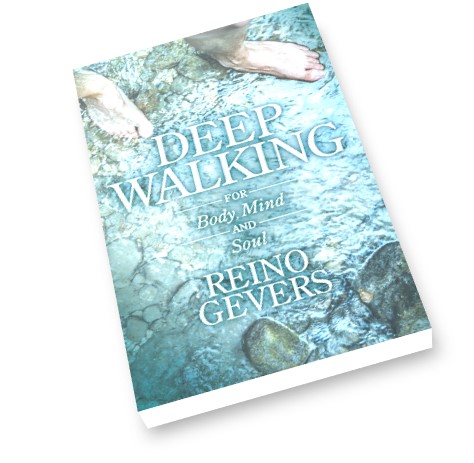
P.S. I’m excited to announce the release of my latest book, “The Turning of the Circle: Embracing Nature’s Wisdom for Purposeful Living.” If you enjoy it, you might also be interested in my previous works, “Deep Walking for Body, Mind and Soul” and “Walking on Edge: A Pilgrimage to Santiago.” You can find all of these titles at reputable bookstores near you.
“A comfort zone is a really beautiful place, but nothing grows there”~ Anonymous
We are living in the most prosperous and exciting era of mankind, yet if we look and hear around us many people seem stuck in the grievance culture of anger and unhappiness.
During the past centuries, mankind has made groundbreaking discoveries in discoveries in physics, astronomy, and biology. In the latter half of the 20th century computers and the invention of the Internet have led to an unprecedented acceleration of knowledge and information on a global level.
In 1982, futurist and inventor R. Buckminster Fuller estimated that up until 1900, human knowledge doubled approximately every century, but by 1945 it was doubling every 25 years. And by 1982, it was doubling every 12-13 months. Current estimates predict that with the revolution of AI technology human knowledge will double every 12 hours.
At the same time, the cultural gap between technological progress and the ability of human consciousness to process these changes has increased. Rapid change produces uncertainty with the unknown perceived as a threat.
A natural aversion to change
Evolutionary psychology suggests that humans have developed a natural aversion to risk as a survival mechanism. Change is inherently associated with uncertainty and risk, triggering a “walling off” from potential harm. Changing habits and routines requires effort and the ability to adapt.
While, some people thrive in a new environment of innovation, and see every new challenge as an opportunity for growth and evolution, others are gripped by fear and retreat into the cave of their comfort zone, not realizing that if they don’t adapt, their lives will be changed for them anyway.
The grievance culture feeding on toxic emotions
As we enter 2024 with elections scheduled in several major countries there is a real danger of the public narrative being hijacked by “grievance culture” feeding on innate human fears, anxiety, and anger. Fanatacists promise a return to the “golden era” of the past by building walls, creating the illusion that the comfort zone can be protected from “external threat”.
You will be comfortably resting in your “comfort zone” if a demagogue is telling you that all your grievances and unhappiness have been caused by the opposing political party, a minority group, a foreign nation, or an institution. He is telling you that you can comfortably sit back while I will sort out these problems. Meanwhile, backstage your basic liberties and freedom of expression are being eroded.
We are at the cusp of embracing a bright new future or falling back into old divisions of intolerance and xenophobia
Much of the unhappiness is caused by cultural indoctrination and addiction to the accumulation of “things”. It has replaced the spiritual void left by institutional religion with ever more people questioning its emphasis on what to believe and how to behave. When you define yourself by the “things” you own, you will never be happy because you are missing out on the BEING of life. And life is constantly in motion and evolution.
With the growth of spiritual awareness comes the recognition that evolution and change are inherently part of the divine plan. Everything in the universe is ultimately interconnected and composed of Divine Oneness.
When born there is separation from the Oneness and a natural tendency to separate from the body only to yearn and strive for the reconnection with the Whole.
The American poet Louise Erdrich describes how life will break and heal you during this process … “Nobody can protect you from that, and being alone won’t either, for solitude will also break you with its yearning. You have to love. You have to feel. It is the reason you are here on earth. You have to risk your heart. You are here to be swallowed up. And when it happens that you are broken, or betrayed, or left, or hurt, or death brushes too near, let yourself sit by an apple tree and listen to the apples falling all around you in heaps, wasting their sweetness. Tell yourself that you tasted as many as you could.“
Forgetting to live the experience
We are constantly chasing after happiness and forgetting to live the experience. At that moment when we have achieved what we have been striving for all along, we feel a sense of loss and emptiness. Grievance culture feeds on what is lacking in life or what is under threat of being taken away from you.
Practicing a gratitude ritual elevates consciousness and creates an abundance mindset. If you are healthy, have food on your table, and a warm home with electricity, you are already better off than most people in the world.
Reconnecting with body and soul
Reconnecting with body and soul is more important than ever when the pull of grievance culture is trying to pull you away from your center. Life is meant to be difficult and challenging. We only grow when we confront those challenges and obstacles. And, you will be better equipped to deal with those challenges if you nurture your mind and body. When you change your perspective with a gratitude mindset the universe will conspire creating more happiness, joy, and energy in your life.
Reino Gevers – Author – Mentor – Speaker
P.S. I’m excited to announce the release of my latest book, “The Turning of the Circle: Embracing Nature’s Wisdom for Purposeful Living.” If you enjoy it, you might also be interested in my previous works, “Deep Walking for Body, Mind and Soul” and “Walking on Edge: A Pilgrimage to Santiago.” You can find all of these titles at reputable bookstores near you.
As the major battlefronts in Ukraine find themselves in a protracted stalemate, the conflict in Gaza has been readily embraced by mass media as an alternative, offering a boundless supply of dramatic narratives of bombings, injured children, and distraught mothers.
On-the-ground reporters emphasize the tragic unfolding events with a flair for dramatic language, often neglecting to furnish the essential context and nuanced analysis that might otherwise prove less sensational but more informative.
Stirring a potent mix of toxic emotions
Intricate details and complexities of geopolitical situations risk being overshadowed, as the media opts for a continuous stream of emotionally charged visuals, skillfully crafting a narrative that stirs a potent blend of anger, disgust, and fear among its audience.
It is prudent to contemplate the underlying origins of wars, which often revolve around mythical concepts of land ownership. Fundamental rights of those actually living on the land are callously disregarded in the name of religious ideologies and historical claims that, upon closer scrutiny are tenuous at best.
The land belongs to those who live on it
A world characterized by broader acceptance of the principle that land belongs to its inhabitants could pave the way for greater global peace. Human history reveals a nomadic evolutionary journey, where migration has consistently been an intrinsic human inclination. However, substantial population shifts have frequently been involuntarily, triggered by natural catastrophes and conflicts, disrupting the harmonious coexistence that a more inclusive understanding of land ownership might foster.
Do we really want to open a debate on who rightfully owns Australia, New Zealand, the United States, or South Africa? Take back all the land from who owns it now and give it back to the indigenous people? We could also go back to when the earliest homo sapiens started migrating from Africa to Europe and conflicted with the Neanderthals on hunting grounds? If Vladimir Putin gives history “lectures” on why Russia has the “right” to annex Ukraine, we can ask why Austria doesn’t have the right to recreate the Austro-Hungarian Empire and why not recreate the Holy Roman Empire, a complex political structure that existed from the Middle Ages until 1806.
Redrawing history maps for ideological and empire-building purposes is a mindset from the last century that triggered countless wars, especially in Europe. It was the reason why the founding fathers of the European Union had the vision of creating an alliance of nations, some of whom had fought each other for centuries, in an interdependent union of equals with open borders and the free flow of peoples and goods. It has ensured the longest era of peace and prosperity in central Europe and is the reason why most countries in eastern Europe, including Ukraine, are clamoring to join.
In antiquity, the Middle East was predominantly inhabited by nomadic tribes, whose dwellings were dictated by the grazing needs of their livestock. The concept of national boundaries is a relatively recent historical development. They were often the result of indiscriminate colonial map makers sitting in European capitals.
The debate over historical claims to Palestine by either the Jews or the Arabs becomes somewhat mooted when acknowledging that we have a modern reality where approximately 20 percent of Israel’s citizenry is Arab. Within the self-identified Jewish population we have a rich tapestry of diversity, encompassing Ashkenazi, Sephardic, Mizrahi, and other Jewish ethnicities. Beyond this, Israel is home to a mosaic of minorities, including the Druze, Bedouins, Circassians, and various Christian groups.
The primary objective of the Hamas terrorist organization is to establish an Islamic state. Dozens of foreigners from across the globe were among the victims of the October massacre this year. It was a callous and brutal demonstration of the organization’s complete disregard for human life. Innocent children, babies, fathers, mothers, and the old and frail were often shot at point-blank range. The trauma, horror, and rage in Israeli society is understandable but can never warrant a response that likewise causes massive civilian casualties.
The Hamas attack was planned in horrific detail to provoke the Israeli response. It was to be expected that Israel’s most rightwing leader ever, Benjamin Netanyahu, would react the way he did by ordering an invasion to “eradicate Hamas.” By using civilians as cover Hamas is callously taking into account the casualties as part of its greater global strategy, and it appears they are having much success:
The global landscape is witnessing the troubling aftermath with a surge in anti-Semitism and Islamophobia. The voices of moderation find themselves overshadowed by extremists who vehemently advocate an ultimatum: a stark choice between good and evil “Palestine” or “Israel.” The polarizing narrative fosters an atmosphere of divisiveness and conflict, the breeding ground for extremists and demagogues eager to recruit new followers.
We have to connect the dots to understand why Hamas launched its attack on innocent Israeli civilians in the first place.
It is no coincidence that the attack came after Israel was having some diplomatic success in improving relations with moderate Arab countries.
Was Hamas instigated to launch the attack by Russia’s ally Iran to deflect attention and military resources from Ukraine? There is some evidence, though not confirmed, that Russian mercenaries were involved in the training of Hamas.
If Israel had a wiser leader, other options in response to the invasion of Gaza would have been the better choice. In the wake of massive Israeli bombings and civilian casualties in Gaza, Israel has lost the moral high ground.
The wiser option
Indian Prime Minister Manmohan Singh faced a similar dilemma when Pakistani terrorists carried out in November 2008 a series of coordinated attacks including on the Taj Mahal Palace Hotel. It was one of the deadliest attacks in Indian history claiming the lives of an estimated 166 people with 300 others injured. Singh was under great pressure to launch an attack on Pakistan but urged caution. Later European and American analysts pinpointed rogue elements within Pakistani intelligence as having planned the attack to draw international attention to the India-Pakistan conflict by provoking an Indian military response.
By not escalating in 2008, India created a policy option to employ legal methods against the attack’s perpetrators and retained the moral high ground. If it had gone to war with Pakistan the result would probably have been a stalemate with the world sharing the blame 50:50.
After the 9/11 terrorist attacks, the United States received an outpouring of sympathy from all parts of the world. Instead of carefully considering its options, President George Bush ordered the invasion of Iraq, not having a real plan of what would come afterward. It was by all means a mistake of historical dimensions with many lives unnecessarily lost.
Evil can never be fought with a simplistic “eye for an eye” concept. Violence breeds more violence. The children traumatized by the bombings in Gaza are likely to be eager recruits for the next terror organization.
What does this all mean for you and me on a personal level?
Political conflicts are a reflection of the collective state of mind of the state or the nation. We will never eradicate war or conflict. It is part of the human condition that we are incomplete beings prone to irrational behavior.
Being pulled into the rabbit hole of daily images of disaster and conflict does something with your mindset and your emotions. It can numb the senses to real feelings of empathy and compassion and trigger anger, frustration, and melancholy sadness. You are not in control of external events but you are in control of how you perceive and react to these events.
During these times of conflict in the external world, it takes discipline to set boundaries to over-exposure to negative news without ignoring what is happening in the external world. A good antidote to grievance culture, negativity, and pain is the ability to find meaning, grace and beauty in every moment.
No matter how challenging these times may be, practicing the discipline of thought, taking a different perspective, and shifting your focus, will bring you into a higher vibrational field. A kind word here, compassion and a smile there, and being grateful for the smallest of things. Gratitude, love, empathy, peace,and kindness are the threads that weave together humanity.
Reino Gevers – Author – Mentor – Speaker
P.S. I’m excited to announce the release of my latest book, “The Turning of the Circle: Embracing Nature’s Wisdom for Purposeful Living.” If you enjoy it, you might also be interested in my previous works, “Deep Walking for Body, Mind and Soul” and “Walking on Edge: A Pilgrimage to Santiago.” You can find all of these titles at reputable bookstores near you.
Practicing full self-acceptance with all the pain, trauma, and shame from the past are the building stones of resilience against grievance culture feeding on the toxicity of anger and fear.
Much of the dysfunctional behaviors prevalent in our contemporary society can be traced back to an inflated Ego-Mind and a prevailing narcissistic culture, rooted in poor self-worth.
Negative thought patterns inevitably lead to negative actions and an endless cycle of suffering until the cycle is broken with a heightened state of awareness.
Narcissism is often an overcompensation for an underlying feeling of inadequacy. The need for constant admiration and validation from others is driven by an inner void.
There might be an inner voice telling you: “I’m too fat, too thin, too short, too old, and have an ugly nose.” The thoughts and voices that often come from programming stem from hurts inflicted during early childhood.
You can transmute that inner voice with a new mantra: “I unconditionally love and accept myself the way I am. I am so happy and grateful to my body that has served me so well. I am healthy and I am strong.”
Self-love should not be confused with narcissism. You can only serve your higher purpose if you are no longer at war with yourself. The more you practice self-compassion, self-love, and self-acceptance the more you will attract this in the external world.
Life is a constant cycle of ups and downs. It is part of life that you have at times messed up, been disappointed, faced trauma, loss, and real “down on the ground moments.” During these times you might have neglected self-care like proper nutrition, exercise, and adequate sleep.
When you dig deep into your inner resources
But on deeper reflection, these dark nights of the soul have very often forced you into introspection and to dig deep into your inner resources. Once you start feeding your body with high-nutrient foods, exercising regularly, and programming your mind with positive thoughts, you start moving into a higher vibrational field.
Spiritual growth and soul elevation very seldom come during those times when you are feeling high and on top of the world. The pain can be the path where the light begins to shine. You will have greater ease in transitioning from challenges and adversity when you are in the awareness that every chapter in life has a season and that “this too shall pass.”
Reino Gevers – Author – Mentor – Speaker
P.S. I’m excited to announce the release of my latest book, “The Turning of the Circle: Embracing Nature’s Wisdom for Purposeful Living.” If you enjoy it, you might also be interested in my previous works, “Deep Walking for Body, Mind and Soul” and “Walking on Edge: A Pilgrimage to Santiago.” You can find all of these titles at reputable bookstores near you.
On one of my walks on the Camino de Santiago in northwestern Spain, I met a woman who was on the pilgrimage to deal with the grief of just having lost her husband to whom she had been happily married for many years.
Like her many people walking the Camino are at an inflection point in their life, walking off their grief from the loss of a loved one, the trauma of a divorce, or the fears of dealing with a life-threatening illness.
The shared community experience of doing an 800-kilometer walk over many weeks is one reason why some pilgrims come back every year to walk the entire route or some sections. There are few places in the world where complete strangers would exchange some of their most intimate experiences only minutes after meeting each other.
The sacred path
One morning, as we continued our journey, the woman I had been walking alongside for several days seemed unusually introspective. Eventually, she shared a vivid dream she had experienced the previous night.
In her dream, she found herself before the iconic burning bush, a scene drawn straight from the pages of the Bible’s Book of Exodus. In this powerful vision, God revealed Himself to her through the flames, just as he had to Moses centuries ago. But in her unique version of the story, a gentle voice emanated from the fiery foliage, urging her to tread the path ahead with reverence. The encounter left her awestruck, marking our journey with an undeniable sense of divine purpose.
The universe, or God, has many ways of whispering to your innermost soul, particularly in dreams. Treading the Camino path with reverence has led to a profound transformational shift in people who have walked this ancient path. It is a crash course in the lessons of life.
When traversing the earth with reverence, the senses awaken to the profound beauty of God’s creation. In the presence of mindfulness, enchantment permeates every moment. Conversely, when the mind is agitated and in haste, there is disconnection. Life’s wonders appear fleeting and superficial. A stressed mind remains trapped in the tunnel vision of flight, missing the intricate magic that weaves through existence.
The magic of the moment
Magic reveals itself in the tiniest of moments. Just a few days ago, I ventured into a rocky cove for some snorkeling. In the midst of the tranquil turquoise water, a pair of fish glided past, their scales aglow with a rainbow of colors, a mesmerizing effect created by the angle of sunlight filtering through the water’s surface.
It was a fleeting encounter, but within those brief seconds lay an astounding beauty. I would have entirely missed the moment had I not chosen to pause in stillness at one particular spot for a few precious minutes. In that space of quiet connection, the universe unfolded its secrets, reminding me that the most extraordinary experiences often come from the simplest acts of presence.
Serenity unfurls its wings in unhurried slow, deliberate breaths. It whispers through the silence of the mountains and echoes in the steady, gentle cadence of the waves.
Nature, in its eternal wisdom, guides you inward with each inhalation and exhalation, inviting you to rediscover the tranquility within. Amidst the clamor of the external world and the cacophony of maddening crowds, respite can be in the simplicity of aligning your breath with the rhythm of the natural world. Chaos fades, and solace is found in the gentle embrace of the universe.
Reino Gevers – Author – Mentor – Speaker
P.S. I’m excited to announce the release of my latest book, “The Turning of the Circle: Embracing Nature’s Wisdom for Purposeful Living.” If you enjoy it, you might also be interested in my previous works, “Deep Walking for Body, Mind and Soul” and “Walking on Edge: A Pilgrimage to Santiago.” You can find all of these titles at reputable bookstores near you.
Just prior to the year 2000 there was a strange phenomenon spanning the globe with large groups of people believing that a catastrophic event would extinguish all life on earth at the turn of the clock into the new millennium.
There was the rumor, that the Y2K computer bug would cause major power outages and computer breakdowns across the world as the calender rolled over into the year 2000. Some Christian sects saw in the year 2000 the Apocalypse and the Second Coming of Christ.
In the end, the year 2000 came and went without much incident. The cults of course found various explanations why things didn’t turn out as they predicted. The calculations were slightly off and the apocalypse would occur at a later date or the reason it didn’t happen was a result of the faith and intensive prayers of the followers. Some followers downplayed the significance of the failed prediction or quietly forgot their predictions.
Fixed belief can completely derail you from your destiny
The event was however very revealing of how a fixed belief can completely derail and capture the minds of millions of people. We are seeing the same phenomenon in the drumbeat of political propaganda and fake news. Once a mind has been locked into a belief. There is no rational argument that will persuade the person to change his or her mind. It is wasted energy to engage with a person who is unwilling to listen or possibly see things from a different perspective.
While the term “sin” in the religious context is often equated with moral transgressions, the deeper spiritual meaning is more complex. It could be explained as a disruption of spiritual harmony, causing harm to the self, and straying from the path of your destiny.
The universe finds expression in nature
A principle in nature is constant flow, adaptation, and evolution. The universe, or God, finds expression in nature. And, we humans are very much part of the interaction with all living beings.
In the coming decades, humanity is at the cusp of making a major leap in the evolution of consciousness. But it can also go the other way with a major breakdown in civilization as we know it if we fail to do the internal and external work.
Internally we need to confront the demon of addiction. It is the addiction to the immediate gratifications, like substance and food abuse but especially the fixation to limiting political or religious beliefs. The new spirituality is cosmic by nature, emphasizing a deep, interconnected relationship between the individual and the universe as a whole. It transcends traditional religious boundaries and is characterized by a sense of awareness and awe for the natural world around us.
This is the stepping stone to the external transformation. Since the industrial-revolution humanity has seen the earth as a material object that needed to be exploited, in contrast to the ancient traditions that saw the divine in every object and living thing. The earth itself was seen as the Mother, a living entity. Certain places were pinpointed as locations with a high-energy vortex and portals to the hereafter. They were chosen for ritual and worship.
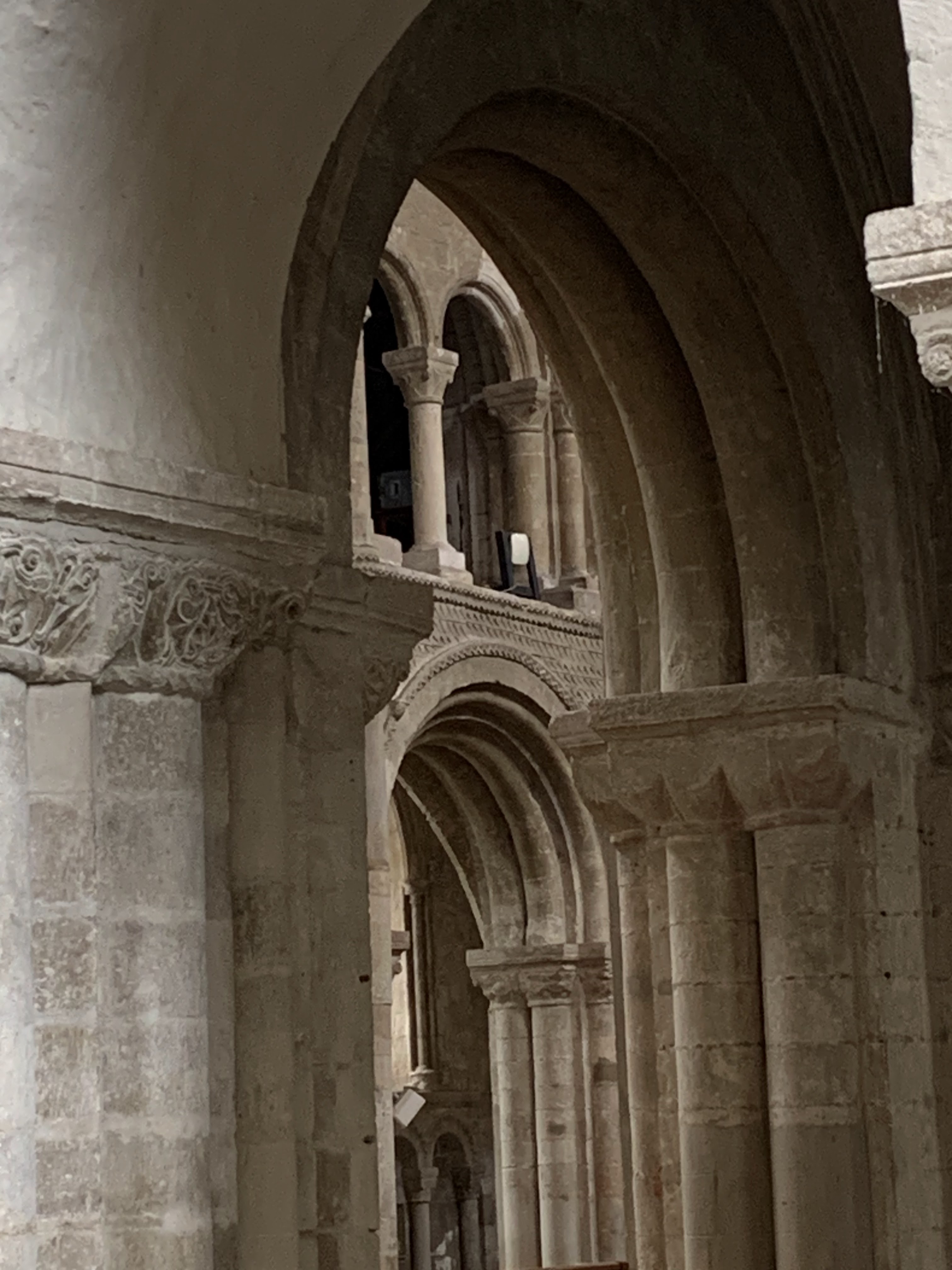
The cathedrals, chapels, and churches in Europe were often built on such ancient locations which is why these quiet spaces offer particular sanctuary for quiet stillness.
Especially during times of stress, uncertainty, and emotional turmoil time spent in solitude or in nature will calm the mind and open the senses to the whispers of the soul. When surrounded by the beauty, sights sounds, and smells of nature you become realigned with the bigger whole.
Allowing the mind to recover from stress and mental fatigue in nature helps restore cognitive functions and clarity. When you practice deep walking in nature you will regain your natural pace and rhythm.
Exposure to sunlight and the natural day-night cycle can help regulate and improve sleep patterns. Adequate sleep is essential for mental well-being. Sunlight plays a crucial role in the production of Vitamin D in the body, essential for bone density, muscle function, immune support, and cardiovascular health.
A principle of nature is constant change
A principle of nature is the cycle of change. Plants, animals and insects are constantly adapting to changing environmental conditions and seasonal cycles. Part of God’s evolutionary plan is constant refinement and perfection. By embracing nature’s wisdom you rediscover purpose and meaning.
The disconnect from our natural environment is responsible for much of the emotional turmoil and imbalance we see around us. With the pull of technology and digital distraction becoming ever greater, it is becoming more important than ever to take a time-out in nature to rediscover who you really are and who you are destined to become.
Reino Gevers – Author – Mentor – Speaker
P.S. My new book “The Turning of the Circle: Embracing Nature’s Wisdom for Purposeful Living” has just been published. You might also find my other books “Deep Walking for Body, Mind and Soul” and “Walking on Edge: A Pilgrimage to Santiago” of interest. They are available where all good books are sold.
Understanding and managing your emotions is key to achieving personal growth and accessing a higher vibrational energy. You can only tap into your inner wisdom by transmuting the charge of your toxic emotions such as fear, shame, anger, and grievance.
This poses a particular challenge during a time when social media and the political narrative feeds on negativity and our darkest toxic emotions.
Your body is the most authentic recording device of everything that has happened in your life. You will dream of events that happened decades ago because those memories are stored away somewhere in the depths of your body cells.
When you dream of when you were a seven-year-old and stole the cookies from Grandma’s closet, you have in some way not closed with that incident emotionally.
Your head-mind probably made up all sorts of reasons why taking those cookies was in order, while your sub-conscious heart-mind knew very well that what you did was stealing and that you hurt Grandma because you lied to her.
A tension or dissonance between head-mind and heart-mind, like acting against a gut feeling or doing something where all the alarm bells are running at a heart level, are just those things that the body will always remember.
Training your “heart-mind” to be emotionally mature is one of the reasons we are here on earth. We humans are imperfect beings, and probably the most disconnected of species from ourselves and our natural environment.
We have incarnated as souls to use our bodies as instruments of learning.
The heart is not merely an organ of the cardiovascular system that transports nutrients, oxygen and hormones throughout the body and removes metabolic waste. In the spiritual sense the heart is described as the “seat of the soul.” It is the first organ that develops in the fetus and is the connection between our physical and non-physical (soul) selves.
Impulses or thoughts flow first from the heart and then to the brain. The brain dissects, rationalizes and analyzes. The “heart-mind” is authentic and closest to the true self or soul purpose. Knowing the difference between “head-mind” and “heart-mind” is the spiritual learning part.
Our body is constantly sending us signals about what we need to hear and work on. The problem is that we are so caught up in the world of distraction that we mostly fail to listen until the body gets really angry and calls a time-out with some illness or malady. It is no surprise that cardiovascular diseases top the list in much of the Western world.
Regaining the connection
Regaining that connection to the “heart-mind” comes mostly during times of solitude, during meditation, prayer and deep walking. That is when we become aware of our emotional state of being. Some of the “emotional memories” stored in the body could go back many years or even decades.
These energies can be transmuted very well with the ancient body arts of tai chi, qi gong and yoga that were developed and refined by spiritual masters over many generations.
It is only fairly recent that these ancient arts have reached the Western world. One of the great tai chi masters, Cheng Mang Ching, was ostracized by the Chinese community in New York when he began teaching tai chi for the first time to Western students in the early 1960s.
If you walk the main Camino Frances, you will be walking for five weeks or longer. After two or three weeks on the road you realize that the Camino is much more than a mere physical exercise.
Not only does the body start detoxing, but I have noticed on my walks that dreams, childhood events, and memories of traumatic relationships that occurred many years ago return with a particular clarity.
These are particularly precious healing moments when old trauma is released to open up the channels for a flow of new energy.
Whatever the heart-mind hasn’t transmuted emotionally will at some stage come back to haunt you. It is why the mother on her death bed has that last wish before dying to reconcile with the son she hasn’t spoken to for years.
Volunteers and therapists companioning the dying have told me that the deepest regret is most often not having made amends with innermost family members. A peaceful death then only comes when that “something” has been dealt with.
What Chinese medicine has known for centuries, modern medicine is confirming with latest research. Many a serious illness has its origins in emotional baggage stored in the body-mind.
There is a particularly poignant passage in the third Beatitude of the Bible: “Blessed are the meek, for they shall inherit the earth.”
In the original Aramaic language, spoken by Jesus, the meaning is more subtle: “Tubwehun l’ makiche d’hinnon nertun arha.” This roughly translates to: “Renewal to those in emotional turmoil and blessed are those who can soften that which has hardened in their bodies.”
While walking in solitude you will inevitably be confronted by the same phenomenon as when lying alone awake at night: Hundreds of thoughts will be passing through your mind of past and future things.
One thought chases the next as you wind yourself up and down in a spiral of dancing monkeys in the head.
You won’t control those thoughts by practicing mind control methods. The mind does become aware of what it is thinking about and can extract itself with an accusatory finger of “why can’t I think of something else? Why can’t I let go of these worrying concerns in my head?”
You will notice that as the body releases tension during your walk, those dancing monkeys gradually start disappearing as you begin the descent from the head into feeling the body.
This is best done by aligning to the present moment by focusing on your breathing and counting the inhaling and exhaling of breaths.
You can also start by feeling each step touching the ground, feeling the ground and how the energy of the earth moves from your foot up your legs, spinal cord, neck and the crown of your head. Start by walking very slowly, aware of the present moment, just concentrating on these small things to liberate your mind.
Our ancestors practiced ceremony and rituals to transmute trauma on a body level. Animals still have this mechanism intact. A herd of antelope will run apparently haphazardly in all directions when one of them has been killed by a predator. Their bodies shiver and shake, but minutes later all has passed and they will resume grazing as if nothing has happened.
Calming mind and body
Transitioning from the depths of our lowest emotional frequencies, such as anger, shame, resentment, hate, greed, fear, and anxiety, towards the pinnacle of human evolution involves embracing the transformative power of compassion, love, empathy, gratitude, peace, and serenity.
Even as you ascend the ladder of higher consciousness, the complete liberation from toxic emotions and feelings remains an elusive goal; you are, after all, only human. However, through unwavering commitment and diligent practice, you can expedite your exit from the rabbit hole of negativity.
It will empower you to savor extended periods of vitality, hope, and inner tranquility, enhancing your overall well-being and vibrational frequency. It is the recipe for longevity and good health.
Reino Gevers – Author – Mentor – Speaker
P.S. This is an extract from “Deep Walking for Body, Mind and Soul. All my books are available on Kindle, and paperback where all good books are sold. If you would like to order in batch to gift to friends, family and employees you can contact me by DM for a special discount.
How often have you caught yourself going back into the past with the feeling of regret on the opportunities missed, the words you wished you had never said, and the things you would do differently if you could turn back the clock?
At times the feeling of regret can be so overwhelming that it’s like a dragnet pulling you down into a dark abyss of unhappiness. But according to author Daniel H. Pink regret is a fundamental part of our lives and can help us make smarter and better decisions in the future.
Foundation regrets. These are regrets on the human need for some form of stability. Pink quotes Jason who says: “I regret not saving money diligently ever since I started working. It’s nearly crushing every day to think about how hard I’ve worked for the last twenty-five years or so, but financially I have nothing to show for it.”
Boldness regrets. Over time we are much more likely to regret the chances we didn’t take than the chances we did, whether its work choices, education or the choice of a partner. Foregone opportunities can be especially haunting during times of stress and pain.
Moral regrets. Most people wish to be seen as good people. But over time morally dubious decisions can be gnawing such as swindling in a business or cheating on a spouse.
Connection regrets. According to Pink fractured or unrealized relationships with spouses, partners, parents, friends, and all other close relationships constitute the largest deep structure category of regret.
We can set very high standards to the self and are at times our own worst critic. The melancholy sadness and regret over that which was and is no more is not only debilitating but prevents you from moving forward. Many of our regrets can in fact be undone by making amends, reversing bad choices, and taking a different perspective by posing the questions: What did I need to learn and how can I make a better choice in moving forward? If I’ve harmed others, can I make amends through an apology or some form of emotional or material restitution?
Was the regret merely an unpleasant incident in your life or does it define your life? Practicing self-care and self-compassion can neutralize some of those feelings if you treat yourself like you would be treating your best friend.
You forge your identity with the story that you tell yourself. The first step is acceptance of that feeling or emotion of regret and replacing it with a positive thought moving forward. “I made a bad decision. I feel terrible about it. But I lovingly accept myself the way I am. I am harvesting from the rich experience and moving positively forward.”
In loving yourself you build the ability to nurture and better serve your relationships. The lesson of a door slammed shut is to do better next time.
Reino Gevers – Author – Mentor – Speaker
P.S. If you’ve found this article of interest you might want to read more in my books. “The Turning of the Circle: Embracing Nature’s Wisdom for Purposeful Living” has just been published. You might also find my other books “Deep Walking for Body, Mind and Soul” and “Walking on Edge: A Pilgrimage to Santiago” of interest – available where all good books are sold.
Membership of Christian churches and attendance of services is falling dramatically in many countries. But does that mean that more people are becoming agnostic, atheist or have lost their belief in a God or the divine?
On my current pilgrimage walk on the Camino de Santiago in northwestern Spain, we passed through several villages and towns on a Sunday. All these beautiful and ancient temples of worship, some dating back to Celtic times and early Christianity, had their doors shut.
One church did happen to be open but a man shooed us pilgrims away, making it clear that we were not welcome to have a look inside. I do normally enjoy sitting in these sacred places, meditating and feeling into the powerful energy fields that they emanate.
It hit a sore point to be rudely turned away. It symbolized for me everything that has gone wrong with conventional religion, fixated on empty external ritual, and controlling doctrine.
Churches and temples should be open for people of all denominations as long as they show respect, giving everyone sanctuary seeking a quiet space from the noisy and distractive pull of the external world.
For centuries religions from all the major faiths have vilified, ostracized, burned at the stake and shamed those that did not conform or belong. At the same time the hypocrisy of the clergy regarding sexual abuse, financial misdemeanors and interference in politics is laid bare like a festering open wound.
Jesus never had plans to establish an institution or a church. His criticism of the Pharisees, the clergy, and their hypocrisy was especially directed at those leaders burdening the faithful with strict rules and regulations while showing little love, mercy and compassion to those in need.
There is a saying that religion is for those who fear hell while spirituality is for those who have been there. On my more than a dozen walks on the Camino I have met countless people who have gone through the hell of losing loved ones, confronted life-threatening illnesses, the dark holes of depression, financial ruin and relationship breakdown. What I can say about all of them is that these life-changing events made them come out stronger and forced them into deep introspection on the purpose and meaning of life.
Experiential spirituality is a process whereby the shutters of the soul window are gradually opened up. It is a feeling of connection with the divine, and the mystery of creation. The great scientist Albert Einstein once said that the religion of the future will be cosmic in nature.
“The most beautiful and deepest experience a man can have is the sense of the mysterious. It is the underlying principle of religion as well as all serious endeavor in art and science. He who never had this experience seems to me, if not dead, then at least blind,” Einstein is quoted as saying.
The Dalai Lama, the spiritual leader of Tibetan Buddhism, encourages individuals to go beyond the superficial differences among religions and recognize the deeper essence of spirituality and morality that can be found in all faith traditions.
The fundamental principles of compassion, love, and ethics are not limited to any particular religious tradition or belief system. These principles, the Dalai Lama believes, are universal.
Among the hundreds of thousands of people who walk the Camino each year there are devout Catholics and people of all faiths but also manyspiritual seekers asking the age old question:
Where do I come from? Where am I going? What am I doing with the rest of the days of my life?
“The five colors blind the eye; The five tones deafen the ear; The five flavors dull the taste. Racing and hunting madden the mind; Precious things lead one astray.” – Lao Tzu
We are living in an age where technological progress has generated prosperity for a vast number of people and created a lifestyle for the average person that the most powerful kings and queens in the Middle Ages could not ever have imagined. Life expectancy, health care, mobility, and hygiene are at unprecedented levels in human history.
Individual self-realization, self-interest, and ambition have been powerful motivators for societal progress. But it appears we are at a tipping point where technological leaps are far greater than the mental capacity to deal with these changes. The unchecked pursuit of wealth and extraction of natural resources are threatening the survival of our species.
We have become blinded by the glare of the 10,000 things. We are drowning in information and misinformation and starving in wisdom that promotes a culture of spiritual awareness, empathy, fairness, and social responsibility.
The biblical story of the dance around the golden calf is timeless in its relevance. The Israelites had become impatient living in the desert, losing their trust in God. They then fashioned a golden calf with jewelry collected from the people, worshipping and dancing around the calf in revelry while their leader Moses was away in the mountains receiving the ten commandments from God.
The story serves as a warning against losing the moral compass and placing worldly desires above a genuine relationship with the divine, the true self. and purpose in life. Underlying the insatiable desire for new things is the misconception that power and wealth are equal to happiness. The predominant messaging of our culture is consumerism, social status, and material wealth.
There is nothing wrong in enjoying material abundance and prosperity. But making it the primary objective in your life, and becoming overly attached to “things” will inevitably lead to suffering and pain. The perspective changes completely for people suddenly confronting a life-threatening disease or facing the fear of losing a loved one.
The antidote to greed is the reconnection to our interconnectedness with all things living.
Reconnecting with interconnectedness involves recognizing and embracing the understanding that all beings and elements in the world are interconnected and interdependent. Building wisdom is like building a muscle. It’s an ongoing process. Key points to consider:
Awareness and Mindfulness: Practice being fully attentive to the present moment, observing the connections between yourself and your surroundings. You can do this by focusing consciously on your inhaling and exhaling breaths. Meditation practices, journaling, gratitude rituals and other self-care habits will help cultivate care for others. ,
Deep Walking: Deep walking is more than a hike. It is a spiritual experience where you develop a deeper connection to the natural world, observing the intricate interdependence between yourself, plants, animals, and the environment. By spending more time in the green and blue spaces of nature you extract yourself from the rat race of external distractions. Finding these moments of stillness will make you aware that life is finite. You cannot take your material possessions with you into the afterlife.
Compassion and kindness: Cultivate compassion and empathy towards others. Recognize that every person you encounter is connected to you in some way, sharing the same basic human experiences and emotions.
Relationships: Recognize that your actions, thoughts, and emotions have an impact on those around you, just as their actions, thoughts, and emotions affect you. Nurture and foster positive connections with others. The five people you spend most of your time with have a major impact on your value system, mannerisms, and state of mind.
Service and community: By helping others, you are contributing to the greater interconnected whole. Engaging in acts of altruism and service can deepen your understanding of interconnectedness by experiencing the positive ripple effects of your actions.
Reino Gevers – Author – Mentor – Speaker
One more thing...If you have found this article interesting you might want to subscribe with the “follow” button above or recommend my FREE weekly Blog to friends and family. My books can be ordered at all places that sell good books in both paperback and kindle.