Author Archives: Reino Gevers

Reino Gevers's avatar

About Reino Gevers

Author, mentor and trainer

Can religion be an addiction?

Times of uncertainty and rapid social and economic change provide fertile ground for a proliferation of religious and political cults offering „easy solutions“ for deeper underlying issues.

In a positive sense religion can offer sanctuary for like-minded people providing a framework of meaning in a chaotic world. Codes of behavior are offered as a means of salvation from an often unbearable life in the here and now.

It becomes unhealthy where it turns into an addiction characterized by compulsive behaviors and the inability to perceive or discuss any other perspective or alternative.

Adherents might engage in activities to the point where it disrupts their daily life, relationships, work and responsibilities – common to all addictions.

It becomes a coping mechanism, deflecting an underlying past trauma, loss or hurt. Sect and cult leaders are particularly successful in recruiting individuals going through a particularly vulnerable period in their life.

Control and Isolation

The control mechanisms of a cult can be on a very subtle emotional level. Once the member has gone all-in by severing long-term relationships, it becomes very difficult to return to the old life. Few people will admit to having made a mistake or having made the wrong decision after sacrificing the best years of their life and donated all their money to the “movement” or “cause.” We are hard-wired as social beings and it gets very difficult to leave “the cult family”. Those who leave are vilified as traitors to the cause, threatened and in extreme cases harmed physically and mentally.

Group-Think, Lies and Deception

Once in the cult or religious movement you are part of the „group-think bubble“ . Members expressing the faintest doubts or engaging in a critical discourse about the objectives of the movement or the leader are shamed, coerced and brought into line. They will be told that they are “in their ego”, have sinned or strayed from the path. They will be playing on a core fear of most humans – the fear of being excommunicated from the safety of the tribe.

Financial Exploitation

A common denominator of all cults is the financial exploitation of their members. They will be asked to contribute membership fees, provide funds for a new temple, pay for the private jet or the legal fees of the cult leader. At times members would have to donate all their assets to the movement for “the common good” as a sign of their commitment and loyalty. A small portion might be channeled to real charities as a marketing ploy while the major portion will be kept by the cult leader for his personal needs.

Exploitation of vulnerabilities

The political cult and charismatic leader at its head will ensnare you if you haven’t dealt with your shadows such as anger and fear or transmuted a traumatic experience.

Addiction to a belief has to be treated like any other addiction. First and forement there is the need for an honest recognition and acceptance of the problem. What lifestyle changes, support groups and therapy are necessary? What would my life look like without the addiction? What freedoms would I be enjoying? How can I prevent relapse and find supportive friends with a higher vibrational energy?

If you are drawn to a charismatic leader with a hate-filled, and vindictive messaging, ask yourself: “What anger within me is he tapping into? What can I positively change in my life now, instead of placing my hopes in the “political messiah.”?

Walking the path of your highest calling in personal freedom and liberty is foundational to fulfilling your soul destiny and living a life of bliss. You can pick and learn from the gems and wisdom of many teachers past and present. But if you should run into that religion, sect or cult offering the one and only perfect solution, it might just sound too good to be true.

Experiential spirituality

While experiential spirituality can exist within the context of organized religions, it transcends traditional religious boundaries of what to believe, and how to behave. There is a direct personal experience of the divine, through a sacred, or transcendent state of consciousness, and cannot be defined.

Practices closely associated with experiential spirituality include meditation, prayer, music, contemplating sacred art, and deepwalking pilgrimages.

On the path of experiential spirituality, you are never truly done. You continuously grow, make mistakes, learn, and discover along the way. Rather than adhering to a fixed moral code, you develop an intuitive situational awareness that guides you toward higher or lower vibrational paths.

Once on the journey, it fosters a profound sense of connection with the cosmic order and the essence of life, kindling a deeper feeling of peace, love, and interconnectedness that transcend doctrine or belief.

In the words of 13th-century Mystic Meister Eckart:

“The knower and the known are one. Simple people imagine that they should see God as if he stood there and they here. This is not so. God and I, we are one in knowledge.”

Reino Gevers – Author – Mentor – Speaker

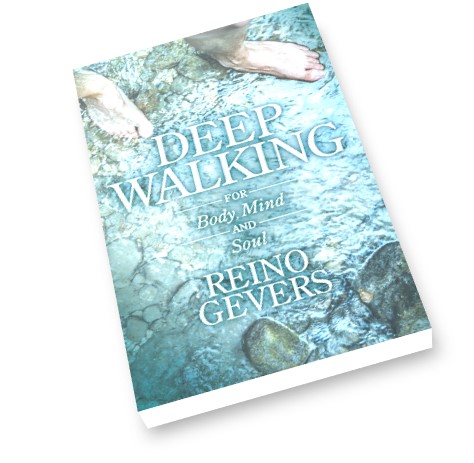
P.S. I’m excited to announce the release of my latest book, “The Turning of the Circle: Embracing Nature’s Wisdom for Purposeful Living.” If you enjoy it, you might also be interested in my previous works, “Deep Walking for Body, Mind and Soul” and “Walking on Edge: A Pilgrimage to Santiago.” You can find all of these titles at reputable bookstores near you.

Leave a comment

Filed under deep walking, meditation, mental health, nature, religion, spirituality

AI and social media: A generational challenge

Every era faces different challenges, defined by the changing landscapes of society, technology, and geopolitical events, and we have not even begun to understand the current impact of social media and Artificial Intelligence (AI) on mental health and social cohesion.

It was telling that in the U.S. presidential debate, both candidates not only made a devastatingly poor impression but that one of the biggest challenges of our time such as the impact of social media and AI on every facet of our lives was not even mentioned.

The pervasive effect of social media on mental health

Studies have shown an alarming increase in suicide rates, especially among teenage girls in recent years coinciding with the widespread adoption of social media platforms like Instagram, Snapchat, and TikTok. Girls are at greater risk of cyberbullying, facilitating bullying behavior that can be relentless and pervasive. Unrealistic beauty standards are perpetuated, leading to body dissatisfaction and low self-esteem.

Among teenage boys, the dangers of addiction to online gaming and porn are leading to growing isolation and a breakdown in social skills.

AI is changing our world

We are just at the cusp of rapid technological changes triggered by AI with positive as well as negative effects. The technology is already proving to be most effective in medicine. At the Institute of Cancer Research, for example, researchers have developed a unique canSAR database that can combine patients’ clinical and genetic data with independent chemistry, biology, patient, and disease information. It i likely to revolutionize transportation with self-driving cars, buses, and drones.

But many jobs, especially those involving routine and repetitive tasks, are at risk of being automated. Sectors such as manufacturing, logistics, and retail are particularly vulnerable to automation, potentially leading to significant job losses. The rapid pace of AI development requires workers to continuously update their skills, which can be challenging for many.

The rapid technological changes we are seeing inevitably lead to a growing gap between the cultural and mental capacities of societies to adapt to these changes and the legal frameworks to prevent the abuse of such technology. It creates fear and anxiety among those individuals who have particular difficulty in adapting to changes.

The use of AI and other new technologies have to be designed in ways that respect human rights, privacy, and autonomy, and do not dehumanize users. Human capabilities need to be augmented rather than replacing the human touch in critical areas like customer service, healthcare, and creative fields.

A holistic approach needs to be made recognizing and valuing the unique identity, experiences, and needs of each person rather than treating them as anonymous entities. Every individual has different
emotional, psychological, and social needs.

With all our senses becoming over-stimulated by technology and threatening our mental and physical well-being it becomes all the more essential to reconnect with nature and our primal roots and senses.

Taking time out for a deep walk in nature is becoming a crucial pillar of survival in the digital world. Here are just some ways how we can rehumanize our senses:

Immersing in the green and blue spaces

Immersing yourself in the blue and green spaces of natural landscapes such as forests, mountains, oceans, and streams plays a major part in reducing freeze, flight and fight stress hormones such as cortisol. Auditory engagement with natural sounds such as the rustling of leaves, flowing water and birdsong contrast with the constant noise of an urban environment, providing a peaceful respite to help clear the mind.

Sensory Stimulation

The clean, fresh air of natural environments, free from pollutants and artificial smells, invigorates and refreshes your senses with the diverse scents from natural herbs, flowers and trees. They can positively evoke memories and emotions. Feeling and touching natural elements such as a tree, rock, sand or water provides direct physical connection with the natural world and the present moment.

Deep walking

Walking in nature is one of the most beneficial and underestimated ways of boosting your immune system, and preventing cardiovascular and metabolic disease. At the same time, exposure to sunlight helps your body produce vitamin D which is essential for bone health and overall mental well-being. Walking less than 5,000 steps per day is generally considered to be a sedentary lifestyle. Anything between 8,000 and 10,000 steps a day will significantly improve your health.

Reino Gevers – Author – Mentor – Speaker

P.S. I’m excited to announce the release of my latest book, “The Turning of the Circle: Embracing Nature’s Wisdom for Purposeful Living.” If you enjoy it, you might also be interested in my previous works, “Deep Walking for Body, Mind and Soul” and “Walking on Edge: A Pilgrimage to Santiago.” You can find all of these titles at reputable bookstores near you.

Leave a comment

Filed under mental health, mental-health

Hardened body, hardened mind

After spending several weeks on my annual pilgrimage retreat along the Camino in northwestern Spain, I have had ample time to reflect on some pressing issues affecting our collective state of mind. I’m increasingly concerned about humanity’s tendency to retreat into tribal bubbles, becoming addicted to fixed concepts and thoughts.

Here is my theory on why the world is at real risk of tipping back into authoritarianism, intolerance, and the cult-like idealization of the “strongman” leader.

Social media thrives on toxic culture

We live in an age where any person in a dark cellar with a deranged mind can get millions of views by posting the most outlandish conspiracy theories, extremism, and anger. There are no real filters or control mechanisms in place to prevent the algorithms from blocking obviously false, distorted, and hateful information. And, there are no legal consequences for those responsible.

A preoccupation with fear, anxiety, and negativity will inevitably impact your mental and physical health. The eyes, brain, and spinal cord are intricately connected through the central nervous system (CNS), facilitating vision, sensory processing, and motor control.

The interconnection of body and mind

The eyes capture visual information and convert it into electrical signals. The optic nerve then transmits these signals to the brain which processes and interprets this information, coordinating with other sensory inputs and cognitive functions The spinal cord transmits these motor commands from the brain to the eyes and other body parts, integrating visual information to coordinate body movements.

Stress starts with negative thought

Stress hormones responsible for flight, fight, and freeze responses of the body are triggered by chronic negative thoughts. Constant worry, fear, and tension will inevitably negatively impact your daily functioning and decision-making. In extreme cases, it leads to depression, hopelessness, and loss of self-esteem.

People preoccupied with negative thoughts may resort to unhealthy coping mechanisms, such as overeating, smoking, substance abuse, or addiction to simplistic thoughts and concepts to numb their emotional pain.

Cognitive distortions, such as catastrophizing (expecting the worst), overgeneralization (viewing a single negative event as a never-ending pattern), and black-and-white thinking (seeing things as all good or all bad).

It is an open door for cult leaders, and extremist political movements offering simple solutions for complex global problems.

What is the antidote?

You have the power to make lifestyle choices, that determine whether you become a tool in the hands of manipulators or take back control over your own mental and physical health. Here are some tips:

  • What you feed your brain with that you become. Monitor your time spent on social media and the consumption of negative news.
  • Physical activity, a balanced diet, and adequate sleep can help mitigate the effects of stress and improve your overall feeling of well-being.
  • How are you talking to yourself? Are your thoughts mainly negative or positive?
  • Mindfulness practices including meditation, deep walking, yoga, tai chi, qi gong reduce the impact of negative thinking and improve awareness. These exercises also impact your body posture and how you feel about yourself.
  • Techniques such as deep breathing, progressive muscle relaxation, and Cognitive Behavioral Therapy (CBT) can help identify negative thought patterns.
  • Choose your friends wisely. Don’t waste your time arguing with people addicted to fixed concepts and illusions. Positively-minded and supportive friends, family, and community make all the difference.

Reino Gevers – Author – Mentor – Speaker

P.S. I’m excited to announce the release of my latest book, “The Turning of the Circle: Embracing Nature’s Wisdom for Purposeful Living.” If you enjoy it, you might also be interested in my previous works, “Deep Walking for Body, Mind and Soul” and “Walking on Edge: A Pilgrimage to Santiago.” You can find all of these titles at reputable bookstores near you.

Leave a comment

Filed under mental health

Truth of the Heart

Just having completed the Camino Aragonese pilgrimage route in northwestern Spain, I was deeply inspired by the diverse landscapes, rich vegetation, and the symphony of nature that emerges when human noise recedes.

Immersing oneself in nature reveals the interconnectedness of all living beings. Nature is an expression of the divine, with diversity as a fundamental principle of creation.

In times when external voices grow increasingly loud with hate-filled tribalism and ethnocentricity, the truth of the heart becomes paramount.

Monoculture is lifeless

Compare a lifeless monoculture with a meadow buzzing with the sound of birds, insects and the aroma of wild herbs and a multitude of flowers.

Thoughts and beliefs – religious, philosophical or political – have become so much part of tribalist identity that some people would rather die than admit that they have all along placed the ladder against the wrong wall.

Attachment to fanaticism in all shape and form hardens mind and body, and is one of the biggest obstacles to personal growth and elevation of consciousness.

One humanity or chaotic tribalism

Currently humanity is at the cusp of an elevation of consciousness of a one humanity or regressing into another chaotic age of divisive tribalism, nationalism, and intolerance.

There have been brief periods of enlightenment in the past when faith was more experiential in nature, with individuals gaining higher insight through contemplation, art and music.

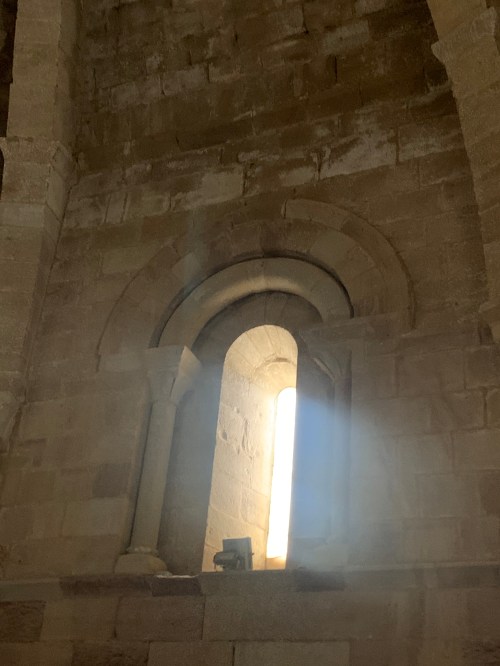
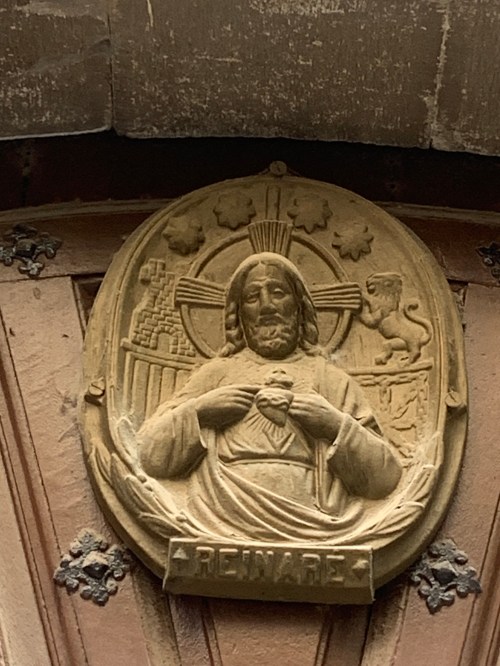
Beautifully restored Romanesque cathedrals, especially in Jaca and Sanguesa, on the Aragonese route provided sanctuary in medieval times for quiet contemplation and inspiration from sculpture at a time when most people were illiterate.

Divinely inspired music and art

Later construction of the grand cathedrals such as Notre-Dame in Paris and Chartres, with their stunning stained glass windows inspired awe and devotion.

During the Renaissance era religious art with masterpieces by artists such as Michelangelo, Leonardo da Vinci, and Raphael communicated complex theological ideas through visual means.

Sacred music by composers such as Johann Sebastian Bach, and Beethoven created elaborate musical compositions elevating the liturgical experience and deepening the spiritual experience, connecting with the divine in profound sensory-rich ways.

When a religion degenerates into claiming the ultimate truth, subjugating its members into what to believe and how to behave, there is empty ritual and stagnation. The head-mind closes the door to the heart-mind and the whispers to the soul.

Reino Gevers – Author – Mentor – Speaker

P.S. I’m excited to announce the release of my latest book, “The Turning of the Circle: Embracing Nature’s Wisdom for Purposeful Living.” If you enjoy it, you might also be interested in my previous works, “Deep Walking for Body, Mind and Soul” and “Walking on Edge: A Pilgrimage to Santiago.” You can find all of these titles at reputable bookstores near you.

Leave a comment

Filed under deep walking, Pilgrimage, spirituality, Uncategorized

Manifesting into misery

Creating a vision board with images of a beautiful seaside home, luxury cars, and a substantial bank balance might seem like an easy path to a blissful life. However, for most people, this remains a distant dream, while they continue living in quiet misery and desperation.

Books on personal wealth and fulfillment like „Think and Grow Rich“ by Napolean Hill reached a cult-like status in the 1960s-1970s and were followed in recent times by bestsellers such as „The Secret“ by Rhonda Byrne.

Some people do in fact win the lottery, inherit a fortune, or become rich and famous overnight. Yet, many of these individuals end up losing their wealth or attempt to drown their profound unhappiness with substance abuse and escape into constant external distractions. Multiple studies reveal that lottery winners are twice as likely to file for bankruptcy than the general population.

If you haven‘t done the inner work by questioning your real motivation and are primarily focused on the HAVING rather than the BEING you will remain on a low unhappy vibrational level despite living a life of exceptional material abundance.

Visualizing and manifesting is only one part of the work. You will be severely disappointed if you don‘t follow through with a realistic plan of action and do the inner work on the vibrational frequency that you emanate.

How are you talking to yourself?

Are you at peace with yourself and your darker side? Can you accept and love yourself the way you are or is talking to the self dominated by feelings of regret, shame, or guilt?

Are your thoughts dominated by negativity?

Your first thought when you awake in the morning is your compass for the day. Can you transmute low-energy such as anger, sadness, and fear into kindness, positivity, and courage? Be authentic by accepting how you feel without blaming yourself and others. Do external circumstances out of your control dominate your thoughts?

Why do you want certain things?

Do you want that nice house, car, or kitchen to compete with the Joneses to boost your low self-esteem by wanting to impress the people you most dislike?

What happens if?

Ever thought about what happens when you actually achieve your goal? Super achievers often describe an empty feeling almost like a hangover. After winning the 1997 World Golf Championship in Spain, Australian golfer Greg Norman left his trophy in the locker room, saying the memories were more important than the trophy itself. Sometimes we need that challenge, that obstacle and that long road to elevate consciousness.

You need to be clear on whether your wish is embedded in an ego-mind or driven by an inner passion, and joy where you deeply feel a connection to inner purpose and ultimately divine will of service to a greater whole.

Your eyes will light up when you tell people about your dream. You will feel a surge of energy in your body, and your spirit is lifted.

If your path is cluttered with obstacles, disappointment, and setbacks it could mean two things: You either still have to learn something or you have mindlessly careened off on the wrong track, needing to press the reset button.

Be careful what you wish for

It could turn into a horrible nightmare if it is not aligned with your divine purpose to become who you really are. Fame and wealth doesn’t mean your life is without problems. You will still have to deal with health, personal grief, and external circumstances out of your control like all other people.

When you start building a high vibrational level you will automatically attract circumstances and people on the same frequency. You will develop greater situational awareness of what information, people, foods, and surroundings boost your energy levels. 

When things start falling into place almost effortlessly you are on the right path. You can start enjoying the gifts bestowed to you by the universe in humble gratitude. The universe in essence has your back.

Reino Gevers – Author – Mentor – Speaker

P.S. I’m excited to announce the release of my latest book, “The Turning of the Circle: Embracing Nature’s Wisdom for Purposeful Living.” If you enjoy it, you might also be interested in my previous works, “Deep Walking for Body, Mind and Soul” and “Walking on Edge: A Pilgrimage to Santiago.” You can find all of these titles at reputable bookstores near you.

Leave a comment

Filed under mental health, mental-health, self-development, spirituality

Sages, Saints and Sinners

In a life-threatening global crisis, individuals are compelled to either dig deep into their inner light or succumb to their darkest shadows. This is the central theme of my upcoming book, “Sages, Saints, and Sinners,” set against the harrowing backdrop of the Black Plague, which nearly decimated the entire population of Europe in the 14th century.

Here are two contrasting excerpts:

“Amidst the stark contrast of tragedy, mortality, and chaos, beauty revealed itself in heightened clarity and depth.

A keen awareness of life’s fleeting nature permeated his being, igniting an inner yearning to embrace existence with unwavering intensity.

 He savored the earth’s pulsating rhythm beneath his feet, marveling at the majestic dance of birds of prey overhead, the delicate shimmer of sunlight on swaying blades of grass, and the harmonious symphony of nature’s myriad voices. The beauty of creation eluded possession, transcending mere ownership to encompass a profound perspective that infused every facet of existence.”

Photo by Samrat Maharjan on Pexels.com

…”Nuns and monks offered simple herbal remedies and prayers, reading from the sacraments or taking confessions from the dying.

Simple pallets with straw served as beds with local volunteers supplying food and taking away the bodies of the dead in donkey carts to be buried in a cemetery nearby.

Isabel frequently conferred with Brother Thomas on researching the possible cause of the pestilence, refusing to believe that it was an act of God.

What better place to be than the monastery where some of Europe’s best theologians, astronomers, mathematicians, and doctors were at work.

“God has blessed us with intellect and a mind to ponder. Do we not ascend through every trial, gathering wisdom along the journey?” remarked Brother Thomas.

I’ve been working on this book project for the past two years and I’m now working on the final draft. The message I want to put out there with this novel is that even in dire situations of hopelessness, life is transitory.

It is in times of difficulty, in the pain, in the suffering that consciousness can either be elevated to its highest levels or succumb to the lowest vibrational levels of toxic emotions marked by procrastination, fear, and rage.

Reino Gevers – Author – Mentor – Speaker

P.S. I’m excited to announce the release of my latest book, “The Turning of the Circle: Embracing Nature’s Wisdom for Purposeful Living.” If you enjoy it, you might also be interested in my previous works, “Deep Walking for Body, Mind and Soul” and “Walking on Edge: A Pilgrimage to Santiago.” You can find all of these titles at reputable bookstores near you.

Leave a comment

Filed under spirituality

Pushback from dark forces

You don’t need to be a conspiracy theorist to see that extremist groups are exploiting global fears and uncertainties to push an agenda that threatens basic freedoms and hinders humanity’s collective progress.

Despite significant advancements over the past two decades, there is rising resistance from forces entrenched in primordial ideologies, where power is maintained through subjugation and conflict.

For your own peace of mind, it is important not to be overwhelmed by the voices of negativity emanating from the external world, but at the same time be aware of the manipulative forces trying to lure you into a false reality.

Fear and anxiety create an imagined threat

When in fear and anxiety you not only become susceptible to a false narrative but you will be held back to the next level of growth and consciousness. The natural human survival mechanism of freeze, flight, or fight mode is triggered by the primitive or “reptilian brain” when a real or imagined threat is perceived.

Those regions of the brain playing a significant part in decision-making, creativity, and problem-solving such as the prefrontal cortex, parietal cortex, and portions of the temporal and occipital lobes are literally put on hold.

Evil forces are masters at creating and manipulating grievance culture

If you are unable to reflect and put those fears and anxieties in perspective or when emotions from past trauma are suppressed, you are easy prey for manipulation by external forces. Political demagogues are masters at building a grievance culture based on existing collective fears, shame, or humiliation.

Photo by Andrea Piacquadio on Pexels.com

These simple but highly effective techniques have been used by dictators, authoritarians, and cult leaders throughout history:

  • Reshaping public opinion by spreading a false and misleading narrative. Quality media and journalism characterized by in-depth reporting and fact-checking is slammed as fake news. Followers are increasingly lured into a “group-think” mentality where all other perspectives are vilified as disloyalty and betrayal.
  • The charismatic leader presents himself as a “messianic figure” promising to solve all problems and fulfill people’s needs. They promote an image of themselves as infallible leaders cultivating a cult-like devotion among followers.
  • Certain groups, individuals, parties, and minorities are scapegoated to deflect blame and to unite followers behind the leader, deflecting from their own failings and weaknesses.
  • They manipulate historical narratives to legitimize their rule and justify their actions. This can involve glorifying past achievements, whitewashing atrocities, or demonizing political opponents.
  • Independent institutions such as the judiciary, legislature, and civil society organizations are usurped to prevent checks and balances in the system. It took Adolf Hitler and his Nazi party less than three months to replace the entire German civil service with loyalists after coming to power in a democratic election in 1933.
  • Loyalists are rewarded with a combination of rewards and punishments to discourage dissent. Critics are either forced into exile, imprisoned or litigated into bankruptcy.

The Maga Republicans in the United States, Viktor Orbán’s Fidesz party in Hungary, Germany’s extremist AfD party, the Putinist movement in Russia or the Erdogan program in Turkey, all show similar totalitarian characteristics and have a common agenda.

Extremist movements are adept at creating a nostalgic and glorified view of the past where in their view “there was more prosperity, less crime, less social unrest, and the woman knew her place in the social hierarchy.”

Present realities are painted darker than they actually are. Our parents and grandfathers by far did not have the same opportunities as we have today: Here a few examples:

  • Global poverty rates have declined significantly over the past two decades. Many countries, particularly in Asia, have experienced rapid economic growth, lifting millions out of poverty.
  • Technological advancements have transformed communication and access to information, enabling greater connectivity and social mobilization. Can you imagine a world today without Internet and a cell phone in your hand with all the information in the world at your fingertips?
  • Renewable energy sources have become more prominent, creating cheaper energy and boosting economic prosperity.
  • There is a growing recognition of the interconnectedness of all life and the importance of environmental sustainability, social justice, and ethical living. Many spiritual and religious traditions emphasize values such as compassion, empathy, and stewardship of the Earth.
  • There has been a proliferation of spiritual movements, beliefs, and practices, reflecting diverse cultural, religious, and philosophical traditions. We are fast embracing a more tolerant and universal “cosmic religion.”

These changes could only take place with more freedoms, room for expression and acceptance of diversity and change as a fundamental part of human evolvement and advancement. It is worth fighting to protect these freedoms.

Let’s acknowledge the historical truth: extremist, fascist movements inflicted the most catastrophic human tragedy and loss of life during World War II.

Today, we stand at a critical juncture where concerted action is imperative to thwart Russia’s advances in Ukraine, a crucial player in global food exports. If the United States, were to cease armament support to Ukraine and inadvertently aid Putin’s aggression, the consequences would be dire. We could witness a mass displacement of many millions of people towards Western Europe, destabilizing societies on a global scale.

Furthermore, intelligence assessments suggest that Putin’s ambitions extend far beyond Ukraine. There are concerns of potential Russian expansion into the Baltic states and even Poland, effectively redrawing geopolitical boundaries.

Simultaneously, Putin’s regime propagates an insidious information war, sowing seeds of hatred and division in numerous countries. Alarmingly, elements within the Maga Republican movement have been parroting verbatim Russian disinformation.

However, a successful defense by Ukraine against Russian forces would not only safeguard its sovereignty but also channel resources to long-term global goals of environmental conservation, public health, poverty alleviation, and securing a brighter and more peaceful future for generations to come.

When confronted with dark forces, you have a choice: Will you follow the path of hate, division, anger, and conflict, or will you embrace your own inner truth and humanity of joy, kindness,and compassion?

Reino Gevers – Author – Mentor – Speaker

P.S. I’m excited to announce the release of my latest book, “The Turning of the Circle: Embracing Nature’s Wisdom for Purposeful Living.” If you enjoy it, you might also be interested in my previous works, “Deep Walking for Body, Mind and Soul” and “Walking on Edge: A Pilgrimage to Santiago.” You can find all of these titles at reputable bookstores near you.

Leave a comment

Filed under mental health, mental-health, psychology, purpose, raised consciousness, self-development, social media, trump presidency

Is religion stifling spiritual growth?

During my childhood in South Africa, I started having my first doubts about religion when clergy defended from the pulpit the abhorrent policy of apartheid and prevented a devout black priest from attending a church ceremony.

The message of salvation failed to resonate in the obligatory Sunday services which I found to be extraordinarily melancholy and joyless occasions, steeped in empty ritual. It did however serve the purpose of sending me onto a path of intensive ongoing spiritual exploration.

If you are one of those people who left the church in frustration after being shamed for thinking differently or questioning doctrine, then welcome to the club.

For centuries religious institutions have stifled spiritual growth and prevented people from living their divine purpose by telling them how to behave, what to believe, and even what politicians to vote for. This, for me at least, is the ultimate sin for which the church needs to take responsibility.

Spiritual but not religious

Especially younger people in Western countries are seeing through the hypocrisy and leaving the church in droves. But does that mean that more people are becoming agnostic, atheist, or have lost their belief in the divine?

Seven out of ten Americans describe themselves as spiritual in some way including 22 percent who say they are spiritual but not religious.

Even the first Christian communities were often divided between legalistic interpretations of the Gospel and experiential spirituality. There is a lovely passage in Galatians 5 of the New Testament of the Bible where St. Paul criticizes an early church in today’s Turkey.

Paul underscores the centrality of the Gospel, calling on the faithful to practice love, joy, peace, patience, kindness, goodness, faithfulness, gentleness, and self-control as opposed to the legalism of what foods to eat and what could and could not be done on a Sabbath.

Jesus, the ultimate revolutionary

Some 2,000 years ago Jesus broke all religious conventions by healing the sick on the Sabbath. He was eventually crucified when openly exposing the hypocrisy of the clergy, by dining with sinners, tax collectors, prostitutes, and other outcasts – who were excluded from the Temple.

Jesus never had plans to establish an institution or a church and would probably be horrified by what people are saying and practicing in his name today. When someone starts confronting me with the words: “Have you found the real Jesus?” it is for me a signal to run.

Temples, churches, and places of worship could be turned into sanctuaries of peace by opening their doors to people of all faiths. Many Christian churches however are stuck in tribalistic doctrine, especially when it comes to who is entitled to holy communion, abortion, or whether women can be ordained as priests.

Thriving churches, however, are vibrant meeting places for people joyfully dancing, singing, praying, and sharing meals together. In a positive sense, they can cement the community spirit, especially in urban environments where we have an epidemic of isolation and loneliness. These church members practice a living faith by visiting the aged, providing comfort to prison inmates, and refugees, and establishing food banks for the hungry.

Spiritual growth comes from a place of brokenness

There is a saying that religion is for those who fear hell while spirituality is for those who have been there. The seeds of spiritual growth come from a place of brokenness.

On my more than a dozen walks on the Camino in Spain I have met countless people who have gone through the hell of losing loved ones, confronted life-threatening illnesses, the dark holes of depression, financial ruin, and relationship breakdown. What I can say about all these people I’ve met on the Camino is that such life-changing events made them come out stronger, forcing them into deep introspection on the purpose and meaning of life.

A cosmic religion of the future

Experiential spirituality is a process whereby the shutters of the soul window are opened. It is a feeling of connection with the divine, and the mystery of creation. The great scientist Albert Einstein once said that the religion of the future will be cosmic in nature. 

“The most beautiful and deepest experience a man can have is the sense of the mysterious. It is the underlying principle of religion as well as all serious endeavors in art and science. He who never had this experience seems to me, if not dead, then at least blind,” Einstein is quoted as saying.

The Dalai Lama, the spiritual leader of Tibetan Buddhism, encourages individuals to go beyond the superficial differences among religions and recognize the deeper essence of spirituality and morality that can be found in all faith traditions. 

The fundamental principles of compassion, love, and ethics are not limited to any particular religious tradition or belief system. These principles, the Dalai Lama believes, are universal.

Already early into this year, a record number of pilgrims are walking the Camino. All share the common quest that has resonated through the ages:

“From whence do I hail? Whither do I journey? What purpose guides my days ahead?”

In echoing the ancient Sages and Mystics, emphasizing the innate spirit of man: Where there is a lighthearted spirit of joy, peace, positivity, and kindness, negativity and darkness recede.

Reino Gevers – Author – Mentor – Speaker

P.S. I’m excited to announce the release of my latest book, “The Turning of the Circle: Embracing Nature’s Wisdom for Purposeful Living.” If you enjoy it, you might also be interested in my previous works, “Deep Walking for Body, Mind and Soul” and “Walking on Edge: A Pilgrimage to Santiago.” You can find all of these titles at reputable bookstores near you.

Leave a comment

Filed under Camino de Santiago, happiness, humanity, meditation, mental health, psychology, self-development, spirituality

Evil is created, not born

Russian President Vladimir Putin’s unprovoked invasion of Ukraine has inflicted devastation upon millions of lives and dramatically altered geopolitical realities. Analysts speculate that Putin’s actions may be rooted in a traumatic childhood, a common denominator of some of the world’s most brutal dictators.

Adverse childhood experiences and trauma are sometimes passed on for generations, and if not transmuted can create particularly destructive adults who are incapable of showing compassion, empathy, or love.

Putin himself is probably unaware that his behavior is driven by unresolved “inner childhood” trauma but his convoluted argument on national television that the invasion of Ukraine was justified to fight “Nazis” offer some clues to his actions.

Ukraine is led by a Jewish leader and Putin’s argument that the country’s government is led by Nazis is absurd. Lately, the argument of fighting “Nazis” in Ukraine has been changed into a fight against the West as a whole “intent on destroying Russia.”

Putin, judging from his many unhinged statements in state-controlled media, obviously feels threatened and considers himself the victim seemingly oblivious to the suffering he has unleashed.

A former profiler from the U.S. Central Intelligence Agency (CIA), Dr. Jerrold Post, who later became a professor of psychiatry has suggested that Putin’s anxieties possibly stemmed from his early experiences in life.

Putin grew up as a street kid in a rough neighborhood of Leningrad, a city devastated by the Nazis during World War II. Most of the population died in the war and Putin’s father was badly injured, inheriting from his parents their wartime trauma. Growing up without any loving adults around him, Putin was forced to fend for himself on the streets and was badly bullied by other children.

It produced a macho personality, deep distrust of others, unpredictability, and a man willing to advance his own power agenda walking over killing fields in the process. Putin has had his most vocal opponents assassinated or imprisoned, started wars in several neighboring countries, and is sowing division and hate with an information war of fake news on a global level. We are seeing evil at play on multiple levels.

Photo by Keira Burton on Pexels.com

Dr. Post explained in an essay that Putin’s steely surface is directly linked to being bullied as a child which led him to take up martial arts.

“He (Putin) took up martial arts so as not to be pushed around by other kids. We are seeing the same behavior in his leadership,” Post wrote.

The psychologist Alice Miller writes that there “is no confirmation of the widespread assertion that there are people who are born evil. On the contrary. The deciding factor is the reception they were given when they came into the world and the way they were treated later.”

Her summary of how evil is created and what she learned from the common denominator of childhoods from dictators is particularly poignant:

“These children will tend to glorify the violence inflicted upon them and later take advantage of every possible opportunity to exercise such violence, possibly on a gigantic scale. Hitler, Stalin, and Mao all had particularly traumatic childhoods during which they were repeatedly beaten and shamed by adults.

“Children learn by imitation. Their bodies do not learn what we try to instill in them through words but what they have experienced physically. Battered, injured children will learn to batter and injure others; sheltered, respected children will learn to respect and protect those weaker than themselves. Children have nothing else to go on but their own experiences.”

Our responsibility as a society therefore is to instill in children from an early childhood love, respect, understanding, kindness, and warmth.

The healthier a child’s relationships are at a later stage in life, the higher the possibility of recovery and resilience from trauma.

When a childhood trauma can be resolved at an early stage, there is a greater chance of healing and less risk that a destructive behavior pattern is repeated in adult life.

Related articles:

Reino Gevers – Author – Mentor – Speaker

P.S. I’m excited to announce the release of my latest book, “The Turning of the Circle: Embracing Nature’s Wisdom for Purposeful Living.” If you enjoy it, you might also be interested in my previous works, “Deep Walking for Body, Mind and Soul” and “Walking on Edge: A Pilgrimage to Santiago.” You can find all of these titles at reputable bookstores near you.

Leave a comment

Filed under psychology, self-development, spirituality, Uncategorized

The power of community

Happiness is a state of mind, often based on those small joys of life that wield immense power to our sense of bliss.

Recently, I engaged in an exercise with course participants, probing into what fueled their energy reserves versus what drained them. Surprisingly, the resounding echoes leaned towards moments spent with loved ones, the companionship of pets, or the peace of mind found in nature as profound sources of rejuvenation.

Notably absent from their reflections was any mention of shopping or the accumulation of material possessions. Yet, society incessantly indoctrinates us that such acquisitions are the keys to happiness. The allure of novelty quickly dims, leaving behind a feeling of regret and shame from overspending.

Humans are tribal by nature

We humans are tribal by nature. Positive interaction with our fellow human beings where we feel seen, supported, and heard is key to perceiving a sense of safety and well-being. A supportive community has for eons been part of the survival mechanism of the human species.

In his research on the Five Blue Zones, Dan Buettner explored the lifestyles and diets in regions of the world where people lived the longest and were healthiest.

It is a fact that aging and death are part of life but living a healthy lifestyle can add decades to your life and happiness. Some key pillars of the research of the Five Blue Zones:

  • Physical Activity. People who live long lives do regular moderate exercise such as walking
  • All the Five Blue Zones came from strong communities with a healthy mixture of young and old people
  • They had a sense of purpose and joy
  • Their intake of calories and alcohol was minimal and most had Mediterranean or whole food plant-based diet.

Genetics play a relatively insignificant part of between 20-25 per cent when it comes to longevity.

With stress related physical and mental disorders becoming a growing threat to the very fabric of society, a supportive network of family, friends, or broader social circles, helps fortify your ability to weather life’s storms.

Belonging to a community fosters a sense of connection and belonging, which is fundamental to human well-being.

Healthy communities can serve as platforms for shared knowledge, emotional support and coping strategies. By exchanging insights and learning from one another’s experiences, individuals within a community can develop adaptive skills for managing stress more effectively.

The bonds of community are often strengthened by shared religious rituals, festivals, music and dancing.

In essence, community acts as both a shield and a sanctuary, offering protection from the onslaught of negativity from the external world while nurturing the resilience needed to bounce back after going through the loss of a loved one or any other challenge that life throws at you.

Reino Gevers – Author – Mentor – Speaker

P.S. I’m excited to announce the release of my latest book, “The Turning of the Circle: Embracing Nature’s Wisdom for Purposeful Living.” If you enjoy it, you might also be interested in my previous works, “Deep Walking for Body, Mind and Soul” and “Walking on Edge: A Pilgrimage to Santiago.” You can find all of these titles at reputable bookstores near you.

1 Comment

Filed under Uncategorized