Russian President Vladimir Putin’s unprovoked invasion of Ukraine has inflicted devastation upon millions of lives and dramatically altered geopolitical realities. Analysts speculate that Putin’s actions may be rooted in a traumatic childhood, a common denominator of some of the world’s most brutal dictators.
Adverse childhood experiences and trauma are sometimes passed on for generations, and if not transmuted can create particularly destructive adults who are incapable of showing compassion, empathy, or love.
Putin himself is probably unaware that his behavior is driven by unresolved “inner childhood” trauma but his convoluted argument on national television that the invasion of Ukraine was justified to fight “Nazis” offer some clues to his actions.
Ukraine is led by a Jewish leader and Putin’s argument that the country’s government is led by Nazis is absurd. Lately, the argument of fighting “Nazis” in Ukraine has been changed into a fight against the West as a whole “intent on destroying Russia.”
Putin, judging from his many unhinged statements in state-controlled media, obviously feels threatened and considers himself the victim seemingly oblivious to the suffering he has unleashed.
A former profiler from the U.S. Central Intelligence Agency (CIA), Dr. Jerrold Post, who later became a professor of psychiatry has suggested that Putin’s anxieties possibly stemmed from his early experiences in life.
Putin grew up as a street kid in a rough neighborhood of Leningrad, a city devastated by the Nazis during World War II. Most of the population died in the war and Putin’s father was badly injured, inheriting from his parents their wartime trauma. Growing up without any loving adults around him, Putin was forced to fend for himself on the streets and was badly bullied by other children.
It produced a macho personality, deep distrust of others, unpredictability, and a man willing to advance his own power agenda walking over killing fields in the process. Putin has had his most vocal opponents assassinated or imprisoned, started wars in several neighboring countries, and is sowing division and hate with an information war of fake news on a global level. We are seeing evil at play on multiple levels.
“He (Putin) took up martial arts so as not to be pushed around by other kids. We are seeing the same behavior in his leadership,” Post wrote.
The psychologist Alice Miller writes that there “is no confirmation of the widespread assertion that there are people who are born evil. On the contrary. The deciding factor is the reception they were given when they came into the world and the way they were treated later.”
Her summary of how evil is created and what she learned from the common denominator of childhoods from dictators is particularly poignant:
“These children will tend to glorify the violence inflicted upon them and later take advantage of every possible opportunity to exercise such violence, possibly on a gigantic scale. Hitler, Stalin, and Mao all had particularly traumatic childhoods during which they were repeatedly beaten and shamed by adults.
“Children learn by imitation. Their bodies do not learn what we try to instill in them through words but what they have experienced physically. Battered, injured children will learn to batter and injure others; sheltered, respected children will learn to respect and protect those weaker than themselves. Children have nothing else to go on but their own experiences.”
Our responsibility as a society therefore is to instill in children from an early childhood love, respect, understanding, kindness, and warmth.
The healthier a child’s relationships are at a later stage in life, the higher the possibility of recovery and resilience from trauma.
When a childhood trauma can be resolved at an early stage, there is a greater chance of healing and less risk that a destructive behavior pattern is repeated in adult life.
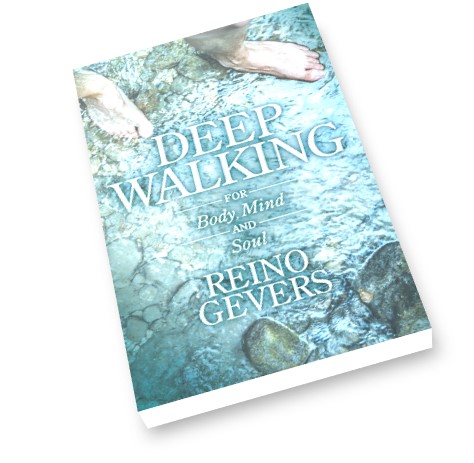
P.S. I’m excited to announce the release of my latest book, “The Turning of the Circle: Embracing Nature’s Wisdom for Purposeful Living.” If you enjoy it, you might also be interested in my previous works, “Deep Walking for Body, Mind and Soul” and “Walking on Edge: A Pilgrimage to Santiago.” You can find all of these titles at reputable bookstores near you.
Happiness is a state of mind, often based on those small joys of life that wield immense power to our sense of bliss.
Recently, I engaged in an exercise with course participants, probing into what fueled their energy reserves versus what drained them. Surprisingly, the resounding echoes leaned towards moments spent with loved ones, the companionship of pets, or the peace of mind found in nature as profound sources of rejuvenation.
Notably absent from their reflections was any mention of shopping or the accumulation of material possessions. Yet, society incessantly indoctrinates us that such acquisitions are the keys to happiness. The allure of novelty quickly dims, leaving behind a feeling of regret and shame from overspending.
Humans are tribal by nature
We humans are tribal by nature. Positive interaction with our fellow human beings where we feel seen, supported, and heard is key to perceiving a sense of safety and well-being. A supportive community has for eons been part of the survival mechanism of the human species.
In his research on the Five Blue Zones, Dan Buettner explored the lifestyles and diets in regions of the world where people lived the longest and were healthiest.
It is a fact that aging and death are part of life but living a healthy lifestyle can add decades to your life and happiness. Some key pillars of the research of the Five Blue Zones:
Physical Activity. People who live long lives do regular moderate exercise such as walking
All the Five Blue Zones came from strong communities with a healthy mixture of young and old people
They had a sense of purpose and joy
Their intake of calories and alcohol was minimal and most had Mediterranean or whole food plant-based diet.
Genetics play a relatively insignificant part of between 20-25 per cent when it comes to longevity.
With stress related physical and mental disorders becoming a growing threat to the very fabric of society, a supportive network of family, friends, or broader social circles, helps fortify your ability to weather life’s storms.
Belonging to a community fosters a sense of connection and belonging, which is fundamental to human well-being.
Healthy communities can serve as platforms for shared knowledge, emotional support and coping strategies. By exchanging insights and learning from one another’s experiences, individuals within a community can develop adaptive skills for managing stress more effectively.
The bonds of community are often strengthened by shared religious rituals, festivals, music and dancing.
In essence, community acts as both a shield and a sanctuary, offering protection from the onslaught of negativity from the external world while nurturing the resilience needed to bounce back after going through the loss of a loved one or any other challenge that life throws at you.
Reino Gevers – Author – Mentor – Speaker
P.S. I’m excited to announce the release of my latest book, “The Turning of the Circle: Embracing Nature’s Wisdom for Purposeful Living.” If you enjoy it, you might also be interested in my previous works, “Deep Walking for Body, Mind and Soul” and “Walking on Edge: A Pilgrimage to Santiago.” You can find all of these titles at reputable bookstores near you.
The average person spends a large portion of their life daydreaming, problem-solving, planning, worrying, and mulling over the past and the future, caught in the maelstrom of between 50,000 and 70,000 thoughts per day.
A large part of these thoughts would be influenced by a spectrum of emotions that have a major impact on your physical and mental well-being.
Numerous studies reveal that positive emotions such as happiness, gratitude, and love have been associated with a stronger immune system, while negative emotions like sadness or loneliness may weaken it, making you more susceptible to infections and illnesses.
Emotions impact your physical and mental well-being
Toxic emotions such as anger, anxiety, and fear are known to trigger stress hormones responsible for the fight, flight, and freeze response in the body. Prolonged stress can cause problems such as cardiovascular issues, a weakened immune system, digestive problems, muscle tension, and metabolic diseases.
Your business success, your relationships, your partnership, and basically your happiness are linked by how well you have your emotions under control, and how well you understand your own emotional response mechanism.
Doing the self-work and understanding your own emotions is key
Developing emotional awareness, and understanding your emotions is therefore key to leading a beautiful life.
This week I interviewed on my podcast Living to BE , a Sensory Perception Analyst and Expert in her field, Kim Korte. I would highly recommend you listen to the valuable advice she gives on finding a good emotional balance. You can also watch it on my youtube channel. Some of the highlights of our conversation:
Finding the right balance in your emotional response
Training your mind for greater emotional resilience
Self-awareness on the different emotional nuances
Reino Gevers – Author – Mentor – Speaker
P.S. I’m excited to announce the release of my latest book, “The Turning of the Circle: Embracing Nature’s Wisdom for Purposeful Living.” If you enjoy it, you might also be interested in my previous works, “Deep Walking for Body, Mind and Soul” and “Walking on Edge: A Pilgrimage to Santiago.” You can find all of these titles at reputable bookstores near you.
“Silence in the face of evil is itself evil: God will not hold us guiltless. Not to speak is to speak. Not to act is to act.” – Dietrich Boenhoeffer (German theologian killed by the Nazis)
A couple of days back, a startling headline lit up my screen: Russian dissident Alexei Navalny had been assassinated. The news shook me to my core, leaving me appalled at the apparent depths to which Russian leader Vladimir Putin would stoop, fully aware of the shockwaves it would send worldwide.
Navalny’s murder snuffed out a beacon of hope in the oppressive landscape of Putin’s Russia. When a leader turns to such brutal tactics, it reveals not strength but profound weakness. Navalny epitomized everything the autocrat in the Kremlin was not.
It is the nature of dictatorial regimes that they bring forth the best and the worst extremes in mankind. South Africa’s apartheid regime had shining examples of courage and humanity in Nelson Mandela, Archbishop Desmond Tutu, Steve Biko, and many others. Nazi Germany had Dietrich Boenhoeffer and dissidents such as Sophie Scholl. Czechoslovakia had Vaclav Havel and Poland Lech Walesa.
Navalny’s assassination, probably directly ordered by Putin, is one of many in today’s Russia including opposition politicians, journalists, businessmen, and academics who dared speak out about the corruption, cruelty, and nepotism.
We discover who we are in confronting evil and at the same time the darkness and the light within. The external is a reflection of that which is within. Evil manifests itself where there is a complete absence of what is good and pure.
Failure to engage in self-reflection, transmuting one’s own shadows, and speaking out against evil renders one vulnerable to the influence of evil. This truth was starkly realized by figures such as Dietrich Bonhoeffer and Winston Churchill during World War II. Attempting to placate, appease, or negotiate with evil proves futile, as it perceives such actions as weaknesses, stemming from a consciousness devoid of moral values.
In Greek mythology, the evil Goddess Eris has the only purpose of sowing discord. She causes a conflict among the Goddesses Athena, Hera, and Aphrodite by throwing a golden apple among them with the words: “to the fairest”.
No other God wanted to be put on the receiving end of the wrath of the three Goddesses by choosing one of them as the fairest. The Goddesses then ask the mortal prince of Troy Paris to do it for them. Each tries to bribe him by pledging great gifts, and Paris then gives the apple to Aphrodite who had promised to make the most beautiful woman on earth fall in love with him.
The woman chosen was Helen, the queen of Sparta and wife to Menelaus. When Paris eloped off with her, Menelaus declared war on Troy, rallying all the Greek kings, and triggering the Trojan War.
Another Greek Goddess, Enyo, delighted in war and destruction, bloodshed, and the ransacking of cities.
The fallen angel and the lure of power
Christianity describes the devil, Satan, as a fallen angel and the very personification of evil. He was expelled from Heaven at the beginning of time after attempting to become equal to God.
The archetypal motif of the fallen angel or Lucifer is found in Summerian folklore, Roman mythology, Germanic tribes, and the Vedas.
In popular culture, we find Darth Vader, a fictional character in the Star Wars series. He is the dark father and the personification of evil in popular culture, serving the empire as its chief enforcer.
The windows to the soul
Eyes are said to be the windows to the soul with the bible quoting several passages in this vein. “The eye is the lamp of the body. So, if your eye is healthy, your whole body will be full of light,” (Matthew 6:22). “But if your eye is bad, your whole body will be full of darkness. If then the light in you is darkness, how great is the darkness!” (Matthew 6:23).
I remember very well when my elderly German neighbor, who had experienced the horrors of World War II, remarked on Vladimir Putin’s ascension to power in 1999. “You can’t trust him. His eyes are cold like those of a wolf.”
U.S. President Joe Biden told Putin during a closed-door meeting in 2011: “I looked in your eyes and I don’t think you have a soul,’ and [he] looked back at me, he said, ‘We understand each other.'”
For all those millions of people in the West who blindly follow the Russian narrative of lies, deception and fake news, I highly recommend the book: “The Killer in the Kremlin”, an explosive account and exposure of Putin’s tyranny and sinister ambitions by award-winning journalist John Sweeney.
Often evil disguises its real intentions behind a smokescreen of lies, disinformation, and false flag operations. It is the playbook of such Lords of Evil as Adolf Hitler, Slobodan Milosevic, Joseph Stalin, and Mao Zedong. In our lifetime we have to face the truth. We have another Lord of Evil in Vladimir Putin. Over decades he has not only duped western politicians but much of the rest of the world. Let’s connect the dots just to illustrate how much this Lord of Evil has sown destruction and discord.
Under Putin, Soviet-era repression has given way to a marriage between kleptocracy and organized crime, turning Russia into a “Mafia state”.. Organized crime has become an outgrowth of the political machine. Mafia cells have undertaken assassinations, facilitated coercion, and extortion. Outspoken Putin critics such as Garry Kasparov have all the while warned and revealed the true nature of the monster.
During a closed-door meeting in the year 2000, Putin is said to have offered the wealthiest Russian oligarchs a deal: Surrender to my authority, and you can keep your mansions, and multibillion-dollar corporations. Those oligarchs who reneged on this deal and undermined Putin were thrown into prison or died under mysterious circumstances. Putin’s wealth is a secret but it can be safely assumed that he has used the oligarchs as a major source of his hidden assets.
Turning Russia into a Mafia-type state has given Putin huge resources to weaken Western democracies. Putin has repeatedly voiced his disgust for the multi-culturalism, sexual diversity, and free speech which he sees as a direct threat to his authoritarian and 19th-century imperialist dreams. Over the years he has funneled huge resources to rightwing and extremist groups in western countries, spreading lies and disinformation on social media through Russian state-funded bots.
And then the Lord of Evil decides to invade Ukraine, the world’s breadbasket, triggering the largest refugee crisis in Europe since World War II and possibly the deaths of millions of people in Third World countries due to famine. Meanwhile, we have become almost emotionally immune to the daily bombardment of playgrounds, hospitals, and residential buildings in Ukraine as Putin wages a war against innocent civilians.
What does humanity have to learn from all this?
We need the enemy, and the opposite perspective to gain clarity on our own core values and choices. Often the question is asked: “If there is a God, why does he allow evil?”
But we have been given the power of choice. We cannot blame dysfunctional human actions on the Creator. God has often been seen as a strict father figure punishing his flock for sinful or bad behavior. The Mystics in contrast view God, the universal creator or the divine as “a state of Being” – the connection to pure love, kindness, and compassion. The manifestation of evil would therefore be the opposite condition – the state of complete absence of God.
Napoleon Hill once said that every evil carries within it the flames of self-destruction. It was a warning by the famous mentor to his students, political and business leaders to reflect carefully on their actions and goals. When they are not in sync with the universe and designed for the benefit of all, those flames will come back to burn you.
Sometimes those flames can come in the form of such deep disgust and regret with the “Self” that it manifests in self-destructive behavior such as addiction or serious illness.
The tragedy is that the character once held by the stranglehold of the shadow demons finds himself incapable of self-reflection.
Most suffering that we experience in our personal lives or that we witness in the external world is a result of bad human choices and actions carried out from a low level of spiritual disconnect.
The word “evil” is often used in a confusing context to blame, vilify or distract.
The wisdom of the ancient Mystics can be a good guideline. Basic human nature has not changed much over the centuries. There will always be a segment of people who don’t give any regard to the outcome of their actions. Meister Eckhart, the great Dominican friar of the early fourteenth century, warned against those whose “sole concern is how to gain honors, wealth, and pleasure.”
These people, according to Eckart, are those who lack all sense of humility by “running in front of God.” Inevitably their lives will be haunted by what they call bad luck or a bad hand. They will be blaming God, fate, people different from themselves, and basically everyone for what has gone wrong in their lives. They are filled with hate, resentment, and anger. They are the malignant narcissists of our age who seek only personal validation and glory.
As the Lord of Evil and his followers spin the narrative of hate, division, and destruction some comfort can be taken from the fact that evil ultimately destroys itself because it is out of sync with the laws of the universe. The thoughts, actions, and energy you send out inevitably come back to you.
In the same way, the path of light which is that of kindness, unconditional love, compassion, unity, tolerance, gratitude, and acceptance will bless you in a multitude of ways. You will be living a happy and blissful life if you make yourself an instrument of divine purpose.
Reino Gevers – Author – Mentor – Speaker
P.S. I’m excited to announce the release of my latest book, “The Turning of the Circle: Embracing Nature’s Wisdom for Purposeful Living.” If you enjoy it, you might also be interested in my previous works, “Deep Walking for Body, Mind and Soul” and “Walking on Edge: A Pilgrimage to Santiago.” You can find all of these titles at reputable bookstores near you.
“Three things cannot be long hidden: the sun, the moon, and the truth.” – Buddha
In my early days as a news reporter covering the ‘court beat’ and witnessing some of humanity’s worst crimes, it was disheartening to see how many criminals, even when faced with undeniable evidence, would contort the truth, painting their victims as the villains.”
In the tumultuous public information space, truth finds itself relegated to the backseat, drowned out by a cacophony of lies, deception, and hate speech. The manipulation of truth isn’t solely the domain of petty criminals; it’s a tool wielded with equal fervor by autocrats, dictators, and cult leaders.
I’ve often pondered how individuals can fabricate and obscure with such unwavering conviction that one might almost be inclined to believe them. It dawned on me that evil, or Satan isn’t merely a religious concept but a stark reality, inhabited by individuals devoid of a moral compass and exhibiting behavior far removed from what society deems normal and ethical.
In the increasingly muddied water of social media, we need to call out the purveyors of evil messaging. They are easily identifiable:
They lack complete empathy and have no qualms in causing harm and suffering to others.
They are masters at manipulating words. Their tools are deception and gaslighting. Their lies and twisting of the truth will make you doubt your own sanity.
They seek complete control. They will pressure, intimidate, and coerce. They demean, humiliate, or degrade others as a means of asserting power and dominance.
Charisma. Externally they are sometimes charismatic, outgoing, and charming personalities. But they have an agenda. They are trying to gain your trust while secretly pursuing their own selfish agenda – typical among religious and political cult leaders.
Emotional manipulation. If you have not transmuted your own dark emotions of fear, anxiety, hate, and shame you are easy prey. They will tell you that all your “bad feelings” have been caused by “others” – people of other faiths, cultural origins, and political beliefs. By this stage, you will be willing to follow them unconditionally all the way into the darkest of dungeons.
The good news is that God has given us the power of choice. Our primary purpose on earth is to elevate consciousness. You ultimately have the power to transcend limited perspectives, biases, and conditioned beliefs, gaining greater clarity, empathy, and interconnectedness with the broader world of existence.
By engaging in simple acts of service, kindness, and altruism you will cultivate a sense of purpose, fulfillment, and connection to something greater than yourself.
By learning to love yourself you will cultivate empathy and compassion towards others, fostering a greater sense of connection and understanding of the human experience.
Explore and study spiritual and philosophical traditions that promote personal growth, self-discovery, and a sense of interconnectedness with higher consciousness.
To quote Robert Frost: “Two roads diverged in a wood, and I took the one less traveled by, and that has made all the difference.”
Reino Gevers – Author – Mentor – Speaker
P.S. I’m excited to announce the release of my latest book, “The Turning of the Circle: Embracing Nature’s Wisdom for Purposeful Living.” If you enjoy it, you might also be interested in my previous works, “Deep Walking for Body, Mind and Soul” and “Walking on Edge: A Pilgrimage to Santiago.” You can find all of these titles at reputable bookstores near you.
“You must never think of the whole street at once, understand? You must only concentrate on the next step, the next breath, the next stroke of the broom, and the next, and the next. Nothing else.”
– Michael Ende, Momo
Are you finding yourself on a frustrating treadmill of doing a job that you hate and counting the years until retirement? There are millions of people out there wasting the most precious years of their lives for all the wrong reasons.
On average about half of your lifetime will be spent working, assuming you retire in your mid-60s and have a typical lifespan between 70 and 80. It therefore makes sense that you spend your best years doing what you love and what you are passionate about.
If you are stuck in grievance culture, unhappy in your job, or your relationship, and have problems with your self-esteem the universe will be sending you many signs that you need to change direction.
A job environment with constant high-stress levels will not only cause mental and physical exhaustion but eventually lead to a host of other health problems that will severely impact your lifespan and quality of life. Some typical red flags:
Your personal values are no longer in alignment with the values of the organization
All your efforts go unnoticed or unappreciated
You feel undervalued and underpaid for what you are doing
You have reached a dead end in personal growth. The job lacks growth opportunity, meaning, and purpose.
You might have started a particular career or job with a passion, but it has meanwhile outlived its purpose. It has become a grinding chore and is exhausting you physically and mentally. That might be the time for you to move on. One path is often the stepping stone or learning curve for you to move on to another path.
In doing what you love, you will discover that the true richness of life is not just in the paycheck, but in the fulfillment of your soul. When you are doing what you are passionate about your higher vibrational frequency will automatically attract all the abundance and the money you need.
Even in carrying out the most mundane tasks your mindset and perspective are key, according to the 13th-century Mystic Meister Eckhart. Being in alignment is the discovery of mysticism in all of your activities in a “joyful experiential presence”.
Eckart’s formula for happiness was liberation from attachment and complete surrender to “dedication” in giving yourself wholeheartedly to a cause, person, or activity. This, he argues, is only possible if you create space for contemplative “emptiness”.
The more in alignment “the more powerful, dignified, useful, commendable, and perfect is the prayer and the work,” Eckart writes in one of his sermons.
Similarly, Zen Buddhism encourages practitioners to cultivate mindfulness, which involves paying full attention to each moment, fully immersing yourself in the present experience, and extending to all activities whether it’s walking, eating, working, or any other daily task.
Mindful activity involves being fully present in the current moment, paying attention to thoughts, feelings, and sensations without becoming entangled by attachment or judgment. Developing a kind and compassionate attitude is integral to the spiritual path.
In a busy world, you are constantly being pulled into a thousand different directions, becoming a playball for social media and the “glitter of the shiny things.” Distraction and addiction are trying to stifle the voice of your soul yearning to accomplish that which it was destined to bring forth and create from the day you were born.
Reino Gevers – Author – Mentor – Speaker
P.S. I’m excited to announce the release of my latest book, “The Turning of the Circle: Embracing Nature’s Wisdom for Purposeful Living.” If you enjoy it, you might also be interested in my previous works, “Deep Walking for Body, Mind and Soul” and “Walking on Edge: A Pilgrimage to Santiago.” You can find all of these titles at reputable bookstores near you.
Crazy politics is infiltrating the minds of millions of people in key European countries and the United States, with the views of extremist fringe groups becoming mainstream as they cleverly manipulate powerful communication instruments.
Politics is a reflection of massive changes in social norms and values as a growing number of people feel they are being left behind by a technological revolution that benefits a tech-savvy elite to the detriment of industries that have formed the lifeblood of regions and communities for centuries.
Rational thought and logic are being undermined by manipulators
The ancient Greeks and Romans were well aware of how rational thought and logic could be undermined by manipulators feeding on fear, anger and desire. The Stoics therefore advocated logic and reason as an antidote in understanding and navigating the world.
The Stoics categorized emotions into two types: “eupatheiai” or good feelings and “apatheia” – a state of tranquility or freedom from disturbing emotions. They accepted emotions as being part of the human condition and they could not be suppressed. Rather a healthy emotional state should be aligned with reason.
External events are beyond our control but Stoicism teaches us that we should focus on what we can control such as our own thoughts and actions. The concept is encapsulated in the Stoic maxim: “Epictetus’ Dichotomy of Control,” which encourages individuals to distinguish between what is within their control such as their own thoughts and actions, and what is not such as external events.
During these times it is more important than ever to stand guard at the guardrails of the mind. We are seriously lacking in leaders of wisdom who are aware that their actions, words, norms, and values have a huge impact on society. Words and slogans that stir division, and belittle and disparage people with opposing views rip apart the very fabric of what holds a society together.
If emotions overpower logical thought, entire economies and the nation state are at risk. An example is the current political narrative in Germany. A fringe rightwing party called the Afd (Alternative for Germany) was largely ridiculed by the mainstream because of its extremist ideas. But steadily over the past few years it has gathered more support with simplistic xenophobic messaging to the point where it has become the second-most popular party in current opinion polls.
The silent majority was finally stirred into action with hundreds of thousands of moderate Germans taking to the streets during the past few days horrified at the news that Afd party leaders met secretly drafting a master plan on how to deport millions of people both citizens and non-citizens with an immigrant background. The Afd’s economic policies would in reality devastate the German economy as most factories, hospitals, and service industries are totally dependent on foreign labor because of an ever growing older population.
In the same vein the Brexit campaign in the United Kingdom was fixated on the idea that leaving the European Union would save the country billions of pounds that would then be spent on the country’s National Health Service (NHS). In reality economists have calculated that the UK’s GDP is currently about five per cent lower than it would have been had it not voted to leave.
Emotions unfortunately are more powerful than rational tnought and logic. It explains why those politicians arguing on the benefits of remaining in the European Union lost the argument. They provided statistics and economic data whilst the Brexiteers emotionalized the debate with the vision of reborn “Great Britain” freed from the constraints of Brussels bureaucrats.
Most people outside the United States are horrified at the prospect of the world’s most powerful nation being led by a president with obvious mental health issues. Psychologists and sociologists will for many decades be analyzing the “Trump phenomenon.” Part of the explanation could be that he has become the voice for grievance culture – for the large numbers of people suffering from frustration, dissatisfaction, stress, anxiety, anger and compulsive behavior.
Our core values, norms and beliefs are shaped by those people we idolize as leaders. We should choose wisely using the Stoic method of logic and rationality: What is external and beyond my control and what is intrinsically part of my thought process and perspective that I can change?
Are my values of an empathic nature in service of universal rights, liberty, kindness, tolerance, protective of other people and the natural world or are my values motivated by dominance, exploitation, aggressiveness, and retribution that ultimately lead to a world the worse for everyone.
Reino Gevers – Author – Mentor – Speaker
P.S. I’m excited to announce the release of my latest book, “The Turning of the Circle: Embracing Nature’s Wisdom for Purposeful Living.” If you enjoy it, you might also be interested in my previous works, “Deep Walking for Body, Mind and Soul” and “Walking on Edge: A Pilgrimage to Santiago.” You can find all of these titles at reputable bookstores near you.
In ancient oral traditions saints and prophets are often said to return as angels in disguise after departing from their earthly existence, assisting those in desperate need of help, but sometimes unwittingly you too can become a divine messenger by imparting one word or deed that can completely change the trajectory of a person’s life.
Several stories reflect the universal theme of saints and prophets in the afterlife intervening in human affairs, in unexpected and unassuming forms.
Guidance and healing at crucial junctions
In ancient Greek mythology, the deity Asclepius is associated with healing and is said to have returned to the mortal world in disguise offering healing and guidance.
In the Islamic tradition, Khizr is often associated with the archetype of a wise and immortal figure who appears in challenging times, disguised as an ordinary person.
In Slavic folklore, the supernatural being Baba Yaga comes in disguise to test individuals and those who treat her kindly are well rewarded.
According to Jewish-Christian legend the Prophet Elijah intervened at several crucial junctions of human history. During the Battle of Las Navas de Tolosa in 1212 the Christian forces in Spain faced a formidable opponent against the soldiers of the Almohad Caliphate. The Christian army was about to be defeated when a mysterious knight wielding a white banner with a red cross appeared on the battlefield, believed to have been Elijah in disguise, and providing the crucial assistance that turned the tide.
The red cross against a white background is today a familiar symbol on the scallop shell worn by pilgrims walking the Camino de Santiago, many of them probably unaware of its origins. In my novel “Walking on Edge” I refer to several mysterious encounters with strangers that the main character Jake has on the Camino. Some of these accounts are based on real stories that I came across on my own pilgrimage walks.
It is common for pilgrims to have a really low moment while on the Camino, where they are at the point of giving up. I’ve met several people who reported having an epiphany after overhearing a conversation or having a chance encounter with a stranger, giving them the courage to continue.
You should never underestimate the impact your words and deeds could have on a fellow human being. Sometimes you also need to be cruel to be kind.
A teacher or parent might implement a policy of no-nonsense adherence to deadlines and assignments to prepare the student for the obstacles they might encounter in future professional environments, instilling a sense of responsibility and discipline, even though momentarily demanding.
If you have a family member or friend suffering from an addiction problem, the only way you are going to help them is by setting clear boundaries and deadlines where they can get professional help.
But sometimes a simple gesture or act of kindness can leave an everlasting imprint on a person’s memory.
In Charles Dickens’ novella “A Christmas Carol,” the miserly and bitter old man Scrooge is transformed with a child’s kindness that serves as a catalyst for his redemption, reminding him of the joy and warmth associated with Christmas and the importance of human connection.
It costs absolutely nothing to be kind. You never know what impact that could have on a fellow human being. The exact right words and actions might resonate with another person more than you realize.
Reino Gevers – Author – Mentor – Speaker
P.S. I’m excited to announce the release of my latest book, “The Turning of the Circle: Embracing Nature’s Wisdom for Purposeful Living.” If you enjoy it, you might also be interested in my previous works, “Deep Walking for Body, Mind and Soul” and “Walking on Edge: A Pilgrimage to Santiago.” You can find all of these titles at reputable bookstores near you.
“A comfort zone is a really beautiful place, but nothing grows there”~ Anonymous
We are living in the most prosperous and exciting era of mankind, yet if we look and hear around us many people seem stuck in the grievance culture of anger and unhappiness.
During the past centuries, mankind has made groundbreaking discoveries in discoveries in physics, astronomy, and biology. In the latter half of the 20th century computers and the invention of the Internet have led to an unprecedented acceleration of knowledge and information on a global level.
In 1982, futurist and inventor R. Buckminster Fuller estimated that up until 1900, human knowledge doubled approximately every century, but by 1945 it was doubling every 25 years. And by 1982, it was doubling every 12-13 months. Current estimates predict that with the revolution of AI technology human knowledge will double every 12 hours.
At the same time, the cultural gap between technological progress and the ability of human consciousness to process these changes has increased. Rapid change produces uncertainty with the unknown perceived as a threat.
A natural aversion to change
Evolutionary psychology suggests that humans have developed a natural aversion to risk as a survival mechanism. Change is inherently associated with uncertainty and risk, triggering a “walling off” from potential harm. Changing habits and routines requires effort and the ability to adapt.
While, some people thrive in a new environment of innovation, and see every new challenge as an opportunity for growth and evolution, others are gripped by fear and retreat into the cave of their comfort zone, not realizing that if they don’t adapt, their lives will be changed for them anyway.
The grievance culture feeding on toxic emotions
As we enter 2024 with elections scheduled in several major countries there is a real danger of the public narrative being hijacked by “grievance culture” feeding on innate human fears, anxiety, and anger. Fanatacists promise a return to the “golden era” of the past by building walls, creating the illusion that the comfort zone can be protected from “external threat”.
You will be comfortably resting in your “comfort zone” if a demagogue is telling you that all your grievances and unhappiness have been caused by the opposing political party, a minority group, a foreign nation, or an institution. He is telling you that you can comfortably sit back while I will sort out these problems. Meanwhile, backstage your basic liberties and freedom of expression are being eroded.
We are at the cusp of embracing a bright new future or falling back into old divisions of intolerance and xenophobia
Much of the unhappiness is caused by cultural indoctrination and addiction to the accumulation of “things”. It has replaced the spiritual void left by institutional religion with ever more people questioning its emphasis on what to believe and how to behave. When you define yourself by the “things” you own, you will never be happy because you are missing out on the BEING of life. And life is constantly in motion and evolution.
With the growth of spiritual awareness comes the recognition that evolution and change are inherently part of the divine plan. Everything in the universe is ultimately interconnected and composed of Divine Oneness.
When born there is separation from the Oneness and a natural tendency to separate from the body only to yearn and strive for the reconnection with the Whole.
The American poet Louise Erdrich describes how life will break and heal you during this process … “Nobody can protect you from that, and being alone won’t either, for solitude will also break you with its yearning. You have to love. You have to feel. It is the reason you are here on earth. You have to risk your heart. You are here to be swallowed up. And when it happens that you are broken, or betrayed, or left, or hurt, or death brushes too near, let yourself sit by an apple tree and listen to the apples falling all around you in heaps, wasting their sweetness. Tell yourself that you tasted as many as you could.“
Forgetting to live the experience
We are constantly chasing after happiness and forgetting to live the experience. At that moment when we have achieved what we have been striving for all along, we feel a sense of loss and emptiness. Grievance culture feeds on what is lacking in life or what is under threat of being taken away from you.
Practicing a gratitude ritual elevates consciousness and creates an abundance mindset. If you are healthy, have food on your table, and a warm home with electricity, you are already better off than most people in the world.
Reconnecting with body and soul
Reconnecting with body and soul is more important than ever when the pull of grievance culture is trying to pull you away from your center. Life is meant to be difficult and challenging. We only grow when we confront those challenges and obstacles. And, you will be better equipped to deal with those challenges if you nurture your mind and body. When you change your perspective with a gratitude mindset the universe will conspire creating more happiness, joy, and energy in your life.
Reino Gevers – Author – Mentor – Speaker
P.S. I’m excited to announce the release of my latest book, “The Turning of the Circle: Embracing Nature’s Wisdom for Purposeful Living.” If you enjoy it, you might also be interested in my previous works, “Deep Walking for Body, Mind and Soul” and “Walking on Edge: A Pilgrimage to Santiago.” You can find all of these titles at reputable bookstores near you.
A ray of light travels into a chamber, illuminating a spiral motif representing a vortex for the dead in completion of their journey from this world into the „other world“.
The phenomenon at an ancient site in Newgrange, Ireland, is thought to date back 2800 BC and occurs every year on December 21st, marking the shortest day and longest night of the year in the northern hemisphere.
At Stonehenge, in the United Kingdom, another ancient site from the Bronze Age, the sun rises behind the entrance of a stone circle illuminating the Centre.
The lives of ancient cultures were closely intertwined with the laws of nature and the transition of the seasons and were elaborately celebrated in ritual and religious ceremony.
Modern man’s disconnect from nature and spiritual essence appears to be at the root of much of today‘s confusion and mental instability. Our modern versions of Christmas, Easter and Thanksgiving are a poor reflection of their original spiritual meaning.
The celebration of the birth of Christ in Bethlehem, comes just after the winter solstice, representing victory over darkness, rebirth, and hope over fear.
The hope of the guiding star
The guiding star that led the Magi to the birthplace of Jesus, represents hope, divine guidance, and the birth of a significant spiritual event, signifying the arrival of a special and transformative moment.
The celebration of the birth of Christ is associated with an annual inner spiritual rebirth of the “Christ within“
The ancient Mystics refer to each individual having a divine and spiritual essence connected to a higher consciousness.
In Christianity, it may be linked to the belief that Christ’s spirit resides within believers, guiding and influencing their thoughts, actions, and spiritual journey.
Connecting to the spiritual essence
In a broader sense, it can be found in various spiritual and philosophical traditions that emphasize inner enlightenment and connection to a higher reality.
The “Buddha Nature“ has the optimistic view that every individual can attain enlightenment through spiritual practice and awareness.
Defilements and obscurations that prevent enlightenment are considered temporary and removable.
The time between Christmas and New Year – a time symbolizing the transition from the old to the new – is of particular spiritual significance.
Whatever negative experience, loss and trauma you have experienced this year this quiet space can be spent for inner reflection and contemplation.
What addictive thoughts and beliefs are holding you back? What things are distracting you? What relationships are pulling you down into a lower vibrational field?
When the old can be released the path into the gateway of spiritual renewal and purpose opens.
Reino Gevers – Author – Mentor – Speaker
P.S. I’m excited to announce the release of my latest book, “The Turning of the Circle: Embracing Nature’s Wisdom for Purposeful Living.” If you enjoy it, you might also be interested in my previous works, “Deep Walking for Body, Mind and Soul” and “Walking on Edge: A Pilgrimage to Santiago.” You can find all of these titles at reputable bookstores near you.










 ReinosBlog