Thoughts on South Africa

SA2Some 21 years ago I covered as a reporter Nelson Mandela’s inauguration as president of the new democratic South Africa. For a while during the election it was touch-and-go whether the country would plunge into civil war or proceed into a peaceful multi-racial democracy.

It was mostly thanks to Mandela’s charisma and wise leadership that a wave of optimism, euphoria and relief swept the nation.

When the national rugby team, the Springboks, won the world cup against New Zealand on home ground in the following year, the “rainbow nation” was literally drunk with pride and self-confidence. Those historical weeks were later turned into the movie “Invictus” starring Morgan Freeman (Mandela) and Matt Damon (the Springbok rugby captain Francois Pienaar).  Racial reconciliation seemed possible. Forgiveness had won over hatred. South Africa was showing the world. We can overcome! So what has become of the once so proud rainbow nation?

On the plane enroute to South Africa last month, I was watching the BBC TV headlines. Police were once again firing teargas at protesting students outside the Union Building parliament buildings in Pretoria where Mandela was inaugurated as president in 1994. I could not help wondering: How could it have come so far with  the ruling ANC having lost it so completely with the country’s young generation? It is a generation that grew up in the new multi-racial democracy and never experienced the harsh reality of apartheid laws. Yet obviously there is deep frustration running far deeper than the protests over higher university fees.

From the small-talk I managed to have with young folk from different races, there is a growing deep resentment at the ruling ANC elites, whose primary objective appears to be an entitlement attitude and self-enrichment “philosophy”. Ruling President Jacob Zuma even had the audacity of recently telling his party followers that the ANC had priority over the well-being of the country. Off the cuff remarks indeed have a far greater truth than statements cleansed by polished party spokesmen.

Local newspapers are full of reports on corruption at basically every government level. After having been away from the country for several years it is sad to see the running decay of practically everything run by government from public roads to basic services such as electricity and water.  The police also seem totally inept and corrupt in dealing with the spiraling crime rate.

A well-spoken young white man told me that he and his friends were all saving up their money to leave  the country as soon as possible because the racial quota system also called Black Economic Empowerment (BEE) was squeezing them out of any possible university education or job opportunity. The same can be said for the country’s Indian minority. South Africa’s ANC rulers appear no better than their apartheid predecessors in making “racial” and party apparatchik rather than professional appointments. This indeed bodes ill for the future of the country.

The ANC has completely lost its moral compass. Symbolic for this was the kowtowing to China by refusing Nobel Peace Prize laureate the Dalai Lama a visa to visit his good friend and fellow Nobel Peace Prize laureate Archbishop Desmond Tutu which prompted the bishop describing the ANC as  worse than the apartheid government.

This is not what Mandela envisioned in his dream of a rainbow nation and the non-racialism that the ANC veterans once espoused in the Freedom Charter.

Still, South Africa might be ruled by inept and corrupt leaders but it remains one of the world’s most beautiful countries. The warm-heartedness, humor and hospitality of its peoples are a stark contrast to the coldness and anonymity felt in the European capitals.  Efficient private-run enterprises are taking over where government is failing. The country is still working – at least more or less – despite what all the local doom prophets are pronouncing.

For European and North American visitors with Euros and dollars in their pockets South Africa is still a very good deal and they will be treated with a friendliness and hospitality they will find in few other countries.

Lastly what makes me feel optimistic about South Africa’s future is that a growing number of young people from all races are coming to the fore who are seeing through the ANC smokescreen and double-speak. Just as the youth started the beginning of the downfall of apartheid in the Soweto uprising of 1976, there is a start of a grumbling wave. Once you lose the youth, you have lost it.

There is hope still in the year 2020 or thereafter: A young leader starting afresh from where Mandela left in leading a truly democratic non-racial rainbow nation?


1 Comment

Filed under Uncategorized

Back from the Camino – what now?

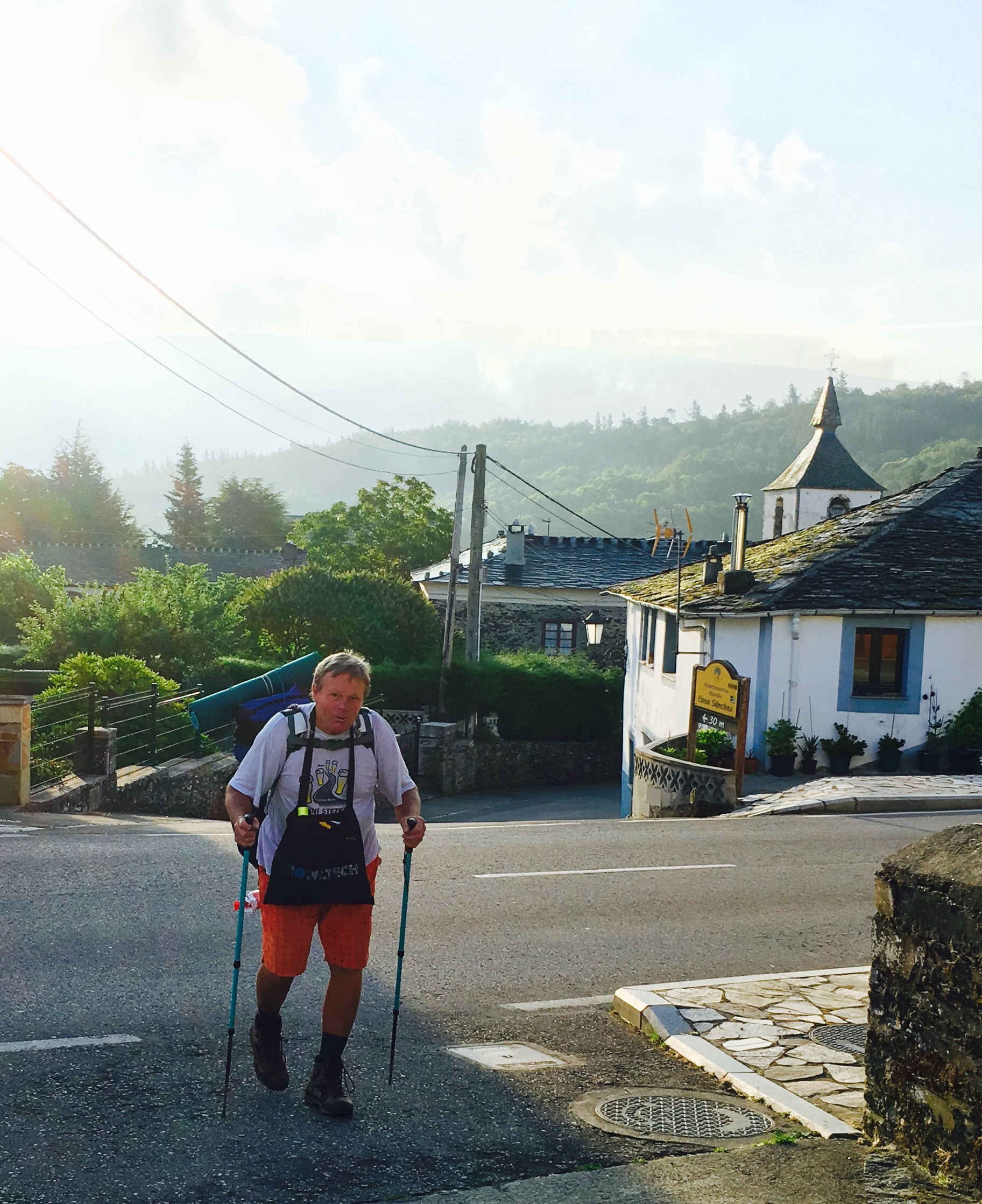
Its been some weeks since we returned from our hike on the Spanish Camino and I’m still astounded at how much the experience still resonates in our lives.

We have just heard from Jim who walked the entire Camino Frances from Jean Pied de Port, arriving in Santiago last week after 40 days of walking.

The many interesting and fascinating people you meet on the Camino is part of part of what I would describe as one of the most precious gifts of the Camino. This is why many Peregrinos decide to give something back in volunteering to work a summer in one of the pilgrims’ hostels.

Many people walk the Camino to find an answer to a life-important question they are dealing with. Mostly they find the answer, sometimes after weeks or months after the walk, with the answer to a question needing time to ripen.

On my first Camino I was somewhat disappointed at not having found “my answer”. The lesson to learn was patience and to open the mind to the so many of the mysteries and lessons of the Path.

The first lesson I learned was that it needs time to “walk things off” and get rid of the old emotional baggage that you often carry with you for years. My theory is that the body has an “emotional memory” just like the emotional mind in holding onto “traumatic” experiences on a cellular level. This is why the first days of walking are so hard, even for people who have prepared well physically.

When this “emotional garbage” comes to the surface on the “path of crucifixion” that often comes during the first week of arduous walking through blisters, sore knees and back pain, the transformation process can begin. Then walking, even through difficult terrain, becomes an easy ride and you can actually start enjoying daily walks of 25-30 kilometres and more.

There were so many images, smells and meetings of mind on this centuries old path that this space is too short to fill them.

There was the father walking the path with two mules in fulfilling a dream that his daughter had on her death bed when dying of cancer. There are the brave young folk in the Aragon province fighting a dam project that will flood a pristine valley and one of the oldest parts of the Camino. There are the faces of people you look at where you know they have just gone through a very hard time in their lives and that they have come through, stronger.

On a physical level, I feel much fitter. My skin seems smoother and my senses of smell and hearing different. In my dreams I am still walking and when I wake up I know that I will soon be making plans for the next walk on the Camino.

Leave a comment

Filed under Uncategorized

Stress Is Your Brain Trying to Avoid Something

Figure out what that is, and you’re halfway to feeling better.

Source: Stress Is Your Brain Trying to Avoid Something

Leave a comment

Filed under Uncategorized

Following the path of the Holy Grail

Nestled in a rock face near the Spanish city of Jaca is the ancient monastery of San Juan de la Pena. It dates back to the ninth century and by the 11th century became the spiritual and intellectual centre of the Kingdom of Aragon. According to legend the Holy Grail was kept here until the 14th century.

There is no final proof but It was believed to be the chalice used by Jesus during the Last Supper and the cup in which Joseph of Arimathea collected the Blood of Jesus on the Cross. Today the original is kept in the Cathedral of Valencia with a copy displayed on a stone altar in the old monastery.


Whether true or not, the monastery San Juan de la Pena is a mysterious and unique place. While on our recent walk on the Camino, I took a day to explore the area on the mountain from which there are spectacular views of the Pyrenees mountains in the distance.


The Monasterio Nuevo, or new monastery, further up the mountain is a much bigger complex. Its exterior has been rebuilt with a modern museum interior giving much insight on how the monks lived according to the Benedictine Order

The monastery had enormous influence not only in the ancient Kingdom of Aragon but throughout Europe of the early Middle Ages. The monks lived disciplined lives, following a daily routine of contemplation, work and study. Silence was highly cherished. The monks took a vow of silence and were only allowed to speak if it was absolutely necessary or when it was a good thought or blessing. It was obviously an atmosphere that was conducive to highly-focused study and inner spiritual work.

The exhibition in the new monastery illustrates a colorful history of rise and decay. The influence and success of this monastery in the early Middle Ages can be attributed to several factors that are good lessons for today’s corporates:

  • The monks were absolutely focused, disciplined and dedicated to their task
  • At the same time they did not exclude themselves from the outside world, honing the art of networking and relationship-building with the rulers and decision-makers of the time.
  • A charismatic abbot, or leader, was crucial in maintaining cohesion, discipline and respect
  • Basic material needs were catered for by the Kingdom with at times generous grants and donations

Its a mute point on whether the decay started in the year 1399 when the Aragonese King Martino V took the Holy Grail  to his palace in Zaragoza and when the monks asked for it back he tricked them with a replica. There were several fires that destroyed much of the monastery complex in the 17th century. Decay came in line with infighting and power struggles. Grants and privileges from the king were reduced and at times completely stopped. Loss of focus and purpose came in line with vows being broken and poor leadership.

An organisation is only as successful as long as its members are motivated to abide by the internal codes and ethics which always reflects on how it is perceived by those outside. There will always be circumstances that cannot be controlled, such as political change or upheavel. But it is how adaptable and flexible that organisation is to unpredictable changes, that will ultimately determine its survival.

Leave a comment

Filed under connection, energy, healing nature, life vision, meditation, monasteries, monks, organisational structure, powerbodymind, psychology, spirituality

Encounters

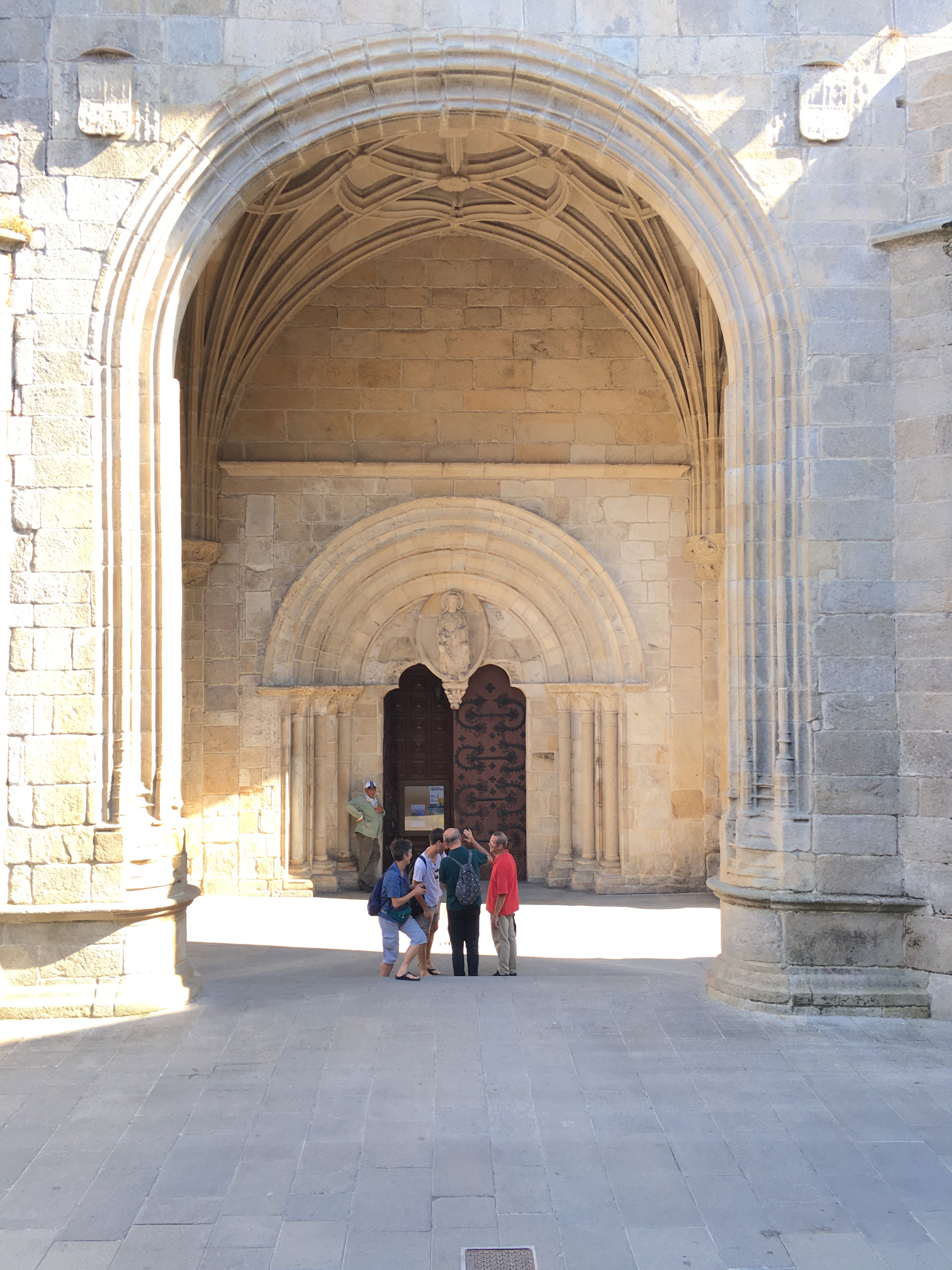
The magnificent churches and cathedrals along the Camino are shrouded in mystery and legend. Overlooking  the town of Estella is an impressive modern Basilica. It is built on the hilltop where in 1085 shepherds were attracted by a cluster of stars. Hidden in a cave they found the image of the Virgin Mary. First of all a chapel was built, and then a Baroque church and finally in 1951 a star-shaped basilica recreating the intense light effect that was produced when the carving was discovered. In the interior a 14th-century Gothic image of the Virgin of the Puy from the 14th century is conserved. 

  After leaving Estella on a beautiful meandering path, Alyce walks ahead to the village of Villamayor. She finds the church open. An elderly man, who looks like a priest, appears from nowhere, asking her to come over. He showers her with blessings and prayers of protection, grabbing her by her shoulders and giving her a long hug. Alyce feels this wave of energy coming her way. What we don’t know at that time is that our friend from the US, Jim, met the same man at the same place only a few minutes earlier. He gives Jim a match to light a candle before a silver processional cross. Jim is at that moment overwhelmed by a truly spiritual experience, momentarily falling to his knees. That evening Alyce and Jim share their experiences with me, still moved by the encounter. But the next day we meet the man who runs the Albergue in Villamayor. He tells us he knows of no old man or priest in the village. The church is in fact mostly locked with the pilgrims often complaining about this. The real priest is in fact a young man. So who was the stranger giving blessings to the passing pilgrims?  
 

Leave a comment

Filed under Uncategorized

Days on the Camino

We’ve been on the Camino since July 30th, starting our walk along the Arles Route from Lourdes. We have met some fascinating people on the Way, while walking through drenching rain, searing heat and spending nights in Albergues with 30 strangers in the same room. Its an emotional topsy-turvy and especially during the first few days you ask yourself: Why am I doing this? 

   
Since my first walk on the Camino in 2006 I’ve been hooked on this experience because this walk is so much more than just a hike. You can indeed walk this route like a physical endeavour but if you open yourself to the mystery of this path it will teach you so many things. Someone said to me yesterday that the Camino is an analogy of life. You have highs and lows, beauty and ugliness, pain and joy, company and loneliness. In the end you just have to go step by step and deal with things as they come. However, the feeling that you are being carried and guided by some higher force gets more intense as you go along. We are body and soul and the soul part is in the end what its all about.

Leave a comment

Filed under Uncategorized

Reconnecting by walking the Camino

IMG_1581  Tomorrow my wife Alyce and I are starting our walk on the Camino from the French town of Lourdes.  Its time to walk things off again and to reconnect on many levels after a more than challenging year. For centuries, if not longer, countless people have walked these ancient paths mainly as an inner and outer spiritual journey. It is believed that prior to it becoming the mainly Christian St. James Way the Celtic people had walked these ceremonial paths in paying homage to the Earth Goddess.

Over the years I’ve walked several Camino routes alone, with a good friend, in a group and with my wife. I’ve been asked so why walk the Camino if you can go on a hike anywhere else? Whats the big deal? Why are so many thousands of people in modern times rediscovering this ancient pilgrimage route and taking time out to “walk things off”.

I’ve had some of the most interesting meetings with people from all walks of life on the Way. Some take time out after having lost a loved one, or having recovered from a serious illness or finding themselves at a crossroads in life. Others simply enjoy the walking. But nobody I know has gone home from the Camino without it having triggered something something in their lives. Its been a long tradition to leave a stone at these kilometre markings as a sign of respect to previous pilgrims, or to let things go that you no longer need in your life, or in memory of a cherished person.

camino_steine During the Middle Ages it was common for at least one member of a family to go on the pilgrimage to “cleanse” the family line of “sins”.  Many never came back. It was an arduous route in those times with many people dying of disease and illness. Today practically every town caters towards the pilgrims with good food and comfortable accommodation. The route is well-marked although every pilgrim will tell a story of having got “lost in the way.” It is part of the process of reconnecting, finding ones rhythm and getting back into ones own space.

This time we will be walking about 270 km over two weeks from Lourdes to Puenta La Reina, taking things as they come. We will keep you posted.

Leave a comment

Filed under Uncategorized

“Glücks-erlebnis” – es kommt darauf an, wofür wir unser Geld ausgeben

Unser Glück ist das was wir an positiven Erlebnissen haben und nicht das was wir an materiellen Gütern besitzen oder haben wollen

Reino Gevers's avatarLebens-Zeit mit Reino Gevers

Wiumhlangarocksr stehen immer wieder vor der schwierigen Entscheidung: Geben wir unser Urlaubsgeld tatsächlich für einen Urlaub aus oder nutzen wir es, um neue Möbel oder Kleidung zu kaufen.

Für einige Tage erfreuen wir uns an den neuen Sachen. Es ist dennoch erstaunlich wie schnell der Reiz an dem Neuen verflogen ist und ein Frustgefühl hinterläßt – schon halten wir nach dem nächsten zu kaufenden Gegenstand Ausschau.

Wenn wir Menschen darauf ansprechen uns auf eine Erlebnisreise zu den Delfinen und Elefanten nach Südafrika zu begleiten, hören wir immer wieder: “Würde ich ja gerne mal machen, ist mir aber zu teuer.” Es ist eine Falle in die wir alle tappen.

Die beiden Forscher Leaf van Boven und Thomas Gilovich haben sich schon 2003 mit der Frage beschäftigt, ob es uns glücklicher macht, unser Geld in materielle Güter zu investieren, oder darin, etwas zu erleben, wie Urlaube, Konzertbesuche oder Restaurantbesuche.

In…

View original post 310 more words

Leave a comment

by | July 9, 2015 · 8:30 am

Nutrition and cancer

Reino Gevers's avatarReinosBlog

“Let food be thy medicine and medicine be thy food.” – Hippocrates

By Alyce and Reino Gevers

The sad truth about conventional cancer treatment is that little attention is being given to how big an influence nutrition and acidity in the body has on the outbreak of the disease. Cancer cells feed in an acidic environment and yet very few doctors and hospitals are looking at the connection between diet and cancer.

At the beginning of the last century, the processed food industry was still in its infancy. The connection between mass consumption of processed foods and the diseases of modern times such as cancer can be seen when looking at the slide from the New England Journal of Medicine.  Processed foods include many substances such as unnatural flavors, preservatives sugars and salts that over the years form  a toxic cocktail in the body, creating a fertilizer for cancer…

View original post 536 more words

Leave a comment

Filed under Uncategorized

Nutrition and cancer

“Let food be thy medicine and medicine be thy food.” – Hippocrates

By Alyce and Reino Gevers

The sad truth about conventional cancer treatment is that little attention is being given to how big an influence nutrition and acidity in the body has on the outbreak of the disease. Cancer cells feed in an acidic environment and yet very few doctors and hospitals are looking at the connection between diet and cancer.

At the beginning of the last century, the processed food industry was still in its infancy. The connection between mass consumption of processed foods and the diseases of modern times such as cancer can be seen when looking at the slide from the New England Journal of Medicine.  Processed foods include many substances such as unnatural flavors, preservatives sugars and salts that over the years form  a toxic cocktail in the body, creating a fertilizer for cancer cells.

It is no surprise that infectious diseases were the main cause of death around 1900. Death from heart disease peaked in the 1960s while today 185.9 of every 100,000 deaths is from cancer with rising tendency. Despite billions being poured into cancer research, little progress has been made in halting the trend. It is obvious that the “cancer industry” is going to do everything possible in trying to convince us that only conventional medicine heals. Any cancer patient will tell you how difficult it is to resist the onslaught of the highly profitable  cancer machinery.

Doctors are telling patients that their chances of survival are remote if they refuse chemo. Now try and argue with a doctor who will cite statistics (lots of them stemming from the pharmaceutical industry itself) while you are already in fear from fighting a life-threatening disease.

Doctors take the Hippocratic oath and seem to have forgotten the important quote above. I’m not saying conventional treatments should be avoided. This is a very personal choice and much also depends on how far the cancer has taken hold in the body. But to completely exclude nutrition as an important part of the curing process is irresponsible.

An important complimentary cancer therapy, is the strengthening of the body’s natural immune system.  this is also very important to Chemo patients since chemo destroys ALL cells…good and bad alike.  Did you know that cancer cells divide and multiply every 18 hours, whilst normal cells divide  24 hours for the same process.  Thus, if the cancer cells find an agreeable environment in which to grow, they spread faster than the healthy cells do.  This is one of the main reasons it is of utmost importance to not feed cancer cells!  Take away their energy supply and create an alkaline environment for healthy cells to do their job.  Otherwise, the cancer cells regain the upper hand….causing recurring cancer.

Cells need a plentiful supply of oxygen,  fresh produce, harvested from good soils that can provide the essential nutrients to keep the body’s 70 billion cells in a natural equilibrium and to promote the detoxification process. First, and foremost, you need a sugar-free diet so as not to FEED CANCER CELLS, to restore natural liver function and to detoxify.  White processed sugar essentially robs the body of essential nutrients. Other immune strengthening sweetening alternatives are maple syrup, natural honey, and dates…just to name a few.

The Gerson therapy: “Healing – the GersonWay”  puts particular emphasis on restoring proper functioning of the liver, which plays a crucial role in the detoxification of the body and restoring natural physiological activities. Cancer cells have no chance in a healthy body. A body with a strong immune system cultivates a healthy cell environment that prevents cells from mutating into cancer in the first place. A healthy immune strengthening diet for cancer patients would also be meat-free, the addition of Vitamins D & C, raw juicing therapies,  high quality essential oils with Omega 3 fatty acids.   But that´s for another blog in detail.  Stay tuned…..

Image You have the choice!             Junkfood

A denatured, nutritionally empty, toxic modern diet is the main cause of today’s worsening health crisis.


1 Comment

Filed under cancer, energy, healing nature, immune system, liver, nutrition, psychology