
“Pity the nation whose people are sheep,
and whose shepherds mislead them.
Pity the nation whose leaders are liars, whose sages are silenced,
and whose bigots haunt the airwaves…” – Lawrence Ferlinghetti –
Voters in more than 60 countries are going to the polls this year, as the ominous tide of extremism gains momentum globally, fostering a toxic atmosphere of xenophobia, fear, and division, and undermining basic democratic principles.
The central African country of Rwanda serves as an extreme example of what is possible when extremism captures the minds of an entire nation. About one million people of the Tutsi minority and Hutu moderates were slaughtered in the genocide in April 1994.
In an unprecedented wild frenzy of killings, people grabbed machetes, clubs, firearms, and other crude weapons turning on neighbors, colleagues, and even family members. Many of the key perpetrators were well-educated, having studied at elite Western universities.
The role of mass media in a genocide
Weeks before the genocide radio stations and media outlets stepped up their hate speech and then turned to incitement of direct violence against the Tutsi population, encouraging ordinary citizens to take up arms and participate in the killings.
If you think this is not possible in modern Western societies, think again. Germany was a democratic country in the 1920s with a well-educated middle class until the Nazis seized control. Yugoslavia descended into a genocidal civil war in the 1990s.
When the dark shadows of the collective subconscious are captured, anything is possible. The Swiss psychiatrist Carl Gustav Jung warned that nothing is more dangerous than a psychic epidemic fanned by toxic emotions.
A simple but effective message of hate and fear
We are seeing much of the same narrative toward immigrants and refugees in the United States, Europe, and other countries. The message is simple but highly effective: Illegal immigrants are swamping our society, coming to take your job, and ramping up crime. Dysfunctional behavior by an individual or a crime committed by an individual is boxed into a behavior pattern of a certain group or minority.
Extremist fringe groups riding the wave of xenophobia, fear, and anxiety have become mainstream in formerly tolerant countries such as the Netherlands, Italy, Sweden, Britain, and Germany. The conservative Republican party in the United States has basically been hijacked by MAGA Trump extremists.
The real facts on immigration
Few media outlets take the trouble to look at the real facts in the hysterical debate on immigration, refugees, and undocumented immigrants and to expose the lies of the demagogues.
Despite the media and political narrative in the United States crime among undocumented immigrants is much lower than in the native population, according to several studies, notably in the U.S. state of Texas.
What is true in the United States also applies to many European countries. Crime among foreign immigrants or refugees is much lower than in the native population. This is because the consequences such as deportation are much harsher and immigrant communities normally have a healthy community network.
A study published in the Journal of Ethnicity in Criminal Justice in 2018 even found that undocumented immigration was associated with decreased violent crime rates.
The mortal fear that societies will be swamped by foreigners also needs to be put into perspective. As of 2021, the 10.5 million unauthorized immigrants in the United States represented only about three percent of the total U.S. population and 22 percent of the foreign-born population. These percentages were among the lowest since the 1990s, according to the Pew Research Center.
In Europe, the estimates indicate that there were around 3.9 to 4.8 million irregular migrants living in the European Union as of 2017 with a total population of around 512 million. This equals only about 0.76 to 0.94 percent of the total population.
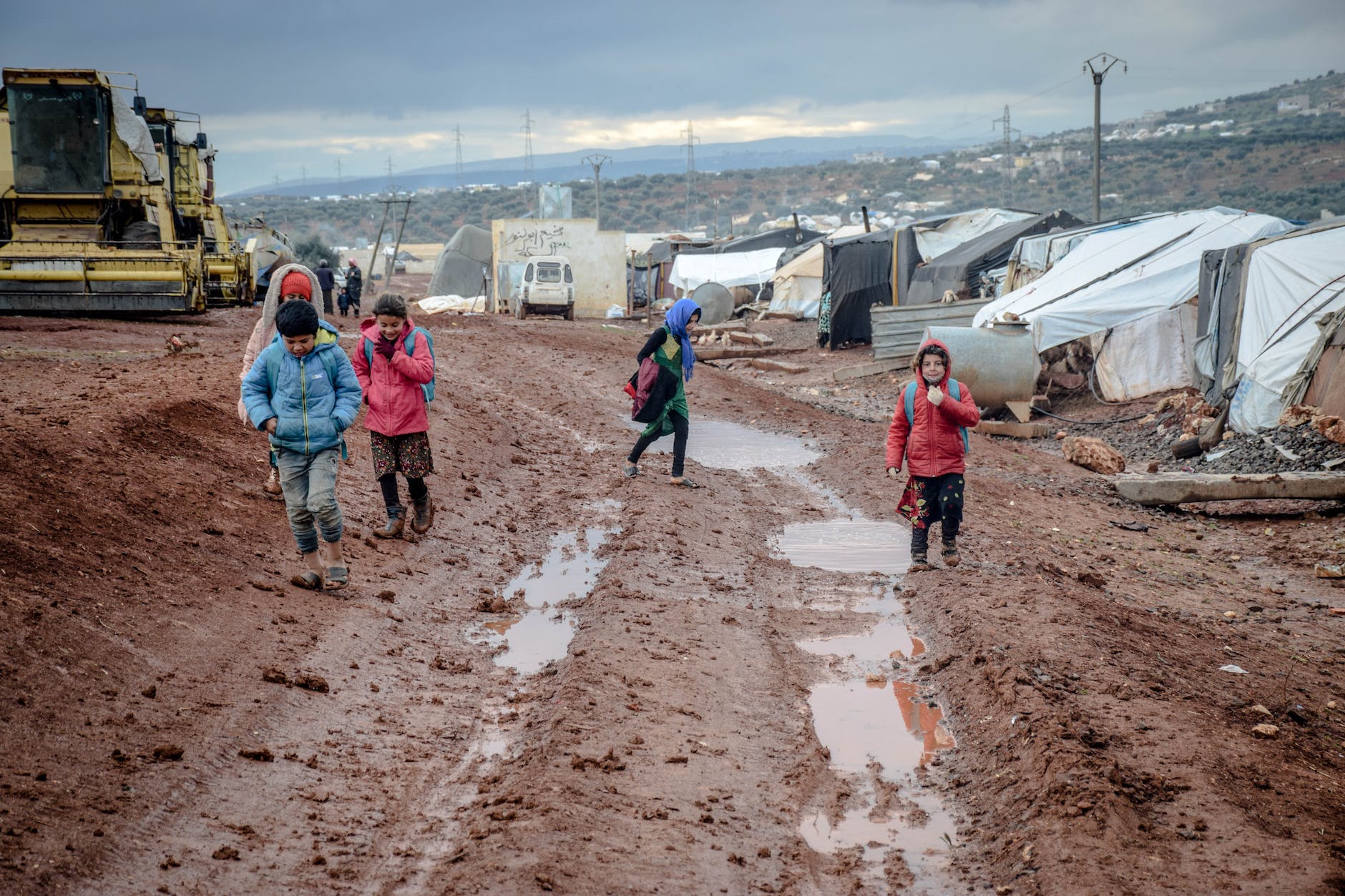
If we compare Jordan’s population of around ten million people the proportion of Syrian refugees alone is about 6.5 per cent. Lebanon’s population of around six million people hosts over 1.5 million Syrian refugees.
Despite language and cultural differences more than half of the Syrian refugees who came to Germany six years ago have a job, two-thirds of them work full-time and 70 percent of them have a qualified job.
Nearly half of the people currently receiving social welfare are foreigners in Germany but this has to be put into perspective when you consider that most of them are people who fled Ukraine. It is much the same in the UK and other Western European countries bearing the brunt of providing food and shelter for people who fled Ukraine after the Russian invasion in 2022.
Why are people migrating from their home countries?
The debate on immigration is missing the key aspects of why people are leaving their home countries. If you or your family are threatened with persecution by an authoritarian regime, or your children have no food to eat, you will do everything to save them from starvation or death.
Millions of people will continue to leave their home countries if the socio-economic conditions in these countries are not addressed, especially if a growing number of autocrats and dictators in these countries live in luxury while their populations starve. With the impact of climate change, especially affecting poorer countries severe droughts, floods, and other extreme weather events are exacerbating the situation.
On the positive side migrants often bring valuable skills, talents, and expertise that benefit the economy, leading to higher productivity and competitiveness. Cultural exchange also fosters creativity, cross-cultural understanding, tolerance, and appreciation of diversity as a principle of creation.
Racism, hate and xenophobia goes against the very principle of creation based on diversity, adaptation to change, creativity and evolution of conciousness. It is the very opposite of our ultimate purpose on earth – spreading kindness, love and compassion.
Immigrants are often highly motivated and entrepreneurial, leading to the creation of new businesses, industries, and jobs. Several studies currently point to the generally growth-promoting effects of migration on international trade and investment.
As Lawrence Ferlinghetti so succinctly puts it: “Pity the nation that knows no other language but its own and no other culture but its own. Pity the nation whose breath is money and sleeps the sleep of the too-well-fed. Pity the nation – oh, pity the people who allow their rights to erode.”
Reino Gevers – Author – Mentor – Speaker
P.S. I’m excited to announce the release of my latest book, “The Turning of the Circle: Embracing Nature’s Wisdom for Purposeful Living.” If you enjoy it, you might also be interested in my previous works, “Deep Walking for Body, Mind and Soul” and “Walking on Edge: A Pilgrimage to Santiago.” You can find all of these titles at reputable bookstores near you.