Tag Archives: mental health

Transforming Pain: Cultivating True Gratitude

You may find yourself in the midst of one of life’s more challenging chapters marked by grief, uncertainty, or loss. Then, as if on cue, a well-meaning friend offers the familiar advice: “Just be grateful.” In that moment, you might feel an angry urge to say: “You don’t understand.” And the weight grows heavier when you begin comparing your life to those who seem happier, wealthier, healthier, or younger, as if their brightness somehow dims your own.

But here’s the deeper truth: you cannot silence authentic emotions such as sadness, despair, or fear by layering them with forced gratitude. Emotional honesty is not weakness; it’s the foundation of healing. Gratitude only becomes meaningful when it arises from a place of full acceptance and when you allow yourself to feel everything that is part of you without self-judgment.

“I am feeling sad. I am disappointed. I am angry. And still, there are things I can be grateful for.”

This is where healing begins. When you make a habit of connecting the dots between past experiences and present growth, you start to see a deeper pattern.

There comes that quiet reassurance that the universe has always had your back. Even the darkest moments often conceal unexpected blessings, pushing you to tap into inner reserves of strength and begin anew.

I’ve lived through many moments of profound despair, and I suspect you have too. Relationship breakdowns, the untimely loss of loved ones, financial setbacks, and health scares. Yet in hindsight, these painful milestones have often marked the beginning of something transformative.

Technologically, humanity has made extraordinary progress in recent decades. But this advancement has come at a steep personal and environmental cost. Our lives today are faster, more connected, and paradoxically more stressed. We have more time than any generation before us, and yet time has become our most precious, elusive commodity.

This revolution forces us to confront an ancient question:

What truly makes you content and fulfilled?

The thrill of a shiny new object fades quickly. What endures is meaning and purpose.

Every extreme carries within it the seed of renewal. The technological age has amplified our left-brain — analytical, data-driven, “spreadsheet” thinking — while the right-brain, our intuitive, creative, and spiritual side, remains undernourished. Yet it is this neglected dimension that holds the key to balance.

We are not just rational beings. We are playful, imaginative, soulful creatures. Reclaiming that part of the self — and integrating both hemispheres of the mind — is the challenge of our time. Just because you are going through a dark chapter, doesn’t mean you cannot have a beautiful life. Peace comes from going all in on accepting yourself and building on the habits and tools that elevate healing and growth.

How can I do a reset?

Begin with small, intentional rituals that reconnect you to gratitude — not as a forced emotion, but as a recognition and acceptance of life’s complexity and beauty. Here are three daily practices to help you cultivate authentic gratitude:

Morning Reflection

Before reaching for your phone, take three minutes to sit quietly and ask: What is one thing I’m grateful for today — even if it’s small? It could be the warmth of a comfortable bed, the sound of birds, or simply waking up and still being alive, perhaps thanking God, or the universe for a new day.

Gratitude Journal

Each evening, write down three things that brought you comfort, joy, or insight — even if the day was difficult. Over time, this builds a reservoir of perspective and emotional resilience.

Sharing Gratitude

Make it a daily practice to express appreciation — whether through a heartfelt compliment, a sincere thank-you, or a simple kind word. When you share in someone else’s joy or gratitude, you amplify it. Gratitude shared is gratitude multiplied, and it deepens the bonds that connect us.

These rituals aren’t about denying pain or pretending everything is fine. They’re about honouring the full spectrum of your experience while gently creating space for light to return. Gratitude, when rooted in truth, becomes a quiet but potent force for healing, resilience, and renewal.

If the only prayer you ever say in your entire life is ‘thank you,’ it will be enough.”
— Meister Eckhart

This simple yet profound reminder by the great 13th-century Mystic invites you to see gratitude as a way of being and a sacred thread that weaves through joy and sorrow alike, anchoring you in the beauty of presence and opening to grace.

Reino Gevers – Host of the LivingToBe podcast

P.S.: If you enjoyed this article, you might be interested in my latest book, Sages, Saints, and Sinners. Get it today on Amazon, Barnes & Noble, and wherever good books are sold.

Leave a comment

Filed under gratitude, happiness, spirituality, Thanksgiving

The Sacred Bond Between Dogs and Humans

Yesterday, I had to make a very difficult decision in letting go of my beloved Dalmatian, Klara, who has been a faithful companion through the seasons of my life for over fourteen and a half years. Her gentle presence, unwavering loyalty, and unconditional love have been a constant reminder of the sacred bond that exists between dogs and their humans.

Dogs are spiritual beings. Their devotion and ability to love without condition form a bridge between the seen and the unseen, assisting us on our soul’s journey in ways we often only begin to understand when they are gone.

Every dog owner who has shared a deep bond with their four-legged friend will tell you that dogs can sense our emotions long before we consciously recognize them ourselves. They seem to perceive energy fields and emotional undercurrents that go beyond human understanding.

The Science Behind Emotional Connection

Interestingly, modern science is beginning to confirm what dog lovers have always known in their hearts. There’s now solid scientific evidence that dogs can detect and respond to human emotions through scent.

Studies using physiological measures — such as cortisol levels, heart rate, and fMRI brain scans — reveal that dogs can literally smell our emotional states. These scent cues influence their own behavior and even their stress responses.

  • A 2018 study published in Animal Cognition exposed dogs to sweat samples from humans who had watched either a scary or a neutral video. Dogs who sniffed “fear sweat” showed higher heart rates, sought comfort from their owners, and avoided strangers.
  • A 2022 study at Queen’s University Belfast trained dogs to distinguish between stress-related sweat and breath samples versus neutral ones. Astonishingly, the dogs identified the “stress” samples correctly 94% of the time after just a few trials.

These findings show that dogs can detect emotions such as fear, anxiety, sadness, and happiness through subtle chemical shifts tied to hormones like cortisol and adrenaline. They use this information to adjust their behavior — offering comfort, staying close, or becoming cautious — depending on what we’re feeling.

Dogs as Mirrors of Our Inner World

Beyond their empathy, dogs often mirror aspects of our own nature that invite us to grow.

  • A dog that shows exceptional love may be teaching us to open our hearts more fully.
  • A stubborn dog might be reminding us to loosen our own rigidity.
  • A loyal dog teaches us the deep beauty of steadfastness.

When I had a Rhodesian Ridgeback, it taught me the power of focus and presence. If my mind wandered during our walks, my dog would sense it immediately, pulling in all directions or breaking free to chase a rabbit. The lesson was clear: stay present.

Dogs even reflect us in surprising physical ways. Some adopt the walking gait of their owners — and there are remarkable stories of dogs developing a limp to mirror an injured owner, even walking on three legs in solidarity.

Timeless Companionship

When I was a teenager, I had a fox terrier named Stompie who would wait by the gate each day precisely at the moment I returned from school. Decades later, Klara — who lost her hearing two years ago — would still be waiting on the terrace just minutes before my arrival, somehow sensing I was on my way home. That intuitive bond transcends logic; it belongs to the language of love and connection that dogs seem to speak fluently.

The Neurology of Love

Recent studies show that the dog–owner relationship activates brain regions similar to those seen in the infant–mother bond. In dogs, the reward center of the brain responds more strongly to their owner’s voice than to that of a familiar person. More attached dogs show even greater neural activity when hearing their owner’s praise — evidence that the emotional connection runs deep on both sides.

At Harvard University, researchers are now studying how social bonds between children and their pet dogs develop over time — exploring whether these relationships can help reduce stress for both child and dog alike. The answers may help us better understand what many of us already know intuitively: love shared with a dog is healing, grounding, and transformative.

Klara’s passing has left a void in my home and in my heart but also a profound gratitude for the years we shared. Her spirit, like so many beloved companions before her, reminds me that love never truly leaves. It simply changes form, waiting patiently for us, just as our dogs always have.

Reino Gevers – Host of the LivingToBe podcast

P.S.: If you enjoyed this article, you might be interested in my latest book, Sages, Saints, and Sinners. Get it today on Amazon, Barnes & Noble, and wherever good books are sold.

Leave a comment

Filed under mental health, mental-health, psychology, purpose, Uncategorized

When a Society Loses its Mind

“It is not famine, not earthquakes, not microbes, not cancer, but man himself who is man’s greatest danger to man, for the simple reason that there is no adequate protection against psychic epidemics, which are infinitely more devastating than the worst of natural catastrophes.”
— Carl Gustav Jung, “The Undiscovered Self” (1957)

There’s a virus spreading faster than any we’ve seen before. It doesn’t attack the body, but the mind.
It’s called collective insanity, where whole groups of people begin to share the same irrational beliefs, emotions, and behaviors, drifting further and further from reality.

This kind of madness takes hold when critical thinking collapses and a free press is silenced or controlled. When truth becomes inconvenient, emotion and ideology take over. Falsehoods repeated often enough start to sound like truth, and soon, everyone is echoing the same slogans without stopping to ask, “Does this make sense?”

Collective insanity usually begins in times of deep economic and social uncertainty. The world feels unstable and frightening. During social unrest, war, economic turmoil, or disease, people crave certainty. They long for simple answers to complex problems, and for someone who promises to make everything right again.

That’s when a charismatic leader often appears, offering clear, emotionally charged explanations that seem to restore order. Dictators like Hitler, Mao, and Mussolini understood this perfectly. They demanded total obedience, convincing millions to surrender personal freedom, conscience, and judgment.

Strong emotions like anger, hate, and retribution spread quickly, almost like an infection of the soul.
We “catch” emotions from one another through something psychologists call emotional contagion. The more a narrative is repeated, the more real it begins to feel.

In authoritarian systems or cult-like movements, people learn to silence their doubts. To question is to risk punishment or exclusion, and so they conform. In time, they begin to believe the very lies they once only pretended to accept. (Experiments have shown this again and again, most famously by Solomon Asch, who proved that people will deny what they see if everyone around them disagrees.)

Collective insanity thrives where access to truth is restricted. It becomes especially dangerous when a small handful of billionaires control the flow of information or when social media algorithms feed us only what confirms our existing beliefs. These echo chambers create entire worlds of illusion, each reinforcing its own version of “truth.”

And once a society defines an enemy — witches, heretics, another race, or “the corrupt elite” — violence begins to feel justified, even noble. We see this pattern today in the growing attacks on politicians, judges, and journalists who dare to hold opposing views. The moral compass spins wildly when truth and empathy are lost.

The Way Out

History shows us that collective insanity inevitably ends, but often only after great suffering and when the truth finally comes out. The cult leader is exposed when there is no longer any denying of his sexual abuse. There is no longer any denying the authoritarian leader’s corruption, inept leadership and personal enrichment.
In Germany, the delusion collapsed when the war was lost, millions of lives had been lost, and the truth could no longer be denied. Putin’s Russia is possibly facing a similar scenario.
In South Africa, the Truth and Reconciliation Commission forced the nation to face the horrors of apartheid, allowing confession, grief, and healing to begin.

The path back to sanity always begins with truth-telling and with courage.
It takes brave souls, compassionate communities, and civic action groups to speak truth, even when it’s unpopular or dangerous. It takes emotional honesty and the willingness to face the grief, guilt, and fear without turning away.

When this is done collectively, something powerful happens. Healing begins.
We rediscover our shared humanity. Sanity and peace begin in the heart of each person who chooses truth, faith, and courage over fear.

Reino Gevers – Host of the LivingToBe podcast

P.S.: If you enjoyed this article, you might be interested in my latest book, Sages, Saints, and Sinners. Get it today on Amazon, Barnes & Noble, and wherever good books are sold.

Leave a comment

Filed under happiness, humanity, mass media, mental health, psychology, purpose

The COVID-19 Legacy: Social Fragmentation and Healing

Two years ago, the World Health Organization (WHO) declared that the COVID-19 pandemic was no longer a public health emergency. Yet its psychological and social aftershocks continue to ripple through societies, fragmenting communities once gripped by fear and fueling political extremism.

Several studies have now confirmed what many suspected: the pandemic and ensuing lockdowns had a profound impact on mental health worldwide. For the first time in history, scientists were able to observe the effects of collective fear on a truly global scale.

The Emotional Toll

While experiences varied across regions and communities, several broad patterns emerged:

  • Prolonged uncertainty, isolation, and fear led to widespread anxiety, depression, and burnout.
  • Eroding trust became a defining feature, as people grew confused and skeptical toward governments, media, and even science amid rapidly shifting information.
  • Collective grief settled over the world, a mourning not only for lost lives, but also for lost time, normalcy, and connection.

Shifting Social Landscapes

Communities fractured along new fault lines with differing views on vaccines, lockdowns, and mask mandates dividing families, friends, and neighbors.
Technology became both a lifeline and a liability: it kept people connected yet deepened isolation, fatigue, and exposure to misinformation and conspiracy theories.

The Mind–Body Connection

Emotional stress is one of the most significant threats to both mental and physical health. Neuroscience and medical research have long shown that chronic activation of the body’s stress response can harm nearly every system, especially the immune and cardiovascular systems.

  • The Whitehall Studies in the U.K. found that chronic job stress increases the risk of heart disease.
  • The Adverse Childhood Experiences (ACE) Study revealed that early-life emotional trauma elevates the risk of chronic illness in adulthood.

The link between mind and body is undeniable—but so too is our capacity for resilience.

Cultivating Resilience

Research shows that stress resilience or the ability to recover from emotional adversity can buffer these effects. Protective factors include:

  • Strong social connections
  • Spiritual or faith practices
  • Mindfulness and meditation
  • Regular exercise and restorative sleep
  • A deep sense of purpose or meaning

A Shared Awakening

The pandemic also ignited a global period of reflection on mortality, interdependence, and renewal. Many rediscovered spirituality, nature, and the quiet power of mindfulness. For perhaps the first time in modern memory, humanity was united by a shared awareness of its own fragility.

A Creative Rebirth

For me personally, the lockdown became a period of unexpected inspiration. It was during this time that I began writing my novel Sages, Saints and Sinners. In my research, I discovered haunting parallels between our modern experience and the Black Death of medieval times, echoing the same fear, isolation, and uncertainty, followed ultimately by rebirth.

Reino Gevers – Host of the LivingToBe podcast

P.S.: If you enjoyed this article, you might be interested in my latest book, Sages, Saints, and Sinners. Get it today on Amazon, Barnes & Noble, and wherever good books are sold.

Leave a comment

Filed under mental health, mental-health, powerbodymind, psychology, spirituality

The Sacred Principle of Diversity

There’s something quietly profound about spending time in a natural landscape that hasn’t been tamed or touched by human hands. Whether it’s in the African bush, a lonely walk in the Galician mountains, or on a mundane path in the Meseta. What strikes me every time is how life insists on diversity. Every insect, tree, bird, and creature is somehow interconnected in a grand, mysterious harmony. Nature doesn’t strive for sameness. It thrives because of its differences.

And I’ve come to believe the same is true for humanity.

Every different culture, cuisine, language, and spiritual tradition feels like a distinct fingerprint of life, carrying its own wisdom, colors, and cadence. They’re not threats to one another but complementary parts of a much larger whole.

When we try to flatten the world into one belief system, one way of being, one “truth,” we violate a deep principle embedded in creation itself.

So many of the “isms” we’ve inherited, such as nationalism, tribalism, and certain flavors of extreme patriotism, tend to dehumanize those who don’t fit neatly into the mold. When difference becomes a threat instead of a teacher, it often escalates into exclusion, oppression, and even violence.

And yet, the ancient sages and mystics remind us: under all these differences, there is unity.

The Baha’i Faith teaches that all religions stem from the same divine source, evolving like chapters in one great story of spiritual awakening with the great spiritual teachers from different religions appearing at a certain chosen time and place.

Mahayana Buddhism tells us that all beings possess Buddha-nature, regardless of the path they walk; the light within is the same.

In Christian Mysticism, creation is declared “good,” and every human made in the image of God, each of us carrying a unique spark of divine purpose. Meister Eckhart, the 13th-century mystic, wrote:

“The eye through which I see God is the same eye through which God sees me; my eye and God’s eye are one eye, one seeing, one knowing, one love.”

Another echo of this truth comes from the writings inspired by Julian of Norwich (c. 1342 – after 1416), an English woman who lived in quiet prayer and seclusion:

“Each soul is a unique expression of God’s love, as varied and wondrous as the colors in creation.”

This isn’t just theology. It’s a call to practice. A spiritual responsibility. If diversity is sacred, then how I relate to it matters. Am I listening? Am I open? Am I willing to be changed by what I don’t yet understand?

This can become a daily transformative spiritual practice:

  • What can I learn from the differences I perceive in others?
  • What is it that provokes my discomfort, anger, or fear?
  • Why am I drawn to some cultures and landscapes, and repelled by others?

These questions may serve as an invitation into a deeper clarity and humility.

In a world increasingly shaped by division, choosing to honor diversity is a form of sacred resistance. It’s a return to the original design of creation: not uniformity, but unity through difference. And when you lean into that, something holy begins to take shape both around you and within.

Reino Gevers – Host of the LivingToBe podcast

P.S.: If you enjoyed this article, you might be interested in my latest book, Sages, Saints, and Sinners. Get it today on Amazon, Barnes & Noble, and wherever good books are sold.

Leave a comment

Filed under raised consciousness, religion, spirituality

Why we need each other: The longevity secret

“Consuming things does not satisfy our longing for meaning. We’ve learned that piling up material goods cannot fill the emptiness of lives which have no confidence or purpose.” Jimmy Carter

We’ve never been more connected and more alone. In the race for success, self-expression, and consumerism, something vital has been lost: deep, meaningful community relationships.

Active participation in a community can add years to your life and improve your overall well-being. Humans thrive when they feel at home in communities that serve each other.

Former U.S. president Jimmy Carter was well aware of this, serving his community well into old age and reminding us of our true strength and values.

Meanwhile, depression and anxiety rates are rising significantly in urban areas. Research shows that people in cities are more likely to suffer from mental health issues compared to those in rural areas.

In big cities such as Stockholm, Berlin, and London about half the population live in single-households with high density housing, and transient populations of students and professionals leading to weaker social bonds.

The “Blue Zones” and community bonds

However, in those parts of the world, the so-called “blue zones”, where people live the longest strong community bonds are a common denominator.

In Okinawa, Japan, the elders have moais or tight-knit social circles that provide lifelong support. In Sardinia, Italy and many other southern European regions, inter-generational living keeps elders socially engaged.

The Harvard Study of Adult Development, which has been running for over 80 years, consistently finds that close relationships and strong social bonds are the most significant predictors of long-term health and happiness.

On my more than a dozen pilgrimage walks through rural northwestern Spain I have repeatedly witnessed the strong community spirit in the villages and towns. Regular religious and cultural festivals are held to celebrate local saints or historical events. People of all generations are strongly engaged in these events, providing purpose and meaning.

The Power of Social Connection

  • Studies show that strong social ties can increase lifespan by up to 50 percent compared to those with weak social connections.
  • Loneliness and isolation are as harmful to health as smoking 15 cigarettes a day.
  • Close relationships help reduce stress, improve mental health, and boost the immune system.

Cultivating strong social ties is one of the most effective ways to enhance health and happiness over time. Faith, purpose, and community engagement are particularly strong factors for resilience and longevity. When people look after each other they are more likely to stay physically active, eat healthier, and seek medical care when needed.

Reino Gevers – Author – Mentor –Speaker

If you enjoyed this article you might be interested in my latest book: Sages, Saints and Sinners to be launched globally on April 8th, 2025.

Leave a comment

Filed under mental health, psychology, purpose

Spiritual Resilience and Life’s Challenges

Throughout my life, I have grappled with the tension between religion and spirituality. Organized belief systems can so easily devolve into intolerance, hypocrisy, and hatred of those who look, think, or act differently. Ideology in all its forms fractures societies, breeding division and animosity.

Yet, creation thrives in diversity. God’s garden is a vibrant spectrum of colors and forms, each plant and flower enhancing the other in a harmonious beauty that can only be fully appreciated when seen in its entirety.

At its best, religion provides meaning and purpose to life. It offers solace and sanctuary during life’s most challenging moments—times of grief, loss, despair, and seemingly insurmountable obstacles.

Religion at its best and at its worst

Religion can unify communities, fostering a spirit of collective goodwill that transcends individual needs. Throughout history, faith-based inspiration has unleashed humanity’s most profound creativity in art, music, philosophy, and architecture. The masterpieces of Michelangelo, the compositions of Bach and Beethoven, and the enduring grandeur of centuries-old cathedrals and temples stand as testaments to the power of faith to inspire and elevate. At their core, all major religions share a universal message of love, compassion, kindness, and peace.

Yet, at its worst, religion has been wielded as a tool for manipulation and abuse. It has perpetuated discrimination, financial exploitation, fraud, and instilled fear and shame in innocent victims, leaving lifelong scars.

Over centuries, countless lives have been lost in wars waged over dogma, with individuals persecuted or executed for deviating from “the true gospel.” Such hypocrisy has driven millions to turn away from institutionalized and denominational religion, creating a vacuum often filled by a trash culture of alternate ideologies, political extremism, or addictions to external gratification. The consequences of this disconnection are evident in the growing epidemic of depression and spiritual emptiness.

How spirituality creates resilience against life’s challenges

Recent research highlights a significant link between spiritual belief and resilience to depression. Those who believe in a higher power are often better equipped to navigate life’s challenges, finding balance and purpose more easily than those disconnected from spiritual practice.

Experiential spirituality, unlike externally imposed beliefs, emerges as a deeply personal “knowing.” As Carl Gustav Jung famously stated when asked if he believed in God: “I don’t believe. I know.” This kind of spirituality arises intuitively, often in moments of awe—walking in nature, contemplating a masterpiece, listening to music, or engaging in creative flow.

This prompts profound questions: Is religion merely a pathway to spirituality, or is it an end in itself? Are we transitioning into a post-religious era? How can we bridge the divide between organized religion and personal spirituality to cultivate deeper, more authentic connections with the divine?

Reino Gevers – Author – Mentor – Speaker

P.S. If you enjoyed this article you will be interested in my books available where all good books are sold.

Leave a comment

Filed under meditation, psychology, self-development, spirituality, Uncategorized

Minds captured by Fanaticism

A right-wing media ecosystem fueled by resentment and anger is capturing millions of minds with a steady stream of alternate realities, stoking division, and delivering a daily narrative designed to reinforce grievance and distrust.

Social media is becoming an even more integral part of daily life, particularly for younger generations, as highlighted by Pew Research. While extremist platforms like Rumble remain smaller than giants like YouTube, they still attract millions of followers, spreading a wide array of conspiracy theories and disinformation.

Driven by a core message of fear and anxiety, these “hate entrepreneurs” pin blame for personal and collective challenges on a shifting cast of internal and external enemies, further exacerbating divisions.

Doom prophecies have long been a typical playbook of cults and populist political leaders.

It appears that once a person has invested huge time and energy resources in a particular belief, it becomes part of their identity. Even the best argument or scientific study will not dissuade the person from adopting a different perspective. They become locked in a particular mindset. Different perspectives or beliefs are radically rejected and some even turn to violent behavior to defend their mindset.

During medieval times when the black plague decimated much of the European population, rumor and superstition spread just as fast. A rumor that the Jews were responsible for the plague by poisoning water wells led to a mass pogrom in the French city of Strasbourg. About 2,000 Jews were burned alive on a platform constructed in a Jewish cemetery on Valentine’s Day in 1349.

Leon Festinger, a social psychologist, made groundbreaking contributions in the 1950s to understanding belief systems. He based much of his findings on studying a cult led by Dorothy Martin (alias Marian Keech), who claimed to receive messages from extraterrestrial beings about a catastrophic flood that would destroy the Earth on a specific date.

In some of his key findings he found that members of the cult were so committed to their belief that they abandoned jobs, loved ones and possessions in preparation for the flood. When the prophecy failed, instead of abandoning their belief, the cult members rationalized the failure by claiming that their prayers had “saved the world.”


Festinger found that cognitive dissonance was highest among those who had made the most significant personal sacrifices for the cult, doubling down on their belief and reinforcing their fanaticism.

In a digital world it becomes far easier for cults and extremist groups to maintain cohesion by withdrawing into information silos that cement beliefs such as:

  • Climate change denial
  • Vaccines are a conspiracy by the pharmaceutical industry
  • The “chemtrails” conspiracy theory posits that the condensation trails left by aircraft—are chemicals intentionally sprayed into the atmosphere for nefarious purposes. The rumor has persisted since the early 1990s despite the lack of clear scientific evidence.

Fixed belief and fanaticism ultimately creates a toxic emotional state, blending fear, anxiety, and anger. It fosters dehumanization, deepens political polarization, and fractures social cohesion.

On a personal level, it becomes a significant barrier to self-growth and spiritual evolution. In a rapidly changing world, adapting is essential for survival. Clinging to rigid beliefs not only limits personal transformation but also blinds you to the new opportunities and possibilities the universe continually offers.

Reino Gevers – Author – Mentor – Speaker

P.S. If you enjoyed this article you will be interested in my books available where all good books are sold.

Leave a comment

Filed under mass media, mental health, psychology, raised consciousness, self-development, social media, Uncategorized

Scapegoating and Misinformation: A Lethal Combination

Minds consumed by fear, anxiety, and thoughts of retribution are easily captured by hate preachers and demagogues. The scenes unfolding in the UK—right-wing extremists burning businesses of small shop-owners, targeting mosques, and attacking innocent bystanders of color—are tragic repetitions of history.

What distinguishes the current situation is the dramatically enhanced tools available to extremists, amplifying their impact. Over the weekend, at least 30 violent protests erupted across the UK, largely fueled by misinformation spread on social media claiming that an illegal Muslim immigrant was responsible for killing three young girls and injuring several others.

An account called Europe Invasion, known to publish Islamophobic and anti-immigrant content, posted on X, formerly Twitter, that the suspect was “alleged to be a Muslim immigrant”. The post was viewed more than six million times. And as the post was accruing views, crowds of far-right protesters were swelling in Southport, ready to charge local mosques.

The truth was that the attacker in Southport was identified by police as a 17-year-old, Axel Rudakubana, who was born in Britain, and that the attack was not terrorist-related. The motive for the attack remains unclear.

Scapegoating during times of crisis

Countless similar incidents can be cited throughout history where minority groups have been targetted by hysterical crowds, falling prey to rumors, misinformation, and hate speech. During the Black Death in Europe in the 14th-century thousands of innocent people were killed for allegedly spreading the pestilence. Jews were blamed for poisoning drinking wells. The baseless accusations led to widespread violence and massacres against Jewish communities throughout Europe, including the Strasbourg massacre in 1349, where around 2,000 Jews were burned alive.

In 1779, anti-Catholic riots were incited by Lord George Gordon in London, spreading fears that the Papists Act of 1778 would lead to Catholic dominance. The resulting violence lasted several days, leading to widespread destruction, looting, and the deaths of around 300 people.

Social media platforms must bear responsibility

The difference is that misinformation in our age can spread globally within seconds, reaching millions of people. Social media platforms must bear responsibility for failing or unwilling to remove obviously false information. As we have seen in the latest riots in the UK, the consequences can be devastating.

During times of crisis, there is a need to seek simple answers to complex problems. Cognitive closure and confirmation bias make people dismiss facts and contradictory evidence. Scapegoating provides psychological relief and an outlet for fear, anger, and underlying grievance culture.

Exclusion of outsiders by Group and tribal-think

“Group” and “tribal-think” views all those outside the “tribe” as outsiders. During times of economic and social crises, the in-group/out-group dynamic becomes more pronounced, leading to the vilification of those perceived as different or threatening.

Responsible leadership and fact-checking journalism become more important than ever. Individuals and social media platforms should be made accountable on a global level for spreading hate and misinformation.

Reino Gevers – Author – Mentor – Speaker

P.S. If you enjoyed this article you might be interested in my books available where all good books are sold.

Leave a comment

Filed under demagogues, extremism, humanity, ideology, mass media

AI and social media: A generational challenge

Every era faces different challenges, defined by the changing landscapes of society, technology, and geopolitical events, and we have not even begun to understand the current impact of social media and Artificial Intelligence (AI) on mental health and social cohesion.

It was telling that in the U.S. presidential debate, both candidates not only made a devastatingly poor impression but that one of the biggest challenges of our time such as the impact of social media and AI on every facet of our lives was not even mentioned.

The pervasive effect of social media on mental health

Studies have shown an alarming increase in suicide rates, especially among teenage girls in recent years coinciding with the widespread adoption of social media platforms like Instagram, Snapchat, and TikTok. Girls are at greater risk of cyberbullying, facilitating bullying behavior that can be relentless and pervasive. Unrealistic beauty standards are perpetuated, leading to body dissatisfaction and low self-esteem.

Among teenage boys, the dangers of addiction to online gaming and porn are leading to growing isolation and a breakdown in social skills.

AI is changing our world

We are just at the cusp of rapid technological changes triggered by AI with positive as well as negative effects. The technology is already proving to be most effective in medicine. At the Institute of Cancer Research, for example, researchers have developed a unique canSAR database that can combine patients’ clinical and genetic data with independent chemistry, biology, patient, and disease information. It i likely to revolutionize transportation with self-driving cars, buses, and drones.

But many jobs, especially those involving routine and repetitive tasks, are at risk of being automated. Sectors such as manufacturing, logistics, and retail are particularly vulnerable to automation, potentially leading to significant job losses. The rapid pace of AI development requires workers to continuously update their skills, which can be challenging for many.

The rapid technological changes we are seeing inevitably lead to a growing gap between the cultural and mental capacities of societies to adapt to these changes and the legal frameworks to prevent the abuse of such technology. It creates fear and anxiety among those individuals who have particular difficulty in adapting to changes.

The use of AI and other new technologies have to be designed in ways that respect human rights, privacy, and autonomy, and do not dehumanize users. Human capabilities need to be augmented rather than replacing the human touch in critical areas like customer service, healthcare, and creative fields.

A holistic approach needs to be made recognizing and valuing the unique identity, experiences, and needs of each person rather than treating them as anonymous entities. Every individual has different
emotional, psychological, and social needs.

With all our senses becoming over-stimulated by technology and threatening our mental and physical well-being it becomes all the more essential to reconnect with nature and our primal roots and senses.

Taking time out for a deep walk in nature is becoming a crucial pillar of survival in the digital world. Here are just some ways how we can rehumanize our senses:

Immersing in the green and blue spaces

Immersing yourself in the blue and green spaces of natural landscapes such as forests, mountains, oceans, and streams plays a major part in reducing freeze, flight and fight stress hormones such as cortisol. Auditory engagement with natural sounds such as the rustling of leaves, flowing water and birdsong contrast with the constant noise of an urban environment, providing a peaceful respite to help clear the mind.

Sensory Stimulation

The clean, fresh air of natural environments, free from pollutants and artificial smells, invigorates and refreshes your senses with the diverse scents from natural herbs, flowers and trees. They can positively evoke memories and emotions. Feeling and touching natural elements such as a tree, rock, sand or water provides direct physical connection with the natural world and the present moment.

Deep walking

Walking in nature is one of the most beneficial and underestimated ways of boosting your immune system, and preventing cardiovascular and metabolic disease. At the same time, exposure to sunlight helps your body produce vitamin D which is essential for bone health and overall mental well-being. Walking less than 5,000 steps per day is generally considered to be a sedentary lifestyle. Anything between 8,000 and 10,000 steps a day will significantly improve your health.

Reino Gevers – Author – Mentor – Speaker

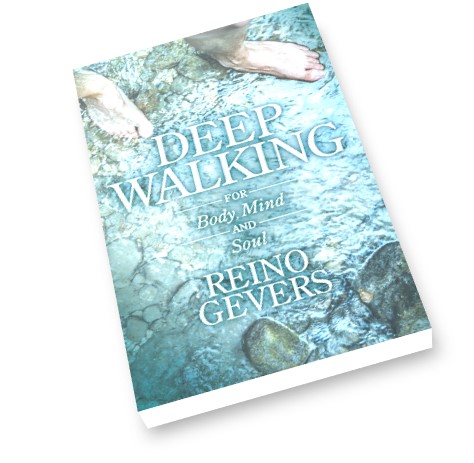
P.S. I’m excited to announce the release of my latest book, “The Turning of the Circle: Embracing Nature’s Wisdom for Purposeful Living.” If you enjoy it, you might also be interested in my previous works, “Deep Walking for Body, Mind and Soul” and “Walking on Edge: A Pilgrimage to Santiago.” You can find all of these titles at reputable bookstores near you.

Leave a comment

Filed under mental health, mental-health