Tag Archives: spirituality

Walking like a pilgrim

Ancient cultures and religions for thousands of years worshipped nature as an expression of the divine. With technological progress has come a disconnect with mankind primarily seeing the external world as a means of exploitation and subjugation.

In order to survive as a species we need to reconnect to nature and our spiritual purpose. One of the most underestimated and effective means of realigning body, mind and soul is by taking a walk.

You could either see a walk as a daily physical activity to stay fit or alternatively go for a deep walk with a higher intention. Or, you could go on a meditative pilgrimage walk lasting several weeks with deep spiritual significance.

A hike is generally goal orientated. You are aiming to reach a certain destination, walk a number of steps a day or just carry out a recreational activity.

Over the years on my pilgrimage walks on the Camino de Santiago in northwestern Spain it is interesting to observe people starting the 500-mile (800-kilometer) walk as hikers purely as a physical endeavor or adventure and then transitioning into pilgrims.

There is a deep mystery about these ancient pilgrimage paths and walking in the footsteps of people who have walked these paths for hundreds of years. Their collective traces and memories seem etched into the cobblestones, waymarkers, dusty paths, and old chapels.

“It doesn’t take long for the Camino to start walking you,” a pilgrim said to me on one of my first walks.

As you find your natural rhythm and walk off the distractions of the “monkey-mind” caught in thoughts of the past or the future, you become increasingly connected to the natural world around you.

Photo by Akshaya Premjith on Pexels.com

Walking like a pilgrim

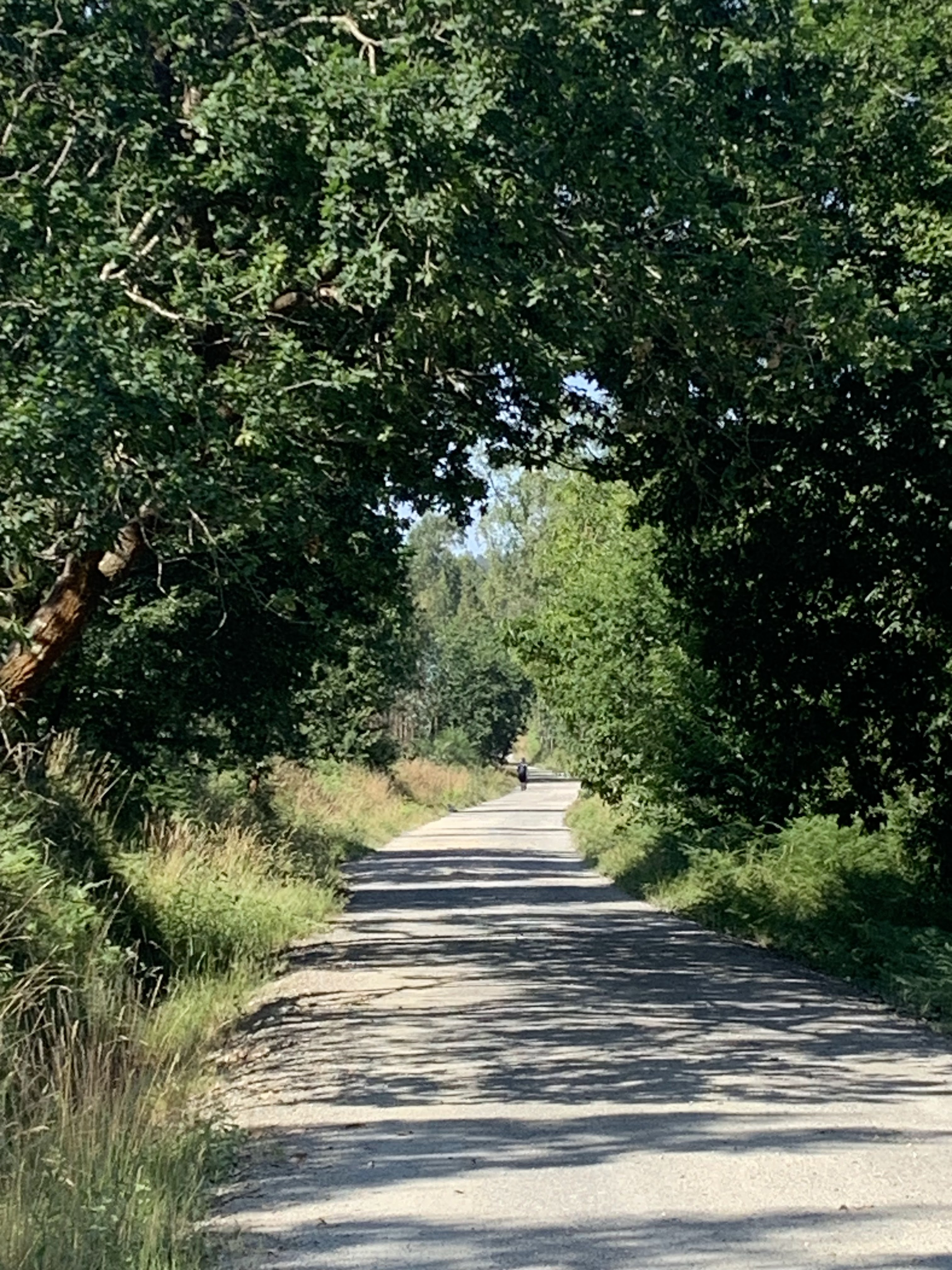
You don’t have to walk long distances to walk like a pilgrim. Instead of being goal-orientated it is all about walking with mindfulness, taking in the aroma of herbs along the path through your nostrils, hearing the water of a creek in the distance, enjoying the morning song of a blackbird, feeling the warmth of the sun on your skin and opening your eyes to what you see around you.

A pilgrimage walk is a destination with meaning, like walking from the magnificent 14th-century Wells Cathedral, Somerset England, to Glastonbury Tor – a significant spiritual place of worship since the time of the Celtics. But it could also be walking between an ancient oak tree and a bridge crossing a river.

It can also be a walk to resolve a particular question, an unresolved problem, or to say a prayer of gratitude. You could ask the universe for an answer as you do your walking and open yourself to the whispers from the universe in the form of signs and symbols. Sometimes the answer would come in a casual remark made by a stranger.

Many philosophers, writers, artists, and poets have found inspiration while walking. According to legend the Greek philosopher Aristotele taught his students while walking. The composer Johan Sebastian Bach in 1705 walked 205 miles from Arnstadt to Lübeck along the Baltic coast to find inspiration. The great Persian philosopher Rumi said about walking:

“Keep walking, though there is no place to get to. Don’t try to see through the distances. That’s not for human beings. Move within. But don’t move the way fear makes you move.”

Reino Gevers – Author – Mentor – Speaker

One more thing...If you have found this article interesting you might want to subscribe with the “follow” button above or recommend my FREE weekly Blog to friends and family. My books can be ordered at all places that sell good books in both paperback and kindle.

Leave a comment

Filed under mental health, mental-health

The Mystery of Easter and the Shroud of Turin

The Shroud of Turin believed to depict an image of Jesus continues to baffle researchers. Neither a painting nor a photograph, its origins remain unclear. Scientists have undertaken rigorous research, employing methods such as short bursts of ultraviolet light and laser technology to unravel its secrets. At the same time, it continues to keep believers in awe.

The impossibility of recreating a forgery

The scientists managed to re-create a small section of the cloth with some of the properties at a microscopic level, concluding that “some form of electromagnetic energy” such as a flash of light created the image.   Ultraviolet lasers were not available to medieval forgers thus opening the possibility that the Shroud is actually Jesus’ burial cloth, with the image created at the point of resurrection.

Some ancient paintings depict the Roman soldiers guarding the grave of Jesus being blinded by a flash of lightning as he rises from the grave but there is no mention of this in the biblical scriptures. The story of the crucifixion and the resurrection is the reason why we celebrate Easter in the Christian tradition.

Why we celebrate Easter

The exact details of the events after Jesus’ crucifixion vary slightly. After dying on the cross his followers wrapped him in a cloth and buried him in a tomb. A group of women went to the tomb on the third day to anoint his body with spices. When they arrived, they found the stone covering the entrance to the tomb had been rolled away and the tomb was empty. An angel appeared to them and told them that Jesus had risen from the dead.

Later that same day, Jesus appeared to two of his followers on the road to Emmaus, and then to the rest of his disciples, who were gathered in a locked room. He showed them his wounds and ate with them to prove that he was not a ghost, but had risen bodily from the dead.

One of the Italian scientists who examined the shroud, Professor Paolo Di Lazzaro, said:

“When one talks about a flash of light being able to color a piece of linen in the same way as the shroud, discussion inevitably touches on things like miracles and resurrection. But as scientists, we were concerned only with verifiable scientific processes. We hope our results can open up a philosophical and theological debate but we will leave the conclusions to the experts, and ultimately to the conscience of individuals.”

Carbon dating tests conducted in 1988 indicated that the shroud was created between 1260 and 1390 AD, leading many to conclude that it was a medieval forgery. However, these results have been disputed by other researchers who argue that if it was a forgery it would have to be possible to replicate it easily with modern methods.

Fake or forgery?

During the Middle Ages, the trade in Christian relics was a thriving industry that involved the buying, selling, and exchanging of objects that were believed to have belonged to saints, martyrs, or other holy figures. These objects included fragments of bone, pieces of clothing, and other personal items, which were often housed in ornate reliquaries and venerated by believers as objects of spiritual power. The Crown of Thorns that was placed on Jesus’ head as a means of torture was housed in the Notre-Dame Cathedral in Paris, where it has been on public display since the 19th century and dramatically rescued during the fire of April 2019.

The bones that are believed to be those of St. James the Apostle, also known as Santiago, are kept in the Cathedral of Santiago de Compostela in Spain. According to tradition, the remains of St. James were discovered in the 9th century by a hermit named Pelagius, who saw a bright light shining over a field near the town of Iria Flavia. The discovery of the bones led to the establishment of the shrine in the Cathedral of Santiago which has become one of the most important pilgrimage sites in Europe.

Trade in religious relics goes back to the earliest times. Relics were considered sacred objects imbued with spiritual powers, possessing a direct connection to the divine and serving as a conduit for blessings, healing protection, and power.

Is it important whether the bones of St. James are real or whether the Shroud of Turin is an authentic image of Jesus? What we do know is that some of the world’s most beautiful architectural creations have been built to house relics. As long as there is a mysterious aura about them we will continue to be stimulated by them on a deep spiritual level.

For most of the tens of thousands of pilgrims who have rediscovered the ancient pilgrimage route to Santiago, it is unimportant whether the apostle ever lived or was buried in Spain. The shared experience of veneration, the common search for meaning, and the individual spiritual experience while walking on an ancient path is of greater significance.

Likewise, the Shroud of Turin with the life-size image of the man with stains of blood on the cloth, appearing to be consistent with the wounds that Jesus suffered on the cross, will continue to fascinate. Believers feel a deep sense of awe and reverence, leading to peace, comfort, and inspiration during difficult times. More than ever we need those quiet places of power to explore the inner world of who we really are.

Reino Gevers – Author – Mentor – Speaker

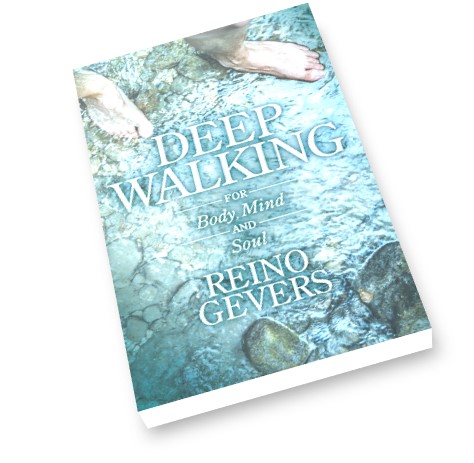
P.S. I’m excited to announce the release of my latest book, “The Turning of the Circle: Embracing Nature’s Wisdom for Purposeful Living.” If you enjoy it, you might also be interested in my previous works, “Deep Walking for Body, Mind and Soul” and “Walking on Edge: A Pilgrimage to Santiago.” You can find all of these titles at reputable bookstores near you.

Leave a comment

Filed under spirituality, Uncategorized

Life is not meant to be easy

“It’s the difficult years that make you ready for a phenomenal life.”
― Hiral Nagda

Our culture is obsessed with youth, happiness, and distraction. Much pain and suffering are caused when we compare ourselves with the “wonderful” lives most people seem to be leading when we read their posts on social media. Very few people admit publicly that they are going through a rough time.

Like the law of nature’s seasons, life goes through cycles of birth, maturity, decay, and death. Conflict, suffering, pain, problems and difficulties are as much part of life as bliss, joy, happiness and abundance.

Our ideas of suffering and pain stem much from religion. Most church-practiced Christianity, today has lost its way into an empty ritual. The earliest of Christian, Buddhist, Taoist, Judaic and other teachings were rooted in an archetypical reality and experiential spirituality.

Moving away from empty ritual

Post-reformation Christian teachings particularly emphasize the inherently “sinful” ways of man with Jesus having to sacrifice himself on the cross for the ultimate salvation of all of mankind. Unfortunately, it has led to some denominations and religions causing incalculable harm to the self-worth of many an individual with their definition of “sin” fixated on how to behave and what to believe.

In the archetypical and mystical traditions, the cross itself is deeply symbolic linking life on earth with the non-physical heavenly dimension. The above and below, the left and the right conjoined in the center signify the number five in numerology. The number 5 in the biblical sense symbolizes God’s grace, goodness, and favor toward humans. It is mentioned 318 times in the bible. In Judaism, there are five books of the Torah and the commandments were written five each on two tablets.

The deeper meaning of the crucifixion

The image of Jesus’ death on the Cross in a metaphysical sense represents the dying of personality and ego consciousness attached to form and the transition into Christ-consciousness of the immortal, the dissolving of the physical body into the resurrected spiritual body. It is a powerful image of a complete cleansing of the ego mind during suffering.

It is during these “flat-on-the-ground” moments, in the complete surrender of the mind that the gateway to the soul is ripped wide open. We are forced by the pain, the suffering, and the despair into deep introspection. Procrastination, lethargy, and comfort zones inevitably lead to stagnation, decay, and melancholy fixation on what was and is no more.

The Camino de Santiago: An analogy of life

The ancient pilgrimage route, the Camino de Santiago in northwestern Spain, has become so popular in recent years because more and more people are seeking a new spiritual truth. The 500-mile route traversed by pilgrims for centuries is very much an analogy of life. In the solitude of lonely walks, the climbing of mountains, and the physical and emotional pains experienced on the route many a pilgrim – after experiencing the trauma of divorce, loss, health crisis, or job burnout – finds liberation from all attachment and new purpose and meaning while walking. Sometimes the revelation happens on the path, sometimes months after the walk.

Leading French thinker and philosopher Frédéric Gros writes that “walking is exploring the mystery of presence. Presence to the world, to others, and to yourself… You discover when you walk that it emancipates you from space and time…”

Abraham Lincoln is quoted as saying: “I am a slow walker, but I never walk back.”

You are passaging your path on the Camino of life “paso a paso” – step by step. On this path, you will be experiencing bad days and good days, realizing in that moment of crisis when you feel lonely, tired, and exhausted that “this too shall pass.” Ultimately you will be losing the fear of death when form passes into formlessness.

Reino Gevers – Author – Mentor – Speaker

One more thing...If you have found this article interesting you might want to subscribe with the “follow” button above or recommend my FREE weekly Blog to friends and family. My books can be ordered at all places that sell good books in both paperback and kindle.

1 Comment

Filed under Camino de Santiago, mental health, mental-health

Finding purpose with deep walking

Living a modern sedentary lifestyle glued to a screen rebels against our very human nature that is designed from the dawn of mankind to walk. Homo Sapiens has populated the planet walking, which is today one of the most underrated, yet most effective ways of keeping body, mind, and soul healthy.

A body of research has meanwhile confirmed the many positive effects only a moderate amount of walking per day can positively impact your health.

The Harvard Nurses’ Health Study, which has been tracking the health behaviors of more than 200,000 women for more than three decades, has revealed that walking for an average of 30 minutes a day can lower the risk of heart disease, stroke, and diabetes by 30 to 40 percent.

Walking at this rate can also lower the risk of breast cancer by 20 to 30 percent.

A 2018 study by UCLA researchers has found that a sedentary lifestyle is also bad for mental health.

The researchers did brain scans of 35 people aged 45 to 75, finding that those who sat the most had more thinning in an area of the brain involved with memory, a change that may be linked to cognitive decline and dementia.

Living a sedentary lifestyle surrounded by things created by the “head mind” will never make you feel the same sense of aliveness and awareness that you will feel through the intuitive “heart-mind” when walking in nature. The universe, or God, finds expression through nature.

In my latest “Living to BE” podcast I discussed with my pilgrim friend Kevin Considine the many life lessons deep pilgrimage walking has to offer. Kevin has walked more than 14,000 kilometers on ancient pilgrimage paths since he retired eight years ago.

Scientists have found that exposure to blue spaces such as lakes, rivers, and the sea are particularly beneficial to mental health.

A team from the Barcelona Institute for Global Health (ISGlobal) undertook the first international review of 35 studies on “blue spaces.” They concluded that outdoor blue spaces not only reduce stress levels, but also improve general well-being.

Crossing the Pyrenees mountains from France to Spain on one of my pilgrimage walks

The difference between a hike and a deep-walking pilgrimage experience

One of the most popular paths is the Camino de Santiago in northwestern Spain, which has been traversed by pilgrims for centuries. In recent years, it has been rediscovered by tens of thousands of people from all walks of life as a path of healing and self-discovery.

Some of the world’s most creative and talented artists, including Johann Sebastian Bach, William Blake, and Jean-Jacques Rousseau explored their inner worlds on long walks, acutely aware of the positive effects in opening the senses to nature.

The conservationist John Muir, tormented by nightmares and anxiety after nearly going blind in a work accident, immersed himself in nature on a 1,000-mile journey on foot from the banks of the Ohio River to the Gulf of Mexico.

On my first pilgrimage walk to Santiago, I too was tormented by a dysfunctional relationship, a stressed-out job and childhood trauma that I had suppressed for many years. Any amount of therapy did not have the same effect as facing those inner demons on long, lonely walks of solitude in nature. I have described in detail my journey in my two books: Walking on Edge and Deep Walking for Body, Mind and Soul.

Experiential spirituality at its best

The universe speaks to us in many ways but nowhere more than with such clarity when body, mind, and soul are completely immersed in nature and not distracted by the pull of countless things in our daily, modern lives. It is experiential spirituality at its best.

A particular fascination with the Camino de Santiago in northwestern Spain is that these ancient pilgrimage paths have been walked by pilgrims for many centuries. It is marked by numerous crosses and symbols left by the pilgrims of old, many of whom did not survive the long trip. I would concur with my pilgrim friend Kevin that the route is filled with the spirits of pilgrims who have gone before, who guide us on the way.

Many a person has started the more than 800-kilometer walk from Jean Pied de Port in France to Santiago de Compostela as a hiking or sporting endeavor but ended the walk as a pilgrim. It is a part of the Camino mystery. It has a different impact on every individual, awakening channels to the soul that you had never dreamed possible.

Reino Gevers – Author – Mentor – Speaker

One more thing...If you have found this article interesting you might want to subscribe with the “follow” button above or recommend my FREE weekly Blog to friends and family. My books can be ordered at all places that sell good books in both paperback and kindle.

Leave a comment

Filed under Camino de Santiago, deep walking, exercise mental health

Realigning with the heavenly ladder

The sages of old teach that every individual latently can achieve the heights of mental and spiritual capacity but that most people impose limitations upon themselves that prevent them from living their full potential.

Last week I visited the northwestern German town of Münster, famous for the Peace of Westphalia treaty of 1648 ending the 30-year war. It closed a terrible chapter in European history of warfare between not only nations but between Protestants and Catholics, claiming the lives of about eight million people.

The artist Billi Tanner aptly chose the Lamberti Church in the center of the city to install a golden-lit “heavenly ladder” extending from within the church to the spire on the exterior.

She says about her work: “During these times the heavenly ladder (from Jacob‘s dream in Genesis 28,12) stands primarily for the three divine values hope, faith, and love. If all people were to live by that wouldn‘t that be wonderful? “ The biblical story tells us that while fleeing from his brother Esau, Jacob saw in a dream Jacob a ladder, or staircase, reaching into heaven with angels going up and down it.

The heavenly ladder has become a powerful symbol connecting the heavenly realm with our earth-bound purpose. It can be interpreted as the step-by-step ascent to spiritual growth in becoming who you were meant to become from the day you were born but also as a symbol of the descent from heaven of angels who guide us on this path.

A firm base as a precondition to higher experience

The steps on the ladder are passages of initiation as we progress and grow through life. Alignment with both heaven and earth, our mental and physical capabilities is essential. If you learn to understand yourself you can basically accomplish everything.

A ladder not rooted to earth will fall, meaning that you need first and foremost to have a firm foundation as a precondition to higher experience. The Jewish Mystics were very aware of this, teaching their scholars to master a basic trade to earn a living. Work was seen as an important tool of training for higher consciousness. Taking a proper attitude to whatever we are practicing as a craft was seen as decisive in training inner traits such as clarity of thought, reliability, and self-discipline. Earning a livelihood was seen as central to finding a divine purpose.

While the base of the ladder was firmly grounded the pinnacle of the ladder stretched all the way to heaven and paradise. But action is necessary by taking each step up the rung. Symbolically all that you experience in life is a school for the elevation of consciousness and the precondition to taking the next step. You have to go through a new period of apprenticeship each time.

The ascent up the ladder is ultimately an ascent to another dimension as we walk through the path of life. We are called upon to climb the celestial ladder with growing awareness, and not to be pulled downward by the forces of distraction. What we are experiencing on an individual level is also experienced by humanity on a collective level. During these times of renewed talk of war and confrontation between nations, we should never lose our capacity for faith, hope, and love.

Reino Gevers – Author – Mentor – Speaker

One more thing...If you have found this article interesting you might want to subscribe with the “follow” button above or recommend my FREE weekly Blog to friends and family. My books can be ordered at all places that sell good books in both paperback and kindle.

Leave a comment

Filed under meditation, mental health, mental-health

Escaping the treadmill of the monkey mind

One of the tragedies of the human condition is being stuck in the „monkey mind“ that is dancing in thoughts of what was and is no more and the fear and anxiety of what the future might hold. 

Thoughts trigger emotions and emotions trigger reactions that inevitably have a major impact on your vibrational frequency that will in turn inevitably attract what you emanate.

If your mind is focused on scarcity you will see around you only scarcity and attract the same. If you are primarily a person in gratitude and abundance you will live in abundance and see abundance everywhere. It‘s what we call the magnetism in the law of attraction.

Our culture’s predominant messaging is external gratification which inevitably nurtures a scarcity mindset. However, just by putting this age in which humanity finds itself, in a historical perspective we are experiencing unprecedented abundance. If you are reading this you would very likely have internet access, a stove, a fridge, and a supermarket in the vicinity offering a multitude of foods. You are living the life the kings and queens of the 14th or 15th century could only have dreamed of. Hygiene, health care, transportation, and almost every level of human existence have made immense strides over just the past 100 years.

Tremendous technological progress has however stunted spiritual growth. We are so fixated on immediate gratification that we are losing our minds. Buddhists call it the attachment to the 10,000 things. We are only confronted with mortality when a close loved one has passed, and otherwise prefer to banish illness, frailty, and death to hospitals and old age homes. 

In the Middle Ages, death was a constant reality. Fatal diseases were rampant. What we would today term a simple injury could rob the life of a young person within days. Men died in battles and women during pregnancy or childbirth. You were one of the lucky ones if you survived until your mid-40s. This inevitably focused people‘s attention on the eternal. Some of the greatest artwork and architectural masterpieces were dedicated to the divine and inspire us to this day. Philosophical thought and the teachings of the sages and mystics were timeless in their wisdom.

Meister Eckhart, a 13th-century Mystic and Dominican monk, quotes an unknown sage with the words: „World and time are small things. Unless you transcend world and time, you will not see God. “

Finding a connection to soul

The French 17th-century mathematician Blaise Pascal said: „All of humanity’s problems stem from man’s inability to sit quietly in a room alone.”  The disconnect from the yearnings of the soul manifests itself in the craving and attachment to form that is always transitory. 

Stress always starts with the thought of wanting to be in someplace other than where you are currently finding yourself.

To find alignment with soul you have to detach from the illusory distractions of the external world. Focusing your mind on the gentle flow of your inhaling and exhaling breath is just one form of meditation. Humming the OM, a prayer, or a mantra first thing in the morning or just before closing your day at bedtime is another. Practicing some form of meditation daily has multiple positive effects on body, mind and soul.

Move your body

Physically moving your body unsticks the mind. Your body posture and physiology are an authentic expression of your mindset. Anybody can see whether a person is sad, angry, kind, happy or exuberant. Take a walk in nature, and open your senses to the sights, smells, and sounds of your surroundings. The green and blue spaces of nature will instill in you the feeling of connectedness and BEING.

Service for others

Preoccupation with the needs of the ego is a hallmark of our narcissistic culture. Individual needs are prioritized over the needs of the community. Fellow living beings and the environment are sacrificed for short-term human needs. Extraction of natural resources is prioritized over preservation and recuperation for future generations. Nationalism, tribalism, factionalism, and other forms of fundamentalism define themselves in the separateness from the „other“. 

All the wise sages of old teach us that living a life of service is the recipe for happiness, soul connection, and purpose. The higher we rise in this understanding the higher we rise „in the connection to God“, according to Eckhart. The soul „returns to God through good and divine works.“

Study

The 33rd U.S. President Harry Truman said: „Not all readers are leaders, but all leaders are readers.” What you feed your mind with that you become. The German poet Rainer Maria Rilke wrote that „the dream of your life has been dreamed from eternity.“ Your life is meant to grow and to become one part of humanity that also is destined to evolve and become on a collective level. Learning and studying the teachings of the wise will make you wise and give you the skillset for your life in service.

The spiritual teachings of the mystics emphasize the inseparability of body, mind, and spirit, and finding discipline in the daily training of meditation/prayer, and exercise of the body so that you have the strength and power to serve. Procrastination would be a disservice to your higher self. 

Reino Gevers – Author – Mentor – Speaker

One more thing...If you have found this article interesting you might want to subscribe with the “follow” button above or recommend my FREE weekly Blog to friends and family. My books can be ordered at all places that sell good books in both paperback and kindle.

Leave a comment

Filed under mental health, mental-health, spirituality, Uncategorized

The virus of victim culture

How would you feel when after your passing you were shown by an angel the life you could have lived but didn’t live because you were too afraid to take action or spent a life in misery by blaming everyone else, especially your elementary family for what went wrong in your life?

To some degree, it’s everyone’s story. Families and relationships are strained by divorce, emotional abuse, financial issues or poor physical and mental health. But the external world, especially social media, indoctrinates us with the message that we are always supposed to be happy. Life is never like that. The seasons of nature teach us that we go through cycles of spring, summer, autumn and winter.

Our grievance culture thrives on negativity which has become like a virus infecting individuals and millions of people in entire nations. A person infected with grievance culture is incapable of self-reflection and taking responsibility. He would rather wallow in feeling sorry for himself for what all the others did to him in creating the situation he finds himself in. By blaming others he has a perfect excuse for not taking action to change the status quo.

Victim culture can poison entire nations

On a macro-level, it is a hallmark of fascist and extremist movements led by demagogues who have the ability to channel the toxic emotions of hate, anxiety, and fear into blaming ethnic minorities, other religions, political parties or genders for everything that has gone wrong in society. The fascists of Nazi Germany found fertile ground in stirring the flames of existing 19th-century Prussian militarism, hurt national pride, and prejudice toward the Jewish minority.

Comparisons with the current situation in Russia are striking. The Russian leadership is effectively using hurt national pride after the collapse of the Soviet Union to justify the invasion of another country. The messaging from state Russian media is that NATO was responsible for starting the war and that the atrocities committed by Russian troops are fake news.

A democratic modern Germany and the European Union could only be built after total defeat of Adolf Hitler and the realization that nationalism can never be a solution. In the same way dramatic changes in Russia will possibly only came after total collapse of the current authoritarian economic and political order.

Grievance culture is an addiction to a mindset. The individual is in total denial that there is a problem. The healing process is then only possible during an epiphany that comes with a flat-on-the-ground moment. The frustration level, disgust, and pain threshold has reached such a level that the first steps toward changing the situation are taken.

Photo by Simon Berger on Pexels.com

Life is cyclical: Winter is a time for reflection and opportunity

The winter cycles of life when we are in pain, grief and suffering offer also the greatest opportunity to an elevation of consciousness and change. Conflicts in relationships, in a job, or in a family are signposts pinpointing that changes need to be made, and that the status quo is no longer working. You are given an opportunity by the universe to dig deep into your inner resources, your inner truth, and your soul purpose. The winter cycles of life are a time for withdrawal and self-reflection where the ideas, and opportunities for the next cycle, spring, are born.

Some of the most successful start-ups have been founded during an economic downturn or recession. Several of the world’s most outstanding business and political leaders transmuted the winter years of their lives into activism, leadership, and creativity. Nelson Mandela spent 27 years in prison, never losing sight of the long-term goal to become president of a non-racial democratic South Africa.

Martin Luther King wrote about his own suffering:

“As my sufferings mounted I soon realized that there were two ways that I could respond to my situation: either to react with bitterness or seek to transform the suffering into a creative force. I decided to follow the latter course. Recognizing the necessity for suffering I have tried to make of it a virtue. If only to save myself from bitterness, I have attempted to see my personal ordeals as an opportunity to transform myself and heal the people involved in the tragic situation which now obtains. I have lived these last few years with the conviction that unearned suffering is redemptive.”

Success for these outstanding personalities came after many trials and tribulations where any normal person would have succumbed to bitterness and blame. We see often only the end result of their accomplishment and not the rough path, the inner work, discipline, and dedication they built to get there.

Reino Gevers – Author – Mentor – Speaker

One more thing...If you have found this article interesting you might want to subscribe with the “follow” button above or recommend my FREE weekly Blog to friends and family. My books can be ordered at all places that sell good books in both paperback and kindle.

Leave a comment

Filed under mental health, mental-health, Uncategorized

You are not your beliefs and thoughts

Change your thoughts and you will change your life

The average human being typically has more than 6,000 thoughts per day. The figure was pinpointed by a team of psychology experts at Queen’s University in Canada, who say they have developed a never-before-seen way to detect when one thought ends and another begins.

Other researchers estimate that we process between 60,000 and 70,000 thoughts per day. In 2005, the National Science Foundation published an article saying of those thousands of thoughts, 80 percent were negative, and 95 percent were exactly the same repetitive thoughts as the day before.

What you think you become

It, therefore, makes perfect sense to practice thought control. It can change your life. What you think you will become. It is the self-image with which you program yourself. Attachment to thoughts and beliefs imprison the mind. It is what the Buddhists describe as one of the major causes of suffering.

Our culture has been poisoned by narcissism and ego-centered thought. The predominant messaging is on external appearance, image, and possession. This inevitably leads to a disconnect with inner authenticity, spiritual purpose, and BEING. The more pronounced this disconnect the greater the addiction to all that offers short-term gratification.

We are seeing an explosion of substance abuse in those cultures worshipping the false gods of materialism. At the same time, we are seeing a dangerous tendency of fanatical addiction to fixed thoughts and beliefs that are threatening the foundations of democracy and free thought.

The loss of identity

The Ego-Mind confuses identity with thought and belief. It is a house built on a sandy foundation because a disconnect from the true self makes the person susceptible to holding onto a fixed belief or ideology. Identity is defined by the “others” who are wrong. An opposing idea thought or belief that threatens this false self-identity is perceived as a threat to all who we think we are. What is left of identity when we realize that the cultural icons that we have worshipped are emperors wearing no clothes? What is left of the ego when all the facts on the ground show us that we have been wrong all along?

The personality imprisoned by the Ego-Mind inevitably becomes physically and psychologically ever more rigid and inflexible to the point where it will not even hesitate to kill if it feels its identity crumbling away. It would rather die than admit that it was mistaken all along. The Ego-Mind has no inner substance, it knows no laughter, joy, or love.

All creativity that is dominated by the right side of the brain is stifled. But it is what makes us essentially human when we show a willingness to go with the flow of creativity in learning new things and developing our skill set. Soul authenticity is connected to the heart-mind. It serves a much greater wholeness than the self, the tribe, or the nation. The soul knows no attachment. It knows only unconditional love, joy, and laughter.

Connecting to the Heart-Mind

We will only survive as a species if we reconnect with this greater wholeness when we begin to realize that truth and belief happens in tolerance and interaction. We need to let go of the attachment to the opinionated head, the closed heart, and the defensive walls of what we believe to be identity.

Religious and political fanaticism is rooted in fear. Emotional stress and fear always begins with a thought. Fear and hate are never a reflection of truth. It comes from the lowest vibrational energy. When you take action in doing what you really love you begin to move beyond the fear.

There comes a point where you have to unlearn all the conditioning to become whole again by surrendering to trust. Experiential spirituality is essentially the practice of emptying the mind of all attachment and at the same time connecting to the inner room of the soul. It is surrendering to the magic of the moment and opening to the whispers of the universe.

Reino Gevers – Author – Mentor – Speaker

One more thing...If you have found this article interesting you might want to subscribe with the “follow” button above or recommend my FREE weekly Blog to friends and family. My books can be ordered at all places that sell good books in both paperback and kindle.

Leave a comment

Filed under mental health, mental-health, Uncategorized

The power of self-love

The first principle is that you must not fool yourself and you are the easiest person to fool.”

Richard P. Feynman

The need for self-love as the precondition to giving love is a key to many spiritual teachings. At the heart of much self-destructive behavior, and the addiction problems we see in the world today are the rejection and contempt of self.

You cannot love and accept yourself without unconditionally accepting the shadows within. You have to learn to accept that you are an incomplete human being.


The hypocrisy that often underlies institutionalized religion stems from the notion that those who don’t believe and behave the same way that we do are in some way inferior and lesser human beings. When you are in denial of your own inadequacies and weaknesses you will see them more pronounced in others.

The beginning of forgiveness


The beginning of forgiveness begins with the forgiving of self. The seeds of inadequacy and lack of self-esteem are planted early in life by social norms or misguided parental pressure.


Failure and missteps are part of the human condition. As the sages and Mystics teach us: They are the stepping stones to self-awareness and self-love. By learning to forgive yourself you can accept and learn to forgive others.

The scriptures teach us that “If you forgive others their sins, they are indeed forgiven. If you withhold forgiveness from one another, they are held bound.” (John 20:23).

Photo by cottonbro studio on Pexels.com


The more addicted we become to a preferred self-image the more judgemental we become. But it is precisely the relationship difficulties, conflict situations, failures, and disappointments of life that mirror the shadow aspects within. These are the aspects in need of acceptance or transformation that help elevate you to a higher vibrational energy, your inner power, and strength.

Surrendering to life


Surrendering to life is complete surrender to that which is greater than any image of self and the essence of what is the vulnerability of body, mind, and soul. It is what Paula D’Arcy describes as “God comes to us disguised as our life.”


As the spiritual teacher, priest, and author Richard Rohr explains: “Surrender is not giving up, as we tend to think, nearly as much as it is a giving to the moment, the event, the person, and the situation.”

Life happens. You cannot change what has happened in the past. Taking a different perspective can transmute feelings of pain and guilt. A personal mantra of forgiveness could be:

“I release at this moment the attachment to the pain and the melancholy sadness to that which was and is no more. I love and accept myself the way I am. I love and accept my true soul nature. I am in loving care and kindness to myself and others.

Reino Gevers – Author – Mentor – Speaker

One more thing...If you have found this article interesting you might want to subscribe with the “follow” button above or recommend my FREE weekly Blog to friends and family. My books can be ordered at all places that sell good books in both paperback and kindle.

Leave a comment

Filed under meditation, mental health, mental-health, spirituality, Uncategorized

Raising your vibrational energy for 2023

Starting another New Year you have all the possibility of rewriting your future by raising your vibrational energy to the level that attracts the circumstances, people, and opportunities to make this your best year yet.

It is a time to release attachments and addictions to associations, habits, thoughts, beliefs, and the negative self-talk that limits your power and keeps you at the level of the eagle that is scratching with the chickens, unaware that it can in reality soar high in the sky.

The Austrian psychiatrist Viktor Frankl theorized that the absence of meaning and purpose in life inevitably leads to the pursuit of distracting “pleasures” and addictions. Frankl, a Holocaust survivor, describes in his famous book “Man’s Search for Meaning”, the deep yearning of every individual to live a life of purpose and meaning whatever the external circumstances.

There is a deep yearning within every human being to be seen, recognized, and appreciated for who they are with their unique individual capabilities, strengths, and vulnerabilities.

Relationships

It is why relationships, the people you surround yourself with on a daily basis, are such an important key to happiness. There would be only a select group of very few people you would be willing to spend alone with on an island. The people you spend the most time with influence you in multiple and many subtle ways. You inevitably adopt the views, mannerisms, and beliefs of the people closest to you. Surround yourself with people who emanate positivity, joy, and kind-heartedness and you will become like them.

Health should be a top priority

If you are eating low-nutrient processed foods, and not getting enough sleep and exercise you will never raise your energy frequency. It’s a downward spiral that inevitably ends in poor mental and physical health. We are not only social beings but our metabolism is simply not built for a sedentary lifestyle. The best way of staying physically active is to find a set time – at best early in the morning – for a regular exercise routine. Start with just a 15-20 minute exercise sequence a day and then gradually build on it. Trying to do too much at once most often fails. Choose an exercise that you enjoy doing. For me, the most enjoyable part of the day is taking my dog for a walk in nature. Getting enough daylight sun on your body is very important because the body produces Vitamin D when exposed to sunlight. Vitamin D helps boost the immune system, improves sleep, and maintains a strong bone structure.

Attachments

Attachment to that which was and is no more can be like a huge dragnet pulling you away from seeing the opportunities, joys, and magic of the present moment. Thoughts dwelling on the past are mostly blurred by emotion and very seldom reflect the true events. The “monkey mind” constantly dances between the past and the future. The worrying mind will paint the worst possible scenario of all that could happen. The result: frozen paralysis.

Breathing into the present moment

By consciously focusing the mind on your breathing rhythm you will be instantly pulling yourself back to the present moment. Breathing meditations release tension and tightness in the body. Deep breathing through the nose releases nitric oxide which widens the blood vessels allowing for better transportation of oxygen to vital organs.

What information are you feeding your mind with?

The business model of most mass media is based on fanning the flames of negative emotion. Outlandish conspiracy theories hate tweets and irrelevant gossip are shared millions of times. Negative emotions however are a threat to your long-term health. Anger, resentment, fear, and anxiety keep you at the lowest possible vibrational frequency. It is that frequency that you are most easily manipulated because you are disconnected from your true self. Karl Marx described in 1843 in a celebrated dictum “religion is the opium of the people.” The place of old-school institutional religion has undoubtedly today been taken by the 24-7 drumbeat of mass media, influencing and manipulating the minds of hundreds of millions of people in an alternate reality. Information and knowledge cannot be compared to wisdom.

Gaining more wisdom

We are drowning in information and starving in wisdom. Some ways of gaining more wisdom:

  • Surround yourself with wise, intelligent people who offer a different perspective to the one you might have.
  • Read regularly and read books that have an impact on your life
  • Listen more and ask more questions, rather than talking

Wisdom has depth and nuance far removed from transitory mainstream superficiality. It can be developed and strengthened and is not limited to the wise and old. As Albert Einstein once said: “Any fool can know. The point is to understand.”

Reino Gevers – Author – Mentor – Speaker

One more thing...If you have found this article interesting you might want to subscribe with the “follow” button above or recommend my FREE weekly Blog to friends and family. My books can be ordered at all places that sell good books in both paperback and kindle.

Leave a comment

Filed under mental health, mental-health, Uncategorized