Category Archives: Pilgrimage

Walking the Camino: Lessons in Life and Faith

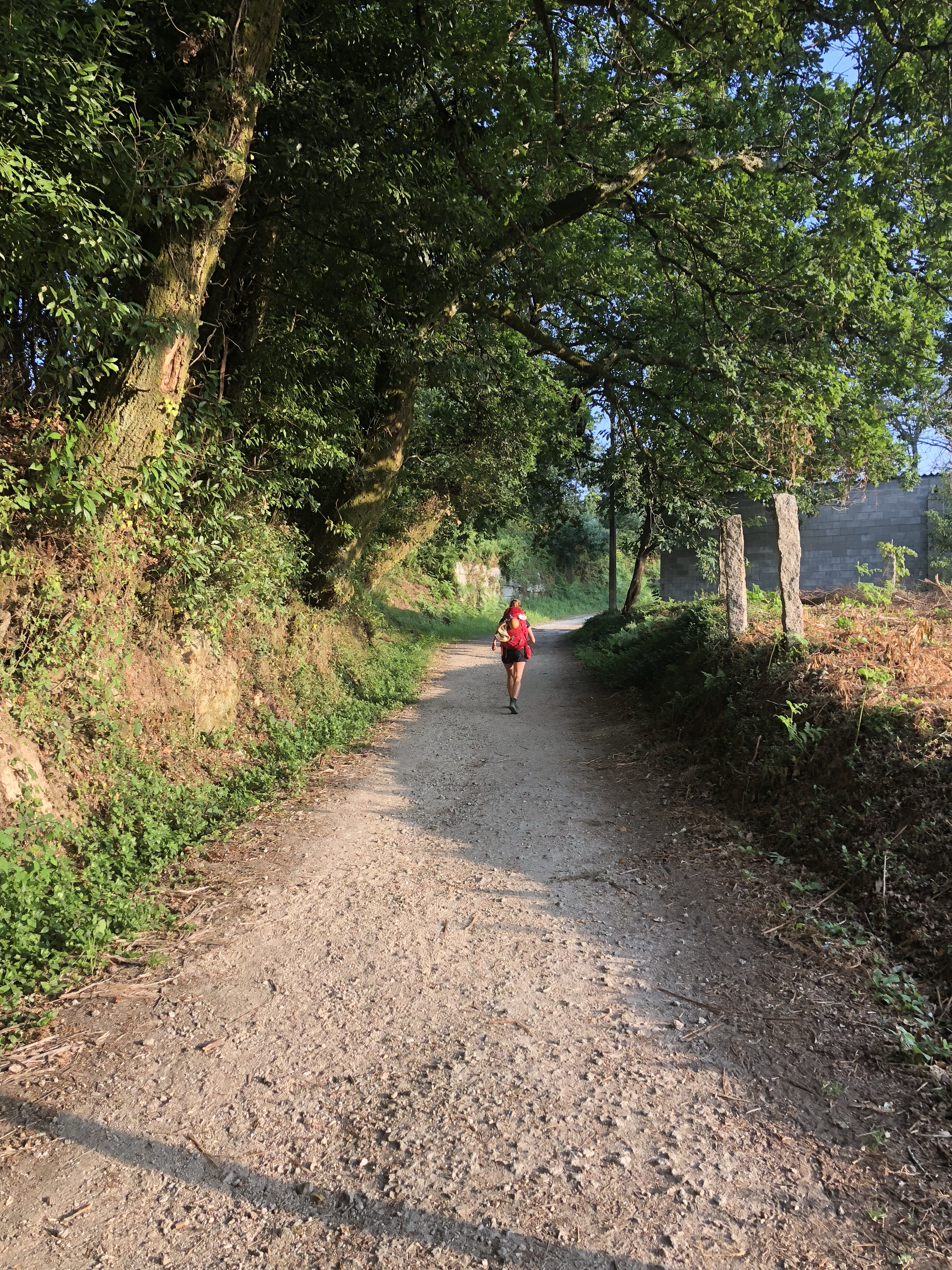
Walking the Camino is a spiritual journey that mirrors the journey of life, unfolding in three profound stages: a beginning, a middle, and an end. Kierkegaard describes these three stages of life as the aesthetic, the ethical, and the religious.

The first stage—the crucifixion—represents the struggle and hardship of making mistakes, forcing the boat upstream, and losing your way on the wrong path. During the first stage in life we face trial and error, effort often feels futile. You sometimes engage in aimless wandering and deviations. You may easily lose your way with countless distractions in the monkey mind.

The middle stage, symbolized by the Valley of Death or the Meseta, is a surrender of the ego to a higher purpose and deeper meaning. Here, the ego must die for the soul to awaken to its inner truth, allowing for transformation and clarity.

According to Kierkegaard the appeal during this “ethical stage” lies in walking the path with confidence, even though it may be monotonous and exhausting at times.

The final stage—the resurrection—is a state of flow, where you align with the current of life and begin to see that every experience, even the challenges, has been an expression of divine grace, sculpting you into the BEING you were always meant to become.

You feel the ecstasy in the dance of life. Your walk is a gentle surfing of the path without a sense of gravity. There is an unspoken faith in the journey that drives you forward, and quickens your pace.

Reaching the Cathedral of Santiago is a celebration of joy and homecoming, marking the soul’s return to its true essence. Ultimately, the Camino is a journey of the soul, finding its way back home.

Reino Gevers – Author – Mentor – Speaker

P.S. If you enjoyed this article you will be interested in my books available where all good books are sold.

Leave a comment

Filed under Camino de Santiago, meditation, mental health, mental-health, Pilgrimage, psychology, purpose, religion, self-development

Pilgrimage, Mystery, and Healing

In London’s Westminster Cathedral stands a strikingly beautiful statue of Our Lady of Walsingham, emanating timeless grace, peace, and compassion.

The Marian shrine of Our Lady of Walsingham, located in Norfolk, England, traces its origins back to the early 11th century. Known as “England’s Nazareth,” it became one of the most significant and ancient pilgrimage sites in the country.

Known as the „Walsingham Way,” countless pilgrims visited the Holy House with a wooden statue of the Virgin Mary as a focal point of contemplation. It was a time when monasteries and shrines connected medieval pathways in a powerful matrix throughout Europe.

But in 1538 Henry VIII ordered the Walsingham statue to be taken to London and destroyed. As part of his break from Catholicism, monasteries were dissolved, pillaged and pilgrimages prohibited.

Only in recent times, the Walsingham pilgrimage path has been revived now officially forming part of the network of pilgrimage paths to Santiago de Compostela in Spain.

The shrine in Walsingham has regained its medieval significance, often referred to as the “English Lourdes” because of its central place in Catholic and Anglican devotion in England.

Pilgrims to Walsingham seek healing, spiritual guidance, and a deepened relationship with the Virgin Mary. It remains a place of great spiritual renewal for many, with visitors walking the Holy Mile, a traditional part of the pilgrimage route.

The beautiful statue of the Walsingham Lady in Westminster Cathedral was commissioned by Cardinal Griffin in 1954 and sculpted by Pius Dapre. For many years it remained hidden and almost unknown in the Cathedral Crypt until it was recovered.

Mystery still surrounds the original wooden shrine which may have never been burned and destroyed as ordered by Henry VIII.

An article recently published in The Catholic Herald quoted art historians as saying that The Langham Madonna, a battered 13th-century English statue in London’s Victoria and Albert Museum, is in fact the original statue of Our Lady of Walsingham.

There were no eyewitness accounts that the statue was actually destroyed in London, according to the historians but hidden by Catholic loyalists until it reappeared centuries later in the museum.

Throughout history, countless myths, legends, and mysteries have surrounded the figure of the Goddess—whether Mary, Brigid, Kali, Isis or others—appearing and reappearing in various forms. At times, she has been revealed as a beautiful statue, carved from wood, stone, or marble, inspiring the creation of shrines, monasteries, or cathedrals at the place of her discovery.

Mary, in particular, has been known to appear in sacred apparitions at sites like Walsingham, Lourdes, and Fatima—places where the veil between worlds seems thin. Regardless of whether one is a believer, agnostic, or of another faith, her presence has been tied to stories of miracles that defy logic. Yet, time and again, she has brought comfort, solace, and peace to those facing pain and confusion.

Reino Gevers – Author – Mentor – Speaker

P.S. If you enjoyed this article you will be interested in my books available where all good books are sold.

Check out also the recent episode on the Living to BE podcast and Youtube with our special guest Matt O’Neill. The topic: Happiness is a Choice.

Leave a comment

Filed under mental health, Pilgrimage, spirituality, Uncategorized

Truth of the Heart

Just having completed the Camino Aragonese pilgrimage route in northwestern Spain, I was deeply inspired by the diverse landscapes, rich vegetation, and the symphony of nature that emerges when human noise recedes.

Immersing oneself in nature reveals the interconnectedness of all living beings. Nature is an expression of the divine, with diversity as a fundamental principle of creation.

In times when external voices grow increasingly loud with hate-filled tribalism and ethnocentricity, the truth of the heart becomes paramount.

Monoculture is lifeless

Compare a lifeless monoculture with a meadow buzzing with the sound of birds, insects and the aroma of wild herbs and a multitude of flowers.

Thoughts and beliefs – religious, philosophical or political – have become so much part of tribalist identity that some people would rather die than admit that they have all along placed the ladder against the wrong wall.

Attachment to fanaticism in all shape and form hardens mind and body, and is one of the biggest obstacles to personal growth and elevation of consciousness.

One humanity or chaotic tribalism

Currently humanity is at the cusp of an elevation of consciousness of a one humanity or regressing into another chaotic age of divisive tribalism, nationalism, and intolerance.

There have been brief periods of enlightenment in the past when faith was more experiential in nature, with individuals gaining higher insight through contemplation, art and music.

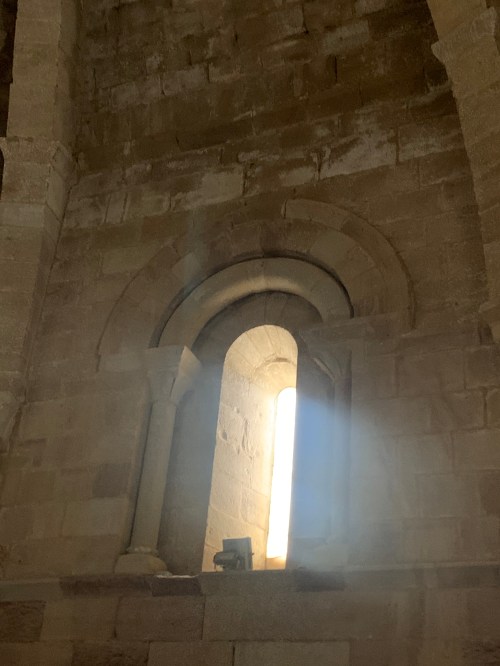
Beautifully restored Romanesque cathedrals, especially in Jaca and Sanguesa, on the Aragonese route provided sanctuary in medieval times for quiet contemplation and inspiration from sculpture at a time when most people were illiterate.

Divinely inspired music and art

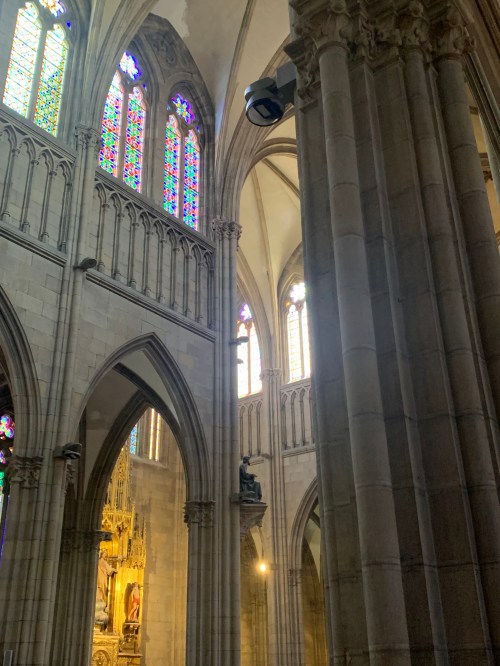
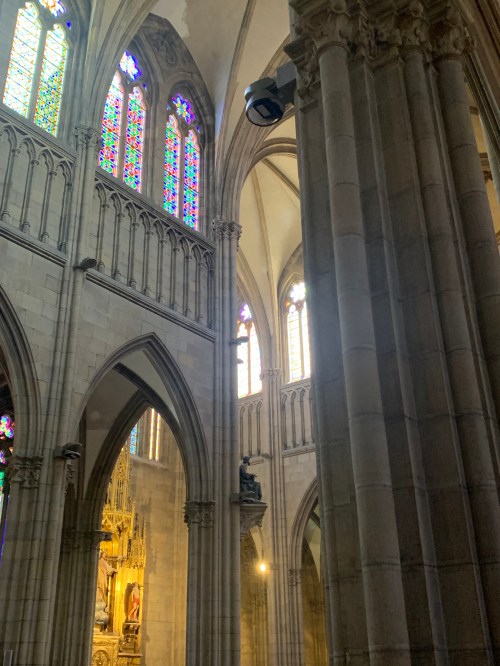
Later construction of the grand cathedrals such as Notre-Dame in Paris and Chartres, with their stunning stained glass windows inspired awe and devotion.

During the Renaissance era religious art with masterpieces by artists such as Michelangelo, Leonardo da Vinci, and Raphael communicated complex theological ideas through visual means.

Sacred music by composers such as Johann Sebastian Bach, and Beethoven created elaborate musical compositions elevating the liturgical experience and deepening the spiritual experience, connecting with the divine in profound sensory-rich ways.

When a religion degenerates into claiming the ultimate truth, subjugating its members into what to believe and how to behave, there is empty ritual and stagnation. The head-mind closes the door to the heart-mind and the whispers to the soul.

Reino Gevers – Author – Mentor – Speaker

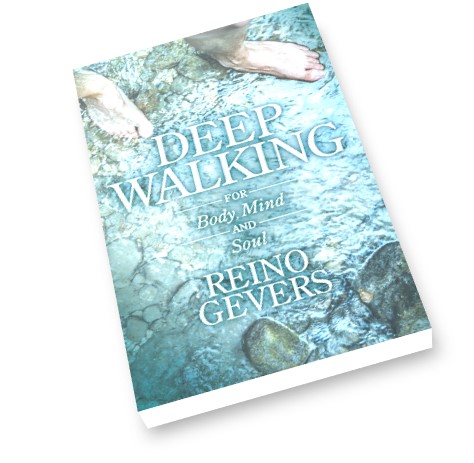
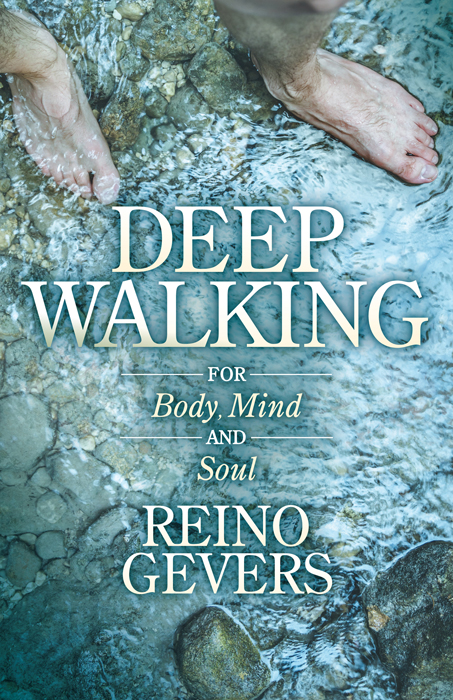
P.S. I’m excited to announce the release of my latest book, “The Turning of the Circle: Embracing Nature’s Wisdom for Purposeful Living.” If you enjoy it, you might also be interested in my previous works, “Deep Walking for Body, Mind and Soul” and “Walking on Edge: A Pilgrimage to Santiago.” You can find all of these titles at reputable bookstores near you.

Leave a comment

Filed under deep walking, Pilgrimage, spirituality, Uncategorized

Another hill to climb

Strength and growth come only through continuous effort and struggle.” – Napoleon Hill –

It is much easier to climb a mountain if you take it one step at a time instead of looking at the steep peak ahead of you.

Several times I had to tell myself this during the last couple of days walking the Camino de Santiago in northwestern Spain.

There is also a saying on the Camino that the last few kilometers are the hardest. You climb one hill and then you find you have to climb another at the next bend.

Obstacles – the blessings in disguise

Just reflect a little on your life so far. It is mostly the obstacles, the setbacks, and those down on the ground moments that have triggered the biggest transformation.

Sadly, we often throw in the towel before we have learned the lesson or just before we are about to achieve the biggest breakthrough.

Life is not meant to be easy. We whither and die spiritually and physically if we procrastinate in a comfort zone.

A crisis, whether in an institution, in the job or in a personal relationship, is a message from the universe telling us that something is out of balance and needs to change.

The journey has to continue

We can for a moment look back on the winding steep road that we have climbed, appreciating the view and the accomplishment. But at some point we will have to continue the journey.

We human beings are hardwired to explore, and discover. As long as we live on this earth we will constantly be challenged to redefine purpose and meaning.

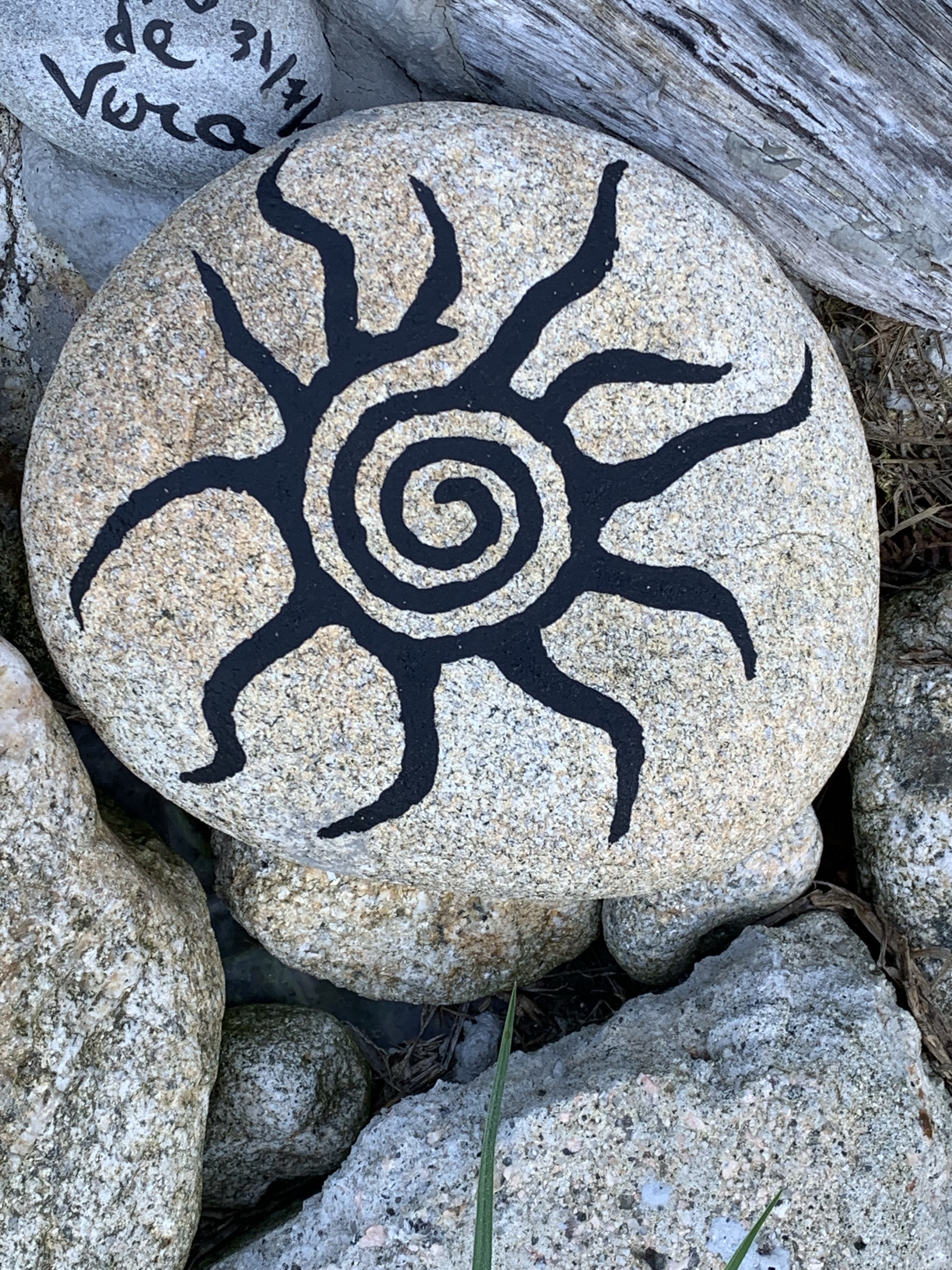
This morning I found a spiral etched into stone by the ancient Celtic inhabitants of Galicia. The rock site was perfectly aligned to the rising morning sun. Obviously the area had been a place of religious significance eons ago.

The ancient people were acutely aware of the laws of the seasons, closely studying nature. Beyond the perceived chaos of natural phenomenon lies a naural order of all things. The spiral is found in miniscule shells and flowers, and our DNA but also in the shape of our expanding galaxy.

Spiritually the spiral motif represents the path of the soul from the outer ego personality to the divine unity. It is the symbol of constant evolution and growth – a divine song of renewal moving from age to age.

Reino Gevers – Author – Mentor – Speaker

One more thing...If you have found this article interesting you might want to check out our courses, retreats and books

and ask others to also subscribe to this Blog.

Leave a comment

Filed under mental health, mental-health, Pilgrimage, self-development, Uncategorized

Your sacred path

All the people you have met throughout your life and the experiences you have had up to this moment in time have made you into the person who you are today. Yet, there still might be that inner voice whispering that there is more to life than you have been taught or have learned.

Caroline Myss is quoted as saying that “as a vital part of a larger, universal spirit, we each have been put here on earth to fulfill a sacred contract that enhances our personal spiritual growth while contributing to the evolution of the entire global soul.”

Connecting with the global soul

Our individual souls are connected to a global soul comprising all life on the planet. Each person has a unique destiny and soul purpose and it’s not about what kind of job you are doing or the things you own. These might be a manifestation of what you become in the becoming of who you really are.

It is almost essential to find alone time for contemplation and inner reflection and to walk your sacred path alone. The urge to walk a pilgrimage first starts as a whisper and becomes ever more louder. The need to go on this soul adventure is sometimes met with strong resistance by the loved ones or family members around you. They will sense that you are in a process of shifting your consciousness and will confront you with all sorts of arguments to dissuade you from walking.

The universe will test your willpower

In a way it is the universe testing your willpower but the sad truth is also that most people are too afraid to make the changes necessary to improve their lives. Family members or partners want you to stay in the tribe and share the same beliefs, mannerisms and habits. Often they will be projecting their own fears onto you if you decide to go on a journey of untrodden paths. Partners in this way often block each other instead of lending support and encouragement to the other.

On the Camino Aragonese between Jaca and Puenta La Reina, Spain

In a few days time I will start my 14th pilgrimage walk, walking for the second time from Porto in Portugal to Santiago and then to Cabo Finisterre, the westernmost point of the Iberian Peninsular. Each walk has been different, and unique. Looking back these walks have proven to be truly transformational not only in the way they have led me in making major changes to my external life but what has happened on a spiritual level. My two books on the Camino in essence tell this story that began in early 2007.

When I served in a pilgrims’ hostel as a volunteer in 2019 I had the opportunity of literally talking to hundreds of pilgrims from all walks of life and nationalities on what motivated them to walk this ancient path that at times can be truly challenging both emotionally and physically.

Why do people go on a pilgrimage walk?

Some people start the Camino as a sporting adventure that then turns into a spiritual journey.  An American pilgrim I walked with some years ago said to me: “If you don’t approach the Camino with humility it will humiliate you.”

The Camino is telling you that this journey is not about accomplishing something but in un-becoming from everything that you thought you were and touching that place deep in the soul who you are truly meant to be.

Is the Camino part of the bigger journey of humanity seeking a common spirituality that transcends the boundaries of religious dogma?

The Camino is an analogy of life

The Camino is in many ways an analogy of life. If you can deal with the roller-coaster of the walk’s trials and tribulations, you will be steeled for whatever challenges life throws at your feet in the acceptance of the impermanence of all things.

I’ve heard stories from pilgrims who have suffered terrible personal hurt and tragedy. Others were walking while defying a life threatening medical diagnosis or who had just survived cancer.

Experiential spirituality reveals itself in helping and supportive hands, in the recognition of fellow souls going through tough trials and tribulations. There is a deep sense of that one truth that we are all one humanity.

Reino Gevers – Author – Mentor – Speaker

One more thing...If you have found this article interesting you might want to check out our courses, retreats and books

Leave a comment

Filed under Camino de Santiago, deep walking, Pilgrimage, self-development, spirituality

Two wolves and a choice

Day 3: Via Francigena – San Gimignano to Colle di Val d’Elsa

We decided today to take the alternative route to Monteriggioni via Colle di Val di’ Elsa also known as the “crystal city” because of its high-quality glass ware.

Also simply known as Colle the town has for centuries been frequented by pilgrims on the Via Francigena. On a little hill opposite the castle in the medieval town is the 13th century convent of San Francesco where the saint’s followers would assemble for prayer.

On the walk through the shady forests and hilltops kissing the clouds I was reminded of the story of how St. Francis tamed a wolf that was terrorising the population of the Umbrian town of Gubbio.

The tale of the wolf and emotions running wild

The story goes that the wolf waited outside the city gates waiting to feast on anyone foolish enough to venture outside. Francis, who had lived in the city at the time, then announced that he himself would visit the wolf in its lair. With the wolf charging at Francis he made the sign of the Cross and commanded the wolf to cease its attacks in the name of God, at which point the wolf trotted up to him docilely and lay at his feet, putting its head in his hands.

The symbolism of the story is telling. There is a similar tale of an old Indian chieftain telling his grandson the story of two wolves constantly struggling in the heart of the human:

“There is the wolf of darkness, who is full of envy, desperation, fear and anger. The other is the wolf of light. It is the wolf of love, generosity, compassion, kindness and joy.”

The grandson asks, “And which of the two wolves is going to win?”

Sighing, the old chieftain replies, “The wolf you choose to feed.”

The story from Zen Buddhism on the taming of the bull has similar connotations. It says much about maintaining control of emotions. Uncontrolled outbursts of anger have destroyed countless marriages, long friendships, and destroyed careers and business deals.

The wolf has a voracious appetite and the warning from St. Francis and the Indian chieftain is clear. We have the freedom of choice. The wolf could be tamed because St. Francis had made him aware that a life in fear, hunger and being constantly on the run was one of suffering. In the The Fioretti di San Francesco that describes the life of St. Francis, the wolf is described as bowing its head and submitting completely at his mercy.

“As thou art willing to make this peace, I promise thee that thou shalt be fed every day by the inhabitants of this land so long as thou shalt live among them; thou shalt no longer suffer hunger, as it is hunger which has made thee do so much evil; but if I obtain all this for thee, thou must promise, on thy side, never again to attack any animal or any human being; dost thou make this promise?”

Reino Gevers – Author. Mentor. Speaker

One more thing…

You might want to check out my new book “Deep Walking for Body, Mind and Soul” released as a paperback by Morgan James Publishing on August 11, 2020. It has some valuable tips on creating happiness and boosting your vibrational energy on many levels. You can order it at all major outlets such as Amazon, Barnes and Noble or in my own store.  Check out the latest five-star reviews on Goodreads.

This image has an empty alt attribute; its file name is bookcovers_sideview.jpg

“A breathtaking, captivating, transformative walk,” – Tom Dutta, Canada

“The book reminded me of my own journey in life I am walking and how bringing stillness to my busy life and mind is essential.” – Karin, France

“The book compresses on its slim 190 pages an extreme density of life wisdom.” Christina Germany

Leave a comment

Filed under Camino de Santiago, Pilgrimage, spirituality

Food for thought

„Walk as if you are kissing the Earth with your feet.” – Thich Nath Hanh

Day  2 on the Via Francigena – Gambassi Terme to San Gimignano

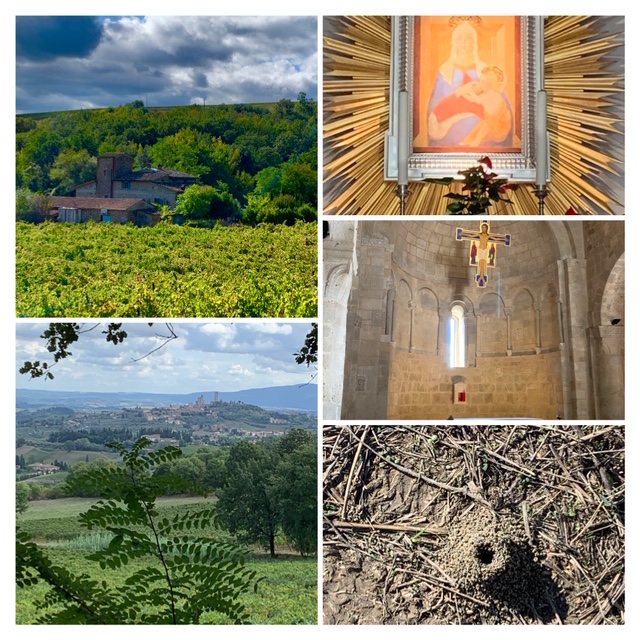
On a hilltop between the medieval Tuscan towns of Gambassi Terme and San Gimignano the pilgrim enters the village of Pancole famous for the 15th century painting by Pier Francesco Fiorentino of the “Virgin feeding her Son.”

The original sanctuary was built in 1668 on the site where the sacred image originally stood along a country road where it had been abandoned and covered by undergrowth. Several miracles were attributed to the Madonna.

One of the miracles is the survival of the painting itself after the Nazis destroyed the original sanctuary in an act of indiscriminate vandalism in a bid to destroy the very soul and ancestral roots of a nation.

The sanctuary was reconstructed in 1949 and along with the nearby Monastero di Bose offer wonderful spaces for quiet  contemplation.

Landscapes that inspired poets and artists throughout the ages

It is no surprise that spectacular landscapes and the quiet pathways throughout the centuries inspired poets, musicians and religious orders

Spending hours in the heart of nature after only a few days of walking opens the heart and mind to the whispers from the universe.

You are forced to go slow up the steep inclines and then you begin to notice the small creatures on the ground such as the lizards, beetles, ants, and butterflies.  When in a hurry it is easy to mindlessly trample on these small creatures who are all fighting for survival when perceiving the heavy boots of an oncoming pilgrim.

St. Francis – the original ecologist

There are numerous stories of St. Francis, the patron saint of the animals, communicating and preaching to the animals as fellow creatures of God.  The saint was well known to walk long distances to spread his message and there are no numerous shrines on the Camino in Spain and along the Via Francigena dedicated to him.

St. Francis can be described as the original ecologist and his central message of social justice and greed causing harm to both the victim and the perpetrator ringing more true than ever.

Spending time in nature creates awareness on how complex the interaction of plant, insect, bird and mammal are intertwined and co-dependent on each other.  Nature starts tilting into imbalance when one species gains dominance and threatens the livelihood of all others. It is offers much food for thought.

Reino Gevers – Author. Mentor. Speaker

One more thing…

You might want to check out my new book “Deep Walking for Body, Mind and Soul” released as a paperback by Morgan James Publishing on August 11, 2020. It has some valuable tips on creating happiness and boosting your vibrational energy on many levels. You can order it at all major outlets such as Amazon, Barnes and Noble or in my own store.  Check out the latest five-star reviews on Goodreads.

This image has an empty alt attribute; its file name is bookcovers_sideview.jpg

“A breathtaking, captivating, transformative walk,” – Tom Dutta, Canada

“The book reminded me of my own journey in life I am walking and how bringing stillness to my busy life and mind is essential.” – Karin, France

“The book compresses on its slim 190 pages an extreme density of life wisdom.” Christina Germany

Leave a comment

Filed under Camino de Santiago, environment, meditation, Pilgrimage, self-development, spirituality

One step at a time …

Day  1: Via Francigena – San Miniato to Gambassi Terme

The question often arises about the differences between a hike and a deep walking pilgrimage. The easiest way for you to find out would be to follow in the footsteps of the ancient pilgrims on one of the famous European routes.

Experiencing it cannot be explained in full

I have met many people who started walking the Camino de Santiago as a hiker and ended it as a pilgrim. Experiential spirituality cannot be explained. It can only be experienced.

Today I started my 13th pilgrimage walk on the Via Francigena in Italy. The original plan was to once again walk one of the Spanish routes but Covid-19 forced a change of plan. Italy is currently  a safer country to travel after initially suffering the worst outbreak of the virus in Europe  earlier this year. It is now hailed as one of the countries that have  been more successful in containing the virus.

Like the Camino de Santiago the Via Francigena is one of the ancient pilgrimage routes dating back to the Middle Ages with the exception that pilgrims walked to Rome rather than Santiago.

A blessing from a stranger

Our walk started in the northern Italian town of San Miniato  near Pisa. On leaving the town a friendly granny stamped our pilgrims’ passports, handing each of us a small shell with the blessing of the Holy Mary.

We would not be able to comfortably enjoy these marvelous pilgrimage paths without the support of thousands of such local volunteers who maintain the paths with way markers, first aid kits, and offering their service in the pilgrims’ hostels. It is not uncommon for these people to spend whatever they have left from their small pensions and salaries to maintain these old paths, chapels and other holy sites.

The 24 kilometer route to Gambassi Terme is challenging for a first day, lacking the typical cafes and small towns that you find on the Camino de Santiago. The countryside nevertheless offers marvelous views of the Tuscany landscape and after some hours of walking, the town of San Miniato can be seen in the distance with its unmistakeable hilltop fortress tower.

The physical challenge

Forced by the circumstances to carry more weight than usual in my backpack, this first day was physically strenuous. I would always advise first-time hikers to start with short-distance walks of no more than 12-15 kilometers so that the body can gradually become attuned to long-distance walking. I was reminded of my first walk on the Camino carrying too much weight and starting wholly unprepared. The back pain, blisters and other physical and mental ailments followed inevitably.

Lessons in humility

The pilgrimage path is an important lesson in humility. “If you don’t walk  the path with humility it will teach you humility,” a pilgrim once said to me.

It is in the recognition of one’s own brokenness, and in opening up to the beginners’ mind that possibility and elevation  of consciousness is possible.

Especially in the current situation it is easy to get pulled into the maelstrom of news negativity and doomsday prophets. A pilgrimage walk is the perfect opportunity to realign and center the mind to higher purpose and meaning.

Walking a path more than once is like reading a good book several times over. What you have not seen or read the first time will be seen differently, from a different angle and new window of consciousness.

The lesson of the day:

  • Take one step at a time. If you look at the mountain ahead, your walk will be so much more difficult. On the other hand if you turn around you will be amazed as to how far you have walked.
  • Looking at the mountain to climb is the trap that leads to procrastination.
  • One blessing, one good thought at a time, one positive action at a time leads to the compound effect that makes all the difference both to you and the world.

Reino Gevers – Author. Mentor. Speaker

One more thing…

You might want to check out my new book “Deep Walking for Body, Mind and Soul” released as a paperback by Morgan James Publishing on August 11, 2020. It has some valuable tips on creating happiness and boosting your vibrational energy on many levels. You can order it at all major outlets such as Amazon, Barnes and Noble or in my own store.  Check out the latest five-star reviews on Goodreads.

“A breathtaking, captivating, transformative walk,” – Tom Dutta, Canada

“The book reminded me of my own journey in life I am walking and how bringing stillness to my busy life and mind is essential.” – Karin, France

“The book compresses on its slim 190 pages an extreme density of life wisdom.” Christina, Germany

Leave a comment

Filed under Pilgrimage, self-development, spirituality

Walking your walk

Faith in the biblical sense can truly move mountains. Theresa decides to walk the Camino in an act of defiance after her doctor tells her that the cancer in her body will reduce her lifespan to six months at the most and that she should settle her affairs.

She walks the Camino with soft feet, sending her backpack ahead to the next town with a taxi. She completes her walk and returns home a different woman.

“That was five years ago,” she tells me as we drink our café con leche in one of the many bars dotting the Camino. This time she is walking the Camino the second time.

We are only in the infancy of discovering the true connection between body and mind. So many fellow pilgrims I’ve met on the Camino were told by family, friends, and associates that they would never be able to walk almost 800 kilometers over five weeks. We are capable of so much more than we think possible.

path.jpg (1)

Photo by Stephen Leonardi on Unsplash

The Austrian-born Jewish psychiatrist Victor Frankl (1905-1997) is renowned for his breakthrough research on the power of meaning. In his book Nevertheless, Say “Yes” to Life: A Psychologist Experiences the Concentration Camp, also known under the bestselling title Man’s Search for Meaning, he narrates several observations in the Nazi death camps.

While incarcerated in Auschwitz, Frankl counseled fellow prisoners with his philosophy that a striving for meaning, even in the most harrowing of circumstances, is what keeps us alive.

Inmates who gave themselves up became suicidal and died, while those who saw some meaning, like telling the world about the Holocaust after liberation, survived.

It was the “will to meaning” that looked to the future, and not to the traumatic events of the past, that sustained people.

Despite losing his wife and nearly all his family in the holocaust, Frankl refused to dwell on the past.

Even in the worst possible situation, man still has freedom of choice and the ability to seek meaning in whatever situation he finds himself in, he argued.

“Everything can be taken from a man but one thing: the last of the human freedoms—to choose one’s attitude in any given set of circumstances, to choose one’s own way,” he wrote.

It’s a simple but profound truth. It all begins in the mind.

It is why a cancer patient will very often give up when told of the diagnosis. The word itself is so loaded with fear and mortality that the patient sees no hope. The shocked reaction of family and friends is often not conducive to the healing process either when the patient is asked on a daily basis how “the cancer treatment is going.”

We also know from research that patients who overload their friends and family on a daily basis with all the details of their illness do much worse than those who refuse to mention by name the illness, merely telling everyone that they are in a healing process.

Most fitness and weight-loss programs fail because of a negative mindset.

After an initial loss of weight or a couple of exercise sessions, most people give up and return to old habits because they haven’t found the real reason in their mind why they want to reduce weight or get fit. Some people even end up being more obese because they have subconsciously tricked their mind into putting on more weight. “I don’t want to be fat. I don’t want to be in debt,” are a double-negative with opposite the intended effect.

Reformulating that wish into a realistic feeling that is actually felt as emotion and pictured as an ideal outcome really works.

Reino Gevers – Author, Mentor, and Consultant

https://www.reinogevers.com

Gevers-DeepWalking CVR.indd               paperback_cover_1

Order here

applepodcast         


1 Comment

Filed under Camino de Santiago, lifestyle management, Pilgrimage, psychology, spirituality, Uncategorized

After the walk, the real journey begins

Limiting beliefs planted from early childhood can have a powerful hold far into adulthood preventing the fulfillment of a purpose-filled life and the expansion of soul consciousness.

So many fellow pilgrims on the Camino, especially women, told me of the huge pushback they faced from husbands, parents, siblings, friends and even children who tried to dissuade them from going on a pilgrimage.

The pushback often comes from close friends and family

Very often those people closest to you pull you down when they hear you talk of an “outlandish” business idea, or going on that trip you have dreamed about taking for so long.

When you move to a higher energy frequency and start becoming strong, you will awaken demons with some of the people you surround yourself with. These are people stuck in their own fears and uncertainty who feel threatened when a member of their tribe breaks out.

If you take time out to walk the Camino in Spain for a four- or five-week period, you will come back a changed person, and this is sensed by the people around you.

Many pilgrims find it very difficult to fall back into the same old rhythm they left prior to walking the Camino. It is like going back to a different world.

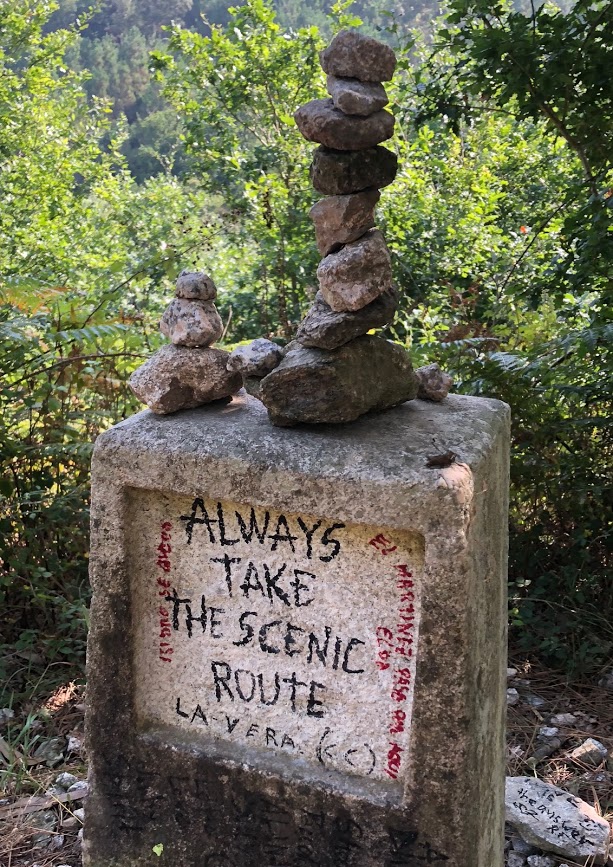
waymarker      img_1002

The real pilgrimage begins after the pilgrimage

“I was hardly back home when I broke down. Everything seemed so strange. Everyone was going about their business and I just couldn’t find my place anymore,” a German pilgrim said after her return. After the pilgrimage, another pilgrimage begins- the pilgrimage of reflecting on and integrating all the experiences made on the path.

We have many associates but when it comes down to it, we have very few real friends who truly understand us and are supportive of our soul growth process.

Be careful who you open up to 

Fellow pilgrims, who shared the deep spiritual experiences after returning from the Camino, were sometimes ridiculed by friends or family members. My advice, therefore: Be careful who you open up to. Few people are genuinely interested. Most people are just curious or have hidden motives. Probably the only people who will really understand you are those people with whom you shared the same experience on the Camino.

And, sometimes it is better to keep the deepest spiritual experience to yourself because words only limit what has been felt on a soul level.

We often stay too long in relationships that have long outlived their purpose. Some people are givers and some are takers. The question that needs to be asked is: Do I feel comfortable, uplifted and energized when I’m in the company of that person? Or do I feel emotionally drained, exhausted and in a bad mood after spending time with him or her?

Getting support from those who give rather than take

A partner, family member or friend who really is focused on your well being will resonate with your enthusiasm, see the opportunity rather than the danger and offer unconditional support while you are on the path.

What is the main reference group that influences you on many levels?  Every so often it might be necessary to reflect on this.

It’s not that you want to hurt and exclude some people from your life. But the time might have come just to spend much less time with them and to spend more time with those people who really uplift you.

A good exercise is: Who are the five people you would choose to live with on a lonely island? Who are the people you would only want to spend a weekend with? Who are the three-minute people you want to remain polite with but keep at a clear distance?

A good guideline is the content of your conversations. Are you sharing uplifting ideas and thoughts or are you spending your time gossiping about other people and wallowing in negative things that happened in the past?

Reino Gevers – Author, Mentor, and Consultant

https://www.reinogevers.com

Gevers-DeepWalking CVR.indd               paperback_cover_1                            applepodcast         


Leave a comment

Filed under Camino de Santiago, outdoor coaching, Pilgrimage, psychology, self-development, spirituality, Uncategorized