Practicing full self-acceptance with all the pain, trauma, and shame from the past are the building stones of resilience against grievance culture feeding on the toxicity of anger and fear.
Much of the dysfunctional behaviors prevalent in our contemporary society can be traced back to an inflated Ego-Mind and a prevailing narcissistic culture, rooted in poor self-worth.
Negative thought patterns inevitably lead to negative actions and an endless cycle of suffering until the cycle is broken with a heightened state of awareness.
Narcissism is often an overcompensation for an underlying feeling of inadequacy. The need for constant admiration and validation from others is driven by an inner void.
There might be an inner voice telling you: “I’m too fat, too thin, too short, too old, and have an ugly nose.” The thoughts and voices that often come from programming stem from hurts inflicted during early childhood.
You can transmute that inner voice with a new mantra: “I unconditionally love and accept myself the way I am. I am so happy and grateful to my body that has served me so well. I am healthy and I am strong.”
Self-love should not be confused with narcissism. You can only serve your higher purpose if you are no longer at war with yourself. The more you practice self-compassion, self-love, and self-acceptance the more you will attract this in the external world.
Life is a constant cycle of ups and downs. It is part of life that you have at times messed up, been disappointed, faced trauma, loss, and real “down on the ground moments.” During these times you might have neglected self-care like proper nutrition, exercise, and adequate sleep.
When you dig deep into your inner resources
But on deeper reflection, these dark nights of the soul have very often forced you into introspection and to dig deep into your inner resources. Once you start feeding your body with high-nutrient foods, exercising regularly, and programming your mind with positive thoughts, you start moving into a higher vibrational field.
Spiritual growth and soul elevation very seldom come during those times when you are feeling high and on top of the world. The pain can be the path where the light begins to shine. You will have greater ease in transitioning from challenges and adversity when you are in the awareness that every chapter in life has a season and that “this too shall pass.”
Reino Gevers – Author – Mentor – Speaker
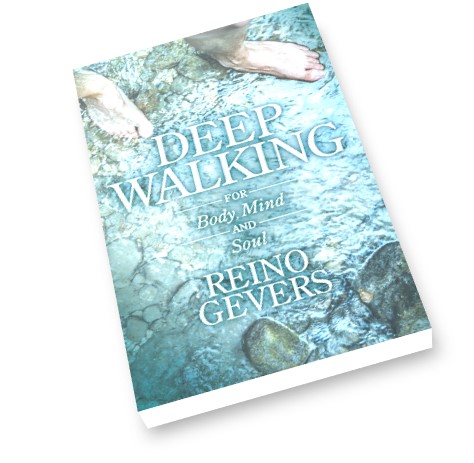
P.S. I’m excited to announce the release of my latest book, “The Turning of the Circle: Embracing Nature’s Wisdom for Purposeful Living.” If you enjoy it, you might also be interested in my previous works, “Deep Walking for Body, Mind and Soul” and “Walking on Edge: A Pilgrimage to Santiago.” You can find all of these titles at reputable bookstores near you.
“Musical training is a more potent instrument than any other because rhythm and harmony find their way into the inward places of the soul.” – Plato
It appears to be no mere coincidence that music has spearheaded profound social and political transformations throughout history. Powerful lyrics that strike the tune of the time seem to penetrate an unseen realm, resonating with the deepest chords of human experience.
It’s almost a miracle that we can enjoy today the crisp and clear voice of John Lennon in the newly released Beatles song “Now and Then” with machine learning technology managing to extract the deceased band member’s vocals from a poor 1970s cassette recording.
The new song triggers memories of the famously successful, “Eleanor Rigby” with the introductory lyrics: “Ah, look at all the lonely people!” The theme of loneliness and isolation was a clear departure from earlier Beatles love songs into a new genre.
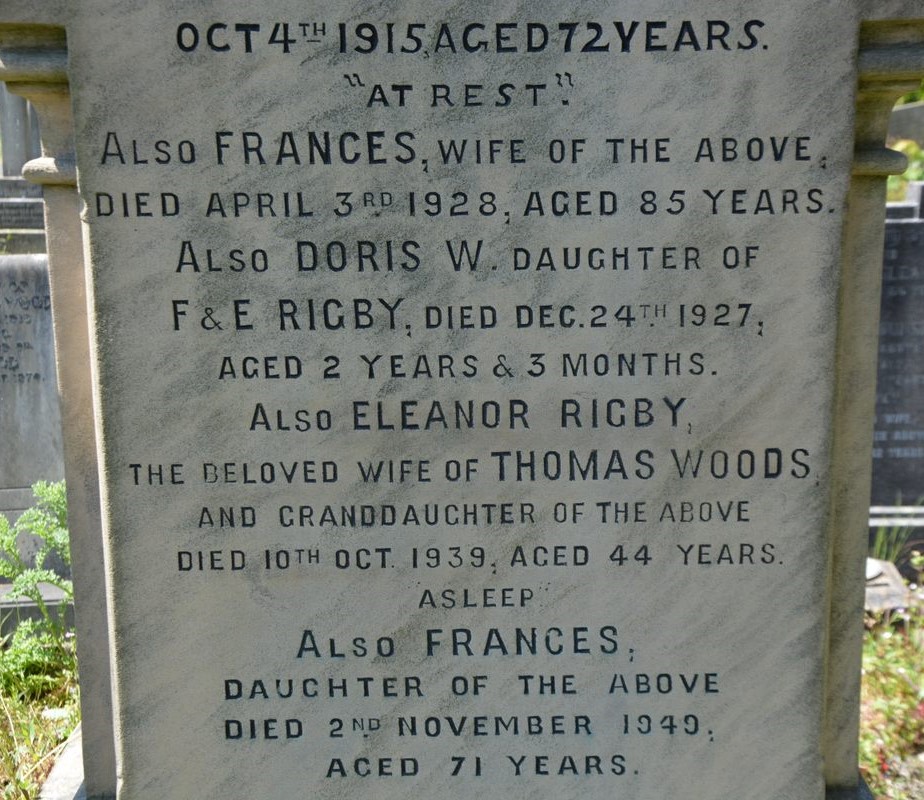
It is the only song where none of the Beatles plays an instrument. There is an eery aspect with the name “Eleanor Rigby” found on a gravestone at St. Peter’s Parish Church, in Woolten, Liverpool where Paul McCartney and John Lennon first met as teenagers in 1957.
The real Eleanor Rigby
It tells the story of a lonely woman named Eleanor Rigby, and the gravestone allegedly served as the inspiration for Paul McCartney when writing the song. The actual grave belongs to a woman named Eleanor Rigby, who died in 1939 at the age of 44.
In a 2021 article for the New Yorker, McCartney writes that after being introduced to John Lennon they most certainly wandered about in the churchyard talking about their future. But McCartney writes that he couldn’t consciously recall having seen the gravestone.
“I don’t remember seeing the grave there, but I suppose I might have registered it subliminally.”
McCartney goes on to write that several coincidental meetings led to the formation of the band: “All these small coincidences had to happen to make the Beatles happen, and it does feel like some kind of magic. It’s one of the wonderful lessons about saying yes when life presents these opportunities to you. You never know where they might lead.”
During its time Eleanor Rigby struck a chord with many people perceiving and feeling the “social isolation” that comes with living in large cities, geographically distant from close family and friends with limited opportunities for social interactions apart from the workplace.
It is no coincidence either that the Beatles arrived at a time in the 1960s when a new generation yearned to break free from the suffocating morality of the 1950s. Music has played a pivotal role in driving change throughout history, giving a voice to the simmering social undercurrent.
Songwriters and musicians have shared sentiments about a mysterious, almost mystical process of creating music. McCartney mentioned in several interviews how some of their most famous songs seemed to flow effortlessly as if the melodies and lyrics were already there, waiting to be discovered.
Joni Mitchell describes the art of creative songwriting as a form of channeling, arriving from a place she can’t fully explain, almost as if they are given to her.
Leonard Cohen said: “If I knew where the good songs came from, I’d go there more often.”
Bob Dylan describes his songwriting process as tapping into something beyond his conscious mind, often coming to him almost fully formed, as if he’s a conduit for something greater than himself.
Bach: Infused by spirituality
One of the greatest composers of all time, Johann Sebastian Bach, infused his music with his deep spiritual beliefs. His music is timeless and continues to inspire millions across all national, cultural, and religious boundaries. The complexity of Bach’s compositions and emotional resonance has scholars citing it as evidence of a profound connection to something beyond the human realm.
Deep walking in solitude over long distances, undeniably also influenced Bach’s compositions. Walking between his home and a parish that did a first performance, he would often refine and adapt the composition. Walking has a natural rhythm, that might have influenced Bach’s sense of musical rhythm.
In 1705 the young Bach made a 400-kilometer journey on foot from Arnstadt to Lübeck in northern Germany to learn from the then-famous organist Dietrich Buxtehude.
Ludwig von Beethoven took daily walks in nature. Many of his best ideas came to him during walks in the country, including his ‘pastoral’ Symphony No. 6. Completed in 1808.
Lennon’s last words to McCartney were reportedly: “Think about me every now and then, old friend,” which makes “Now and Then” seem almost like a message from the beyond. The song is the final official Beatles farewell. There are only two surviving members – McCartney and Ringo Starr both now in their 80s.
Reino Gevers – Author – Mentor – Speaker
P.S. I’m excited to announce the release of my latest book, “The Turning of the Circle: Embracing Nature’s Wisdom for Purposeful Living.” If you enjoy it, you might also be interested in my previous works, “Deep Walking for Body, Mind and Soul” and “Walking on Edge: A Pilgrimage to Santiago.” You can find all of these titles at reputable bookstores near you.
Go into your own ground and learn to know yourself there. The outward man is the swinging door; the inner man is the still hinge – Meister Eckhart
Life is a rollercoaster of natural and spontaneous changes constantly forcing us to tread unknown paths. While some people may excitedly embrace a new beginning others retreat into fixed belief and ideology, providing the illusion of a safety cacoon in a world of “turmoil.”
But resistance to the natural flow of life and attachment to fixed thoughts, beliefs, and things is one of the greatest causes of human suffering and misery. Staying in the moment and finding peace in the acceptance of reality is thus at the core of the Taoist and Mystic teachings.
Throughout history, wise prophets have faced vilification and persecution for their courage in exposing the hypocrisy of religions based on firm behavior rules, fearlessly shedding light on the discrepancies and contradictions inherent in entrenched beliefs. They especially questioned the existence of an authoritarian Father God figure “out there in heaven” who, like a strict parent, would punish his children for bad behavior. All natural or personal calamities were attributed to punishment by God “for sinful behavior.”
Meister Eckhart, a 14th-century Dominican monk whose writings are more topical today than ever, had to answer charges of heresy before an Inquisition in 1326. He barely escaped a death sentence. His writings were banned. Other Mystics of the time like Giordano Bruno and Marguerite Poret were not so lucky. They were executed or burned at the stake.
Straying from religious doctrine and liberating the mind from externally imposed belief was a dangerous undertaking in the Middle Ages. In modern times political beliefs, sometimes using religion as a cover, tend to vilify opposing beliefs as a threat to justify all means in destroying the “enemy.”
Fanaticists of the political and religious nature see the world only in black and white. The belief becomes closely intertwined with the Ego mind and identity. A different or multi-layered interpretation is perceived as a direct threat to the self.
Words in ancient languages such as Aramaic, the lingua franca during the time of Jesus, allowed much room for individual interpretation. The word for God “Abwun” could mean “Our Father” but also the absolute, pure oneness, creation, source of all power and flow of blessing.
One of the most powerful messages in the Bible is found in the Gospel of John 1:1. “In the beginning was the Word, and the Word was with God, and the Word was God”. When replacing the “word” with “consciousness” the text is filled with a much broader meaning.
“In the beginning was Consciousness, and Consciousness was with God, and Consciousness was God”.
Eckart describes a process of spiritual transformation when the divine spark within transcends its individuality or Ego and enters into a state of divine consciousness.
It’s a moment of pure presence when the soul feels at One with something much greater than the self.
Aligning with divine consciousness is opening the heart to the universe and detaching from worldly attachments. It is beyond conceptualized thinking and complete immersion in a state of oneness.
“You should know that true detachment is nothing else but a mind that stands unmoved by all accidents of joy or sorrow, honor, shame or disgrace, as a mountain of lead stands unmoved by a breath of wind. This immovable detachment brings a man into the greatest likeness to God,” according to Eckart.
In a world feeding on the messaging of negativity, it becomes a challenge to train the mind to stay the course of positivity. We can easily be pulled into the abyss of grievance culture when emotions such as anger, anxiety, and fear can be triggered in millions of people by one message on social media.
Modern man has largely been disconnected from what can be described as the divine expression through nature of which he is an essential part. Places worshipped as sacred by ancient peoples have been conceptualized as things that could be harvested, exploited, and destroyed. The void is trying to be filled with the addiction to short-term gratifications: Accumulating more things, more food, more kinky sex, and more substance abuse.
Where is your passion?
Is it a surprise that depression has reached epidemic levels on a global level? But in the pain of suffering more and more people are searching for new meaning and purpose. Where do I come from and where am I going? What excites me and drives my passion? What elevates my consciousness and boosts my vibrational energy.
The author Michael Gladwell describes in his book “The Tipping Point” that it takes only a small number of people to initiate social change. We are currently experiencing both a global environmental and mental health crisis. History has proven that such crisis situations can galvanize people into action.
We are at the tipping point of realizing on a spiritual level that the crisis we are finding ourselves in has not been created by a punishing external father God figure for bad behavior. It is a direct result of our own actions and behaviors and we have the power to change those actions and behaviors.
We as a collective humanity have dug our own rabbit hole. We need to liberate the mind from fixated false belief structures and start doing the inner work. More and more people are awakening to awareness through meditation and other disciplines of the mind. There is a growing realization that every thought comes from a state of consciousness, turns into a thought, a word, and then into an action.
When you are no longer at war with yourself you will emanate compassion, love, empathy, and trust, aligning with divine consciousness.
The “word” in John 1:1 refers to the union with the Inner Christ or what the Buddhists call “Buddha Nature” – the inherent, untainted “seed” that resides in all things. Seeking the Inner Christ or Buddha Nature is the path of the spiritual seeker.
Reino Gevers – Author – Mentor – Speaker
P.S. I’m excited to announce the release of my latest book, “The Turning of the Circle: Embracing Nature’s Wisdom for Purposeful Living.” If you enjoy it, you might also be interested in my previous works, “Deep Walking for Body, Mind and Soul” and “Walking on Edge: A Pilgrimage to Santiago.” You can find all of these titles at reputable bookstores near you.
Have you asked yourself why decent, educated, and well-meaning people are pulled into the dragnet of a dangerous cult? Do you think you are immune to making the same mistake? All it takes for them to capture your mind is to push certain emotional triggers and feelings.
Times of uncertainty and rapid change impact personal lives in multiple ways. The world’s getting more complex. We are seeking easy answers and simple solutions. If you are at an especially vulnerable point in your life. If you haven’t done the self-work in transmuting archaic fears, anxieties, and anger issues, you are at risk.
Historians and psychologists to this day ask themselves why a highly civilized nation that brought forth some of the world’s greatest philosophers, writers, and inventors could literally “worship” in masses a madman demagogue like Adolf Hitler. Cult leaders in different variations are malignant narcissists, display psychotic personality disorders, and carry an extreme personal grievance.
Hitler perfectly epitomized and tapped into the collective humiliation and undercurrent seething anger Germans felt after losing a war and suffering hunger and poverty during the economic meltdown of the 1930s. With a rising number of extremist groups coming to the fore in once unshakeable democracies, scholars and historians are seeing dangerous parallels and comparisons to the 1930s and the rise of fascism that culminated in the catastrophe of World War II.
An “us-versus-them” mentality
Cult movements typically have an “us versus them” mentality, providing a “safe haven” for individuals who have suffered a personal loss or humiliation. The “tribe” in the form of an organization, religion or political movement with a charismatic leader at its head perceives all outsiders of the movement as a threat. They will pound the message of “exceptionalism” of their leader or group. The “non-believers” and especially minority groups are vilified and dehumanized. Followers of the cult inevitably break off contact with family, and friends who do not belong or refuse “to see the light.”
Control and Isolation
The control mechanisms of a cult can be on a very subtle emotional level. Once the member has gone all-in by severing long-term relationships, it becomes very difficult to return to the old life. Few people will admit to having made a mistake or the wrong decision after sacrificing the best years of their lives and donating all their money to the “movement” or “cause.” We are hard-wired as social beings and it gets very difficult to leave “the cult family”. Those who leave are vilified as traitors to the cause, threatened, and in extreme cases harmed physically and mentally.
Once in the movement you inevitably become part of “group-think.” Members expressing the faintest doubts, who engage in a critical discourse or ask the wrong questions are shamed, coerced, and brought into line by the cult leader or his lieutenants. The critics will be told that they are “in their ego” or have strayed from the path – a favorite one in the religious cults. They will be playing on a core fear of most humans – the fear of being excommunicated from the safety of the tribe. Meanwhile, the real objectives and the financial dealings of the movement can be shrouded in mystery. The leader is always right. Excuses will be made over and over again as to why the leader could never be responsible for sexual misconduct, overspending on luxury items, or committing a serious crime.
Financial Exploitation
A common denominator of all cults is the financial exploitation of their members. They will be asked to contribute high membership fees, provide funds for a new temple, and pay for the private jet or the legal fees of the cult leader. At times members would have to donate all their assets to the movement for “the common good” as a sign of their commitment and loyalty. A small portion might be channeled to real charities as a marketing ploy while the major part will be kept by the cult leader for his personal needs.
Exploitation of vulnerabilities
You might say: “This can’t happen to me.” But cults and sects are masters at exploiting human vulnerabilities and emotions. Nobody is safe. A religious sect with a therapeutic New Age touch might catch you during an especially vulnerable point in your life when you are lonely and in need of social support and love, have just gone through a divorce, lost a loved one, or have a spiritual crisis.
The political cult and charismatic leader at its head will ensnare you if you haven’t dealt with your darkest toxic emotions such as anger and fear. You are functioning on “automatic” in the fight and flight mode of your reptilian mind, separated from the prefrontal cortex of your brain responsible for critical and logical thought.
Addiction to a cult has to be treated like any other addiction. First and foremost there is the need for an honest recognition and acceptance of the problem. Concrete action has to be taken like leaving the cult, breaking all contact with its members, and possibly leaving town. What lifestyle changes, support groups, and therapy are necessary? What would my life look like without the addiction? What freedoms would I be enjoying? How can I prevent relapse and find supportive friends with a higher vibrational energy?
If you are drawn to a charismatic leader with a hate-filled, and vindictive message, ask yourself: “What anger within me is he tapping into? What can I positively change in my life, instead of delegating action to the “political messiah.”?
Walking the path of your highest calling in personal freedom and liberty is foundational to fulfilling your soul destiny and living a life of bliss. By becoming subservient to a cult you are surrendering your unique God-given authenticity and weakening your self-esteem.
You have instead a wonderful opportunity to build on self-development from the gems and wisdom of many teachers past and present who have transcended the temptations of power and ego. If you should run into that “guru” offering a seemingly perfect solution or the only path to enlightenment – you had better run.
Reino Gevers – Author – Mentor – Speaker
P.S. My new book “The Turning of the Circle: Embracing Nature’s Wisdom for Purposeful Living” has just been published. You might also find my other books “Deep Walking for Body, Mind and Soul” and “Walking on Edge: A Pilgrimage to Santiago” of interest. They are available where all good books are sold.
Membership of Christian churches and attendance of services is falling dramatically in many countries. But does that mean that more people are becoming agnostic, atheist or have lost their belief in a God or the divine?
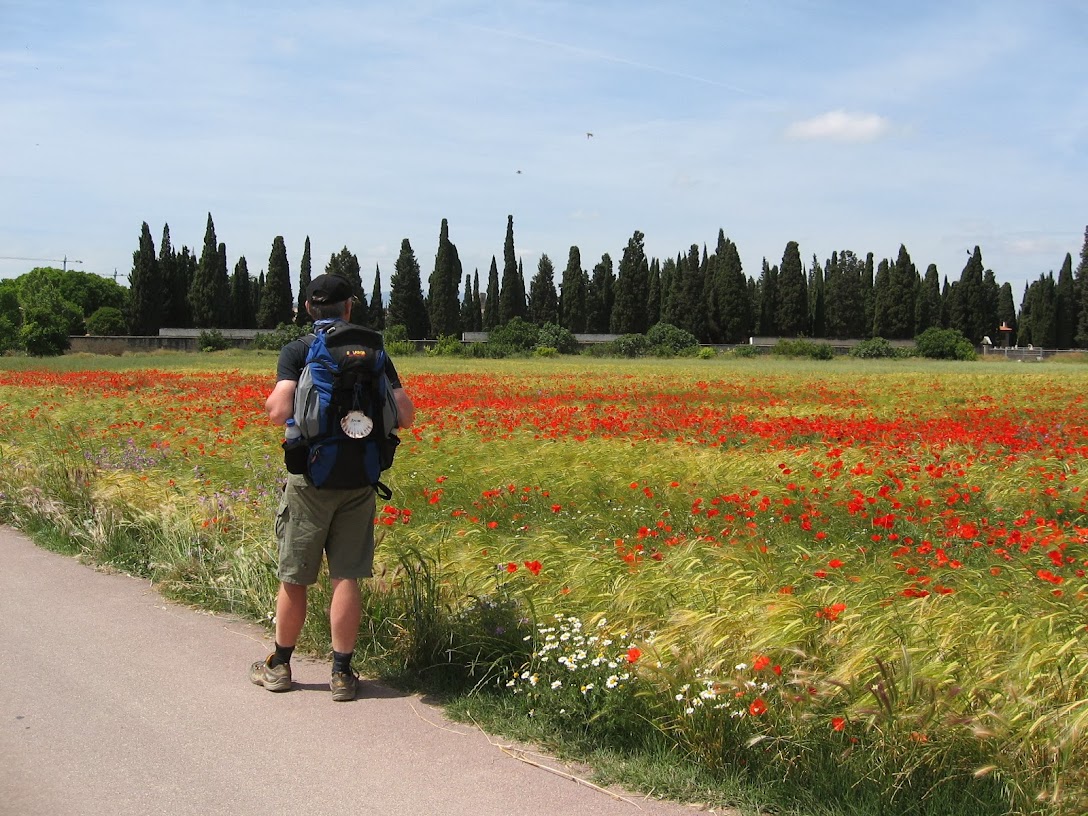
On my current pilgrimage walk on the Camino de Santiago in northwestern Spain, we passed through several villages and towns on a Sunday. All these beautiful and ancient temples of worship, some dating back to Celtic times and early Christianity, had their doors shut.
One church did happen to be open but a man shooed us pilgrims away, making it clear that we were not welcome to have a look inside. I do normally enjoy sitting in these sacred places, meditating and feeling into the powerful energy fields that they emanate.
It hit a sore point to be rudely turned away. It symbolized for me everything that has gone wrong with conventional religion, fixated on empty external ritual, and controlling doctrine.
Churches and temples should be open for people of all denominations as long as they show respect, giving everyone sanctuary seeking a quiet space from the noisy and distractive pull of the external world.
For centuries religions from all the major faiths have vilified, ostracized, burned at the stake and shamed those that did not conform or belong. At the same time the hypocrisy of the clergy regarding sexual abuse, financial misdemeanors and interference in politics is laid bare like a festering open wound.
Jesus never had plans to establish an institution or a church. His criticism of the Pharisees, the clergy, and their hypocrisy was especially directed at those leaders burdening the faithful with strict rules and regulations while showing little love, mercy and compassion to those in need.
There is a saying that religion is for those who fear hell while spirituality is for those who have been there. On my more than a dozen walks on the Camino I have met countless people who have gone through the hell of losing loved ones, confronted life-threatening illnesses, the dark holes of depression, financial ruin and relationship breakdown. What I can say about all of them is that these life-changing events made them come out stronger and forced them into deep introspection on the purpose and meaning of life.
Experiential spirituality is a process whereby the shutters of the soul window are gradually opened up. It is a feeling of connection with the divine, and the mystery of creation. The great scientist Albert Einstein once said that the religion of the future will be cosmic in nature.
“The most beautiful and deepest experience a man can have is the sense of the mysterious. It is the underlying principle of religion as well as all serious endeavor in art and science. He who never had this experience seems to me, if not dead, then at least blind,” Einstein is quoted as saying.
The Dalai Lama, the spiritual leader of Tibetan Buddhism, encourages individuals to go beyond the superficial differences among religions and recognize the deeper essence of spirituality and morality that can be found in all faith traditions.
The fundamental principles of compassion, love, and ethics are not limited to any particular religious tradition or belief system. These principles, the Dalai Lama believes, are universal.
Among the hundreds of thousands of people who walk the Camino each year there are devout Catholics and people of all faiths but also manyspiritual seekers asking the age old question:
Where do I come from? Where am I going? What am I doing with the rest of the days of my life?
Some years ago I was not in a very good place stuck in a dysfunctional relationship and a stressed-out job. My thoughts revolved around starting to live at some point in the distant future. A friend who took pity on me advised me to walk the famous pilgrimage route, the Camino de Santiago in northwestern Spain.
Like many first-time walkers on the Camino, I was obsessed about reaching my destination at a certain time in order to secure my place in a bunk bed in a pilgrims’ hostel. The Camino is in so many ways an analogy of life which is why it has become such a popular destination for modern-day spiritual seekers.
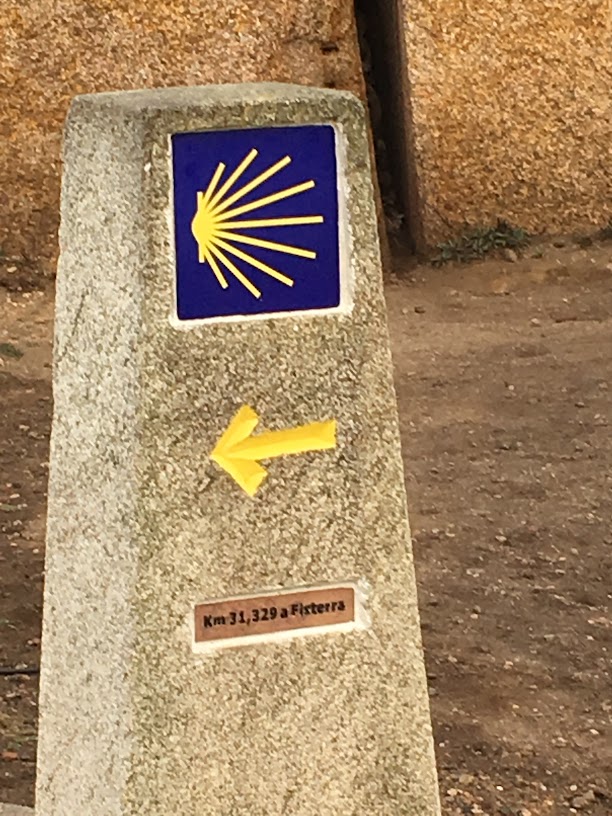
Walking too fast and missing the waymarker
With a backpack much too heavy, poor-quality hiking boots, and a hurting foot I was battling both physically and emotionally. There is a saying that if you walk the Camino like a hiker with physical intent it will force you into humility. While walking too fast, I missed the waymarkers and got horribly lost. At one point I had to seek refuge in a grotto during a heavy thunderstorm in the Pyrenees mountains, far off my route.
How many times in life does the universe send warning whispers that we have missed a waymarker and are on the wrong path? How obsessed are we with things we think we need but insist on keeping them in our backpack?
Forced to go much slower, I gradually felt my senses reawakening to the magic of the moment. I started inhaling the aroma of wild thyme, rosemary and oregano. I added mint to my water bottle. A singing blackbird followed me for part of the way. I befriended stray dogs and cats and met wonderful people who are still friends today. For the first time in many years, I felt an aliveness and vibrancy in my body.
Trapped in doing rather than BEING
Over the years, I’ve observed other pilgrims going through the same process. Hikers would pride themselves on the number of kilometers they had done that day. People doing the route on a bicycle would go into tunnel vision, oblivious to the sights and sounds around them. If you are trapped in the rat race of doing rather than BEING it is difficult to push the reset button overnight. At the end of the day, slow and mindful walkers would converse on the magical experiences they had that day while those in a race would look at them in disbelief.
So much of our lives are wasted carrying the weight of the past, and living in some distant future working for time-off at the weekend, the annual vacation, and the years when we can start living when retiring from a job we always hated. When the day finally comes, we live the final years of our life in regretful grumpiness of what was and is no more.
It helps to train your awareness that life is finite and that you will die one day. With your last breath, you will leave this earth into formlessness. You won’t be taking any of your precious earthly possessions with you. All that remains will be consciousness.
So you might as well stick around a little longer and enjoy the moment. Practicing mindfulness is ideally done in the stillness of nature.
Focus your attention on your breath. Observe your thoughts and sensations without judgment. By consistently practicing mindfulness, you can cultivate a heightened sense of awareness and presence in your everyday life.
Engage Your Senses: Pause and notice the sights, sounds, smells, tastes, and physical sensations around you. Fully immerse yourself in the present moment by bringing awareness to the details of your sensory experiences.
Slow Down and pay attention: Challenge yourself to slow down and be fully present in each moment. Whether you’re eating, walking, or engaging in any other daily activity, do it with intention and attentiveness.
Reino Gevers – Author – Mentor – Speaker
One more thing...If you have found this article interesting you might want to subscribe with the “follow” button above or recommend my FREE weekly Blog to friends and family. My books can be ordered at all places that sell good books in both paperback and kindle.
Some 2,000 years ago a soul incarnated into the family of a simple carpenter and his wife in the town of Nazareth of what was then part of the Roman province of Judaea.
Jesus of Nazareth was to change the world for generations to come and elevate human consciousness to a new level.
From an early age, the scriptures tell us, Jesus astounded the temple priests with his knowledge and wisdom. By the time he was a young man his revolutionary teachings and miracle healings were drawing huge crowds and followers.
The threatened priesthood
The priesthood of the day saw him as a grave threat when he exposed their hypocrisy and their literal interpretation of the scriptures.
Jesus led by example showing us that service for the downtrodden, the sick, the vulnerable, and the discriminated minorities was the stepping stone to creating a life of bliss.
The God-given meaning and purpose of life is closely intertwined with the unraveling of the veils covering the soul and living who you were born to become.
It was far removed from abiding to the rules and regulations of a belief structure controlled and imposed by the priesthood.
The long hidden texts of St. Thomas, discovered only in recent times, reveal early Christian teachings deeply embedded in experiential Spirituality and multi-layered interpretation that read much like Zen Koans of Buddhist tradition. Jesus is quoted as saying:
“Rather, the kingdom is inside of you, and it is outside of you. When you come to know yourselves, then you will become known, and you will realize that it is you who are the sons of the living father. But if you will not know yourselves, you dwell in poverty and it is you who are that poverty.”
This reminds much of the inscription in the Ancient Greek Temple of Delphi: Knowing Thyself, Knowing who you are not and then finding the God within – or your truth
Jesus was crucified in a place called Calvary in Jerusalem at the age of 33. In Kabbalistic teaching 33 is a magical number. It is the number of steps on Jacob’s ladder on which the angels walked bringing the wisdom of heaven unto earth or aligning with the higher (Christ) self.
Calvary in its original Hebrew form means “place of the skull.”
The arbor vitae in the brain is also described as the tree of life. It lies within the center of the cerebellum and helps provide valuable sensory information to the brain, protruding from the skull.
In Kundalini Yoga energy rises up the 33 vertebrae of the spinal cord to the seventh chakra located at the crown of the head, illuminating the third eye or pineal gland, your spiritual consciousness.
Jesus’ crucifixion and resurrection after three days is ultimately a story of salvation from suffering, after transgressing through the dark night of the soul.
There is a surrendering to forgiveness and grace. After a point of great suffering and doubt Jesus could look upon the people causing his suffering and forgive, knowing that it all ultimately had a higher meaning.
Sacrifice and expansion of consciousness
Making sacrifices expands your conscious awareness. When you transmute the lower energy vibrations rooted in the emotions of fear, anxiety, greed and hate, you achieve Christ consciousness – the 33rd degree of consciousness – unconditional love.
According to the Mystics God is unseparated from all things, for God is in all things and is more inwardly in them than they are in themselves.
St. Augustine is quoted as saying that the soul has within her all knowledge, and whatever we practice outwardly serves only to awaken that knowledge.
In places of solitude and in the quiet spaces of nature the cracks open to the wisdom and window of your soul’s longing, to the depths of your purpose and destiny – to the Christ within.
Reino Gevers – Author – Speaker – Mentor
One more thing...If you have found this article interesting you might want to subscribe with the “follow” button above or recommend my FREE weekly Blog to friends and family. My books can be ordered at all places that sell good books in both paperback and kindle.
Strength and growth come only through continuous effort and struggle.” – Napoleon Hill –
It is much easier to climb a mountain if you take it one step at a time instead of looking at the steep peak ahead of you.
Several times I had to tell myself this during the last couple of days walking the Camino de Santiago in northwestern Spain.
There is also a saying on the Camino that the last few kilometers are the hardest. You climb one hill and then you find you have to climb another at the next bend.
Obstacles – the blessings in disguise
Just reflect a little on your life so far. It is mostly the obstacles, the setbacks, and those down on the ground moments that have triggered the biggest transformation.
Sadly, we often throw in the towel before we have learned the lesson or just before we are about to achieve the biggest breakthrough.
Life is not meant to be easy. We whither and die spiritually and physically if we procrastinate in a comfort zone.
A crisis, whether in an institution, in the job or in a personal relationship, is a message from the universe telling us that something is out of balance and needs to change.
The journey has to continue
We can for a moment look back on the winding steep road that we have climbed, appreciating the view and the accomplishment. But at some point we will have to continue the journey.
We human beings are hardwired to explore, and discover. As long as we live on this earth we will constantly be challenged to redefine purpose and meaning.
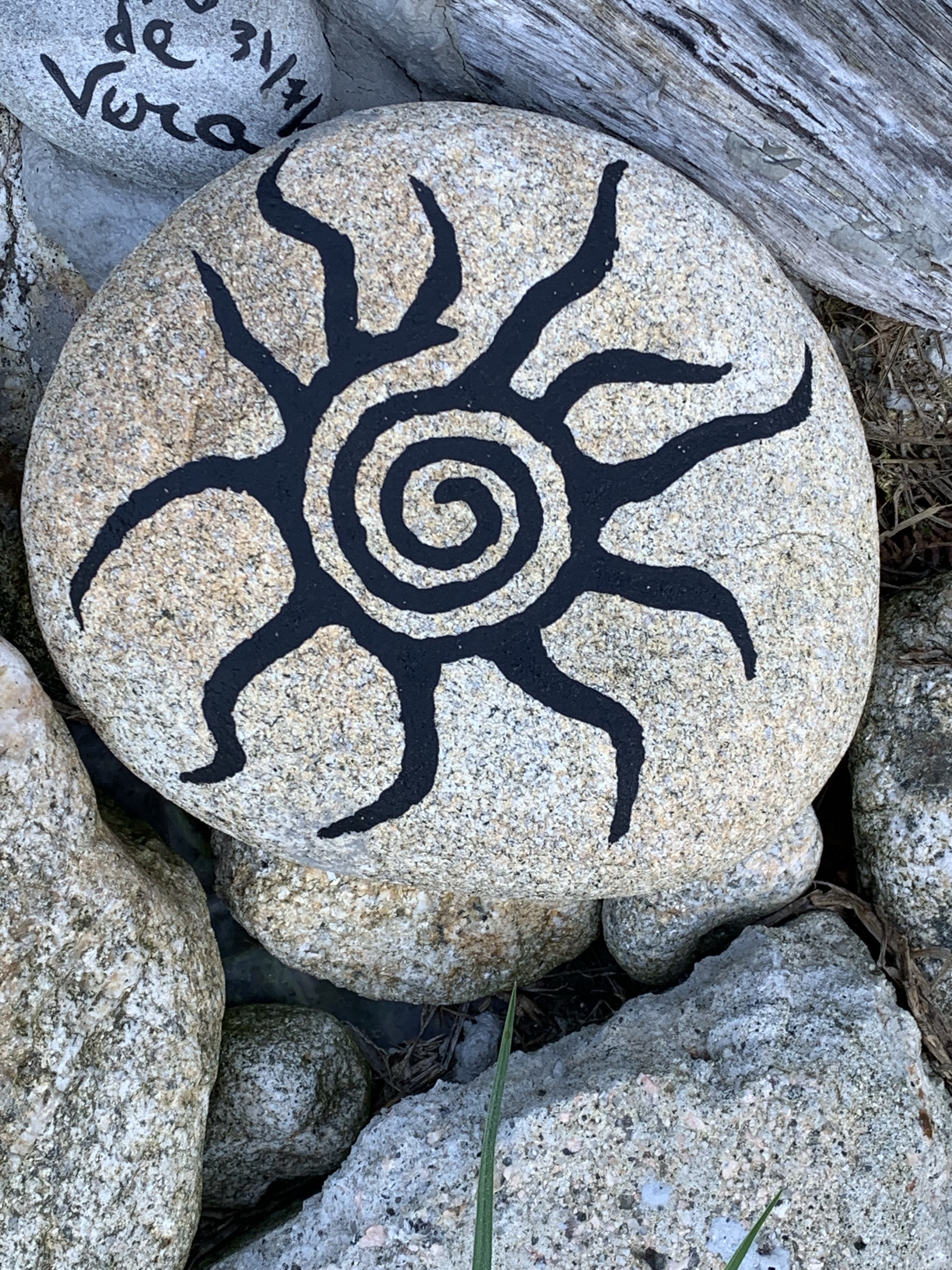
This morning I found a spiral etched into stone by the ancient Celtic inhabitants of Galicia. The rock site was perfectly aligned to the rising morning sun. Obviously the area had been a place of religious significance eons ago.
Celtic spiral etched in rock
The ancient people were acutely aware of the laws of the seasons, closely studying nature. Beyond the perceived chaos of natural phenomenon lies a naural order of all things. The spiral is found in miniscule shells and flowers, and our DNA but also in the shape of our expanding galaxy.
Spiritually the spiral motif represents the path of the soul from the outer ego personality to the divine unity. It is the symbol of constant evolution and growth – a divine song of renewal moving from age to age.
Reino Gevers – Author – Mentor – Speaker
One more thing...If you have found this article interesting you might want to check out our courses, retreats and books
All the people you have met throughout your life and the experiences you have had up to this moment in time have made you into the person who you are today. Yet, there still might be that inner voice whispering that there is more to life than you have been taught or have learned.
Caroline Myss is quoted as saying that “as a vital part of a larger, universal spirit, we each have been put here on earth to fulfill a sacred contract that enhances our personal spiritual growth while contributing to the evolution of the entire global soul.”
Connecting with the global soul
Our individual souls are connected to a global soul comprising all life on the planet. Each person has a unique destiny and soul purpose and it’s not about what kind of job you are doing or the things you own. These might be a manifestation of what you become in the becoming of who you really are.
It is almost essential to find alone time for contemplation and inner reflection and to walk your sacred path alone. The urge to walk a pilgrimage first starts as a whisper and becomes ever more louder. The need to go on this soul adventure is sometimes met with strong resistance by the loved ones or family members around you. They will sense that you are in a process of shifting your consciousness and will confront you with all sorts of arguments to dissuade you from walking.
The universe will test your willpower
In a way it is the universe testing your willpower but the sad truth is also that most people are too afraid to make the changes necessary to improve their lives. Family members or partners want you to stay in the tribe and share the same beliefs, mannerisms and habits. Often they will be projecting their own fears onto you if you decide to go on a journey of untrodden paths. Partners in this way often block each other instead of lending support and encouragement to the other.
On the Camino Aragonese between Jaca and Puenta La Reina, Spain
In a few days time I will start my 14th pilgrimage walk, walking for the second time from Porto in Portugal to Santiago and then to Cabo Finisterre, the westernmost point of the Iberian Peninsular. Each walk has been different, and unique. Looking back these walks have proven to be truly transformational not only in the way they have led me in making major changes to my external life but what has happened on a spiritual level. My two books on the Camino in essence tell this story that began in early 2007.
When I served in a pilgrims’ hostel as a volunteer in 2019 I had the opportunity of literally talking to hundreds of pilgrims from all walks of life and nationalities on what motivated them to walk this ancient path that at times can be truly challenging both emotionally and physically.
Why do people go on a pilgrimage walk?
Some people start the Camino as a sporting adventure that then turns into a spiritual journey. An American pilgrim I walked with some years ago said to me: “If you don’t approach the Camino with humility it will humiliate you.”
The Camino is telling you that this journey is not about accomplishing something but in un-becoming from everything that you thought you were and touching that place deep in the soul who you are truly meant to be.
Is the Camino part of the bigger journey of humanity seeking a common spirituality that transcends the boundaries of religious dogma?
The Camino is an analogy of life
The Camino is in many ways an analogy of life. If you can deal with the roller-coaster of the walk’s trials and tribulations, you will be steeled for whatever challenges life throws at your feet in the acceptance of the impermanence of all things.
I’ve heard stories from pilgrims who have suffered terrible personal hurt and tragedy. Others were walking while defying a life threatening medical diagnosis or who had just survived cancer.
Experiential spirituality reveals itself in helping and supportive hands, in the recognition of fellow souls going through tough trials and tribulations. There is a deep sense of that one truth that we are all one humanity.
Reino Gevers – Author – Mentor – Speaker
One more thing...If you have found this article interesting you might want to check out our courses, retreats and books
„Walk as if you are kissing the Earth with your feet.” – Thich Nath Hanh
Day 2 on the Via Francigena – Gambassi Terme to San Gimignano
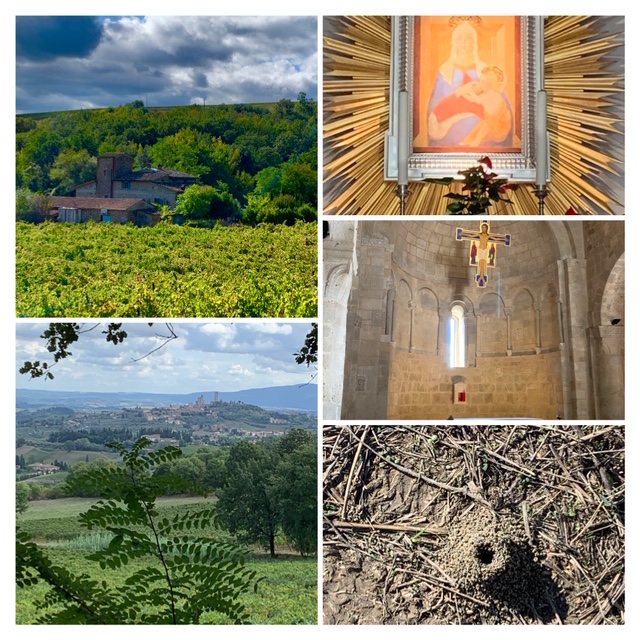
On a hilltop between the medieval Tuscan towns of Gambassi Terme and San Gimignano the pilgrim enters the village of Pancole famous for the 15th century painting by Pier Francesco Fiorentino of the “Virgin feeding her Son.”
The original sanctuary was built in 1668 on the site where the sacred image originally stood along a country road where it had been abandoned and covered by undergrowth. Several miracles were attributed to the Madonna.
One of the miracles is the survival of the painting itself after the Nazis destroyed the original sanctuary in an act of indiscriminate vandalism in a bid to destroy the very soul and ancestral roots of a nation.
The sanctuary was reconstructed in 1949 and along with the nearby Monastero di Bose offer wonderful spaces for quiet contemplation.
Landscapes that inspired poets and artists throughout the ages
It is no surprise that spectacular landscapes and the quiet pathways throughout the centuries inspired poets, musicians and religious orders
Spending hours in the heart of nature after only a few days of walking opens the heart and mind to the whispers from the universe.
You are forced to go slow up the steep inclines and then you begin to notice the small creatures on the ground such as the lizards, beetles, ants, and butterflies. When in a hurry it is easy to mindlessly trample on these small creatures who are all fighting for survival when perceiving the heavy boots of an oncoming pilgrim.
St. Francis – the original ecologist
There are numerous stories of St. Francis, the patron saint of the animals, communicating and preaching to the animals as fellow creatures of God. The saint was well known to walk long distances to spread his message and there are no numerous shrines on the Camino in Spain and along the Via Francigena dedicated to him.
St. Francis can be described as the original ecologist and his central message of social justice and greed causing harm to both the victim and the perpetrator ringing more true than ever.
Spending time in nature creates awareness on how complex the interaction of plant, insect, bird and mammal are intertwined and co-dependent on each other. Nature starts tilting into imbalance when one species gains dominance and threatens the livelihood of all others. It is offers much food for thought.
Reino Gevers – Author. Mentor. Speaker
One more thing…
You might want to check out my new book “Deep Walking for Body, Mind and Soul” released as a paperback by Morgan James Publishing on August 11, 2020. It has some valuable tips on creating happiness and boosting your vibrational energy on many levels. You can order it at all major outlets such as Amazon, Barnes and Noble or in my own store. Check out the latest five-star reviews on Goodreads.
“A breathtaking, captivating, transformative walk,” – Tom Dutta, Canada
“The book reminded me of my own journey in life I am walking and how bringing stillness to my busy life and mind is essential.” – Karin, France
“The book compresses on its slim 190 pages an extreme density of life wisdom.” Christina Germany















 ReinosBlog