Category Archives: spirituality

Can you be a divine messenger?

In ancient oral traditions saints and prophets are often said to return as angels in disguise after departing from their earthly existence, assisting those in desperate need of help, but sometimes unwittingly you too can become a divine messenger by imparting one word or deed that can completely change the trajectory of a person’s life.

Several stories reflect the universal theme of saints and prophets in the afterlife intervening in human affairs, in unexpected and unassuming forms.

Guidance and healing at crucial junctions

In ancient Greek mythology, the deity Asclepius is associated with healing and is said to have returned to the mortal world in disguise offering healing and guidance.

In the Islamic tradition, Khizr is often associated with the archetype of a wise and immortal figure who appears in challenging times, disguised as an ordinary person.

In Slavic folklore, the supernatural being Baba Yaga comes in disguise to test individuals and those who treat her kindly are well rewarded.

According to Jewish-Christian legend the Prophet Elijah intervened at several crucial junctions of human history. During the Battle of Las Navas de Tolosa in 1212 the Christian forces in Spain faced a formidable opponent against the soldiers of the Almohad Caliphate. The Christian army was about to be defeated when a mysterious knight wielding a white banner with a red cross appeared on the battlefield, believed to have been Elijah in disguise, and providing the crucial assistance that turned the tide.

The red cross against a white background is today a familiar symbol on the scallop shell worn by pilgrims walking the Camino de Santiago, many of them probably unaware of its origins. In my novel “Walking on Edge” I refer to several mysterious encounters with strangers that the main character Jake has on the Camino. Some of these accounts are based on real stories that I came across on my own pilgrimage walks.

It is common for pilgrims to have a really low moment while on the Camino, where they are at the point of giving up. I’ve met several people who reported having an epiphany after overhearing a conversation or having a chance encounter with a stranger, giving them the courage to continue.

You should never underestimate the impact your words and deeds could have on a fellow human being. Sometimes you also need to be cruel to be kind.

A teacher or parent might implement a policy of no-nonsense adherence to deadlines and assignments to prepare the student for the obstacles they might encounter in future professional environments, instilling a sense of responsibility and discipline, even though momentarily demanding.

If you have a family member or friend suffering from an addiction problem, the only way you are going to help them is by setting clear boundaries and deadlines where they can get professional help.

But sometimes a simple gesture or act of kindness can leave an everlasting imprint on a person’s memory.

In Charles Dickens’ novella “A Christmas Carol,” the miserly and bitter old man Scrooge is transformed with a child’s kindness that serves as a catalyst for his redemption, reminding him of the joy and warmth associated with Christmas and the importance of human connection.

It costs absolutely nothing to be kind. You never know what impact that could have on a fellow human being. The exact right words and actions might resonate with another person more than you realize.

Reino Gevers – Author – Mentor – Speaker

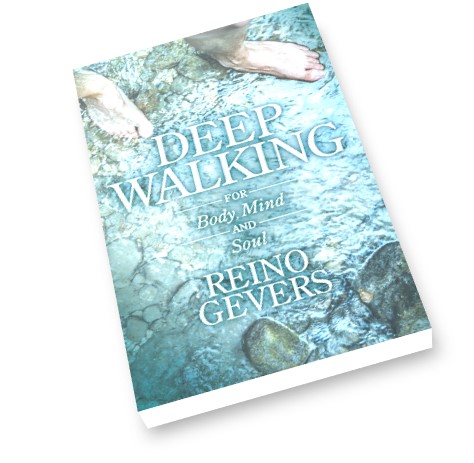
P.S. I’m excited to announce the release of my latest book, “The Turning of the Circle: Embracing Nature’s Wisdom for Purposeful Living.” If you enjoy it, you might also be interested in my previous works, “Deep Walking for Body, Mind and Soul” and “Walking on Edge: A Pilgrimage to Santiago.” You can find all of these titles at reputable bookstores near you.

Leave a comment

Filed under Camino de Santiago, spirituality, Uncategorized

Light into a world beyond

A ray of light travels into a chamber, illuminating a spiral motif representing a vortex for the dead in completion of their journey from this world into the „other world“.

The phenomenon at an ancient site in Newgrange, Ireland, is thought to date back 2800 BC and occurs every year on December 21st, marking the shortest day and longest night of the year in the northern hemisphere.

At Stonehenge, in the United Kingdom, another ancient site from the Bronze Age, the sun rises behind the entrance of a stone circle illuminating the Centre.

The lives of ancient cultures were closely intertwined with the laws of nature and the transition of the seasons and were elaborately celebrated in ritual and religious ceremony.

Modern man’s disconnect from nature and spiritual essence appears to be at the root of much of today‘s confusion and mental instability. Our modern versions of Christmas, Easter and Thanksgiving are a poor reflection of their original spiritual meaning.

The celebration of the birth of Christ in Bethlehem, comes just after the winter solstice, representing victory over darkness, rebirth, and hope over fear.

The hope of the guiding star

The guiding star that led the Magi to the birthplace of Jesus, represents hope, divine guidance, and the birth of a significant spiritual event, signifying the arrival of a special and transformative moment.

The celebration of the birth of Christ is associated with an annual inner spiritual rebirth of the “Christ within“

The ancient Mystics refer to each individual having a divine and spiritual essence connected to a higher consciousness.

In Christianity, it may be linked to the belief that Christ’s spirit resides within believers, guiding and influencing their thoughts, actions, and spiritual journey.

Connecting to the spiritual essence

In a broader sense, it can be found in various spiritual and philosophical traditions that emphasize inner enlightenment and connection to a higher reality.

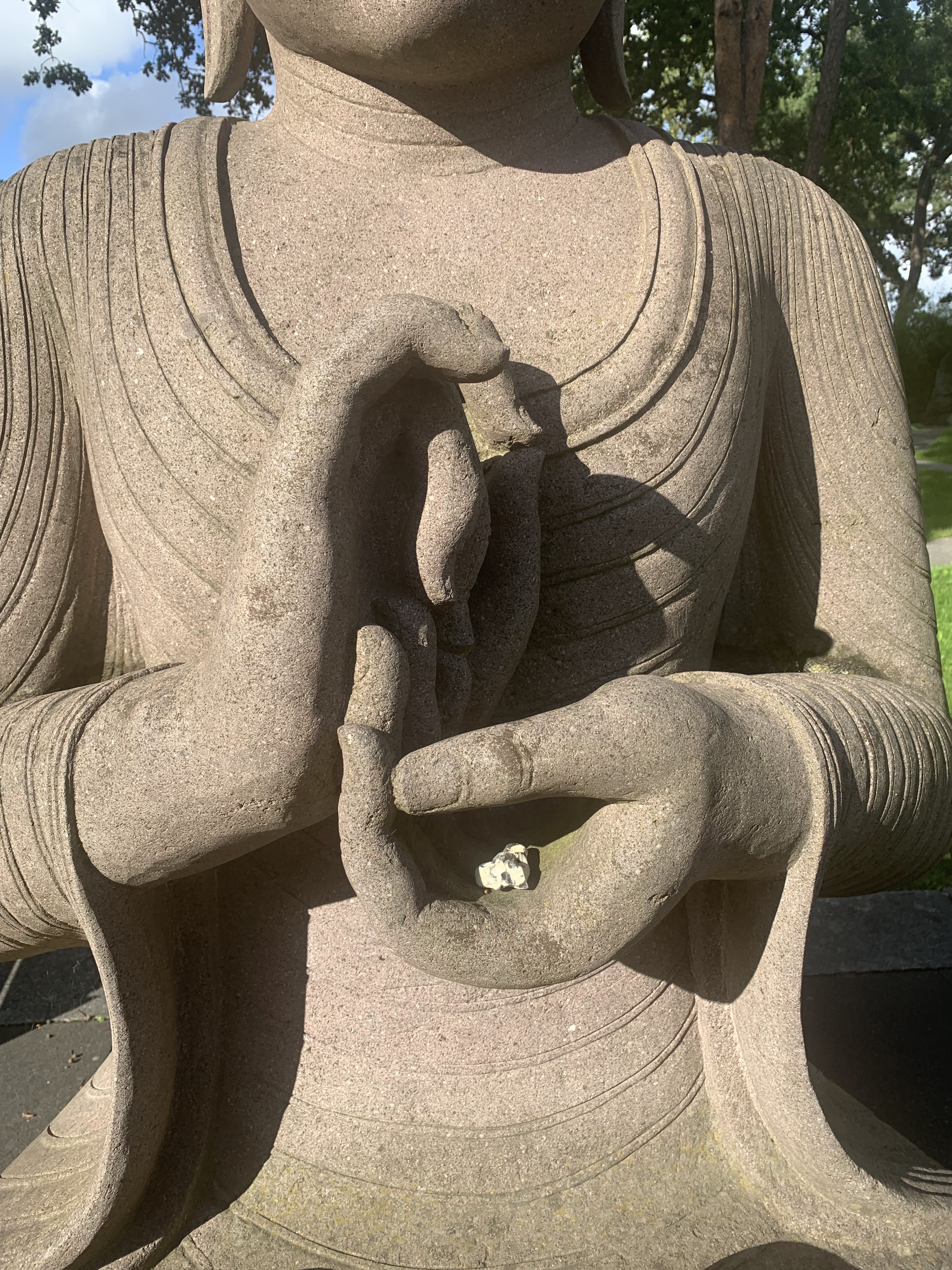
The “Buddha Nature“ has the optimistic view that every individual can attain enlightenment through spiritual practice and awareness.

Defilements and obscurations that prevent enlightenment are considered temporary and removable.

The time between Christmas and New Year – a time symbolizing the transition from the old to the new – is of particular spiritual significance.

Whatever negative experience, loss and trauma you have experienced this year this quiet space can be spent for inner reflection and contemplation.

What addictive thoughts and beliefs are holding you back? What things are distracting you? What relationships are pulling you down into a lower vibrational field?

When the old can be released the path into the gateway of spiritual renewal and purpose opens.

Reino Gevers – Author – Mentor – Speaker

P.S. I’m excited to announce the release of my latest book, “The Turning of the Circle: Embracing Nature’s Wisdom for Purposeful Living.” If you enjoy it, you might also be interested in my previous works, “Deep Walking for Body, Mind and Soul” and “Walking on Edge: A Pilgrimage to Santiago.” You can find all of these titles at reputable bookstores near you.

2 Comments

Filed under raised consciousness, spirituality, Uncategorized

Humanity at the crossroads

As we end an old year and enter another new year in the 21st century it is worth reflecting of where we stand as a humanity. We have witnessed in 2023 two major wars traumatizing millions of people, a world grappling with a climate and environmental crisis and and a resurgance of authoritarianism.

Humanity stands at the cusp of forging a new earth characterized by elevated vibrational energy and heightened consciousness, fostering an unprecedented era of abundance, tolerance, and peace. Alternatively, there is the ominous prospect of regressing into another dark age, replete with conflicts fueled by tribalist fears, anxieties, and hatred.

Regrettably, a significant portion of humanity appears to operate on autopilot, blissfully ignorant that their responses are dictated by emotions and feelings rooted in obsessive thoughts and beliefs, steeped in the shadows of past traumas or programmed by mass media.

Photo by Pixabay on Pexels.com

These ingrained thoughts and beliefs wield a potency akin to that of substance addiction. A vehement denial of this addiction persists, the grip so formidable that they prefer to die rather than acknowledging that their beliefs and perspectives rest on a flawed foundation.

Beliefs and thoughts impacting cell expression

In his book “The Biology of Belief”, the cell biologist Dr. Bruce Lipton, argues that beliefs and thoughts have an influence on our gene expression and have a profound effect on our health and physical well-being.

Lipton argues that positive beliefs can contribute to health and healing, while negative beliefs can potentially lead to illness. The good news is that by becoming aware of the shadow, your thought patterns and emotions, you have then power of choice and become a co-creator on a collective level in transmuting these beliefs, ultimately living a happier and healthier life.

The power of words and thoughts

Words and sound have a vibrational energy that affects your body and mind. Research conducted on 700 million words and phrases used on Facebook by the University of Warwick, United Kingdom, in 2013 revealed some astonishing facts.

Neurotic people disproportionately used the phrase “sick of” and the word “depressed”. Research conducted by Eichstedt et al. in 2015 found a correlation between language used on Twitter accounts and heart disease in U.S. counties where words expressing anger, hate, and resentment were predominantly used.

In this week’s “Living to BE” podcast I interview an expert on the subject, Janet Schmidt, explains her own path into creating a life of abundance after losing nearly all her money, and becoming aware of her own ancestral program of scarcity. We delve on the subjects of healing trauma and limiting beliefs, building a prosperity mindset and reprogramming for success.

Why do some people procrastinate in victimhood and the “blame game” while others develop an emotional resilience that catapults them into a life they have always dreamed of with happy relationships, material abundance, and a healthy mind and body?

What are you feeding your mind with?

What you feed your mind and body with is one of the keys of reprogramming. Avoid toxic people poisoning your mind with their prejudices, fears and hate. Be mindful of what books, social media feeds and news channels you feed your mind with.

Are you still in control or are you a member of the ranting crowd addicted to grievance culture? Who are you really? What is your purpose in life? If you choose to create a space for solitude, for example by taking a walk in the green and blue spaces of nature, you will reconnect to the awe inspiring gift from the universe and the bigger whole. You will start to perceive the faint whispers from the universe, revealing the waymarkers of your authentic path of destiny.

If you find yourself caught in the rabbit hole of toxic emotions try the method of emotional shifting. Replace the word “fear” with “courage”, “hate” with “love and compassion”, “anxiety” with “confidence and trust”, “scarcity” with “abundance”, “melancholy sadness”, with “happiness and gratitude.”

There are some powerful mantras and prayers that elevate into a higher vibrational field. Examples are the Buddhist mantra: Om Mani Padme Hum, the Christian Catholic prayer song: “Ave Maria” and the Lord’s Prayer in the original Aramaic version.

The purpose in life is to find synchronicity with divine purpose. What the Buddhists call the “Buddha nature” and the Christian mystics the “Christ within” is evolution of spiritual consciousness that begins with practising kindness and compassion with the self that emanates into all your relationships making the world a better place – one step at a time.

Reino Gevers – Author – Mentor – Speaker

P.S. I’m excited to announce the release of my latest book, “The Turning of the Circle: Embracing Nature’s Wisdom for Purposeful Living.” If you enjoy it, you might also be interested in my previous works, “Deep Walking for Body, Mind and Soul” and “Walking on Edge: A Pilgrimage to Santiago.” You can find all of these titles at reputable bookstores near you.

Leave a comment

Filed under mental health, mental-health, self-development, spirituality

Autumn and the time to let go

Here in the northern hemisphere, autumn unfolds its colorful spectacle. Trees shed their leaves as a brisk breeze weaves through bare branches. A nimble squirrel gracefully navigates from one tree to another, scouting for the optimal spot to hibernate through the coming winter.

Autumn marks a period of natural slowdown, where the vibrancy of summer yields to the quieter preparation for the colder months ahead. Yet, within this apparent tranquility, there exists a wild and unpredictable quality. A gentle, warm wing might whisper promises of impending spring, only to be followed by tempestuous storms.

In observing autumn’s dichotomy, we find a reflection of our own complexities. It teaches you the art of conserving energy for the inevitable challenges, mirroring nature’s rhythmic dance between repose and upheaval.

In studying nature you inevitably embark on a journey of self-discovery, unraveling the intricacies of your own existence in the ever-changing seasons of life.

We often forget that we are part of the bigger matrix. Your entire body is a composition of the elements around you. In the ancient Chinese philosophy of the Five Elements, autumn is associated with the element of metal. By getting into alignment with nature, you will recognize your innate and authentic nature.

Thus autumn is a time for introspection. These are questions you could ask:

What was really good this year?

What was a mistake and should be avoided in the future?

Life can be hard in teaching you the lessons you need to learn, especially when you fail to heed the whispers from the universe that tell you where to walk. It could be the advice from a total stranger, a sentence you coincidentally pick up in a conversation. A sudden inclination or feeling, a strong symbol from a dream, or a work of art you are observing.

Like the falling leaves of autumn, this is a time to let go of relationships, beliefs, and concepts that no longer serve you.

Harmonizing the inner and outer worlds is a major challenge in a world where attention is constantly being pulled at by external distractions.

Your breathing pattern is a reflection of your inner state of mind

Being aware of your breathing pattern plays a key role in relaxing your mind. Shamans and yogis have for centuries used breathing techniques to explore new realms of consciousness. In studying your breathing and improving on it, you become aware of hidden emotions and feelings. Fear, for instance, expresses itself with a flat breathing pattern and clogged feeling in the throat. A symptom of stress is strained breathlessness coming from shallow breathing from the upper chest.

A tense and stressed body finds no solace. Worries, fears, and other emotions create an imbalance that makes it susceptible to illness.

Recognizing the shadow aspect, such as your fears, your anger, your hurt, your shame, envy, or greed, is the first step in transmuting those negative emotions.

In a reflection of the metal aspect of the personality, we would look at the following questions:

Is there an old melancholy sadness that binds my spirit from making a move forward? Can I really admit to that sadness that is still there? Could it be that I should set a boundary toward certain people and make a healthy separation? Are my immediate surroundings, like my home and job, still fulfilling?

Are there too many superficial distractions in my life that prevent me from going on the path of my true destiny? Am I in the position of letting go of old concepts, ideas, or other so-called truths that have outlived their value for me?

Is my basic outlook on life of a positive or negative nature? Do I perceive tension and looming conflict situations in my immediate surroundings before they actually erupt? Do I have enough room to breathe? What is preventing me from exploring new avenues? Where are the boundaries set by myself or others? Could it be that I am also crossing the boundaries of others without realizing this?

The unique, authentic self only manifests itself when you liberate yourself from the magnetic pull of countless distractions, selling images, wants, and needs.

We need a truly strong metal element to preserve that space of true authenticity. When we are authentic with the true self, we are immune to mental and physical exhaustion that mostly comes from playing with the images of the false self.

Reino Gevers – Author – Mentor – Speaker

P.S. I’m excited to announce the release of my latest book, “The Turning of the Circle: Embracing Nature’s Wisdom for Purposeful Living.” If you enjoy it, you might also be interested in my previous works, “Deep Walking for Body, Mind and Soul” and “Walking on Edge: A Pilgrimage to Santiago.” You can find all of these titles at reputable bookstores near you.

Leave a comment

Filed under mental health, mental-health, spirituality, Uncategorized

How worthy are you?

Practicing full self-acceptance with all the pain, trauma, and shame from the past are the building stones of resilience against grievance culture feeding on the toxicity of anger and fear.

Much of the dysfunctional behaviors prevalent in our contemporary society can be traced back to an inflated Ego-Mind and a prevailing narcissistic culture, rooted in poor self-worth.

Negative thought patterns inevitably lead to negative actions and an endless cycle of suffering until the cycle is broken with a heightened state of awareness.

Narcissism is often an overcompensation for an underlying feeling of inadequacy. The need for constant admiration and validation from others is driven by an inner void.

There might be an inner voice telling you: “I’m too fat, too thin, too short, too old, and have an ugly nose.” The thoughts and voices that often come from programming stem from hurts inflicted during early childhood.

Photo by nicollazzi xiong on Pexels.com

The mantra of self-acceptance

You can transmute that inner voice with a new mantra: “I unconditionally love and accept myself the way I am. I am so happy and grateful to my body that has served me so well. I am healthy and I am strong.”

Self-love should not be confused with narcissism. You can only serve your higher purpose if you are no longer at war with yourself. The more you practice self-compassion, self-love, and self-acceptance the more you will attract this in the external world.

Life is a constant cycle of ups and downs. It is part of life that you have at times messed up, been disappointed, faced trauma, loss, and real “down on the ground moments.” During these times you might have neglected self-care like proper nutrition, exercise, and adequate sleep.

When you dig deep into your inner resources

But on deeper reflection, these dark nights of the soul have very often forced you into introspection and to dig deep into your inner resources. Once you start feeding your body with high-nutrient foods, exercising regularly, and programming your mind with positive thoughts, you start moving into a higher vibrational field.

Spiritual growth and soul elevation very seldom come during those times when you are feeling high and on top of the world. The pain can be the path where the light begins to shine. You will have greater ease in transitioning from challenges and adversity when you are in the awareness that every chapter in life has a season and that “this too shall pass.”

Reino Gevers – Author – Mentor – Speaker

P.S. I’m excited to announce the release of my latest book, “The Turning of the Circle: Embracing Nature’s Wisdom for Purposeful Living.” If you enjoy it, you might also be interested in my previous works, “Deep Walking for Body, Mind and Soul” and “Walking on Edge: A Pilgrimage to Santiago.” You can find all of these titles at reputable bookstores near you.

Leave a comment

Filed under mental health, self-development, spirituality

Now and Then

“Musical training is a more potent instrument than any other because rhythm and harmony find their way into the inward places of the soul.” – Plato

It appears to be no mere coincidence that music has spearheaded profound social and political transformations throughout history. Powerful lyrics that strike the tune of the time seem to penetrate an unseen realm, resonating with the deepest chords of human experience.

It’s almost a miracle that we can enjoy today the crisp and clear voice of John Lennon in the newly released Beatles song “Now and Then” with machine learning technology managing to extract the deceased band member’s vocals from a poor 1970s cassette recording.

The new song triggers memories of the famously successful, “Eleanor Rigby” with the introductory lyrics: “Ah, look at all the lonely people!” The theme of loneliness and isolation was a clear departure from earlier Beatles love songs into a new genre.

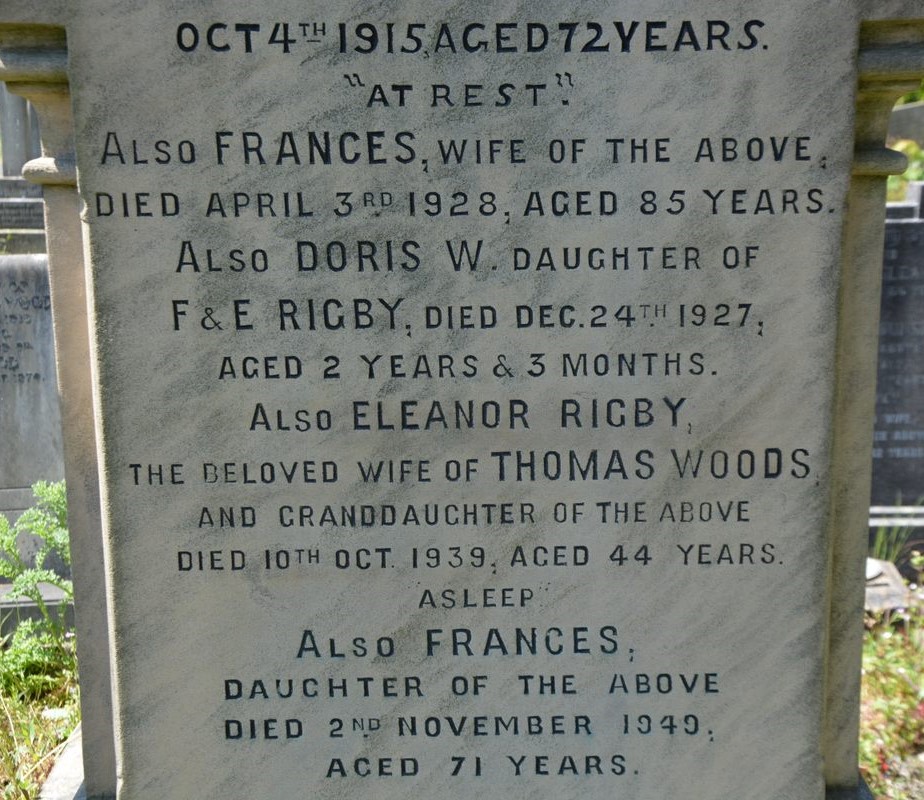
It is the only song where none of the Beatles plays an instrument. There is an eery aspect with the name “Eleanor Rigby” found on a gravestone at St. Peter’s Parish Church, in Woolten, Liverpool where Paul McCartney and John Lennon first met as teenagers in 1957.

The real Eleanor Rigby

It tells the story of a lonely woman named Eleanor Rigby, and the gravestone allegedly served as the inspiration for Paul McCartney when writing the song. The actual grave belongs to a woman named Eleanor Rigby, who died in 1939 at the age of 44.

In a 2021 article for the New Yorker, McCartney writes that after being introduced to John Lennon they most certainly wandered about in the churchyard talking about their future. But McCartney writes that he couldn’t consciously recall having seen the gravestone.

“I don’t remember seeing the grave there, but I suppose I might have registered it subliminally.”

McCartney goes on to write that several coincidental meetings led to the formation of the band: “All these small coincidences had to happen to make the Beatles happen, and it does feel like some kind of magic. It’s one of the wonderful lessons about saying yes when life presents these opportunities to you. You never know where they might lead.”

During its time Eleanor Rigby struck a chord with many people perceiving and feeling the “social isolation” that comes with living in large cities, geographically distant from close family and friends with limited opportunities for social interactions apart from the workplace.

It is no coincidence either that the Beatles arrived at a time in the 1960s when a new generation yearned to break free from the suffocating morality of the 1950s. Music has played a pivotal role in driving change throughout history, giving a voice to the simmering social undercurrent.

Songwriters and musicians have shared sentiments about a mysterious, almost mystical process of creating music. McCartney mentioned in several interviews how some of their most famous songs seemed to flow effortlessly as if the melodies and lyrics were already there, waiting to be discovered.

Joni Mitchell describes the art of creative songwriting as a form of channeling, arriving from a place she can’t fully explain, almost as if they are given to her.

Leonard Cohen said: “If I knew where the good songs came from, I’d go there more often.”

Bob Dylan describes his songwriting process as tapping into something beyond his conscious mind, often coming to him almost fully formed, as if he’s a conduit for something greater than himself.

Bach: Infused by spirituality

One of the greatest composers of all time, Johann Sebastian Bach, infused his music with his deep spiritual beliefs. His music is timeless and continues to inspire millions across all national, cultural, and religious boundaries. The complexity of Bach’s compositions and emotional resonance has scholars citing it as evidence of a profound connection to something beyond the human realm.

Deep walking in solitude over long distances, undeniably also influenced Bach’s compositions. Walking between his home and a parish that did a first performance, he would often refine and adapt the composition. Walking has a natural rhythm, that might have influenced Bach’s sense of musical rhythm.

In 1705 the young Bach made a 400-kilometer journey on foot from Arnstadt to Lübeck in northern Germany to learn from the then-famous organist Dietrich Buxtehude.

Ludwig von Beethoven took daily walks in nature. Many of his best ideas came to him during walks in the country, including his ‘pastoral’ Symphony No. 6. Completed in 1808.

Lennon’s last words to McCartney were reportedly: “Think about me every now and then, old friend,” which makes “Now and Then” seem almost like a message from the beyond. The song is the final official Beatles farewell. There are only two surviving members – McCartney and Ringo Starr both now in their 80s.

Reino Gevers – Author – Mentor – Speaker

P.S. I’m excited to announce the release of my latest book, “The Turning of the Circle: Embracing Nature’s Wisdom for Purposeful Living.” If you enjoy it, you might also be interested in my previous works, “Deep Walking for Body, Mind and Soul” and “Walking on Edge: A Pilgrimage to Santiago.” You can find all of these titles at reputable bookstores near you.
.

Leave a comment

Filed under longevity, mental health, self-development, spirituality, Uncategorized

Building resilience in turbulent times

Humanity is about to embark on a journey marked by monumental shifts and unprecedented disruptions, unlike anything we have seen before. It will impact every aspect of our lives, creating a ripple effect that will affect us on multiple levels.

This is the conclusion reached in a workshop we had recently in a German monastery. The participants included experts from finance, research, health, and education – all of them having delved deeply into philosophy, religion, and spirituality.

A tumultuous shift into a new era inevitably comes with disruptions in the form of wars, breakdown of institutions and industries, extremism, and social changes. Some notable examples of the past include the industrial revolutions of the 18th and 19th centuries, the Great Depression of the 1930s, the two world wars, the end of the Cold War in the early 1990s, and the digital revolution of the late 20th century.

We can expect in the next five years an unprecedented leap in quantum computing, biotechnology, genetic engineering, robotics, and artificial intelligence automation. The ability to enhance, alter, or transfer consciousness raises profound existential and ethical questions about identity, mortality, and the human experience.

During times of uncertainty, we are seeing a retreat into political extremism and religious fanaticism. Fear is what fuels the radicals, exploiting emotions to sow discord and chaos. Millions will find themselves on the losing end, navigating the turbulent waters of change.

The winners who embrace change

Yet, amidst these challenges, there will emerge a resilient group of individuals and communities who seize the opportunity. Winners not only adapt to change but have the innate ability of turning adversity into an advantage. They embody the human spirit’s ability to innovate and flourish during times of uncertainty.

Building resilience

The more you build your mental, spiritual, and physical resilience at this point in time the easier it will be for you to navigate the disruptions of the future.

In my new book “The Turning of the Circle: Embracing Nature’s Wisdom for Purposeful Living”, I emphasize the point that all of life underlies a seasonal principle of natural and spontaneous changes. Evolutionary change, sometimes disruptive, is an elementary aspect of the universal intelligence, of God, or the divine.

Embedded within the fabric of all things lies a divine essence, a source that intricately connects us all within a vast and intricate cosmic matrix. This profound interconnectedness is in perpetual motion, constantly evolving, adapting, and striving toward refinement. Within this intricate tapestry, God finds expression through the awe-inspiring wonders of nature.

Creation, in all its diverse and manifold forms, is a testament to the boundless creativity of the divine. It is a dynamic masterpiece, never at a standstill, but rather, continuously in motion and unfolding in the exquisite dance of creation.

The purpose of life is life itself

With the sunrise of another day, the delicate bloom and aroma of a flower, the melodious song of a bird, and the fleeting touch of the wind, you hear the divine whispering to the soul. The everyday miracles of nature serve as reminders of the eternal dance of existence, illuminating the path of endless growth and the limitless opportunities that dwell within the universe’s vast and loving embrace.

While the external world will continue to focus on the distractions of the 10,000 things and short-term material and sensory gratification, the spiritual teachings of the ancient Mystic teachers become more relevant than ever, providing a haven of comfort and resilience during times of uncertainty.

Happiness and contentment can ultimately only be found in alignment with the vertical dimension of the spiritual.

The term “spiritual” traces its roots back to the Greek word “pneumatikos,” later translated to “spiritualis” in Latin. Unlike religion, it stands apart from rigid doctrines and defined systems of belief. Instead, it inherently signifies an exploration of the inner essence, a journey towards the core or spark of the “holy spirit,” integrating the life force in connection with divine energy. It embodies a sacred communion that transcends the boundaries of organized faith, emphasizing the personal and transformative relationship between the individual and the divine.

Lifting the veil to fulfillment and life purpose entails uncovering your individual creative niche within the vast tapestry of God’s creation. The purpose of life is life itself.

The choice is between embracing a bright future of hope and purpose or heading for the pitfalls of negativity laid by the forces of darkness.

Reino Gevers – Author – Mentor – Speaker

P.S. I’m excited to announce the release of my latest book, “The Turning of the Circle: Embracing Nature’s Wisdom for Purposeful Living.” If you enjoy it, you might also be interested in my previous works, “Deep Walking for Body, Mind and Soul” and “Walking on Edge: A Pilgrimage to Santiago.” You can find all of these titles at reputable bookstores near you.

.

Leave a comment

Filed under mental health, mental-health, spirituality, Uncategorized

Liberating the mind from attachment

Go into your own ground and learn to know yourself there. The outward man is the swinging door; the inner man is the still hinge – Meister Eckhart

Life is a rollercoaster of natural and spontaneous changes constantly forcing us to tread unknown paths. While some people may excitedly embrace a new beginning others retreat into fixed belief and ideology, providing the illusion of a safety cacoon in a world of “turmoil.”

But resistance to the natural flow of life and attachment to fixed thoughts, beliefs, and things is one of the greatest causes of human suffering and misery. Staying in the moment and finding peace in the acceptance of reality is thus at the core of the Taoist and Mystic teachings.

Throughout history, wise prophets have faced vilification and persecution for their courage in exposing the hypocrisy of religions based on firm behavior rules, fearlessly shedding light on the discrepancies and contradictions inherent in entrenched beliefs. They especially questioned the existence of an authoritarian Father God figure “out there in heaven” who, like a strict parent, would punish his children for bad behavior. All natural or personal calamities were attributed to punishment by God “for sinful behavior.”

Meister Eckhart, a 14th-century Dominican monk whose writings are more topical today than ever, had to answer charges of heresy before an Inquisition in 1326. He barely escaped a death sentence. His writings were banned. Other Mystics of the time like Giordano Bruno and Marguerite Poret were not so lucky. They were executed or burned at the stake.

Straying from religious doctrine and liberating the mind from externally imposed belief was a dangerous undertaking in the Middle Ages. In modern times political beliefs, sometimes using religion as a cover, tend to vilify opposing beliefs as a threat to justify all means in destroying the “enemy.”

Fanaticists of the political and religious nature see the world only in black and white. The belief becomes closely intertwined with the Ego mind and identity. A different or multi-layered interpretation is perceived as a direct threat to the self.

Words in ancient languages such as Aramaic, the lingua franca during the time of Jesus, allowed much room for individual interpretation. The word for God “Abwun” could mean “Our Father” but also the absolute, pure oneness, creation, source of all power and flow of blessing.

One of the most powerful messages in the Bible is found in the Gospel of John 1:1. “In the beginning was the Word, and the Word was with God, and the Word was God”. When replacing the “word” with “consciousness” the text is filled with a much broader meaning.

“In the beginning was Consciousness, and Consciousness was with God, and Consciousness was God”.

Eckart describes a process of spiritual transformation when the divine spark within transcends its individuality or Ego and enters into a state of divine consciousness.

It’s a moment of pure presence when the soul feels at One with something much greater than the self.

Aligning with divine consciousness is opening the heart to the universe and detaching from worldly attachments. It is beyond conceptualized thinking and complete immersion in a state of oneness.

“You should know that true detachment is nothing else but a mind that stands unmoved by all accidents of joy or sorrow, honor, shame or disgrace, as a mountain of lead stands unmoved by a breath of wind. This immovable detachment brings a man into the greatest likeness to God,” according to Eckart.

In a world feeding on the messaging of negativity, it becomes a challenge to train the mind to stay the course of positivity. We can easily be pulled into the abyss of grievance culture when emotions such as anger, anxiety, and fear can be triggered in millions of people by one message on social media.

Modern man has largely been disconnected from what can be described as the divine expression through nature of which he is an essential part. Places worshipped as sacred by ancient peoples have been conceptualized as things that could be harvested, exploited, and destroyed. The void is trying to be filled with the addiction to short-term gratifications: Accumulating more things, more food, more kinky sex, and more substance abuse.

Where is your passion?

Is it a surprise that depression has reached epidemic levels on a global level? But in the pain of suffering more and more people are searching for new meaning and purpose. Where do I come from and where am I going? What excites me and drives my passion? What elevates my consciousness and boosts my vibrational energy.

The author Michael Gladwell describes in his book “The Tipping Point” that it takes only a small number of people to initiate social change. We are currently experiencing both a global environmental and mental health crisis. History has proven that such crisis situations can galvanize people into action.

We are at the tipping point of realizing on a spiritual level that the crisis we are finding ourselves in has not been created by a punishing external father God figure for bad behavior. It is a direct result of our own actions and behaviors and we have the power to change those actions and behaviors.

We as a collective humanity have dug our own rabbit hole. We need to liberate the mind from fixated false belief structures and start doing the inner work. More and more people are awakening to awareness through meditation and other disciplines of the mind. There is a growing realization that every thought comes from a state of consciousness, turns into a thought, a word, and then into an action.

When you are no longer at war with yourself you will emanate compassion, love, empathy, and trust, aligning with divine consciousness.

The “word” in John 1:1 refers to the union with the Inner Christ or what the Buddhists call “Buddha Nature” – the inherent, untainted “seed” that resides in all things. Seeking the Inner Christ or Buddha Nature is the path of the spiritual seeker.

Reino Gevers – Author – Mentor – Speaker

P.S. I’m excited to announce the release of my latest book, “The Turning of the Circle: Embracing Nature’s Wisdom for Purposeful Living.” If you enjoy it, you might also be interested in my previous works, “Deep Walking for Body, Mind and Soul” and “Walking on Edge: A Pilgrimage to Santiago.” You can find all of these titles at reputable bookstores near you.
Leave a comment

Filed under mental health, mental-health, self-development, spirituality

Connecting to your inner wisdom

Understanding and managing your emotions is key to achieving personal growth and accessing a higher vibrational energy. You can only tap into your inner wisdom by transmuting the charge of your toxic emotions such as fear, shame, anger, and grievance.

This poses a particular challenge during a time when social media and the political narrative feeds on negativity and our darkest toxic emotions.

Your body is the most authentic recording device of everything that has happened in your life. You will dream of events that happened decades ago because those memories are stored away somewhere in the depths of your body cells.

When you dream of when you were a seven-year-old and stole the cookies from Grandma’s closet, you have in some way not closed with that incident emotionally.

Your head-mind probably made up all sorts of reasons why taking those cookies was in order, while your sub-conscious heart-mind knew very well that what you did was stealing and that you hurt Grandma because you lied to her.

A tension or dissonance between head-mind and heart-mind, like acting against a gut feeling or doing something where all the alarm bells are running at a heart level, are just those things that the body will always remember.

Training your “heart-mind” to be emotionally mature is one of the reasons we are here on earth. We humans are imperfect beings, and probably the most disconnected of species from ourselves and our natural environment.

We have incarnated as souls to use our bodies as instruments of learning.

The heart is not merely an organ of the cardiovascular system that transports nutrients, oxygen and hormones throughout the body and removes metabolic waste. In the spiritual sense the heart is described as the “seat of the soul.” It is the first organ that develops in the fetus and is the connection between our physical and non-physical (soul) selves.

Impulses or thoughts flow first from the heart and then to the brain. The brain dissects, rationalizes and analyzes. The “heart-mind” is authentic and closest to the true self or soul purpose. Knowing the difference between “head-mind” and “heart-mind” is the spiritual learning part.

Our body is constantly sending us signals about what we need to hear and work on. The problem is that we are so caught up in the world of distraction that we mostly fail to listen until the body gets really angry and calls a time-out with some illness or malady. It is no surprise that cardiovascular diseases top the list in much of the Western world.

Regaining the connection

Regaining that connection to the “heart-mind” comes mostly during times of solitude, during meditation, prayer and deep walking. That is when we become aware of our emotional state of being. Some of the “emotional memories” stored in the body could go back many years or even decades.

These energies can be transmuted very well with the ancient body arts of tai chi, qi gong and yoga that were developed and refined by spiritual masters over many generations.

It is only fairly recent that these ancient arts have reached the Western world. One of the great tai chi masters, Cheng Mang Ching, was ostracized by the Chinese community in New York when he began teaching tai chi for the first time to Western students in the early 1960s.

If you walk the main Camino Frances, you will be walking for five weeks or longer. After two or three weeks on the road you realize that the Camino is much more than a mere physical exercise.

Not only does the body start detoxing, but I have noticed on my walks that dreams, childhood events, and memories of traumatic relationships that occurred many years ago return with a particular clarity.

These are particularly precious healing moments when old trauma is released to open up the channels for a flow of new energy.

Whatever the heart-mind hasn’t transmuted emotionally will at some stage come back to haunt you. It is why the mother on her death bed has that last wish before dying to reconcile with the son she hasn’t spoken to for years.

Volunteers and therapists companioning the dying have told me that the deepest regret is most often not having made amends with innermost family members. A peaceful death then only comes when that “something” has been dealt with.

What Chinese medicine has known for centuries, modern medicine is confirming with latest research. Many a serious illness has its origins in emotional baggage stored in the body-mind.

There is a particularly poignant passage in the third Beatitude of the Bible: “Blessed are the meek, for they shall inherit the earth.”

In the original Aramaic language, spoken by Jesus, the meaning is more subtle: “Tubwehun l’ makiche d’hinnon nertun arha.” This roughly translates to: “Renewal to those in emotional turmoil and blessed are those who can soften that which has hardened in their bodies.”

While walking in solitude you will inevitably be confronted by the same phenomenon as when lying alone awake at night: Hundreds of thoughts will be passing through your mind of past and future things.

One thought chases the next as you wind yourself up and down in a spiral of dancing monkeys in the head.

You won’t control those thoughts by practicing mind control methods. The mind does become aware of what it is thinking about and can extract itself with an accusatory finger of “why can’t I think of something else? Why can’t I let go of these worrying concerns in my head?”

You will notice that as the body releases tension during your walk, those dancing monkeys gradually start disappearing as you begin the descent from the head into feeling the body.

This is best done by aligning to the present moment by focusing on your breathing and counting the inhaling and exhaling of breaths.

You can also start by feeling each step touching the ground, feeling the ground and how the energy of the earth moves from your foot up your legs, spinal cord, neck and the crown of your head. Start by walking very slowly, aware of the present moment, just concentrating on these small things to liberate your mind.

Our ancestors practiced ceremony and rituals to transmute trauma on a body level. Animals still have this mechanism intact. A herd of antelope will run apparently haphazardly in all directions when one of them has been killed by a predator. Their bodies shiver and shake, but minutes later all has passed and they will resume grazing as if nothing has happened.

Calming mind and body

Transitioning from the depths of our lowest emotional frequencies, such as anger, shame, resentment, hate, greed, fear, and anxiety, towards the pinnacle of human evolution involves embracing the transformative power of compassion, love, empathy, gratitude, peace, and serenity.

Even as you ascend the ladder of higher consciousness, the complete liberation from toxic emotions and feelings remains an elusive goal; you are, after all, only human. However, through unwavering commitment and diligent practice, you can expedite your exit from the rabbit hole of negativity.

It will empower you to savor extended periods of vitality, hope, and inner tranquility, enhancing your overall well-being and vibrational frequency. It is the recipe for longevity and good health.

Reino Gevers – Author – Mentor – Speaker

P.S. This is an extract from “Deep Walking for Body, Mind and Soul. All my books are available on Kindle, and paperback where all good books are sold. If you would like to order in batch to gift to friends, family and employees you can contact me by DM for a special discount.

Leave a comment

Filed under mental health, mental-health, spirituality, Uncategorized

Why nobody is safe from a cult

Have you asked yourself why decent, educated, and well-meaning people are pulled into the dragnet of a dangerous cult? Do you think you are immune to making the same mistake? All it takes for them to capture your mind is to push certain emotional triggers and feelings.

Times of uncertainty and rapid change impact personal lives in multiple ways. The world’s getting more complex. We are seeking easy answers and simple solutions. If you are at an especially vulnerable point in your life. If you haven’t done the self-work in transmuting archaic fears, anxieties, and anger issues, you are at risk.

Historians and psychologists to this day ask themselves why a highly civilized nation that brought forth some of the world’s greatest philosophers, writers, and inventors could literally “worship” in masses a madman demagogue like Adolf Hitler. Cult leaders in different variations are malignant narcissists, display psychotic personality disorders, and carry an extreme personal grievance.

Hitler perfectly epitomized and tapped into the collective humiliation and undercurrent seething anger Germans felt after losing a war and suffering hunger and poverty during the economic meltdown of the 1930s. With a rising number of extremist groups coming to the fore in once unshakeable democracies, scholars and historians are seeing dangerous parallels and comparisons to the 1930s and the rise of fascism that culminated in the catastrophe of World War II.

An “us-versus-them” mentality

Cult movements typically have an “us versus them” mentality, providing a “safe haven” for individuals who have suffered a personal loss or humiliation. The “tribe” in the form of an organization, religion or political movement with a charismatic leader at its head perceives all outsiders of the movement as a threat. They will pound the message of “exceptionalism” of their leader or group. The “non-believers” and especially minority groups are vilified and dehumanized. Followers of the cult inevitably break off contact with family, and friends who do not belong or refuse “to see the light.”

Control and Isolation

The control mechanisms of a cult can be on a very subtle emotional level. Once the member has gone all-in by severing long-term relationships, it becomes very difficult to return to the old life. Few people will admit to having made a mistake or the wrong decision after sacrificing the best years of their lives and donating all their money to the “movement” or “cause.” We are hard-wired as social beings and it gets very difficult to leave “the cult family”. Those who leave are vilified as traitors to the cause, threatened, and in extreme cases harmed physically and mentally.

Photo by Luis Dalvan on Pexels.com

Group-Think, Lies and Deception

Once in the movement you inevitably become part of “group-think.” Members expressing the faintest doubts, who engage in a critical discourse or ask the wrong questions are shamed, coerced, and brought into line by the cult leader or his lieutenants. The critics will be told that they are “in their ego” or have strayed from the path – a favorite one in the religious cults. They will be playing on a core fear of most humans – the fear of being excommunicated from the safety of the tribe. Meanwhile, the real objectives and the financial dealings of the movement can be shrouded in mystery. The leader is always right. Excuses will be made over and over again as to why the leader could never be responsible for sexual misconduct, overspending on luxury items, or committing a serious crime.

Financial Exploitation

A common denominator of all cults is the financial exploitation of their members. They will be asked to contribute high membership fees, provide funds for a new temple, and pay for the private jet or the legal fees of the cult leader. At times members would have to donate all their assets to the movement for “the common good” as a sign of their commitment and loyalty. A small portion might be channeled to real charities as a marketing ploy while the major part will be kept by the cult leader for his personal needs.

Exploitation of vulnerabilities

You might say: “This can’t happen to me.” But cults and sects are masters at exploiting human vulnerabilities and emotions. Nobody is safe. A religious sect with a therapeutic New Age touch might catch you during an especially vulnerable point in your life when you are lonely and in need of social support and love, have just gone through a divorce, lost a loved one, or have a spiritual crisis.

The political cult and charismatic leader at its head will ensnare you if you haven’t dealt with your darkest toxic emotions such as anger and fear. You are functioning on “automatic” in the fight and flight mode of your reptilian mind, separated from the prefrontal cortex of your brain responsible for critical and logical thought.

Addiction to a cult has to be treated like any other addiction. First and foremost there is the need for an honest recognition and acceptance of the problem. Concrete action has to be taken like leaving the cult, breaking all contact with its members, and possibly leaving town. What lifestyle changes, support groups, and therapy are necessary? What would my life look like without the addiction? What freedoms would I be enjoying? How can I prevent relapse and find supportive friends with a higher vibrational energy?

If you are drawn to a charismatic leader with a hate-filled, and vindictive message, ask yourself: “What anger within me is he tapping into? What can I positively change in my life, instead of delegating action to the “political messiah.”?

Walking the path of your highest calling in personal freedom and liberty is foundational to fulfilling your soul destiny and living a life of bliss. By becoming subservient to a cult you are surrendering your unique God-given authenticity and weakening your self-esteem.

You have instead a wonderful opportunity to build on self-development from the gems and wisdom of many teachers past and present who have transcended the temptations of power and ego. If you should run into that “guru” offering a seemingly perfect solution or the only path to enlightenment – you had better run.

Reino Gevers – Author – Mentor – Speaker

P.S. My new book “The Turning of the Circle: Embracing Nature’s Wisdom for Purposeful Living” has just been published. You might also find my other books “Deep Walking for Body, Mind and Soul” and “Walking on Edge: A Pilgrimage to Santiago” of interest. They are available where all good books are sold.

Leave a comment

Filed under humanity, mental health, mental-health, psychology, self-development, spirituality