Tag Archives: psychology

2026: Finding Meaning in Uncertain Times

At the start of a New Year, we find ourselves living in a time of heightened global tension. Multiple conflicts, political instability, and rapid social change have left many people feeling uncertain, anxious, and unmoored.

The quote: „We are living in interesting times,“ often attributed to the British statesman Sir Austin Chamberlain in the 1920s, encapsulates what many feel today.

The Changing World Order

I recently delved into the book by Ray Dalio „The Changing World Order – Why Nations Succeed and Fail.“

He analyzed why nations appear to follow recurring long-term cycles of growth and decline driven by economics, politics, and human nature.

Seen through a spiritual and moral lens, Ray Dalio’s message is less about markets and the decline of empires but more about the inner condition of a society.

Why nations rise and fall

Nations rise when they cultivate humility, discipline, fairness, and responsibility. Education and science is one of the keys to successful economies. But along with technical skill comes the moral formation; productivity flows from a shared sense of purpose, common values and trust.

Money is a reflection of values: when wealth is earned through contribution, innovation, and stewardship, it strengthens the whole.

Decline begins when a nation forgets its limits and loses its moral compass. Excessive debt mirrors spiritual debt—living off tomorrow rather than honoring today. Inequality widens when the common good is replaced by self-interest. Arrogance replaces gratitude; entitlement replaces service.

The decline begins when institutions are hollowed out not only because of bad policy, but because of character and moral erosion.

Internal conflict grows when people lose a sense of shared belonging. The “other” becomes an enemy rather than a neighbor. From a moral standpoint, this is the deepest danger: separation from one another and from transcendent meaning.

History shows that societies disintegrate when power is pursued without wisdom, and freedom without responsibility.

External conflict revealing a deeper crisis

External conflict, in Dalio’s cycle, reflects a deeper spiritual struggle: fear versus trust. Rising powers test declining ones not only materially, but morally. Violence and domination appear when dialogue, humility, and restraint have already failed.

But cycles also imply renewal. Collapse is not punishment but karmic consequence. Societies can realign when they recover timeless virtues such as truthfulness, stewardship, compassion, and reverence for what is larger than the self.

In spiritual terms, Dalio’s insight echoes an ancient teaching:

What a nation gains by losing its soul is never truly wealth and what it saves by recovering its soul can outlast empires.

In this liminal season of transition, we are called to clear the waters clouded by deception, obfuscation, and endless distraction. The longing for truth is no longer abstract; it has become a spiritual and human necessity—quite literally, a matter of survival.

Reino Gevers – Host of the LivingToBe podcast

P.S.: If you enjoyed this article, you might be interested in my latest book, Sages, Saints, and Sinners. Get it today on Amazon, Barnes & Noble, and wherever good books are sold.

Leave a comment

Filed under psychology, purpose, spirituality, Uncategorized

Your Superpower in a Loud Society

Knowing yourself is the beginning of all wisdom.”— Aristotle

Standing guard at the doorway of your mind has become essential to maintaining spiritual and mental health in an age where our minds are drowning in information but thirsting for wisdom.

What you feed your mind, you ultimately become. A few careless minutes scrolling on your smartphone can trigger a cascade of emotions that can shape your entire day.

If you are reading this, you are likely one of the few who is actively reflecting on what is happening to us collectively.

Conflict and social disruption will always be part of the human condition—we are imperfect beings, after all. But we also carry within us the profound power of choice.

When the fringe becomes the megaphone

My impression is that the darker impulses of humanity are being amplified through the very technology meant to connect us. Fanatical fringe groups and those consumed by malice spend countless hours attacking others with hate-filled messages. Social media companies do little to halt this simply because emotionally charged content fuels engagement—and engagement fuels profit.

We may believe we are in control of what enters our minds, but for most people this is not true. Social media and search engine algorithms quietly track our behavior and serve up the content we are most likely to consume. In doing so, they shape not only our preferences, but our thinking.

Echo chambers of belief

Beliefs and opinions are constantly being reaffirmed within separate realities—information bubbles where each group hears only the echoes of its own worldview. Families, friendships, communities, and even congregations are fracturing along these invisible but powerful dividing lines.

What we need is a collective pushback from the quiet majority: the rational, thoughtful, grounded people who do not fall for emotional manipulation. That resistance begins by asking simple but profound questions:

Is this information expanding my energy or diminishing it?

Is it helping me grow, evolve, and reach my full potential?

A common misconception is that knowledge, information, and education alone equal wisdom. Yet many highly intelligent people refuse to learn from their mistakes, cling to fixed mindsets, and resist deeper reflection—never realizing they have been backing the wrong horse all along.

The power of who and what you surround yourself with

True wisdom is innate knowledge shaped through experience. It is the quiet confidence of intuition and higher consciousness. When you choose to surround yourself with wise friends, nourish your mind with spiritual teachings, and seek guidance from grounded mentors, you naturally grow in wisdom.

Equally essential is practicing self-care by setting firm boundaries with people, media, and environments that deplete your mind, body, and soul. Self-care is not indulgence—it is alignment. It is taking time for silence, contemplation, and reconnection with your inner life.

Choosing this path gradually fills your life with greater happiness and contentment because you begin building a bridge to your soul. Your actions shift from serving the ego to serving the greater whole.

Reino Gevers – Host of the LivingToBe podcast

P.S.: If you enjoyed this article, you might be interested in my latest book, Sages, Saints, and Sinners. Get it today on Amazon, Barnes & Noble, and wherever good books are sold.

Leave a comment

Filed under meditation, mental health, psychology, purpose, spirituality, Uncategorized

From Burnout into Becoming who you really are

Have you ever felt like you’re just running on empty, and feeling emotionally exhausted that comes from carrying too much, too often, and for too long? You’re not alone.

At some point, most of us find ourselves stuck in the burnout spiral by juggling responsibilities, absorbing too much information on social media, and feeling the quiet weight of stress pressing in from every side. It’s easy to lose your sense of calm, purpose, and energy when overwhelm takes hold.

You might feel disconnected from what is ultimately your journey into becoming who you really are.

But here’s the truth: You don’t need a dramatic life reset to feel better.
Small, intentional steps can help you rebuild your energy and resilience. Doable practices that can help you restore your strength from the inside out.

Acknowledge the Overwhelm

“Let’s start with honesty: Are you constantly running on empty?” The difference between normal stress vs. chronic overwhelm. Common sources: caregiving, decision fatigue, emotional burnout, information overload.

The Science

The body has a natural defence mechanism when under duress. The hormone cortisol puts you into fight, flight or freeze mode. Your breathing becomes fast and shallow as all your senses go into survival mode. Your cognitive functions, the ability to find creative solutions is impaired. At the same time all your vital body organs do not get the nutrients they need, steadily breaking down your immune system. We are simply not designed to cope with permanent stress over long periods of time.

Common misconceptions on building resilience

A common misconception about building resilience is to “toughen it out.” But it’s not about swimming against the tide and bouncing back as before. It’s more about integrating the experience and adapting accordingly.

Micro-Shifts That Build Strength

Simple routines and mind habits can restore control. Your intuition will tell you that you are not aligned if what you are doing is inevitably causing fatigue and exhaustion. Learning to say „no“ and setting healthy boundaries to people who deplete your energy takes practice. Pause for a moment and breathe before reacting. In this way you are building space between stimulus and response.

The Role of Faith and Belief

Integrating faith can be pivotal in providing an anchor of guidance during stormy times. It could be a morning meditation or prayer that aligns you with your authentic self. Several studies have confirmed that taking a walk in the green and blue spaces of nature and opening the senses to the sights, sounds, and smells of nature reduces the stress hormones in your body significantly.

Building a Resilience Toolbox

Stress is not necessarily harmful. It can help you focus on the task at hand. But too much of it is harmful. The key is finding a good sprint and recovery system. Practices such as breathwork, walks in nature, digital breaks, gratitude reflection and nurturing positive relationships are just some examples. What and who grounds you? Mental reframing: “Is this pressure pointing to a shift I need? What is life throwing at me from which I can learn?“ You can ask for help without guilt. Learn to sit with discomfort without shutting down.

What’s one small choice you can make this week to calm the overwhelm? It could be a simple question such as: “When I feel overwhelmed, I want to remember…”

Reino Gevers – Author – Mentor –Speaker

P.S.: If you enjoyed this article, you might be interested in my latest book, Sages, Saints, and Sinners. Get it today on Amazon, Barnes & Noble, and wherever good books are sold.

Leave a comment

Filed under exercise mental health, stress, stress hormones, Uncategorized

Art as a Lens: Exploring History and Human Experience

Great artists possess the rare ability to pierce through the veil of the ordinary, revealing the deeper truths that lie beneath life’s surface. In times when power distorts reality and fear stifles truth, their work becomes a courageous act of revelation.

A few days ago, I was vividly reminded of this while visiting the Tate Britain gallery in London. Entrance to most of London’s famous galleries is free, and it’s a great way to spend a few quiet hours in a big city.

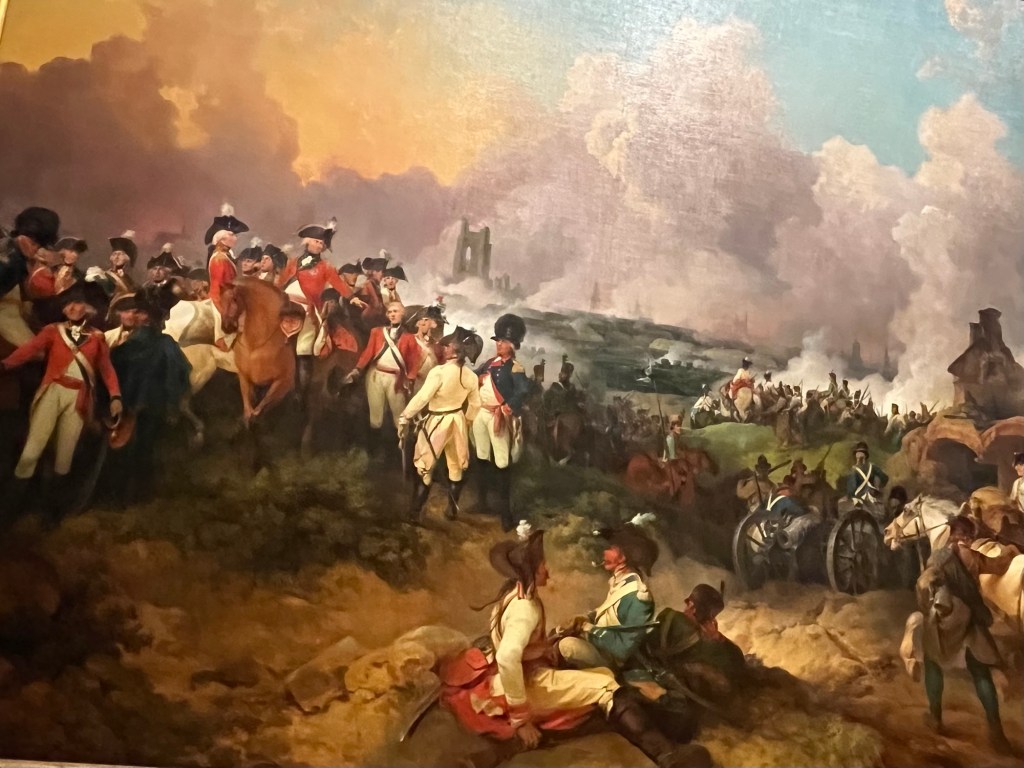
I was particularly struck by the works of the late 17th and 18th centuries. The expanding British Empire was marked by conflict, built by the sacrifices of soldiers and the toil of slaves and factory workers. Child labour was common, and women were condemned to giving birth and running the household.

Subtle hints beneath the surface

Artists were often commissioned to glorify the king and the empire, yet beneath the surface of landscape paintings, market scenes, and depictions of mixed-status couples, subtle traces of class divisions and social tensions quietly emerge.

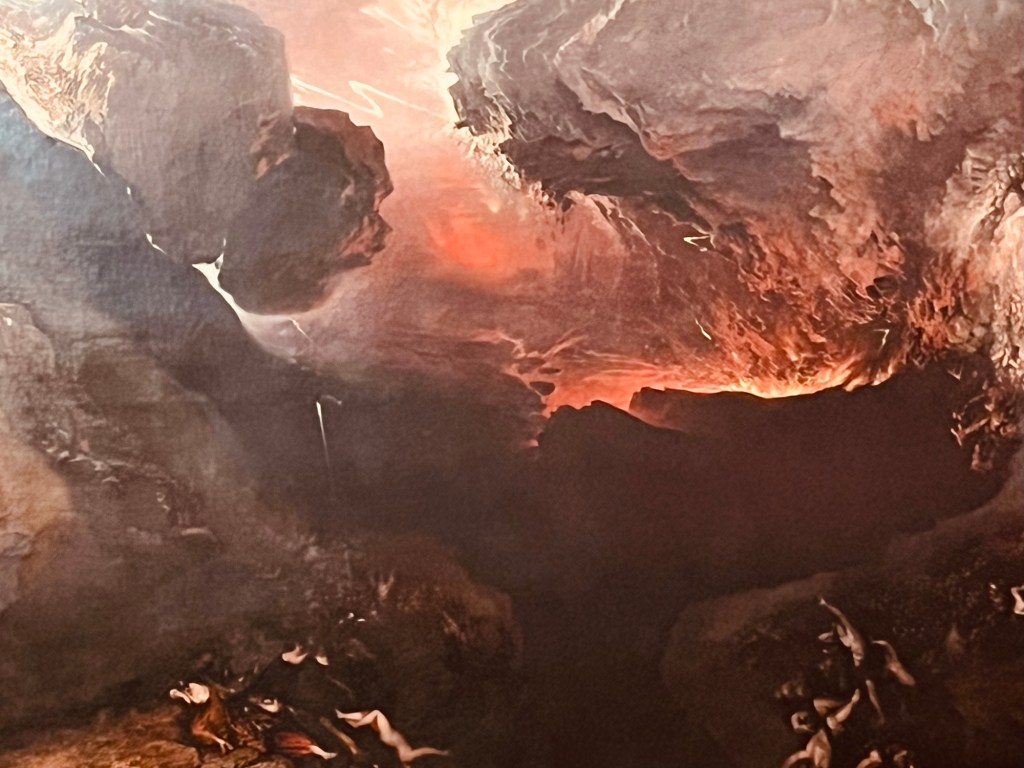
The tumultuous times of the late 18th and 19th centuries, along with global wars, came at a huge cost, marked by massive taxation for ordinary people, widening wealth gaps, poverty, and unemployment. Artists responded by painting dramatic battle scenes or images that either evoke a Romantic past or feelings of awe and terror.

Art and spirituality

Much of religious art was commissioned by monasteries in medieval times to convey the gospel because most people were illiterate. In contemplation of the art, the individual had a unique gateway to experiential spirituality.

Apocalyptic imagery from the Book of Revelation reflects the deep anxieties of a time when rapid technological and social upheaval left many feeling unmoored. Long-held certainties, norms, and values were beginning to crumble. In many ways, these ancient fears echo our own and mirror the disruptions in today’s world.

Artists sensing underlying tensions

Major social and political shifts are often preceded by conflict and upheaval. Artists sense these underlying tensions long before they burst into the open ,but also give some cues to a brighter future.

Art offers us a unique lens through which to view the past, revealing not just historical waymarkers but the deeper rhythms of human experience.

History moves in cycles. Out of hardship and resilience emerges renewal and growth, only to give way once more to seasons of disruption and decline. Yet, from each winter of decay, a new spring is born, reminding us that regeneration is woven into the very fabric of life.

Reino Gevers – Author – Mentor –Speaker

P.S: If you enjoyed this article you might be interested in my very latest book: Sages, Saints and Sinners Get it today on Amazon, Barnes & Noble and where all good books are sold.

Leave a comment

Filed under art, Uncategorized

When Life Hurts, Purpose Heals

Everything can be taken from a man but one thing: the last of the human freedoms—to choose one’s attitude in any given set of circumstances, to choose one’s own way.” Victor Frankl

In just nine days after being liberated from a Nazi death camp, Viktor Frankl poured his unimaginable ordeal into one of the most profound testaments to human resilience and the indomitable spirit ever written.

Upon his return to Vienna he found that his wife and almost entire family had died in concentration camps.

Most people would have been broken by such devastating pain, but Frankl managed to turn his suffering into a powerful pschological and spiritual mission.

His book: Man‘s Search for Meaning serves as a powerful guideline for all people currently experiencing almost insurmountable difficulties.

Frankl firmly believed that meaning can be found even in the most harsh conditions.

Purpose

Essential for Frankl was a firm belief in the Why.

Knowing your „why” helped people survive even the most brutal conditions, Frankl found. For him, it was the hope of seeing his wife again and the desire to rewrite his lost manuscript on his logotherapy psychological theory.

Detachment

He learned to detach from his suffering by focusing on memories, nature, and moments of beauty or spiritual reflection. He found that even in the camps, one could choose a different mindset—what he called the “last of human freedom.

Helping Others

As a psychiatrist, Frankl often counseled fellow prisoners, helping them find meaning and hope. This act of service gave him a sense of dignity and reinforced his own resilience.

Focusing on the Present

Frankl adapted to the harsh camp routines by focusing on small daily tasks and not letting himself be overwhelmed by fear of the future.

Belief

Recent groundbreaking studies reveal that individuals who anchor their lives in the belief in a higher power demonstrate significantly greater resilience in navigating and transforming adversity.

Evil has a persistent way of manifesting itself, sometimes infecting entire nations and societies—as seen in Nazi Germany. It can appear all-powerful, overwhelming any hope for goodness to prevail.

Yet, history shows that in the darkest hours, seeds of light and righteousness are quietly sown, preparing the way for a new dawn. Evil, by its nature, violates the deeper laws of creation. It tends to overreach—and in doing so, ultimately sows the seeds of its own destruction.

Reino Gevers – Author – Mentor –Speaker

If you enjoyed this article you might be interested in my very latest book: Sages, Saints and Sinners Get it today on Amazon, Barnes & Noble and where all good books are sold.

Leave a comment

Filed under mental health, psychology, purpose, spirituality, Uncategorized

Words matter

„False words are not only evil in themselves, but they infect the soul with evil „ – Socrates

Socrates’ timeless warning about the power of words feels more urgent than ever in a world flooded with information overload much of it crafted to mislead and deceive.

When those in power use language to distort reality, the ability to discern truth from illusion becomes not just a skill, but a necessity.

Choosing your words wisely

The way we speak and the choice of words matter, revealing our true character with language a key tool in preparing the soul for truth.

Multiple studies confirm what the Ancient Greek sages knew all along: The words we speak and internalize can significantly impact our emotions, stress levels and body metabolism.

Neuroscientist Dr. Andrew Newberg and communications expert Mark Robert Waldman found that even a single negative word can stimulate the brain‘s fear center, or amygdala.

Conversely, positive words stimulate the prefrontal cortex associated with logic and emotional balance.

Words that heal

Hearing or uttering positive words such as love, gratitude, support, strong, capable, resilient, brave, happy, vibrant, cheerful or warmth activates reward centers in the brain, leading to increased dopamine and serotonin levels.

Using positive affirmations or mantras have an even more powerful impact. Some examples:

– I am surrounded by kindness, compassion and love.

– My life is filled with gratitude, radiance and happiness.

– I am a magnet of abundance and prosperity.

– I am resilient, strong and full of courage

Mantras and prayers have been used for centuries to cultivate inner peace and spiritual strength.

Om Mani Padme Hung, with its emphasis on resonant vowels, carries a unique vibrational quality that makes its repetitive intonation especially powerful for cultivating inner peace and facilitating emotional healing. Its rhythmic chanting not only calms the mind but also helps release stress, fostering a deep sense of balance and spiritual well-being.

The Ave Maria whether sung or recited in prayer enhances comfort and protection, particularly during challenging times. It deepens feelings to the divine, reinforcing trust and surrender.

A 2001 study published in the British Medical Journal found that recitation of the Rosary including the Ave Maria synchronized breathing to about six breaths per minute, a rhythm particularly effective in reducing anxiety and enhancing emotional well-being.

Words and language fulfill their highest purpose when they uplift the soul and foster spiritual growth—when they seek truth through song, poetry, or storytelling, resonating with the deeper essence of human experience.

Powerfully chosen words illuminate the path to truth and freedom. Writers select them with care and intention. Storytellers and poets devote a lifetime to refining their craft. But when language is twisted for ulterior motives, it does more than deceive—it corrupts the soul, as Socrates warned.

Reino Gevers – Author – Mentor –Speaker

If you enjoyed this article you will be interested in my books available where all good books are sold.

Leave a comment

Filed under spirituality, Uncategorized

Sages, Saints, and Sinners: When things fall apart

History is often said to follow a cyclical pattern, where humanity repeatedly faces cathartic trials to achieve breakthroughs in collective consciousness.

Over the past four years, I have delved deeply into comparing the COVID-19 crisis with another pivotal catastrophe in human history—the Black Death of the 14th century.

Reflecting on the pandemic’s impact, it feels almost surreal how profoundly it has reshaped our lives. The lingering effects of collective fear, anxiety, and uncertainty continue to ripple through societies, fueling political extremism and even the collapse of governments in several countries. And this, it seems, is only the beginning.

This journey of reflection and exploration has culminated in an exciting milestone: my upcoming book, Sages, Saints, and Sinners is set to release on April 8th. The novel delves into the historical echoes, human resilience, and moral questions that crises like these bring to the forefront. It will be available on all major platforms where great books are sold.

This project has been a labor of love, spanning four years of research and writing. During the lockdown, I felt compelled to explore irrational and sometimes inexplicable human behavior.

Scapegoating during times of crisis

In the 14th-century, those deemed responsible for the Black Death were quickly identified. The clergy framed the pandemic as divine punishment for “sinful living,” while a pernicious rumor accused Jewish communities of poisoning water wells. This led to horrific acts of violence, with thousands of Jews killed in baseless retribution. So-called witches, often midwives and healers, were burned at the stake.

When it became clear that even devout clergy were not spared by the plague, the church lost much of its credibility. In the same way the often haphazard way governments implemented the lockdowns during Covid has led to extreme distrust in all institutions.

If this seems primitive, consider how misinformation flourished during the COVID-19 pandemic, spreading even faster than reliable facts. One widely circulated claim was that the virus had been engineered in a lab as a bioweapon. Another conspiracy theory blamed 5G mobile networks for the pandemic. Despite overwhelming evidence of their effectiveness, some argued masks were either useless or harmful. Others falsely believed that exposure to sunlight or high temperatures could prevent infection.

Misinformation and rumor hampering efforts to address a crisis

Similarly, medieval misconceptions about disease transmission fueled dangerous behaviors. Many believed the plague spread through foul air, leading to bizarre practices such as drinking urine or wallowing in filth to ward off illness. The correct assumption that the pandemic was spread by rodents was widely ignored. Observant authorities were finding that in clean areas infections were relatively low while they were highest in suburbs with a high rat population.

Across both eras, misinformation magnified fear and hampered efforts to address the crisis effectively.

Spiritual conflict and the weight of fate

In the novel, I have weaved the story around the two main characters Geronimo and Isabel whose bond is tested by spiritual conflict, the weight of fate, and the unforgiving realities of a world in turmoil.

When Geronimo is enslaved and Isabel, heartbroken, seeks refuge in a convent, their tragic journey unfolds, echoing the timeless struggles of myth and history.

I dare to say that the next few years are likely to be marked by an external world marked by geopolitical shifts, fake realities, and disruptive chaos.

It need however, not fill you with fear or anxiety. One principle of creation that we learn from Daoist philosophy is that a state of equilibrium and new beginnings is often preceded by a whirlwind of destruction and chaos.

With the universe forming the ultimate equilibrium, surface events often appear chaotic, but are inherently connected to a universal order. In Daoism, nature is often used as an analogy. A fire might raze a landscape, or a storm uproot trees. An entire landscape can be reshaped but space is also cleared for new growth and fresh beginnings.

In times of profound change, the wisest approach is not to resist but to adapt. The key lies in releasing rigid expectations and surrendering to the process of transformation with resilience and grace. By embracing simplicity and practicing non-attachment to specific outcomes, we can navigate transitions with greater ease and clarity.

While external forces such as geopolitical upheavals, natural disasters, and pandemics are beyond your control, the response to them is entirely within your power.

By focusing on what you can influence in your mindset and actions, you can empower yourself by transforming challenges into opportunities for growth and discovering strength in the midst of uncertainty.

Reino Gevers – Author – Mentor – Speaker

P.S. If you enjoyed this article you will be interested in my books available where all good books are sold.

Leave a comment

Filed under humanity, mental health, psychology

Minds captured by Fanaticism

A right-wing media ecosystem fueled by resentment and anger is capturing millions of minds with a steady stream of alternate realities, stoking division, and delivering a daily narrative designed to reinforce grievance and distrust.

Social media is becoming an even more integral part of daily life, particularly for younger generations, as highlighted by Pew Research. While extremist platforms like Rumble remain smaller than giants like YouTube, they still attract millions of followers, spreading a wide array of conspiracy theories and disinformation.

Driven by a core message of fear and anxiety, these “hate entrepreneurs” pin blame for personal and collective challenges on a shifting cast of internal and external enemies, further exacerbating divisions.

Doom prophecies have long been a typical playbook of cults and populist political leaders.

It appears that once a person has invested huge time and energy resources in a particular belief, it becomes part of their identity. Even the best argument or scientific study will not dissuade the person from adopting a different perspective. They become locked in a particular mindset. Different perspectives or beliefs are radically rejected and some even turn to violent behavior to defend their mindset.

During medieval times when the black plague decimated much of the European population, rumor and superstition spread just as fast. A rumor that the Jews were responsible for the plague by poisoning water wells led to a mass pogrom in the French city of Strasbourg. About 2,000 Jews were burned alive on a platform constructed in a Jewish cemetery on Valentine’s Day in 1349.

Leon Festinger, a social psychologist, made groundbreaking contributions in the 1950s to understanding belief systems. He based much of his findings on studying a cult led by Dorothy Martin (alias Marian Keech), who claimed to receive messages from extraterrestrial beings about a catastrophic flood that would destroy the Earth on a specific date.

In some of his key findings he found that members of the cult were so committed to their belief that they abandoned jobs, loved ones and possessions in preparation for the flood. When the prophecy failed, instead of abandoning their belief, the cult members rationalized the failure by claiming that their prayers had “saved the world.”


Festinger found that cognitive dissonance was highest among those who had made the most significant personal sacrifices for the cult, doubling down on their belief and reinforcing their fanaticism.

In a digital world it becomes far easier for cults and extremist groups to maintain cohesion by withdrawing into information silos that cement beliefs such as:

  • Climate change denial
  • Vaccines are a conspiracy by the pharmaceutical industry
  • The “chemtrails” conspiracy theory posits that the condensation trails left by aircraft—are chemicals intentionally sprayed into the atmosphere for nefarious purposes. The rumor has persisted since the early 1990s despite the lack of clear scientific evidence.

Fixed belief and fanaticism ultimately creates a toxic emotional state, blending fear, anxiety, and anger. It fosters dehumanization, deepens political polarization, and fractures social cohesion.

On a personal level, it becomes a significant barrier to self-growth and spiritual evolution. In a rapidly changing world, adapting is essential for survival. Clinging to rigid beliefs not only limits personal transformation but also blinds you to the new opportunities and possibilities the universe continually offers.

Reino Gevers – Author – Mentor – Speaker

P.S. If you enjoyed this article you will be interested in my books available where all good books are sold.

Leave a comment

Filed under mass media, mental health, psychology, raised consciousness, self-development, social media, Uncategorized

Disinformation: The Threat to Democracy

I had to read the headline twice to fully grasp what was happening: meteorologists in the U.S. have been inundated with abuse, including death threats, from conspiracy theorists accusing them and the government of manufacturing and controlling hurricanes.

This disturbing trend mirrors the threats scientists faced during the COVID-19 pandemic, when fake news spread claims that the virus was a hoax. Recently, I made the mistake of commenting on an article about the U.S. presidential elections, only to be bombarded with vile remarks and personal insults.

Violent threats are becoming alarmingly common, especially on platforms like Twitter, where safeguards against disinformation have largely collapsed since Elon Musk’s acquisition. Now, anyone with an internet connection can propagate wild conspiracies, with little to no oversight.

A key tactic of right-wing extremists is to vilify both independent and mainstream media, constructing a dystopian reality where truth is distorted into lies and falsehoods are presented as truth. By manipulating reality and eroding public trust in factual information, they create fertile ground for the rise of totalitarianism.

Hannah Arendt, the German-American political theorist and philosopher, best known for her works on totalitarianism, warned as long ago as six years after World War II:

“The ideal subject of totalitarian rule is not the convinced Nazi or the convinced communist, but people for whom the distinction between fact and fiction (ie the reality of experience) and the distinction between true and false (ie standards of thought) no longer exist.”

Arendt’s concern with the fragility of truth in the public realm echoes today’s concerns about the impact of fake news on public trust in media, government, and institutions. When people no longer trust facts, they withdraw from democratic engagement and become vulnerable to authoritarian manipulation.

The reason why MAGA Trumpists and their acolytes such as Musk are targeting “mainstream media” is that Independent media is often at the forefront of exposing corruption, abuses of power, and misinformation, which might otherwise go unchecked.

Investigative journalism plays a pivotal role by digging into stories that powerful entities want to keep hidden. Independent media, free of government control, regularly fact-check falsehoods. Some examples include the British Broadcasting Corporation (BBC), The Guardian, and ProPublica.

PolitiFact is one of the most well-known fact-checking organizations in the United States. It is widely recognized for its Truth-O-Meter, which rates the accuracy of statements made by politicians, public figures, and media outlets. The ratings range from “True” to “Pants on Fire” for particularly egregious falsehoods.

Basic democratic freedom and liberty are being threatened in multiple countries. Authoritarian messaging is based on negativity and falsehoods to spread fear, anxiety, and division. The existing reality is exaggerated to much worse than it is. It promises the struggling working class a Utopian future. This future will, of course, never materialize.

Here are just a few examples of what you face if you allow authoritarianism to take control of your life:

  • Power is mostly concentrated in the hands of a single leader or a small ruling elite. Checks and balances are eroded allowing leaders to act without accountability or transparency.
  • Authoritarian leaders use their positions to enrich themselves and their acolytes. Public resources are diverted for personal gain, leading to a lack of investment in essential services like education, healthcare, and infrastructure.
  • Political competition is eliminated or severely restricted by changes in laws benefiting the ruling party. Opposition leaders may be imprisoned, exiled, or assassinated as we are currently seeing in Putin’s Russia.
  • Authoritarian regimes stoke hatred of “the other,” including ethnic and religious minorities, leading to social fragmentation violence and unrest.
  • Authoritarianism prioritizes control over economic liberalization, creativity and innovation. In the long term economies stagnate, and entrepreneurship is stifled.

Happiness is created by mindset and perspective. Foundational is a society with basic freedoms of democracy and expression. Authoritarianism ultimately has a devastating effect on every citizen. You end up being poorer, more desperate and living a life of quiet misery.

As Winston Churchill once summized: “Democracy is the worst form of government, except for all the others that have been tried.”

Reino Gevers – Author – Mentor – Speaker

P.S. If you enjoyed this article you will be interested in my books available where all good books are sold.

Leave a comment

Filed under climate change, demagogues, humanity, ideology, mental health, social media

Victimhood and Embracing Responsibility

In a relentless storm of external distractions, it’s easy to lose yourself in a maze of illusions, false hopes, and misleading perceptions that steer you away from your true destiny and purpose.

The messaging from the world out there is primarily that happiness is created by „having“ rather than „being“.

Abundance and prosperity, if used mindfully, are useful tools to make an impact, but if they are the primary motive of all your efforts you will never have enough, falling into the trap of postponing the good life to some distant future.

Here is the hard truth: That moment will never come if you fail to live fully in the present moment, and practice gratitude for all the blessings that you already have.

Accepting Responsibility

Victimhood is one of the biggest obstacles to growth and personal fulfillment. By blaming your partner, your parents, your boss and the government for all that has gone wrong in your life you stay at a low vibrational energy where you will miss all the opportunities offered by the universe.

When the language you speak to yourself and others is mainly one of anger, retribution and hate you will attract much of the same dark energy around you. What you emanate to the world you will receive. You will remain trapped in an endless cycle of unhappiness.

We are all victims to some degree. The storms of life can unsettle in countless unpredictable ways. External events, accidents, personal loss and natural catastrophes are not under your control. But how you deal with these unexpected events make all the difference.

Photo by Julia Avamotive on Pexels.com

Accepting Impermanence

Like the seasons in nature nothing is permanent. The natural cycle dictates a time of spring and summer for birth, growth, and harvesting before we enter again a season of autumn and winter. The dark cold seasons of life are a time for introspection, recalibration and renewal. It means letting go of people that keep you at a low frequency, changing a job, a location or even a country. Fear of the unknown often leads to procrastination in the comfort zone but moving ahead also presents the greatest opportunity for growth and personal fulfillment.

Follow your aspirations and dreams

Never give up on your values, purpose and your why. You will intuitively sense that you are on the right path if everything falls into place. You meet the right people at the right time at the place at the right time. You feel a surge of energy and passion when you are doing the things that are in sync with your values and dreams.

Societal norms and expectations

There will always be other people who are seemingly happier, healthier and wealthier than you are. What you see on social media is not the reality. Sometimes those people who seemingly have everything in terms of fame and fortune are deeply unhappy because happiness is a state of mind.

Taking time for solitude

In a noisy and hurried world it has become more essential than ever to take time out for solitude and contemplation. When you take time for a quiet walk in nature the noise of the world recedes into the background. You will sense an innate harmony beyond the seemingly chaotic. In the natural world everything is interconnected and has its place and purpose within the totality of wholeness.

Reino Gevers – Author – Mentor – Speaker

P.S. If you enjoyed this article you will be interested in my books available where all good books are sold.

Check out also the recent episode on the Living to BE podcast and Youtube with our special guest Matt O’Neill. The topic: Happiness is a Choice.

2 Comments

Filed under gratitude, happiness, mental health, mental-health, self-development, Uncategorized