Tag Archives: self-development

From religion to the political cult

For centuries, organized religion shaped people’s beliefs, provided meaning, and defined purpose in life. However, in today’s increasingly secular world, political parties are stepping into this void, offering a “gospel” that vilifies and divides.

Genuine political debate and the exchange of ideas have taken a back seat, as leaders of political movements are elevated to “cult” status, portrayed as messianic figures who claim to hold the ultimate truth.

Political cults manipulate and coerce

Many self-proclaimed religious prophets and sects inevitably faded into obscurity amid financial scandals and sexual abuse. Political cults meanwhile seem to have a field day seek in coercing followers into submission while draining them of their material resources.

Cult members are notorious for defending and excusing the misdeeds, bad behavior, and extravagance of their leaders. Devotion becomes an addiction to belief. Identity is entirely tied to cult membership.

It is only after a long process of “detoxification” that individuals may realize that true happiness cannot be outsourced. No one else is responsible for creating your happiness or unhappiness—ultimately, it is the choices you make that shape a fulfilling life..

The similarities between organized religion and political parties with a cult-like following are compelling. They both provide members with community, identity and a sense of belonging. Membership of a “tribe” shapes your friendships and beliefs. Political ideologies can become just as dogmatic as religious orthodoxy, with little room for compromise or divergent views.

The political cult uses party symbols, flags, and slogans in a similar way as religious iconography, reinforcing group identity and loyalty.

In the “Us vs. Them Mentality” political cults foster a binary division between “us” (the faithful) and “them” (the heretical or the non-believers). It ultimately leads to increased division and social fragmentation.

Historical parallels

In the mid 20th-century the fascist movements in Italy and Germany took on religious-like fervor. Mussolini and Hitler were literally worshipped as messianic figures, built around powerful symbols such as swastikas, chanting of slogans at mass rallies with oaths of allegiance.

History teaches us that when organized religion retreats into orthodoxy and forms a toxic alliance with political radicalism, the consequences are devastating.

The Thirty Years’ War (1618–1648) was one of the most destructive and complex conflicts in European history, involving many of the major powers and resulting in significant political, social, and religious upheavels across the continent. While starting out as an ideological conflict between Catholics and Protestants, it was also driven by political, dynastic, and territorial ambitions.

The conflict was only solved in The Peace of Westphalia treaty establishing the principle of religious tolerance within the Holy Roman Empire, effectively ending large-scale religious wars in Europe. This came after The Holy Roman Empire lost between 15-20 percent of its population. In some regions, such as Germany, where most of the fighting took place, certain areas lost up to half of their inhabitants.

Most concerning are current development in countries such as the United States and India where religious fundamentalism forms an alliance with political radicalism. There is a breakdown of democracy, intolerance of dissent, a breakdown in constructive dialogue, and ultimately social fragmentation and disintegration.

A political religion is centered on building a tribe of like-minded followers who can be swayed and manipulated by those seeking power and personal gain. While it fosters a sense of identity and community, it demands unwavering loyalty to its self-constructed ideology, silencing dissent and, in the end, stripping the followers of their freedom and happiness.

The 13th-century Mystic Meister Eckart, in warning of the false prophets, said: “Let us observe first, therefore, that there are some who follow God. These are the perfect. Others walk close by God, at His side. These are the imperfect. But there are others who run in front of God, and these are the wicked.”

The new “cosmic” religion

Albert Einstein envisioned a new “cosmic religion” not tied to any particular religious creed or doctrine. Instead of being bound to specific religious institutions or deities, the “cosmic religion” would be rooted in a sense of awe, wonder, and reverence for the universe itself—what he called the “cosmic mystery.”

Einstein felt that science, by revealing the beauty, interconnection and complexity of nature, could evoke a profound spiritual response, that could unify humanity beyond traditional religious divides. He emphasized moral responsibility, interconnectedness, and an appreciation for the mysteries of existence, without reliance on traditional religious structures or personal gods.

Experiential spirituality in contrast to organized religion is rooted in direct, personal experience of the divine, or a sense of connection to the universe. It is an inward, subjective journey where each individual seeks their own spiritual truths through spiritual practises such as meditation, deep walking in nature and personal reflection. Individual spiritual experience is the ultimate authority.

Happiness is a state of mind

Happiness is a state of mind and perspective. Most humans spend a large portion of their day thinking of that which was and is no more or in anxiousness and fear of an uncertain future. A negative mindset opens your mind to manipulation by external forces. The only reality is the present moment.

What do you have in your life for which you can be truly grateful?

Why not practice a gratitude ritual for the small blessings and miracles of life? What brings you authentic joy and happiness?

If you have electricity, clean water, a roof over your head, and food on the table, you are incredibly fortunate compared to a significant portion of humanity. These basic amenities, which many take for granted in developed parts of the world, remain out of reach for millions of people globally.

Access to these resources gives you much better economic security and educational opportunities. You have the ability to improve your life and the lives of future generations. You are fortunate to have greater freedom to pursue personal goals, education, and self-improvement, and don’t need to struggle for survival like most people on earth.

Reino Gevers – Author – Mentor – Speaker

P.S. If you enjoyed this article you will be interested in my books available where all good books are sold.

Leave a comment

Filed under extremism, gratitude, happiness, religion, spirituality

Pilgrimage, Mystery, and Healing

In London’s Westminster Cathedral stands a strikingly beautiful statue of Our Lady of Walsingham, emanating timeless grace, peace, and compassion.

The Marian shrine of Our Lady of Walsingham, located in Norfolk, England, traces its origins back to the early 11th century. Known as “England’s Nazareth,” it became one of the most significant and ancient pilgrimage sites in the country.

Known as the „Walsingham Way,” countless pilgrims visited the Holy House with a wooden statue of the Virgin Mary as a focal point of contemplation. It was a time when monasteries and shrines connected medieval pathways in a powerful matrix throughout Europe.

But in 1538 Henry VIII ordered the Walsingham statue to be taken to London and destroyed. As part of his break from Catholicism, monasteries were dissolved, pillaged and pilgrimages prohibited.

Only in recent times, the Walsingham pilgrimage path has been revived now officially forming part of the network of pilgrimage paths to Santiago de Compostela in Spain.

The shrine in Walsingham has regained its medieval significance, often referred to as the “English Lourdes” because of its central place in Catholic and Anglican devotion in England.

Pilgrims to Walsingham seek healing, spiritual guidance, and a deepened relationship with the Virgin Mary. It remains a place of great spiritual renewal for many, with visitors walking the Holy Mile, a traditional part of the pilgrimage route.

The beautiful statue of the Walsingham Lady in Westminster Cathedral was commissioned by Cardinal Griffin in 1954 and sculpted by Pius Dapre. For many years it remained hidden and almost unknown in the Cathedral Crypt until it was recovered.

Mystery still surrounds the original wooden shrine which may have never been burned and destroyed as ordered by Henry VIII.

An article recently published in The Catholic Herald quoted art historians as saying that The Langham Madonna, a battered 13th-century English statue in London’s Victoria and Albert Museum, is in fact the original statue of Our Lady of Walsingham.

There were no eyewitness accounts that the statue was actually destroyed in London, according to the historians but hidden by Catholic loyalists until it reappeared centuries later in the museum.

Throughout history, countless myths, legends, and mysteries have surrounded the figure of the Goddess—whether Mary, Brigid, Kali, Isis or others—appearing and reappearing in various forms. At times, she has been revealed as a beautiful statue, carved from wood, stone, or marble, inspiring the creation of shrines, monasteries, or cathedrals at the place of her discovery.

Mary, in particular, has been known to appear in sacred apparitions at sites like Walsingham, Lourdes, and Fatima—places where the veil between worlds seems thin. Regardless of whether one is a believer, agnostic, or of another faith, her presence has been tied to stories of miracles that defy logic. Yet, time and again, she has brought comfort, solace, and peace to those facing pain and confusion.

Reino Gevers – Author – Mentor – Speaker

P.S. If you enjoyed this article you will be interested in my books available where all good books are sold.

Check out also the recent episode on the Living to BE podcast and Youtube with our special guest Matt O’Neill. The topic: Happiness is a Choice.

Leave a comment

Filed under mental health, Pilgrimage, spirituality, Uncategorized

Healing the Wounded Inner Child: A Key to Finding Soul Purpose

Unlocking your true potential and discovering your soul-driven purpose often begins with healing your inner child—the part of you that struggles with procrastination or reacts intensely to seemingly minor triggers.

Many adults carry emotional wounds from childhood, like shame, guilt, or neglect, which can lead to feeling stuck in a victim mentality, reliving the past. Instead of facing and nurturing this wounded inner self, some turn to addiction or other forms of escape, missing the opportunity for true healing and growth.

Even more troubling, the wounded inner child—having endured severe physical and emotional abuse—may adopt aggressive behavior as a defense mechanism. Many of history’s most ruthless dictators, including Adolf Hitler, Mao Zedong, Joseph Stalin, and Vladimir Putin, experienced deeply traumatic childhoods.

A malignant narcissist, rather than addressing the root of their pain, develops an insatiable need to be admired, validated, and revered. Beneath this façade lies a profound lack of self-esteem that drives them to constantly seek attention and control. Often found at the helm of political or religious cults, they surround themselves with sycophants, viewing even constructive criticism as betrayal. They believe they are always right, making it unlikely they would ever seek help or therapy.

I’ve often wondered why an increasing number of adults seem to lose the plot, have no situational awareness, and lack the most basic courtesy. The foundational stones of adult life are in many ways determined in early childhood, setting you up for success or failure in later life. But no matter what baggage from the past you are carrying on your shoulders you still have the power of choice.

Emotional support, attention, and affection are crucial for a child’s healthy development. The wounded child may have been an unwanted child, having received little physical or verbal expressions of love and affection.

One or both of the caregivers have been preoccupied, unavailable, and emotionally distant for much of the child’s life. They turn into adults who have difficulty regulating their emotions and struggle with their interpersonal relationships or suffer from anxiety and depression.

Self-care and healing the inner child

Healing the wounded inner child is key to unleashing your creative powers, self-esteem, and soul-driven purpose. It is never a one-off process but can be a lifetime journey of self-reflection and self-compassion.

The worst you can do is fall into the blame game, making your past responsible for all the mishaps in your life. The healing process starts by taking a different perspective and accepting the feelings and emotions from your childhood.

You can connect with your inner child by meditating on a picture of yourself at an age that was particularly hurtful or traumatic. Talk to that younger version of yourself offering parental comfort, support, and understanding that it didn’t have at the time. It is extremely helpful to start the process with the help of an experienced mentor or therapist.

Engage in activities that nurture the joy of the inner child

Even if most of your childhood was a long dark chapter, there were also moments where you experienced joy. Find out what gave you joy in the early stages of your life and whether you can expand on that in your adult life. Maybe it was playing with a favorite pet, reading a particular book, or watching a particular fairytale movie.

Setting boundaries

The hurt inner child has never learned to set healthy boundaries. Setting boundaries goes hand-in-hand with self-care. The more you start loving and practicing self-care with your inner child, the more you will become aware of what expands your energy and what sucks away at your energy level. Practice saying no to persons when you feel overwhelmed, when something doesn’t align with your values, or when you simply need your own space.

Healing the wounded inner child is a deeply personal journey, and different techniques or approaches may resonate with different individuals. Trust your instincts and the voice of your inner child.

Reino Gevers – Author – Mentor – Speaker

P.S. If you enjoyed this article you will be interested in my books available where all good books are sold.

Check out also the recent episode on the Living to BE podcast and Youtube with our special guest Matt O’Neill. The topic: Happiness is a Choice.

Leave a comment

Filed under mental health, mental-health

Victimhood and Embracing Responsibility

In a relentless storm of external distractions, it’s easy to lose yourself in a maze of illusions, false hopes, and misleading perceptions that steer you away from your true destiny and purpose.

The messaging from the world out there is primarily that happiness is created by „having“ rather than „being“.

Abundance and prosperity, if used mindfully, are useful tools to make an impact, but if they are the primary motive of all your efforts you will never have enough, falling into the trap of postponing the good life to some distant future.

Here is the hard truth: That moment will never come if you fail to live fully in the present moment, and practice gratitude for all the blessings that you already have.

Accepting Responsibility

Victimhood is one of the biggest obstacles to growth and personal fulfillment. By blaming your partner, your parents, your boss and the government for all that has gone wrong in your life you stay at a low vibrational energy where you will miss all the opportunities offered by the universe.

When the language you speak to yourself and others is mainly one of anger, retribution and hate you will attract much of the same dark energy around you. What you emanate to the world you will receive. You will remain trapped in an endless cycle of unhappiness.

We are all victims to some degree. The storms of life can unsettle in countless unpredictable ways. External events, accidents, personal loss and natural catastrophes are not under your control. But how you deal with these unexpected events make all the difference.

Photo by Julia Avamotive on Pexels.com

Accepting Impermanence

Like the seasons in nature nothing is permanent. The natural cycle dictates a time of spring and summer for birth, growth, and harvesting before we enter again a season of autumn and winter. The dark cold seasons of life are a time for introspection, recalibration and renewal. It means letting go of people that keep you at a low frequency, changing a job, a location or even a country. Fear of the unknown often leads to procrastination in the comfort zone but moving ahead also presents the greatest opportunity for growth and personal fulfillment.

Follow your aspirations and dreams

Never give up on your values, purpose and your why. You will intuitively sense that you are on the right path if everything falls into place. You meet the right people at the right time at the place at the right time. You feel a surge of energy and passion when you are doing the things that are in sync with your values and dreams.

Societal norms and expectations

There will always be other people who are seemingly happier, healthier and wealthier than you are. What you see on social media is not the reality. Sometimes those people who seemingly have everything in terms of fame and fortune are deeply unhappy because happiness is a state of mind.

Taking time for solitude

In a noisy and hurried world it has become more essential than ever to take time out for solitude and contemplation. When you take time for a quiet walk in nature the noise of the world recedes into the background. You will sense an innate harmony beyond the seemingly chaotic. In the natural world everything is interconnected and has its place and purpose within the totality of wholeness.

Reino Gevers – Author – Mentor – Speaker

P.S. If you enjoyed this article you will be interested in my books available where all good books are sold.

Check out also the recent episode on the Living to BE podcast and Youtube with our special guest Matt O’Neill. The topic: Happiness is a Choice.

2 Comments

Filed under gratitude, happiness, mental health, mental-health, self-development, Uncategorized

Divine Whispers and the Pursuit of Happiness

In a world plagued by anger and fear, the pursuit of happiness is primarily directed toward external gratification and distractions, causing much pain. Now, more than ever, it is crucial to seek quiet moments of solitude to rediscover true meaning, purpose, and a life of bliss.

The ancient Mystics often interpret the voice of the divine as coming in a whisper, a still voice within the soul, giving guidance and instructions on the spiritual journey, especially when reconnecting with the beauty and harmony found in nature.

Evil draws to what is other

As opposed to the wholeness and beauty of divine creation, the 13th-century Mystic Meister Eckart describes evil as essentially “accidental in its nature: it stands outside, draws and directs things outwards, distracts from inner things, draws to what is other, smacks of otherness of division, withdrawal or falling away. Evil, therefore is nothing but a defect or shortcoming.”

In experiential spirituality the divine is perceived through silent contemplation or in a state of presence and being that transcends concept and language. The Mystics understood divine truth as direct experience rather than surrender to the fixed belief and dogma of religion.

After walking the Camino de Santiago for the first time in 2006 I sensed this “something” of a mystery beyond concept and religion. I have meanwhile walked more than a dozen Caminos, which has for me become an annual retreat of inner reflection. I’ve spoken to hundreds of pilgrims on the Camino who have had a profound transformation in reconnecting with their inner voice whilst walking on this magical path.

But there are also many other ways including the creation of a “quiet space” amid the turmoil of a busy and noisy life.

Between time and eternity

Meister Eckhart describes the soul as created in a place between time and eternity:

“With its highest powers it touches Eternity, with its lower Time. To the extent that the soul is able to withdraw from Time and its concerns, the more God is revealed in it and the more God is speaking in it and by it.”

The whispers from the universe or God can be heard most clearly when the soul transcends the temporal and focuses on the eternal, turning contemplatively inward.

A life of bliss, according to Eckart, is closely aligned to living a “virtuous life” in seeking connection with the divine. Every person has a divine spark within them—a part of God that resides in the soul. A virtuous life involves living in awareness of this divine presence within and allowing it to guide one’s actions.

Eckhart emphasizes the importance of inner purity and detachment from worldly desires and attachments. For him, a virtuous life involves freeing oneself from ego, selfishness, and the distractions of the material world. This detachment allows the soul to be more receptive to God’s presence and to act from a place of divine inspiration rather than personal will.

The famous Sufi poet Rumi describes in one of his lines:

“The breeze at dawn has secrets to tell you. Don’t go back to sleep.”

The subtle, quiet communication from the divine comes in moments of stillness when all the senses are sharpened to full presence.

Reino Gevers – Author – Mentor – Speaker

P.S. If you enjoyed this article you will be interested in my books available where all good books are sold.

Check out also the latest episode on the Living to BE podcast and Youtube with our special guest Matt O’Neill. The topic: Happiness is a Choice

Leave a comment

Filed under meditation, mental health, mental-health, spirituality

The words we use matter

Words have a powerful impact on both mental and physical health, and leaders bear a significant responsibility in choosing words that resonate within a nation’s collective consciousness, either undermining or strengthening social cohesion.

When political or thought leaders normalize belittling, insulting, or threatening language, it sets a precedent for their followers to do the same. It has now become almost impossible to discuss an emotional or controversial topic on social media without it devolving into personal attacks.

Positive words can uplift mood, foster a sense of connection, and enhance self-esteem, while negative words can lead to feelings of anxiety, depression, and stress.

Repetition of negative words impacts your health

Repeated repetition of words that trigger anger and fear reinforces harmful beliefs and thought patterns, cementing a pessimistic or fearful worldview. They turn on the body’s fight-or-flight response, leading to increased heart rate, elevated cortisol levels, and muscle tension.

A well-known study published in 2015 in the journal Psychological Science analyzed Twitter language from different counties across the United States. The researchers found that the frequency of negative words related to anger, stress, and fatigue was a strong predictor of heart disease mortality in those areas. This predictive power was even stronger than traditional factors like smoking and obesity rates.

Negative social media interactions can turn on stress pathways in the body, leading to chronic inflammation, higher blood pressure, and other risk factors.

Positive affirmations promote mental well-being

In contrast, repeated positive affirmations or mindfulness practices involving positive language can lead to lasting changes in brain pathways, promoting greater mental well-being.

Kind, supportive, and empathetic language strengthens relationships and builds social bonds, which are crucial for mental health. Positive words turn on reward centers in the brain, while negative words trigger fear and pain.

Words can trigger the release of feel-good hormones like dopamine and oxytocin, reduce stress levels, and promote relaxation. Here are just some examples of many: love, peace, stillness, breath, kind, smile, cheer, kind, value, and gratitude.

The Power of Mantras and Prayer

Various studies have revealed that recitation of certain prayers and mantras has a particularly positive effect on heart rate variability and cardiovascular health.

The song “Ave Maria,” particularly in its various classical renditions like those by Franz Schubert or Charles Gounod, is known to have a profound calming, and soothing effect on the body and mind. The spiritual connection can evoke feelings of comfort, protection, and spiritual upliftment, quietening the mind and reducing mental chatter.

One of the most widely used and revered mantras in Tibetan Buddhism is “Om Mani Padme Hung”. The mantra is particularly helpful in purifying negative emotions like anger, jealousy, and attachment. Practitioners can cultivate a more compassionate and loving mindset, leading to greater emotional balance and resilience. Chanting the mantra typically involves deep, rhythmic breathing, which can improve oxygenation of the body, enhance lung capacity, and promote a sense of physical calm.

In summary, the words we hear and use in our vocabulary shape who we are, impacting our relationships and our physiological and psychological health.

In moments when the external world pulses with negativity, it’s crucial to establish healthy boundaries and elevate your own vibrational energy. Cultivating a space of stillness, positivity, joy, and self-care becomes essential.

Reino Gevers – Author – Mentor – Speaker

P.S. If you enjoyed this article you might be interested in my books available where all good books are sold.

Leave a comment

Filed under mass media, meditation, mental health, mental-health

The Power of Forgiveness: Healing and Empowering

A few months after Nelson Mandela was released from 27 years of imprisonment by South Africa’s apartheid regime, I had the extraordinary privilege of meeting him at his home with a small group of journalists.

As I stood in his presence, I couldn’t help but wonder how a man who had endured such immense suffering could radiate such profound kindness and show no desire for retribution toward those who had wronged him.

The answer became clear when he shared a powerful insight: “Forgiveness liberates the soul, it removes fear. That’s why it’s such a powerful weapon.”

A powerful message of leadership

Mandela’s wisdom and unwavering commitment to forgiveness set him apart as a leader of unparalleled stature, guiding his nation from the brink of civil war to the dawn of a modern democracy. His example is a powerful reminder of the qualities of leadership that are so desperately needed in our world today.

Seeking retribution for wrongs committed by others is at the heart of the Middle East conflict and peace will not be found unless Israelis and Palestinians learn to forgive each other. It is difficult enough on a personal level to forgive but wise leaders of a country can make all the difference.

Are you struggling to forgive yourself and others? The biblical story of Joseph is one of the most powerful teachings of how the ways of the universe or God can be very different from the plans we often make in life.

Joseph was slandered, beaten, and sold into slavery by his own brothers because of jealousy. Joseph could have easily succumbed to his fate but he never lost faith that everything in life had purpose and meaning.

The trap of the blame game

Only from such a perspective could he forgive his brothers and move out of the trap of the blame game. He made the best out of his situation to such an extent that Potiphar, the man who bought him on the slave market in Egypt, soon promoted him to a higher position. Later he was put in charge of managing Potiphar’s huge estate.

Potiphar had taken a liking to Joseph and must have been impressed by his kindness, wisdom, and humility. For all intents and purposes, Joseph had made it. But Potiphar’s bored wife had taken just as much a liking to the handsome young Joseph.

Realizing that he would betray his master who had done so much for him, Joseph avoided the advances of Potiphar’s wife who became so upset that she accused him of rape. Joseph was thrown into prison losing everything. He could again have succumbed to despondency.

But it so happens that he meets in prison two of the Pharaoh’s ministers who had lost favor with the ruler. One of them was eventually released from prison and restored to his old position. Only when the Pharaoh had a strange dream did the minister remember the time in prison with Joseph who had impressed him as an interpreter of dreams.

Long story short: Joseph gets released from prison to interpret the Pharaoh’s dream. The essence of the dream was that the ruler had to prepare the country for seven years of drought. Amazingly Joseph’s fortune changed in an instant when the Pharaoh recognized the wisdom of the man he was dealing with.  Joseph is promoted to viceroy of all of Egypt as the righthand man of the most powerful ruler of the world at the time.

Life comes in strange twists and turns

True to the dream interpretation the drought did come and only by wise management of the food and grain resources could countless lives be saved including those of Joseph’s brother and aging father Jacob.

Life comes often in strange twists and turns. Fortunes can be earned and lost overnight. High positions of political power and influence may be gone tomorrow. The amazing story of Joseph is that he never lost trust and faith. By forgiving his brothers and Potiphar’s wife for falsely accusing him, he made peace with himself and could go into trust and humility. From that energy grew his wisdom and incredible foresight to prevent a catastrophe.

Forgiving does not mean approval of wrongdoing

Forgiving does not mean that you are approving of wrongdoing, of abuse, and all the terrible things that humans do to each other. It is making peace with the past in the knowledge that you are the person today because of all of that which you have experienced.

The famous Austrian psychiatrist Victor Frankl only survived the Nazi death camps by telling himself that “everything can be taken from a man but one thing: the last of human freedoms – to choose one’s attitude in any given set of circumstances, to choose one’s one way.”

Forgiveness is self-care at the highest level

Forgiveness requires a conscious decision to release feelings of resentment and vengeance toward someone who has harmed you. It is self-care at the highest level.

Forgiveness allows you to release negative emotions and to move on in life. Remaining locked in hate and retribution keeps you at a low vibrational energy that prevents you from spotting the new opportunities the universe is presenting to you.

By choosing to forgive, you are paving the way to a healthier, happier, and more fulfilling life. You are creating room for positive feelings to flourish.

Reino Gevers – Author – Mentor – Speaker

P.S. If you enjoyed this article you might be interested in my books available where all good books are sold.

Leave a comment

Filed under happiness, mental health, mental-health, Uncategorized

The Hidden Climate Culprits: Livestock Emissions

With temperatures soaring well over 40 degrees Celcius here on the Mediterranean island of Mallorca, local authorities have imposed water restrictions and warned people to avoid heat stroke by staying indoors for most of the day.

As climate change warms the planet, heat waves are becoming more common and lasting longer. Vulnerable population groups, especially the elderly, are exposed to life-threatening temperatures. Nature is affected by drying soils and vegetation, posing higher fire risks, according to a recent study.

Climate change is shifting entire populations

Mallorca is Europe’s main holiday destination with tourism generating most of the island’s income. The problem is that the island’s limited water resources can no longer cope with an estimated 18 million visitors this year. In the long-term tourists will be choosing cooler places to go in the northern hemisphere such as Scandinavia.

For most of us these are only the beginnings of rapid climate change. We have not been forced to leave our homes, like the millions of people in Africa, the Middle East, and Latin America who are bearing the brunt of climate change. Repeated flash floods or extreme dry seasons have destroyed large swathes of agricultural land.

Partisan politicization of climate change has muddied the waters

The warning signs and news reports of extreme weather patterns are getting louder by the day. Unfortunately, the issue of climate change has become extremely politicized and prey to America’s culture wars. The climate scientists, who in most cases have studied this field for decades, are getting increasingly alarmed that sound scientific data is being ignored or lambasted as fake.

When I attended the summit of the Intergovernmental Panel on Climate Change (IPCC) in Bonn in 1999, scientists got only one thing wrong. The climate scenarios of extreme weather patterns they had predicted by the middle of this century are already a reality in the year 2024.

Based on the annual report from NOAA’s Global Monitoring Lab, global average atmospheric carbon dioxide was 419.3 parts per million (“ppm” for short) in 2023, setting a new record high. In 1999 the rate of ppm was 367 and some of those scientists I interviewed at the time warned that the tipping point of no return was around 420 ppm.

The human mind tends to go into denial when faced with problems that seem too complex, distant, or threatening to the status quo. Climate activists may have erred in choosing the term “global warming” instead of “climate change.”

Reframing the fossil fuel debate to emphasize pollution, such as clean air, clean rivers, and biodiversity, could be more persuasive. Additionally, reliance on fossil fuels finances some of the world’s most oppressive regimes.

Climate scientists have long warned that extreme weather patterns—including hurricanes, severe winters followed by scorching summers, and flash flooding—would become increasingly common.

Mass animal production and climate change

Climate activists have not done their cause any favor by targeting the airline industry and blaming motorists for most of the carbon dioxide emissions. Somehow the animal food-producing industry has managed to dodge the fact that it impacts climate change to a far greater extent than the transportation industry.

Scientists were aware that the methane produced by grazing cattle – around two-thirds of livestock emissions come from cows – was a significant chunk of the anthropogenic greenhouse gases that were heating the planet’s atmosphere. However, there had been no attempt to quantify how large a chunk it might be.

The report estimated that livestock were responsible for 18% of global greenhouse gas emissions – including nine percent of anthropogenic CO2 emissions, mostly due to deforestation for (pasture and) feed crops, 37% of anthropogenic methane emissions, largely from cow burps, 65% of anthropogenic nitrous oxides, overwhelmingly from manure and 64% of anthropogenic ammonia emissions, according to a study by Henning Steinfeld, head of the UN Food and Agriculture Organization (FAO)’s livestock policy branch.

And then there is the issue of food waste. According to a WWF report about 6%-8% of all human-caused greenhouse gas emissions could be reduced if we stop wasting food. In the US alone, the production of lost or wasted food generates the equivalent of 32.6 million cars’ worth of greenhouse gas emissions.

There is still hope. Our species has survived for so many thousands of generations because we have the ability to adapt to changing circumstances. By making conscious choices on what you buy in the grocery store and what you eat, you will not only be turning things around on your own health but also that of the planet.

There are numerous health benefits by focusing on foods that are nutrient-dense, minimally processed, and sustainably produced:

  • Opt for locally produced and seasonal products such as leafy greens, berries, carrots, tomatoes, apples, and citrus fruits.
  • Production of lentils, chickpeas, black beans, and peas have lower greenhouse gas emissions and improve soil health through nitrogen fixation.
  • Poultry generally has a lower carbon footprint than red meat. Choose organic and free-range options.
  • Steer clear of seafoods that don’t have sustainable eco-labelling. Species like sardines, anchovies, and herring are lower on the food chain and reproduce quickly, making them more sustainable options.

Processed foods often have added sugars, additives, unhealthy fats, and preservatives. Their production is resource-intensive, resulting in high transportation costs and greenhouse gas emissions. By better planning your meals, storing food properly, and using leftovers you can minimize waste.

Starting with these small changes, you can contribute to a more livable planet while enjoying a healthier life with more energy, better sleep, and mental resilience.

Reino Gevers – Author – Mentor – Speaker

P.S. If you enjoyed this article you might be interested in my books available where all good books are sold.

Leave a comment

Filed under environment, Uncategorized

Hardened body, hardened mind

After spending several weeks on my annual pilgrimage retreat along the Camino in northwestern Spain, I have had ample time to reflect on some pressing issues affecting our collective state of mind. I’m increasingly concerned about humanity’s tendency to retreat into tribal bubbles, becoming addicted to fixed concepts and thoughts.

Here is my theory on why the world is at real risk of tipping back into authoritarianism, intolerance, and the cult-like idealization of the “strongman” leader.

Social media thrives on toxic culture

We live in an age where any person in a dark cellar with a deranged mind can get millions of views by posting the most outlandish conspiracy theories, extremism, and anger. There are no real filters or control mechanisms in place to prevent the algorithms from blocking obviously false, distorted, and hateful information. And, there are no legal consequences for those responsible.

A preoccupation with fear, anxiety, and negativity will inevitably impact your mental and physical health. The eyes, brain, and spinal cord are intricately connected through the central nervous system (CNS), facilitating vision, sensory processing, and motor control.

The interconnection of body and mind

The eyes capture visual information and convert it into electrical signals. The optic nerve then transmits these signals to the brain which processes and interprets this information, coordinating with other sensory inputs and cognitive functions The spinal cord transmits these motor commands from the brain to the eyes and other body parts, integrating visual information to coordinate body movements.

Stress starts with negative thought

Stress hormones responsible for flight, fight, and freeze responses of the body are triggered by chronic negative thoughts. Constant worry, fear, and tension will inevitably negatively impact your daily functioning and decision-making. In extreme cases, it leads to depression, hopelessness, and loss of self-esteem.

People preoccupied with negative thoughts may resort to unhealthy coping mechanisms, such as overeating, smoking, substance abuse, or addiction to simplistic thoughts and concepts to numb their emotional pain.

Cognitive distortions, such as catastrophizing (expecting the worst), overgeneralization (viewing a single negative event as a never-ending pattern), and black-and-white thinking (seeing things as all good or all bad).

It is an open door for cult leaders, and extremist political movements offering simple solutions for complex global problems.

What is the antidote?

You have the power to make lifestyle choices, that determine whether you become a tool in the hands of manipulators or take back control over your own mental and physical health. Here are some tips:

  • What you feed your brain with that you become. Monitor your time spent on social media and the consumption of negative news.
  • Physical activity, a balanced diet, and adequate sleep can help mitigate the effects of stress and improve your overall feeling of well-being.
  • How are you talking to yourself? Are your thoughts mainly negative or positive?
  • Mindfulness practices including meditation, deep walking, yoga, tai chi, qi gong reduce the impact of negative thinking and improve awareness. These exercises also impact your body posture and how you feel about yourself.
  • Techniques such as deep breathing, progressive muscle relaxation, and Cognitive Behavioral Therapy (CBT) can help identify negative thought patterns.
  • Choose your friends wisely. Don’t waste your time arguing with people addicted to fixed concepts and illusions. Positively-minded and supportive friends, family, and community make all the difference.

Reino Gevers – Author – Mentor – Speaker

P.S. I’m excited to announce the release of my latest book, “The Turning of the Circle: Embracing Nature’s Wisdom for Purposeful Living.” If you enjoy it, you might also be interested in my previous works, “Deep Walking for Body, Mind and Soul” and “Walking on Edge: A Pilgrimage to Santiago.” You can find all of these titles at reputable bookstores near you.

Leave a comment

Filed under mental health

Truth of the Heart

Just having completed the Camino Aragonese pilgrimage route in northwestern Spain, I was deeply inspired by the diverse landscapes, rich vegetation, and the symphony of nature that emerges when human noise recedes.

Immersing oneself in nature reveals the interconnectedness of all living beings. Nature is an expression of the divine, with diversity as a fundamental principle of creation.

In times when external voices grow increasingly loud with hate-filled tribalism and ethnocentricity, the truth of the heart becomes paramount.

Monoculture is lifeless

Compare a lifeless monoculture with a meadow buzzing with the sound of birds, insects and the aroma of wild herbs and a multitude of flowers.

Thoughts and beliefs – religious, philosophical or political – have become so much part of tribalist identity that some people would rather die than admit that they have all along placed the ladder against the wrong wall.

Attachment to fanaticism in all shape and form hardens mind and body, and is one of the biggest obstacles to personal growth and elevation of consciousness.

One humanity or chaotic tribalism

Currently humanity is at the cusp of an elevation of consciousness of a one humanity or regressing into another chaotic age of divisive tribalism, nationalism, and intolerance.

There have been brief periods of enlightenment in the past when faith was more experiential in nature, with individuals gaining higher insight through contemplation, art and music.

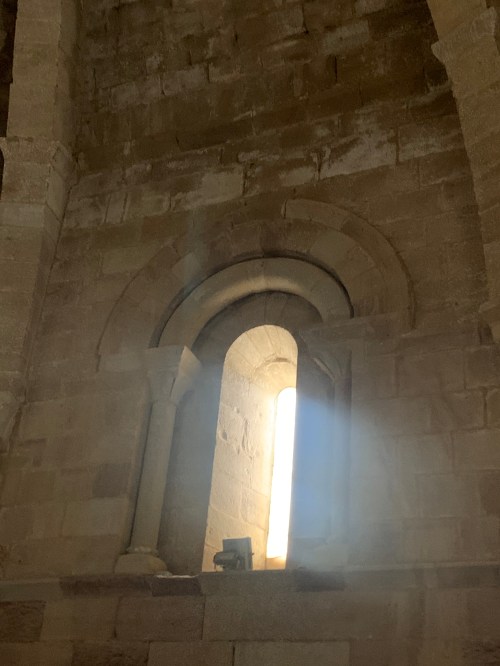
Beautifully restored Romanesque cathedrals, especially in Jaca and Sanguesa, on the Aragonese route provided sanctuary in medieval times for quiet contemplation and inspiration from sculpture at a time when most people were illiterate.

Divinely inspired music and art

Later construction of the grand cathedrals such as Notre-Dame in Paris and Chartres, with their stunning stained glass windows inspired awe and devotion.

During the Renaissance era religious art with masterpieces by artists such as Michelangelo, Leonardo da Vinci, and Raphael communicated complex theological ideas through visual means.

Sacred music by composers such as Johann Sebastian Bach, and Beethoven created elaborate musical compositions elevating the liturgical experience and deepening the spiritual experience, connecting with the divine in profound sensory-rich ways.

When a religion degenerates into claiming the ultimate truth, subjugating its members into what to believe and how to behave, there is empty ritual and stagnation. The head-mind closes the door to the heart-mind and the whispers to the soul.

Reino Gevers – Author – Mentor – Speaker

P.S. I’m excited to announce the release of my latest book, “The Turning of the Circle: Embracing Nature’s Wisdom for Purposeful Living.” If you enjoy it, you might also be interested in my previous works, “Deep Walking for Body, Mind and Soul” and “Walking on Edge: A Pilgrimage to Santiago.” You can find all of these titles at reputable bookstores near you.

Leave a comment

Filed under deep walking, Pilgrimage, spirituality, Uncategorized