Great artists possess the rare ability to pierce through the veil of the ordinary, revealing the deeper truths that lie beneath life’s surface. In times when power distorts reality and fear stifles truth, their work becomes a courageous act of revelation.
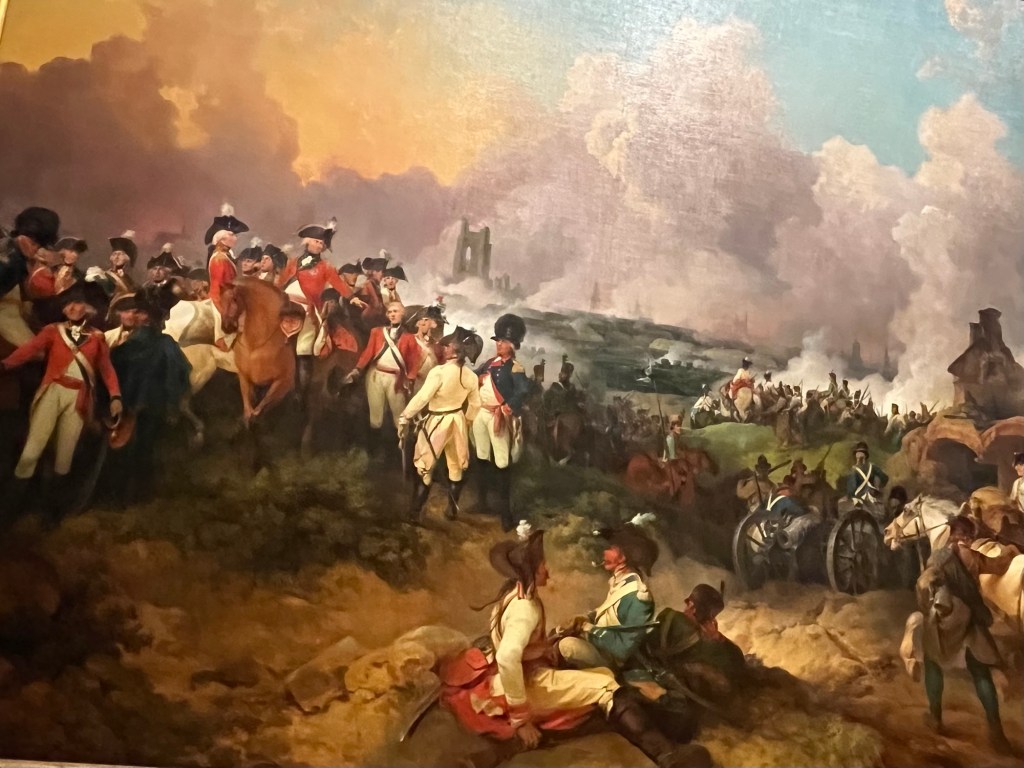
A few days ago, I was vividly reminded of this while visiting the Tate Britain gallery in London. Entrance to most of London’s famous galleries is free, and it’s a great way to spend a few quiet hours in a big city.
I was particularly struck by the works of the late 17th and 18th centuries. The expanding British Empire was marked by conflict, built by the sacrifices of soldiers and the toil of slaves and factory workers. Child labour was common, and women were condemned to giving birth and running the household.
Subtle hints beneath the surface
Artists were often commissioned to glorify the king and the empire, yet beneath the surface of landscape paintings, market scenes, and depictions of mixed-status couples, subtle traces of class divisions and social tensions quietly emerge.
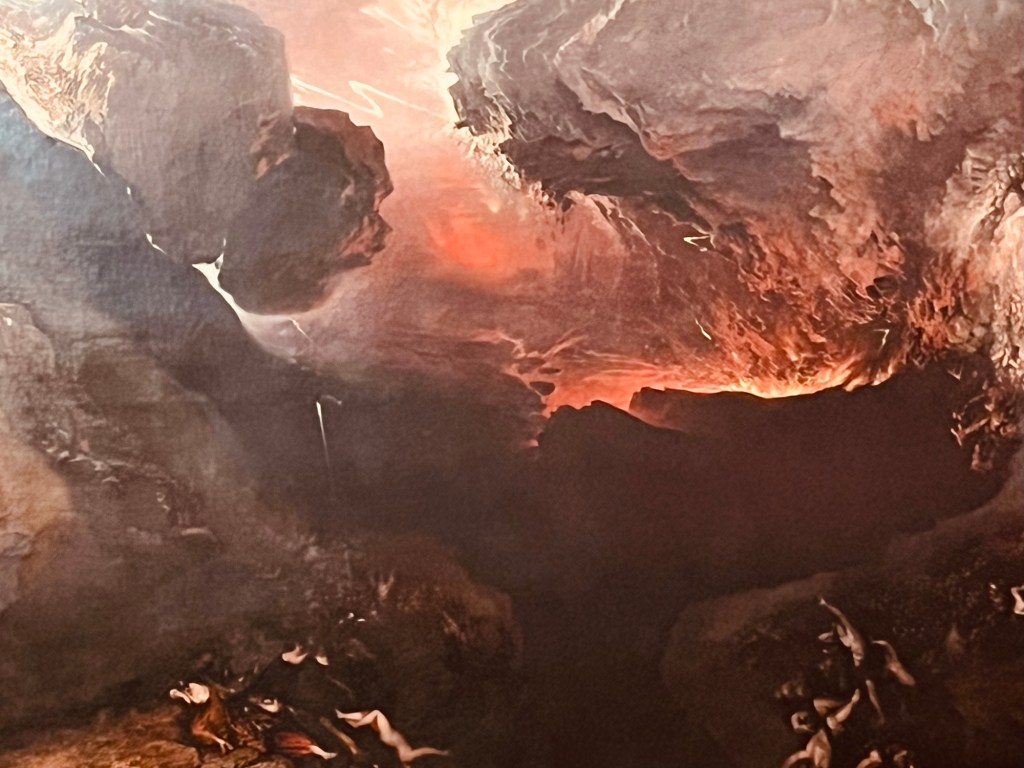
The tumultuous times of the late 18th and 19th centuries, along with global wars, came at a huge cost, marked by massive taxation for ordinary people, widening wealth gaps, poverty, and unemployment. Artists responded by painting dramatic battle scenes or images that either evoke a Romantic past or feelings of awe and terror.
Art and spirituality
Much of religious art was commissioned by monasteries in medieval times to convey the gospel because most people were illiterate. In contemplation of the art, the individual had a unique gateway to experiential spirituality.
Apocalyptic imagery from the Book of Revelation reflects the deep anxieties of a time when rapid technological and social upheaval left many feeling unmoored. Long-held certainties, norms, and values were beginning to crumble. In many ways, these ancient fears echo our own and mirror the disruptions in today’s world.
Artists sensing underlying tensions
Major social and political shifts are often preceded by conflict and upheaval. Artists sense these underlying tensions long before they burst into the open ,but also give some cues to a brighter future.
Art offers us a unique lens through which to view the past, revealing not just historical waymarkers but the deeper rhythms of human experience.
History moves in cycles. Out of hardship and resilience emerges renewal and growth, only to give way once more to seasons of disruption and decline. Yet, from each winter of decay, a new spring is born, reminding us that regeneration is woven into the very fabric of life.
It doesn’t take a coup or a dictator to kill a democracy. Sometimes, the rot begins from within, in slow motion and in plain sight.
Across America and other traditional democracies, the checks and balances that are foundational in free societies are being chipped away.
If history teaches us anything, it’s this: when authoritarianism rules everyone loses—freedom, dignity, truth, and the very social fabric that makes us human.
The grim reality of authoritarian rule
Envision yourself living in a country where even the mildest critique of the ruler could land you behind bars or strip you of your livelihood. The airwaves echo incessant hymns of praise for the leader, while simultaneously stoking hate towards both real and imagined adversaries. Meanwhile, your son lives in constant fear, knowing he could be conscripted at any moment into a futile war.
This is a grim reality in Russia and a growing number of countries, casting a shadow over the lives of its citizens.
Alarmingly, this pattern could potentially spread to democracies where generations have relished unparalleled freedoms, blissfully unaware of the true implications of authoritarian rule and its pervasive influence on society.
Across the globe, we witness a gradual erosion of fundamental liberties and democratic principles. Even within Western democracies long considered bastions of stability, nefarious political factions are becoming mainstream, posing a major threat to the established order.
The Democracy Index for 2019 found that democratic backsliding across the world has led to the worst score since the index was first produced in 2006, with only 5.7 percent of the global population living in what could be considered a “full democracy.”
A Berlin-based leading Civil liberties network has warned that the rule of law is declining across the European Union as far-right parties continue to weaken legal and democratic checks and balances. Liberties in entrenched democracies such as Sweden and Italy are in a gradual process of retreat and risk becoming systematic, according to the 2024 Liberties Rule of Law Report.
Democracy and civil liberties take many decades to be entrenched in society while it takes only one government to dismantle everything. Freedom of the press can be stifled overnight, opposition parties banned or intimidated, and judges and civil service members replaced with regime-friendly acolytes. All this has played out in Hungary, once a democratic country but now under authoritarian rule of Victor Urban.
The frightening scenario is that the process takes place gradually and incrementally with an electorate sleepwalking into authoritarianism.
We need only to look at history to understand how quickly basic freedoms can be usurped when a society fails to heed the warning signs. Adolf Hitler’s ultimate plan to extinguish the Jewish population with a German Reich controlling all of Europe was clearly outlined in his 1925 autobiographical manifesto “Mein Kampf”, compounding existing beliefs, fears, and xenophobia.
When opinion becomes an entrenched belief when truth becomes a lie and the mind refuses to accept an alternative idea or perspective, it is but a short road to authoritarianism.
Hitler’s explicit racial theories were openly portrayed in “Mein Kampf” and in his speeches before coming to power: Jews, Slavs, and other non-Aryan groups were described as subhuman and deserving of extermination or subjugation. His vision for a racially pure society involved the systematic elimination of “undesirable” populations that eventually culminated in the Holocaust. People in the mid-1920s failed to fully comprehend Hitler’s intentions for territorial expansion (Lebensraum) and the establishment of a racially pure Aryan state.
The suppression of dissent, the elimination of political opposition, and the manipulation of propaganda to indoctrinate the German population with Nazi ideology was introduced gradually. The policy of appeasement with influential groups of Nazi sympathizers in the United States, Britain, and other countries, eventually paved the way for one of the darkest periods in human history.
Authoritarianism goes against all human dignity and essentially gives power to a single ruler or small clique that inevitably ends up enriching itself at a terrible cost to the majority of the population. It is a one-way street where everyone loses.
Democracy can only endure when it is grounded in a robust system of checks and balances, supported by a vigilant and critical civil society. The authoritarian regimes of the last century unleashed unimaginable catastrophes, including two world wars and a genocide unparalleled in human history.
At its core, democracy champions freedom of expression, individual liberty, and tolerance. It allows you to fully express and live your potential without fearing repression and control by a state.
Democracy can be chaotic, messy and loud, allowing a platform and freedom of speech for everyone.
Yet, these very values are increasingly vulnerable to exploitation by extremists. Before we fully recognize the threat, power can fall into the hands of individuals whose sole aim is personal advantage, subjugation and control.
Authoritarianism, grounded in fixed belief and fanaticism ultimately creates a toxic emotional state, blending fear, anxiety, and anger. It fosters dehumanization, deepens political polarization, and fractures social cohesion.
On a personal level, it becomes a significant barrier to self-growth and spiritual evolution. In a rapidly changing world, adapting is essential for survival. Clinging to rigid beliefs not only limits personal transformation but also blinds you to the new opportunities and possibilities the universe continually offers.
Everything can be taken from a man but one thing: the last of the human freedoms—to choose one’s attitude in any given set of circumstances, to choose one’s own way.” Victor Frankl
In just nine days after being liberated from a Nazi death camp, Viktor Frankl poured his unimaginable ordeal into one of the most profound testaments to human resilience and the indomitable spirit ever written.
Upon his return to Vienna he found that his wife and almost entire family had died in concentration camps.
Most people would have been broken by such devastating pain, but Frankl managed to turn his suffering into a powerful pschological and spiritual mission.
His book: Man‘s Search for Meaning serves as a powerful guideline for all people currently experiencing almost insurmountable difficulties.
Frankl firmly believed that meaning can be found even in the most harsh conditions.
Purpose
Essential for Frankl was a firm belief in the Why.
Knowing your „why” helped people survive even the most brutal conditions, Frankl found. For him, it was the hope of seeing his wife again and the desire to rewrite his lost manuscript on his logotherapy psychological theory.
Detachment
He learned to detach from his suffering by focusing on memories, nature, and moments of beauty or spiritual reflection. He found that even in the camps, one could choose a different mindset—what he called the “last of human freedom.
Helping Others
As a psychiatrist, Frankl often counseled fellow prisoners, helping them find meaning and hope. This act of service gave him a sense of dignity and reinforced his own resilience.
Focusing on the Present
Frankl adapted to the harsh camp routines by focusing on small daily tasks and not letting himself be overwhelmed by fear of the future.
Belief
Recent groundbreaking studies reveal that individuals who anchor their lives in the belief in a higher power demonstrate significantly greater resilience in navigating and transforming adversity.
Evil has a persistent way of manifesting itself, sometimes infecting entire nations and societies—as seen in Nazi Germany. It can appear all-powerful, overwhelming any hope for goodness to prevail.
Yet, history shows that in the darkest hours, seeds of light and righteousness are quietly sown, preparing the way for a new dawn. Evil, by its nature, violates the deeper laws of creation. It tends to overreach—and in doing so, ultimately sows the seeds of its own destruction.
Reino Gevers – Author – Mentor –Speaker
If you enjoyed this article you might be interested in my very latest book: Sages, Saints and Sinners Get it today on Amazon, Barnes & Noble and where all good books are sold.
„False words are not only evil in themselves, but they infect the soul with evil „ – Socrates
Socrates’ timeless warning about the power of words feels more urgent than ever in a world flooded with information overload much of it crafted to mislead and deceive.
When those in power use language to distort reality, the ability to discern truth from illusion becomes not just a skill, but a necessity.
Choosing your words wisely
The way we speak and the choice of words matter, revealing our true character with language a key tool in preparing the soul for truth.
Multiple studies confirm what the Ancient Greek sages knew all along: The words we speak and internalize can significantly impact our emotions, stress levels and body metabolism.
Neuroscientist Dr. Andrew Newberg and communications expert Mark Robert Waldman found that even a single negative word can stimulate the brain‘s fear center, or amygdala.
Conversely, positive words stimulate the prefrontal cortex associated with logic and emotional balance.
Words that heal
Hearing or uttering positive words such as love, gratitude, support, strong, capable, resilient, brave, happy, vibrant, cheerful or warmth activates reward centers in the brain, leading to increased dopamine and serotonin levels.
Using positive affirmations or mantras have an even more powerful impact. Some examples:
– I am surrounded by kindness, compassion and love.
– My life is filled with gratitude, radiance and happiness.
– I am a magnet of abundance and prosperity.
– I am resilient, strong and full of courage
Mantras and prayers have been used for centuries to cultivate inner peace and spiritual strength.
Om Mani Padme Hung, with its emphasis on resonant vowels, carries a unique vibrational quality that makes its repetitive intonation especially powerful for cultivating inner peace and facilitating emotional healing. Its rhythmic chanting not only calms the mind but also helps release stress, fostering a deep sense of balance and spiritual well-being.
The Ave Maria whether sung or recited in prayer enhances comfort and protection, particularly during challenging times. It deepens feelings to the divine, reinforcing trust and surrender.
A 2001 study published in the British Medical Journal found that recitation of the Rosary including the Ave Maria synchronized breathing to about six breaths per minute, a rhythm particularly effective in reducing anxiety and enhancing emotional well-being.
Words and language fulfill their highest purpose when they uplift the soul and foster spiritual growth—when they seek truth through song, poetry, or storytelling, resonating with the deeper essence of human experience.
Powerfully chosen words illuminate the path to truth and freedom. Writers select them with care and intention. Storytellers and poets devote a lifetime to refining their craft. But when language is twisted for ulterior motives, it does more than deceive—it corrupts the soul, as Socrates warned.
Reino Gevers – Author – Mentor –Speaker
If you enjoyed this article you will be interested in my books available where all good books are sold.
“Like river tides and autumn leaves, All things must drift, all things must weave. No hand can hold the fleeting dawn, For what is here will soon be gone.” — Unknown
External events, such as elections and economic cycles, can easily consume all your attention, pulling you away from your true purpose and inner joy. You may perceive the world as chaotic, making it harder to focus on the person you are meant to become.
If recent political events have left you feeling disheartened, powerless, or overwhelmed, know that you are not alone. Take comfort in the timeless wisdom: “This too shall pass.” Challenges are temporary, and no moment—good or bad—lasts forever. Stay grounded, keep perspective, and trust in your resilience.
The origins of the expression are unclear. According to Jewish folklore, King Solomon is said to have asked his advisors for something that would keep him grounded. They presented him with a ring inscribed with “Gam zeh ya’avor” (גם זה יעבור), which translates as “This too shall pass.”
The phrase has also been linked to several other traditions and later gained popularity in Western culture, and was famously quoted by Abraham Lincoln in a speech in 1859.
Lincoln made his remarks at the Wisconsin State Fair in Milwaukee, at a time of looming civil war, and rising political divisions over the slavery issue. He referenced an Eastern monarch who sought a phrase from advisors that would always be true in both good and bad times.
The answer he received was “This too shall pass away.” Lincoln used this phrase to highlight the idea that all circumstances—whether good or bad—are temporary.
The phrase serves as a powerful reminder to the wealthy, the powerful, and the arrogant that humility is essential, and success can be fleeting.
Just as nature moves through its cycles, life is impermanent, with good and bad times constantly shifting. Those who remain attached to power and wealth are especially vulnerable to these unpredictable forces, much like the changing seasons. They cannot be controlled.
Seizing back control when life becomes challenging
In the winter season of life, external events can at times be very challenging. But there are ways of how you can seize back control by focusing on those things that you can control:
Accepting a reality does not mean that you approve of it
You can control your response and your emotions to external events
Remind yourself that nothing lasts forever including challenging times
You can reframe your perspective into a question:
What can I learn from this and what opportunity may arise from this situation?
This is a time to build resilience by strengthening body, mind, and spirit. Falling into despondency and negativity will not serve you well. Try limiting your exposure to negativity such as negative social media and news events. Surround yourself with positive people and do things that boost your vibrational energy.
Practicing Gratitude
Being grateful for those things that are going well in your life can be a powerful tool of reframing emotions and feelings. Write down every day three things you can be truly grateful for.
Letting go of attachments to beliefs, perspectives, and emotions is a journey. Realigning with the rhythms of nature—listening to the wind, the rustling leaves, birds singing or the gentle flow of water—can be profoundly healing.
A deep walking meditation in nature allows for a reset, grounding yourself in the present moment. Whenever you feel weighed down, shift your focus to your breath. With each inhale, reconnect to your true self; with each exhale, release what no longer serves you.
Reino Gevers – Author – Mentor – Speaker
P.S. If you enjoyed this article you will be interested in my books available where all good books are sold.
Throughout my life, I have grappled with the tension between religion and spirituality. Organized belief systems can so easily devolve into intolerance, hypocrisy, and hatred of those who look, think, or act differently. Ideology in all its forms fractures societies, breeding division and animosity.
Yet, creation thrives in diversity. God’s garden is a vibrant spectrum of colors and forms, each plant and flower enhancing the other in a harmonious beauty that can only be fully appreciated when seen in its entirety.
At its best, religion provides meaning and purpose to life. It offers solace and sanctuary during life’s most challenging moments—times of grief, loss, despair, and seemingly insurmountable obstacles.
Religion at its best and at its worst
Religion can unify communities, fostering a spirit of collective goodwill that transcends individual needs. Throughout history, faith-based inspiration has unleashed humanity’s most profound creativity in art, music, philosophy, and architecture. The masterpieces of Michelangelo, the compositions of Bach and Beethoven, and the enduring grandeur of centuries-old cathedrals and temples stand as testaments to the power of faith to inspire and elevate. At their core, all major religions share a universal message of love, compassion, kindness, and peace.
Yet, at its worst, religion has been wielded as a tool for manipulation and abuse. It has perpetuated discrimination, financial exploitation, fraud, and instilled fear and shame in innocent victims, leaving lifelong scars.
Over centuries, countless lives have been lost in wars waged over dogma, with individuals persecuted or executed for deviating from “the true gospel.” Such hypocrisy has driven millions to turn away from institutionalized and denominational religion, creating a vacuum often filled by a trash culture of alternate ideologies, political extremism, or addictions to external gratification. The consequences of this disconnection are evident in the growing epidemic of depression and spiritual emptiness.
How spirituality creates resilience against life’s challenges
Recent research highlights a significant link between spiritual belief and resilience to depression. Those who believe in a higher power are often better equipped to navigate life’s challenges, finding balance and purpose more easily than those disconnected from spiritual practice.
Experiential spirituality, unlike externally imposed beliefs, emerges as a deeply personal “knowing.” As Carl Gustav Jung famously stated when asked if he believed in God: “I don’t believe. I know.” This kind of spirituality arises intuitively, often in moments of awe—walking in nature, contemplating a masterpiece, listening to music, or engaging in creative flow.
This prompts profound questions: Is religion merely a pathway to spirituality, or is it an end in itself? Are we transitioning into a post-religious era? How can we bridge the divide between organized religion and personal spirituality to cultivate deeper, more authentic connections with the divine?
Reino Gevers – Author – Mentor – Speaker
P.S. If you enjoyed this article you will be interested in my books available where all good books are sold.
A right-wing media ecosystem fueled by resentment and anger is capturing millions of minds with a steady stream of alternate realities, stoking division, and delivering a daily narrative designed to reinforce grievance and distrust.
Social media is becoming an even more integral part of daily life, particularly for younger generations, as highlighted by Pew Research. While extremist platforms like Rumble remain smaller than giants like YouTube, they still attract millions of followers, spreading a wide array of conspiracy theories and disinformation.
Driven by a core message of fear and anxiety, these “hate entrepreneurs” pin blame for personal and collective challenges on a shifting cast of internal and external enemies, further exacerbating divisions.
Doom prophecies have long been a typical playbook of cults and populist political leaders.
It appears that once a person has invested huge time and energy resources in a particular belief, it becomes part of their identity. Even the best argument or scientific study will not dissuade the person from adopting a different perspective. They become locked in a particular mindset. Different perspectives or beliefs are radically rejected and some even turn to violent behavior to defend their mindset.
During medieval times when the black plague decimated much of the European population, rumor and superstition spread just as fast. A rumor that the Jews were responsible for the plague by poisoning water wells led to a mass pogrom in the French city of Strasbourg. About 2,000 Jews were burned alive on a platform constructed in a Jewish cemetery on Valentine’s Day in 1349.
Leon Festinger, a social psychologist, made groundbreaking contributions in the 1950s to understanding belief systems. He based much of his findings on studying a cult led by Dorothy Martin (alias Marian Keech), who claimed to receive messages from extraterrestrial beings about a catastrophic flood that would destroy the Earth on a specific date.
In some of his key findings he found that members of the cult were so committed to their belief that they abandoned jobs, loved ones and possessions in preparation for the flood. When the prophecy failed, instead of abandoning their belief, the cult members rationalized the failure by claiming that their prayers had “saved the world.”
Festinger found that cognitive dissonance was highest among those who had made the most significant personal sacrifices for the cult, doubling down on their belief and reinforcing their fanaticism.
In a digital world it becomes far easier for cults and extremist groups to maintain cohesion by withdrawing into information silos that cement beliefs such as:
Climate change denial
Vaccines are a conspiracy by the pharmaceutical industry
The “chemtrails” conspiracy theory posits that the condensation trails left by aircraft—are chemicals intentionally sprayed into the atmosphere for nefarious purposes. The rumor has persisted since the early 1990s despite the lack of clear scientific evidence.
Fixed belief and fanaticism ultimately creates a toxic emotional state, blending fear, anxiety, and anger. It fosters dehumanization, deepens political polarization, and fractures social cohesion.
On a personal level, it becomes a significant barrier to self-growth and spiritual evolution. In a rapidly changing world, adapting is essential for survival. Clinging to rigid beliefs not only limits personal transformation but also blinds you to the new opportunities and possibilities the universe continually offers.
Reino Gevers – Author – Mentor – Speaker
P.S. If you enjoyed this article you will be interested in my books available where all good books are sold.
The rebirth of Paris’s Notre-Dame Cathedral, five years after a devastating fire, serves as a striking beacon of hope during a time marked by division, uncertainty, and fear. It is a powerful testament to what humanity can achieve when united in a shared purpose.
Europe’s great cathedrals, such as Chartres and Notre-Dame, were more than architectural marvels. They were profound expressions of faith, creativity, and communal spirit. These towering structures, built to reflect heavenly glory, continue to inspire awe and remind us of the enduring power of collective endeavor.
What unites people around a common purpose fosters trust and transcends individual interests. For millennia, religious rituals and practices have served this unifying function, binding communities to shared values, goals, and principles. Religion has also provided a framework for understanding suffering and adversity, offering solace and resilience in times of need.
Religion and the sense of belonging
As inherently social beings, humans find strength in connection. Participating in religious ceremonies has historically reinforced a sense of belonging and strengthened the social fabric of communities. Modern studies affirm this, linking faith and religious involvement to lower levels of depression and anxiety, underscoring the vital role of shared spirituality in nurturing mental and emotional well-being.
Hill and Pargament (2003) concluded that spirituality fosters resilience by enhancing hope and optimism, even in highly stressful situations.
But paradoxically the affiliation to a specific religion, community or faith often strengthens the divide between “them and us”. Religion can bring out the best and the worst in humanity. Friendships, humanity and service may be restricted to the “in group” while those outside the group were often villified and dehumanized.
In my recent podcast on LivingtoBE, I discussed with psychologist Katie Turner, on when spirituality or religion becomes toxic and in some cases cause long-lasting trauma.
When clergy, therapists or spiritual teachers have not done the the self-work by transmuting their own shadows they will project these on their followers.
Some religious beliefs discourage seeking professional help, claiming that prayer or faith alone should suffice.
Religion is then abused as a tool of manipulation, coercion, control and exclusion. Overemphasis on sin, punishment, or unachievable standards of moral purity can lead to chronic guilt and shame.
Toxic religion often revolves around charismatic leaders who demand absolute loyalty and discourage critical thinking or questioning.
When members of a religious community feel compelled to suppress their individuality, religion can even alienate them from their authentic spiritual path and soul purpose.
Religious platitudes may hinder personal growth and self-discovery, with fixed beliefs locking individuals into a singular worldview obstructing the evolution of spiritual awareness and consciousness.
What Can Help?
Set Boundaries: Establish clear limits on how much influence religion exerts over your life and well-being.
Seek Broader Perspectives: Explore spiritual practices and belief systems that prioritize love, tolerance, acceptance, and personal growth.
Consider Professional Support: Therapy or counseling can provide a safe space for healing from spiritual abuse or the effects of toxic religious experiences.
At its best, religion offers sanctuary, love, and compassion during times of need. At its worst, it can inflict profound physical and emotional harm. Cultivating a grounded connection to your own intuitive senses and spiritual needs will help you discern and navigate the difference, empowering you to recognize and avoid toxic expressions of faith.
Reino Gevers – Author – Mentor – Speaker
P.S. If you enjoyed this article you will be interested in my books available where all good books are sold.
The landscape that you inhabit shapes you in profound ways, prompting the question: Where is home, and what environment truly nurtures your joy, energy, and zest for life?
Recently, I returned to South Africa, revisiting the places that defined my childhood. The journey was deeply reflective, stirring memories and a realization: home is no longer where it once was.
While timeless landmarks like the mountains and rivers of the Drakensberg endure, everything shaped by human hands changes—and often, tragically, deteriorates.
In rural South Africa, essential infrastructure like roads, sanitation, water, and electricity has largely collapsed or is on the brink of failure. Political corruption has turned state institutions into feeding troughs for party loyalists, leaving what was once the pride of Africa’s railways and roads in disrepair.
The place of home can shift
Circumstances led me to leave my birthplace at a young age. For years, I lived and worked in Germany—a land tied to my ancestral roots but one I could never truly call home. The long, cold, and wet winters left me battling colds and flu for weeks, an unmistakable signal that my well-being needed a different environment.
At times I was terribly homesick, longing for the blue skies, expansive landscapes, sounds and smells of my African homeland. It is easy to fall into the trap of melancholy sadness of what once was and is no more, the past becoming an idealized and distorted image.
Finding the place in the sun
Seven years ago, I found my place under the sun in Mallorca, Spain. It wasn’t until then that I fully understood how deeply geography, culture, and community impacts not just physical health but mental vibrancy and energy.
Sometimes, choosing to live someplace else does change everything for the better, notwithstanding that you always take yourself with you. Home is ultimately within. Home is what creates a sense of belonging and purpose.
Feeling at home sometimes shifts as you grow, adapt, and explore the world. At times, it’s where you were born or raised, rooted in childhood memories and traditions. At other times, it’s where you feel most alive, inspired, and at peace—a place or state of mind that aligns with your values, dreams, and well-being.
Recently the most renowned South African writer and poet Breyten Breytenbach passed away in his home in Paris. In his prose, Breytenbach frequently explored how the home one remembers rarely aligns with the home one finds upon return. The landscapes may remain familiar, but the social, political, and personal contexts often shift dramatically.
Returning home can evoke a profound sense of loss—of the self that once belonged fully to that place and the home that no longer exists as it was. Returning to childhood landscapes can be a complex, bittersweet experience, marked by both longing and alienation.
In a poignant in his book “Return to Paradise”, Breytenbach reflects:
We carry our homes within us, shaped by the stories of our scars. The land may hold its silence, but the roads remember our footsteps.
Where is the place where you can truly breathe and thrive?
What does home mean to you?
Reino Gevers – Author – Mentor – Speaker
P.S. If you enjoyed this article you will be interested in my books available where all good books are sold.
“The great cease to rule when the small cease to grovel.” (Friedrich Schiller 1759-1805)
Dictators, demagogues, and cult leaders excel at convincing decent, ordinary people that blind obedience and unwavering loyalty will miraculously transform their lives. The rude awakening inevitably comes.
Once in power autocrats and dictators inevitably exploit the weak and vulnerable for their own selfish needs. Russian leader Vladimir Putin is a typical example. He is purported to be one of the wealthiest people on earth. Meanwhile, his country’s infra-structure, health, and education system are collapsing while state resources are spent on imperialist wars.
In the recent U.S. Elections the power grab by wealthy oligarchs has been more subtle. Elon Musk, probably the world’s second wealthiest man, together with other billionaires (Peter Thiel, David Sachs, Rupert Murdoch etc.) control a large part of the nation’s tech and media industry (Twitter/X, Fox News). They injected more than two billion dollars into the Trump election campaign and now have a major influence on the country’s political agenda.
We are seeing an unprecedented symbiosis of politics, power and capital in the United States, German Professor Bernhard Pörksen, a media analyst, said in an interview with ZDF television. These libertarian ideologues “who despise the weak” are “pursuing their agenda on their own media platforms with extreme aggression, despising classic journalism and clearly threatening their enemies.”
Historian Timothy Snyder in his book On Tyranny, describes how democracies often erode not through sudden collapse but through gradual undermining of norms, laws, and institutions.
“The mistake is to assume that rulers who came to power through institutions cannot change or destroy those very institutions—leaving democracy in ruins.”
Spreading disinformation on their media platforms is part of the agenda. When the truth is turned into a lie and the lie into the truth the ordinary citizen, confused by conflicting information overload, switches off from politics, ultimately surrendering his basic freedoms and liberty.
In the short-term autocracies create the impression of stability through strong control of dissent and internal conflict. The reality is that without the checks and balances of a democracy power is inevitably abused, leading to inefficiency, corruption, and exploitation. Suppression of dissent and free thought stifles creativity, critical feedback, and innovation.
When the powerful become too powerful and economic promises don’t materialize, frustration can reach a tipping point. A single, galvanizing event can ignite existing frustrations and unify disparate groups against the regime, such as blatant corruption or fraudulent elections. Rebellion becomes possible when the population collectively believes change is achievable such as in the peaceful revolutions in communist East Germany, Czechoslovakia and Poland.
Nothing is more powerful than when individuals arise collectively in the realization that they can be masters of their own destiny. The pain becomes so powerful that people overcome their apathy, fear, and disempowerment, embracing a collective cause.
Mahatma Gandhi’s peaceful struggle of collective civil disobedience against imperialist British rule remains a shining example of collective power that built momentum through incremental successes with strikes, protests, and legal rulings.
You as an individual collectively will hold enormous power in shaping your destiny when overcoming fear, and believe in the possibility of change.
The poem “Invictus” by William Ernest Henley, remains a powerful declaration of resilience and self-mastery, speaking of the indomitable human spirit in the face of adversity and the ability to control one’s fate:
“Out of the night that covers me, Black as the pit from pole to pole, I thank whatever gods may be For my unconquerable soul.
In the fell clutch of circumstance I have not winced nor cried aloud. Under the bludgeonings of chance My head is bloody, but unbowed.
Beyond this place of wrath and tears Looms but the Horror of the shade, And yet the menace of the years Finds and shall find me unafraid.
It matters not how strait the gate, How charged with punishments the scroll, I am the master of my fate, I am the captain of my soul.”
Reino Gevers – Author – Mentor – Speaker
P.S. If you enjoyed this article you will be interested in my books available where all good books are sold.



 ReinosBlog