Category Archives: Uncategorized

Bridging Religion and Spirituality

“God is at home. It is we who have gone out for a walk.” – Meister Eckart

I have always struggled with taking the teachings of the Bible literally. Once, when I voiced my doubts to a pastor, he replied, “You just have to believe.” This answer left me unsatisfied, deepening my questions and nudging me further from conventional faith. Today, I see myself more as a spiritual seeker than a believer.

After much soul-searching, including walking many pilgrimage paths in northwestern Spain, I’ve come to feel and experience something profoundly vast and mysterious, far beyond the simplified image or concept of a personal “God.”

I find it hard to reconcile the notion of an all-powerful, loving God with the existence of suffering and a deity who punishes or abandons those who disobey or fail to believe. The God of the Old Testament is often portrayed as a father figure, demanding absolute obedience to doctrines meant to provide stability, certainty, and structure. Within this framework, dissenting interpretations and questioning of these truths were rarely tolerated and brutally suppressed.

Diversity as a core principle of creation

In my time spent contemplating nature, I have come to see diversity as a core principle of creation itself. In nature, every being continuously changes, adapts, and evolves. Those that resist adaptation ultimately fade, making space for species better suited to survive. To me, this endless process of growth and refinement mirrors experiential spiritual growth, which, unlike fixed belief, is fluid. Here, understanding is shaped by direct experience, reflection, and openness to change.

Different religions, like different races, and cultures are like a garden meant to complement and enrich each other. South Africa’s Archbishop Desmond Tutu pointedly once described it as:

“God’s dream is that you and I and all of us will realize that we are family, that we are made for togetherness, for goodness, and for compassion. God’s garden is diverse, with many colors and cultures, and all are precious in His sight.”

Creating peace through mutual respect and compassion

Embracing and accepting the diversity of cultures, faiths, and perspectives as a divine gift is the essential foundation for lasting peace in our world. When we see this diversity not as a source of division but as a beautiful, intentional expression of creation, we open ourselves to mutual respect, compassion, and understanding.

Each unique tradition, belief, and background can contribute its own wisdom, enriching the broader human experience. True peace arises from recognizing that our differences are not obstacles but opportunities to grow, connect, and celebrate a shared humanity within the wholeness of creation. .

Bridging science and religion

Albert Einstein, in his efforts to bridge science and spirituality, described a “cosmic religious feeling”—a deep awe at the order, beauty, and mystery of the universe. For him, this feeling didn’t arise from belief in a personal God but from reverence for something grand and beyond human comprehension. He didn’t see God as a being who intervenes, rewards, or punishes but as a metaphor for the universe’s profound mysteries. While he respected religion’s role in human ethics, he believed morality is a human endeavor rather than a divine dictate.

Spiritual understanding, I feel, is something that grows and adapts with experience, often diverging from the intended path to reveal unexpected landscapes. Such growth may not even be a choice. Sometimes we are forced onto the path of spiritual awakening by profound loss, pain or hardship.

Fixed beliefs can offer a foundation, while experiential spirituality allows expansion, reinterpretation, and deepening of understanding. The former might be expressed in ritual, prayer, and sacrament, while the latter can be found in meditation, contemplation, deep communion with nature, or service to others. Yet, the two need not be in opposition; instead, they can enrich each other.

As the 13-century Mystic Meister Eckart once reflected: “The most powerful prayer, one well-nigh omnipotent and the worthiest of all, is the outcome of a quiet mind. The quieter it is, the more powerful, the worthier, the deeper, the more telling, and more perfect the prayer is.”

Reino Gevers – Author – Mentor – Speaker

P.S. If you enjoyed this article you will be interested in my books available where all good books are sold.

Leave a comment

Filed under Uncategorized

What makes you happy?

“Gratitude is the antidote to the weight of regret”

In an uncertain and sometimes chaotic world, the constant stream of negative news can feel overwhelming, often overshadowing the positive moments. Unfortunately, the mind tends to focus more on negativity, making it essential to intentionally cultivate a mindset that embraces joy and positivity.

Throughout each day, we all face both positive and negative experiences. But have you ever wondered why the negative ones linger in your mind longer and why the negative message is more powerful than the positive?

Conditioning the mind to joy involves rewiring the brain to focus more on positive experiences, feelings, and thoughts while managing stress and challenges more effectively. Here are several practices that can help with this:

Gratitude

  • Daily Reflection: Spend a few minutes each day reflecting on things you’re grateful for, even small things. Writing them down can amplify the effect, as it reinforces positive neural pathways.
  • Reframe Challenges: When facing difficulties, try to focus on any lessons or positives that can come from them. What do I need to learn from this experience? I there a positive side to this?

Meditation and Deep Walking

  • Stay Present: Mindfulness teaches you to focus on the present, reducing tendencies to dwell on the past or worry about the future, both of which can detract from joy.
  • Deep Walking in nature is a great way of reconnecting and alignment. Spending time in the green and blue spaces of nature and opening the senses to sound, smell and feeling will noticeable reduce your stress levels. If you want to find out more, check out my book: Deep Walking for Body, Mind and Soul.

Positive Visualization

  • Imagine Joyful Outcomes: Regularly visualizing positive experiences can help the brain become more attuned to them. Picture moments that bring you happiness and success, even small ones, and try to evoke the emotions you’d feel in those scenarios.
  • Future Gratitude: Think about things you’re looking forward to or would like to happen, and imagine how grateful you’ll feel when they do.

Self-Love

  • Speak Kindly to Yourself: The way you talk to yourself affects how you feel about yourself. Practicing self-compassion means addressing your thoughts with kindness and patience, which fosters a more joyful and supportive inner world.
  • Forgive Yourself: Mistakes happen, and letting go of self-criticism can bring immediate relief and joy.

Acts of Kindness

  • Give to Others: Helping others releases oxytocin and other “feel-good” hormones, creating a sense of connection and joy.
  • Practice Appreciation: Show gratitude to those around you, which can increase your own sense of happiness and fulfillment.

Flow Activities

  • Find a Passion or Hobby: Activities that fully absorb your attention—like art, sports, or music—can create “flow” states, which are deeply satisfying and joyful.
  • Focus on Progress: Rather than aiming for perfection, celebrate small wins and improvements, which can help you appreciate your journey.

Cultivate Optimism

  • Challenge Negative Thoughts: When you notice negative thoughts, ask yourself if they’re realistic or if there’s a more positive perspective you could consider.
  • Practice Positive Affirmations: Regularly affirming positive beliefs about yourself and your future can build a mindset that gravitates toward joy.

Physical Exercise

  • Exercise Regularly: Physical activity releases endorphins, boosts mood, and reduces stress, all of which contribute to a happier space.
  • Smile Often: Even forcing a smile can trigger a small release of dopamine, making the brain associate smiling with joy.

Building positive habits and cultivating a resilient mindset takes time, especially if you’ve spent years dwelling in negativity. It’s a gradual process, but starting small can make a big impact. Begin with simple actions, like writing down three things you’re grateful for each day. Or take a few minutes each day to walk in nature or meditate. Over time, these small steps add up, creating a powerful, lasting effect.

In my village, there’s a Moroccan fruit and vegetable vendor who greets each customer with a big smile and a warm, friendly remark. Recently, I told him how his kindness radiates positivity to everyone he meets. Just think of the hundreds of people he uplifts, day after day, week after week, year after year. For me he is a reminder of how just one person can have a profoundly positive effect.

Reino Gevers – Author – Mentor – Speaker

P.S. If you enjoyed this article you will be interested in my books available where all good books are sold.

Leave a comment

Filed under gratitude, happiness, meditation, Uncategorized

Leadership matters: The Strong vs the Wise

Whether it’s the captain of a ship, a school principal, a company manager, or the president of a nation, leadership makes a difference. The character and values a leader demonstrates through words and actions can have a profound impact.

For more than a decade, I’ve had the opportunity to work with hundreds of companies, gaining much insight into the challenges and success stories when it comes to people management, motivation, creativity and well-being.

Ultimately, leadership plays a huge role. It determines how a family, a company, an institution, or even a country adapts and navigates tumultuous times.

Brute strength and fear never work

It’s not brute strength that counts, but wisdom. A “strong” leader, is often authoritarian and surrounded by sycophants, refuses to take good advice and relies on fear-based tactics.

This approach is often seen in leaders driven by ego or even malignant narcissism. It can lead to immense, lasting harm. Such leaders tend to belittle others to mask their own insecurities and deficiencies.

The wise leader, by contrast, has a bigger vision, grounded in social intelligence and deep listening. They pick up early signals before issues escalate into crises, navigating with a calm, compassionate demeanor. Wise leadership is marked by patience, thoughtfulness, and humility, creating an atmosphere where people feel valued and respected.

Mandela exemplified compassionate leadership

Nelson Mandela exemplified this. After being unjustly imprisoned for 27 years, he had every reason to harbor bitterness. Yet, when I met Mandela shortly after his release from prison in 1990, he showed a profound sense of forgiveness. He realized that hate and retribution would only hinder a peaceful, democratic future for South Africa. He recognized that his true strength lay in bringing together opposite sides in building one nation.

Body language tells the truth

To grasp the distinction between effective and ineffective leadership, we should pay attention not just to words but to body language. Wise leaders convey a natural authority through measured movements, creating an environment of stability and composure even in high-stress scenarios. Their expressions are often accompanied by a gentle smile that signals warmth and approachability. They nod or offer affirmations while others speak, embodying active listening and respect.

In contrast, ego-driven leaders tend to use body language to assert control. They may invade personal space, exhibit forceful gestures like pointing or chopping the air, and maintain scowling or emotionless expressions, creating an atmosphere of intimidation and tension rather than collaboration and respect.

This distinction is crucial because effective leadership directly shapes workplace culture, employee engagement, and job satisfaction—all key factors influencing absenteeism and work-related stress.

Bad leadership destroys health and well-being

Research supports this, such as the Health and Well-being at Work report from the Chartered Institute of Personnel and Development (CIPD) in the UK. This 2019 study found that 37 percent of employees cited “management style” as a major source of workplace stress, a significant factor in absenteeism.

  • Organizations with supportive managers reported lower absenteeism rates, as employees felt valued and connected to their work.
  • Furthermore, the report highlighted how companies with inclusive, communicative, and supportive cultures see fewer absences.
  • When leadership invests in employee well-being, absenteeism rates can drop by nearly 25 percent, significantly reducing burnout and fostering resilience, health and satisfaction.

What does this mean for national leadership? Leaders at the helm of a country have an outsize influence. They can incite division, demean, and fragment society. Do they bring out the worst in the human being in emanating fear, intolerance, anger and retribution? Or, do they heal, unite, respect, and motivate a nation, elevating it to a higher state of consciousness.

The character and values of a nation are mirrored in its chosen leaders, as the philosopher and writer Joseph de Maistre, (1753–1821) once said:

“Every nation gets the government it deserves.”

Reino Gevers – Author – Mentor – Speaker

P.S. If you enjoyed this article you will be interested in my books available where all good books are sold.

Leave a comment

Filed under mental health, psychology, self-development, trump presidency, Uncategorized

Pilgrimage, Mystery, and Healing

In London’s Westminster Cathedral stands a strikingly beautiful statue of Our Lady of Walsingham, emanating timeless grace, peace, and compassion.

The Marian shrine of Our Lady of Walsingham, located in Norfolk, England, traces its origins back to the early 11th century. Known as “England’s Nazareth,” it became one of the most significant and ancient pilgrimage sites in the country.

Known as the „Walsingham Way,” countless pilgrims visited the Holy House with a wooden statue of the Virgin Mary as a focal point of contemplation. It was a time when monasteries and shrines connected medieval pathways in a powerful matrix throughout Europe.

But in 1538 Henry VIII ordered the Walsingham statue to be taken to London and destroyed. As part of his break from Catholicism, monasteries were dissolved, pillaged and pilgrimages prohibited.

Only in recent times, the Walsingham pilgrimage path has been revived now officially forming part of the network of pilgrimage paths to Santiago de Compostela in Spain.

The shrine in Walsingham has regained its medieval significance, often referred to as the “English Lourdes” because of its central place in Catholic and Anglican devotion in England.

Pilgrims to Walsingham seek healing, spiritual guidance, and a deepened relationship with the Virgin Mary. It remains a place of great spiritual renewal for many, with visitors walking the Holy Mile, a traditional part of the pilgrimage route.

The beautiful statue of the Walsingham Lady in Westminster Cathedral was commissioned by Cardinal Griffin in 1954 and sculpted by Pius Dapre. For many years it remained hidden and almost unknown in the Cathedral Crypt until it was recovered.

Mystery still surrounds the original wooden shrine which may have never been burned and destroyed as ordered by Henry VIII.

An article recently published in The Catholic Herald quoted art historians as saying that The Langham Madonna, a battered 13th-century English statue in London’s Victoria and Albert Museum, is in fact the original statue of Our Lady of Walsingham.

There were no eyewitness accounts that the statue was actually destroyed in London, according to the historians but hidden by Catholic loyalists until it reappeared centuries later in the museum.

Throughout history, countless myths, legends, and mysteries have surrounded the figure of the Goddess—whether Mary, Brigid, Kali, Isis or others—appearing and reappearing in various forms. At times, she has been revealed as a beautiful statue, carved from wood, stone, or marble, inspiring the creation of shrines, monasteries, or cathedrals at the place of her discovery.

Mary, in particular, has been known to appear in sacred apparitions at sites like Walsingham, Lourdes, and Fatima—places where the veil between worlds seems thin. Regardless of whether one is a believer, agnostic, or of another faith, her presence has been tied to stories of miracles that defy logic. Yet, time and again, she has brought comfort, solace, and peace to those facing pain and confusion.

Reino Gevers – Author – Mentor – Speaker

P.S. If you enjoyed this article you will be interested in my books available where all good books are sold.

Check out also the recent episode on the Living to BE podcast and Youtube with our special guest Matt O’Neill. The topic: Happiness is a Choice.

Leave a comment

Filed under mental health, Pilgrimage, spirituality, Uncategorized

Victimhood and Embracing Responsibility

In a relentless storm of external distractions, it’s easy to lose yourself in a maze of illusions, false hopes, and misleading perceptions that steer you away from your true destiny and purpose.

The messaging from the world out there is primarily that happiness is created by „having“ rather than „being“.

Abundance and prosperity, if used mindfully, are useful tools to make an impact, but if they are the primary motive of all your efforts you will never have enough, falling into the trap of postponing the good life to some distant future.

Here is the hard truth: That moment will never come if you fail to live fully in the present moment, and practice gratitude for all the blessings that you already have.

Accepting Responsibility

Victimhood is one of the biggest obstacles to growth and personal fulfillment. By blaming your partner, your parents, your boss and the government for all that has gone wrong in your life you stay at a low vibrational energy where you will miss all the opportunities offered by the universe.

When the language you speak to yourself and others is mainly one of anger, retribution and hate you will attract much of the same dark energy around you. What you emanate to the world you will receive. You will remain trapped in an endless cycle of unhappiness.

We are all victims to some degree. The storms of life can unsettle in countless unpredictable ways. External events, accidents, personal loss and natural catastrophes are not under your control. But how you deal with these unexpected events make all the difference.

Photo by Julia Avamotive on Pexels.com

Accepting Impermanence

Like the seasons in nature nothing is permanent. The natural cycle dictates a time of spring and summer for birth, growth, and harvesting before we enter again a season of autumn and winter. The dark cold seasons of life are a time for introspection, recalibration and renewal. It means letting go of people that keep you at a low frequency, changing a job, a location or even a country. Fear of the unknown often leads to procrastination in the comfort zone but moving ahead also presents the greatest opportunity for growth and personal fulfillment.

Follow your aspirations and dreams

Never give up on your values, purpose and your why. You will intuitively sense that you are on the right path if everything falls into place. You meet the right people at the right time at the place at the right time. You feel a surge of energy and passion when you are doing the things that are in sync with your values and dreams.

Societal norms and expectations

There will always be other people who are seemingly happier, healthier and wealthier than you are. What you see on social media is not the reality. Sometimes those people who seemingly have everything in terms of fame and fortune are deeply unhappy because happiness is a state of mind.

Taking time for solitude

In a noisy and hurried world it has become more essential than ever to take time out for solitude and contemplation. When you take time for a quiet walk in nature the noise of the world recedes into the background. You will sense an innate harmony beyond the seemingly chaotic. In the natural world everything is interconnected and has its place and purpose within the totality of wholeness.

Reino Gevers – Author – Mentor – Speaker

P.S. If you enjoyed this article you will be interested in my books available where all good books are sold.
Check out also the recent episode on the Living to BE podcast and Youtube with our special guest Matt O’Neill. The topic: Happiness is a Choice.

2 Comments

Filed under gratitude, happiness, mental health, mental-health, self-development, Uncategorized

The Power of Forgiveness: Healing and Empowering

A few months after Nelson Mandela was released from 27 years of imprisonment by South Africa’s apartheid regime, I had the extraordinary privilege of meeting him at his home with a small group of journalists.

As I stood in his presence, I couldn’t help but wonder how a man who had endured such immense suffering could radiate such profound kindness and show no desire for retribution toward those who had wronged him.

The answer became clear when he shared a powerful insight: “Forgiveness liberates the soul, it removes fear. That’s why it’s such a powerful weapon.”

A powerful message of leadership

Mandela’s wisdom and unwavering commitment to forgiveness set him apart as a leader of unparalleled stature, guiding his nation from the brink of civil war to the dawn of a modern democracy. His example is a powerful reminder of the qualities of leadership that are so desperately needed in our world today.

Seeking retribution for wrongs committed by others is at the heart of the Middle East conflict and peace will not be found unless Israelis and Palestinians learn to forgive each other. It is difficult enough on a personal level to forgive but wise leaders of a country can make all the difference.

Are you struggling to forgive yourself and others? The biblical story of Joseph is one of the most powerful teachings of how the ways of the universe or God can be very different from the plans we often make in life.

Joseph was slandered, beaten, and sold into slavery by his own brothers because of jealousy. Joseph could have easily succumbed to his fate but he never lost faith that everything in life had purpose and meaning.

The trap of the blame game

Only from such a perspective could he forgive his brothers and move out of the trap of the blame game. He made the best out of his situation to such an extent that Potiphar, the man who bought him on the slave market in Egypt, soon promoted him to a higher position. Later he was put in charge of managing Potiphar’s huge estate.

Potiphar had taken a liking to Joseph and must have been impressed by his kindness, wisdom, and humility. For all intents and purposes, Joseph had made it. But Potiphar’s bored wife had taken just as much a liking to the handsome young Joseph.

Realizing that he would betray his master who had done so much for him, Joseph avoided the advances of Potiphar’s wife who became so upset that she accused him of rape. Joseph was thrown into prison losing everything. He could again have succumbed to despondency.

But it so happens that he meets in prison two of the Pharaoh’s ministers who had lost favor with the ruler. One of them was eventually released from prison and restored to his old position. Only when the Pharaoh had a strange dream did the minister remember the time in prison with Joseph who had impressed him as an interpreter of dreams.

Long story short: Joseph gets released from prison to interpret the Pharaoh’s dream. The essence of the dream was that the ruler had to prepare the country for seven years of drought. Amazingly Joseph’s fortune changed in an instant when the Pharaoh recognized the wisdom of the man he was dealing with.  Joseph is promoted to viceroy of all of Egypt as the righthand man of the most powerful ruler of the world at the time.

Life comes in strange twists and turns

True to the dream interpretation the drought did come and only by wise management of the food and grain resources could countless lives be saved including those of Joseph’s brother and aging father Jacob.

Life comes often in strange twists and turns. Fortunes can be earned and lost overnight. High positions of political power and influence may be gone tomorrow. The amazing story of Joseph is that he never lost trust and faith. By forgiving his brothers and Potiphar’s wife for falsely accusing him, he made peace with himself and could go into trust and humility. From that energy grew his wisdom and incredible foresight to prevent a catastrophe.

Forgiving does not mean approval of wrongdoing

Forgiving does not mean that you are approving of wrongdoing, of abuse, and all the terrible things that humans do to each other. It is making peace with the past in the knowledge that you are the person today because of all of that which you have experienced.

The famous Austrian psychiatrist Victor Frankl only survived the Nazi death camps by telling himself that “everything can be taken from a man but one thing: the last of human freedoms – to choose one’s attitude in any given set of circumstances, to choose one’s one way.”

Forgiveness is self-care at the highest level

Forgiveness requires a conscious decision to release feelings of resentment and vengeance toward someone who has harmed you. It is self-care at the highest level.

Forgiveness allows you to release negative emotions and to move on in life. Remaining locked in hate and retribution keeps you at a low vibrational energy that prevents you from spotting the new opportunities the universe is presenting to you.

By choosing to forgive, you are paving the way to a healthier, happier, and more fulfilling life. You are creating room for positive feelings to flourish.

Reino Gevers – Author – Mentor – Speaker

P.S. If you enjoyed this article you might be interested in my books available where all good books are sold.

Leave a comment

Filed under happiness, mental health, mental-health, Uncategorized

The Hidden Climate Culprits: Livestock Emissions

With temperatures soaring well over 40 degrees Celcius here on the Mediterranean island of Mallorca, local authorities have imposed water restrictions and warned people to avoid heat stroke by staying indoors for most of the day.

As climate change warms the planet, heat waves are becoming more common and lasting longer. Vulnerable population groups, especially the elderly, are exposed to life-threatening temperatures. Nature is affected by drying soils and vegetation, posing higher fire risks, according to a recent study.

Climate change is shifting entire populations

Mallorca is Europe’s main holiday destination with tourism generating most of the island’s income. The problem is that the island’s limited water resources can no longer cope with an estimated 18 million visitors this year. In the long-term tourists will be choosing cooler places to go in the northern hemisphere such as Scandinavia.

For most of us these are only the beginnings of rapid climate change. We have not been forced to leave our homes, like the millions of people in Africa, the Middle East, and Latin America who are bearing the brunt of climate change. Repeated flash floods or extreme dry seasons have destroyed large swathes of agricultural land.

Partisan politicization of climate change has muddied the waters

The warning signs and news reports of extreme weather patterns are getting louder by the day. Unfortunately, the issue of climate change has become extremely politicized and prey to America’s culture wars. The climate scientists, who in most cases have studied this field for decades, are getting increasingly alarmed that sound scientific data is being ignored or lambasted as fake.

When I attended the summit of the Intergovernmental Panel on Climate Change (IPCC) in Bonn in 1999, scientists got only one thing wrong. The climate scenarios of extreme weather patterns they had predicted by the middle of this century are already a reality in the year 2024.

Based on the annual report from NOAA’s Global Monitoring Lab, global average atmospheric carbon dioxide was 419.3 parts per million (“ppm” for short) in 2023, setting a new record high. In 1999 the rate of ppm was 367 and some of those scientists I interviewed at the time warned that the tipping point of no return was around 420 ppm.

The human mind tends to go into denial when faced with problems that seem too complex, distant, or threatening to the status quo. Climate activists may have erred in choosing the term “global warming” instead of “climate change.”

Reframing the fossil fuel debate to emphasize pollution, such as clean air, clean rivers, and biodiversity, could be more persuasive. Additionally, reliance on fossil fuels finances some of the world’s most oppressive regimes.

Climate scientists have long warned that extreme weather patterns—including hurricanes, severe winters followed by scorching summers, and flash flooding—would become increasingly common.

Mass animal production and climate change

Climate activists have not done their cause any favor by targeting the airline industry and blaming motorists for most of the carbon dioxide emissions. Somehow the animal food-producing industry has managed to dodge the fact that it impacts climate change to a far greater extent than the transportation industry.

Scientists were aware that the methane produced by grazing cattle – around two-thirds of livestock emissions come from cows – was a significant chunk of the anthropogenic greenhouse gases that were heating the planet’s atmosphere. However, there had been no attempt to quantify how large a chunk it might be.

The report estimated that livestock were responsible for 18% of global greenhouse gas emissions – including nine percent of anthropogenic CO2 emissions, mostly due to deforestation for (pasture and) feed crops, 37% of anthropogenic methane emissions, largely from cow burps, 65% of anthropogenic nitrous oxides, overwhelmingly from manure and 64% of anthropogenic ammonia emissions, according to a study by Henning Steinfeld, head of the UN Food and Agriculture Organization (FAO)’s livestock policy branch.

And then there is the issue of food waste. According to a WWF report about 6%-8% of all human-caused greenhouse gas emissions could be reduced if we stop wasting food. In the US alone, the production of lost or wasted food generates the equivalent of 32.6 million cars’ worth of greenhouse gas emissions.

There is still hope. Our species has survived for so many thousands of generations because we have the ability to adapt to changing circumstances. By making conscious choices on what you buy in the grocery store and what you eat, you will not only be turning things around on your own health but also that of the planet.

There are numerous health benefits by focusing on foods that are nutrient-dense, minimally processed, and sustainably produced:

  • Opt for locally produced and seasonal products such as leafy greens, berries, carrots, tomatoes, apples, and citrus fruits.
  • Production of lentils, chickpeas, black beans, and peas have lower greenhouse gas emissions and improve soil health through nitrogen fixation.
  • Poultry generally has a lower carbon footprint than red meat. Choose organic and free-range options.
  • Steer clear of seafoods that don’t have sustainable eco-labelling. Species like sardines, anchovies, and herring are lower on the food chain and reproduce quickly, making them more sustainable options.

Processed foods often have added sugars, additives, unhealthy fats, and preservatives. Their production is resource-intensive, resulting in high transportation costs and greenhouse gas emissions. By better planning your meals, storing food properly, and using leftovers you can minimize waste.

Starting with these small changes, you can contribute to a more livable planet while enjoying a healthier life with more energy, better sleep, and mental resilience.

Reino Gevers – Author – Mentor – Speaker

P.S. If you enjoyed this article you might be interested in my books available where all good books are sold.

Leave a comment

Filed under environment, Uncategorized

The shooter: A problem of angry young men

A 20-year-old individual with mental health issues narrowly missed assassinating former President Donald Trump, with the bullet missing him by just an inch. While the media highlights the apparent security lapses, the deeper concern lies in the alarming pattern of another troubled, angry young person resorting to gun violence.

Minutes after the incident, both sides of the political spectrum devolved into outlandish conspiracy theories, blaming each other for inciting political extremism with their rhetoric. However, the incident reflects a broader issue: a troubled young man who could have directed his violence at any other prominent person or innocent people in a school or shopping mall.

Young men responsible for mass shootings

Nearly all mass shootings in the United States have been committed by young men. A 2019 report titled “Mass Murder with Firearms: Incidents and Victims, 1999-2013” provides detailed demographic breakdowns, showing that most mass shooters are male and often in their 20s and 30s.

For most people outside the United States, the gun culture and the ease with which deeply disturbed human beings can get access to highly dangerous weapons is incomprehensible.

The man who fired at Trump, Thomas Mathew Crooks, fits the profile of most other shooters such as social isolation, mental health challenges, and access to a firearm. His political views seem ambiguous. We will never know his motives after he was killed by a secret service agent sniper.

Regression into macho-culture

A breakdown of recent European elections and the MAGA culture in the United States reveals that a large swathe of young men are regressing into an unhealthy demagogic macho culture headed by male figureheads, tapping into their grievances, anger, and lack of self-esteem.

Recent studies and statistics show us that young women in their early twenties are crushing it on nearly all levels from education to job performance while men in the same age group are falling behind with a devastating impact on their mental health.

According to the U.S. National Center for Education Statistics (NCES), in 2020, about 59 percent of all undergraduate students were women, while 41 percent were men. In the 2019-2020 academic year women earned 60 percent of all Masters degrees and 54 percent of all doctoral degrees.

Higher education levels mean higher earnings with women in their early twenties increasingly entering high-paying fields in traditionally male-dominated industries like tech and engineering.

Young men in their early twenties typically report higher rates of substance abuse across various categories. According to the Substance Abuse and Mental Health Services Administration (SAMHSA), in 2020, some 53.4 percent of young men aged 18-25 reported binge drinking in the past month, compared to 40.3 percent of women in the same age group.

Young men typically far outnumber women when it comes to violent crime and the number of prison inmates. While over 1.1 million men serve time in prison in the United States the number of women is only 80,000.

A poll by the Institute of Politics (IOP) at Harvard Kennedy School revealed striking differences between how young Democrats, Republicans, and independents view the role of men and women in society. Young men are increasingly turning away from the Democrats and adopting more conservative Republican ideology.

In a culture where young men have the feeling they are losing out, macho male political extremists are telling them that the system is rigged against them, that immigrants and minorities are responsible for their misery, and that science is a hoax.

Overly rigid “woke” and “cancel culture” sidelines individuals for perceived transgressions contributing to societal divisiveness.

We have seen a dangerous precedent where fascist movements in Germany, Spain, and Italy during the early 1930s were led by charismatic leaders such as Hitler, Mussolini, and Franco. Fascist movements are male-dominated macho cults, emphasizing traditional gender roles. Project 2025, a plan crafted by the Heritage Foundation and various conservative groups emphasizes the role of men as providers and protectors while advocating for women primarily as caretakers and nurturers within the traditional nuclear family context.

Young men turning to the right, women to the left

A strong gender gap in political affiliation can also be detected in countries such as Germany where young men are increasingly turning to more conservative views while women in the same age group tend to vote for progressive parties. Based on recent data, it can be estimated that around 30-35 percent of young men in their early twenties in France support right-wing parties, particularly the National Rally and similar far-right parties.

In the recent European elections, the upsurge in support for right-wing parties was fueled by young voters, especially young men, embracing hardline anti-immigration views. According to pollsters political allegiances forged in young adulthood tend to last for a lifetime with the trend toward radicalism unlikely to ebb anytime soon.

While political parties on the extreme fringes are propagating the message to young men that external circumstances are responsible, the real issue of their pain is not addressed. A multi-faced approach is needed:

  • We urgently need to promote healthy, non-toxic models of masculinity that allow for emotional expression and vulnerability.
  • Peer support groups and mentoring programs can assist young men in sharing their experiences
  • Community-based programs that offer team sports, skill-building workshops, and social support can help reduce social isolation.

We cannot allow demagogues and political cults to poison the minds of young men with a false sense of meaning and purpose with a regression into a macho-culture, glorifying gun culture and confusing self-empowerment with the use of force.

Reino Gevers – Author – Mentor – Speaker

P.S. If you enjoyed this article you might be interested in my books available where all good books are sold.

Leave a comment

Filed under mental health, mental-health, Uncategorized

Political Divisions in America: Concerns from a Global Perspective

Many Americans in rural Georgia, Kansas, or Texas may not realize that people in Europe and around the world are closely watching events in the United States with growing concern as political divisions deepen.

The assassination attempt on former President Donald Trump seems likely to intensify extremism and further entrench these divisions.

People like me, living on an island in the Mediterranean, are perplexed. I talk to many friends and family in the United States and have noticed in recent times families breaking up and lifelong friendships being terminated over political differences.

The perception has always been that the United States is a creatively free, dynamic, tolerant, multi-cultural nation of boundless opportunity and human endeavor. You have gifted the world with some of the best music, art, and technological tools.

How is it possible that the world’s arguably most powerful and successful nation in economic and military terms can so lose the plot over issues such as basic democratic norms, women’s rights, and religious freedom?

The United States remains the only superpower

Events in the United States have vast geopolitical consequences considering the military and political power wielded by the person sitting in the White House. With a GDP of 26 trillion dollars in 2023 the U.S. economy far surpassed the world’s second-largest economy China with a GDP of 19 trillion dollars followed by the economies of Germany, Japan, and India.

The U.S. defense budget of about 813 billion dollars is the largest in the world. For fiscal year 2023, it was approximately $813 billion. Compared to Russia, China, and India the U.S. military is by far the most powerful, and technologically advanced.

As an outsider looking at events in the United States from afar, here are some thoughts:

  • Despite a booming economy, it appears that a significant portion of Americans are living paycheck to paycheck. There is a perception that they will never live the American dream and that the system is rigged against them by elites in Washington and New York. These people are particularly prone to nostalgia rhetoric that promotes the idea that America was once a great country that has degenerated into chaos.
  • American media, especially local and regional newspapers, were once prime examples of good journalism and fact-checking. There was a clear distinction between news and editorial comment or opinion. The digital revolution has basically killed-off professional journalism. Mass media in America earns its revenues with entertainment and drama, rather than educating and informing. News channels from the left and the right are propagandistic and serve two different perceptions of reality.
  • The tribal bubbles are served by algorithms on social media, emphasizing confirmation bias and grievance culture. Beliefs are cemented, and other viewpoints and even solid science are rejected as fake news.
  • Russian and Chinese bot factories have played significant roles in fanning divisions, fears, hate, and anxieties, through social media as part of their broad information warfare. Russian bots were particularly successful in promoting the Russian narrative on the war in Ukraine with U.S. congressmen on the right.

Devastating consequences for an inward-looking America

When America turns ever more inward with an “America First” philosophy and withdraws from such established institutions as NATO, the consequences are too ghastly to contemplate. The globalized economy has become increasingly intertwined. Disruptions of markets elsewhere will inevitably have a major impact on the man in the street in Detroit or Phoenix. The power void will be filled by other forces such as China and Russia, gaining control of major natural resources and trade routes.

Of particular concern in Europe is a possible withdrawal of U.S. military support for Ukraine. Retired U.S. commanding officer of U.S. forces in Europe, Ben Hodges, paints a devastating scenario if Ukraine should lose the war against Russia or be forced into an unacceptable peace agreement. Millions of Ukrainian refugees would massively disrupt the social order in Western Europe.

“Failure of Ukraine will have devastating consequences for Europe and for the United States. If Ukraine fails, Russia will absorb tens of thousands of Ukrainian troops into their ranks. They’ll be forced into the service and then they’ll be used as cannon fodder on the next phase of what Russia attempts. This will most likely be against Moldova, or against Lithuania or maybe even Poland,” according to Hodges.

To my American friends, I say: Your decision in November will have a major impact on lives all over the world. Who ultimately benefits from the hatred and division? Will you serve as a beacon for the rule of law, tolerance, and democratic norms or serve as a template for the dictatorships of Russia, China, Iran, and North Korea on why democracy does not work?

Reino Gevers – Author – Mentor – Speaker

P.S. If you enjoyed this article you might be interested in my books available where all good books are sold.

Leave a comment

Filed under extremism, humanity, ideology, mass media, social media, trump presidency, Uncategorized

Truth of the Heart

Just having completed the Camino Aragonese pilgrimage route in northwestern Spain, I was deeply inspired by the diverse landscapes, rich vegetation, and the symphony of nature that emerges when human noise recedes.

Immersing oneself in nature reveals the interconnectedness of all living beings. Nature is an expression of the divine, with diversity as a fundamental principle of creation.

In times when external voices grow increasingly loud with hate-filled tribalism and ethnocentricity, the truth of the heart becomes paramount.

Monoculture is lifeless

Compare a lifeless monoculture with a meadow buzzing with the sound of birds, insects and the aroma of wild herbs and a multitude of flowers.

Thoughts and beliefs – religious, philosophical or political – have become so much part of tribalist identity that some people would rather die than admit that they have all along placed the ladder against the wrong wall.

Attachment to fanaticism in all shape and form hardens mind and body, and is one of the biggest obstacles to personal growth and elevation of consciousness.

One humanity or chaotic tribalism

Currently humanity is at the cusp of an elevation of consciousness of a one humanity or regressing into another chaotic age of divisive tribalism, nationalism, and intolerance.

There have been brief periods of enlightenment in the past when faith was more experiential in nature, with individuals gaining higher insight through contemplation, art and music.

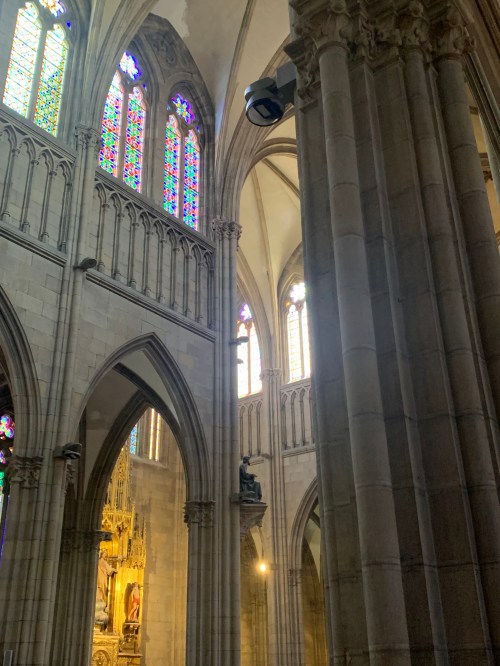
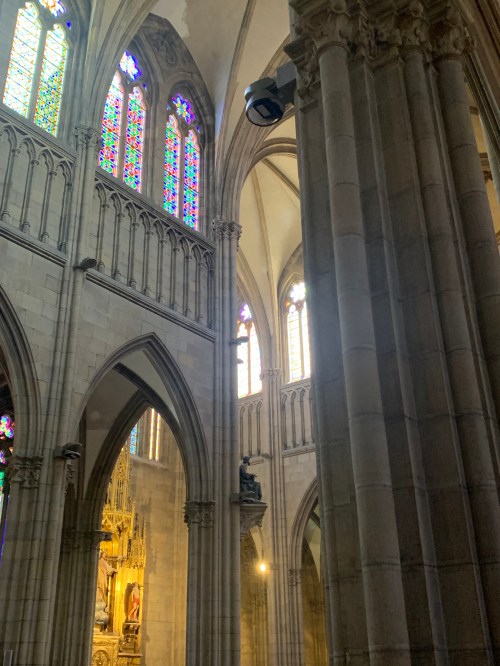
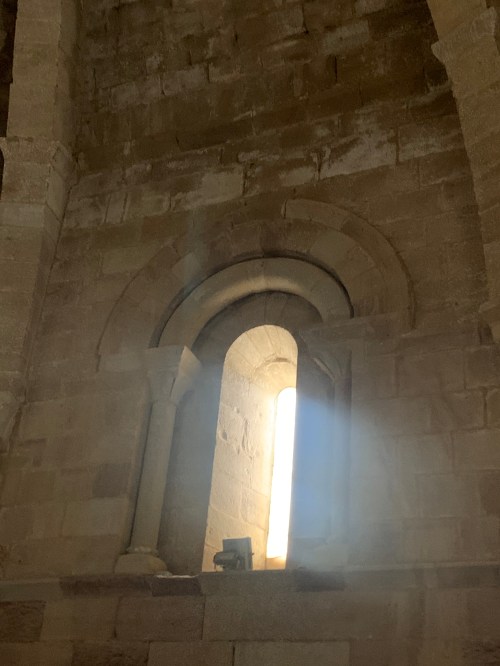
Beautifully restored Romanesque cathedrals, especially in Jaca and Sanguesa, on the Aragonese route provided sanctuary in medieval times for quiet contemplation and inspiration from sculpture at a time when most people were illiterate.

Divinely inspired music and art

Later construction of the grand cathedrals such as Notre-Dame in Paris and Chartres, with their stunning stained glass windows inspired awe and devotion.

During the Renaissance era religious art with masterpieces by artists such as Michelangelo, Leonardo da Vinci, and Raphael communicated complex theological ideas through visual means.

Sacred music by composers such as Johann Sebastian Bach, and Beethoven created elaborate musical compositions elevating the liturgical experience and deepening the spiritual experience, connecting with the divine in profound sensory-rich ways.

When a religion degenerates into claiming the ultimate truth, subjugating its members into what to believe and how to behave, there is empty ritual and stagnation. The head-mind closes the door to the heart-mind and the whispers to the soul.

Reino Gevers – Author – Mentor – Speaker

P.S. I’m excited to announce the release of my latest book, “The Turning of the Circle: Embracing Nature’s Wisdom for Purposeful Living.” If you enjoy it, you might also be interested in my previous works, “Deep Walking for Body, Mind and Soul” and “Walking on Edge: A Pilgrimage to Santiago.” You can find all of these titles at reputable bookstores near you.

Leave a comment

Filed under deep walking, Pilgrimage, spirituality, Uncategorized