In an age when narratives of division, exclusion, and separation grow louder, a quiet truth comes into view when we examine the origins of language and culture.
Diversity is not accidental. It is a divine principle of growth, evolution, and color. From the earliest words to the languages we speak today, we have always been—and will always be— one humanity, expressing ourselves in many voices and song.
Languages and cultures did not arise in isolation.
They grew as people moved, met, traded, worshipped, struggled, and learned from one another. English carries Germanic bones, Latin learning, French refinement, Norse pragmatism, and words from every corner of the globe.
German shares ancient roots with English, shaped by regional sound shifts and centuries of cultural exchange with Slavic and Norse peoples.
Spanish is Latin at heart, enriched by Celtic echoes, Visigothic rule, and nearly eight centuries of Arabic wisdom.
Chinese developed along a different path, yet with the same human impulse—to name the world, preserve meaning, and pass wisdom across generations—using a writing system that unites many voices into one shared tradition.
At their deepest level, all languages serve the same purpose: to connect human beings.
Whether through inflected verbs or tones, alphabets or characters, each language reflects the same universal needs—belonging, memory, meaning, and hope.
Even where linguistic families differ, the patterns repeat: shared ancestors, adaptation through contact, and continuity through storytelling and faith.
No language is “pure.” Each is a living record of encounter. Every word carries footprints of those who came before—migrants, traders, teachers, farmers, poets, seekers. What appears as difference is, in truth, relationship written into sound.
Language reminds us that humanity has always been interwoven. Our histories overlap, our words borrow freely, and our voices echo one another across time and geography.
We are formed in relationship and sustained by exchange. When we build walls, and retreat into tribalism, we harden ourselves behind artificial boundaries. We diminish and extinguish divine purpose. What refuses connection withers; what remains open continues the work of creation.
As the 13th century Mystic Meister Eckart reminds us: „The eye with which I see God is the same eye with which God sees me.”
English: Germanic (Angles, Saxons, Jutes), Latin, Old Norse (Viking), Norman French, Greek
At the start of a New Year, we find ourselves living in a time of heightened global tension. Multiple conflicts, political instability, and rapid social change have left many people feeling uncertain, anxious, and unmoored.
The quote: „We are living in interesting times,“ often attributed to the British statesman Sir Austin Chamberlain in the 1920s, encapsulates what many feel today.
The Changing World Order
I recently delved into the book by Ray Dalio „The Changing World Order – Why Nations Succeed and Fail.“
He analyzed why nations appear to follow recurring long-term cycles of growth and decline driven by economics, politics, and human nature.
Seen through a spiritual and moral lens, Ray Dalio’s message is less about markets and the decline of empires but more about the inner condition of a society.
Why nations rise and fall
Nations rise when they cultivate humility, discipline, fairness, and responsibility. Education and science is one of the keys to successful economies. But along with technical skill comes the moral formation; productivity flows from a shared sense of purpose, common values and trust.
Money is a reflection of values: when wealth is earned through contribution, innovation, and stewardship, it strengthens the whole.
Decline begins when a nation forgets its limits and loses its moral compass. Excessive debt mirrors spiritual debt—living off tomorrow rather than honoring today. Inequality widens when the common good is replaced by self-interest. Arrogance replaces gratitude; entitlement replaces service.
The decline begins when institutions are hollowed out not only because of bad policy, but because of character and moral erosion.
Internal conflict grows when people lose a sense of shared belonging. The “other” becomes an enemy rather than a neighbor. From a moral standpoint, this is the deepest danger: separation from one another and from transcendent meaning.
History shows that societies disintegrate when power is pursued without wisdom, and freedom without responsibility.
External conflict revealing a deeper crisis
External conflict, in Dalio’s cycle, reflects a deeper spiritual struggle: fear versus trust. Rising powers test declining ones not only materially, but morally. Violence and domination appear when dialogue, humility, and restraint have already failed.
But cycles also imply renewal. Collapse is not punishment but karmic consequence. Societies can realign when they recover timeless virtues such as truthfulness, stewardship, compassion, and reverence for what is larger than the self.
In spiritual terms, Dalio’s insight echoes an ancient teaching:
What a nation gains by losing its soul is never truly wealth and what it saves by recovering its soul can outlast empires.
In this liminal season of transition, we are called to clear the waters clouded by deception, obfuscation, and endless distraction. The longing for truth is no longer abstract; it has become a spiritual and human necessity—quite literally, a matter of survival.
Just because you have walked through a dark past does not mean your story ends there. Christmas carries a deep and enduring message of hope.
The ancient mystics understood that time is an illusion, teaching full presence as eternity touching the present moment.
The days between Christmas and the New Year were honoured as the in-between time where endings soften and new beginnings quietly form.
Christmas is an invitation into this holy simplicity. The birth of Christ did not take place in a palace but in an unremarkable shelter, rough with straw and shadow. Yet kings traveled great distances to kneel there and pay homage.
This is the great paradox of Christmas: divinity arrives hidden in the ordinary. Love reveals itself not in grandeur, but in humility. The sacred is often found exactly where you least expect it.
In this season, you are gently reminded of your own worth. You are worthy of love. You can learn to love yourself, even the parts shaped by fear and survival. When you dare to face your fears with compassion, you begin to gather the tools for healing and growth. Peace is uncovered from within.
The Christmas story is also a story of clearing space. The stable had to be emptied and prepared to receive new life. In the same way, this season invites you to release old entanglements, to lay down burdens that are no longer of service, and to allow the soul to breathe.
As you learn to care for yourself with gentleness, you become more capable of caring for others in the wider human family.
This is the quiet miracle of Christmas: when love is born within, it radiates outward, warming a broken world in need of hope.
„Knowing yourself is the beginning of all wisdom.”— Aristotle
Standing guard at the doorway of your mind has become essential to maintaining spiritual and mental health in an age where our minds are drowning in information but thirsting for wisdom.
What you feed your mind, you ultimately become. A few careless minutes scrolling on your smartphone can trigger a cascade of emotions that can shape your entire day.
If you are reading this, you are likely one of the few who is actively reflecting on what is happening to us collectively.
Conflict and social disruption will always be part of the human condition—we are imperfect beings, after all. But we also carry within us the profound power of choice.
When the fringe becomes the megaphone
My impression is that the darker impulses of humanity are being amplified through the very technology meant to connect us. Fanatical fringe groups and those consumed by malice spend countless hours attacking others with hate-filled messages. Social media companies do little to halt this simply because emotionally charged content fuels engagement—and engagement fuels profit.
We may believe we are in control of what enters our minds, but for most people this is not true. Social media and search engine algorithms quietly track our behavior and serve up the content we are most likely to consume. In doing so, they shape not only our preferences, but our thinking.
Echo chambers of belief
Beliefs and opinions are constantly being reaffirmed within separate realities—information bubbles where each group hears only the echoes of its own worldview. Families, friendships, communities, and even congregations are fracturing along these invisible but powerful dividing lines.
What we need is a collective pushback from the quiet majority: the rational, thoughtful, grounded people who do not fall for emotional manipulation. That resistance begins by asking simple but profound questions:
Is this information expanding my energy or diminishing it?
Is it helping me grow, evolve, and reach my full potential?
A common misconception is that knowledge, information, and education alone equal wisdom. Yet many highly intelligent people refuse to learn from their mistakes, cling to fixed mindsets, and resist deeper reflection—never realizing they have been backing the wrong horse all along.
The power of who and what you surround yourself with
True wisdom is innate knowledge shaped through experience. It is the quiet confidence of intuition and higher consciousness. When you choose to surround yourself with wise friends, nourish your mind with spiritual teachings, and seek guidance from grounded mentors, you naturally grow in wisdom.
Equally essential is practicing self-care by setting firm boundaries with people, media, and environments that deplete your mind, body, and soul. Self-care is not indulgence—it is alignment. It is taking time for silence, contemplation, and reconnection with your inner life.
Choosing this path gradually fills your life with greater happiness and contentment because you begin building a bridge to your soul. Your actions shift from serving the ego to serving the greater whole.
Is humanity sliding back into conflict and cultural regression or are we standing at the threshold of, an era of peace, prosperity, and progress on every level?
I’ve been reading The Changing World Order by Ray Dalio, whose research into the cyclical rise and fall of empires is both sobering and fascinating. History, it’s said, never repeats itself—but patterns do. And for thousands of years, they have shaped the destiny of nations and civilizations.
Today, we find ourselves in a remarkable moment. Humanity is literally creating a parallel intelligence through AI—an evolution that will profoundly transform our world. Since the 19th century, the global economy has gone through repeated waves of disruption, followed by bursts of innovation and rapid growth.
According to Dalio, those who recognize these cycles early tend to emerge stronger, while those clinging to the past often struggle. History shows that generations shaped by hardship and resilience create wealth and progress—only for their descendants, raised in comfort, to grow complacent and begin the downward turn. The result? Rising inequality, social unrest, political polarization, and eventual fragmentation. Sound familiar?
The good news, as Dalio notes, is that downward cycles tend to be shorter than the long upward phases of creativity, optimism, and expansion. Each decline, though painful, clears the way for renewal.
So how can we prepare on a personal level?
Embrace change. Disruption is often a cleansing force, clearing the old to make space for the new. Shift your mindset. See the universe as working for you, not against you. Trust the seasons. Nature teaches us that endings are never final—they are part of a larger rhythm of rebirth and growth.
If we learn to move with the current rather than resist it, we may discover that what looks like decline is really transformation. Go with the flow of the river—and you’ll find yourself carried forward into the next great awakening.
Yesterday, I had to make a very difficult decision in letting go of my beloved Dalmatian, Klara, who has been a faithful companion through the seasons of my life for over fourteen and a half years. Her gentle presence, unwavering loyalty, and unconditional love have been a constant reminder of the sacred bond that exists between dogs and their humans.
Dogs are spiritual beings. Their devotion and ability to love without condition form a bridge between the seen and the unseen, assisting us on our soul’s journey in ways we often only begin to understand when they are gone.
Every dog owner who has shared a deep bond with their four-legged friend will tell you that dogs can sense our emotions long before we consciously recognize them ourselves. They seem to perceive energy fields and emotional undercurrents that go beyond human understanding.
The Science Behind Emotional Connection
Interestingly, modern science is beginning to confirm what dog lovers have always known in their hearts. There’s now solid scientific evidence that dogs can detect and respond to human emotions through scent.
Studies using physiological measures — such as cortisol levels, heart rate, and fMRI brain scans — reveal that dogs can literally smell our emotional states. These scent cues influence their own behavior and even their stress responses.
A 2018 study published in Animal Cognition exposed dogs to sweat samples from humans who had watched either a scary or a neutral video. Dogs who sniffed “fear sweat” showed higher heart rates, sought comfort from their owners, and avoided strangers.
A 2022 study at Queen’s University Belfast trained dogs to distinguish between stress-related sweat and breath samples versus neutral ones. Astonishingly, the dogs identified the “stress” samples correctly 94% of the time after just a few trials.
These findings show that dogs can detect emotions such as fear, anxiety, sadness, and happiness through subtle chemical shifts tied to hormones like cortisol and adrenaline. They use this information to adjust their behavior — offering comfort, staying close, or becoming cautious — depending on what we’re feeling.
Dogs as Mirrors of Our Inner World
Beyond their empathy, dogs often mirror aspects of our own nature that invite us to grow.
A dog that shows exceptional love may be teaching us to open our hearts more fully.
A stubborn dog might be reminding us to loosen our own rigidity.
A loyal dog teaches us the deep beauty of steadfastness.
When I had a Rhodesian Ridgeback, it taught me the power of focus and presence. If my mind wandered during our walks, my dog would sense it immediately, pulling in all directions or breaking free to chase a rabbit. The lesson was clear: stay present.
Dogs even reflect us in surprising physical ways. Some adopt the walking gait of their owners — and there are remarkable stories of dogs developing a limp to mirror an injured owner, even walking on three legs in solidarity.
Timeless Companionship
When I was a teenager, I had a fox terrier named Stompie who would wait by the gate each day precisely at the moment I returned from school. Decades later, Klara — who lost her hearing two years ago — would still be waiting on the terrace just minutes before my arrival, somehow sensing I was on my way home. That intuitive bond transcends logic; it belongs to the language of love and connection that dogs seem to speak fluently.
The Neurology of Love
Recent studies show that the dog–owner relationship activates brain regions similar to those seen in the infant–mother bond. In dogs, the reward center of the brain responds more strongly to their owner’s voice than to that of a familiar person. More attached dogs show even greater neural activity when hearing their owner’s praise — evidence that the emotional connection runs deep on both sides.
At Harvard University, researchers are now studying how social bonds between children and their pet dogs develop over time — exploring whether these relationships can help reduce stress for both child and dog alike. The answers may help us better understand what many of us already know intuitively: love shared with a dog is healing, grounding, and transformative.
Klara’s passing has left a void in my home and in my heart but also a profound gratitude for the years we shared. Her spirit, like so many beloved companions before her, reminds me that love never truly leaves. It simply changes form, waiting patiently for us, just as our dogs always have.
I’ve been contemplating one of Rilke’s poems lately. It has stayed with me because it speaks so directly to our world today, where noise and distractions pull from all directions. Rilke envisions a silence so profound that all the noise, chatter, busyness of the senses, and endless distractions simply fall away.
And, in that stillness, he says, we might finally glimpse the divine with full clarity.
If only it would be, just once, completely quiet… If only it would be, just once, completely quiet. If the random, and the approximate went mute, and the neighbors’ laughter, if the noise that my senses make wouldn’t so stubbornly keep me from waking– Then I could, in a thousandfold thought, think you right to the edge of you and have you (just a smile long), to give to all life as a gift like a thank-you.
Reading this, I couldn’t help but notice how often we treat noise, chatter, and distraction as normal. Yet maybe our constant talking, scrolling, and background hum are really a way of avoiding something scarier: just sitting with the stillness within.
Stillness can feel so unsettling because it invites us to hear the inner voice we’ve been ignoring, the voice of authenticity, of truth, of God. Rilke reminds me that silence isn’t empty at all. It’s a threshold. If we dare to step into it, we may discover presence, gratitude, and a deeper connection with life than all our distractions could ever offer.
You could also take a walk in nature, opening the senses to natural sounds that are different from noise. Birdsong, the waters of a creek, the rustling of leaves in the trees—all of it forms a beautiful symphony. In those moments, you can feel yourself connected to a larger whole and begin to perceive the subtle whispers of the universe.
So here’s a simple practice: find just five minutes today to sit in stillness. Turn off the phone, close your eyes, and notice the quiet beneath the noise. At first it may feel uncomfortable, but stay with it. Listen for that subtle inner voice—the one that whispers rather than shouts. You may find, as Rilke did, that in the stillness something sacred begins to stir.
Have you ever felt like you’re just running on empty, and feeling emotionally exhausted that comes from carrying too much, too often, and for too long? You’re not alone.
At some point, most of us find ourselves stuck in the burnout spiral by juggling responsibilities, absorbing too much information on social media, and feeling the quiet weight of stress pressing in from every side. It’s easy to lose your sense of calm, purpose, and energy when overwhelm takes hold.
You might feel disconnected from what is ultimately your journey into becoming who you really are.
But here’s the truth: You don’t need a dramatic life reset to feel better. Small, intentional steps can help you rebuild your energy and resilience. Doable practices that can help you restore your strength from the inside out.
Acknowledge the Overwhelm
“Let’s start with honesty: Are you constantly running on empty?” The difference between normal stress vs. chronic overwhelm. Common sources: caregiving, decision fatigue, emotional burnout, information overload.
The Science
The body has a natural defence mechanism when under duress. The hormone cortisol puts you into fight, flight or freeze mode. Your breathing becomes fast and shallow as all your senses go into survival mode. Your cognitive functions, the ability to find creative solutions is impaired. At the same time all your vital body organs do not get the nutrients they need, steadily breaking down your immune system. We are simply not designed to cope with permanent stress over long periods of time.
Common misconceptions on building resilience
A common misconception about building resilience is to “toughen it out.” But it’s not about swimming against the tide and bouncing back as before. It’s more about integrating the experience and adapting accordingly.
Micro-Shifts That Build Strength
Simple routines and mind habits can restore control. Your intuition will tell you that you are not aligned if what you are doing is inevitably causing fatigue and exhaustion. Learning to say „no“ and setting healthy boundaries to people who deplete your energy takes practice. Pause for a moment and breathe before reacting. In this way you are building space between stimulus and response.
The Role of Faith and Belief
Integrating faith can be pivotal in providing an anchor of guidance during stormy times. It could be a morning meditation or prayer that aligns you with your authentic self. Several studies have confirmed that taking a walk in the green and blue spaces of nature and opening the senses to the sights, sounds, and smells of nature reduces the stress hormones in your body significantly.
Building a Resilience Toolbox
Stress is not necessarily harmful. It can help you focus on the task at hand. But too much of it is harmful. The key is finding a good sprint and recovery system. Practices such as breathwork, walks in nature, digital breaks, gratitude reflection and nurturing positive relationships are just some examples. What and who grounds you? Mental reframing: “Is this pressure pointing to a shift I need? What is life throwing at me from which I can learn?“ You can ask for help without guilt. Learn to sit with discomfort without shutting down.
What’s one small choice you can make this week to calm the overwhelm? It could be a simple question such as: “When I feel overwhelmed, I want to remember…”
Great artists possess the rare ability to pierce through the veil of the ordinary, revealing the deeper truths that lie beneath life’s surface. In times when power distorts reality and fear stifles truth, their work becomes a courageous act of revelation.
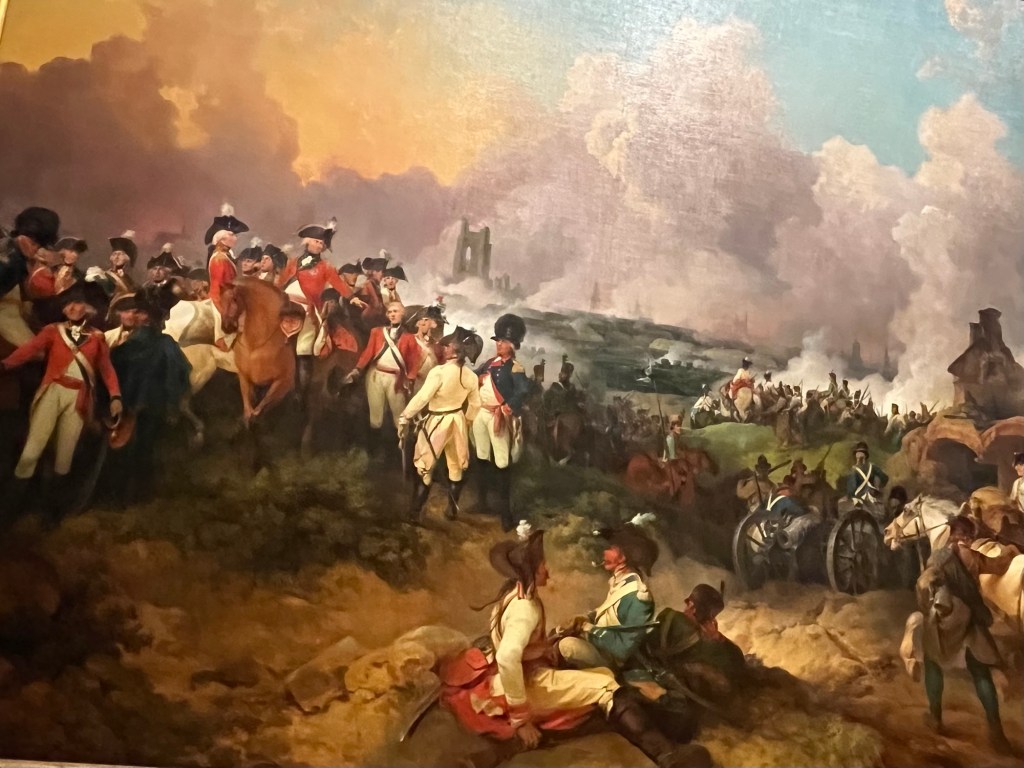
A few days ago, I was vividly reminded of this while visiting the Tate Britain gallery in London. Entrance to most of London’s famous galleries is free, and it’s a great way to spend a few quiet hours in a big city.
I was particularly struck by the works of the late 17th and 18th centuries. The expanding British Empire was marked by conflict, built by the sacrifices of soldiers and the toil of slaves and factory workers. Child labour was common, and women were condemned to giving birth and running the household.
Subtle hints beneath the surface
Artists were often commissioned to glorify the king and the empire, yet beneath the surface of landscape paintings, market scenes, and depictions of mixed-status couples, subtle traces of class divisions and social tensions quietly emerge.
The tumultuous times of the late 18th and 19th centuries, along with global wars, came at a huge cost, marked by massive taxation for ordinary people, widening wealth gaps, poverty, and unemployment. Artists responded by painting dramatic battle scenes or images that either evoke a Romantic past or feelings of awe and terror.
Art and spirituality
Much of religious art was commissioned by monasteries in medieval times to convey the gospel because most people were illiterate. In contemplation of the art, the individual had a unique gateway to experiential spirituality.
Apocalyptic imagery from the Book of Revelation reflects the deep anxieties of a time when rapid technological and social upheaval left many feeling unmoored. Long-held certainties, norms, and values were beginning to crumble. In many ways, these ancient fears echo our own and mirror the disruptions in today’s world.
Artists sensing underlying tensions
Major social and political shifts are often preceded by conflict and upheaval. Artists sense these underlying tensions long before they burst into the open ,but also give some cues to a brighter future.
Art offers us a unique lens through which to view the past, revealing not just historical waymarkers but the deeper rhythms of human experience.
History moves in cycles. Out of hardship and resilience emerges renewal and growth, only to give way once more to seasons of disruption and decline. Yet, from each winter of decay, a new spring is born, reminding us that regeneration is woven into the very fabric of life.
It doesn’t take a coup or a dictator to kill a democracy. Sometimes, the rot begins from within, in slow motion and in plain sight.
Across America and other traditional democracies, the checks and balances that are foundational in free societies are being chipped away.
If history teaches us anything, it’s this: when authoritarianism rules everyone loses—freedom, dignity, truth, and the very social fabric that makes us human.
The grim reality of authoritarian rule
Envision yourself living in a country where even the mildest critique of the ruler could land you behind bars or strip you of your livelihood. The airwaves echo incessant hymns of praise for the leader, while simultaneously stoking hate towards both real and imagined adversaries. Meanwhile, your son lives in constant fear, knowing he could be conscripted at any moment into a futile war.
This is a grim reality in Russia and a growing number of countries, casting a shadow over the lives of its citizens.
Alarmingly, this pattern could potentially spread to democracies where generations have relished unparalleled freedoms, blissfully unaware of the true implications of authoritarian rule and its pervasive influence on society.
Across the globe, we witness a gradual erosion of fundamental liberties and democratic principles. Even within Western democracies long considered bastions of stability, nefarious political factions are becoming mainstream, posing a major threat to the established order.
The Democracy Index for 2019 found that democratic backsliding across the world has led to the worst score since the index was first produced in 2006, with only 5.7 percent of the global population living in what could be considered a “full democracy.”
A Berlin-based leading Civil liberties network has warned that the rule of law is declining across the European Union as far-right parties continue to weaken legal and democratic checks and balances. Liberties in entrenched democracies such as Sweden and Italy are in a gradual process of retreat and risk becoming systematic, according to the 2024 Liberties Rule of Law Report.
Democracy and civil liberties take many decades to be entrenched in society while it takes only one government to dismantle everything. Freedom of the press can be stifled overnight, opposition parties banned or intimidated, and judges and civil service members replaced with regime-friendly acolytes. All this has played out in Hungary, once a democratic country but now under authoritarian rule of Victor Urban.
The frightening scenario is that the process takes place gradually and incrementally with an electorate sleepwalking into authoritarianism.
We need only to look at history to understand how quickly basic freedoms can be usurped when a society fails to heed the warning signs. Adolf Hitler’s ultimate plan to extinguish the Jewish population with a German Reich controlling all of Europe was clearly outlined in his 1925 autobiographical manifesto “Mein Kampf”, compounding existing beliefs, fears, and xenophobia.
When opinion becomes an entrenched belief when truth becomes a lie and the mind refuses to accept an alternative idea or perspective, it is but a short road to authoritarianism.
Hitler’s explicit racial theories were openly portrayed in “Mein Kampf” and in his speeches before coming to power: Jews, Slavs, and other non-Aryan groups were described as subhuman and deserving of extermination or subjugation. His vision for a racially pure society involved the systematic elimination of “undesirable” populations that eventually culminated in the Holocaust. People in the mid-1920s failed to fully comprehend Hitler’s intentions for territorial expansion (Lebensraum) and the establishment of a racially pure Aryan state.
The suppression of dissent, the elimination of political opposition, and the manipulation of propaganda to indoctrinate the German population with Nazi ideology was introduced gradually. The policy of appeasement with influential groups of Nazi sympathizers in the United States, Britain, and other countries, eventually paved the way for one of the darkest periods in human history.
Authoritarianism goes against all human dignity and essentially gives power to a single ruler or small clique that inevitably ends up enriching itself at a terrible cost to the majority of the population. It is a one-way street where everyone loses.
Democracy can only endure when it is grounded in a robust system of checks and balances, supported by a vigilant and critical civil society. The authoritarian regimes of the last century unleashed unimaginable catastrophes, including two world wars and a genocide unparalleled in human history.
At its core, democracy champions freedom of expression, individual liberty, and tolerance. It allows you to fully express and live your potential without fearing repression and control by a state.
Democracy can be chaotic, messy and loud, allowing a platform and freedom of speech for everyone.
Yet, these very values are increasingly vulnerable to exploitation by extremists. Before we fully recognize the threat, power can fall into the hands of individuals whose sole aim is personal advantage, subjugation and control.
Authoritarianism, grounded in fixed belief and fanaticism ultimately creates a toxic emotional state, blending fear, anxiety, and anger. It fosters dehumanization, deepens political polarization, and fractures social cohesion.
On a personal level, it becomes a significant barrier to self-growth and spiritual evolution. In a rapidly changing world, adapting is essential for survival. Clinging to rigid beliefs not only limits personal transformation but also blinds you to the new opportunities and possibilities the universe continually offers.