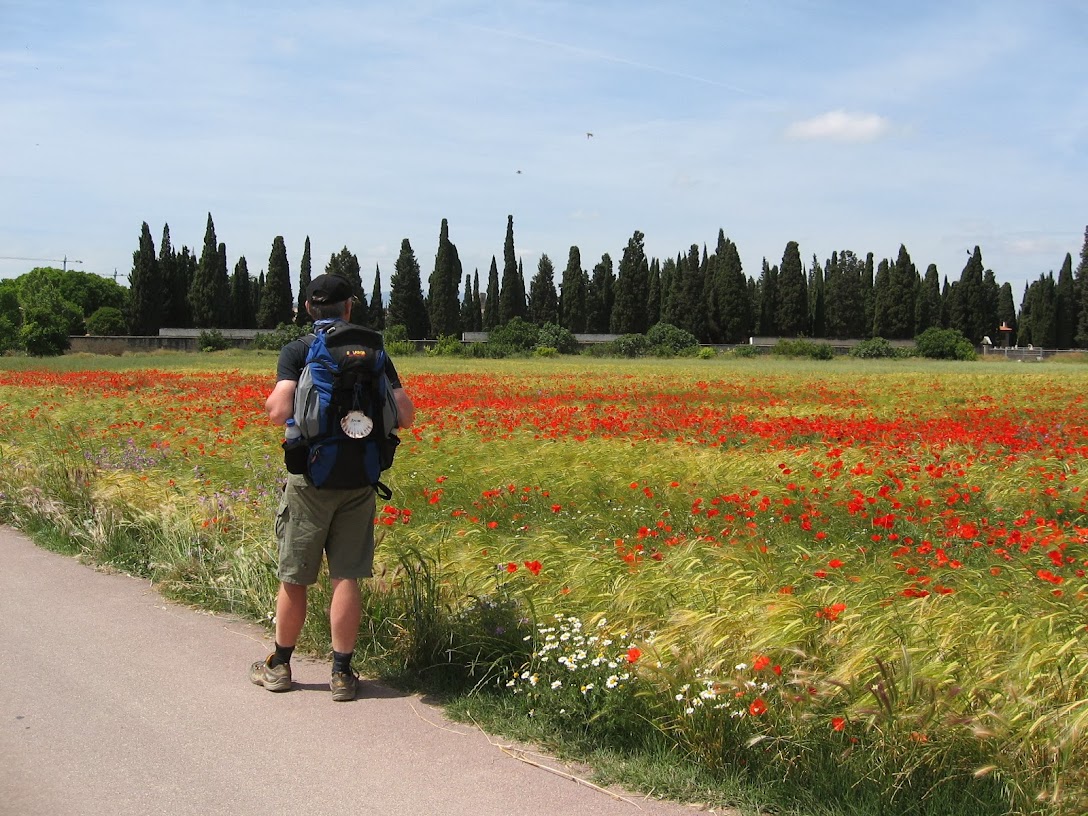
Walking the Camino pilgrimage route in northwestern Spain is an analogy of life and a fast-track course in self-development and soul elevation. It is why many people who start this 800-kilometer walk as a sporting endeavor end it as a pilgrim.
A fellow pilgrim once said to me: „If you don‘t walk this path with humility, it will force you to become humble.“ It is a mantra that has remained etched in my mind as one of the many life lessons learned on the Camino.
Life gets in the way of a plan
Life inevitably gets in the way of a meticulous plan or agenda. This doesn’t mean you shouldn’t have a financial plan or pension savings scheme. You should simply be aware that even the best of plans can be scuttled by external events out of your control. You should therefore be prepared all the time to adapt, amend, and surrender to the flow of change.
On the journey of the soul, the pursuit of knowledge is an endless path of discovery. However, within various religious communities, there exists a phenomenon often referred to as the “spiritual ego.” This tendency can manifest as individuals within a group belittling those outside their faith or belief system, portraying them as less enlightened or unaware of profound truths, while they remain blind to their own hypocrisy and failings.
The universe has its own sense of humor in bringing us back to humility if we denigrate others with our inflated pride.
The Ego-Throne
The Achilles heel of the high achievers who have phenomenal success and then come crashing down is the illusion they created it all by themselves while seated on the golden throne. Their decisions are always infallible. Criticism by underlings is seen as disloyalty so they are eventually surrounded by sycophants and boot lickers.
History is full of examples of captains of industry, emperors, presidents, and superstars who lost everything because they withdrew into a cocoon far removed from the real world and the lives of ordinary people.
The challenges of good leadership
Aware of the temptations of power, the Stoic Roman philosopher emperor Marcus Aurelius (161 to 180 AD) had a servant follow him through the streets of Rome whispering in his ear: “You’re just a man… just a man,” to keep him humble. He is remembered to this day as one of the “Five Good Emperors” of the Roman Empire. His “Meditations” continue to be studied and revered for their insights into Stoic philosophy and the challenges of leadership.
During my more than a dozen walks on the Camino I’ve met some extremely wealthy people walking the path with a simple backpack and sleeping by choice on a bunk bed in a pilgrims hostel rather than spending the night in a luxury hotel.
It was an eye-opener to hear their stories of how they had transitioned from grief, financial ruin, and other obstacles that life had thrown at them. They all shared the same traits: Kindness, humility, and wisdom embedded in the knowledge that nothing can be taken for granted. The most precious things in life are free, and happiness can be found in the smallest of things.
Reino Gevers – Author – Mentor – Speaker
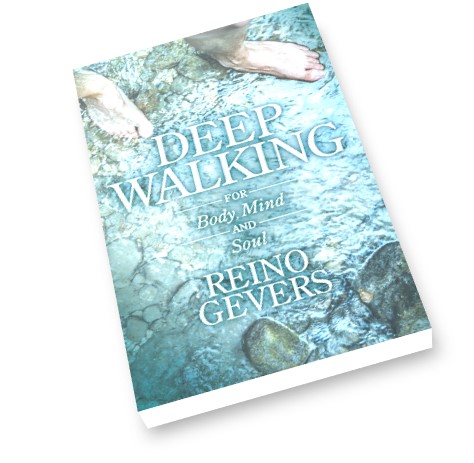
P.S. I’m excited to announce the release of my latest book, “The Turning of the Circle: Embracing Nature’s Wisdom for Purposeful Living.” If you enjoy it, you might also be interested in my previous works, “Deep Walking for Body, Mind and Soul” and “Walking on Edge: A Pilgrimage to Santiago.” You can find all of these titles at reputable bookstores near you.
Understanding and managing your emotions is key to achieving personal growth and accessing a higher vibrational energy. You can only tap into your inner wisdom by transmuting the charge of your toxic emotions such as fear, shame, anger, and grievance.
This poses a particular challenge during a time when social media and the political narrative feeds on negativity and our darkest toxic emotions.
Your body is the most authentic recording device of everything that has happened in your life. You will dream of events that happened decades ago because those memories are stored away somewhere in the depths of your body cells.
When you dream of when you were a seven-year-old and stole the cookies from Grandma’s closet, you have in some way not closed with that incident emotionally.
Your head-mind probably made up all sorts of reasons why taking those cookies was in order, while your sub-conscious heart-mind knew very well that what you did was stealing and that you hurt Grandma because you lied to her.
A tension or dissonance between head-mind and heart-mind, like acting against a gut feeling or doing something where all the alarm bells are running at a heart level, are just those things that the body will always remember.
Training your “heart-mind” to be emotionally mature is one of the reasons we are here on earth. We humans are imperfect beings, and probably the most disconnected of species from ourselves and our natural environment.
We have incarnated as souls to use our bodies as instruments of learning.
The heart is not merely an organ of the cardiovascular system that transports nutrients, oxygen and hormones throughout the body and removes metabolic waste. In the spiritual sense the heart is described as the “seat of the soul.” It is the first organ that develops in the fetus and is the connection between our physical and non-physical (soul) selves.
Impulses or thoughts flow first from the heart and then to the brain. The brain dissects, rationalizes and analyzes. The “heart-mind” is authentic and closest to the true self or soul purpose. Knowing the difference between “head-mind” and “heart-mind” is the spiritual learning part.
Our body is constantly sending us signals about what we need to hear and work on. The problem is that we are so caught up in the world of distraction that we mostly fail to listen until the body gets really angry and calls a time-out with some illness or malady. It is no surprise that cardiovascular diseases top the list in much of the Western world.
Regaining the connection
Regaining that connection to the “heart-mind” comes mostly during times of solitude, during meditation, prayer and deep walking. That is when we become aware of our emotional state of being. Some of the “emotional memories” stored in the body could go back many years or even decades.
These energies can be transmuted very well with the ancient body arts of tai chi, qi gong and yoga that were developed and refined by spiritual masters over many generations.
It is only fairly recent that these ancient arts have reached the Western world. One of the great tai chi masters, Cheng Mang Ching, was ostracized by the Chinese community in New York when he began teaching tai chi for the first time to Western students in the early 1960s.
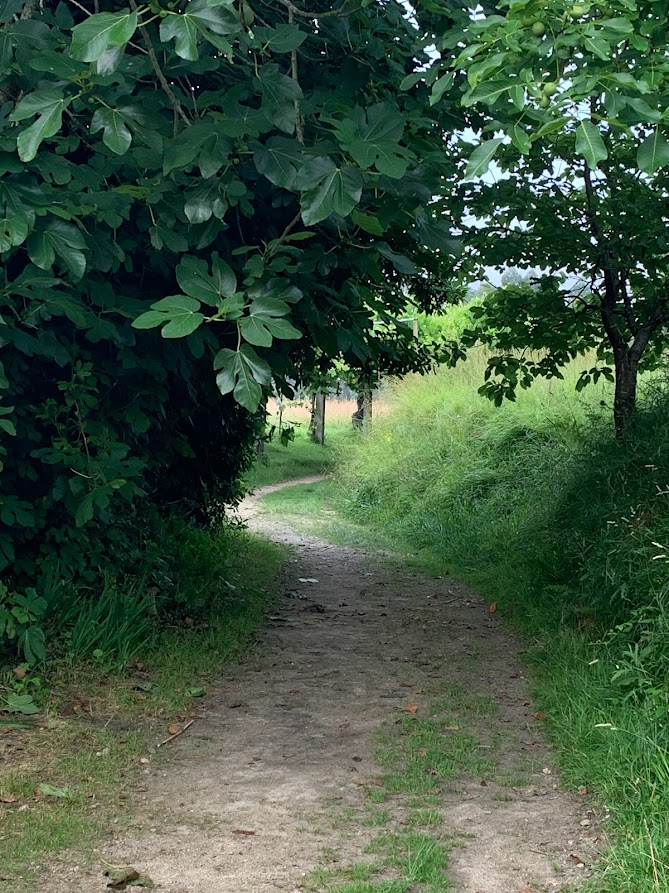
If you walk the main Camino Frances, you will be walking for five weeks or longer. After two or three weeks on the road you realize that the Camino is much more than a mere physical exercise.
Not only does the body start detoxing, but I have noticed on my walks that dreams, childhood events, and memories of traumatic relationships that occurred many years ago return with a particular clarity.
These are particularly precious healing moments when old trauma is released to open up the channels for a flow of new energy.
Whatever the heart-mind hasn’t transmuted emotionally will at some stage come back to haunt you. It is why the mother on her death bed has that last wish before dying to reconcile with the son she hasn’t spoken to for years.
Volunteers and therapists companioning the dying have told me that the deepest regret is most often not having made amends with innermost family members. A peaceful death then only comes when that “something” has been dealt with.
What Chinese medicine has known for centuries, modern medicine is confirming with latest research. Many a serious illness has its origins in emotional baggage stored in the body-mind.
There is a particularly poignant passage in the third Beatitude of the Bible: “Blessed are the meek, for they shall inherit the earth.”
In the original Aramaic language, spoken by Jesus, the meaning is more subtle: “Tubwehun l’ makiche d’hinnon nertun arha.” This roughly translates to: “Renewal to those in emotional turmoil and blessed are those who can soften that which has hardened in their bodies.”
While walking in solitude you will inevitably be confronted by the same phenomenon as when lying alone awake at night: Hundreds of thoughts will be passing through your mind of past and future things.
One thought chases the next as you wind yourself up and down in a spiral of dancing monkeys in the head.
You won’t control those thoughts by practicing mind control methods. The mind does become aware of what it is thinking about and can extract itself with an accusatory finger of “why can’t I think of something else? Why can’t I let go of these worrying concerns in my head?”
You will notice that as the body releases tension during your walk, those dancing monkeys gradually start disappearing as you begin the descent from the head into feeling the body.
This is best done by aligning to the present moment by focusing on your breathing and counting the inhaling and exhaling of breaths.
You can also start by feeling each step touching the ground, feeling the ground and how the energy of the earth moves from your foot up your legs, spinal cord, neck and the crown of your head. Start by walking very slowly, aware of the present moment, just concentrating on these small things to liberate your mind.
Our ancestors practiced ceremony and rituals to transmute trauma on a body level. Animals still have this mechanism intact. A herd of antelope will run apparently haphazardly in all directions when one of them has been killed by a predator. Their bodies shiver and shake, but minutes later all has passed and they will resume grazing as if nothing has happened.
Calming mind and body
Transitioning from the depths of our lowest emotional frequencies, such as anger, shame, resentment, hate, greed, fear, and anxiety, towards the pinnacle of human evolution involves embracing the transformative power of compassion, love, empathy, gratitude, peace, and serenity.
Even as you ascend the ladder of higher consciousness, the complete liberation from toxic emotions and feelings remains an elusive goal; you are, after all, only human. However, through unwavering commitment and diligent practice, you can expedite your exit from the rabbit hole of negativity.
It will empower you to savor extended periods of vitality, hope, and inner tranquility, enhancing your overall well-being and vibrational frequency. It is the recipe for longevity and good health.
Reino Gevers – Author – Mentor – Speaker
P.S. This is an extract from “Deep Walking for Body, Mind and Soul. All my books are available on Kindle, and paperback where all good books are sold. If you would like to order in batch to gift to friends, family and employees you can contact me by DM for a special discount.
Have you asked yourself why decent, educated, and well-meaning people are pulled into the dragnet of a dangerous cult? Do you think you are immune to making the same mistake? All it takes for them to capture your mind is to push certain emotional triggers and feelings.
Times of uncertainty and rapid change impact personal lives in multiple ways. The world’s getting more complex. We are seeking easy answers and simple solutions. If you are at an especially vulnerable point in your life. If you haven’t done the self-work in transmuting archaic fears, anxieties, and anger issues, you are at risk.
Historians and psychologists to this day ask themselves why a highly civilized nation that brought forth some of the world’s greatest philosophers, writers, and inventors could literally “worship” in masses a madman demagogue like Adolf Hitler. Cult leaders in different variations are malignant narcissists, display psychotic personality disorders, and carry an extreme personal grievance.
Hitler perfectly epitomized and tapped into the collective humiliation and undercurrent seething anger Germans felt after losing a war and suffering hunger and poverty during the economic meltdown of the 1930s. With a rising number of extremist groups coming to the fore in once unshakeable democracies, scholars and historians are seeing dangerous parallels and comparisons to the 1930s and the rise of fascism that culminated in the catastrophe of World War II.
An “us-versus-them” mentality
Cult movements typically have an “us versus them” mentality, providing a “safe haven” for individuals who have suffered a personal loss or humiliation. The “tribe” in the form of an organization, religion or political movement with a charismatic leader at its head perceives all outsiders of the movement as a threat. They will pound the message of “exceptionalism” of their leader or group. The “non-believers” and especially minority groups are vilified and dehumanized. Followers of the cult inevitably break off contact with family, and friends who do not belong or refuse “to see the light.”
Control and Isolation
The control mechanisms of a cult can be on a very subtle emotional level. Once the member has gone all-in by severing long-term relationships, it becomes very difficult to return to the old life. Few people will admit to having made a mistake or the wrong decision after sacrificing the best years of their lives and donating all their money to the “movement” or “cause.” We are hard-wired as social beings and it gets very difficult to leave “the cult family”. Those who leave are vilified as traitors to the cause, threatened, and in extreme cases harmed physically and mentally.
Once in the movement you inevitably become part of “group-think.” Members expressing the faintest doubts, who engage in a critical discourse or ask the wrong questions are shamed, coerced, and brought into line by the cult leader or his lieutenants. The critics will be told that they are “in their ego” or have strayed from the path – a favorite one in the religious cults. They will be playing on a core fear of most humans – the fear of being excommunicated from the safety of the tribe. Meanwhile, the real objectives and the financial dealings of the movement can be shrouded in mystery. The leader is always right. Excuses will be made over and over again as to why the leader could never be responsible for sexual misconduct, overspending on luxury items, or committing a serious crime.
Financial Exploitation
A common denominator of all cults is the financial exploitation of their members. They will be asked to contribute high membership fees, provide funds for a new temple, and pay for the private jet or the legal fees of the cult leader. At times members would have to donate all their assets to the movement for “the common good” as a sign of their commitment and loyalty. A small portion might be channeled to real charities as a marketing ploy while the major part will be kept by the cult leader for his personal needs.
Exploitation of vulnerabilities
You might say: “This can’t happen to me.” But cults and sects are masters at exploiting human vulnerabilities and emotions. Nobody is safe. A religious sect with a therapeutic New Age touch might catch you during an especially vulnerable point in your life when you are lonely and in need of social support and love, have just gone through a divorce, lost a loved one, or have a spiritual crisis.
The political cult and charismatic leader at its head will ensnare you if you haven’t dealt with your darkest toxic emotions such as anger and fear. You are functioning on “automatic” in the fight and flight mode of your reptilian mind, separated from the prefrontal cortex of your brain responsible for critical and logical thought.
Addiction to a cult has to be treated like any other addiction. First and foremost there is the need for an honest recognition and acceptance of the problem. Concrete action has to be taken like leaving the cult, breaking all contact with its members, and possibly leaving town. What lifestyle changes, support groups, and therapy are necessary? What would my life look like without the addiction? What freedoms would I be enjoying? How can I prevent relapse and find supportive friends with a higher vibrational energy?
If you are drawn to a charismatic leader with a hate-filled, and vindictive message, ask yourself: “What anger within me is he tapping into? What can I positively change in my life, instead of delegating action to the “political messiah.”?
Walking the path of your highest calling in personal freedom and liberty is foundational to fulfilling your soul destiny and living a life of bliss. By becoming subservient to a cult you are surrendering your unique God-given authenticity and weakening your self-esteem.
You have instead a wonderful opportunity to build on self-development from the gems and wisdom of many teachers past and present who have transcended the temptations of power and ego. If you should run into that “guru” offering a seemingly perfect solution or the only path to enlightenment – you had better run.
Reino Gevers – Author – Mentor – Speaker
P.S. My new book “The Turning of the Circle: Embracing Nature’s Wisdom for Purposeful Living” has just been published. You might also find my other books “Deep Walking for Body, Mind and Soul” and “Walking on Edge: A Pilgrimage to Santiago” of interest. They are available where all good books are sold.
If you want to enjoy the rainbow you must be prepared to take the journey through pain
In our culture, there is a festering poison of feeling entitled to special benefits or privileges without having made any effort to attain them. If you haven’t invested in the pain and walked the burn that brought you success you will never fully appreciate what you have and risk losing all.
In the ancient Taoist philosophy of the Five Element late summer is associated with the Element Earth. Using the analogy from farming: If you have invested wisely in seeds and fertilizer to plant your crop in spring, and diligently irrigated and weeded your fields in the summer, you will most likely be in the fortunate position of reaping a good crop in late summer.
Every sports star knows that you have to be disciplined and train for several hours every day for several years to reach the top league. Learning a new language requires learning on a regular basis. If you start a new business you have to invest money first, risk failure and maybe start all over again before finally making it.
Investing more than the average
The most successful people constantly push their boundaries and do much more than the average. It not only demands thinking creatively, breaking free from self-imposed limitations, and pursuing ambitious dreams, but putting in the work and the effort.
An entitled person will only see the rewards and compare. “Why can’t I have the same? I’m after all more beautiful, more intelligent …” It is the mindset that spends more than it earns. It is reaping the crop before it has ripened. There is an old English proverb: “Cheat the earth and it will cheat you.”
Falling into the trap of the blame game
Unconscious people are in the blame game and weak because they are victims of everything. Instead of taking complete responsibility as the captain, they think everyone else is responsible for their unhappy condition.
It’s so easy then to accuse the government, other nations, other races, business competitors, parents, siblings, and other people of the situation we find ourselves in. Few people are capable of taking full responsibility for whatever happens in their lives.
The crop will never bear fruit and grow to its full potential if the field is overgrown with weeds. Bugs only thrive in an unbalanced environment.
We subconsciously accumulate customs, habits, and opinions from the people we surround ourselves with and the information with which we feed our brains.
In the book of Wisdom, the I Ging, the earth is described as the receptive, receiving, and softer energy of the female or yin. It is the counterpart, but not the opposing force of the creative Yang. The enormous and receptive force of Yin needs the Yang force to exert and channel the force.
In much the same way, the heroic leader studies the situation at hand, responding accordingly. Action is never taken without a clear grounding and the realization of what path needs to be taken.
Mother Earth provides life. She provides nutrition and room for all beings, be they of a good or bad predisposition. To illustrate this particular importance in comparison to the other elements, many of the ancient writings and drawings have the earth element positioned centrally with the other elements around it. It also emphasizes the importance that at the end of each change cycle, we go full circle back to earth—to the source.
We need thought processes and thinking to accomplish tasks and to give room to our ideas and creativity. The challenge is to get a feeling about when we cross our own boundaries and those of others.
Do I have enough resources to go ahead with plans? Do I make provision for more or for less? Do I have enough in reserve? Or do I live from too much-borrowed energy, becoming indebted to other people and borrowing money?
These are the questions that need to be asked in almost any life situation where the need for change or turnaround is called for, especially if we are feeling constant fatigue after surrounding ourselves with certain people or are met with constant obstacles.
The balanced earth person is trustworthy, generous, and of a stable temperament. They sometimes are slow to respond, but will be thinking things over carefully before giving you a reply. This could be very irritating for an imbalanced pumped-up person expecting a machine-gun reply.
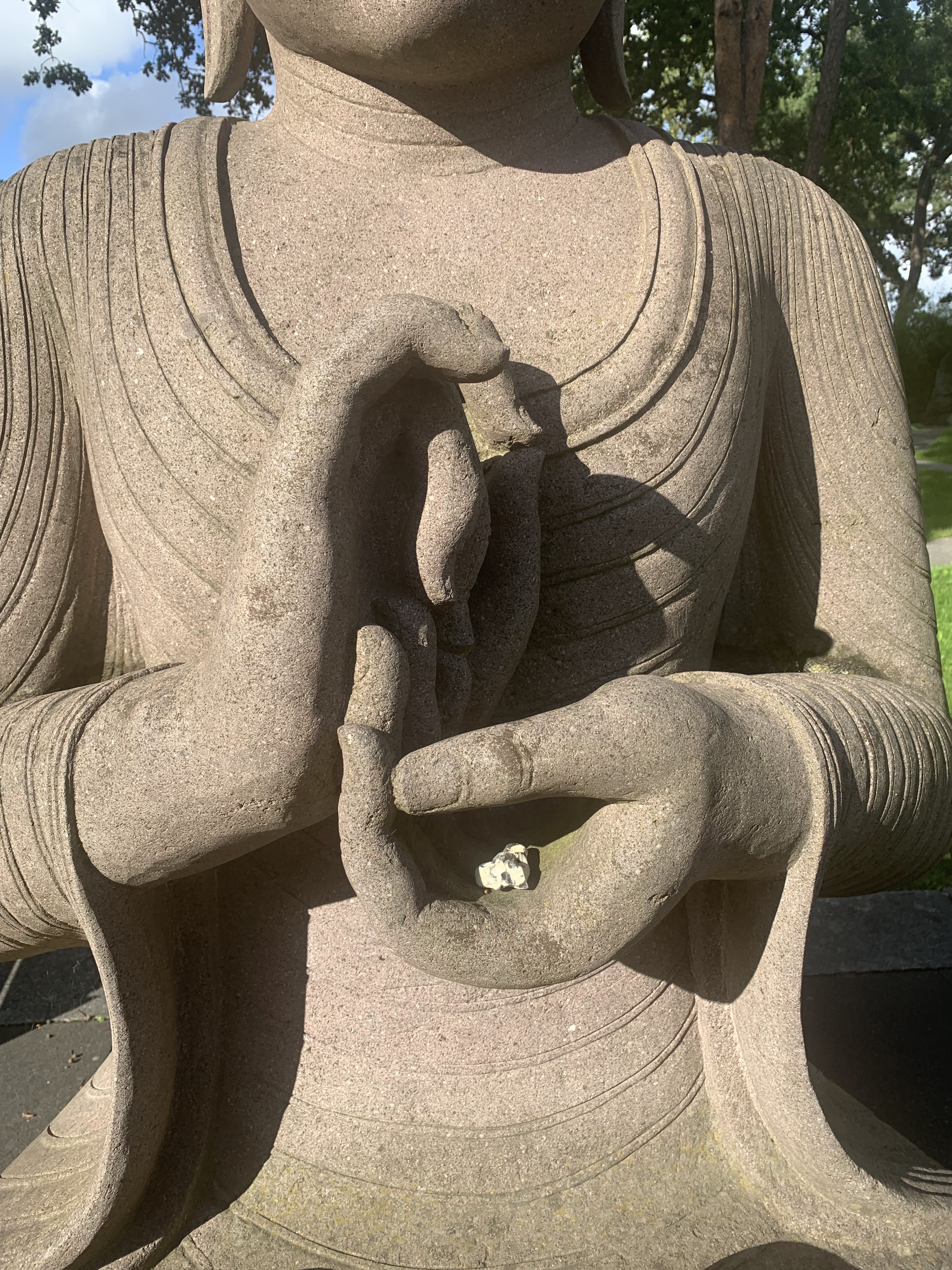
Symbolically, he would be the plump, pot-bellied, sitting Buddha at peace with himself, centered with the universe, and observing calmly while everything around him is falling into loud chaos. They are the steadfast rock in the ocean storm.
In the philosophy of the Five Elements, the Earth is described as being gracious and filled with abundance for all that life has to offer. On the other hand, it demands respect and the absolute maintenance of ethical standards that encompass all living beings. If these are violated, the consequences can be merciless. What is my true motivation? What effect does it have on others? Am I orientated to fulfilling my own greedy needs, or do I have a broader picture in mind?
Reino Gevers – Author – Mentor – Speaker
P.S. This is an extract from “The Turning of the Circle: Embracing Nature’s Wisdom for Purposeful Living” which has just been published. You might also find my other books “Deep Walking for Body, Mind and Soul” and “Walking on Edge: A Pilgrimage to Santiago” of interest – available where all good books are sold.
As you walk the path of life with its up-and-down cycles of dealing with the loss of a loved one, a significant health issue, or financial challenges it is easy to lose self-esteem, passion, and your sense of purpose and meaning.
At the core of how you feel and care for yourself is how you define your place in the world. Are you passionately enjoying what you are doing? Are you a grateful and happy person when you get up in the morning?
What we call a “midlife crisis” can also be a time to redefine purpose and meaning. You might be finding yourself in an unfulfilling job or engaging in repetitive and monotonous routines that suck away your life energy. But you lack the courage or are too fearful to make the necessary changes.
A once fulfilling or loving relationship has degenerated into hate and recrimination. A job that was aligned with your values and purpose has changed so much that it has just become emotionally and physically exhausting.
Loss of meaning and purpose shows itself in negative thinking, constant bickering, and irritability. You will be compensating the search for existential meaning with addictions to bad foods, alcohol, substance abuse, or digital entertainment. This lack of self-love and self-esteem will inevitably manifest itself in body shape and appearance.
Major life transitions, such as a job loss, retirement, or a divorce, can lead to shifts in identity and purpose. Goals, purpose, and meaning need to be redefined.
A healthy sense of self-worth can be cultivated with the three pillars: body, mind and soul.
Looking after your body by doing regular exercise is key. Only 4,000 steps a day of active walking in nature will already significantly boost your metabolism, bone density and mental health, according to latest research. Avoid processed foods, sugars, artificial sweeteners and soda drinks. A mainly Mediterranean diet of fresh fruit, vegetables, olive oil, fish, and a little meat not only feeds your body with vital nutrients but also your brain.
Feed your mind with positive thoughts. Replace a negative thought with a positive thought. What is going well? What is good in your life? Stop comparing yourself with others. There will always be people who appear to be wealthier, more successful, and happier than you. Read good books and train your mind by solving puzzles, learn a new skill or language.
Soul purpose, meaning, and validation are often found in a community or a tribe sharing the same values, and ideals. Experiential spirituality comes from within. Practices such as meditation, deep walking, mindfulness training can open the gateway to a profound spiritual experience, characterized by a sense of union with the divine, and a feeling of being interconnected with all of existence.
In essence. you have to define or redefine your purpose every new day. Be grateful to be alive. Every new day offers a new perspective and new opportunity. When on your authentic soul path, you will be evolving and growing until the day you die.
Reino Gevers – Author – Mentor – Speaker
P.S. If you’ve found this article of interest you might want to read more in my books. “The Turning of the Circle: Embracing Nature’s Wisdom for Purposeful Living” has just been published. You might also find my other books “Deep Walking for Body, Mind and Soul” and “Walking on Edge: A Pilgrimage to Santiago” of interest – available where all good books are sold.
Are you finding yourself trapped in self-talk emphasizing all that is not possible when the universe is constantly sending you messages on how you can escape the negativity trap and live a life of purpose and meaning?
The story goes that a village in the Italian Alps was hit by floodwaters with all the locals quickly heeding warnings from rescue workers to leave in buses for shelters on higher ground. All but one man refused to leave. Eventually, the rescue workers came by in speed boats with the waters rising rapidly. Again the villager refused to leave saying: “God will look after me.”
Failing to get the message
As the waters rose the villager had to eventually climb onto his rooftop. A rescue helicopter swooped low offering help. Again the villager refused help: “I’m staying. I’m putting my trust in God to help me.”
The inevitable happened. The man drowned. Reaching heaven’s gate, he accused God of ignoring his prayers. “What do you mean?” God responded kindly. “First I sent buses to the village to rescue everyone, then I sent the rescue workers in speed boats and finally I sent the helicopter and you still refused to get the message.”
When trapped in a spiral of negativity or in the sadness of that which once was and is no more, you will never perceive the whispers of the universe, offering you new opportunities in the ever-turning cyclical spiral of life.
The message from the universe could come in a casual word dropped by a passenger in a train, an image on a billboard or in a book full of wisdom that puts you on a completely different trajectory.
If you have a partner, a dear friend or a family member who responds with a “no” to everything you are suggesting, then you might consider the following. There might be underlying fears and trauma for their negativity. They might be in the process of transmuting these fears and trauma by taking a necessary painful walk over the hot coals.
They might respond with “no” because they are stressed out and feeling emotionally drained. You will see with great clarity an opportunity for them, while they are not seeing it at all, making you angry for wasting your time with them. You can only react with patient communication and active listening in breaking down the barrier.
Stepping out of the comfort zone
Stepping out of the comfort zone takes courage. Most people would rather suffer all their life in quiet misery than make the change that could completely transform their life. One of the major reasons why people are risk-averse is that they fear the shame of failure and loss if things go wrong. Staying in the comfort zone provides a certain sense of predictability and control. Meanhwhile, the mental imposter feeds low self-esteem and lack of self-confidence with negative self-talk: “That’s impossible. I’ll never manage that. I can’t do that. I don’t have the skills, money, and talent that others have.”
The seeds of low self-esteem are often sown in early childhood with the constant criticism from parents, siblings, teachers and peer groups far outweighing tangible and positive reinforcement. Especially those individuals who are different or highly talented will feel the pressure to conform to the lowest common denominator of the tribe.
Meanwhile opportunity has been waiting all along at the other end of the smokescreen. Overcoming the fear of walking an unknown path involves acknowledging these fears, taking it one step at a time, building self-confidence by acknowledging those steps, and practicing self-compassion. The first steps are a painful walk in leaving well-known territory, and the “protection” of the tribe
But ultimately the walk into authenticity is highly rewarding. By facing and embracing new challenges consciousness and personal growth are elevated. You increase your resilience by facing all the storms of life.
There is no satisfaction greater than the realisation that the universe is sculpturing you into the person you were always meant to be.
Reino Gevers – Author – Mentor – Speaker
P.S. If you’ve found this article of interest you might want to read more in my books. “The Turning of the Circle: Embracing Nature’s Wisdom for Purposeful Living” has just been published. You might also find my other books “Deep Walking for Body, Mind and Soul” and “Walking on Edge: A Pilgrimage to Santiago” of interest – available where all good books are sold.
How often have you caught yourself going back into the past with the feeling of regret on the opportunities missed, the words you wished you had never said, and the things you would do differently if you could turn back the clock?
At times the feeling of regret can be so overwhelming that it’s like a dragnet pulling you down into a dark abyss of unhappiness. But according to author Daniel H. Pink regret is a fundamental part of our lives and can help us make smarter and better decisions in the future.
Foundation regrets. These are regrets on the human need for some form of stability. Pink quotes Jason who says: “I regret not saving money diligently ever since I started working. It’s nearly crushing every day to think about how hard I’ve worked for the last twenty-five years or so, but financially I have nothing to show for it.”
Boldness regrets. Over time we are much more likely to regret the chances we didn’t take than the chances we did, whether its work choices, education or the choice of a partner. Foregone opportunities can be especially haunting during times of stress and pain.
Moral regrets. Most people wish to be seen as good people. But over time morally dubious decisions can be gnawing such as swindling in a business or cheating on a spouse.
Connection regrets. According to Pink fractured or unrealized relationships with spouses, partners, parents, friends, and all other close relationships constitute the largest deep structure category of regret.
We can set very high standards to the self and are at times our own worst critic. The melancholy sadness and regret over that which was and is no more is not only debilitating but prevents you from moving forward. Many of our regrets can in fact be undone by making amends, reversing bad choices, and taking a different perspective by posing the questions: What did I need to learn and how can I make a better choice in moving forward? If I’ve harmed others, can I make amends through an apology or some form of emotional or material restitution?
Was the regret merely an unpleasant incident in your life or does it define your life? Practicing self-care and self-compassion can neutralize some of those feelings if you treat yourself like you would be treating your best friend.
You forge your identity with the story that you tell yourself. The first step is acceptance of that feeling or emotion of regret and replacing it with a positive thought moving forward. “I made a bad decision. I feel terrible about it. But I lovingly accept myself the way I am. I am harvesting from the rich experience and moving positively forward.”
In loving yourself you build the ability to nurture and better serve your relationships. The lesson of a door slammed shut is to do better next time.
Reino Gevers – Author – Mentor – Speaker
P.S. If you’ve found this article of interest you might want to read more in my books. “The Turning of the Circle: Embracing Nature’s Wisdom for Purposeful Living” has just been published. You might also find my other books “Deep Walking for Body, Mind and Soul” and “Walking on Edge: A Pilgrimage to Santiago” of interest – available where all good books are sold.
In terms of the public narrative humanity is very much threatened by external threats such as the environmental crisis and a potential nuclear war, failing to pinpoint the major underlying cause why the vast number of human beings appear to be unaware and unable to solve the problems threatening our species.
Stress lies at the core of many relationship breakdowns, health problems, financial woes, and preoccupation with drama. The weight of past and current emotional stress is preventing millions of people from living their full potential and elevating human consciousness to another level.
Grievance culture spread by mass media is amplifying the twin shadows of anger and melancholy sadness. A person under mental and physical stress with emotions running out of control has literally lost his mind. This is what happens:
The oldest part of the brain the Amygdala, also known as the reptilian brain, is responsible for the fight or flight response that is triggered immediately when we are under duress. We feel increased anxiety, fear, or anger. Impulse control or rational thinking that we find in the prefrontal cortex of the brain is shut down.
Elevated levels of stress hormones in the body such as cortisol can further impair emotional response. Trauma from the past can be triggered by a mere thought if we have not learned how to transmute that thought.
How many adults in the world are living in the bodies of the hurt inner child?
Carl Gustav Jung, the notable Swiss psychiatrist, and psychoanalyst, often referred to these unconscious aspects of the human psyche that collectively posed the greatest threat to humanity. A repressed hurt or denied aspect of the “shadow” of the human personality could manifest in destructive behaviors on a larger scale.
A repressed feeling or hurt can be a boiling cauldron just waiting to explode as we have seen and are seeing in many tyrants and authoritarian rulers.
Many historians believe that the roots of Adolf Hitler’s cruelty were buried in his childhood. An abusive father and several other personal humiliations following Germany’s defeat in World War I may have contributed to Hitler’s deep-seated anger, resentment, and desire for power and control.
But while some abused children end up being angry and resentful adults others manage to transmute such trauma into something positive. A mind at peace has learned to reconcile itself with the past.
How do you create peace of mind?
It is still somewhat of a mystery why some people learn and grow from adversity while others succumb to the blame game and stay stuck in the quagmire of grievance culture.
One of the key factors appears to be the capacity of self-reflection and willingness to engage in personal growth. Persons willing to examine their thoughts, beliefs, and behaviors gain valuable insights into their patterns and make necessary changes. It involves the humility of taking responsibility for one’s actions, and actively seeking out personal development resources, such as therapy, counseling or mentoring.
You are never done in the self-healing and self-development process. The higher you develop your spiritual consciousness and leadership skills, the higher will be your challenges but also your opportunity for further growth. Zen masters encourage practitioners to embrace adversity as an essential part of life’s journey. They teach that difficult circumstances provide opportunities for growth, self-discovery, and spiritual development. Adversity can be a catalyst to dig deep into inner resources and wisdom.
Take a walk in nature
Some of the world’s greatest writers, philosophers, and musicians spent alone time walking in nature to realign and stimulate their creativity. Meanwhile, several studies conclude that natural sounds such as the flowing waters of a creek, bird song, and the blue and green spaces significantly help reduce stress hormones in the body, lowers blood pressure, and improve heart variability.
The mere act of walking can release endorphins, reduce stress, and improve your mood, which can, in turn, enhance cognitive function and creative thinking. By stepping away from the distractions and demands of daily life, you can enjoy a sense of freedom and foster a deeper connection to the higher self.
Henry David Thoreau, the renowned American writer, philosopher, and naturalist said: “In wildness is the preservation of the world. Every tree sends its fibers forth in search of the wild. The cities import it at any price. Men plow and sail for it. From the forest and wilderness come the tonics and barks which brace mankind.”
Reino Gevers – Author – Mentor – Speaker
One more thing...If you have found this article interesting you might want to subscribe with the “follow” button above or recommend my FREE weekly Blog to friends and family. My books can be ordered at all places that sell good books in both paperback and kindle.
Some years ago I was not in a very good place stuck in a dysfunctional relationship and a stressed-out job. My thoughts revolved around starting to live at some point in the distant future. A friend who took pity on me advised me to walk the famous pilgrimage route, the Camino de Santiago in northwestern Spain.
Like many first-time walkers on the Camino, I was obsessed about reaching my destination at a certain time in order to secure my place in a bunk bed in a pilgrims’ hostel. The Camino is in so many ways an analogy of life which is why it has become such a popular destination for modern-day spiritual seekers.
Walking too fast and missing the waymarker
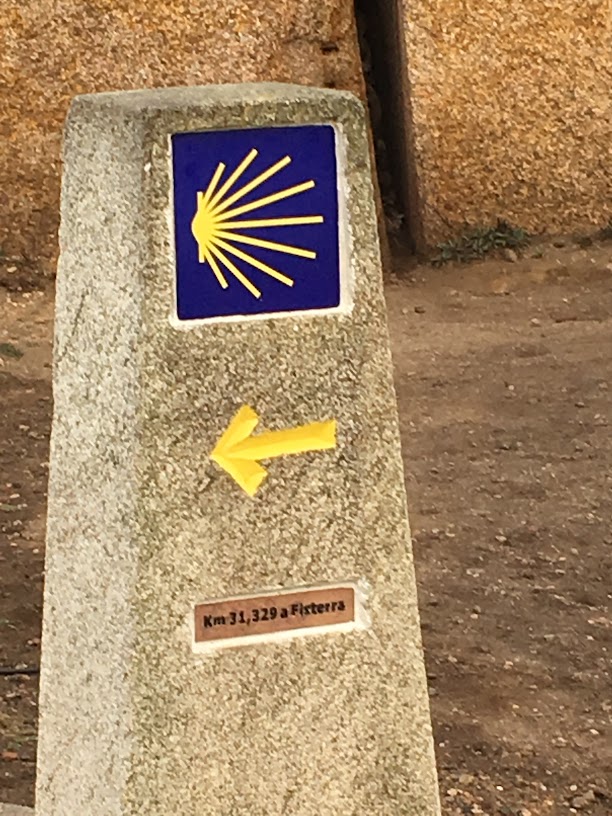
With a backpack much too heavy, poor-quality hiking boots, and a hurting foot I was battling both physically and emotionally. There is a saying that if you walk the Camino like a hiker with physical intent it will force you into humility. While walking too fast, I missed the waymarkers and got horribly lost. At one point I had to seek refuge in a grotto during a heavy thunderstorm in the Pyrenees mountains, far off my route.
How many times in life does the universe send warning whispers that we have missed a waymarker and are on the wrong path? How obsessed are we with things we think we need but insist on keeping them in our backpack?
Forced to go much slower, I gradually felt my senses reawakening to the magic of the moment. I started inhaling the aroma of wild thyme, rosemary and oregano. I added mint to my water bottle. A singing blackbird followed me for part of the way. I befriended stray dogs and cats and met wonderful people who are still friends today. For the first time in many years, I felt an aliveness and vibrancy in my body.
Trapped in doing rather than BEING
Over the years, I’ve observed other pilgrims going through the same process. Hikers would pride themselves on the number of kilometers they had done that day. People doing the route on a bicycle would go into tunnel vision, oblivious to the sights and sounds around them. If you are trapped in the rat race of doing rather than BEING it is difficult to push the reset button overnight. At the end of the day, slow and mindful walkers would converse on the magical experiences they had that day while those in a race would look at them in disbelief.
So much of our lives are wasted carrying the weight of the past, and living in some distant future working for time-off at the weekend, the annual vacation, and the years when we can start living when retiring from a job we always hated. When the day finally comes, we live the final years of our life in regretful grumpiness of what was and is no more.
It helps to train your awareness that life is finite and that you will die one day. With your last breath, you will leave this earth into formlessness. You won’t be taking any of your precious earthly possessions with you. All that remains will be consciousness.
So you might as well stick around a little longer and enjoy the moment. Practicing mindfulness is ideally done in the stillness of nature.
Focus your attention on your breath. Observe your thoughts and sensations without judgment. By consistently practicing mindfulness, you can cultivate a heightened sense of awareness and presence in your everyday life.
Engage Your Senses: Pause and notice the sights, sounds, smells, tastes, and physical sensations around you. Fully immerse yourself in the present moment by bringing awareness to the details of your sensory experiences.
Slow Down and pay attention: Challenge yourself to slow down and be fully present in each moment. Whether you’re eating, walking, or engaging in any other daily activity, do it with intention and attentiveness.
Reino Gevers – Author – Mentor – Speaker
One more thing...If you have found this article interesting you might want to subscribe with the “follow” button above or recommend my FREE weekly Blog to friends and family. My books can be ordered at all places that sell good books in both paperback and kindle.
“The five colors blind the eye; The five tones deafen the ear; The five flavors dull the taste. Racing and hunting madden the mind; Precious things lead one astray.” – Lao Tzu
We are living in an age where technological progress has generated prosperity for a vast number of people and created a lifestyle for the average person that the most powerful kings and queens in the Middle Ages could not ever have imagined. Life expectancy, health care, mobility, and hygiene are at unprecedented levels in human history.
Individual self-realization, self-interest, and ambition have been powerful motivators for societal progress. But it appears we are at a tipping point where technological leaps are far greater than the mental capacity to deal with these changes. The unchecked pursuit of wealth and extraction of natural resources are threatening the survival of our species.
We have become blinded by the glare of the 10,000 things. We are drowning in information and misinformation and starving in wisdom that promotes a culture of spiritual awareness, empathy, fairness, and social responsibility.
The biblical story of the dance around the golden calf is timeless in its relevance. The Israelites had become impatient living in the desert, losing their trust in God. They then fashioned a golden calf with jewelry collected from the people, worshipping and dancing around the calf in revelry while their leader Moses was away in the mountains receiving the ten commandments from God.
The story serves as a warning against losing the moral compass and placing worldly desires above a genuine relationship with the divine, the true self. and purpose in life. Underlying the insatiable desire for new things is the misconception that power and wealth are equal to happiness. The predominant messaging of our culture is consumerism, social status, and material wealth.
There is nothing wrong in enjoying material abundance and prosperity. But making it the primary objective in your life, and becoming overly attached to “things” will inevitably lead to suffering and pain. The perspective changes completely for people suddenly confronting a life-threatening disease or facing the fear of losing a loved one.
The antidote to greed is the reconnection to our interconnectedness with all things living.
Reconnecting with interconnectedness involves recognizing and embracing the understanding that all beings and elements in the world are interconnected and interdependent. Building wisdom is like building a muscle. It’s an ongoing process. Key points to consider:
Awareness and Mindfulness: Practice being fully attentive to the present moment, observing the connections between yourself and your surroundings. You can do this by focusing consciously on your inhaling and exhaling breaths. Meditation practices, journaling, gratitude rituals and other self-care habits will help cultivate care for others. ,
Deep Walking: Deep walking is more than a hike. It is a spiritual experience where you develop a deeper connection to the natural world, observing the intricate interdependence between yourself, plants, animals, and the environment. By spending more time in the green and blue spaces of nature you extract yourself from the rat race of external distractions. Finding these moments of stillness will make you aware that life is finite. You cannot take your material possessions with you into the afterlife.
Compassion and kindness: Cultivate compassion and empathy towards others. Recognize that every person you encounter is connected to you in some way, sharing the same basic human experiences and emotions.
Relationships: Recognize that your actions, thoughts, and emotions have an impact on those around you, just as their actions, thoughts, and emotions affect you. Nurture and foster positive connections with others. The five people you spend most of your time with have a major impact on your value system, mannerisms, and state of mind.
Service and community: By helping others, you are contributing to the greater interconnected whole. Engaging in acts of altruism and service can deepen your understanding of interconnectedness by experiencing the positive ripple effects of your actions.
Reino Gevers – Author – Mentor – Speaker
One more thing...If you have found this article interesting you might want to subscribe with the “follow” button above or recommend my FREE weekly Blog to friends and family. My books can be ordered at all places that sell good books in both paperback and kindle.