“You must never think of the whole street at once, understand? You must only concentrate on the next step, the next breath, the next stroke of the broom, and the next, and the next. Nothing else.”
– Michael Ende, Momo
Are you finding yourself on a frustrating treadmill of doing a job that you hate and counting the years until retirement? There are millions of people out there wasting the most precious years of their lives for all the wrong reasons.
On average about half of your lifetime will be spent working, assuming you retire in your mid-60s and have a typical lifespan between 70 and 80. It therefore makes sense that you spend your best years doing what you love and what you are passionate about.
If you are stuck in grievance culture, unhappy in your job, or your relationship, and have problems with your self-esteem the universe will be sending you many signs that you need to change direction.
A job environment with constant high-stress levels will not only cause mental and physical exhaustion but eventually lead to a host of other health problems that will severely impact your lifespan and quality of life. Some typical red flags:
Your personal values are no longer in alignment with the values of the organization
All your efforts go unnoticed or unappreciated
You feel undervalued and underpaid for what you are doing
You have reached a dead end in personal growth. The job lacks growth opportunity, meaning, and purpose.
You might have started a particular career or job with a passion, but it has meanwhile outlived its purpose. It has become a grinding chore and is exhausting you physically and mentally. That might be the time for you to move on. One path is often the stepping stone or learning curve for you to move on to another path.
In doing what you love, you will discover that the true richness of life is not just in the paycheck, but in the fulfillment of your soul. When you are doing what you are passionate about your higher vibrational frequency will automatically attract all the abundance and the money you need.
Even in carrying out the most mundane tasks your mindset and perspective are key, according to the 13th-century Mystic Meister Eckhart. Being in alignment is the discovery of mysticism in all of your activities in a “joyful experiential presence”.
Eckart’s formula for happiness was liberation from attachment and complete surrender to “dedication” in giving yourself wholeheartedly to a cause, person, or activity. This, he argues, is only possible if you create space for contemplative “emptiness”.
The more in alignment “the more powerful, dignified, useful, commendable, and perfect is the prayer and the work,” Eckart writes in one of his sermons.
Similarly, Zen Buddhism encourages practitioners to cultivate mindfulness, which involves paying full attention to each moment, fully immersing yourself in the present experience, and extending to all activities whether it’s walking, eating, working, or any other daily task.
Mindful activity involves being fully present in the current moment, paying attention to thoughts, feelings, and sensations without becoming entangled by attachment or judgment. Developing a kind and compassionate attitude is integral to the spiritual path.
In a busy world, you are constantly being pulled into a thousand different directions, becoming a playball for social media and the “glitter of the shiny things.” Distraction and addiction are trying to stifle the voice of your soul yearning to accomplish that which it was destined to bring forth and create from the day you were born.
Reino Gevers – Author – Mentor – Speaker
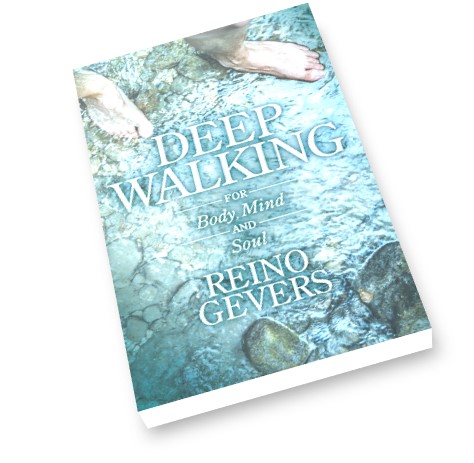
P.S. I’m excited to announce the release of my latest book, “The Turning of the Circle: Embracing Nature’s Wisdom for Purposeful Living.” If you enjoy it, you might also be interested in my previous works, “Deep Walking for Body, Mind and Soul” and “Walking on Edge: A Pilgrimage to Santiago.” You can find all of these titles at reputable bookstores near you.
In ancient oral traditions saints and prophets are often said to return as angels in disguise after departing from their earthly existence, assisting those in desperate need of help, but sometimes unwittingly you too can become a divine messenger by imparting one word or deed that can completely change the trajectory of a person’s life.
Several stories reflect the universal theme of saints and prophets in the afterlife intervening in human affairs, in unexpected and unassuming forms.
Guidance and healing at crucial junctions
In ancient Greek mythology, the deity Asclepius is associated with healing and is said to have returned to the mortal world in disguise offering healing and guidance.
In the Islamic tradition, Khizr is often associated with the archetype of a wise and immortal figure who appears in challenging times, disguised as an ordinary person.
In Slavic folklore, the supernatural being Baba Yaga comes in disguise to test individuals and those who treat her kindly are well rewarded.
According to Jewish-Christian legend the Prophet Elijah intervened at several crucial junctions of human history. During the Battle of Las Navas de Tolosa in 1212 the Christian forces in Spain faced a formidable opponent against the soldiers of the Almohad Caliphate. The Christian army was about to be defeated when a mysterious knight wielding a white banner with a red cross appeared on the battlefield, believed to have been Elijah in disguise, and providing the crucial assistance that turned the tide.
The red cross against a white background is today a familiar symbol on the scallop shell worn by pilgrims walking the Camino de Santiago, many of them probably unaware of its origins. In my novel “Walking on Edge” I refer to several mysterious encounters with strangers that the main character Jake has on the Camino. Some of these accounts are based on real stories that I came across on my own pilgrimage walks.
It is common for pilgrims to have a really low moment while on the Camino, where they are at the point of giving up. I’ve met several people who reported having an epiphany after overhearing a conversation or having a chance encounter with a stranger, giving them the courage to continue.
You should never underestimate the impact your words and deeds could have on a fellow human being. Sometimes you also need to be cruel to be kind.
A teacher or parent might implement a policy of no-nonsense adherence to deadlines and assignments to prepare the student for the obstacles they might encounter in future professional environments, instilling a sense of responsibility and discipline, even though momentarily demanding.
If you have a family member or friend suffering from an addiction problem, the only way you are going to help them is by setting clear boundaries and deadlines where they can get professional help.
But sometimes a simple gesture or act of kindness can leave an everlasting imprint on a person’s memory.
In Charles Dickens’ novella “A Christmas Carol,” the miserly and bitter old man Scrooge is transformed with a child’s kindness that serves as a catalyst for his redemption, reminding him of the joy and warmth associated with Christmas and the importance of human connection.
It costs absolutely nothing to be kind. You never know what impact that could have on a fellow human being. The exact right words and actions might resonate with another person more than you realize.
Reino Gevers – Author – Mentor – Speaker
P.S. I’m excited to announce the release of my latest book, “The Turning of the Circle: Embracing Nature’s Wisdom for Purposeful Living.” If you enjoy it, you might also be interested in my previous works, “Deep Walking for Body, Mind and Soul” and “Walking on Edge: A Pilgrimage to Santiago.” You can find all of these titles at reputable bookstores near you.
“A comfort zone is a really beautiful place, but nothing grows there”~ Anonymous
We are living in the most prosperous and exciting era of mankind, yet if we look and hear around us many people seem stuck in the grievance culture of anger and unhappiness.
During the past centuries, mankind has made groundbreaking discoveries in discoveries in physics, astronomy, and biology. In the latter half of the 20th century computers and the invention of the Internet have led to an unprecedented acceleration of knowledge and information on a global level.
In 1982, futurist and inventor R. Buckminster Fuller estimated that up until 1900, human knowledge doubled approximately every century, but by 1945 it was doubling every 25 years. And by 1982, it was doubling every 12-13 months. Current estimates predict that with the revolution of AI technology human knowledge will double every 12 hours.
At the same time, the cultural gap between technological progress and the ability of human consciousness to process these changes has increased. Rapid change produces uncertainty with the unknown perceived as a threat.
A natural aversion to change
Evolutionary psychology suggests that humans have developed a natural aversion to risk as a survival mechanism. Change is inherently associated with uncertainty and risk, triggering a “walling off” from potential harm. Changing habits and routines requires effort and the ability to adapt.
While, some people thrive in a new environment of innovation, and see every new challenge as an opportunity for growth and evolution, others are gripped by fear and retreat into the cave of their comfort zone, not realizing that if they don’t adapt, their lives will be changed for them anyway.
The grievance culture feeding on toxic emotions
As we enter 2024 with elections scheduled in several major countries there is a real danger of the public narrative being hijacked by “grievance culture” feeding on innate human fears, anxiety, and anger. Fanatacists promise a return to the “golden era” of the past by building walls, creating the illusion that the comfort zone can be protected from “external threat”.
You will be comfortably resting in your “comfort zone” if a demagogue is telling you that all your grievances and unhappiness have been caused by the opposing political party, a minority group, a foreign nation, or an institution. He is telling you that you can comfortably sit back while I will sort out these problems. Meanwhile, backstage your basic liberties and freedom of expression are being eroded.
We are at the cusp of embracing a bright new future or falling back into old divisions of intolerance and xenophobia
Much of the unhappiness is caused by cultural indoctrination and addiction to the accumulation of “things”. It has replaced the spiritual void left by institutional religion with ever more people questioning its emphasis on what to believe and how to behave. When you define yourself by the “things” you own, you will never be happy because you are missing out on the BEING of life. And life is constantly in motion and evolution.
With the growth of spiritual awareness comes the recognition that evolution and change are inherently part of the divine plan. Everything in the universe is ultimately interconnected and composed of Divine Oneness.
When born there is separation from the Oneness and a natural tendency to separate from the body only to yearn and strive for the reconnection with the Whole.
The American poet Louise Erdrich describes how life will break and heal you during this process … “Nobody can protect you from that, and being alone won’t either, for solitude will also break you with its yearning. You have to love. You have to feel. It is the reason you are here on earth. You have to risk your heart. You are here to be swallowed up. And when it happens that you are broken, or betrayed, or left, or hurt, or death brushes too near, let yourself sit by an apple tree and listen to the apples falling all around you in heaps, wasting their sweetness. Tell yourself that you tasted as many as you could.“
Forgetting to live the experience
We are constantly chasing after happiness and forgetting to live the experience. At that moment when we have achieved what we have been striving for all along, we feel a sense of loss and emptiness. Grievance culture feeds on what is lacking in life or what is under threat of being taken away from you.
Practicing a gratitude ritual elevates consciousness and creates an abundance mindset. If you are healthy, have food on your table, and a warm home with electricity, you are already better off than most people in the world.
Reconnecting with body and soul
Reconnecting with body and soul is more important than ever when the pull of grievance culture is trying to pull you away from your center. Life is meant to be difficult and challenging. We only grow when we confront those challenges and obstacles. And, you will be better equipped to deal with those challenges if you nurture your mind and body. When you change your perspective with a gratitude mindset the universe will conspire creating more happiness, joy, and energy in your life.
Reino Gevers – Author – Mentor – Speaker
P.S. I’m excited to announce the release of my latest book, “The Turning of the Circle: Embracing Nature’s Wisdom for Purposeful Living.” If you enjoy it, you might also be interested in my previous works, “Deep Walking for Body, Mind and Soul” and “Walking on Edge: A Pilgrimage to Santiago.” You can find all of these titles at reputable bookstores near you.
At the start of every New Year the Doomsday Prophets seem to have a field day predicting another year of innumerable calamities including wars, economic meltdowns and diseases. Don‘t be fooled. Despite all the bad news we are living in incredibly exciting times. Compared to a century ago life has improved on practically all levels.
All is a matter of perspective and as we enter 2024, I would just like to share just five breakthrough good stories from 2023:
The world is making much faster progress in replacing fossil fuels with renewable energy, driven by simple economics and energy security. In 2023 low-emissions power is expected to account for almost 90 percent of total investment in electricity generation, according to the International Energy Agency (IEA).
Some significant breakthroughs have been achieved in medicine. One example is a technology called CRISPR, a gene-editing technology that can exploit the inherent mechanism of the virus immune systems in bacterial cells. It also holds the ability to extract the infected DNA strands as well. With its help, the most severe diseases like cancer and HIV can be treated. CRISPR was approved by the US Food and Drug Administration in December last year.
In June, researchers unveiled a comprehensive atlas of the lung, compiled from studies of 2.4 million cells in 486 people and highlighting cellular features common in cancer and COVID-19. In October, the largest-yet brain atlas was released, including more than 3,000 cell types, some of them new to science.
Great strides have also been made on producing foods that feed a higher number of people with less of an environmental impact. Animal-sourced foods like meat, seafood, egg, and dairy products are already being replaced with next-generation plant-based analogs that accurately mimic their properties.
Millions of people around the world don‘t have access to clean water. LifestrawMaxmay be a solution. It strips water of bacteria, parasites, and viruses. The system attaches to an existing water supply. It cleans 40 gallons of water in an hour.
If you have access to fresh water, electricity and modern health care you are today living a life kings and queens in the Middle Ages could only have dreamed of. In those days many a young life was cut short by a minor wound, infection or childbirth. The average lifespan in the 15th century was between 30-40 years compared to about 72 today.
Despite favorable statistics, individuals often perceive their personal situations as deteriorating compared to their parents’ lives. The increasing complexity of our world, marked by rapid social, economic, and other challenges, leads some to seek simplistic explanations. Nostalgia often paints the past in brighter hues than its reality.
We have reason for optimism in 2024. There will be good days and bad days, as in every year. Your thoughts and beliefs determine and construct your subjective reality. With truth under constant bombardment in a world of information overflow, you need to stand guard at the doorway of your mind. You are a compilation of your relationships and what you feed your mind with. As yourself these three questions:
Is the information really true and who said it?
Does the source have a good reputation or an ulterior motive?
Is the information from a source of wisdom that elevates my consciousness to a higher vibration.
Reino Gevers – Author – Mentor – Speaker
P.S. I’m excited to announce the release of my latest book, “The Turning of the Circle: Embracing Nature’s Wisdom for Purposeful Living.” If you enjoy it, you might also be interested in my previous works, “Deep Walking for Body, Mind and Soul” and “Walking on Edge: A Pilgrimage to Santiago.” You can find all of these titles at reputable bookstores near you.
A ray of light travels into a chamber, illuminating a spiral motif representing a vortex for the dead in completion of their journey from this world into the „other world“.
The phenomenon at an ancient site in Newgrange, Ireland, is thought to date back 2800 BC and occurs every year on December 21st, marking the shortest day and longest night of the year in the northern hemisphere.
At Stonehenge, in the United Kingdom, another ancient site from the Bronze Age, the sun rises behind the entrance of a stone circle illuminating the Centre.
The lives of ancient cultures were closely intertwined with the laws of nature and the transition of the seasons and were elaborately celebrated in ritual and religious ceremony.
Modern man’s disconnect from nature and spiritual essence appears to be at the root of much of today‘s confusion and mental instability. Our modern versions of Christmas, Easter and Thanksgiving are a poor reflection of their original spiritual meaning.
The celebration of the birth of Christ in Bethlehem, comes just after the winter solstice, representing victory over darkness, rebirth, and hope over fear.
The hope of the guiding star
The guiding star that led the Magi to the birthplace of Jesus, represents hope, divine guidance, and the birth of a significant spiritual event, signifying the arrival of a special and transformative moment.
The celebration of the birth of Christ is associated with an annual inner spiritual rebirth of the “Christ within“
The ancient Mystics refer to each individual having a divine and spiritual essence connected to a higher consciousness.
In Christianity, it may be linked to the belief that Christ’s spirit resides within believers, guiding and influencing their thoughts, actions, and spiritual journey.
Connecting to the spiritual essence
In a broader sense, it can be found in various spiritual and philosophical traditions that emphasize inner enlightenment and connection to a higher reality.
The “Buddha Nature“ has the optimistic view that every individual can attain enlightenment through spiritual practice and awareness.
Defilements and obscurations that prevent enlightenment are considered temporary and removable.
The time between Christmas and New Year – a time symbolizing the transition from the old to the new – is of particular spiritual significance.
Whatever negative experience, loss and trauma you have experienced this year this quiet space can be spent for inner reflection and contemplation.
What addictive thoughts and beliefs are holding you back? What things are distracting you? What relationships are pulling you down into a lower vibrational field?
When the old can be released the path into the gateway of spiritual renewal and purpose opens.
Reino Gevers – Author – Mentor – Speaker
P.S. I’m excited to announce the release of my latest book, “The Turning of the Circle: Embracing Nature’s Wisdom for Purposeful Living.” If you enjoy it, you might also be interested in my previous works, “Deep Walking for Body, Mind and Soul” and “Walking on Edge: A Pilgrimage to Santiago.” You can find all of these titles at reputable bookstores near you.
As we end an old year and enter another new year in the 21st century it is worth reflecting of where we stand as a humanity. We have witnessed in 2023 two major wars traumatizing millions of people, a world grappling with a climate and environmental crisis and and a resurgance of authoritarianism.
Humanity stands at the cusp of forging a new earth characterized by elevated vibrational energy and heightened consciousness, fostering an unprecedented era of abundance, tolerance, and peace. Alternatively, there is the ominous prospect of regressing into another dark age, replete with conflicts fueled by tribalist fears, anxieties, and hatred.
Regrettably, a significant portion of humanity appears to operate on autopilot, blissfully ignorant that their responses are dictated by emotions and feelings rooted in obsessive thoughts and beliefs, steeped in the shadows of past traumas or programmed by mass media.
These ingrained thoughts and beliefs wield a potency akin to that of substance addiction. A vehement denial of this addiction persists, the grip so formidable that they prefer to die rather than acknowledging that their beliefs and perspectives rest on a flawed foundation.
Beliefs and thoughts impacting cell expression
In his book “The Biology of Belief”, the cell biologist Dr. Bruce Lipton, argues that beliefs and thoughts have an influence on our gene expression and have a profound effect on our health and physical well-being.
Lipton argues that positive beliefs can contribute to health and healing, while negative beliefs can potentially lead to illness. The good news is that by becoming aware of the shadow, your thought patterns and emotions, you have then power of choice and become a co-creator on a collective level in transmuting these beliefs, ultimately living a happier and healthier life.
The power of words and thoughts
Words and sound have a vibrational energy that affects your body and mind. Research conducted on 700 million words and phrases used on Facebook by the University of Warwick, United Kingdom, in 2013 revealed some astonishing facts.
Neurotic people disproportionately used the phrase “sick of” and the word “depressed”. Research conducted by Eichstedt et al. in 2015 found a correlation between language used on Twitter accounts and heart disease in U.S. counties where words expressing anger, hate, and resentment were predominantly used.
In this week’s “Living to BE” podcast I interview an expert on the subject, Janet Schmidt, explains her own path into creating a life of abundance after losing nearly all her money, and becoming aware of her own ancestral program of scarcity. We delve on the subjects of healing trauma and limiting beliefs, building a prosperity mindset and reprogramming for success.
Why do some people procrastinate in victimhood and the “blame game” while others develop an emotional resilience that catapults them into a life they have always dreamed of with happy relationships, material abundance, and a healthy mind and body?
What are you feeding your mind with?
What you feed your mind and body with is one of the keys of reprogramming. Avoid toxic people poisoning your mind with their prejudices, fears and hate. Be mindful of what books, social media feeds and news channels you feed your mind with.
Are you still in control or are you a member of the ranting crowd addicted to grievance culture? Who are you really? What is your purpose in life? If you choose to create a space for solitude, for example by taking a walk in the green and blue spaces of nature, you will reconnect to the awe inspiring gift from the universe and the bigger whole. You will start to perceive the faint whispers from the universe, revealing the waymarkers of your authentic path of destiny.
If you find yourself caught in the rabbit hole of toxic emotions try the method of emotional shifting. Replace the word “fear” with “courage”, “hate” with “love and compassion”, “anxiety” with “confidence and trust”, “scarcity” with “abundance”, “melancholy sadness”, with “happiness and gratitude.”
There are some powerful mantras and prayers that elevate into a higher vibrational field. Examples are the Buddhist mantra: Om Mani Padme Hum, the Christian Catholic prayer song: “Ave Maria” and the Lord’s Prayer in the original Aramaic version.
The purpose in life is to find synchronicity with divine purpose. What the Buddhists call the “Buddha nature” and the Christian mystics the “Christ within” is evolution of spiritual consciousness that begins with practising kindness and compassion with the self that emanates into all your relationships making the world a better place – one step at a time.
Reino Gevers – Author – Mentor – Speaker
P.S. I’m excited to announce the release of my latest book, “The Turning of the Circle: Embracing Nature’s Wisdom for Purposeful Living.” If you enjoy it, you might also be interested in my previous works, “Deep Walking for Body, Mind and Soul” and “Walking on Edge: A Pilgrimage to Santiago.” You can find all of these titles at reputable bookstores near you.
Approaching the winter solstice in the northern hemisphere, we find ourselves amidst the longest, darkest, and coldest nights. Likewise, the human experience encounters its winters – stages in life marked by desolation, loss, and lack of purpose. Yet, within these seemingly barren chapters of life, a profound opportunity for introspection arises.
Much like the dormant earth cultivating the potential for rebirth beneath its frozen surface, our personal winters serve as a crucible for critical self-reflection, sowing the seeds of renewal and elevation of consciousness.
Loss, disappointment, and regret come from cause and effect. Something was avoided, or not done during the previous seasons. Going into the blame game by attributing your situation entirely to external circumstances is the procrastination trap.
The blame game inevitably leads to a vicious cycle of wallowing in self-pity that makes everyone around you want to run. Seizing the opportunity in a “flat on the ground” situation is accepting responsibility, redefining purpose, and fine-tuning wisdom and knowledge.
The winter of life makes you resilient in accepting the impermanence of any given state. Life is a never-ending cycle of birth and rebirth, night and day, recuperation and active engagement. Winter is a time to reconnect to the root ancestral energy embedded within. There are several ways of how to build resilience during the winter season:
The law of nature demands rest and recuperation
The body needs at least seven to eight hours of sleep for a healthy immune system. A power nap of 10 to 15 minutes during the low-energy afternoon period of the day will work wonders to boost your mental and physical performance.
Exercise: All pelvic floor exercises that strengthen the bladder and kidney. The bladder has the longest meridian in the body on either side of the spinal cord. The kidney meridian starts at the base of the foot. Typical yoga poses are the cat, boat, and big toe poses. All basic Taiji movements are excellent
Nutrition: Drink lots of good water. Start your day by boiling half a lemon for five minutes just after rising from bed to boost hydration. The lemon peel contains numerous nutrients and enzymes, including Vitamin C. A salty taste is typical for the water element and crucial for kidney balance. But table salt should be avoided as much as possible as it weakens the body. Use natural sea and Himalayan salts with a high mineral content. Typical water-element foods are asparagus, beets, black rice, kelp, wakame, blackberries, blueberries, black grapes, watermelon, scallops, oysters, and mussels.
Breathing
One of the simplest and most natural ways of reducing your stress level is by simply thinking about how you’re breathing.
Inhaling and exhaling naturally through the nose is what you should be doing. As you inhale, the nose warms and moisturizes the air. Your nose releases nitric oxide, which widens the blood vessels, allowing for better transportation of oxygen to vital organs. Your breathing will be deeper and slower, increasing the volume of your lungs and diaphragm.
Elevating your stress resilience becomes a powerful force shaping not only your response mechanisms but also your ability to navigate the winters of life.
How you cultivate self-love intricately weaves into the fabric of all your relationships and how you relate to events in the external world. It’s crucial to distinguish genuine self-nurturing behavior from the misconceived notion of narcissism, which darkens the purity of self-love. The unraveling of harmony often begins with a detachment from the authentic self when you are pulled into the abyss of external distractions.
With a modest investment of effort, you can position yourself far better to weather turbulent times, enabling you to make better decisions with a tranquil mindset. This shift not only empowers you to weather the storm but also to emerge from it all the wiser.
Reino Gevers – Author – Mentor – Speaker
P.S. I’m excited to announce the release of my latest book, “The Turning of the Circle: Embracing Nature’s Wisdom for Purposeful Living.” If you enjoy it, you might also be interested in my previous works, “Deep Walking for Body, Mind and Soul” and “Walking on Edge: A Pilgrimage to Santiago.” You can find all of these titles at reputable bookstores near you.
Nelson Mandela once reflected that one of the most difficult things is not to change society but to change yourself.
I’ve given much thought these days on why my home country South Africa is falling apart.
Fortunately, Mandela was spared from witnessing the complete erosion of moral integrity among his successors. Essential components of infrastructure, including harbors, roads, railways, hospitals, schools, and electricity supply, are deteriorating due to incompetence, crime, and corruption.
A government-funded food scheme, which feeds over 9 million schoolchildren countrywide of which the majority come from poor households, has been thrown into disarray by funds gone missing. Transparency International‘s 2022 Corruption Perceptions Index scored South Africa at 43 on a scale from 0 (“highly corrupt”) to 100 (“very clean”).
Present-day leaders, ensconced in a cocoon of privilege sustained by nepotism and political favoritism, adamantly deny accountability for their shortcomings. Astonishingly, they continue to attribute their catastrophic failures to a regime ousted from power three decades ago.
It appears that they are replicating the very behavior they once decried, abandoning the principles they once championed. Instead of serving society, they exploit their positions for personal gratification, echoing the very actions of those they once decried as the enemy.
Meanwhile, America and many other Western democracies are being torn apart by divisiveness, and political extremism.
The political landscape serves as a mirror reflecting the intricacies of society and individual behavior. Regardless of the adversities presented by the external world, the onus lies squarely on every individual for their response, attitude, actions, and overall sense of happiness.
In my latest Living to BE podcast, Scott White tells of his mission in planting one seed of positivity at a time. Every good day can be made into an even better day by changing the perspective with the antidote of gratitude, kindness, and self-deprecating humor.
How many of us are stuck in regret, pain, hurt, and anger toward an ex-partner, parent, employer, or neighbor.
When unaware it‘s easy to be pulled into the maelstrom of the same fear and anger you are exposed to.
Grievance culture complains about everything from the weather to the postman coming late. It is the lowest vibrational energy that feeds on scarcity, limitation, and neediness.
Even the best solution you offer to these people is met with a „but…“, „that will never work“ or „can‘t do that.“
You literally feel the energy sucked out of you as they go into their rant, making everyone else responsible for their misery.
When a person radiating on a high vibrational frequency enters a room, a transformative shift occurs. You sense your own energy expanding, drawn by a magnetic power that not only inspires but also generates positive change. This influence becomes the defining factor between fear and courage, scarcity and abundance, love versus hate, and kindness prevailing over moody grumpiness.
From this elevated plane of consciousness emerges creativity, inspiration, and confidence. It is from this heightened state that even the most entrenched problems of humanity can find solutions.
There are no shortcuts to the inner work.
Cutting through the veil of adversity, toxic emotions and the monkey mind of dancing thoughts is the spiritual exercise, the gateway to happiness.
Quoting the spiritual teacher Ram Dass:
„One consciousness. That is the way the world could right itself. Start with your peace, your love. your compassion, and go from there … walk each other home.“
Reino Gevers – Author – Mentor – Speaker
P.S. I’m excited to announce the release of my latest book, “The Turning of the Circle: Embracing Nature’s Wisdom for Purposeful Living.” If you enjoy it, you might also be interested in my previous works, “Deep Walking for Body, Mind and Soul” and “Walking on Edge: A Pilgrimage to Santiago.” You can find all of these titles at reputable bookstores near you.
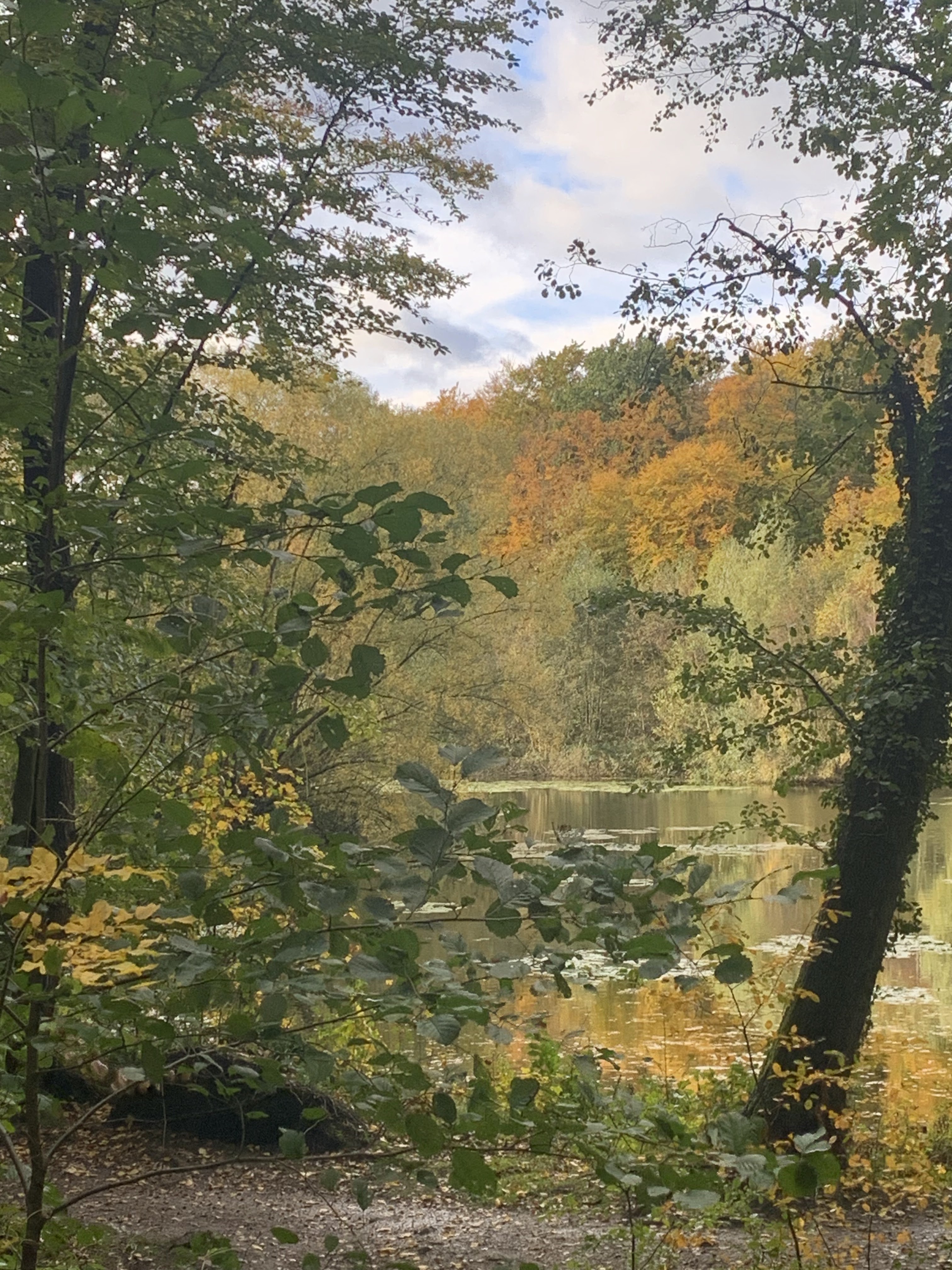
Here in the northern hemisphere, autumn unfolds its colorful spectacle. Trees shed their leaves as a brisk breeze weaves through bare branches. A nimble squirrel gracefully navigates from one tree to another, scouting for the optimal spot to hibernate through the coming winter.
Autumn marks a period of natural slowdown, where the vibrancy of summer yields to the quieter preparation for the colder months ahead. Yet, within this apparent tranquility, there exists a wild and unpredictable quality. A gentle, warm wing might whisper promises of impending spring, only to be followed by tempestuous storms.
In observing autumn’s dichotomy, we find a reflection of our own complexities. It teaches you the art of conserving energy for the inevitable challenges, mirroring nature’s rhythmic dance between repose and upheaval.
In studying nature you inevitably embark on a journey of self-discovery, unraveling the intricacies of your own existence in the ever-changing seasons of life.
We often forget that we are part of the bigger matrix. Your entire body is a composition of the elements around you. In the ancient Chinese philosophy of the Five Elements, autumn is associated with the element of metal. By getting into alignment with nature, you will recognize your innate and authentic nature.
Thus autumn is a time for introspection. These are questions you could ask:
What was really good this year?
What was a mistake and should be avoided in the future?
Life can be hard in teaching you the lessons you need to learn, especially when you fail to heed the whispers from the universe that tell you where to walk. It could be the advice from a total stranger, a sentence you coincidentally pick up in a conversation. A sudden inclination or feeling, a strong symbol from a dream, or a work of art you are observing.
Like the falling leaves of autumn, this is a time to let go of relationships, beliefs, and concepts that no longer serve you.
Harmonizing the inner and outer worlds is a major challenge in a world where attention is constantly being pulled at by external distractions.
Your breathing pattern is a reflection of your inner state of mind
Being aware of your breathing pattern plays a key role in relaxing your mind. Shamans and yogis have for centuries used breathing techniques to explore new realms of consciousness. In studying your breathing and improving on it, you become aware of hidden emotions and feelings. Fear, for instance, expresses itself with a flat breathing pattern and clogged feeling in the throat. A symptom of stress is strained breathlessness coming from shallow breathing from the upper chest.
A tense and stressed body finds no solace. Worries, fears, and other emotions create an imbalance that makes it susceptible to illness.
Recognizing the shadow aspect, such as your fears, your anger, your hurt, your shame, envy, or greed, is the first step in transmuting those negative emotions.
In a reflection of the metal aspect of the personality, we would look at the following questions:
Is there an old melancholy sadness that binds my spirit from making a move forward? Can I really admit to that sadness that is still there? Could it be that I should set a boundary toward certain people and make a healthy separation? Are my immediate surroundings, like my home and job, still fulfilling?
Are there too many superficial distractions in my life that prevent me from going on the path of my true destiny? Am I in the position of letting go of old concepts, ideas, or other so-called truths that have outlived their value for me?
Is my basic outlook on life of a positive or negative nature? Do I perceive tension and looming conflict situations in my immediate surroundings before they actually erupt? Do I have enough room to breathe? What is preventing me from exploring new avenues? Where are the boundaries set by myself or others? Could it be that I am also crossing the boundaries of others without realizing this?
The unique, authentic self only manifests itself when you liberate yourself from the magnetic pull of countless distractions, selling images, wants, and needs.
We need a truly strong metal element to preserve that space of true authenticity. When we are authentic with the true self, we are immune to mental and physical exhaustion that mostly comes from playing with the images of the false self.
Reino Gevers – Author – Mentor – Speaker
P.S. I’m excited to announce the release of my latest book, “The Turning of the Circle: Embracing Nature’s Wisdom for Purposeful Living.” If you enjoy it, you might also be interested in my previous works, “Deep Walking for Body, Mind and Soul” and “Walking on Edge: A Pilgrimage to Santiago.” You can find all of these titles at reputable bookstores near you.
As the major battlefronts in Ukraine find themselves in a protracted stalemate, the conflict in Gaza has been readily embraced by mass media as an alternative, offering a boundless supply of dramatic narratives of bombings, injured children, and distraught mothers.
On-the-ground reporters emphasize the tragic unfolding events with a flair for dramatic language, often neglecting to furnish the essential context and nuanced analysis that might otherwise prove less sensational but more informative.
Stirring a potent mix of toxic emotions
Intricate details and complexities of geopolitical situations risk being overshadowed, as the media opts for a continuous stream of emotionally charged visuals, skillfully crafting a narrative that stirs a potent blend of anger, disgust, and fear among its audience.
It is prudent to contemplate the underlying origins of wars, which often revolve around mythical concepts of land ownership. Fundamental rights of those actually living on the land are callously disregarded in the name of religious ideologies and historical claims that, upon closer scrutiny are tenuous at best.
The land belongs to those who live on it
A world characterized by broader acceptance of the principle that land belongs to its inhabitants could pave the way for greater global peace. Human history reveals a nomadic evolutionary journey, where migration has consistently been an intrinsic human inclination. However, substantial population shifts have frequently been involuntarily, triggered by natural catastrophes and conflicts, disrupting the harmonious coexistence that a more inclusive understanding of land ownership might foster.
Do we really want to open a debate on who rightfully owns Australia, New Zealand, the United States, or South Africa? Take back all the land from who owns it now and give it back to the indigenous people? We could also go back to when the earliest homo sapiens started migrating from Africa to Europe and conflicted with the Neanderthals on hunting grounds? If Vladimir Putin gives history “lectures” on why Russia has the “right” to annex Ukraine, we can ask why Austria doesn’t have the right to recreate the Austro-Hungarian Empire and why not recreate the Holy Roman Empire, a complex political structure that existed from the Middle Ages until 1806.
Redrawing history maps for ideological and empire-building purposes is a mindset from the last century that triggered countless wars, especially in Europe. It was the reason why the founding fathers of the European Union had the vision of creating an alliance of nations, some of whom had fought each other for centuries, in an interdependent union of equals with open borders and the free flow of peoples and goods. It has ensured the longest era of peace and prosperity in central Europe and is the reason why most countries in eastern Europe, including Ukraine, are clamoring to join.
In antiquity, the Middle East was predominantly inhabited by nomadic tribes, whose dwellings were dictated by the grazing needs of their livestock. The concept of national boundaries is a relatively recent historical development. They were often the result of indiscriminate colonial map makers sitting in European capitals.
The debate over historical claims to Palestine by either the Jews or the Arabs becomes somewhat mooted when acknowledging that we have a modern reality where approximately 20 percent of Israel’s citizenry is Arab. Within the self-identified Jewish population we have a rich tapestry of diversity, encompassing Ashkenazi, Sephardic, Mizrahi, and other Jewish ethnicities. Beyond this, Israel is home to a mosaic of minorities, including the Druze, Bedouins, Circassians, and various Christian groups.
The primary objective of the Hamas terrorist organization is to establish an Islamic state. Dozens of foreigners from across the globe were among the victims of the October massacre this year. It was a callous and brutal demonstration of the organization’s complete disregard for human life. Innocent children, babies, fathers, mothers, and the old and frail were often shot at point-blank range. The trauma, horror, and rage in Israeli society is understandable but can never warrant a response that likewise causes massive civilian casualties.
The Hamas attack was planned in horrific detail to provoke the Israeli response. It was to be expected that Israel’s most rightwing leader ever, Benjamin Netanyahu, would react the way he did by ordering an invasion to “eradicate Hamas.” By using civilians as cover Hamas is callously taking into account the casualties as part of its greater global strategy, and it appears they are having much success:
The global landscape is witnessing the troubling aftermath with a surge in anti-Semitism and Islamophobia. The voices of moderation find themselves overshadowed by extremists who vehemently advocate an ultimatum: a stark choice between good and evil “Palestine” or “Israel.” The polarizing narrative fosters an atmosphere of divisiveness and conflict, the breeding ground for extremists and demagogues eager to recruit new followers.
We have to connect the dots to understand why Hamas launched its attack on innocent Israeli civilians in the first place.
It is no coincidence that the attack came after Israel was having some diplomatic success in improving relations with moderate Arab countries.
Was Hamas instigated to launch the attack by Russia’s ally Iran to deflect attention and military resources from Ukraine? There is some evidence, though not confirmed, that Russian mercenaries were involved in the training of Hamas.
If Israel had a wiser leader, other options in response to the invasion of Gaza would have been the better choice. In the wake of massive Israeli bombings and civilian casualties in Gaza, Israel has lost the moral high ground.
The wiser option
Indian Prime Minister Manmohan Singh faced a similar dilemma when Pakistani terrorists carried out in November 2008 a series of coordinated attacks including on the Taj Mahal Palace Hotel. It was one of the deadliest attacks in Indian history claiming the lives of an estimated 166 people with 300 others injured. Singh was under great pressure to launch an attack on Pakistan but urged caution. Later European and American analysts pinpointed rogue elements within Pakistani intelligence as having planned the attack to draw international attention to the India-Pakistan conflict by provoking an Indian military response.
By not escalating in 2008, India created a policy option to employ legal methods against the attack’s perpetrators and retained the moral high ground. If it had gone to war with Pakistan the result would probably have been a stalemate with the world sharing the blame 50:50.
After the 9/11 terrorist attacks, the United States received an outpouring of sympathy from all parts of the world. Instead of carefully considering its options, President George Bush ordered the invasion of Iraq, not having a real plan of what would come afterward. It was by all means a mistake of historical dimensions with many lives unnecessarily lost.
Evil can never be fought with a simplistic “eye for an eye” concept. Violence breeds more violence. The children traumatized by the bombings in Gaza are likely to be eager recruits for the next terror organization.
What does this all mean for you and me on a personal level?
Political conflicts are a reflection of the collective state of mind of the state or the nation. We will never eradicate war or conflict. It is part of the human condition that we are incomplete beings prone to irrational behavior.
Being pulled into the rabbit hole of daily images of disaster and conflict does something with your mindset and your emotions. It can numb the senses to real feelings of empathy and compassion and trigger anger, frustration, and melancholy sadness. You are not in control of external events but you are in control of how you perceive and react to these events.
During these times of conflict in the external world, it takes discipline to set boundaries to over-exposure to negative news without ignoring what is happening in the external world. A good antidote to grievance culture, negativity, and pain is the ability to find meaning, grace and beauty in every moment.
No matter how challenging these times may be, practicing the discipline of thought, taking a different perspective, and shifting your focus, will bring you into a higher vibrational field. A kind word here, compassion and a smile there, and being grateful for the smallest of things. Gratitude, love, empathy, peace,and kindness are the threads that weave together humanity.
Reino Gevers – Author – Mentor – Speaker
P.S. I’m excited to announce the release of my latest book, “The Turning of the Circle: Embracing Nature’s Wisdom for Purposeful Living.” If you enjoy it, you might also be interested in my previous works, “Deep Walking for Body, Mind and Soul” and “Walking on Edge: A Pilgrimage to Santiago.” You can find all of these titles at reputable bookstores near you.








 ReinosBlog