Tag Archives: lifestyle

Is grievance culture contaminating your life?

“Maturity is when you stop complaining and making excuses in your life; you realize everything that happens in life is a result of the previous choice you’ve made and start making new choices to change your life.”― Roy T. Bennett

One of the biggest obstacles toward improving your vibrational energy, your mental health and your general sense of wellbeing is falling prey to the grievance culture currently appearing to dominate the public narrative.

The inner dialogue is primarily focused on some perceived external enemy responsible for all that has gone wrong in your life. You have abdicated responsibility for your past choices and actions. Everything that has gone wrong in your life is the responsibility of …

Entire countries and cultures can become obsessed with grievance culture, sometimes based on historical events or tragedies going back centuries. How far do we have to go back to historical comparisons or history? The nations of the European Union have fought bitter wars with each other for generations, finally realizing that peaceful, mutual cooperation is more beneficial for all.


Sadly in my home country, South Africa, “colonialism” seems to serve as an excuse for everything that is going wrong such as widespread government maladministration and corruption. This does not justify by any means British imperialism. My grandfather fought against the British in the Boer war and was held by the British as a prisoner of war on the island of St. Helena. It would be just as stupid comparing today’s Britain to the Britain of 1901 as comparing modern Germany to the Nazi Germany of the 1930s.

The loudhailers of grievance culture

Yet, the virus of grievance culture seems to infect a growing number of ordinary, educated people seeking simple answers to complex problems. Demagogues and political extremism is on the rise in most countries. The common denominator is that these groupings are mostly led by cult-like figureheads who become the loudhailers of grievance.

Russian President Vladimir Putin is obsessed with grievance as is former U.S. president Donald Trump. Putin has constantly spun the tale of the West’s responsibility for the collapse of the Soviet Union, the economic decline during the post-Soviet era, and Russia’s victimhood. Trump is obsessed with a “stolen election”, and a similar victimhood of a “deep state” conspiring against him.

Learning from the ancient Mystics

Once caught in the maelstrom of grievance culture all sense of humility and self-responsibility is lost. As the great 13th-century Mystic Meister Eckart wrote in one of his sermon’s. It is “running in front of God”. It is falling prey to the Ego-Mind.

The Ego-Mind will be blaming God, fate, people different from themselves, and basically everyone for what has gone wrong in their lives. They are filled with hate, resentment, and anger. They are the malignant narcissists of our age who seek only personal validation and glory. They will never change their opinion and are captured by attachment.

Attachment can be defined as a strong emotional bond to a person, thing, or cause. In extreme cases, it can be closely intertwined with personal perception and identity.

According to Eckart, there are those “imperfect” people who “walk close by God”, wishing to lead God rather than be led by him. They would like God’s will to be their will. We are seeing much of this behavior in religious and political fundamentalism. They are idealists at heart believing that the world would be an entirely different place if a certain ideology. belief or behavior is adhered to.

Joy is found in truth and humility

The “perfect” ones bow to humility in following God on a path that can also be one of hardship and suffering but ultimately leads to a life of bliss and happiness, according to Eckardt. It is what the Buddhists call living a life liberated from all forms of attachment.

It can also be understood as finding the connection to the inner spark of truth. Joy is found in the truth and the pursuit of God’s will, according to Eckart. The Mystic describes walking the path of truth and pursuing the will of God as “an ardent desire” where we are “illuminated and captivated by the depth of our being.” Walking behind is described as “sinking into the essences” of all things.

If you find yourself in the dark hole of complaining about everything wroing in your life or about the weather, politics, your employer or your spouse, then pause and take a deep breath. Take that emotional shift by changing your thought pattern.

You are lucky to be alive. If you are reading this you probably belong to a small group of humanity with running water, electricity, an internet connection, food and a fairly good roof over your head. You probably would also be living in a democracy free to express your opinions and beliefs. You can change your mindset in an instant and decide to take responsibility for every thought, and action you take from this moment onward. It is truly liberating to be responsible for your own life.

Reino Gevers – Author – Mentor – Speaker

One more thing...If you have found this article interesting you might want to subscribe with the “follow” button above or recommend my FREE weekly Blog to friends and family. My books can be ordered at all places that sell good books in both paperback and kindle.

Leave a comment

Filed under mental health, mental-health

Do you really love yourself?

“How you love yourself is how you teach others to love you”

– Rupi Kaur

How you think about yourself and how you talk with yourself is key to how you see the world, and how you interact with others.

Much of the divisive anger we see around us each day can be traced to shame, and lack of self-esteem that has its roots in the hurt experienced by the inner child. The quality of all your relationships is determined by how you feel about yourself. The sad truth is that you will never experience a truly fulfilling, loving relationship unless you learn to love yourself.

Photo by Rodolfo Clix on Pexels.com

Loving yourself is such an important command that we find it eight times in the Bible. The most famous is in a quote from Jesus in Mark 12:30-31: “..Love your neighbor as yourself. There is no commandment greater than these.”

In the same vein, the Buddha said: You, yourself, as much as anybody in the entire universe, deserve your love and affection.”

However, the lines between nurturing self-love and loving the ego often become blurred in our narcissistic culture. We are more concerned about how we are perceived and validated in the outside world than really doing the hard work of growing on a physical, mental, and spiritual level.

So what is the difference between loving the self and loving the ego?

In self-love, you will be in acceptance of who you are including all your challenges, weaknesses, hurts, and needs. The mantra is: “I love and accept myself the way I am.” It is a loving and humble submission to the self that is beyond the personality caught in external ideas and concepts.

When the release of “false Gods” or illusory concepts of the self takes place it is almost paradoxical, according to Eckart Tolle, that the general conditions of your life, the outer forms, tend to improve greatly. Things, people, or conditions that you thought you needed for your happiness now come to you without struggle or effort.

The work starts with getting to know yourself and acknowledging who you are not.

Taking time out for meditation and reflection is crucial. Tolerating alone time with the self is probably one of the hardest lessons for modern man pulled by the distraction of the 10,000 things. The voice of the inner child is often drowned by addictions and the obsession with immediate gratification.

Transmuting the pain of the inner child is a lifelong process. We are never done in the becoming of who we really are. Tracing the curveball emotions that hinder inner growth is best done with guidance from an experienced teacher or mentor who has taken a similar journey through the pain.

In an entitlement-driven culture, the ego-mind is held captive by the hungry ghosts that are never satisfied. The ego-mind is highly judgemental of others. How you are talking to yourself is an indicator of how harshly you judge yourself and others: “Why is this always happening to me?” Why am I always broke?” “Why does everyone hate me?” “Why am I not as beautiful, rich, and successful as…?”

Gratitude: The antidote to negative self-talk

A perfect antidote to negative self-talk is to switch that inner voice to something positive such as gratitude. When you change the perspective your mood will change instantly. Starting the day and ending the day with at least three things that you are immensely grateful for will set the course for how your day or night will be. No matter how bad your current situation might be there will always be things that you can be truly grateful for. We are blessed by the universe with countless things each and every minute of the day. It could be a simple thing such as being grateful to your body for all the work it is doing in sustaining you during your life on this earth. Basking in that feeling of gratitude and really feeling it on a mental and physical level does the trick.

Staying on the path

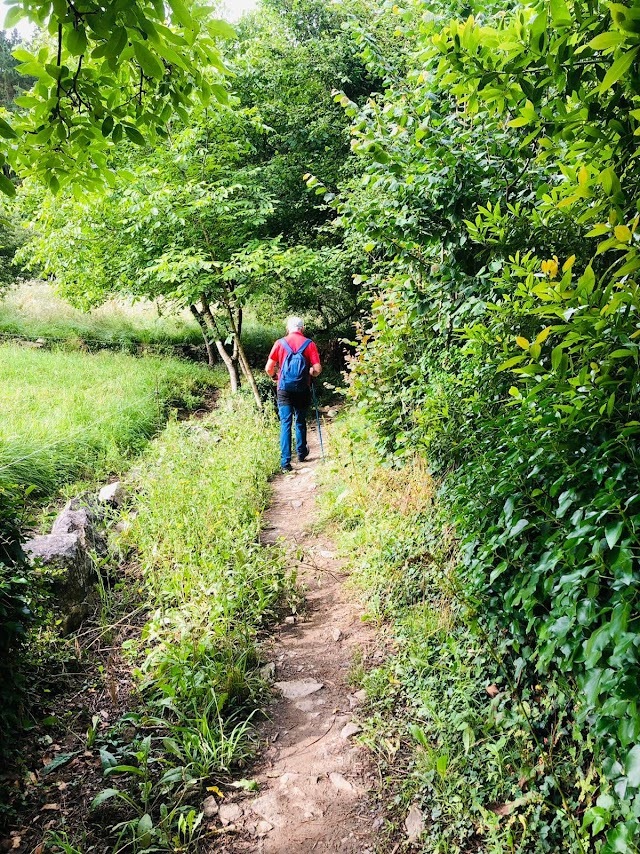
On the Camino de Santiago pilgrimage route, yellow waymarkers painted on walls, roads, and lamp posts prevent pilgrims from getting lost. It is not simply a way marker but a symbol reminding the pilgrim that during the walk of life you need to stay on course by showing loving kindness. Over centuries locals greet the pilgrims with the words: “Buen Camino” – a good path. After weeks on the road, the pilgrim will have been blessed in this way thousands of times. It reminded me on my own walks on the Camino that the simple things in life are often the most valuable.

Being greeted by a kind and smiling face from a stranger while struggling up a rugged mountain path makes all the difference. It costs nothing to be kind. Purpose and meaning in life can simply be spreading love and kindness to one’s fellow human being.

Reino Gevers – Author – Mentor – Speaker

One more thing...If you have found this article interesting you might want to check out our courses, retreats and books and ask others to also subscribe to this Blog.

Leave a comment

Filed under mental health, mental-health

What is your unique thumbprint?

„The meaning of life is to find your gift. The purpose of life is to give it away.”

-Pablo Picasso-

There is an ancient story that tells us of the wanderer, who after a long journey arrives in a town. First he comes across a crippled and blind beggar, then he sees an old woman being beaten, and a funeral procession. Witnessing all this suffering in succession, the wanderer runs out into the desert in desperation, screaming at God: “Why, if you are so powerful do you allow all this suffering and pain? Why don’t you do something?”

After a long silence, the wanderer finally hears the words of the Divine: “I did do something. I created you.”

The story is revealing in that what we see and what we hear is often determined by our current state of .consciousness. In our world of polarity with the constant pull between yin and yang, light and shadow, beauty and ugliness, violence and peace it is easy to make judgmental statements that are seldom congruent with the true facts.

Photo by Pixabay on Pexels.com

You have been born with a unique gift

It is part of human nature to make the Divine or any other entity responsible for all the misery of one’s own state of affairs or that of the world. According to the ancient Mystics we have each been born with a divine purpose, and been handed the gift of a free will.

Surrendering control to external forces for one’s circumstances is one of the big fallacies of our time. We are to a great extent shaped by the culture and place where we are born. But at the same time we must take responsibility for our thoughts and actions.

The true calling often lies in the wounds of the past that have sculptured us into the human beings that we are destined to become. When reflecting on the past it often becomes obvious how the pain, and the obstacles that we have had to overcome gave us the skillset needed to fulfill divine purpose.

The Hero’s Journey is riddled with obstacles

The Hero’s journey through life is riddled by failures, making the wrong decisions and losing the way on the wrong path.  At the point of complete surrender, when we are completely empty, when we choose to give up everything that once defined identity, we become open to the whispers from the Divine.

It is at this juncture that we can forgive those people that have wronged us or inflicted great pain onto us. When we transmute our “enemies” into positive agents that have catapulted us toward major transformational change and elevation of consciousness, it is much easier to forgive.

Getting stuck in the grievances and the sorrow over that which once was and is no more, is the root cause of much of the collective anger we see currently being played out on the political stage. It is also symbolic of the disconnect between external and internal needs. External gratification is never fulfilling when it is out of line with soul purpose.

What is your unique song?

How we share our unique talents and abilities with the world, is as diverse as creation itself. We each carry the seed pf a divine song within that is awaiting to play its part in the concert hall of creation.

It is what moves and inspires you, to which you are magically drawn and where you fell in rhythm with the heartbeat of the universe. It is what Rumi describes as surrendering to that “deeper pull of what you truly love.”

Reino Gevers – Author – Mentor – Speaker

One more thing...If you have found this article interesting you might want to check out our courses, retreats and books and ask others to also subscribe to this Blog.

1 Comment

Filed under spirituality

Is social media controlling your life?

The pen that writes your life story must be held in your own hand.” – Irene C. Kassorla

You might think that you are in control of what you think, believe and purchase each day but our hurried modern lives are being manipulated in a big way and it’s time to seize back control.

The latest facebook-scandal, with former employee Frances Haugen testifying before a U.S. Senate Committee, has revealed the irresponsibility with which social media is using algorithms to spread misinformation and incite political violence.

Social media can be a wonderful tool to connect with old friends, and family living in faraway places of the world. But what we are hearing in the testimony is that these big tech companies know more about human nature and about your individual life, your needs, wishes and desires than you probably know yourself.

If something is for free like the use of social media then there is a price attached. These companies are there to make a profit and they need your personal data to sell to advertisers. The more clicks and shares, the more revenue for the advertiser on the same page.

This means that the loud, angry voices of outlandish lies and misinformation are getting the most attention. They have occupied the big stage while the majority of calm and reasonable voices are being drowned out. It creates a distortion of reality and what our world really looks like. While printed media bears responsibility and is liable for the content it disseminates, social media has been left off the hook by legislation. That really needs to change.

Multiple studies are in fact showing that too much time spent on social media affects mental health, especially those of young adolescents. It can exacerbate feelings of inadequacy of appearance, loneliness, depression and anxiety.

What you feed your mind with you become

Divisive hate speech, and bullying has always been a dark side of humanity. Social media however is amplifying such dysfunctional behavior on a global level. Scientists have found a correlation between heart disease and negative emotions expressed in language on Twitter, according to a major study.

What friends you choose, what social media feeds you look at and what you read gradually shape you into the person who you are today. You might think that you are in control but you are not. Countless digital media companies are competing for your attention. They have some of the world’s best social scientists and psychologists in their employment and know how to prey on human needs and weaknesses.

We all have the need to be seen, to be heard and to be understood. And, we especially want to belong to a tribe that thinks, feels and talks the same language.

If you happen to come across scientific data or information that might contradict what you think you believe in, you might become confused and then angry. Computer algorithms inevitably lead to opinions becoming cemented in separate information silos. People who see each other from different reality perspectives cannot talk or listen to each other anymore.

Time to seize back control

I have for some time blocked those “friends” on social media that have a tendency to always post negative news or are spreading misinformation. Be careful who you invite into your living room and who leaves big footprints of dirt on your lovely white carpet.

Photo by SHVETS production on Pexels.com

You need to stand guard at the doorway of your mind.

I would like to make a proposal for this week. Why not exclusively post just positive and uplifting information on social media for the next seven days? Ask yourself the following questions:

  • Can this information uplift, heal and boost the energy level of a fellow human being?
  • Is the information of a quality that it can elevate human consciousness in a positive way?
  • Will it make you laugh and enjoy the moment?

Lets make our voices heard in a positive way and let the world know that the majority of humanity is not divisive, angry and violent but kind, empathic, calm and reasonable.

Reino Gevers – Author – Mentor – Speaker

One more thing...If you have found this article interesting you might want to check out our courses, retreats and books and ask others to also subscribe to this Blog.

Leave a comment

Filed under mental health

Lessons from the Camino

Walking the Camino in northwestern Spain and Portugal this year was in many respects very different from previous walks on this ancient pilgrimage path that has been massively impacted by the repercussions of the pandemic.

First and foremost the Camino has lost nothing of its magic that has become for hundreds of thousands of modern-day pilgrims, a path of introspection, healing and transformation. About half as many people arrive at the destination in Santiago de Compostela compared to normal years. The good news is that with good planning you can still walk it!

We walked from Porto in Portugal to Santiago, alternating between the coastal and central routes, but booking our accommodation two to three days in advance as most pilgrims’ hostels are still closed and will possibly only reopen next year. Unless you are walking the less popular routes cheap accommodation is very limited for pilgrims with a limited budget.

Can you still stay in a pilgrims’ hostel?

Staying overnight in a pilgrims’ hostel is so much part of the Camino experience where stories are shared over a meal cooked together and often lasting friendships are formed. Although a little more expensive than the municipal albergues, some of the better private albergues are a definite must.

We had one of our most enjoyable evenings with fellow pilgrims at Casa da Fernanda with dancing, singing, great food and good conversations. This was all on a donation basis. Certainly one of the most beautifully run private albergues is the La Cala Pilgrims Inn in Oia run by Tanya Valdes. Tanya is a lovely soul from the U.S. who moved to Spain, fulfilling a heart wish in serving pilgrims in her beautifully renovated albergue, overlooking the monastery in Oia.

The chilling effects of the pandemic

Having had to break off last year’s walk on the Via Francigena in Italy because of another lockdown, walking the Camino Portugues was the first longer walk since 2019. It was at times a chilly experience walking through the small villages where public notice boards bear portraits of locals who have died from Covid and bypassing dozens of closed pilgrims’ hostels, restaurants and curio shops.

Families in the local villages along the Camino route have for centuries earned their income from passing pilgrims and obviously many small businesses have not survived the pandemic. Some had invested all their funds in the expectation of a boom on the Camino for this year’s holy year.

The revival of the Camino pilgrimage in modern days can be largely attributed to Don Elías (1929-1989), the parish priest in O Cebreiro near Lugo. Up to the early 1980s only dozens of pilgrims at the most walked the Camino. But Don Elías had a dream that one day tens of thousands of pilgrims would again be walking the Camino. According to the story Don Elías drove across the whole north of Spain in his old  Citroën packed with tins of yellow paint, marking arrows leading to Santiago.

We were very much aware that this year we were also walking the Camino on behalf of the many pilgrims from other countries who could not walk the path this year because of Covid-related travel restrictions. The Camino can become an addictive ritual and many walkers on the Camino have been doing it several times over. Many pilgrims, who have been unable to walk this year, have been reliving their past walks in the popular Camino forums and social media groups.

Arriving in Santiago

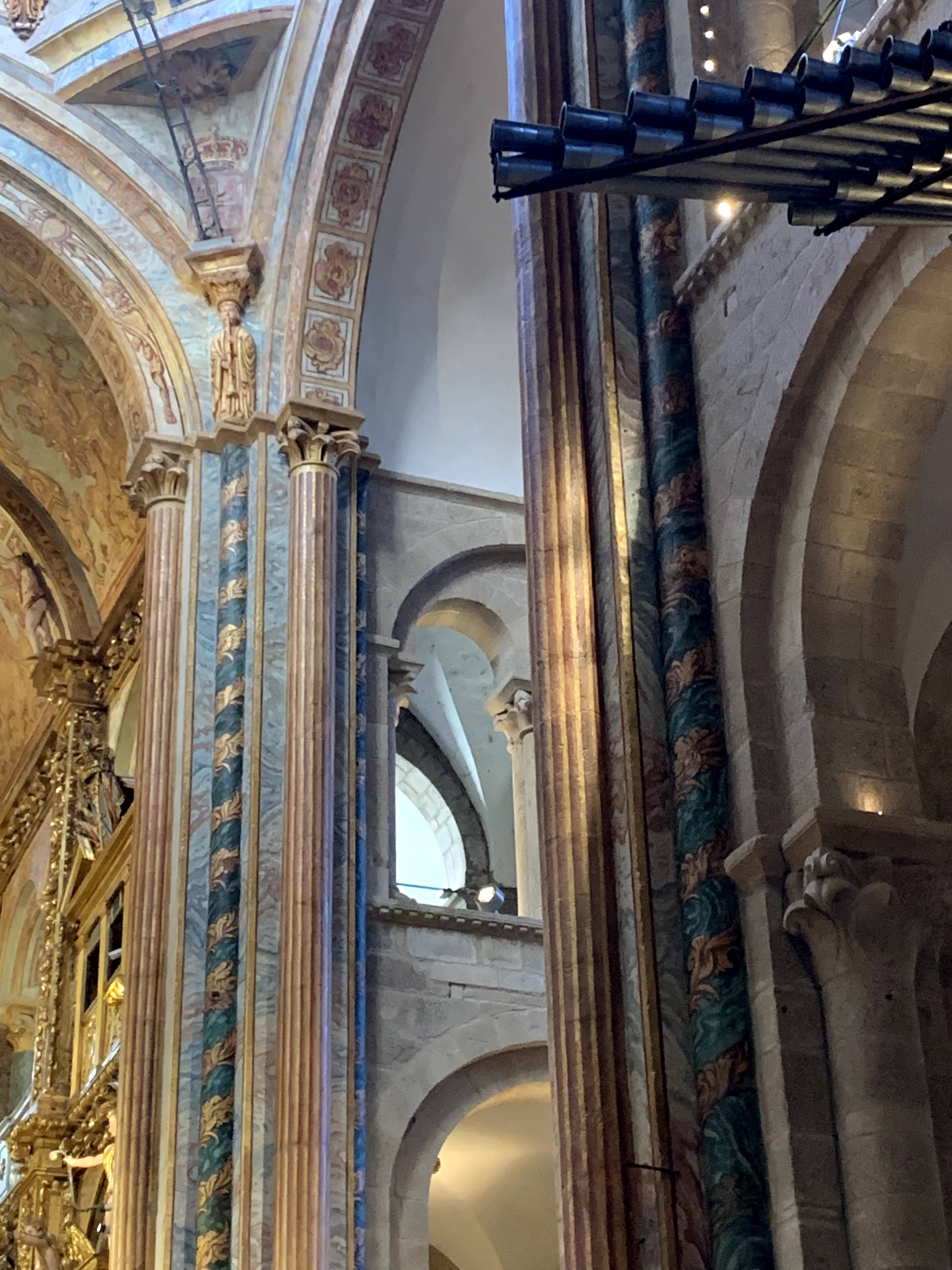
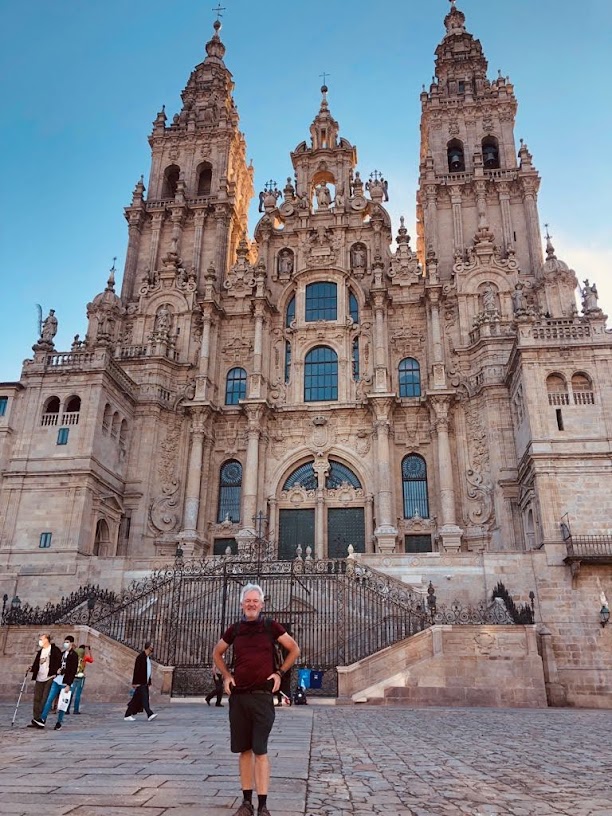
Arriving at the destination in Santiago is always a special occasion. The Cathedral can be seen in all its glory with most of exterior scaffolding removed after years of painstaking renovation work. The interior is especially stunning: Based on the candle-light from medieval times the naves, transept and the Pórtico de la Gloria have been fitted with new lighting. Social distancing still applies and the number of visitors are limited.

The journey begins after the journey

Every journey at some point has to end. You return home but you will not be the same person. A pilgrimage on the Camino takes months to digest. The real transformation begins at home. Life takes on a different meaning when you are in a different rhythm and feel connected to your higher-self. As Marcel Proust is quoted as saying: “My destination is no longer a place, rather a new way of seeing.”

Reino Gevers – Author – Mentor – Speaker

One more thing...If you have found this article interesting you might want to check out our courses, retreats and books and ask others to also subscribe to this Blog.

2 Comments

Filed under Camino de Santiago, mental health, mental-health, spirituality, Uncategorized

Totalitarianism: What comes next?

It’s getting increasingly difficult to discern truth from fiction as public opinion is tipping dangerously close to totalitarianism.

Swiss psychiatrist Carl Gustav Jung spent much time studying this dangerous disease of the human psyche prior to World War II.

Jung vividly warned of the looming catastrophe and Adolf Hitler’s potential for evil and destruction after coming to power in a democratic election with many political leaders at the time believing he could be appeased by making political concessions.

In the mid-1930s, Jung observed a dangerous „collective psychosis“ taking hold in Germany, a society-wide state of psychic possession that seemed to affect normal decent citizens

When moral judgment becomes clouded

Moral judgment had become clouded by martial rituals and subconscious „religious“ worship of the Germanic war god Wotan, triggering irrational and primitive behavior.

Totalitarianism flourishes, according to Jung, when people lose their ability to discern fact from fiction and minds become captured in a bubble of an alternate reality.

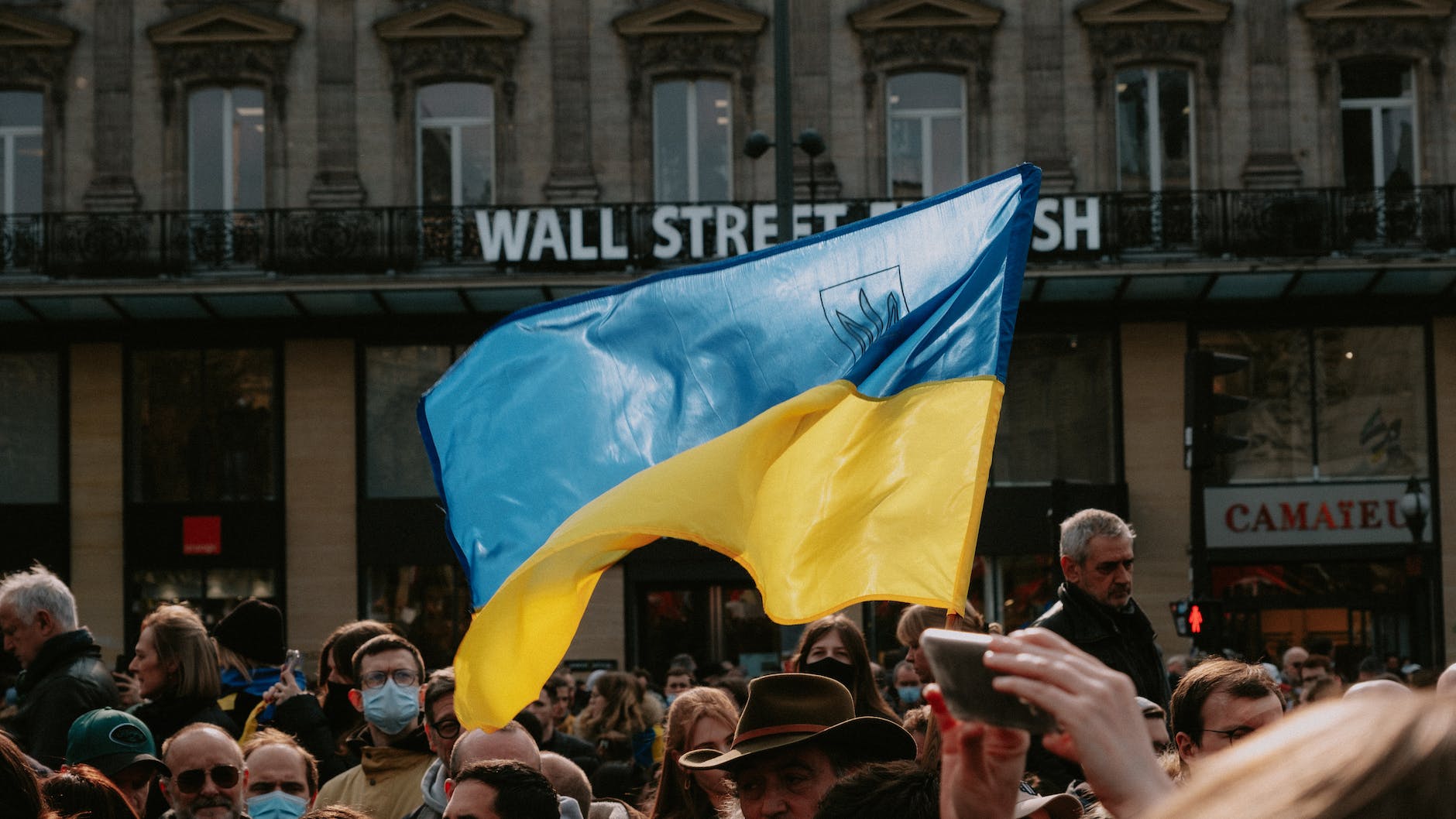
Jung‘s teachings appear more relevant than ever as we observe Vladimir Putin‘s escalation of the war in Ukraine. Russian nationalism and imperialist thinking are in many ways comparable to Hitler‘s national socialism. It exploits a culture of grievance and perceived humiliation, embedded in the mysticism of the Russian Orthodox religion.

Manipulation of the grievance culture

Dictators and extremist political demagogues do not exist by themselves. They relate to a mass psyche of people coerced into lying to themselves. They have become disconnected from their soul purpose by a grievance culture. Their minds have been usurped by the totalitarian leader telling them what to believe and how to behave.

Photo by Mathias Reding on Pexels.com

Human beings cannot look “above” for what is right and wrong, good and evil; we must struggle with these questions and recognize that, while there are no clear answers, it is still crucial to continue probing further and refining our judgments and inner thought process.

Humanity faces a constant challenge of moral reflection. Jung considered this to be central to the exploration of the human mind. The price for getting it wrong can be catastrophic as we learn when Hitler calls for total war or Putin threatens with a nuclear option.

What we would describe as well-intentioned individuals within the Third Reich ended up serving evil with their sense of loyalty and obedience.

How do we discern reality from perception and belief? How do we become more aware and immune to manipulation?

According to Jung, the first step is in training your awareness about your own shadow. Where are your toxic emotions triggered? Can you step back and reflect before reacting? If you cling rigidly to certain thoughts and beliefs you can also be easily manipulated.

Connecting to your inner BEING and authenticity is connecting to your soul purpose. It is best done in a space of quiet solitude. Connecting to your BEING is connecting to your Creator, your God. And, your Creator is unconditional Love and becoming a servant for the well-being of all living things.

What is the language of reconciliation, truth, and love as opposed to a confrontational language that divides and separates us and them, fanning the flames of venom and hate?

Reino Gevers – Author – Mentor – Speaker

One more thing...If you have found this article interesting you might want to subscribe with the “follow” button above or recommend my FREE weekly Blog to friends and family. My books can be ordered at all places that sell good books in both paperback and kindle.

Leave a comment

Filed under mental health, mental-health

Health: We need a paradigm shift

May your body be blessed. May you realize that your body is a faithful and beautiful friend of your soul.“

– John O‘Donohue

You could be feeling a little „battle weary” by now from the daily dosage of Covid-related news. We wish it to be finally over but the pandemic still has many lessons in store for us mankind.

For one thing the issue of public health, and our integral role in a fragile environment has moved into the mainstream.

However, most mass media continues to be fear-based, propagating a one-dimensional perspective, and deflecting from the real underlying challenges. When fear rules the game our vision becomes clouded and our senses become susceptible to mind control and manipulation.

The elephant in the room

The elephant in the room is that two-thirds of Covid victims have had a medical precondition such as obesity, diabetes or stress-related problems that weaken the immune system. Young people with obesity appear to be particularly at risk.

Between a quarter to a half of nurses and health care workers suffer from obesity with experts pinpointing understaffing, stress and bad working hours as some of the reasons. An estimated 115 000 health care workers lost their lives to Covid.

Vaccines are a short-term necessity but not a long term cure. Covid has only highlighted to what extent a large portion of people in the industrialized countries suffer from medical preconditions that will keep on impacting entire economies.

A lifestyle feeding the epidemic

Our modern lifestyle contradicts the very way our bodies have evolved over thousands of generations. Poor exercise, a diet of mainly processed foods and high stress levels cause havoc to the body‘s natural defense systems. Its the perfect feeding ground for a virus that keeps attacking in different mutations.

The „health industry“ is largely in the vice grip of the pharmaceutical industy that is interested in longevity but not quality of life. The processed food industry‘s primary interest is not your health. It is to increase profits by boosting the shelf life of its products with artificial additives that flood the body with toxins, causing a multitude of health problems.

Covid will not be the last virus so we had better start looking at ways of how we can motivate ourselves and others in looking after our body, mind and spirit.

The discipline of maintaining a vibrant body and mind is that bridge toward becoming who you are truly meant to be.

If you don‘t take the time to look after your health, your body will soon force you to take the time to do so.

Just take a walk

Walking is one of the easiest and best ways of how you can start improving your body metabolism. Its one of the most underrated and best ways possible to exercise your body. We have literally been hard-wired by evolution to walk. I go into more detail on this in my book: Deep Walking for Body, Mind and Soul.

What you feed your mind and your body with is what you become. If you are addicted to news channels and social media propagating fear and anxiety you will start feeling emotionally drained and stressed.

Your brain and body need the essential nutrients from foods our ancestors have always eaten, mostly freshly harvested from the ground and the trees without pesticides. Meat was from animals that ate grasses and herbs. Fish came fresh from a clean ocean and river waters.

Photo by Wings Of Freedom on Pexels.com

Aligning body, mind and spirit

Its a no-brainer but we need a real paradigm shift when it comes to personal health and self-care.

By getting enough sleep and exercise, eating the right foods and surrounding yourself with positively-minded people you will have taken the first step to making yourself more resilient in coping with life‘s up-and-down cycles.

When you feel strong in body and mind you become centered and empowered. You will be more resilient to the constant pull of such toxic emotions as anger, hate, fear, envy and frustration.

Reino Gevers – Author – MentorSpeaker

One more thing: If you have found this article useful please share to spread the message. Check out also the latest online courses for you to download books and our retreats on the island of Majorca.

Leave a comment

Filed under mental health, mental-health

The “boiling frog” syndrome

A well-known fable tells us that if a frog is put into boiling water it will immediately jump out. But if the water is only gradually heated the frog will not perceive the danger and be boiled to death. The story is a warning of how a creeping normality of crisis situations delude us into a feeling of false complacency. We fail to act until it is too late.

Our daily habits, thoughts, beliefs and actions play a major part in determining our future. The compound effect of bad or good habits over a period of years and even decades are hugely underestimated.

The compound effect of good and bad habits

Eating for lunch a burger with French fries and a soda drink will affect your body but not harm you in a big way if you eat healthy foods most of the time and you metabolize sugars and carbohydrates with plenty of exercise. But eating mainly processed foods over years and decades will have a devastating impact on your mental and physical health in the long term.

In the same way if your self-talk is mainly negative about yourself or if you incessantly blame others for everything that is going wrong in your life you will most probably be a grumpy, unhappy and miserable person during old age looking back on a life not lived and opportunities missed.

How often have you been buying things you don’t really need because you said: “Its only a few pennies.” But added up over years and decades you could have put aside a small fortune in savings.

Complacency is our biggest enemy

Social and political developments in the recent past should be shaking us out of our sense of complacency and nonchalance. It appears that the general social consensus on values and norms that has prevailed for most of the past decades is seriously being eroded. An independent press, non-partisan judiciary and democratic voting procedures are seriously under threat in countries such as Hungary, Poland, Turkey and first and foremost in the United States. If the United States is no longer the world’s best example of a working democracy authoritarian rule as we see it today in China and Russia will entrench itself in many countries.

Photo by Pixabay on Pexels.com

Like a physical body gradually weakening from the effects of bad nutrition, you don’t perceive the spiral downward immediately. In my home country South Africa the seeds of maladministration and corruption were sown with the election of a populist demagogue Jacob Zuma as president in May 2009. For a while things, like the national airline, appeared on the surface to still be functioning perfectly. But after nine years the rot was there for everyone to see. Most parastatal institutions are bankrupted, leaving numerous towns and cities in dire lack of basic services such as electricity and water supply. It will most likely take generations to get South Africa back on its feet economically.

We tend to forget that political parties, governments and institutions have been created by bodies of individuals. They are a reflection of who we are. When a social pendulum of change swings into a new direction it is at first always led by a minority that eventually become the majority view.

A crisis is a way marker

Crisis situations, whether on a personal or collective level, always tell us that the status quo is no longer workable and that things need to change. The art is to perceive the small, telling signs that something is moving into the wrong direction and to adapt accordingly. It is the frog sensing when the water temperature is rising to a dangerous temperature and when it’s time to get out.

This is why some companies thrive by adapting to changing market conditions while others procrastinate. It is why some species adapt and others become extinct. Some marriage relationships adapt to changing needs and circumstances while others end in divorce. It is why the enlightened leader picks himself up during a crisis, using it as a tool of change in valuable lessons learned while the other stays in the shadow of self-pity and recrimination.

Reino Gevers – Author – Mentor – Speaker

One more thing…

If you have found this article useful please share to spread the message. Check out also the latest online courses for you to download books and our retreats on the island of Majorca.

Leave a comment

Filed under mental health, mental-health

Unlock your mind: Take a walk

Time spent in the stillness of nature unlocks the mind, reconnecting mind, soul, and body with the greater whole.

I’ve just come back from my annual pilgrimage walk on the Camino in northwestern Spain.

There are few things so healing and rejuvenating as spending time in the green and blue spaces of nature.

My very first walk on the Camino de Santiago was in 2006. I needed time out after feeling totally stressed out from job and relationship challenges.

Nature is a healing place

That first walk opened a window that completely changed my life. The first big epiphany: Reconnecting with nature liberates the mind from the treadmill of the same thoughts, fears, and feelings.

On the Camino Primitivo

When body and mind go into synchronicity with nature, self-important ego thoughts are transmuted into calmness and stillness.

You feel part of a bigger whole. The universe starts whispering to the truth of the soul.

Let your breathing follow the natural rhythm of waves breaking to shore. Feel the calming effects of crystal clear waters swirling around a rock. Hear the choir of birds in the woods. Each with a different song, forming that symphony of unity.

Your body tells the truth

Your body is the collective memory of all that you have experienced. The seeds of underlying tension and pain can go far back to a traumatic childhood experience.

It’s those suppressed feelings from the past that deplete the energy that you need to accomplish your dreams. When you do a pilgrimage you may walk more than 20 kilometers (12 miles a day) with a backpack.

Your body goes through a cleansing process both physically and emotionally. You will be letting go of old stuff, walking things off, with every step.

Uncontrolled emotions could surface. You have those flat-on-the-ground moments when you question everything in your life and why you are doing a strenuous walk in unknown territory and sometimes in bad weather conditions.

A pilgrimage walk is no wellness holiday. It can be taxing physically and emotionally. But also pure bliss, joy, and exuberance. There are always lessons to be learned. The Camino de Santiago is a fast-track analogy of life.

You eventually surrender and accept the impermanence of all things. There is no story without a struggle. You have moments of bliss and moments of sadness.

Life is a rollercoaster. Life is grace as you take that walk into the morning light after the darkest of nights.

Reino Gevers – Author – Mentor – Speaker

One more thing...If you have found this article interesting you might want to subscribe or recommend my FREE weekly Blog to friends and family. My books can be ordered at all places that sell good books in both paperback and kindle.

Leave a comment

Filed under mental health, mental-health

What comes after the pandemic?

There is a growing sense of optimism that by late summer we can start returning to normal lives when a large percentage of the populace in most countries has been immunized against Covid-19. Little attention is being given to a far deeper underlying problem.

Sometimes a major shock or jolt is needed to change perceptions. A major threat to public health such as a dangerous virus can bring the entire globally economy to a halt.

The people at risk

While not all patients who died from Covid-19 had underlying health conditions, the major number of people at risk were those older than 60 years or who have health conditions like lung or heart disease, diabetes or conditions that affect their immune system, according to the World Health Organization (WHO).

Lifestyle choices are key

Researchers are still puzzling why some people who contracted the virus had relatively mild symptoms while it was deadly for others. The bottom line is that governments and health institutions are not investing enough resources in preventive medicine. Individuals need to be educated that lifestyle choices made on a daily basis are major determinants of longevity, health and well-being.

WHO defines health as a “state of complete physical, mental and social well-being and not merely the absence of disease or infirmity.” But the feeling of well-being is subjective. Some people live in constant pain, are dependent on a host of medications and still describe themselves as healthy because they are still functioning in some way.

Longevity and quality of life

Prior to the pandemic the lifespan of most people in the industrialized countries had steadily increased over the years. But lifespan says little about the quality of life as we get older. When we reach the age of 60 the likelihood of requiring some form of care because of a disability rises significantly. Common diseases in our time such as diabetes II, obesity, heart-circulatory problems and some forms of depression are all in some way related to lifestyle choices.

Relatively little attention has been given to the fact that Covid-19 has been more deadly in patients with obesity. Even people merely overweight were found to be at higher risk, according to an article in Science Magazine.

What we eat, how we move our bodies and how we deal with mental stress are far greater health determinants than the genes we have inherited from our parents.  Scientists speculate that for the first seven or eight decades of a lifetime typical lifestyle choices such as healthy foods and physical activity enable these individuals to stay healthy into old age. Genetics only appears to play a larger role in the longevity scale from the age of 90.

Health perceptions need radical scrutiny

When a body is under stress because of high blood pressure, obesity or another illness a dangerous virus has easy play in breaking down the body’s natural defense systems. There is a general misconception that we can all return to normal lives once enough people have become immunized against the virus. The truth is that if we don’t change our perceptions of health in a radical way it is only a matter of time before the next, possibly even deadlier, virus hits us.

Only a century ago it was common for people in China to visit the local doctor regularly for acupuncture, herbal treatment and lifestyle guidance such as what Qi Gong exercises needed to be done to balance the flow of the body meridians . The doctor was paid when you were well. If you got ill you didn’t have to pay the doctor because it was believed that he hadn’t done his job properly.

Traditional Chinese Medicine (TCM) is deeply rooted in Taoist and Buddhist philosophy. Man is seen as an integral part of nature and the cyclical laws of the seasons or Five Elements. The microcosm of a person’s health reflecting the macrocosm of nature and the universe.

Eat healthy and save the planet

What we eat not only determines our own health but that of our planet. Eating foods produced from large animal farms and monocultured agricultural methods is a far greater contributor to the climate crisis that our means of transportation. Mass agriculture and the production of animal feed is destroying a large part of our natural ecosystems, in turn increasing the danger of more virus mutations jumping from animals to humans. The climate impact of eating beef and dairy products dwarfs that of a mainly vegetarian diet. The conversion of land for beef production and animal feed is a leading cause of deforestation in many tropical regions.

Each individual has been born with a purpose and you can only live out your full potential if you are feeling vibrant, happy and healthy. German philosopher Arthur Schopenhauer is quoted as saying. “The greatest of follies is to sacrifice health for any other kind of happiness.”

Reino Gevers – Author – Mentor – Speaker

One more thing…

If you have found this article useful please share to spread the message. I’ve also recently compiled brand new online courses that you can download onto your computer or smartphone on ways of how you can transform your life on multiple levels. I will also host from March 10th every week for eight weeks a live online event of practical Qi Gong exercises to boost flexibility and mindset.

Leave a comment

Filed under mental health, mental-health