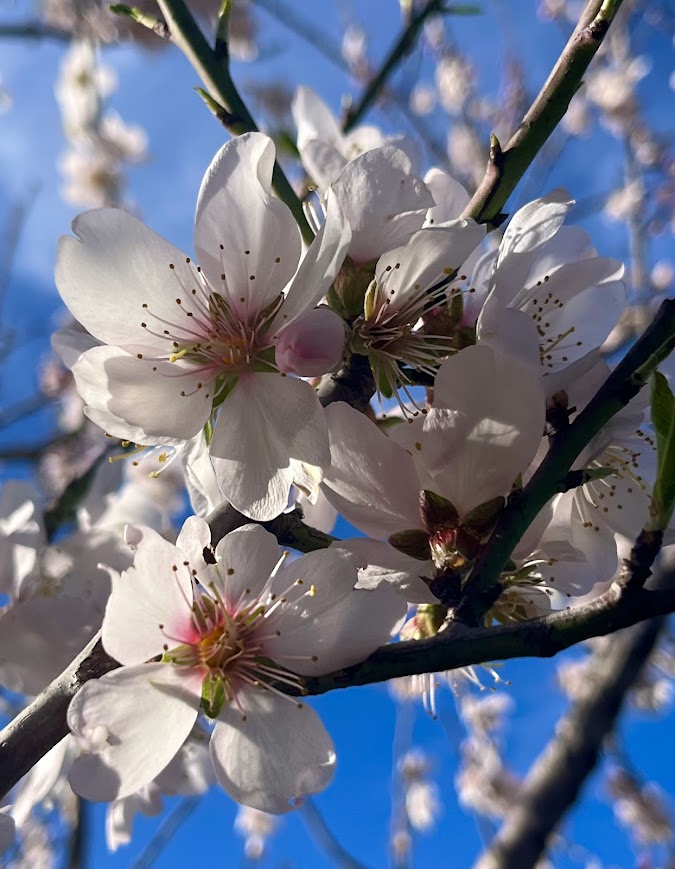
Just because you have walked through a dark past does not mean your story ends there. Christmas carries a deep and enduring message of hope.
The ancient mystics understood that time is an illusion, teaching full presence as eternity touching the present moment.
The days between Christmas and the New Year were honoured as the in-between time where endings soften and new beginnings quietly form.
Christmas is an invitation into this holy simplicity. The birth of Christ did not take place in a palace but in an unremarkable shelter, rough with straw and shadow. Yet kings traveled great distances to kneel there and pay homage.
This is the great paradox of Christmas: divinity arrives hidden in the ordinary. Love reveals itself not in grandeur, but in humility. The sacred is often found exactly where you least expect it.
In this season, you are gently reminded of your own worth. You are worthy of love. You can learn to love yourself, even the parts shaped by fear and survival. When you dare to face your fears with compassion, you begin to gather the tools for healing and growth. Peace is uncovered from within.
The Christmas story is also a story of clearing space. The stable had to be emptied and prepared to receive new life. In the same way, this season invites you to release old entanglements, to lay down burdens that are no longer of service, and to allow the soul to breathe.
As you learn to care for yourself with gentleness, you become more capable of caring for others in the wider human family.
This is the quiet miracle of Christmas: when love is born within, it radiates outward, warming a broken world in need of hope.
„Knowing yourself is the beginning of all wisdom.”— Aristotle
Standing guard at the doorway of your mind has become essential to maintaining spiritual and mental health in an age where our minds are drowning in information but thirsting for wisdom.
What you feed your mind, you ultimately become. A few careless minutes scrolling on your smartphone can trigger a cascade of emotions that can shape your entire day.
If you are reading this, you are likely one of the few who is actively reflecting on what is happening to us collectively.
Conflict and social disruption will always be part of the human condition—we are imperfect beings, after all. But we also carry within us the profound power of choice.
When the fringe becomes the megaphone
My impression is that the darker impulses of humanity are being amplified through the very technology meant to connect us. Fanatical fringe groups and those consumed by malice spend countless hours attacking others with hate-filled messages. Social media companies do little to halt this simply because emotionally charged content fuels engagement—and engagement fuels profit.
We may believe we are in control of what enters our minds, but for most people this is not true. Social media and search engine algorithms quietly track our behavior and serve up the content we are most likely to consume. In doing so, they shape not only our preferences, but our thinking.
Echo chambers of belief
Beliefs and opinions are constantly being reaffirmed within separate realities—information bubbles where each group hears only the echoes of its own worldview. Families, friendships, communities, and even congregations are fracturing along these invisible but powerful dividing lines.
What we need is a collective pushback from the quiet majority: the rational, thoughtful, grounded people who do not fall for emotional manipulation. That resistance begins by asking simple but profound questions:
Is this information expanding my energy or diminishing it?
Is it helping me grow, evolve, and reach my full potential?
A common misconception is that knowledge, information, and education alone equal wisdom. Yet many highly intelligent people refuse to learn from their mistakes, cling to fixed mindsets, and resist deeper reflection—never realizing they have been backing the wrong horse all along.
The power of who and what you surround yourself with
True wisdom is innate knowledge shaped through experience. It is the quiet confidence of intuition and higher consciousness. When you choose to surround yourself with wise friends, nourish your mind with spiritual teachings, and seek guidance from grounded mentors, you naturally grow in wisdom.
Equally essential is practicing self-care by setting firm boundaries with people, media, and environments that deplete your mind, body, and soul. Self-care is not indulgence—it is alignment. It is taking time for silence, contemplation, and reconnection with your inner life.
Choosing this path gradually fills your life with greater happiness and contentment because you begin building a bridge to your soul. Your actions shift from serving the ego to serving the greater whole.
I’ve been contemplating one of Rilke’s poems lately. It has stayed with me because it speaks so directly to our world today, where noise and distractions pull from all directions. Rilke envisions a silence so profound that all the noise, chatter, busyness of the senses, and endless distractions simply fall away.
And, in that stillness, he says, we might finally glimpse the divine with full clarity.
If only it would be, just once, completely quiet… If only it would be, just once, completely quiet. If the random, and the approximate went mute, and the neighbors’ laughter, if the noise that my senses make wouldn’t so stubbornly keep me from waking– Then I could, in a thousandfold thought, think you right to the edge of you and have you (just a smile long), to give to all life as a gift like a thank-you.
Reading this, I couldn’t help but notice how often we treat noise, chatter, and distraction as normal. Yet maybe our constant talking, scrolling, and background hum are really a way of avoiding something scarier: just sitting with the stillness within.
Stillness can feel so unsettling because it invites us to hear the inner voice we’ve been ignoring, the voice of authenticity, of truth, of God. Rilke reminds me that silence isn’t empty at all. It’s a threshold. If we dare to step into it, we may discover presence, gratitude, and a deeper connection with life than all our distractions could ever offer.
You could also take a walk in nature, opening the senses to natural sounds that are different from noise. Birdsong, the waters of a creek, the rustling of leaves in the trees—all of it forms a beautiful symphony. In those moments, you can feel yourself connected to a larger whole and begin to perceive the subtle whispers of the universe.
So here’s a simple practice: find just five minutes today to sit in stillness. Turn off the phone, close your eyes, and notice the quiet beneath the noise. At first it may feel uncomfortable, but stay with it. Listen for that subtle inner voice—the one that whispers rather than shouts. You may find, as Rilke did, that in the stillness something sacred begins to stir.
All the ancient sages and saints return to one non-negotiable truth: the law of impermanence. It is the invisible thread that runs through the fabric of life, weaving and shifting in cycles that shape every experience, identity, and attachment to what once was and is no more.
In Buddhist teachings, the very nature of all phenomena is this: it arises, it changes, and it then passes away. Resisting such impermanence is like trying to dam a river with your bare hands. You only exhaust yourself, and the water still finds its way through. You get wet!
Yet in our materialist culture, we are indoctrinated with the false belief that self-worth is equal to possessions, status, and the glitter of external achievement. The blueprint is enticing: When I have a million in the bank, the perfect home, and a Ferrari in the garage, then I will be happy.When I retire. I will do ... As if life only starts with retirement?
But sooner or later, you discover that what you want is not always what you need, especially when the outer trappings are disconnected from the soul’s true purpose. The more you own, the more you may fear losing it. There is a real danger that you become obsessed with thoughts on what might happen, forgetting that no insurance policy, stock strategy, or health plan can shield you from the law of impermanence.
Paradoxically, the mystics embrace impermanence because it reveals what does not change: the permanence of the soul and its unbroken connection to God, the Source, the Tao, the Universal Consciousness. By meditating on the transient world, the Mystics learned to anchor themselves in what transcends time.
Meister Eckhart, the 14th-century Christian mystic, taught a similar truth when he said, “To be full of things is to be empty of God. To be empty of things is to be full of God.” For Eckhart, the art of detachment was not withdrawal from life, but freedom within it. It is releasing the need to grasp at what inevitably passes so that the soul can rest in what is eternal. In letting go of form, the formless Presence is discovered.
In mystical thinking, endings are thresholds to new beginnings, with death merely being a passage to another dimension. Just as autumn clears the ground for spring’s blossoms, life’s losses make space for new insights, relationships, and states of being. The Sufi poet Hafiz reminds us: “Don’t get lost in your pain; know that one day your pain will become your cure.”
The mystics teach that surrendering to the law of impermanence brings peace of mind, dissolving fear at its root. We are travelers on the journey called life and only guests in the house of time. Like the river that does not mourn the stone it passes, everything you touch, everything you experience, is a moment flowing by.
So let your walk be soft and light. Love deeply. Release gently. You lose nothing, because the current carries you, steadily, inevitably, toward the eternal ocean.
There’s something quietly profound about spending time in a natural landscape that hasn’t been tamed or touched by human hands. Whether it’s in the African bush, a lonely walk in the Galician mountains, or on a mundane path in the Meseta. What strikes me every time is how life insists on diversity. Every insect, tree, bird, and creature is somehow interconnected in a grand, mysterious harmony. Nature doesn’t strive for sameness. It thrives because of its differences.
And I’ve come to believe the same is true for humanity.
Every different culture, cuisine, language, and spiritual tradition feels like a distinct fingerprint of life, carrying its own wisdom, colors, and cadence. They’re not threats to one another but complementary parts of a much larger whole.
When we try to flatten the world into one belief system, one way of being, one “truth,” we violate a deep principle embedded in creation itself.
So many of the “isms” we’ve inherited, such as nationalism, tribalism, and certain flavors of extreme patriotism, tend to dehumanize those who don’t fit neatly into the mold. When difference becomes a threat instead of a teacher, it often escalates into exclusion, oppression, and even violence.
And yet, the ancient sages and mystics remind us: under all these differences, there is unity.
The Baha’i Faith teaches that all religions stem from the same divine source, evolving like chapters in one great story of spiritual awakening with the great spiritual teachers from different religions appearing at a certain chosen time and place.
Mahayana Buddhism tells us that all beings possess Buddha-nature, regardless of the path they walk; the light within is the same.
In Christian Mysticism, creation is declared “good,” and every human made in the image of God, each of us carrying a unique spark of divine purpose. Meister Eckhart, the 13th-century mystic, wrote:
“The eye through which I see God is the same eye through which God sees me; my eye and God’s eye are one eye, one seeing, one knowing, one love.”
Another echo of this truth comes from the writings inspired by Julian of Norwich (c. 1342 – after 1416), an English woman who lived in quiet prayer and seclusion:
“Each soul is a unique expression of God’s love, as varied and wondrous as the colors in creation.”
This isn’t just theology. It’s a call to practice. A spiritual responsibility. If diversity is sacred, then how I relate to it matters. Am I listening? Am I open? Am I willing to be changed by what I don’t yet understand?
This can become a daily transformative spiritual practice:
What can I learn from the differences I perceive in others?
What is it that provokes my discomfort, anger, or fear?
Why am I drawn to some cultures and landscapes, and repelled by others?
These questions may serve as an invitation into a deeper clarity and humility.
In a world increasingly shaped by division, choosing to honor diversity is a form of sacred resistance. It’s a return to the original design of creation: not uniformity, but unity through difference. And when you lean into that, something holy begins to take shape both around you and within.
“A human being is a part of the whole called by us ‘universe,’ a part limited in time and space. He experiences himself, his thoughts and feelings, as something separated from the rest — a kind of optical delusion of his consciousness.” — Albert Einstein
For millennia, ancient sages and saints taught that a sacred order underlies all of creation with a divine intelligence woven into the fabric of life itself. Today, modern science is beginning to echo this timeless wisdom, recognizing patterns of evolution and interconnection that hint at a universal consciousness at work.
When we begin to see that there may be a higher purpose behind life’s chaos, pain, and obstacles, we are invited into a deeper surrender, trusting that the challenges are shaping us into the fullness of who we are meant to become.
At the heart of this understanding lies a universal truth: The Law of the Seasons.
Life, like nature, moves in cycles in an eternal rhythm of growth, shedding, rest, and rebirth.
This rhythm is beautifully expressed in the Chinese philosophy of the Five Elements: Wood, Fire, Earth, Metal, and Water. Rooted in ancient Taoist and Buddhist traditions, these elements reflect the dynamic forces of nature and the continuous flow of transformation that is the secret of life. The sages who developed this framework were not only spiritual teachers but also profound observers of the natural world, recognizing that every season, every phase of life, mirrors a deeper cosmic order.
Spring, the season of the Wood element, marks the beginning of life’s great unfolding. It is the time of birth — when we take our first breath with a cry, entering the world with raw vitality. Just as a newborn deer rises and leaps within moments of birth, life itself surges forward with energy and possibility. In nature, it is the season of sowing: farmers plant seeds, trees awaken with tender blossoms, and birds gather twigs to build their nests. Everything is in motion, fueled by the vision of youth, growth, and a sense of new beginnings.
Summer, aligned with the element of Fire, is the season of full expression. What was planted in spring now bursts into bloom, radiating color, energy, and vibrancy. Fire represents passion, joy, and connection. It is the time of reaching outward into the world and celebrating life’s fullness. Like the sun at its peak, we shine our light most brightly, engaging with others, forging relationships, and expressing our true essence. In this season, nature is alive with movement, with bees humming between blossoms, fruits ripening, and long days inviting us to dance with life.
Late summer ushers in the Earth element. This is the stabilizing force that grounds and nourishes. It is the season of ripening and harvest, when the fruits of earlier seasons are gathered and shared. Earth represents balance, care, and sustenance. It is a time of reflection and integration, when we pause to absorb, digest, and appreciate what has come to fruition. In nature, the fields are golden, the air thick with the scent of abundance, and the pace begins to soften. Earth reminds us of the importance of centering ourselves of being rooted, generous, and in harmony with the rhythms of life. It is time to give gratitude for all the blessings and opportunities that life has provided.
Autumn, governed by the element of Metal, is the season of refinement and release. As the trees let go of their leaves, we too are called to surrender what no longer serves us. Metal represents clarity, value, and the distillation of wisdom, the process of turning experience into insight. It is a time of letting go with grace, making space for what is essential. The air grows crisp, the light softens, and the world becomes quieter, more reflective. In this sacred shedding, we reconnect with our inner worth and recognize the beauty in simplicity and stillness.
Winter, the domain of the Water element, draws us inward to the depths of stillness and rest. It is the season of restoration, of returning to the source. Water symbolizes wisdom, intuition, and the unseen currents of life. Beneath the frozen surface, life is quietly gathering strength. Just as seeds lie dormant beneath the soil, preparing for rebirth, we are invited to pause, reflect, and reconnect with our inner truth. This is a time for dreaming, for listening deeply, and for trusting the mystery of the unknown. Water teaches us that even in darkness, life continues, silently, powerfully, and with purpose. As in life, there is a season to pause, to withdraw, and to hold still.
Together, the Five Elements offer more than a framework for understanding nature. They mirror the unfolding journey of life. Each season calls forth a different quality within you: the courage to begin, the joy of full expression, the grounding of nourishment, the wisdom of release, and the depth of renewal. When you attune yourself to these rhythms, you begin to see that life is not a straight line but a sacred cycle.
It fills me with hope, and I can affirm this from my own experience, when looking back and connecting the dots to life-changing events, that even in times of struggle or uncertainty, you can trust that everything is always in motion, evolving, becoming, and returning again to the truest self. There is a great truth to the saying, attributed to Abraham Lincoln at the height of the American Civil War: This too shall pass!
Everything can be taken from a man but one thing: the last of the human freedoms—to choose one’s attitude in any given set of circumstances, to choose one’s own way.” Victor Frankl
In just nine days after being liberated from a Nazi death camp, Viktor Frankl poured his unimaginable ordeal into one of the most profound testaments to human resilience and the indomitable spirit ever written.
Upon his return to Vienna he found that his wife and almost entire family had died in concentration camps.
Most people would have been broken by such devastating pain, but Frankl managed to turn his suffering into a powerful pschological and spiritual mission.
His book: Man‘s Search for Meaning serves as a powerful guideline for all people currently experiencing almost insurmountable difficulties.
Frankl firmly believed that meaning can be found even in the most harsh conditions.
Purpose
Essential for Frankl was a firm belief in the Why.
Knowing your „why” helped people survive even the most brutal conditions, Frankl found. For him, it was the hope of seeing his wife again and the desire to rewrite his lost manuscript on his logotherapy psychological theory.
Detachment
He learned to detach from his suffering by focusing on memories, nature, and moments of beauty or spiritual reflection. He found that even in the camps, one could choose a different mindset—what he called the “last of human freedom.
Helping Others
As a psychiatrist, Frankl often counseled fellow prisoners, helping them find meaning and hope. This act of service gave him a sense of dignity and reinforced his own resilience.
Focusing on the Present
Frankl adapted to the harsh camp routines by focusing on small daily tasks and not letting himself be overwhelmed by fear of the future.
Belief
Recent groundbreaking studies reveal that individuals who anchor their lives in the belief in a higher power demonstrate significantly greater resilience in navigating and transforming adversity.
Evil has a persistent way of manifesting itself, sometimes infecting entire nations and societies—as seen in Nazi Germany. It can appear all-powerful, overwhelming any hope for goodness to prevail.
Yet, history shows that in the darkest hours, seeds of light and righteousness are quietly sown, preparing the way for a new dawn. Evil, by its nature, violates the deeper laws of creation. It tends to overreach—and in doing so, ultimately sows the seeds of its own destruction.
Reino Gevers – Author – Mentor –Speaker
If you enjoyed this article you might be interested in my very latest book: Sages, Saints and Sinners Get it today on Amazon, Barnes & Noble and where all good books are sold.
“The meaning of life is to find your gift. The purpose of life is to give it away.” — Pablo Picasso
Every soul incarnates with a unique purpose, and life itself is a journey of becoming who you truly are. Yet, from an early age, societal conditioning often obscures the soul’s inner calling, leading to discontent and unhappiness.
The Oracle of Delphi, inscribed at the Temple of Apollo, imparted the timeless wisdom: “Know Thyself.” This maxim reminds us that true purpose and wisdom emerge through deep self-reflection—by peeling away illusions, pretenses, and the false identities imposed by the world, we uncover our authentic essence.
Several sages have expanded on the maxim of Delphi by adding: “Know who you are not”, aligning with the practice of Neti Neti (“not this, not that”) in Advaita Vedanta, a Hindu philosophy. It seeks to understand the self by negating all that is not the true self. Perceiving the divine comes after self-reflection of “knowing thyself” and then “knowing who you are not”. The Islamic hadith states, “He who knows himself knows his Lord.”
From early childhood, we are subtly shaped by influences that can obscure our true nature and pull us away from our unique path in life. The hidden traps come in the form of societal norms, expectations, and fears.
Social Conditioning & External Expectations
From early childhood, we absorb the values, beliefs, and expectations of the family we were born into. Parents often make the mistake of carving out a career path for their child without sensing its deeper yearning. Many realize only later in life that the ladder has been placed against the wrong wall. This often occurs during a midlife crisis.
Self-Deception & Ego
Through self-talk, we often construct identities based on what we want in life rather than who we truly are. Uncomfortable truths are avoided with the ego protecting itself with rational justifications. The mind creates stories, but identifying too much with them keeps us trapped in illusions.
Fear of Change or Truth
Human beings are creatures of habit. Making fundamental changes like creating distance to family members or friends pulling us down to a lower vibrational level requires brave decisions and honest self-reflection.
Seeking Validation from Others
When we rely on external approval, we shape our identity based on how others perceive us rather than our own inner truth. Social media amplifies certain images of “success” and “happiness” mostly by encouraging consumerism.
Finding Stillness
To truly discover who you are, you must create space for stillness. In quiet moments, especially in nature, your senses open to the whispers of the soul. Here, you can seek guidance from God, a higher intelligence, or your higher self. Yet, these answers can only reach your heart when you free yourself from the endless noise of external distractions.
Without solitude, self-awareness remains shallow. Cultivating a meditation practice can help deepen your connection to your inner self. There is no single perfect way to meditate—it might be sitting in stillness, walking mindfully in nature, listening to spiritual music, or engaging in slow, flowing movements like Tai Chi or Qi Gong. The key is to find what brings you into presence and alignment with your true essence and purpose.
Reino Gevers – Author – Mentor – Speaker
If you enjoyed this article you will be interested in my books available where all good books are sold.
Throughout my life, I have grappled with the tension between religion and spirituality. Organized belief systems can so easily devolve into intolerance, hypocrisy, and hatred of those who look, think, or act differently. Ideology in all its forms fractures societies, breeding division and animosity.
Yet, creation thrives in diversity. God’s garden is a vibrant spectrum of colors and forms, each plant and flower enhancing the other in a harmonious beauty that can only be fully appreciated when seen in its entirety.
At its best, religion provides meaning and purpose to life. It offers solace and sanctuary during life’s most challenging moments—times of grief, loss, despair, and seemingly insurmountable obstacles.
Religion at its best and at its worst
Religion can unify communities, fostering a spirit of collective goodwill that transcends individual needs. Throughout history, faith-based inspiration has unleashed humanity’s most profound creativity in art, music, philosophy, and architecture. The masterpieces of Michelangelo, the compositions of Bach and Beethoven, and the enduring grandeur of centuries-old cathedrals and temples stand as testaments to the power of faith to inspire and elevate. At their core, all major religions share a universal message of love, compassion, kindness, and peace.
Yet, at its worst, religion has been wielded as a tool for manipulation and abuse. It has perpetuated discrimination, financial exploitation, fraud, and instilled fear and shame in innocent victims, leaving lifelong scars.
Over centuries, countless lives have been lost in wars waged over dogma, with individuals persecuted or executed for deviating from “the true gospel.” Such hypocrisy has driven millions to turn away from institutionalized and denominational religion, creating a vacuum often filled by a trash culture of alternate ideologies, political extremism, or addictions to external gratification. The consequences of this disconnection are evident in the growing epidemic of depression and spiritual emptiness.
How spirituality creates resilience against life’s challenges
Recent research highlights a significant link between spiritual belief and resilience to depression. Those who believe in a higher power are often better equipped to navigate life’s challenges, finding balance and purpose more easily than those disconnected from spiritual practice.
Experiential spirituality, unlike externally imposed beliefs, emerges as a deeply personal “knowing.” As Carl Gustav Jung famously stated when asked if he believed in God: “I don’t believe. I know.” This kind of spirituality arises intuitively, often in moments of awe—walking in nature, contemplating a masterpiece, listening to music, or engaging in creative flow.
This prompts profound questions: Is religion merely a pathway to spirituality, or is it an end in itself? Are we transitioning into a post-religious era? How can we bridge the divide between organized religion and personal spirituality to cultivate deeper, more authentic connections with the divine?
Reino Gevers – Author – Mentor – Speaker
P.S. If you enjoyed this article you will be interested in my books available where all good books are sold.
“Gratitude is the antidote to the weight of regret”
In an uncertain and sometimes chaotic world, the constant stream of negative news can feel overwhelming, often overshadowing the positive moments. Unfortunately, the mind tends to focus more on negativity, making it essential to intentionally cultivate a mindset that embraces joy and positivity.
Throughout each day, we all face both positive and negative experiences. But have you ever wondered why the negative ones linger in your mind longer and why the negative message is more powerful than the positive?
Conditioning the mind to joy involves rewiring the brain to focus more on positive experiences, feelings, and thoughts while managing stress and challenges more effectively. Here are several practices that can help with this:
Gratitude
Daily Reflection: Spend a few minutes each day reflecting on things you’re grateful for, even small things. Writing them down can amplify the effect, as it reinforces positive neural pathways.
Reframe Challenges: When facing difficulties, try to focus on any lessons or positives that can come from them. What do I need to learn from this experience? I there a positive side to this?
Meditationand Deep Walking
Stay Present: Mindfulness teaches you to focus on the present, reducing tendencies to dwell on the past or worry about the future, both of which can detract from joy.
Deep Walking in nature is a great way of reconnecting and alignment. Spending time in the green and blue spaces of nature and opening the senses to sound, smell and feeling will noticeable reduce your stress levels. If you want to find out more, check out my book: Deep Walking for Body, Mind and Soul.
Positive Visualization
Imagine Joyful Outcomes: Regularly visualizing positive experiences can help the brain become more attuned to them. Picture moments that bring you happiness and success, even small ones, and try to evoke the emotions you’d feel in those scenarios.
Future Gratitude: Think about things you’re looking forward to or would like to happen, and imagine how grateful you’ll feel when they do.
Self-Love
Speak Kindly to Yourself: The way you talk to yourself affects how you feel about yourself. Practicing self-compassion means addressing your thoughts with kindness and patience, which fosters a more joyful and supportive inner world.
Forgive Yourself: Mistakes happen, and letting go of self-criticism can bring immediate relief and joy.
Acts of Kindness
Give to Others: Helping others releases oxytocin and other “feel-good” hormones, creating a sense of connection and joy.
Practice Appreciation: Show gratitude to those around you, which can increase your own sense of happiness and fulfillment.
Flow Activities
Find a Passion or Hobby: Activities that fully absorb your attention—like art, sports, or music—can create “flow” states, which are deeply satisfying and joyful.
Focus on Progress: Rather than aiming for perfection, celebrate small wins and improvements, which can help you appreciate your journey.
Cultivate Optimism
Challenge Negative Thoughts: When you notice negative thoughts, ask yourself if they’re realistic or if there’s a more positive perspective you could consider.
Practice Positive Affirmations: Regularly affirming positive beliefs about yourself and your future can build a mindset that gravitates toward joy.
Physical Exercise
Exercise Regularly: Physical activity releases endorphins, boosts mood, and reduces stress, all of which contribute to a happier space.
Smile Often: Even forcing a smile can trigger a small release of dopamine, making the brain associate smiling with joy.
Building positive habits and cultivating a resilient mindset takes time, especially if you’ve spent years dwelling in negativity. It’s a gradual process, but starting small can make a big impact. Begin with simple actions, like writing down three things you’re grateful for each day. Or take a few minutes each day to walk in nature or meditate. Over time, these small steps add up, creating a powerful, lasting effect.
In my village, there’s a Moroccan fruit and vegetable vendor who greets each customer with a big smile and a warm, friendly remark. Recently, I told him how his kindness radiates positivity to everyone he meets. Just think of the hundreds of people he uplifts, day after day, week after week, year after year. For me he is a reminder of how just one person can have a profoundly positive effect.
Reino Gevers – Author – Mentor – Speaker
P.S. If you enjoyed this article you will be interested in my books available where all good books are sold.