Category Archives: Camino de Santiago

Surrendering to humility

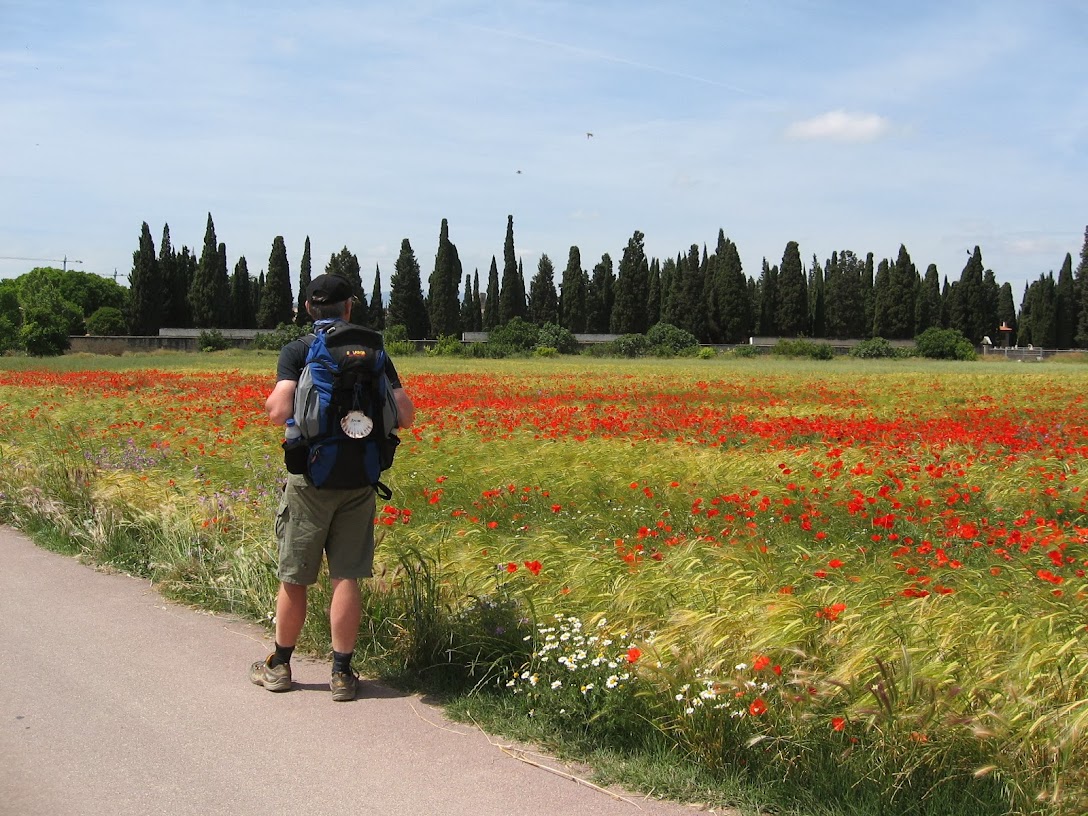
Walking the Camino pilgrimage route in northwestern Spain is an analogy of life and a fast-track course in self-development and soul elevation. It is why many people who start this 800-kilometer walk as a sporting endeavor end it as a pilgrim.

A fellow pilgrim once said to me: „If you don‘t walk this path with humility, it will force you to become humble.“ It is a mantra that has remained etched in my mind as one of the many life lessons learned on the Camino.

Life gets in the way of a plan

Life inevitably gets in the way of a meticulous plan or agenda. This doesn’t mean you shouldn’t have a financial plan or pension savings scheme. You should simply be aware that even the best of plans can be scuttled by external events out of your control. You should therefore be prepared all the time to adapt, amend, and surrender to the flow of change.

On the journey of the soul, the pursuit of knowledge is an endless path of discovery. However, within various religious communities, there exists a phenomenon often referred to as the “spiritual ego.” This tendency can manifest as individuals within a group belittling those outside their faith or belief system, portraying them as less enlightened or unaware of profound truths, while they remain blind to their own hypocrisy and failings.

The universe has its own sense of humor in bringing us back to humility if we denigrate others with our inflated pride. 

The Ego-Throne

The Achilles heel of the high achievers who have phenomenal success and then come crashing down is the illusion they created it all by themselves while seated on the golden throne. Their decisions are always infallible. Criticism by underlings is seen as disloyalty so they are eventually surrounded by sycophants and boot lickers.

History is full of examples of captains of industry, emperors, presidents, and superstars who lost everything because they withdrew into a cocoon far removed from the real world and the lives of ordinary people.

The challenges of good leadership

Aware of the temptations of power, the Stoic Roman philosopher emperor Marcus Aurelius (161 to 180 AD) had a servant follow him through the streets of Rome whispering in his ear: “You’re just a man… just a man,” to keep him humble. He is remembered to this day as one of the “Five Good Emperors” of the Roman Empire. His “Meditations” continue to be studied and revered for their insights into Stoic philosophy and the challenges of leadership.

During my more than a dozen walks on the Camino I’ve met some extremely wealthy people walking the path with a simple backpack and sleeping by choice on a bunk bed in a pilgrims hostel rather than spending the night in a luxury hotel. 

It was an eye-opener to hear their stories of how they had transitioned from grief, financial ruin, and other obstacles that life had thrown at them. They all shared the same traits: Kindness, humility, and wisdom embedded in the knowledge that nothing can be taken for granted. The most precious things in life are free, and happiness can be found in the smallest of things. 

Reino Gevers – Author – Mentor – Speaker

P.S. I’m excited to announce the release of my latest book, “The Turning of the Circle: Embracing Nature’s Wisdom for Purposeful Living.” If you enjoy it, you might also be interested in my previous works, “Deep Walking for Body, Mind and Soul” and “Walking on Edge: A Pilgrimage to Santiago.” You can find all of these titles at reputable bookstores near you.

Leave a comment

Filed under Camino de Santiago, meditation, mental health, mental-health, Uncategorized

Celebrating community on a pilgrimage

One of the reasons I‘m hooked on making an annual pilgrimage walk on the Camino de Santiago is the wonderful people you meet on the way and the celebration of community with people from very different cultures, and religious backgrounds.

It is one of the few places left on earth where you meet individuals who open their hearts, discussing intimate details of their life with you, at times only minutes after meeting for the first time.

The hospitality of the locals on the Camino plays a role. Much of rural Spain still has healthy supportive communities where people meet in cafes and bars on a daily basis to have a chat.

The owner of a bar-hotel and restaurant business confided to me that the cafe part of his business was not really profitable but „closing this place for the winter months would be like closing the local church.“

A sense of belonging

While talking to fellow pilgrims in Santiago we agreed that many spiritual seekers on the Camino were finding a community and sense of belonging on this ancient path they were no longer finding in traditional religions.

As humans, we are hard-wired as social beings. Our relationships and social connections determine who we are. Strong connections and relationships are created when we share our feelings, inner wounds, and vulnerabilities.

Many people walking the Camino have seen their lives come apart on some level. Relationships that have broken down, the death of a loved one, financial loss, or having to deal with the diagnosis of a life-threatening disease. In sharing their stories pilgrims no longer feel “alone.”

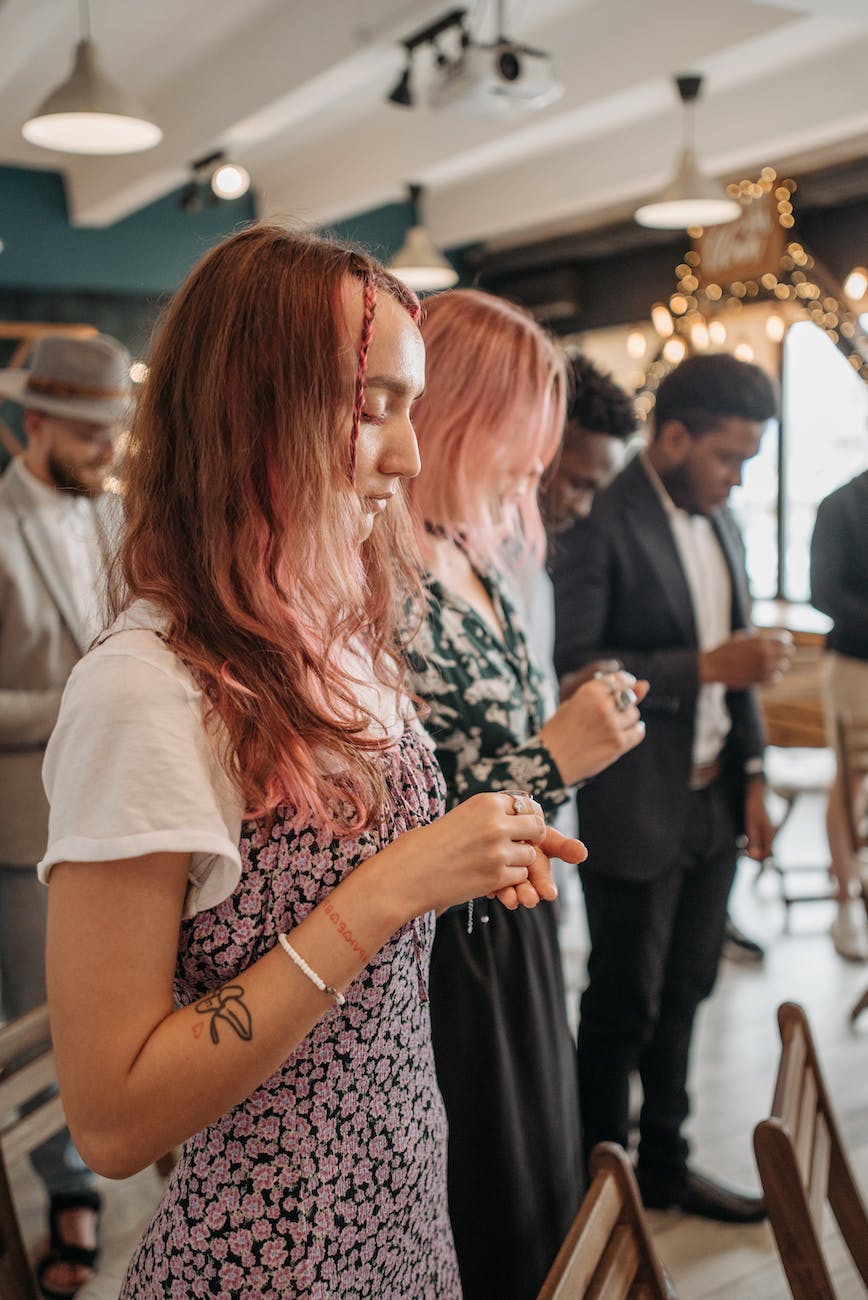
Photo by Pavel Danilyuk on Pexels.com

There is experiential spirituality felt in a healthy community that emanates empathy, love, and kindness. Community is not only felt in a relationship with others, a higher deity but also in a commune with nature and the world around you.

It is walking in nature and bonding with people at the same time that makes the Camino such a magnet for spiritual seekers. This year will again register a record number of pilgrims on the path.

The celebration of the communal ritual

For this reason since ancient times humanity has embedded the celebration of community in religious rituals. Communal meals or rituals involving the sharing of food and drink can be found in ancient Greek and Roman religions, where a communal meal with the gods was seen as a means of establishing a bond or connection.

The Jewish Passover festival and the holy communion ceremony in Roman Catholic, Protestant, and Orthodox religions are celebrated as rituals of sacrifice.

The word “commune” has its roots in Latin, derived from the word “communis,” meaning “common” or “shared.”

In our modern era, we are seeing an explosion of “sharing” and “connection” on social media across continents – the result of a human yearning. Urban lifestyle without connection to natural surroundings and friendly neighbors increasingly leads to individuation, self-isolation, loneliness, and mental health issues.

Online “tribes or families” can never be a replacement for the physical community where there is unconditional physical contact – the holding of hands, a hug, and a kiss on the cheek. This became acutely obvious during the recent pandemic.

Ultimately we all yearn to be seen, to be heard, and to be validated in a positive sense. We want to belong and in that belonging, we find purpose and meaning.

Reino Gevers – Author – Mentor – Speaker

One more thing...My new book “The Turning of the Circle: Embracing Nature’s Wisdom for Purposeful Living” can now be ordered on Amazon and where all good books are sold. You might also find my other books “Deep Walking for Body, Mind and Soul” and “Walking on Edge: A pilgrimage to Santiago” of interest.

Leave a comment

Filed under Camino de Santiago, mental health, mental-health, Uncategorized

Beyond Religion?

Membership of Christian churches and attendance of services is falling dramatically in many countries. But does that mean that more people are becoming agnostic, atheist or have lost their belief in a God or the divine?

On my current pilgrimage walk on the Camino de Santiago in northwestern Spain, we passed through several villages and towns on a Sunday. All these beautiful and ancient temples of worship, some dating back to Celtic times and early Christianity, had their doors shut.

One church did happen to be open but a man shooed us pilgrims away, making it clear that we were not welcome to have a look inside. I do normally enjoy sitting in these sacred places, meditating and feeling into the powerful energy fields that they emanate.

It hit a sore point to be rudely turned away. It symbolized for me everything that has gone wrong with conventional religion, fixated on empty external ritual, and controlling doctrine.

Churches and temples should be open for people of all denominations as long as they show respect, giving everyone sanctuary seeking a quiet space from the noisy and distractive pull of the external world.

For centuries religions from all the major faiths have vilified, ostracized, burned at the stake and shamed those that did not conform or belong. At the same time the hypocrisy of the clergy regarding sexual abuse, financial misdemeanors and interference in politics is laid bare like a festering open wound.

Jesus never had plans to establish an institution or a church. His criticism of the Pharisees, the clergy, and their hypocrisy was especially directed at those leaders burdening the faithful with strict rules and regulations while showing little love, mercy and compassion to those in need.

There is a saying that religion is for those who fear hell while spirituality is for those who have been there. On my more than a dozen walks on the Camino I have met countless people who have gone through the hell of losing loved ones, confronted life-threatening illnesses, the dark holes of depression, financial ruin and relationship breakdown. What I can say about all of them is that these life-changing events made them come out stronger and forced them into deep introspection on the purpose and meaning of life.

Experiential spirituality is a process whereby the shutters of the soul window are gradually opened up. It is a feeling of connection with the divine, and the mystery of creation. The great scientist Albert Einstein once said that the religion of the future will be cosmic in nature. 

“The most beautiful and deepest experience a man can have is the sense of the mysterious. It is the underlying principle of religion as well as all serious endeavor in art and science. He who never had this experience seems to me, if not dead, then at least blind,” Einstein is quoted as saying.

The Dalai Lama, the spiritual leader of Tibetan Buddhism, encourages individuals to go beyond the superficial differences among religions and recognize the deeper essence of spirituality and morality that can be found in all faith traditions. 

The fundamental principles of compassion, love, and ethics are not limited to any particular religious tradition or belief system. These principles, the Dalai Lama believes, are universal.

Among the hundreds of thousands of people who walk the Camino each year there are devout Catholics and people of all faiths but also manyspiritual seekers asking the age old question:

Where do I come from? Where am I going? What am I doing with the rest of the days of my life?

Reino Gevers – Author – MentorSpeaker

Leave a comment

Filed under Camino de Santiago, deep walking, self-development, Uncategorized

Doing or Being?

Some years ago I was not in a very good place stuck in a dysfunctional relationship and a stressed-out job. My thoughts revolved around starting to live at some point in the distant future. A friend who took pity on me advised me to walk the famous pilgrimage route, the Camino de Santiago in northwestern Spain.

Like many first-time walkers on the Camino, I was obsessed about reaching my destination at a certain time in order to secure my place in a bunk bed in a pilgrims’ hostel. The Camino is in so many ways an analogy of life which is why it has become such a popular destination for modern-day spiritual seekers.

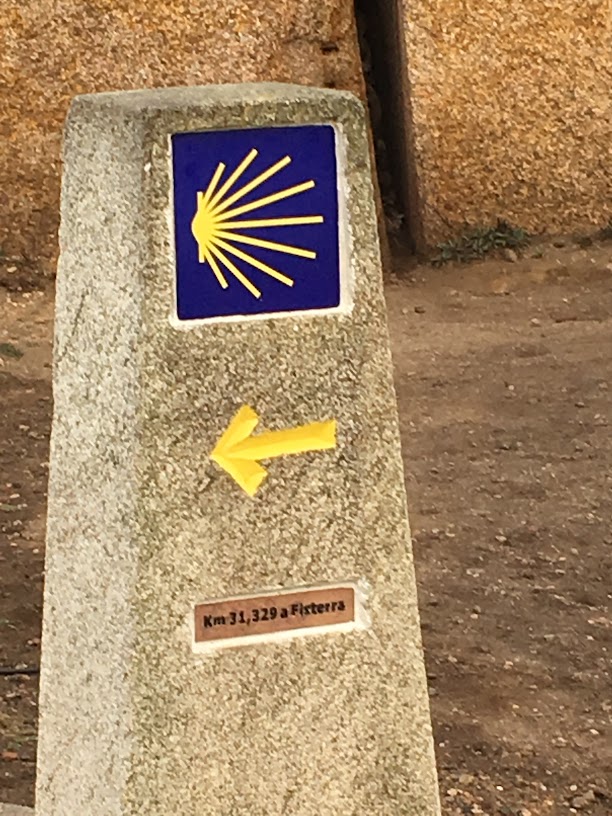
Walking too fast and missing the waymarker

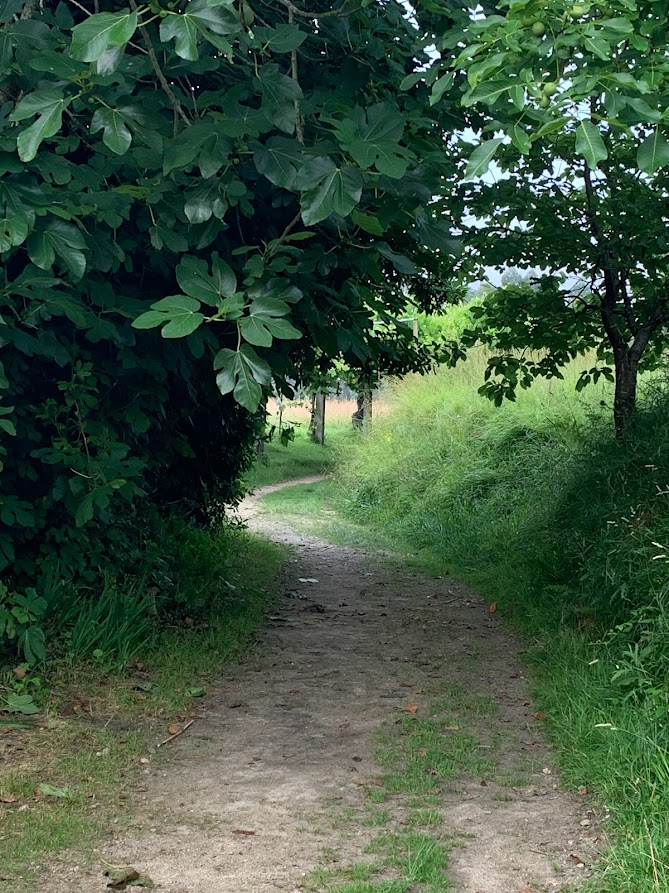
With a backpack much too heavy, poor-quality hiking boots, and a hurting foot I was battling both physically and emotionally. There is a saying that if you walk the Camino like a hiker with physical intent it will force you into humility. While walking too fast, I missed the waymarkers and got horribly lost. At one point I had to seek refuge in a grotto during a heavy thunderstorm in the Pyrenees mountains, far off my route.

How many times in life does the universe send warning whispers that we have missed a waymarker and are on the wrong path? How obsessed are we with things we think we need but insist on keeping them in our backpack?

Forced to go much slower, I gradually felt my senses reawakening to the magic of the moment. I started inhaling the aroma of wild thyme, rosemary and oregano. I added mint to my water bottle. A singing blackbird followed me for part of the way. I befriended stray dogs and cats and met wonderful people who are still friends today. For the first time in many years, I felt an aliveness and vibrancy in my body.

Trapped in doing rather than BEING

Over the years, I’ve observed other pilgrims going through the same process. Hikers would pride themselves on the number of kilometers they had done that day. People doing the route on a bicycle would go into tunnel vision, oblivious to the sights and sounds around them. If you are trapped in the rat race of doing rather than BEING it is difficult to push the reset button overnight. At the end of the day, slow and mindful walkers would converse on the magical experiences they had that day while those in a race would look at them in disbelief.

So much of our lives are wasted carrying the weight of the past, and living in some distant future working for time-off at the weekend, the annual vacation, and the years when we can start living when retiring from a job we always hated. When the day finally comes, we live the final years of our life in regretful grumpiness of what was and is no more.

It helps to train your awareness that life is finite and that you will die one day. With your last breath, you will leave this earth into formlessness. You won’t be taking any of your precious earthly possessions with you. All that remains will be consciousness.

So you might as well stick around a little longer and enjoy the moment. Practicing mindfulness is ideally done in the stillness of nature.

  • Focus your attention on your breath. Observe your thoughts and sensations without judgment. By consistently practicing mindfulness, you can cultivate a heightened sense of awareness and presence in your everyday life.
  • Engage Your Senses: Pause and notice the sights, sounds, smells, tastes, and physical sensations around you. Fully immerse yourself in the present moment by bringing awareness to the details of your sensory experiences.
  • Slow Down and pay attention: Challenge yourself to slow down and be fully present in each moment. Whether you’re eating, walking, or engaging in any other daily activity, do it with intention and attentiveness.

Reino Gevers – Author – Mentor – Speaker

One more thing...If you have found this article interesting you might want to subscribe with the “follow” button above or recommend my FREE weekly Blog to friends and family. My books can be ordered at all places that sell good books in both paperback and kindle.

Leave a comment

Filed under Camino de Santiago, mental health, mental-health, self-development, spirituality

Life is not meant to be easy

“It’s the difficult years that make you ready for a phenomenal life.”
― Hiral Nagda

Our culture is obsessed with youth, happiness, and distraction. Much pain and suffering are caused when we compare ourselves with the “wonderful” lives most people seem to be leading when we read their posts on social media. Very few people admit publicly that they are going through a rough time.

Like the law of nature’s seasons, life goes through cycles of birth, maturity, decay, and death. Conflict, suffering, pain, problems and difficulties are as much part of life as bliss, joy, happiness and abundance.

Our ideas of suffering and pain stem much from religion. Most church-practiced Christianity, today has lost its way into an empty ritual. The earliest of Christian, Buddhist, Taoist, Judaic and other teachings were rooted in an archetypical reality and experiential spirituality.

Moving away from empty ritual

Post-reformation Christian teachings particularly emphasize the inherently “sinful” ways of man with Jesus having to sacrifice himself on the cross for the ultimate salvation of all of mankind. Unfortunately, it has led to some denominations and religions causing incalculable harm to the self-worth of many an individual with their definition of “sin” fixated on how to behave and what to believe.

In the archetypical and mystical traditions, the cross itself is deeply symbolic linking life on earth with the non-physical heavenly dimension. The above and below, the left and the right conjoined in the center signify the number five in numerology. The number 5 in the biblical sense symbolizes God’s grace, goodness, and favor toward humans. It is mentioned 318 times in the bible. In Judaism, there are five books of the Torah and the commandments were written five each on two tablets.

The deeper meaning of the crucifixion

The image of Jesus’ death on the Cross in a metaphysical sense represents the dying of personality and ego consciousness attached to form and the transition into Christ-consciousness of the immortal, the dissolving of the physical body into the resurrected spiritual body. It is a powerful image of a complete cleansing of the ego mind during suffering.

It is during these “flat-on-the-ground” moments, in the complete surrender of the mind that the gateway to the soul is ripped wide open. We are forced by the pain, the suffering, and the despair into deep introspection. Procrastination, lethargy, and comfort zones inevitably lead to stagnation, decay, and melancholy fixation on what was and is no more.

The Camino de Santiago: An analogy of life

The ancient pilgrimage route, the Camino de Santiago in northwestern Spain, has become so popular in recent years because more and more people are seeking a new spiritual truth. The 500-mile route traversed by pilgrims for centuries is very much an analogy of life. In the solitude of lonely walks, the climbing of mountains, and the physical and emotional pains experienced on the route many a pilgrim – after experiencing the trauma of divorce, loss, health crisis, or job burnout – finds liberation from all attachment and new purpose and meaning while walking. Sometimes the revelation happens on the path, sometimes months after the walk.

Leading French thinker and philosopher Frédéric Gros writes that “walking is exploring the mystery of presence. Presence to the world, to others, and to yourself… You discover when you walk that it emancipates you from space and time…”

Abraham Lincoln is quoted as saying: “I am a slow walker, but I never walk back.”

You are passaging your path on the Camino of life “paso a paso” – step by step. On this path, you will be experiencing bad days and good days, realizing in that moment of crisis when you feel lonely, tired, and exhausted that “this too shall pass.” Ultimately you will be losing the fear of death when form passes into formlessness.

Reino Gevers – Author – Mentor – Speaker

One more thing...If you have found this article interesting you might want to subscribe with the “follow” button above or recommend my FREE weekly Blog to friends and family. My books can be ordered at all places that sell good books in both paperback and kindle.

1 Comment

Filed under Camino de Santiago, mental health, mental-health

Finding purpose with deep walking

Living a modern sedentary lifestyle glued to a screen rebels against our very human nature that is designed from the dawn of mankind to walk. Homo Sapiens has populated the planet walking, which is today one of the most underrated, yet most effective ways of keeping body, mind, and soul healthy.

A body of research has meanwhile confirmed the many positive effects only a moderate amount of walking per day can positively impact your health.

The Harvard Nurses’ Health Study, which has been tracking the health behaviors of more than 200,000 women for more than three decades, has revealed that walking for an average of 30 minutes a day can lower the risk of heart disease, stroke, and diabetes by 30 to 40 percent.

Walking at this rate can also lower the risk of breast cancer by 20 to 30 percent.

A 2018 study by UCLA researchers has found that a sedentary lifestyle is also bad for mental health.

The researchers did brain scans of 35 people aged 45 to 75, finding that those who sat the most had more thinning in an area of the brain involved with memory, a change that may be linked to cognitive decline and dementia.

Living a sedentary lifestyle surrounded by things created by the “head mind” will never make you feel the same sense of aliveness and awareness that you will feel through the intuitive “heart-mind” when walking in nature. The universe, or God, finds expression through nature.

In my latest “Living to BE” podcast I discussed with my pilgrim friend Kevin Considine the many life lessons deep pilgrimage walking has to offer. Kevin has walked more than 14,000 kilometers on ancient pilgrimage paths since he retired eight years ago.

Scientists have found that exposure to blue spaces such as lakes, rivers, and the sea are particularly beneficial to mental health.

A team from the Barcelona Institute for Global Health (ISGlobal) undertook the first international review of 35 studies on “blue spaces.” They concluded that outdoor blue spaces not only reduce stress levels, but also improve general well-being.

Crossing the Pyrenees mountains from France to Spain on one of my pilgrimage walks

The difference between a hike and a deep-walking pilgrimage experience

One of the most popular paths is the Camino de Santiago in northwestern Spain, which has been traversed by pilgrims for centuries. In recent years, it has been rediscovered by tens of thousands of people from all walks of life as a path of healing and self-discovery.

Some of the world’s most creative and talented artists, including Johann Sebastian Bach, William Blake, and Jean-Jacques Rousseau explored their inner worlds on long walks, acutely aware of the positive effects in opening the senses to nature.

The conservationist John Muir, tormented by nightmares and anxiety after nearly going blind in a work accident, immersed himself in nature on a 1,000-mile journey on foot from the banks of the Ohio River to the Gulf of Mexico.

On my first pilgrimage walk to Santiago, I too was tormented by a dysfunctional relationship, a stressed-out job and childhood trauma that I had suppressed for many years. Any amount of therapy did not have the same effect as facing those inner demons on long, lonely walks of solitude in nature. I have described in detail my journey in my two books: Walking on Edge and Deep Walking for Body, Mind and Soul.

Experiential spirituality at its best

The universe speaks to us in many ways but nowhere more than with such clarity when body, mind, and soul are completely immersed in nature and not distracted by the pull of countless things in our daily, modern lives. It is experiential spirituality at its best.

A particular fascination with the Camino de Santiago in northwestern Spain is that these ancient pilgrimage paths have been walked by pilgrims for many centuries. It is marked by numerous crosses and symbols left by the pilgrims of old, many of whom did not survive the long trip. I would concur with my pilgrim friend Kevin that the route is filled with the spirits of pilgrims who have gone before, who guide us on the way.

Many a person has started the more than 800-kilometer walk from Jean Pied de Port in France to Santiago de Compostela as a hiking or sporting endeavor but ended the walk as a pilgrim. It is a part of the Camino mystery. It has a different impact on every individual, awakening channels to the soul that you had never dreamed possible.

Reino Gevers – Author – Mentor – Speaker

One more thing...If you have found this article interesting you might want to subscribe with the “follow” button above or recommend my FREE weekly Blog to friends and family. My books can be ordered at all places that sell good books in both paperback and kindle.

Leave a comment

Filed under Camino de Santiago, deep walking, exercise mental health

Lessons from the Camino

Walking the Camino in northwestern Spain and Portugal this year was in many respects very different from previous walks on this ancient pilgrimage path that has been massively impacted by the repercussions of the pandemic.

First and foremost the Camino has lost nothing of its magic that has become for hundreds of thousands of modern-day pilgrims, a path of introspection, healing and transformation. About half as many people arrive at the destination in Santiago de Compostela compared to normal years. The good news is that with good planning you can still walk it!

We walked from Porto in Portugal to Santiago, alternating between the coastal and central routes, but booking our accommodation two to three days in advance as most pilgrims’ hostels are still closed and will possibly only reopen next year. Unless you are walking the less popular routes cheap accommodation is very limited for pilgrims with a limited budget.

Can you still stay in a pilgrims’ hostel?

Staying overnight in a pilgrims’ hostel is so much part of the Camino experience where stories are shared over a meal cooked together and often lasting friendships are formed. Although a little more expensive than the municipal albergues, some of the better private albergues are a definite must.

We had one of our most enjoyable evenings with fellow pilgrims at Casa da Fernanda with dancing, singing, great food and good conversations. This was all on a donation basis. Certainly one of the most beautifully run private albergues is the La Cala Pilgrims Inn in Oia run by Tanya Valdes. Tanya is a lovely soul from the U.S. who moved to Spain, fulfilling a heart wish in serving pilgrims in her beautifully renovated albergue, overlooking the monastery in Oia.

The chilling effects of the pandemic

Having had to break off last year’s walk on the Via Francigena in Italy because of another lockdown, walking the Camino Portugues was the first longer walk since 2019. It was at times a chilly experience walking through the small villages where public notice boards bear portraits of locals who have died from Covid and bypassing dozens of closed pilgrims’ hostels, restaurants and curio shops.

Families in the local villages along the Camino route have for centuries earned their income from passing pilgrims and obviously many small businesses have not survived the pandemic. Some had invested all their funds in the expectation of a boom on the Camino for this year’s holy year.

The revival of the Camino pilgrimage in modern days can be largely attributed to Don Elías (1929-1989), the parish priest in O Cebreiro near Lugo. Up to the early 1980s only dozens of pilgrims at the most walked the Camino. But Don Elías had a dream that one day tens of thousands of pilgrims would again be walking the Camino. According to the story Don Elías drove across the whole north of Spain in his old  Citroën packed with tins of yellow paint, marking arrows leading to Santiago.

We were very much aware that this year we were also walking the Camino on behalf of the many pilgrims from other countries who could not walk the path this year because of Covid-related travel restrictions. The Camino can become an addictive ritual and many walkers on the Camino have been doing it several times over. Many pilgrims, who have been unable to walk this year, have been reliving their past walks in the popular Camino forums and social media groups.

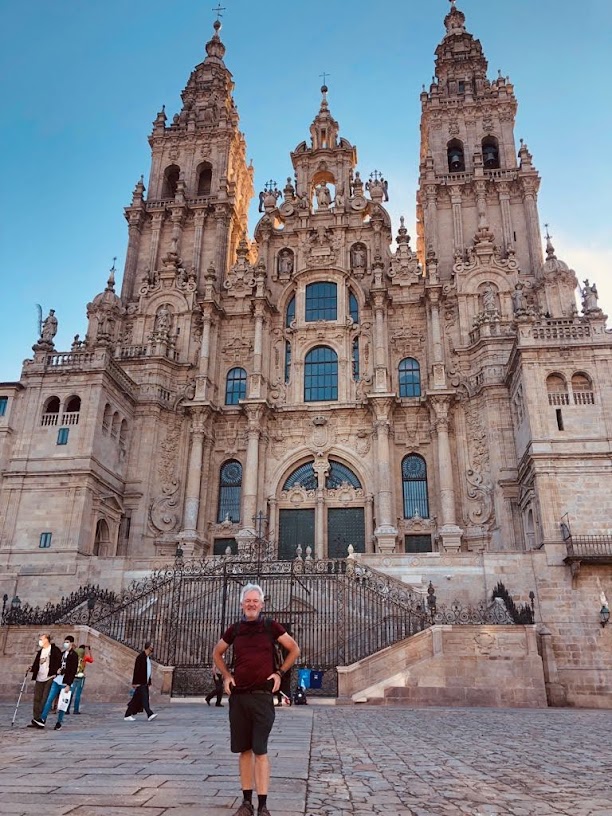
Arriving in Santiago

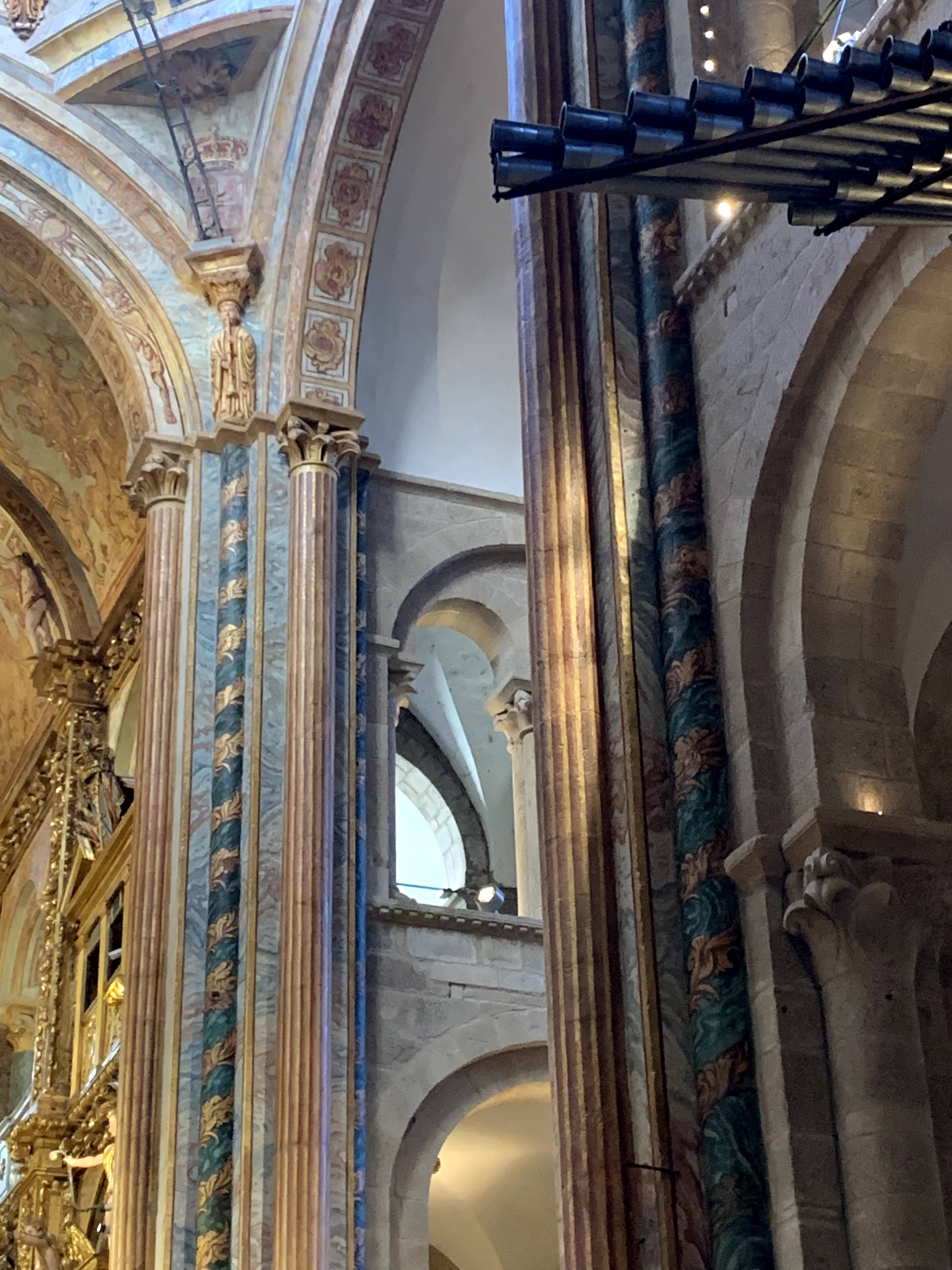
Arriving at the destination in Santiago is always a special occasion. The Cathedral can be seen in all its glory with most of exterior scaffolding removed after years of painstaking renovation work. The interior is especially stunning: Based on the candle-light from medieval times the naves, transept and the Pórtico de la Gloria have been fitted with new lighting. Social distancing still applies and the number of visitors are limited.

The journey begins after the journey

Every journey at some point has to end. You return home but you will not be the same person. A pilgrimage on the Camino takes months to digest. The real transformation begins at home. Life takes on a different meaning when you are in a different rhythm and feel connected to your higher-self. As Marcel Proust is quoted as saying: “My destination is no longer a place, rather a new way of seeing.”

Reino Gevers – Author – Mentor – Speaker

One more thing...If you have found this article interesting you might want to check out our courses, retreats and books and ask others to also subscribe to this Blog.

2 Comments

Filed under Camino de Santiago, mental health, mental-health, spirituality, Uncategorized

Your sacred path

All the people you have met throughout your life and the experiences you have had up to this moment in time have made you into the person who you are today. Yet, there still might be that inner voice whispering that there is more to life than you have been taught or have learned.

Caroline Myss is quoted as saying that “as a vital part of a larger, universal spirit, we each have been put here on earth to fulfill a sacred contract that enhances our personal spiritual growth while contributing to the evolution of the entire global soul.”

Connecting with the global soul

Our individual souls are connected to a global soul comprising all life on the planet. Each person has a unique destiny and soul purpose and it’s not about what kind of job you are doing or the things you own. These might be a manifestation of what you become in the becoming of who you really are.

It is almost essential to find alone time for contemplation and inner reflection and to walk your sacred path alone. The urge to walk a pilgrimage first starts as a whisper and becomes ever more louder. The need to go on this soul adventure is sometimes met with strong resistance by the loved ones or family members around you. They will sense that you are in a process of shifting your consciousness and will confront you with all sorts of arguments to dissuade you from walking.

The universe will test your willpower

In a way it is the universe testing your willpower but the sad truth is also that most people are too afraid to make the changes necessary to improve their lives. Family members or partners want you to stay in the tribe and share the same beliefs, mannerisms and habits. Often they will be projecting their own fears onto you if you decide to go on a journey of untrodden paths. Partners in this way often block each other instead of lending support and encouragement to the other.

On the Camino Aragonese between Jaca and Puenta La Reina, Spain

In a few days time I will start my 14th pilgrimage walk, walking for the second time from Porto in Portugal to Santiago and then to Cabo Finisterre, the westernmost point of the Iberian Peninsular. Each walk has been different, and unique. Looking back these walks have proven to be truly transformational not only in the way they have led me in making major changes to my external life but what has happened on a spiritual level. My two books on the Camino in essence tell this story that began in early 2007.

When I served in a pilgrims’ hostel as a volunteer in 2019 I had the opportunity of literally talking to hundreds of pilgrims from all walks of life and nationalities on what motivated them to walk this ancient path that at times can be truly challenging both emotionally and physically.

Why do people go on a pilgrimage walk?

Some people start the Camino as a sporting adventure that then turns into a spiritual journey.  An American pilgrim I walked with some years ago said to me: “If you don’t approach the Camino with humility it will humiliate you.”

The Camino is telling you that this journey is not about accomplishing something but in un-becoming from everything that you thought you were and touching that place deep in the soul who you are truly meant to be.

Is the Camino part of the bigger journey of humanity seeking a common spirituality that transcends the boundaries of religious dogma?

The Camino is an analogy of life

The Camino is in many ways an analogy of life. If you can deal with the roller-coaster of the walk’s trials and tribulations, you will be steeled for whatever challenges life throws at your feet in the acceptance of the impermanence of all things.

I’ve heard stories from pilgrims who have suffered terrible personal hurt and tragedy. Others were walking while defying a life threatening medical diagnosis or who had just survived cancer.

Experiential spirituality reveals itself in helping and supportive hands, in the recognition of fellow souls going through tough trials and tribulations. There is a deep sense of that one truth that we are all one humanity.

Reino Gevers – Author – Mentor – Speaker

One more thing...If you have found this article interesting you might want to check out our courses, retreats and books

Leave a comment

Filed under Camino de Santiago, deep walking, Pilgrimage, self-development, spirituality

Light from a dark age

It was a “dark age” in the western Europe of the 13th century when pandemics, population decline and economic degradation prevailed. Most people had moved into villages and towns sharing crowded rooms with family members and livestock. With little or no sanitation or semblance of hygiene the stench would have been unbearable for sensitive modern noses.

The exodus from the countryside was exacerbated by repeated crop failures caused by the Little Ice Age triggered by volcanic eruptions and changes in Arctic ice cover. With temperatures dropping for centuries this meant that the winters were particularly long and harsh.

Periods of crisis and challenging external circumstances sometimes force humanity into introspection with the dark ages having brought forth some of the greatest Mystics at the forefront of an individual inward-looking spirituality. The popes and bishops were meanwhile offering little comfort to ordinary people, preoccupied with political power struggles and worldly pleasures.

Pilgrimage walks to Santiago de Compostela

During these times pilgrimages to Santiago de Compostela became popular as an inner journey of penance, spiritual rebirth and renewal. The modern-day pilgrim on the Camino is in many respects no different. Spirituality as opposed to religious doctrine is by far the primary motivation, based on my own research and conversations with hundreds of pilgrims on my more than dozen walks on pilgrimage routes in northwestern Spain.

The wise teachings of the 13th-century Dominican monk Meister Eckart (1260-1328), Catherine of Genoa (1447-1510) and Hildegard of Bingen (1098-1179) are timeless and more topical than ever during these pandemic times. They were the eco-warriors and holistic healers of their time, addressing issues of personal health, nutrition and the environment.

It took the disruption of a global pandemic to remind us that we can be exposed overnight to entirely new circumstances beyond our control. Life can be extremely fragile and uncertain. The mental health repercussions resulting from isolation and lockdowns are only gradually coming to the fore.

A formula for a life of bliss

The Mystics are clear on how to lead a life of bliss. Meister Eckart describes at least five stages of evolution in elevation of consciousness to the “new” man – the “birth of the son” or “birth of God” in the soul. The entire purpose of life he describes as the journey to self-realization and meaning:

  • Contemplation and meditation
  • Doing what is right and acting accordingly
  • Dedication and Love of God
  • Recognition and Differentiation
  • Alignment and surrender of ego

All these Mystics did not retreat to an isolated monastic lifestyle but were engaged in the world. Catherine of Genoa gave selfless service to the sick while at the same time serving as director and treasurer of a hospital. Hildegard of Bingen was engaged in many fields including religion, medicine, music and cosmology, At the same time she was a mentor for many famous personalities of her time.

The common thread is that we are one humanity and that a life of service and dedication for the betterment of all provides solace to inner turmoil during times of crisis.

Reino Gevers – Author – Mentor – Speaker

One more thing…

If you have found this article useful please share to spread the message. I’ve also recently compiled brand new online courses that you can download onto your computer or smartphone on ways of how you can transform your life on multiple levels. Also check out the recent reviews of my book “Deep Walking for Body, Mind and Soul.

Leave a comment

Filed under Camino de Santiago, spirituality, Uncategorized

Space and time

Day 5: Via Francigena – Siena to Monteroni d’Arbia

When observing the Siena Cathedral and other architectural highlights of the 12th and 13th centuries on the Via Francigena it comes to mind that people in medieval times felt a strong connection between the physical and the spiritual.

The cathedrals were an expression of faith with everyday life closely intertwined with religion.

Records from the Siena Cathedral show that construction started around 1226 with the transportation of black and white marble, probably for the construction of the façade and the bell tower. The craftsmen who started the intricate works of art inside and outside the building often did not see their masterpieces completed during their lifetimes, yet put all their energy and creativity into the project.

Head mind and heart mind

Along the path to industrialization and the material comforts of modernity something has gotten lost with the disconnect from physical and soul needs.

The head mind is preoccupied with the distractions of the 10,000 things of short-term gratification, and emphasis on youthful vigor and performance-driven culture. It is the breeding ground for greed and egocentric behavior, the results of which we can see in the destruction of natural ecosystems, irrespective of the consequences for future generations.

The heart-mind is timeless and rooted within a multi-dimensional perspective of unity between the physical and the spiritual. It is restorative rather than exploitative. There is mindful awareness of life within a complex matrix of interdependency.

Leaving Siena and looking back the skyline is still dominated by the Cathedral on the hill. The walk itself takes the pilgrim through open, expansive countryside with unlimited views, especially of the old walled barn complex in La Grancia di Cuna, one of the most impressive agricultural buildings in the Tuscany landscape. From the 12th century it offered pilgrims and merchants on the Via Francigena accommodation and food.

The entire installation is walled with two towers facing the southern entrance. The main entrance leads to an L-shaped square from where mule packs could reach the upper floors of the barn.

Reino Gevers – Author. Mentor. Speaker

One more thing…

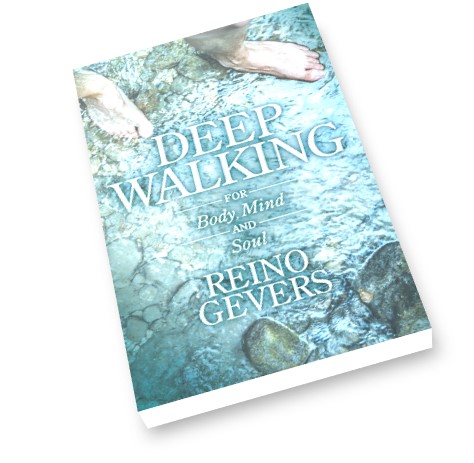
You might want to check out my new book “Deep Walking for Body, Mind and Soul” released as a paperback by Morgan James Publishing on August 11, 2020. It has some valuable tips on creating happiness and boosting your vibrational energy on many levels. You can order it at all major outlets such as Amazon, Barnes and Noble or in my own store.  Check out the latest five-star reviews on Goodreads.

This image has an empty alt attribute; its file name is bookcovers_sideview.jpg

“A breathtaking, captivating, transformative walk,” – Tom Dutta, Canada

“The book reminded me of my own journey in life I am walking and how bringing stillness to my busy life and mind is essential.” – Karin, France

“The book compresses on its slim 190 pages an extreme density of life wisdom.” Christina Germany

Leave a comment

Filed under Camino de Santiago, spirituality