Category Archives: Pilgrimage

Walking the valley of death

There is a section of the Camino Frances in northwestern Spain described as “the valley of death” because it is a flat, monotonous plain between the cities of Burgos and Leon. Many pilgrims prefer to skip the section by taking the bus because of the searing heat and loneliness.

Monotony and loneliness is a state of mind

Those pilgrims who have walked the “Meseta” section, however, describe it as a particularly crucial part of their Camino experience. Monotony and loneliness is, after all, a state of mind.

The Meseta and some of the other boring sections of the Camino, like the busy motorways on the coastal route of the Camino del Norte, force the pilgrim into introspection, and into acceptance of self.

IMG_0994

Meeting the shadow

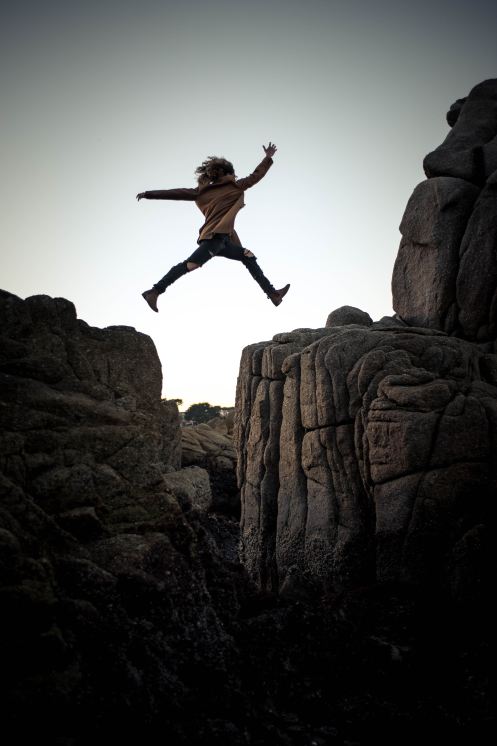
It is the part of the Camino where the pilgrim meets face to face with ego, distorted images and the shadow of the subconscious mind.  Inevitably at times he/she falls flat on the ground emotionally.

“If you don’t accept the Camino with humility, it will force you to become humble,”  an American pilgrim told me on my first Camino some twelve years ago. It was a warning I always remembered after suffering from blistered feet, getting lost, carrying too much unnecessary clutter and going through an emotional roller-coaster.

The “flat on the ground” moments

Especially, if you start saying to yourself that “this Camino thing is no big deal,” it will inevitably present you with another lesson to learn.

We have all experienced those moments of “lying flat on the ground” after losing a loved one through death or divorce, financial disaster, a medical diagnosis, job loss or another major life-changing event that turns us into a different person. Who we were before we are no longer. In a way, it is experiencing the death of the old self.

In such moments the big challenge is to avoid falling into the trap of the blame-game and accepting the situation with humility. Those “flat on the ground” times are the precursor to a new stage of spiritual growth and emotional growth. We end up so frustrated that we finally take the action necessary. The alcoholic finally seeks therapy. We leave a dysfunctional relationship and a job that has depleted all our energy. And, we sever ties with people and situations that did us no good.

In the mystical Christian tradition, the story does not end with the death on the cross but is the path leading through the valley of death to resurrection.
Reino Gevers – Author, Mentor, and Consultant

https://www.reinogevers.com

                                             applepodcast         


Leave a comment

Filed under energy, happiness, lifestyle management, Pilgrimage, psychology, spirituality, Uncategorized

Escaping the treadmill

On the Camino recently I met an Italian pilgrim who has walked the northwestern Spanish pilgrimage route several times. He explained to me why he just couldn’t stop walking.

“I was feeling like part of this big machine that just keeps going.  I realized. If you want to know who you are, you have to get out of this big machine,” he said.

It’s one of the reasons a growing number of people are walking the Camino. There is a deep spiritual yearning for the discovery of the true self, of looking within. Treading the treadmill is spending most of your life in the accumulation of things. After a while, things lose their shine. The urge is to buy more things, which for many people means a never-ending spiral of debt and frustration.

When we are treading the treadmill of the big machine there is little time for reflection as we hurry through life instead of aligning ourselves with life. For me walking the Camino each year is taking time out to digest, to reflect and to cleanse body and mind.

Why is the Camino so different than an ordinary hike?

But why not walk the Appalachian Trail in the eastern United States or the Bruce Trail in Canada or some of the many other famous nature trails?

The many conversations, I have had with the pilgrims passing through the pilgrims’ hostel in Najera the past two weeks,  however, confirmed my impression that the Camino is in so many ways different than a normal hike.

The Camino works on many different subtle levels. For one thing, you are literally walking through a history book with every town and village along the Camino steeped in centuries of human architectural and artistic marvel.

A unique cultural and architectural heritage 

Najera, the little village that is the eighth stage of the Camino starting from the little French hamlet of Saint-Jean-Pied-Le-Port, dates back to Roman times, strategically located along the Najerilla river with the hilltop offering a perfect military observation area. It was the capital of the Kingdom of Navarre until it was conquered by the Muslims and then later recaptured by the Christians.

IMG_2519

         Bridge leading into the town of Najera, monastery to the right 

IMG_2438 - Copy


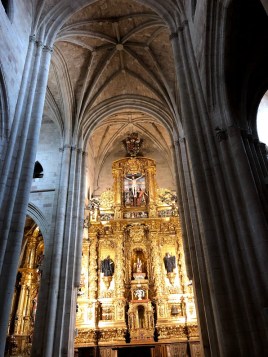
And, right in the middle of this small town of hardly 3,000 people, you will find one of the most marvelous monasteries on the Camino.

It is believed that the Camino pilgrimage path even predates the Christian era when Celtic priests celebrated ritual walks.  “I started walking the Camino as a sporting adventure and ended it as a pilgrim,”  a young man said in sharing the experience many people make on the Camino.

Celebrating the moment

A precondition to really internalizing the magic of the Camino is in the celebration of the present moment which comes after several days of walking and if you are able to avoid the treadmill trap and falling into the robot and monkey mind by constantly checking your cell phone.

It is the one big advice I would give to pilgrims starting their walk. Limit the use of your cell phone to 15 minutes a day.  So often I’ve observed people talking for hours on their cell phones while walking the Camino, robbing themselves of a truly magical experience.

Walking alone and in nature is a challenge initially. It’s about learning to accept the company of self with all its light and shadow. The feelings and emotions can at times be overwhelming but are part of the process of opening the doorway to within.

Reino Gevers – Author, Mentor, and Consultant

https://www.reinogevers.com

                                             applepodcast         


2 Comments

Filed under happiness, humanity, Pilgrimage, psychology, self-development, spirituality, Uncategorized

Camino hostels: Love them or hate them

After serving for two weeks as a volunteer in a pilgrims hostel on the Spanish Camino, I was wondering why hardly any Germans were staying overnight in the Municipal Albergue in Najera – until I coincidentally stumbled upon a comment in a popular German Camino guide book.

The description: “A hall of snorers with 90 bunk beds. Only four toilets and four showers.”

Albergues are run by volunteers

In reality, this could be said about any of the public hostels on the Camino. The places are run by mainly local volunteers. The funds for the upkeep are provided by the local municipality and donations from other pilgrims. The Albergues are usually clean but provide no more than a very basic shelter for the night in line with the pilgrimage tradition going back hundreds of years.

IMG_2494

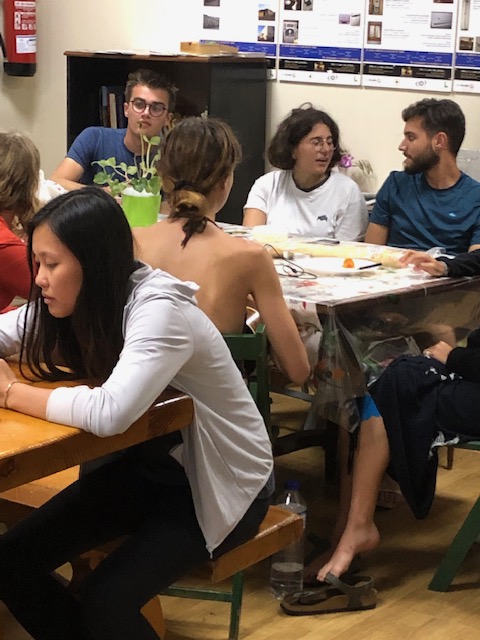
Sharing a meal in an Albergue is one of the joys of the day on the Camino 

But why go through the discomfort of sharing a stuffy dormitory with up to 90 other pilgrims, where some individuals ride roughshod over the sleeping needs of everyone else in setting their alarm clocks at 3.30 a.m and then noisily go about packing their backpack. Inevitably, there are two or three loud snorers who would keep everyone awake.

Popular Camino makes staying in an Albergue the only alternative

Sometimes there is no other choice. With more than 300,000 people now walking the Camino annually, the municipal Albergues are often the only places with beds available. Towns have had to open sports halls in the summer months to cater for the influx of pilgrims.

Such situations are real testing times for humility. What you make out of the situation in an Albergue is always a reflection of where you are at mentally.  I recall meeting a very moody and sleepy-eyed pilgrim in an Albergue last year who threatened all sorts of “warning letters to the authorities” about conditions in the Albergue. Then I noticed that her general negativity was creating an invisible wall between her and everyone else in the room.

Nothing beats the bonding spirit in an Albergue

Some pilgrims, who could easily afford better accommodation, make it a point to choose an Albergue. For, nothing beats the bonding spirit between pilgrims in an Albergue on the Camino. Meals are shared, over sometimes very intimate and emotional conversations. Blisters need to be attended to, and sometimes a doctors’ appointment has to be arranged. Impromptu singing and prayer are common on such evenings.

For low-budget pilgrims and also for those coming from countries with a poor exchange rate to the euro, the Camino would not be possible without the municipal Albergues.  The Camino is becoming more international from year to year with more South Americans and people from far-flung eastern European countries on the Path.

And, it is a joy to watch the Camino uniting people of very diverse national and cultural backgrounds. It is one of the many reasons why the Camino becomes addictive and some people walk it dozens of times.

Reino Gevers – Author, Mentor, and Consultant

https://www.reinogevers.com

                                             applepodcast         

2 Comments

Filed under Camino de Santiago, lifestyle management, Pilgrimage, psychology, spirituality, Uncategorized

A journey and its lessons

A group of tired young Russian pilgrims from St.Petersburg arrived late last night in the Municipal Albergue, or pilgrims’ hostel, in Najera.  It was the last group we registered before we concluded our 14-day term as a four-member volunteer team.

During these two weeks, we registered some 805 pilgrims who stayed overnight in the hostel.

The Camino is becoming an international experience

When I walked my first Camino in 2007,  most people walking the path seemed to be middle-aged Germans, Dutch or Scandinavian.  The pilgrims arriving in Najera were from a far more international diversity.  Apart from the Europeans, the largest groups were from Asia and the Americas.

Together with my fellow three Hospitaleros Pedro from France, Carmen from Toledo in Spain and Ebo from Argentina we were responsible for keeping the hostel clean, and catering to the needs of the between 50-70 pilgrims arriving each day.  A good part of the day we spent scrubbing bathrooms, cleaning floors and washing bed sheets.

IMG_2507

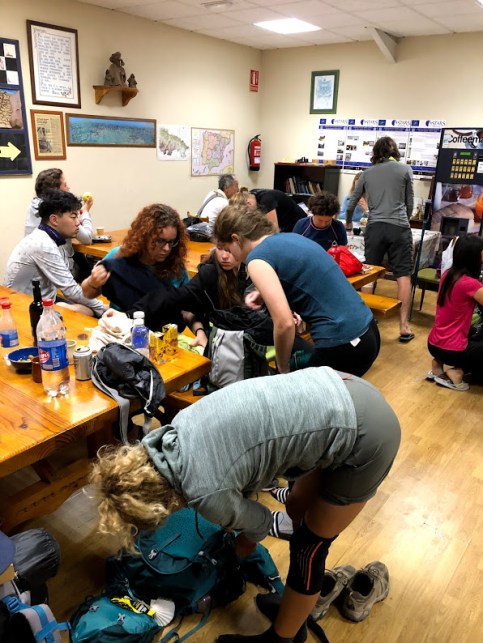
Pilgrims sharing a meal and the experiences of the day in the Municipal Albergue in Najera. Pilgrims are only asked to donate a small fee for the use of the utilities.

Najera is the eighth stage of the Camino Frances, starting in the French village of Saint-Pied-de-Port,  and taking the pilgrim on a more than 727 kilometers (451 miles) journey across northwestern Spain to Santiago de Compostela.

An adventure turns into a spiritual journey

It was a privilege to converse with many of these people and to hear their different stories and motivations in walking the path. Some people start the Camino as a sporting adventure that then turns into a spiritual journey.  An American pilgrim I walked with some years ago said to me: “If you don’t approach the Camino with humility it will humiliate you.”

The Camino is telling you that this journey is not about accomplishing something but in un-becoming from everything that you thought you were and touching that place deep in the soul who you are truly meant to be.

Is the Camino part of the bigger journey of humanity seeking a common spirituality that transcends the boundaries of religious dogma?

A test of emotional and physical resolve

When I spoke to a British man, leaving the Albergue in the morning he confided that “this very emotional journey” was much more than he had anticipated.

After a good week on the Camino, it is a real testing time for physical and emotional resolve. The Camino is in many ways an analogy of life. If you can deal with the roller-coaster of the walk’s trials and tribulations, you will be steeled for whatever challenges life throws at your feet in the acceptance of the impermanence of all things.

Reino Gevers – Author, Mentor, and Consultant

https://www.reinogevers.com

                                             applepodcast         

Leave a comment

Filed under meditation, Pilgrimage, psychology, raised consciousness, self-development, spirituality, Uncategorized

Mindful walking

Najera, northwestern Spain – Preparation for a lengthy pilgrimage walk is essential.  After eight days of walking many pilgrims are arriving at the Municipal Albergue in Najera with badly blistered feet and hurting knees.


bunkbeds

Bunk beds for 90 pilgrims in the Municipal Albergue in Najera 

Most people, who walk the Camino Frances to Santiago de Compostela, start in the French town of Saint-Jean-Pied-de-Port.  It takes the hiker up a steep climb of the Pyrenees mountains to the Spanish town of Roncesvalles.  It is a good 24 kilometer or seven to nine-hour walk. Even for trained hikers, this is no mean feat.


However, if you are wearing new boots and carrying a backpack full of unnecessary clutter, your walk will soon become a chore. The Camino is not only a physical challenge but even more so an emotional challenge. Much of the first few days of walking can rekindle old stuff you thought you had dealt with years ago. It is then comforting to know that there will always be other pilgrims walking with you, going through much of the same process.

bunkbeds.2

Getting ready for the day’s walk. The hostel has to be empty by 7.30 am latest

Three parts of the Camino

Some hikers describe the first stage of the Camino as the “path of crucifixion”, the second as the transition or the walk through the “valley of death” in the heat and dust of the Meseta between Burgos and Leon.  Several guide books describe this section as boring and recommend that the hiker skip the section by taking a bus. Most people who have walked it, however, describe it as a crucial part of the Camino that they would want to have missed. A absolutely agree.

A path of rebirth

I would describe the first two sections as the mindful preparation for the last section-the “path of rebirth or resurrection”.  It is when the pilgrim has moments of absolute euphoria, gratitude, and joy. It is the feeling of accomplishment after transmuting the old stuff into revived energy.  The three parts of the Camino however, can be experienced in some form or other each day. Getting up early in the morning after a bad night’s sleep in a crowded Albergue is a challenge where the mood can be at rock bottom.  This could all change an hour later when experiencing a beautiful sunrise on a mountain top with a bird of prey circling overhead.

Having walked the Camino more than a dozen times, I decided this year to give something back in serving as a volunteer in an Albergue or pilgrims’ hostel for two weeks.  There are between 50-70 pilgrims arriving here each day. It is an enormous privilege to hear the stories of why and how they are doing the Camino. Some are doing the path the third, fourth or fifth time. Most are walking the Camino for the first time.

It is a joy to observe people from many different nationalities and cultural backgrounds bond in this shared experience of the Camino. They mostly don’t understand each other’s language. But the language of shared experience shared meals, and shared emotional ups-and-downs are universal.

Reino Gevers – Author, Mentor, and Consultant
https://www.reinogevers.com

                                             applepodcast         

Leave a comment

Filed under Camino de Santiago, lifestyle management, meditation, Pilgrimage, psychology, Uncategorized

Go Slow To Go Far

One of the  many lessons learned walking the Camino in Spain is that you have to go slow to get far.  I must admit that I too get infected at times by the “bug” that bites many hikers on the Camino: Getting up in the early hours of the morning and racing ahead to the next town to avoid the hassle of finding no accommodation.

IMG_1014

In some of the remote towns albergues or hostels for pilgrims are rare. But on all my ten walks on the Camino, I have always found a place to stay for the night. The Spanish people are incredibly hospitable and friendly toward pilgrims walking the Camino. If worse comes to worse a sports hall or school classrooms is opened with mattresses on the floor. Villagers in the towns have even been seen offering their private bedrooms to tired pilgrims.

But the Camino is in many ways an analogy of life and you inevitably take yourself with you on a journey.  Many pilgrims take a time out from their stressed-out lives at home, and have difficulty switching to a calm, slowed-down rhythm.

And, under stress or in a hurry, you make mistakes. You go into tunnel vision and start missing way markers, making your walk that much longer than planned. You miss out seeing many of the small miracles or the messages sent by the universe on your way. You fail to pace your energy, ending up with blisters on your feet, hurt knees and back problems.

Sometimes a small talk with a villager or a word from a fellow pilgrim along the way can be an immense eye opener and blessing. I have walked several of the Camino routes more than twice and have been amazed at how much I didn’t see the first time around, and how different each Camino walk was.

Staying in the moment is one of the most difficult exercises in the hurried life of the Western mind which is preoccupied with all the fears of tomorrow and the events of the past. Will I have to sleep under the bridge? Will I be safe?  I have seen pilgrims literally fall into panic upon hearing that there was no accommodation left in the town. It is an innate fear to be in a foreign place and having no place to stay.  Others stay completely calm, trusting in the universe that a solution will always be found, laughing it off as part of the Camino experience.

I have taken this Camino experience to heart. A day can be ruined by a stressed-out, hurried mindset where one little catastrophe follows the next.  Or, you can just take one step back, concentrating on the breathing, deliberately slowing your walk by a pace or two, and then just taking it as it comes.

Reino Gevers – Author, Mentor and Consultant 

https://www.reinogevers.com


Leave a comment

Filed under Camino de Santiago, life vision, lifestyle management, Pilgrimage, spirituality, Uncategorized

States of transition

The public discourse in much of social media currently seems to alternate between two extremes with a fall-back to the nationalist hysteria of the 1930s to views expounding a free-for all liberalism. It is typical of a collective consciousness in transition and lacking direction and grounding.

Much of the western world appears to have lost its soul to the hungry ghosts seeking immediate gratification. At the same time we are seeing the outlines of an emerging Renaissance in human consciousness. Every crisis carries within it the seeds of transition and change to a new order.

mountain

A growing number of people are unhappy with the current state of things, and seekers of a new truth transmuting the dogmatism that has been imposed by rigid philosophies and religion during past generations.

Theologian and writer Richard Rohr pointedly describes religion has having brought forth the worst and the best in mankind.  Organised religion has the power of fueling the flames of fanaticism, hate and war or it can open hearts in collective prayer and ritual for the betterment of humankind.

When extreme opposites face each other off, as we are currently seeing along party political lines in the United States, each side becomes blind to the shades of grey and the humanness in the other. We stamp off people along party lines and belief systems preventing a real discourse. In a way it has become “a religious war” between opposites.

In the heated exchange between the opposites the voices of the silent masses go unheard. I do believe that most people are by nature tolerant and can intuitively distinguish between the lie and the truth – a reason  why a growing number of people are refusing to vote and are becoming alienated from organized politics and religion.

Some of the outlines of change can be seen in the fast-growing self-development industry with individual change gradually becoming collective change on a global scale.

In recent years I have met hundreds of people from all walks of life and many different countries on the Camino pilgrimage route in Spain.  About 200,000 people are now walking this ancient medieval pilgrimage route each year. I would describe many of them as spiritual seekers asking the age-old questions: Where do I come from and where am I going?

Reino Gevers – Author, Mentor and Consultant 

http://www.reinogevers.com


Leave a comment

Filed under happiness, humanity, lifestyle management, Pilgrimage, psychology, spirituality, Uncategorized

Time out: Why a pilgrimage?

Next week I will be leaving for my ninth walk on the Camino de Santiago. Its become an annual must-do-event because I am convinced that such a time-out period is essential in boosting my energy, my creativity and general feeling of well-being.

IMG_3577In our modern world our energies are constantly being depleted by countless distractions that make us forget who we are and what soul purpose we have. Worse still: We imitate “role models” hyped by mass media, making us look foolishly unauthentic.

The tradition of walking the Camino is many centuries old. In the Middle Ages, when life was cheap and short, people had a deeply ingrained fear of burning in the fires of hell in the after life. The best possible way of gaining redemption was in walking the Camino.

Today thousands of people are rediscovering the Camino as a perfect analogy of life and a fast-track course in self-development.  Here are only some of the lessons I learned on the Camino:

  • The less weight you carry, the easier your walk
  • The ups-and-downs are cyclical like the ups and downs of life
  • If you get lost you always find someone to help you
  • Be open for the miraculous often hidden in the common

Never mind the enormous health benefits. I’ve noticed that walking between 20-25 kilometers a day not only detoxes the body but also the mind. It is truly “walking things off” and getting rid of the clutter, opening the channels and the senses of hearing, smell, touch and sight.

I will keep you posted on this site.

Reino Gevers – Mentor for Leaders and Achievers – Your Health Matters

Awakening the Fire Within – key principles of health and success. Enrolling now will give you a 25 per cent discount.

NEW RELEASE: “Walking on Edge – A Pilgrimage to Santiago” available both in Kindle and paperback.

http://www.reinogevers.com

Leave a comment

Filed under exercise mental health, happiness, happiness research, Pilgrimage, psychology, raised consciousness, Uncategorized

Walking on Edge

Walking_on_Edge_Cover_for_Kindle The Camino in Spain has in many respects been a life-changing experience for me.  The lessons learned on the pilgrimage are in so many ways an analogy of life. My book “Walking on Edge”, a work of fiction, takes up many autobiographical cues and is dedicated to some of the most amazing people I have met on the Path.

For many centuries Christian pilgrims walked thousands of kilometres from the doorstep of their homes throughout Europe to the Spanish city of Santiago de Compostela, where according to legend lie the remains of one of Jesus apostles St. James. Fear of landing in the fires of hell after death was deeply entrenched in the minds of the people of the Middle Ages. The church at the time promised those folk that they and their families would be cleansed of all sin and have a wonderful afterlife in heaven if they did the pilgrimage at least once in their lifetime.

Today hundreds of thousands of people are rediscovering this ancient route as a wonderful way of self discovery and through that deep look inside, finding their own inner spirituality and soul purpose.

In my book I have changed the characters but some of those modern day miracles are based on true experience.  Yes, I am convinced that miracles are still happening, if we open our senses and look around us. For me the Camino was not one massive bolt of enlightenment striking on a hill, but the sum of many exceptional experiences over a period of several walks on different paths in Spain and France.

Since the days of my childhood I have agonised over the teachings of religion telling us to believe this or that or to follow this or that teaching. It’s all external. One major lesson I have taken from the Camino is that there is a major difference between religion and personal spiritual experience. In my book the pilgrim Chuck calls it the difference between head and heart mind. The soul path cannot be understood with rational thought and can only be felt with the heart. And, a growing number of people are saying: “Let me go out and seek an answer to why I am here and who I really am.” Through this self-recognition comes what I will call “God recognition” and what  is a very personal and individual experience.

Suffering inevitably leads us to go out looking for answers. A lot of people are getting lost and feeling left behind in the digital revolution. In some ways mankind is facing a similar dilemma as the people in the Middle Ages. Its no longer the church that rules over our lives but the information overload of countless distractions polluting our minds with clutter we don’t need.

Ronaldo was one of those pilgrims “walking things off” by going at a pace most others could not keep up with, avoiding all conversation as the emotional clutter gradually released itself, opening up space for new experience.

And it was that space, as Chuck called it “that can then be nourished with inner peace, forgiveness and compassion. You in fact are working on becoming a better human being.”

Reino Gevers – Mentor for Leaders and Achievers – Your Health Matters

http://www.reinogevers.com

“Walking on Edge – A Pilgrimage to Santiago” available both in Kindle and paperback.


Leave a comment

Filed under gratitude, happiness, meditation, Pilgrimage, spirituality, Uncategorized