Tag Archives: Camino de Santiago

Two wolves and a choice

Day 3: Via Francigena – San Gimignano to Colle di Val d’Elsa

We decided today to take the alternative route to Monteriggioni via Colle di Val di’ Elsa also known as the “crystal city” because of its high-quality glass ware.

Also simply known as Colle the town has for centuries been frequented by pilgrims on the Via Francigena. On a little hill opposite the castle in the medieval town is the 13th century convent of San Francesco where the saint’s followers would assemble for prayer.

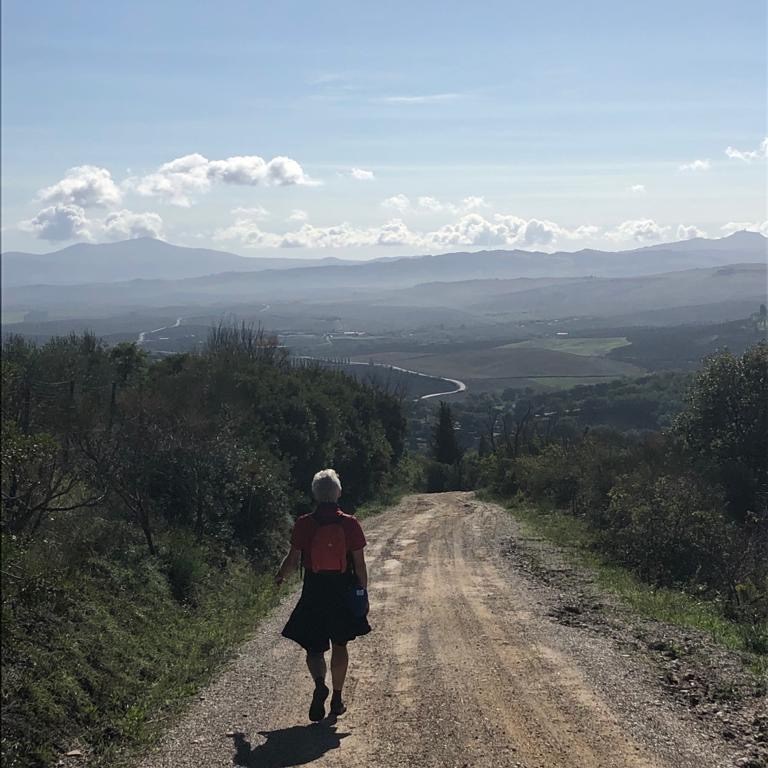
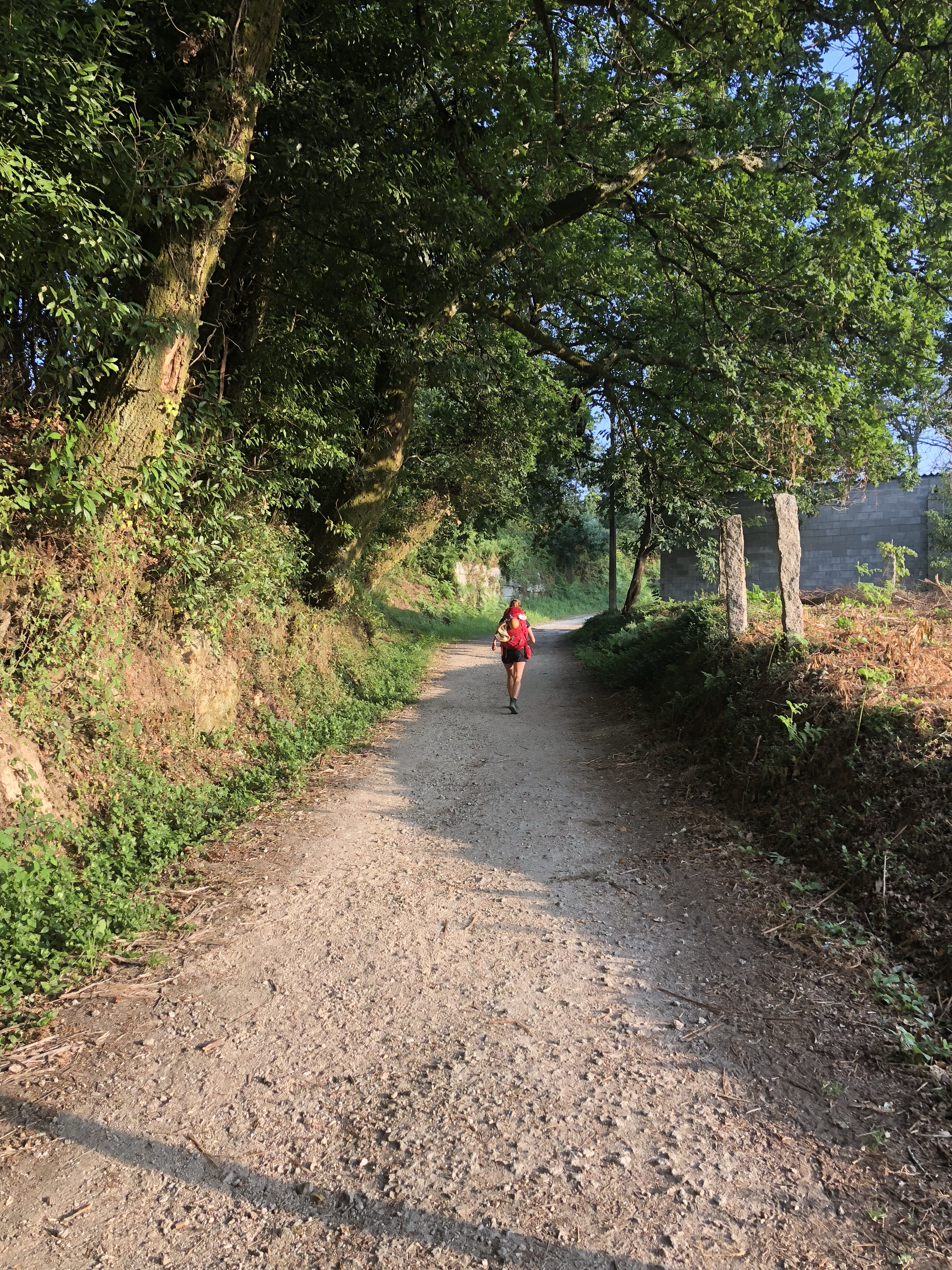
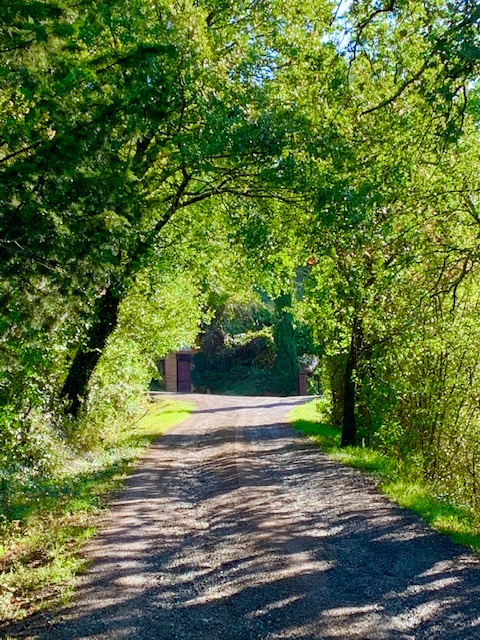
On the walk through the shady forests and hilltops kissing the clouds I was reminded of the story of how St. Francis tamed a wolf that was terrorising the population of the Umbrian town of Gubbio.

The tale of the wolf and emotions running wild

The story goes that the wolf waited outside the city gates waiting to feast on anyone foolish enough to venture outside. Francis, who had lived in the city at the time, then announced that he himself would visit the wolf in its lair. With the wolf charging at Francis he made the sign of the Cross and commanded the wolf to cease its attacks in the name of God, at which point the wolf trotted up to him docilely and lay at his feet, putting its head in his hands.

The symbolism of the story is telling. There is a similar tale of an old Indian chieftain telling his grandson the story of two wolves constantly struggling in the heart of the human:

“There is the wolf of darkness, who is full of envy, desperation, fear and anger. The other is the wolf of light. It is the wolf of love, generosity, compassion, kindness and joy.”

The grandson asks, “And which of the two wolves is going to win?”

Sighing, the old chieftain replies, “The wolf you choose to feed.”

The story from Zen Buddhism on the taming of the bull has similar connotations. It says much about maintaining control of emotions. Uncontrolled outbursts of anger have destroyed countless marriages, long friendships, and destroyed careers and business deals.

The wolf has a voracious appetite and the warning from St. Francis and the Indian chieftain is clear. We have the freedom of choice. The wolf could be tamed because St. Francis had made him aware that a life in fear, hunger and being constantly on the run was one of suffering. In the The Fioretti di San Francesco that describes the life of St. Francis, the wolf is described as bowing its head and submitting completely at his mercy.

“As thou art willing to make this peace, I promise thee that thou shalt be fed every day by the inhabitants of this land so long as thou shalt live among them; thou shalt no longer suffer hunger, as it is hunger which has made thee do so much evil; but if I obtain all this for thee, thou must promise, on thy side, never again to attack any animal or any human being; dost thou make this promise?”

Reino Gevers – Author. Mentor. Speaker

One more thing…

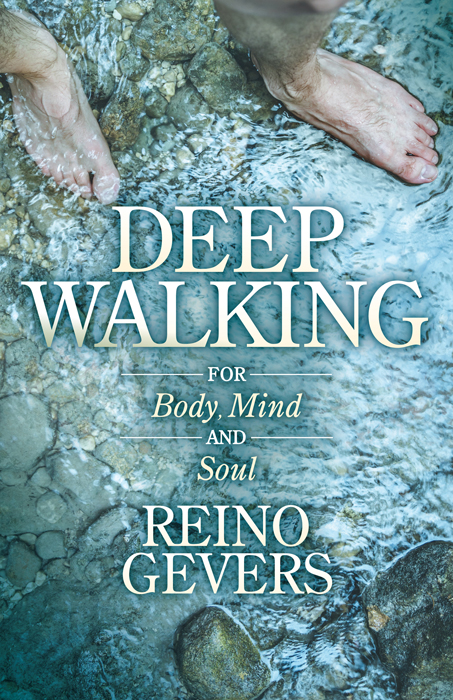
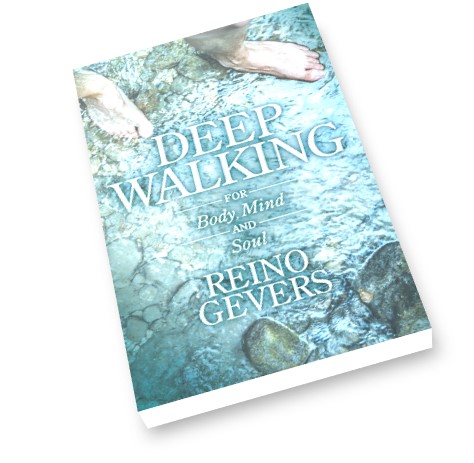
You might want to check out my new book “Deep Walking for Body, Mind and Soul” released as a paperback by Morgan James Publishing on August 11, 2020. It has some valuable tips on creating happiness and boosting your vibrational energy on many levels. You can order it at all major outlets such as Amazon, Barnes and Noble or in my own store.  Check out the latest five-star reviews on Goodreads.
This image has an empty alt attribute; its file name is bookcovers_sideview.jpg

“A breathtaking, captivating, transformative walk,” – Tom Dutta, Canada

“The book reminded me of my own journey in life I am walking and how bringing stillness to my busy life and mind is essential.” – Karin, France

“The book compresses on its slim 190 pages an extreme density of life wisdom.” Christina Germany
Leave a comment

Filed under Camino de Santiago, Pilgrimage, spirituality

One step at a time …

Day  1: Via Francigena – San Miniato to Gambassi Terme

The question often arises about the differences between a hike and a deep walking pilgrimage. The easiest way for you to find out would be to follow in the footsteps of the ancient pilgrims on one of the famous European routes.

Experiencing it cannot be explained in full

I have met many people who started walking the Camino de Santiago as a hiker and ended it as a pilgrim. Experiential spirituality cannot be explained. It can only be experienced.

Today I started my 13th pilgrimage walk on the Via Francigena in Italy. The original plan was to once again walk one of the Spanish routes but Covid-19 forced a change of plan. Italy is currently  a safer country to travel after initially suffering the worst outbreak of the virus in Europe  earlier this year. It is now hailed as one of the countries that have  been more successful in containing the virus.

Like the Camino de Santiago the Via Francigena is one of the ancient pilgrimage routes dating back to the Middle Ages with the exception that pilgrims walked to Rome rather than Santiago.

A blessing from a stranger

Our walk started in the northern Italian town of San Miniato  near Pisa. On leaving the town a friendly granny stamped our pilgrims’ passports, handing each of us a small shell with the blessing of the Holy Mary.

We would not be able to comfortably enjoy these marvelous pilgrimage paths without the support of thousands of such local volunteers who maintain the paths with way markers, first aid kits, and offering their service in the pilgrims’ hostels. It is not uncommon for these people to spend whatever they have left from their small pensions and salaries to maintain these old paths, chapels and other holy sites.

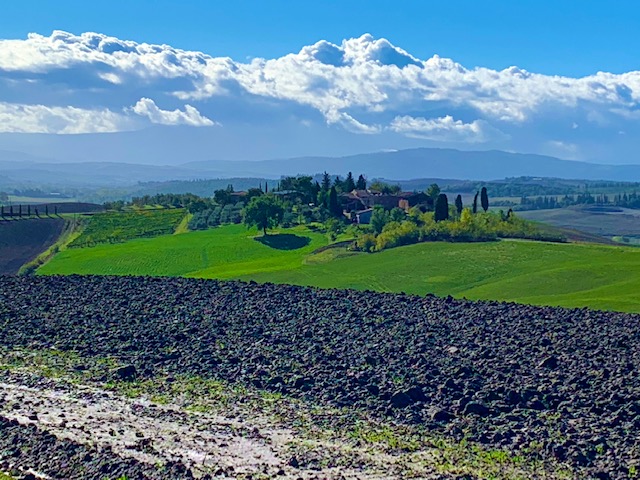
The 24 kilometer route to Gambassi Terme is challenging for a first day, lacking the typical cafes and small towns that you find on the Camino de Santiago. The countryside nevertheless offers marvelous views of the Tuscany landscape and after some hours of walking, the town of San Miniato can be seen in the distance with its unmistakeable hilltop fortress tower.

The physical challenge

Forced by the circumstances to carry more weight than usual in my backpack, this first day was physically strenuous. I would always advise first-time hikers to start with short-distance walks of no more than 12-15 kilometers so that the body can gradually become attuned to long-distance walking. I was reminded of my first walk on the Camino carrying too much weight and starting wholly unprepared. The back pain, blisters and other physical and mental ailments followed inevitably.

Lessons in humility

The pilgrimage path is an important lesson in humility. “If you don’t walk  the path with humility it will teach you humility,” a pilgrim once said to me.

It is in the recognition of one’s own brokenness, and in opening up to the beginners’ mind that possibility and elevation  of consciousness is possible.

Especially in the current situation it is easy to get pulled into the maelstrom of news negativity and doomsday prophets. A pilgrimage walk is the perfect opportunity to realign and center the mind to higher purpose and meaning.

Walking a path more than once is like reading a good book several times over. What you have not seen or read the first time will be seen differently, from a different angle and new window of consciousness.

The lesson of the day:

  • Take one step at a time. If you look at the mountain ahead, your walk will be so much more difficult. On the other hand if you turn around you will be amazed as to how far you have walked.
  • Looking at the mountain to climb is the trap that leads to procrastination.
  • One blessing, one good thought at a time, one positive action at a time leads to the compound effect that makes all the difference both to you and the world.

Reino Gevers – Author. Mentor. Speaker

One more thing…

You might want to check out my new book “Deep Walking for Body, Mind and Soul” released as a paperback by Morgan James Publishing on August 11, 2020. It has some valuable tips on creating happiness and boosting your vibrational energy on many levels. You can order it at all major outlets such as Amazon, Barnes and Noble or in my own store.  Check out the latest five-star reviews on Goodreads.

“A breathtaking, captivating, transformative walk,” – Tom Dutta, Canada

“The book reminded me of my own journey in life I am walking and how bringing stillness to my busy life and mind is essential.” – Karin, France

“The book compresses on its slim 190 pages an extreme density of life wisdom.” Christina, Germany

Leave a comment

Filed under Pilgrimage, self-development, spirituality

After the walk, the real journey begins

Limiting beliefs planted from early childhood can have a powerful hold far into adulthood preventing the fulfillment of a purpose-filled life and the expansion of soul consciousness.

So many fellow pilgrims on the Camino, especially women, told me of the huge pushback they faced from husbands, parents, siblings, friends and even children who tried to dissuade them from going on a pilgrimage.

The pushback often comes from close friends and family

Very often those people closest to you pull you down when they hear you talk of an “outlandish” business idea, or going on that trip you have dreamed about taking for so long.

When you move to a higher energy frequency and start becoming strong, you will awaken demons with some of the people you surround yourself with. These are people stuck in their own fears and uncertainty who feel threatened when a member of their tribe breaks out.

If you take time out to walk the Camino in Spain for a four- or five-week period, you will come back a changed person, and this is sensed by the people around you.

Many pilgrims find it very difficult to fall back into the same old rhythm they left prior to walking the Camino. It is like going back to a different world.

waymarker      img_1002

The real pilgrimage begins after the pilgrimage

“I was hardly back home when I broke down. Everything seemed so strange. Everyone was going about their business and I just couldn’t find my place anymore,” a German pilgrim said after her return. After the pilgrimage, another pilgrimage begins- the pilgrimage of reflecting on and integrating all the experiences made on the path.

We have many associates but when it comes down to it, we have very few real friends who truly understand us and are supportive of our soul growth process.

Be careful who you open up to 

Fellow pilgrims, who shared the deep spiritual experiences after returning from the Camino, were sometimes ridiculed by friends or family members. My advice, therefore: Be careful who you open up to. Few people are genuinely interested. Most people are just curious or have hidden motives. Probably the only people who will really understand you are those people with whom you shared the same experience on the Camino.

And, sometimes it is better to keep the deepest spiritual experience to yourself because words only limit what has been felt on a soul level.

We often stay too long in relationships that have long outlived their purpose. Some people are givers and some are takers. The question that needs to be asked is: Do I feel comfortable, uplifted and energized when I’m in the company of that person? Or do I feel emotionally drained, exhausted and in a bad mood after spending time with him or her?

Getting support from those who give rather than take

A partner, family member or friend who really is focused on your well being will resonate with your enthusiasm, see the opportunity rather than the danger and offer unconditional support while you are on the path.

What is the main reference group that influences you on many levels?  Every so often it might be necessary to reflect on this.

It’s not that you want to hurt and exclude some people from your life. But the time might have come just to spend much less time with them and to spend more time with those people who really uplift you.

A good exercise is: Who are the five people you would choose to live with on a lonely island? Who are the people you would only want to spend a weekend with? Who are the three-minute people you want to remain polite with but keep at a clear distance?

A good guideline is the content of your conversations. Are you sharing uplifting ideas and thoughts or are you spending your time gossiping about other people and wallowing in negative things that happened in the past?

Reino Gevers – Author, Mentor, and Consultant

https://www.reinogevers.com

Gevers-DeepWalking CVR.indd               paperback_cover_1                            applepodcast         


Leave a comment

Filed under Camino de Santiago, outdoor coaching, Pilgrimage, psychology, self-development, spirituality, Uncategorized

Deep Walking to the inner self

Walking the Camino in Spain is a profound experience and many pilgrims have turned their daily journals into books.  Why another Camino book? It was a question I also asked myself before starting my second book on the Camino.

It is almost three decades ago that the actress Shirley Maclean chronicled her pilgrimage in “The Camino: A Journey of the Spirit.”  For Maclean, who was in her 60s at the time, the Camino was an intense spiritual and physical challenge with her journey also taking her back to past lives.

Paulo Coelho, one of the world’s most influential authors, wrote  “The Pilgrimage” in 1986 after walking to Santiago, inspiring numerous people to walk the Camino. German comedian Harpe Kerkeling’s “I’m Off Then: Losing and Finding Myself on the Camino de Santiago followed with his bestseller in 2006.

Some of the world’s greatest artists found inspiration on long walks

After walking my twelfth Camino in 2017, I delved into more research and was surprised to find that some of the world’s most creative and talented artists, including Johann Christian Bach, William Blake, and Jean-Jacques Rousseau explored their inner worlds on long walks.

jon-tyson-W5RrKW2CQoY-unsplash

When a hike turns into a pilgrimage

Several of the many pilgrims I met during my walks said that they started their journey on the Camino as a hike and ended it as a pilgrimage.

In a world of constant digital distraction, the search for new spiritual meaning by “knowing and embracing the true self has become a matter of survival.”  I hope to inspire people to explore their inner world while deep walking in nature.

Walking “things off” in releasing the shadow and hurts of the past, gradually opens the cracks to the soul. By healing the inner we heal the outer. Walking is not only the most effective and underrated form of exercise but can be a real walk to spiritual renewal.

When nature whispers to the soul

Deep Walking on a pilgrimage is not just a walk.  Walking on paths where pilgrims have walked for centuries works on many subtle levels.

A pilgrimage walk is a mindful becoming aware of the simplicity with which nature can heal and whisper to the soul.

Reino Gevers – Author, Mentor, and Consultant

(Read more on this topic in my new book “Deep Walking for Body Mind and Soul” Ebook scheduled for publication by Morgan James in New York on May 5th, 2020. Printed edition scheduled for the major outlets in August 2020)

https://www.reinogevers.com

Gevers-DeepWalking CVR.indd               paperback_cover_1                            applepodcast         


Leave a comment

Filed under healing nature, lifestyle management, meditation, Pilgrimage, psychology, spirituality, Uncategorized

Who are you letting into your home?

Business person looking at wall with light tunnel opening

There is a saying that it takes a village to raise a child. “Ubuntu” is an ancient African term meaning  ‘humanity to others’ because it is those “others” who have made you into that individual who you are.

It means the persons you surround yourself with make you into the person who you are. The village, the individual and the tribe are ONE. So it is worth reflecting on who those five people are who you are letting into your “house.”

Who is supporting and uplifting you?

It will determine how upbeat, optimistic, healthy and successful you are. Are you surrounded by people who are supportive of you on your soul path or do you have people around you who use every opportunity to pull you down?

It is worth reflecting every now and then on those five people who really appreciate and serve you. As you disassociate and realign yourself you will inevitably be confronted by push back.

Is your guest trampling all over your carpet?

So how do I determine who is good for me and who isn’t?  How do I know that the person I let into my home is not going to “trample over my clean white carpet with dirty feet?”

And, it’s basically quite simple:

  • Do you constantly feel drained and emotionally exhausted after spending time with a particular person or a group of people?
  • Have you had this feeling for some time that a relationship is one-sided?
  • Are your conversations with that person or persons centered mainly around negative issues?

If so, it is high time to start disassociating yourself and to move on.

Surround people who emanate kindness and good energy

Open yourself to those people, who, when entering a room, emanate an aura of good energy. I admit those people are few and far between. Most of us are so preoccupied with our own baggage and issues that we no longer notice the true nature of the people around us. True, we cannot always be upbeat. That is not what life is about. Its how we deal on a day to day basis with our ups and downs in the knowledge that nothing stays permanent.

Life is impermanent

All great teachers of Mysticism will tell you that the art of happiness is the ability and wisdom to accept life’s preciousness in the here and now. Impermanence is one of life’s great lessons. Ask anyone who has suddenly lost a loved one, gone through a traumatic divorce or been confronted with a life-changing situation, like losing all one’s savings on the stock market.

The only truth is that life is a constant flow of yin and yang, birth and death, light and shadow, good and evil, expansion and withdrawal. Sorrow, grief, and despair are as much part of life as happiness, joy and exultation or loss and abundance. The discipline of the inner mind and thought process by means of meditation, the body arts or other rituals will help us deal with this ebb and flow.

What we can control is the practice of mind-setting, the choice of the people we surround ourselves with and who we invite into “our holy chambers.”

Reino Gevers – Author, Mentor, and Consultant

(Read more on this topic in my new book “Deep Walking for Body Mind and Soul” Ebook scheduled for publication by Morgan James in New York on May 5th, 2020. Printed edition scheduled for the major outlets in August 2020)

https://www.reinogevers.com

Gevers-DeepWalking CVR.indd                paperback_cover_1                            applepodcast         


1 Comment

Filed under Camino de Santiago, lifestyle management, psychology, spirituality, Uncategorized

Walking to the truth within

A great dilemma of our time is that we are having to deal almost continuously with the distractive pull of a culture obsessed with the immediate gratification of the senses and the illusion that an accumulation of things brings happiness.

The imbalance between wanting to fulfill the needs of the external world and bringing that into synchronicity with the inner truth and the needs of the soul creates an almost unbearable tension that many people try to suppress with substance abuse and other obsessive behaviors.

The hungry ghosts of the external world

Behind the insatiable appetite of the hungry ghosts is embedded the fear of never having enough and that someone might want to take away what I already have. It is the hungry ghosts that drive our culture into destroying our habitat for future generations and it is the hungry ghosts that create an atmosphere of xenophobia toward people who are different from us.

The state of our world is merely an expression of the turmoil within. Hope, however, springs that a small but growing minority of people are taking that walk within to their truth and spiritual authenticity.

The Camino is a symbol of the search for new spiritual meaning

The Camino pilgrimage path in northwestern Spain has become a symbol of this search for new meaning. When walking away from the distractions of the external world the inner world starts revealing itself. It is why so many people who started the walk as a hike end up walking it as a pilgrim.  Last year a total of 320,000 pilgrims walked the Camino, another record, that is likely to be broken this year.

Hope_image

Happiness is a state of mind

It is fascinating to watch first-time pilgrims very often starting their walk with too much clutter in their backpacks and then realizing after a few days that they don’t need most of the things.

One of the great blessings in walking the Camino is the realization that happiness is a state of mind that comes with the discovery of the inner authenticity, and literally walking away from the pull of the external world. A great way of starting the day is a gratitude ritual. The antidote to the pull of the hungry ghost is feeling a real appreciation for the moment and what is.

Reino Gevers – Author, Mentor, and Consultant

(Read more on this topic in my new book “Deep Walking for Body Mind and Soul” Ebook scheduled for publication by Morgan James in New York on May 5th, 2020. Printed edition scheduled for the major outlets in August 2020)

https://www.reinogevers.com

                                             applepodcast         


2 Comments

Filed under happiness, lifestyle management, outdoor coaching, psychology, self-development, spirituality, Uncategorized

Walking into authenticity

A pilgrimage walk is so much more than an ordinary hike, working on many subtle levels, that may trigger a changed perspective and a complete realignment of emotional, physical and spiritual needs.

Walking the Camino is a walk into authenticity when the whispers from the inner voice gradually become heard as with every step more distance is created from the pull of the external distractions of the daily treadmill.

Moving to a higher energy level

From my own observations, I would say that most people are living lives in which they suffer in a quiet misery of unhappy jobs, dysfunctional relationships and other unfulfilled needs that come when the mind is focused too much on external rather than internal needs.

A combination of a daily dosage of junk foods, a mind fed with negative gossip and emotional drama, a sedentary lifestyle, an imbalanced stress, and recuperation cycle, inevitably lead to a downward energy spiral.

Finding that momentum to change an unhappy situation

Over the years it then becomes that much more difficult to find enough energy for the momentum to change an unhappy situation, especially when it comes to taking that first step in changing bad food habits, doing a regular exercise routine or morning ritual.

When you are on a pilgrimage walk, you simply have to keep going. Once you are on the path the pull to complete it is very strong. Other pilgrims will give you that extra bit of encouragement when you are having a down moment.

Walking off old emotional baggage

Especially during the early stages of the walk, there will be mornings when every muscle in the body is aching and feet are blistered.  You may be asking: “Why am I doing this?” But gradually the walk becomes easier, the load from a backpack less heavy, and the motivation to reach the destination that much bigger.

Camino_Portuguez

It is a huge reward when you actually start feeling so much better, physically and emotionally.  It is part of the detox, the walking off of old emotional baggage, that is part of the Camino experience.

By the time you have walked three or four weeks on your pilgrimage retreat, your energy frequency inevitably rises. This becomes noticeable in the resonance with people that have a positive mindset.  You might find stray dogs or cats following you, a bird singing at you from a breakfast table or complete strangers greeting you and starting a conversation. You will also become more aware of the beauty of your surroundings.

Taking time out for realignment

Over the years I’ve tried fitting in a pilgrimage retreat into my schedule every year. It has been life-changing. Modern lives have become exceedingly stressful with the emotions of pain and fear dictating the daily narrative. The uncertainty that comes with exceptional economic and social changes is making many people ill.

More than ever, therefore, we need those time out retreats for inner realignment for those age-old questions seeking answers: Where do I come from? Where am I going? Am I leaving a positive footprint for future generations? The sense of purpose reveals itself in the authentic self.

Reino Gevers – Author, Mentor, and Consultant

https://www.reinogevers.com

                                             applepodcast         


Leave a comment

Filed under Camino de Santiago, connection, happiness, lifestyle management, meditation, mental-health, Pilgrimage, psychology, self-development, spirituality, Uncategorized

Confronting fear

On one of my first walks on the Camino, I got horribly lost during a thunderstorm in the Pyrenees mountains. As darkness set in I was confronted with the most powerful of human emotions – fear.

The typical scenario in such situations is that the human mind gets caught in a trajectory of worst-case scenarios, like falling off a cliff in the darkness or dying from the cold in subzero temperatures.

My choice at that moment was to just keep on walking and reframing in my mind the mantra: Let Go, Let God.  The universe always has answers. At some point, I noticed a faint glimmer of light through the trees which finally led me to the next village and safety.

sammie-vasquez-Zdf3zn5XXtU-unsplash

Photo by Sammie Vasquez on Unsplash

Fear is one of the most powerful obstacles that prevents you from moving forward to new experience, and a happier more purpose-filled life.

It is that which prevents you from leaving a dysfunctional relationship, a job in which you are unhappy or doing the pilgrimage walk because your mind is already on fast-track mode in painting pictures of all the bad things that could happen.

The tragedy is that if you continue to feed toxic emotions such as fear, the bigger the monster gets. It can trigger a state of paralysis and the typical self-destructive mantra: “Can’t change it. Can’t do anything about it.”

A changed mindset would be the mantra: “Everything that has happened to me up to this point has a reason and is pointing me in the direction I must go.”

Fear is in the mind

The only solution is to look fear into the eye. Have I had similar fears in the past? Did these fears really materialize? You will then probably find that in 90 percent of the cases the fears were all in the mind. It does not mean that you need to throw all caution to the wind but getting a more realistic perspective of the situation and changing the mindset. The opposite of fear is courage. But courage does not come without fear.

Reframing fear into courage

On a physical level, fear expresses itself through a quicker heartbeat and a shorter breath. You can literally feel your head getting hot under the collar and your feet losing their hold to the ground. So an excellent way of reframing the mind is by focusing and concentrating on deep in and out-breaths. In this way, you will start calming the mind and body. Fear and stress cause tunnel vision where you will fail to see the solutions offered by the universe often lying right in front of you. When the mind is calm the solution to a problem comes almost by itself. “Now why didn’t I think of that before,” you might say.

If you are dealing with a vexing life issue and don’t know a way out, I really recommend a soul or pilgrimage walk. It is the best way to detox your mind and body, especially if you can find a time-out of several weeks from the daily treadmill.
Reino Gevers – Author, Mentor, and Consultant

https://www.reinogevers.com

                                             applepodcast         


Leave a comment

Filed under Camino de Santiago, lifestyle management, Pilgrimage, psychology, spirituality, Uncategorized

Walking the valley of death

There is a section of the Camino Frances in northwestern Spain described as “the valley of death” because it is a flat, monotonous plain between the cities of Burgos and Leon. Many pilgrims prefer to skip the section by taking the bus because of the searing heat and loneliness.

Monotony and loneliness is a state of mind

Those pilgrims who have walked the “Meseta” section, however, describe it as a particularly crucial part of their Camino experience. Monotony and loneliness is, after all, a state of mind.

The Meseta and some of the other boring sections of the Camino, like the busy motorways on the coastal route of the Camino del Norte, force the pilgrim into introspection, and into acceptance of self.

IMG_0994

Meeting the shadow

It is the part of the Camino where the pilgrim meets face to face with ego, distorted images and the shadow of the subconscious mind.  Inevitably at times he/she falls flat on the ground emotionally.

“If you don’t accept the Camino with humility, it will force you to become humble,”  an American pilgrim told me on my first Camino some twelve years ago. It was a warning I always remembered after suffering from blistered feet, getting lost, carrying too much unnecessary clutter and going through an emotional roller-coaster.

The “flat on the ground” moments

Especially, if you start saying to yourself that “this Camino thing is no big deal,” it will inevitably present you with another lesson to learn.

We have all experienced those moments of “lying flat on the ground” after losing a loved one through death or divorce, financial disaster, a medical diagnosis, job loss or another major life-changing event that turns us into a different person. Who we were before we are no longer. In a way, it is experiencing the death of the old self.

In such moments the big challenge is to avoid falling into the trap of the blame-game and accepting the situation with humility. Those “flat on the ground” times are the precursor to a new stage of spiritual growth and emotional growth. We end up so frustrated that we finally take the action necessary. The alcoholic finally seeks therapy. We leave a dysfunctional relationship and a job that has depleted all our energy. And, we sever ties with people and situations that did us no good.

In the mystical Christian tradition, the story does not end with the death on the cross but is the path leading through the valley of death to resurrection.
Reino Gevers – Author, Mentor, and Consultant

https://www.reinogevers.com

                                             applepodcast         


Leave a comment

Filed under energy, happiness, lifestyle management, Pilgrimage, psychology, spirituality, Uncategorized

Escaping the treadmill

On the Camino recently I met an Italian pilgrim who has walked the northwestern Spanish pilgrimage route several times. He explained to me why he just couldn’t stop walking.

“I was feeling like part of this big machine that just keeps going.  I realized. If you want to know who you are, you have to get out of this big machine,” he said.

It’s one of the reasons a growing number of people are walking the Camino. There is a deep spiritual yearning for the discovery of the true self, of looking within. Treading the treadmill is spending most of your life in the accumulation of things. After a while, things lose their shine. The urge is to buy more things, which for many people means a never-ending spiral of debt and frustration.

When we are treading the treadmill of the big machine there is little time for reflection as we hurry through life instead of aligning ourselves with life. For me walking the Camino each year is taking time out to digest, to reflect and to cleanse body and mind.

Why is the Camino so different than an ordinary hike?

But why not walk the Appalachian Trail in the eastern United States or the Bruce Trail in Canada or some of the many other famous nature trails?

The many conversations, I have had with the pilgrims passing through the pilgrims’ hostel in Najera the past two weeks,  however, confirmed my impression that the Camino is in so many ways different than a normal hike.

The Camino works on many different subtle levels. For one thing, you are literally walking through a history book with every town and village along the Camino steeped in centuries of human architectural and artistic marvel.

A unique cultural and architectural heritage 

Najera, the little village that is the eighth stage of the Camino starting from the little French hamlet of Saint-Jean-Pied-Le-Port, dates back to Roman times, strategically located along the Najerilla river with the hilltop offering a perfect military observation area. It was the capital of the Kingdom of Navarre until it was conquered by the Muslims and then later recaptured by the Christians.

IMG_2519

         Bridge leading into the town of Najera, monastery to the right 

IMG_2438 - Copy


And, right in the middle of this small town of hardly 3,000 people, you will find one of the most marvelous monasteries on the Camino.

It is believed that the Camino pilgrimage path even predates the Christian era when Celtic priests celebrated ritual walks.  “I started walking the Camino as a sporting adventure and ended it as a pilgrim,”  a young man said in sharing the experience many people make on the Camino.

Celebrating the moment

A precondition to really internalizing the magic of the Camino is in the celebration of the present moment which comes after several days of walking and if you are able to avoid the treadmill trap and falling into the robot and monkey mind by constantly checking your cell phone.

It is the one big advice I would give to pilgrims starting their walk. Limit the use of your cell phone to 15 minutes a day.  So often I’ve observed people talking for hours on their cell phones while walking the Camino, robbing themselves of a truly magical experience.

Walking alone and in nature is a challenge initially. It’s about learning to accept the company of self with all its light and shadow. The feelings and emotions can at times be overwhelming but are part of the process of opening the doorway to within.

Reino Gevers – Author, Mentor, and Consultant

https://www.reinogevers.com

                                             applepodcast         


2 Comments

Filed under happiness, humanity, Pilgrimage, psychology, self-development, spirituality, Uncategorized