Category Archives: happiness

From religion to the political cult

For centuries, organized religion shaped people’s beliefs, provided meaning, and defined purpose in life. However, in today’s increasingly secular world, political parties are stepping into this void, offering a “gospel” that vilifies and divides.

Genuine political debate and the exchange of ideas have taken a back seat, as leaders of political movements are elevated to “cult” status, portrayed as messianic figures who claim to hold the ultimate truth.

Political cults manipulate and coerce

Many self-proclaimed religious prophets and sects inevitably faded into obscurity amid financial scandals and sexual abuse. Political cults meanwhile seem to have a field day seek in coercing followers into submission while draining them of their material resources.

Cult members are notorious for defending and excusing the misdeeds, bad behavior, and extravagance of their leaders. Devotion becomes an addiction to belief. Identity is entirely tied to cult membership.

It is only after a long process of “detoxification” that individuals may realize that true happiness cannot be outsourced. No one else is responsible for creating your happiness or unhappiness—ultimately, it is the choices you make that shape a fulfilling life..

The similarities between organized religion and political parties with a cult-like following are compelling. They both provide members with community, identity and a sense of belonging. Membership of a “tribe” shapes your friendships and beliefs. Political ideologies can become just as dogmatic as religious orthodoxy, with little room for compromise or divergent views.

The political cult uses party symbols, flags, and slogans in a similar way as religious iconography, reinforcing group identity and loyalty.

In the “Us vs. Them Mentality” political cults foster a binary division between “us” (the faithful) and “them” (the heretical or the non-believers). It ultimately leads to increased division and social fragmentation.

Historical parallels

In the mid 20th-century the fascist movements in Italy and Germany took on religious-like fervor. Mussolini and Hitler were literally worshipped as messianic figures, built around powerful symbols such as swastikas, chanting of slogans at mass rallies with oaths of allegiance.

History teaches us that when organized religion retreats into orthodoxy and forms a toxic alliance with political radicalism, the consequences are devastating.

The Thirty Years’ War (1618–1648) was one of the most destructive and complex conflicts in European history, involving many of the major powers and resulting in significant political, social, and religious upheavels across the continent. While starting out as an ideological conflict between Catholics and Protestants, it was also driven by political, dynastic, and territorial ambitions.

The conflict was only solved in The Peace of Westphalia treaty establishing the principle of religious tolerance within the Holy Roman Empire, effectively ending large-scale religious wars in Europe. This came after The Holy Roman Empire lost between 15-20 percent of its population. In some regions, such as Germany, where most of the fighting took place, certain areas lost up to half of their inhabitants.

Most concerning are current development in countries such as the United States and India where religious fundamentalism forms an alliance with political radicalism. There is a breakdown of democracy, intolerance of dissent, a breakdown in constructive dialogue, and ultimately social fragmentation and disintegration.

A political religion is centered on building a tribe of like-minded followers who can be swayed and manipulated by those seeking power and personal gain. While it fosters a sense of identity and community, it demands unwavering loyalty to its self-constructed ideology, silencing dissent and, in the end, stripping the followers of their freedom and happiness.

The 13th-century Mystic Meister Eckart, in warning of the false prophets, said: “Let us observe first, therefore, that there are some who follow God. These are the perfect. Others walk close by God, at His side. These are the imperfect. But there are others who run in front of God, and these are the wicked.”

The new “cosmic” religion

Albert Einstein envisioned a new “cosmic religion” not tied to any particular religious creed or doctrine. Instead of being bound to specific religious institutions or deities, the “cosmic religion” would be rooted in a sense of awe, wonder, and reverence for the universe itself—what he called the “cosmic mystery.”

Einstein felt that science, by revealing the beauty, interconnection and complexity of nature, could evoke a profound spiritual response, that could unify humanity beyond traditional religious divides. He emphasized moral responsibility, interconnectedness, and an appreciation for the mysteries of existence, without reliance on traditional religious structures or personal gods.

Experiential spirituality in contrast to organized religion is rooted in direct, personal experience of the divine, or a sense of connection to the universe. It is an inward, subjective journey where each individual seeks their own spiritual truths through spiritual practises such as meditation, deep walking in nature and personal reflection. Individual spiritual experience is the ultimate authority.

Happiness is a state of mind

Happiness is a state of mind and perspective. Most humans spend a large portion of their day thinking of that which was and is no more or in anxiousness and fear of an uncertain future. A negative mindset opens your mind to manipulation by external forces. The only reality is the present moment.

What do you have in your life for which you can be truly grateful?

Why not practice a gratitude ritual for the small blessings and miracles of life? What brings you authentic joy and happiness?

If you have electricity, clean water, a roof over your head, and food on the table, you are incredibly fortunate compared to a significant portion of humanity. These basic amenities, which many take for granted in developed parts of the world, remain out of reach for millions of people globally.

Access to these resources gives you much better economic security and educational opportunities. You have the ability to improve your life and the lives of future generations. You are fortunate to have greater freedom to pursue personal goals, education, and self-improvement, and don’t need to struggle for survival like most people on earth.

Reino Gevers – Author – Mentor – Speaker

P.S. If you enjoyed this article you will be interested in my books available where all good books are sold.

Leave a comment

Filed under extremism, gratitude, happiness, religion, spirituality

Victimhood and Embracing Responsibility

In a relentless storm of external distractions, it’s easy to lose yourself in a maze of illusions, false hopes, and misleading perceptions that steer you away from your true destiny and purpose.

The messaging from the world out there is primarily that happiness is created by „having“ rather than „being“.

Abundance and prosperity, if used mindfully, are useful tools to make an impact, but if they are the primary motive of all your efforts you will never have enough, falling into the trap of postponing the good life to some distant future.

Here is the hard truth: That moment will never come if you fail to live fully in the present moment, and practice gratitude for all the blessings that you already have.

Accepting Responsibility

Victimhood is one of the biggest obstacles to growth and personal fulfillment. By blaming your partner, your parents, your boss and the government for all that has gone wrong in your life you stay at a low vibrational energy where you will miss all the opportunities offered by the universe.

When the language you speak to yourself and others is mainly one of anger, retribution and hate you will attract much of the same dark energy around you. What you emanate to the world you will receive. You will remain trapped in an endless cycle of unhappiness.

We are all victims to some degree. The storms of life can unsettle in countless unpredictable ways. External events, accidents, personal loss and natural catastrophes are not under your control. But how you deal with these unexpected events make all the difference.

Photo by Julia Avamotive on Pexels.com

Accepting Impermanence

Like the seasons in nature nothing is permanent. The natural cycle dictates a time of spring and summer for birth, growth, and harvesting before we enter again a season of autumn and winter. The dark cold seasons of life are a time for introspection, recalibration and renewal. It means letting go of people that keep you at a low frequency, changing a job, a location or even a country. Fear of the unknown often leads to procrastination in the comfort zone but moving ahead also presents the greatest opportunity for growth and personal fulfillment.

Follow your aspirations and dreams

Never give up on your values, purpose and your why. You will intuitively sense that you are on the right path if everything falls into place. You meet the right people at the right time at the place at the right time. You feel a surge of energy and passion when you are doing the things that are in sync with your values and dreams.

Societal norms and expectations

There will always be other people who are seemingly happier, healthier and wealthier than you are. What you see on social media is not the reality. Sometimes those people who seemingly have everything in terms of fame and fortune are deeply unhappy because happiness is a state of mind.

Taking time for solitude

In a noisy and hurried world it has become more essential than ever to take time out for solitude and contemplation. When you take time for a quiet walk in nature the noise of the world recedes into the background. You will sense an innate harmony beyond the seemingly chaotic. In the natural world everything is interconnected and has its place and purpose within the totality of wholeness.

Reino Gevers – Author – Mentor – Speaker

P.S. If you enjoyed this article you will be interested in my books available where all good books are sold.
Check out also the recent episode on the Living to BE podcast and Youtube with our special guest Matt O’Neill. The topic: Happiness is a Choice.

2 Comments

Filed under gratitude, happiness, mental health, mental-health, self-development, Uncategorized

The Power of Forgiveness: Healing and Empowering

A few months after Nelson Mandela was released from 27 years of imprisonment by South Africa’s apartheid regime, I had the extraordinary privilege of meeting him at his home with a small group of journalists.

As I stood in his presence, I couldn’t help but wonder how a man who had endured such immense suffering could radiate such profound kindness and show no desire for retribution toward those who had wronged him.

The answer became clear when he shared a powerful insight: “Forgiveness liberates the soul, it removes fear. That’s why it’s such a powerful weapon.”

A powerful message of leadership

Mandela’s wisdom and unwavering commitment to forgiveness set him apart as a leader of unparalleled stature, guiding his nation from the brink of civil war to the dawn of a modern democracy. His example is a powerful reminder of the qualities of leadership that are so desperately needed in our world today.

Seeking retribution for wrongs committed by others is at the heart of the Middle East conflict and peace will not be found unless Israelis and Palestinians learn to forgive each other. It is difficult enough on a personal level to forgive but wise leaders of a country can make all the difference.

Are you struggling to forgive yourself and others? The biblical story of Joseph is one of the most powerful teachings of how the ways of the universe or God can be very different from the plans we often make in life.

Joseph was slandered, beaten, and sold into slavery by his own brothers because of jealousy. Joseph could have easily succumbed to his fate but he never lost faith that everything in life had purpose and meaning.

The trap of the blame game

Only from such a perspective could he forgive his brothers and move out of the trap of the blame game. He made the best out of his situation to such an extent that Potiphar, the man who bought him on the slave market in Egypt, soon promoted him to a higher position. Later he was put in charge of managing Potiphar’s huge estate.

Potiphar had taken a liking to Joseph and must have been impressed by his kindness, wisdom, and humility. For all intents and purposes, Joseph had made it. But Potiphar’s bored wife had taken just as much a liking to the handsome young Joseph.

Realizing that he would betray his master who had done so much for him, Joseph avoided the advances of Potiphar’s wife who became so upset that she accused him of rape. Joseph was thrown into prison losing everything. He could again have succumbed to despondency.

But it so happens that he meets in prison two of the Pharaoh’s ministers who had lost favor with the ruler. One of them was eventually released from prison and restored to his old position. Only when the Pharaoh had a strange dream did the minister remember the time in prison with Joseph who had impressed him as an interpreter of dreams.

Long story short: Joseph gets released from prison to interpret the Pharaoh’s dream. The essence of the dream was that the ruler had to prepare the country for seven years of drought. Amazingly Joseph’s fortune changed in an instant when the Pharaoh recognized the wisdom of the man he was dealing with.  Joseph is promoted to viceroy of all of Egypt as the righthand man of the most powerful ruler of the world at the time.

Life comes in strange twists and turns

True to the dream interpretation the drought did come and only by wise management of the food and grain resources could countless lives be saved including those of Joseph’s brother and aging father Jacob.

Life comes often in strange twists and turns. Fortunes can be earned and lost overnight. High positions of political power and influence may be gone tomorrow. The amazing story of Joseph is that he never lost trust and faith. By forgiving his brothers and Potiphar’s wife for falsely accusing him, he made peace with himself and could go into trust and humility. From that energy grew his wisdom and incredible foresight to prevent a catastrophe.

Forgiving does not mean approval of wrongdoing

Forgiving does not mean that you are approving of wrongdoing, of abuse, and all the terrible things that humans do to each other. It is making peace with the past in the knowledge that you are the person today because of all of that which you have experienced.

The famous Austrian psychiatrist Victor Frankl only survived the Nazi death camps by telling himself that “everything can be taken from a man but one thing: the last of human freedoms – to choose one’s attitude in any given set of circumstances, to choose one’s one way.”

Forgiveness is self-care at the highest level

Forgiveness requires a conscious decision to release feelings of resentment and vengeance toward someone who has harmed you. It is self-care at the highest level.

Forgiveness allows you to release negative emotions and to move on in life. Remaining locked in hate and retribution keeps you at a low vibrational energy that prevents you from spotting the new opportunities the universe is presenting to you.

By choosing to forgive, you are paving the way to a healthier, happier, and more fulfilling life. You are creating room for positive feelings to flourish.

Reino Gevers – Author – Mentor – Speaker

P.S. If you enjoyed this article you might be interested in my books available where all good books are sold.

Leave a comment

Filed under happiness, mental health, mental-health, Uncategorized

Is religion stifling spiritual growth?

During my childhood in South Africa, I started having my first doubts about religion when clergy defended from the pulpit the abhorrent policy of apartheid and prevented a devout black priest from attending a church ceremony.

The message of salvation failed to resonate in the obligatory Sunday services which I found to be extraordinarily melancholy and joyless occasions, steeped in empty ritual. It did however serve the purpose of sending me onto a path of intensive ongoing spiritual exploration.

If you are one of those people who left the church in frustration after being shamed for thinking differently or questioning doctrine, then welcome to the club.

For centuries religious institutions have stifled spiritual growth and prevented people from living their divine purpose by telling them how to behave, what to believe, and even what politicians to vote for. This, for me at least, is the ultimate sin for which the church needs to take responsibility.

Spiritual but not religious

Especially younger people in Western countries are seeing through the hypocrisy and leaving the church in droves. But does that mean that more people are becoming agnostic, atheist, or have lost their belief in the divine?

Seven out of ten Americans describe themselves as spiritual in some way including 22 percent who say they are spiritual but not religious.

Even the first Christian communities were often divided between legalistic interpretations of the Gospel and experiential spirituality. There is a lovely passage in Galatians 5 of the New Testament of the Bible where St. Paul criticizes an early church in today’s Turkey.

Paul underscores the centrality of the Gospel, calling on the faithful to practice love, joy, peace, patience, kindness, goodness, faithfulness, gentleness, and self-control as opposed to the legalism of what foods to eat and what could and could not be done on a Sabbath.

Jesus, the ultimate revolutionary

Some 2,000 years ago Jesus broke all religious conventions by healing the sick on the Sabbath. He was eventually crucified when openly exposing the hypocrisy of the clergy, by dining with sinners, tax collectors, prostitutes, and other outcasts – who were excluded from the Temple.

Jesus never had plans to establish an institution or a church and would probably be horrified by what people are saying and practicing in his name today. When someone starts confronting me with the words: “Have you found the real Jesus?” it is for me a signal to run.

Temples, churches, and places of worship could be turned into sanctuaries of peace by opening their doors to people of all faiths. Many Christian churches however are stuck in tribalistic doctrine, especially when it comes to who is entitled to holy communion, abortion, or whether women can be ordained as priests.

Thriving churches, however, are vibrant meeting places for people joyfully dancing, singing, praying, and sharing meals together. In a positive sense, they can cement the community spirit, especially in urban environments where we have an epidemic of isolation and loneliness. These church members practice a living faith by visiting the aged, providing comfort to prison inmates, and refugees, and establishing food banks for the hungry.

Spiritual growth comes from a place of brokenness

There is a saying that religion is for those who fear hell while spirituality is for those who have been there. The seeds of spiritual growth come from a place of brokenness.

On my more than a dozen walks on the Camino in Spain I have met countless people who have gone through the hell of losing loved ones, confronted life-threatening illnesses, the dark holes of depression, financial ruin, and relationship breakdown. What I can say about all these people I’ve met on the Camino is that such life-changing events made them come out stronger, forcing them into deep introspection on the purpose and meaning of life.

A cosmic religion of the future

Experiential spirituality is a process whereby the shutters of the soul window are opened. It is a feeling of connection with the divine, and the mystery of creation. The great scientist Albert Einstein once said that the religion of the future will be cosmic in nature. 

“The most beautiful and deepest experience a man can have is the sense of the mysterious. It is the underlying principle of religion as well as all serious endeavors in art and science. He who never had this experience seems to me, if not dead, then at least blind,” Einstein is quoted as saying.

The Dalai Lama, the spiritual leader of Tibetan Buddhism, encourages individuals to go beyond the superficial differences among religions and recognize the deeper essence of spirituality and morality that can be found in all faith traditions. 

The fundamental principles of compassion, love, and ethics are not limited to any particular religious tradition or belief system. These principles, the Dalai Lama believes, are universal.

Already early into this year, a record number of pilgrims are walking the Camino. All share the common quest that has resonated through the ages:

“From whence do I hail? Whither do I journey? What purpose guides my days ahead?”

In echoing the ancient Sages and Mystics, emphasizing the innate spirit of man: Where there is a lighthearted spirit of joy, peace, positivity, and kindness, negativity and darkness recede.

Reino Gevers – Author – Mentor – Speaker

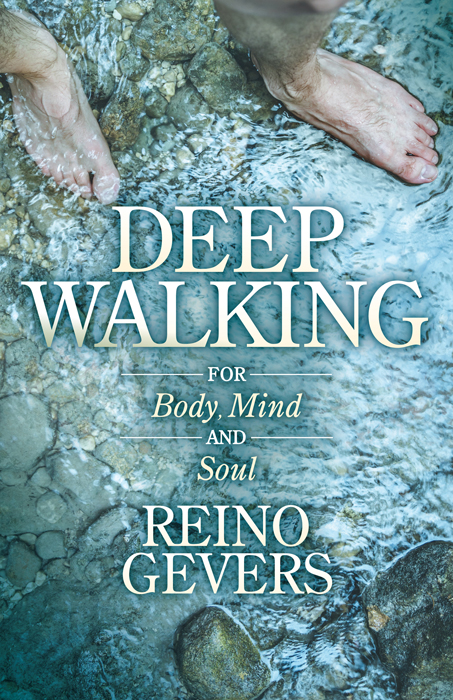
P.S. I’m excited to announce the release of my latest book, “The Turning of the Circle: Embracing Nature’s Wisdom for Purposeful Living.” If you enjoy it, you might also be interested in my previous works, “Deep Walking for Body, Mind and Soul” and “Walking on Edge: A Pilgrimage to Santiago.” You can find all of these titles at reputable bookstores near you.

Leave a comment

Filed under Camino de Santiago, happiness, humanity, meditation, mental health, psychology, self-development, spirituality

The tree of life

Some 2,000 years ago a soul incarnated into the family of a simple carpenter and his wife in the town of Nazareth of what was then part of the Roman province of Judaea.

Jesus of Nazareth was to change the world for generations to come and elevate human consciousness to a new level.

From an early age, the scriptures tell us, Jesus astounded the temple priests with his knowledge and wisdom. By the time he was a young man his revolutionary teachings and miracle healings were drawing huge crowds and followers.

The threatened priesthood

The priesthood of the day saw him as a grave threat when he exposed their hypocrisy and their literal interpretation of the scriptures.

Jesus led by example showing us that service for the downtrodden, the sick, the vulnerable, and the discriminated minorities was the stepping stone to creating a life of bliss.

The God-given meaning and purpose of life is closely intertwined with the unraveling of the veils covering the soul and living who you were born to become.

It was far removed from abiding to the rules and regulations of a belief structure controlled and imposed by the priesthood.

Photo by Pixabay on Pexels.com

Ancient scriptures revealed

The long hidden texts of St. Thomas, discovered only in recent times, reveal early Christian teachings deeply embedded in experiential Spirituality and multi-layered interpretation that read much like Zen Koans of Buddhist tradition. Jesus is quoted as saying:

“Rather, the kingdom is inside of you, and it is outside of you. When you come to know yourselves, then you will become known, and you will realize that it is you who are the sons of the living father. But if you will not know yourselves, you dwell in poverty and it is you who are that poverty.”

This reminds much of the inscription in the Ancient Greek Temple of Delphi: Knowing Thyself, Knowing who you are not and then finding the God within – or your truth

Jesus was crucified in a place called Calvary in Jerusalem at the age of 33. In Kabbalistic teaching 33 is a magical number. It is the number of steps on Jacob’s ladder on which the angels walked bringing the wisdom of heaven unto earth or aligning with the higher (Christ) self.

Calvary in its original Hebrew form means “place of the skull.”

The arbor vitae in the brain is also described as the tree of life. It lies within the center of the cerebellum and helps provide valuable sensory information to the brain, protruding from the skull.

In Kundalini Yoga energy rises up the 33 vertebrae of the spinal cord to the seventh chakra located at the crown of the head, illuminating the third eye or pineal gland, your spiritual consciousness.

Jesus’ crucifixion and resurrection after three days is ultimately a story of salvation from suffering, after transgressing through the dark night of the soul.

There is a surrendering to forgiveness and grace. After a point of great suffering and doubt Jesus could look upon the people causing his suffering and forgive, knowing that it all ultimately had a higher meaning.

Sacrifice and expansion of consciousness

Making sacrifices expands your conscious awareness. When you transmute the lower energy vibrations rooted in the emotions of fear, anxiety, greed and hate, you achieve Christ consciousness – the 33rd degree of consciousness – unconditional love.

According to the Mystics God is un­separated from all things, for God is in all things and is more inwardly in them than they are in themselves.

St. Augustine is quoted as saying that the soul has within her all knowledge, and whatever we practice outwardly serves only to awaken that knowledge.

In places of solitude and in the quiet spaces of nature the cracks open to the wisdom and window of your soul’s longing, to the depths of your purpose and destiny – to the Christ within.

Reino Gevers – Author – Speaker – Mentor

One more thing...If you have found this article interesting you might want to subscribe with the “follow” button above or recommend my FREE weekly Blog to friends and family. My books can be ordered at all places that sell good books in both paperback and kindle.

Leave a comment

Filed under happiness, lifestyle management, mental health, self-development, Uncategorized

A changed world after lockdown

We are in the fifth week of our lockdown in Spain which has some of the most stringent Coronavirus rules in place. I was stopped a few days ago by police near my home who told me in no uncertain terms that taking doggy for a walk was not allowed if I had a garden where the dog could go outside.

Moving about is embedded in our genes

When this is over I will appreciate all the more my long walks in nature in the nearby Tramuntana mountains of Majorca. I have become more aware that moving about freely and traveling to faraway places has become very much part of our modern lifestyle. It will take a while to fully comprehend how farreaching an effect this is having on what we have perceived as fundamental freedoms. Our movements are likely to remain restricted for some time to come. What this means for the travel industry is anyone’s guess.

The urge to be on the move and discovering new places is embedded in our genes. Our ancestors moved from the trees to walk on the ground to seek new feeding grounds. For thousands of years, humans were nomads moving from place to place. As recently as 500 years ago there were still hunters and gatherers in many parts of Europe, Africa, and the Americas.

Finding authenticity on the journey

Jewish mysticist teachers made a point of sending their students on a journey to broaden their mental and spiritual horizons. It was also a way of teaching the scholar not to become too dependent on the Master and to find their own inner authenticity. Experiential spirituality in the mystic tradition is something awaiting discovery from within and cannot be imposed externally by rules of belief.

img_3037

Hiking trail, Majorca

The apprenticeship training of carpenters in Germany has for centuries followed the same tradition. After learning the basic tools of the craft from an experienced “Meister”, the apprentice goes on a “Wanderschaft” or hike to distant places to both finetune his skills and character.

Finding the empty space 

Every pilgrim who has gone on a pilgrimage on the Camino in Spain knows all about the “zoning out” into that empty space that comes when walking alone in nature for several weeks.  Experiential spirituality is a deep personal connection with the divine. Spirituality is all about following and remaining true to your divine purpose. Limitations to “Be-coming” are all too often set by the parameters of doctrine, parental expectations and the constant drum-beat of digital distractions.

When our senses are attuned to nature we find alignment with the universe. There is a close feeling of connectivity to the whole in the seemingly chaotic.

It is all the more reason to look forward again to my next annual pilgrimage. It might not take place at all this year on the Camino because we don’t know if all the restrictions will be lifted by summer. Meanwhile, it will have to be short hikes closer to home.

Reino Gevers – Author, Mentor, and Consultant

https://www.reinogevers.com

Gevers-DeepWalking CVR.indd               paperback_cover_1

Order here

Leave a comment

Filed under happiness, healing nature, humanity, lifestyle management, psychology, spirituality, Uncategorized

Lessons from nature on Covid-19

Even if I knew that tomorrow the world would go to pieces, I would still plant my apple tree – Martin Luther – 

From a spiritual dimension, everything has purpose and meaning.

When we look at the coronavirus or Covid-19 crisis from the perspective of the Five Elements, the metal element comes into play.

scott-webb-r4gqCg1iies-unsplash

Photo by Scott Webb on Unsplash

Covid-19 is attacking us where we are most vulnerable

We are seeing that the virus is spreading especially fast through contact and touch between humans with most of the deaths caused by an infection of the lung.

The metal element represents the body organs of the lung and large intestine on a physical level. They find expression in the nose, the breathing aspect, and the skin – the sense that we go into contact with our external world. The virus is ignoring boundaries of nations, ethnicity and religion. We are all in this together as a human race.

The insidious nature of the virus is that it is attacking us at the very essence of our behavior patterns. We greet each other with our hands as a gesture of politeness and friendship. We hug and kiss the people we love. We touch hands when we give comfort.

A time for introspection during lockdown?

The metal element moves the body energies inward.  This element represents the season of autumn when nature itself starts contracting. It reaches completion with the water element with plant life withdrawing into the roots and animals going into hibernation.

On the emotional level when the Element Metal is weakened we go into grief. Grief is much about the sadness about that which was and is no more. Our very world has changed and will never be the same.  There is much grief, sadness and fear (fear is the emotion of the water element) over that which has changed in our world and is no more.

Humanity has broken the code of nature

Our skin, which is the outer expression of the large intestine, is about setting and accepting boundaries whether we choose or deny body contact and what we inhale and exhale in energy around us. What we inhale we become. What are we inhaling in negative thoughts, news, and distractions? How much have we broken the code of nature in exploiting and destroying our own and the life systems of other living beings?

Moving from grief into courage 

Metal energy that is in balance has courage. Despite the fear, anxiety and melancholy sadness we are seeing many people rediscovering community. Health workers are working tirelessly to help others. Groups are helping to do the shopping for the elderly. Courage is facing the truth of the moment and regaining control. We don’t have control over the external circumstances but we have control over our reactions to them. Staying in the moment is the big challenge. It is acknowledging what is happening in the world, acknowledging our fears, our grief, and sadness, then to transmute those emotions into courage.
Reino Gevers – Author, Mentor, and Consultant

https://www.reinogevers.com

Gevers-DeepWalking CVR.indd               paperback_cover_1

Order here

applepodcast         

4 Comments

Filed under happiness, psychology, self-development, spirituality, Uncategorized

A clue to happiness: How are you talking to yourself?

Humans are hard-wired to live in the past or in the future because planning and learning from the past has been crucial to the survival of our species.

Real joy comes from those magical moments of being absolutely present and experiencing spirituality, love and peace of mind.

Researchers have found that distraction, one of the major scourges of our time, is also a major cause of unhappiness.

Psychologists at Harvard University conducted a study with 2,250 volunteers, monitoring their thoughts and feelings, to find out how often they were focused on what they were doing, and what made them most happy.

thoughts

Photo by Aaron Huber on Unsplash

More than half the time people’s minds were wandering to other things. The researchers concluded that reminiscing, thinking ahead or daydreaming tends to make people more miserable, even when they are thinking about something pleasant.

Matthew Killingsworth, a doctoral student in psychology and lead author of the study, wrote in the journal Science:

“A human mind is a wandering mind and a wandering mind is an unhappy mind. The ability to think about what is not happening is a cognitive achievement that comes at an emotional cost.”

The human mind has between 60,000 – 70,000 different thought monkeys dancing through the head on one day. Becoming aware of these thoughts is the first step toward focusing on the moment.

It is an empowering thought to realize that you are in control of your thoughts and that with a little training you can regain control of these monkeys.

Thoughts are energy waves and they create reality. Where energy flows, the energy goes. The first step is to become aware of your current feeling. Is it predominantly, sad, angry, resentful, happy, or joyful? Negative emotions can sometimes be triggered by banal events, like a driver blowing his horn at you in a traffic situation. This then suddenly triggers an anger explosion that is completely out of proportion to the event. It would be one example of anger that has its roots elsewhere but hasn’t been transmuted.

Out of control emotions have a close connection to scattered thoughts and an uncentered state of mind. For me, deep walking retreats on the Camino in Spain have been a real eye-opener. While walking alone I was inevitably confronted by countless thoughts, especially during the first few days. It is part of the process of dumping old emotional garbage – some of which lie buried in the subconscious mind for years, sometimes to early childhood.

You will have made progress when you find your senses tuning in to the surroundings and becoming aware of the sights, sounds and smells around you.

What thoughts you have immediately after getting up in the morning have a major impact on your day. A dream could have stirred a negative emotion. But you are in control. You can reset your mind. You can set a positive anchor for the day with a meditation, a gratitude ritual, an exercise routine, a mantra, or a prayer.

Every time you catch yourself with a negative thought, you can train the mind to concentrate on breathing. Consciously counting the inhaling and exhaling sequence of breathing will immediately transmute that thought. If you click on my Podcast link below you will find a powerful meditation from ancient Qi Gong practice which I find enormously powerful and the effects of which can last for hours.

Reino Gevers – Author, Mentor, and Consultant

https://www.reinogevers.com

Gevers-DeepWalking CVR.indd               paperback_cover_1

Order here

applepodcast         


Leave a comment

Filed under gratitude, happiness, meditation, mental-health, psychology, self-development, spirituality, Uncategorized

Becoming into Happiness

After the pilgrimage, a new journey begins. For some pilgrims adapting to the daily treadmill of life become almost unbearable after experiencing a walk that has shifted key perspectives on life.

Placing the ladder against the wrong wall

Many of the pilgrims you meet on the Camino find themselves at the crossroads of making major life decisions, after realizing that for most of their lives they had placed their ladder up against the wrong wall.

Most people appear to be unhappy in their jobs, relationships and how they live. Life is a constant rollercoaster of change and much of the dissatisfaction stems from the sadness over what was and is no more or in settling for a compromise of an unfulfilling status quo.

lake

When personal values are in conflict with what you do

Work procedures in the big corporations are standardized globally, leaving little room for individual creativity and cultural differences. People with few or no social skills, who lack even the most rudimentary traits needed in motivating and creating winning teams, are appointed as leaders.

In a dysfunctional institution personal values and aspirations of the employees are often in conflict with the primary objectives of the establishment.

A banker quits his job because he cannot in good conscience sell certain products to his customers; an executive in a car factory leaves shortly before a promotion because the pressure was just getting too much, and he had no more time to spend with his family.

That which holds you in bondage prevents you from rising to a higher frequency of a raised consciousness and fulfilling your soul purpose.

Sometimes you just need to let go of the house you lived in for many years, the job that has become too stressful for your health and the toxic associations that keep you in an uncomfortable “comfort zone,” preventing you from living out your dream

We are here to become who we are meant to be

It is in becoming our true self that we discover the sense of meaning and belonging. We are here to develop and grow our consciousness—to become aware of the greater reality. It is part of what the evolutionary program demands of us.

Project yourself ahead in a time machine where you see yourself rocking in an armchair well into your 80s, looking back on your life. What are your greatest regrets? What are the chances missed? Probably the greatest sin would have been a life passed without even attempting the greatest dreams and following the true destiny. If only I had…

Going the route of constant self-development, self-reflection, and spiritual growth is immensely rewarding. It is one of the keys to living a purposeful and happy life.

Slowing down and perceiving the whisper of the soul

But you will never discover your true calling if you don’t slow down so that you can listen to the whisperings of the soul.

Body and mind have an infinite capacity for change and renewal. It is never too late. All the skin in the body is replaced every two to three weeks. The liver renews itself at least once every couple of years and the skeleton once every ten years.

But trauma and toxic emotions can hold you captive for decades, preventing you from moving forward and “becoming” your true self.

Thought discipline is a practice 

Stress and fear start with a thought. But the solution to a problem has never come from running thoughts and monkeys in the head. These are dark imaginary creations of the mind. Yet the mind has enormous power to create in every direction.

Thought discipline can be practiced. It is normal for negative thoughts, old anger and fears to surface when we walk alone. Replacing that dark thought with a positive thought such as gratitude is the first step in the right direction.

With gratitude comes the wisdom that in the bigger picture there is grace—the grace that we are part of a bigger matrix, that everything has meaning, that we are born to learn, grow, and to become.

Reino Gevers – Author, Mentor, and Consultant

(Read more on this topic in my new book “Deep Walking for Body Mind and Soul” Ebook scheduled for publication by Morgan James in New York on May 5th, 2020. Printed edition scheduled for the major outlets in August 2020)

https://www.reinogevers.com

Gevers-DeepWalking CVR.indd                paperback_cover_1                            applepodcast         


Leave a comment

Filed under happiness, Pilgrimage, psychology, self-development, Uncategorized

Walking to the truth within

A great dilemma of our time is that we are having to deal almost continuously with the distractive pull of a culture obsessed with the immediate gratification of the senses and the illusion that an accumulation of things brings happiness.

The imbalance between wanting to fulfill the needs of the external world and bringing that into synchronicity with the inner truth and the needs of the soul creates an almost unbearable tension that many people try to suppress with substance abuse and other obsessive behaviors.

The hungry ghosts of the external world

Behind the insatiable appetite of the hungry ghosts is embedded the fear of never having enough and that someone might want to take away what I already have. It is the hungry ghosts that drive our culture into destroying our habitat for future generations and it is the hungry ghosts that create an atmosphere of xenophobia toward people who are different from us.

The state of our world is merely an expression of the turmoil within. Hope, however, springs that a small but growing minority of people are taking that walk within to their truth and spiritual authenticity.

The Camino is a symbol of the search for new spiritual meaning

The Camino pilgrimage path in northwestern Spain has become a symbol of this search for new meaning. When walking away from the distractions of the external world the inner world starts revealing itself. It is why so many people who started the walk as a hike end up walking it as a pilgrim.  Last year a total of 320,000 pilgrims walked the Camino, another record, that is likely to be broken this year.

Hope_image

Happiness is a state of mind

It is fascinating to watch first-time pilgrims very often starting their walk with too much clutter in their backpacks and then realizing after a few days that they don’t need most of the things.

One of the great blessings in walking the Camino is the realization that happiness is a state of mind that comes with the discovery of the inner authenticity, and literally walking away from the pull of the external world. A great way of starting the day is a gratitude ritual. The antidote to the pull of the hungry ghost is feeling a real appreciation for the moment and what is.

Reino Gevers – Author, Mentor, and Consultant

(Read more on this topic in my new book “Deep Walking for Body Mind and Soul” Ebook scheduled for publication by Morgan James in New York on May 5th, 2020. Printed edition scheduled for the major outlets in August 2020)

https://www.reinogevers.com

                                             applepodcast         


2 Comments

Filed under happiness, lifestyle management, outdoor coaching, psychology, self-development, spirituality, Uncategorized