Category Archives: Uncategorized

The power of really listening

“Listening may not be the most exciting part of the conversation, but it’s essential if you want to have a meaningful exchange with another person.” – Tania Israel

When you go with the flow and engage in an active interplay with the universe you will be sculptured into that person you were meant to be on the day you were born.

Yet, attachment to judgments, concepts, beliefs, ideas and habits undoubtedly form the biggest obstacle to personal development and soul elevation.

The renowned Swiss psychiatrist Carl Gustav Jung once wrote that some of his most difficult patients were the so-called intellectuals, stuck in their rigid rational thinking. If you are unwilling to accept your own shadow, you will be unwilling to move forward.

Just tuning in for a few minutes to some of the world’s popular talk shows is revealing. (I can’t bear watching it for longer) Neither the host nor the participants are really capable of focusing on what the other person has to say. Minds are made-up before the other person has finished speaking and interrupted in mid-sentence.

Playing the tit-for-tat ping-pong game in communication never ends well. We seem to have lost the ability to really engage with our fellow human beings by deep listening. On the personal level, it inevitably leads to misunderstandings and relationship breakdowns. In the public and political arena, the word “consensus” is almost a blasphemy as each side blasts the other from its walled-off information bubble.

The ancient Greeks and the melting pot of ideas

The loudest person in the room seldom has the best answers. Deep listening is only possible if we temporarily remove ourselves from judgment and pre-conceived concepts. It requires a willingness to receive and digest new information – whether pleasant, unpleasant, or neutral.

The ancient Athenians were well aware that democracy rested on a bedrock of a lively exchange of different ideas. Aware that every individual perceived reality in a different way, the truth could only be found in an active exchange of these different ideas and concepts.

Much of the public narrative we see is not interested in exchanging ideas but merely seeking affirmation of existing ideas. It is the recipe for stagnation and the slide into authoritarianism, along the lines: “If you don’t accept my truth you are my enemy.”

Deep listening is learning

The great Buddhist monk Thich Nath Hanh, described deep listening as in essence a process of learning. It is how we listen that is truly transformative. He said in an interview with Oprah:  “Deep listening helps us to recognize the existence of wrong perceptions in the other person and wrong perceptions in us. The other person has wrong perceptions about himself and about us. And we have wrong perceptions about ourselves and the other person. And that is the foundation for violence and conflict and war.”

The whispers from the universe, that guide us on our soul path, often come in most unexpected ways from so-called everyday persons. It could be the janitor, the bus driver, or a casual remark picked up on a train.

Asking powerful questions about the who, the what, how, and when will lead to meaning and possibility and keep a thought process and conversation going. Asking questions puts you in a position of authentic authority.

Photo by Kevin Malik on Pexels.com

Listening leaders make listening to the ideas and inputs of their employees a key part of their leadership strategy. Richard Branson, the billionaire founder of the Virgin Group, summed up his success as a leader with the words: “Listen more than you talk.” 

Real leaders listen in order to form connections and to build trust and respect. It’s so simple but needs to be said, as I experience this often in my workshops and seminars: Stop multi-tasking! Give people your full attention and respect. Look them in the eye and put away your cell phone and laptop.

Autocrats typically cannot listen, surrounding themselves with toadies and sycophants. Inevitably they end up making bad decisions and choices because their leadership style is based on intimidation and fear.

A frightening recent example was Vladimir Putin publicly humiliating his spy chief prior to the invasion of Ukraine. Nobody dared tell him the truth that invading another country was a horrible idea that would ruin Russia’s economy and make it a pariah nation for decades to come.

Reino Gevers – Author – Mentor – Speaker

One more thing...If you have found this article interesting you might want to read more in my books that can be ordered at all places that sell good books in both paperback and kindle.

Leave a comment

Filed under mental health, mental-health, Uncategorized

Unhappiness and the worship of false gods

The sole meaning of life is to serve humanity” – Leo Tolstoy

The meaning of life is to find your gift. The purpose of life is to give it away.” Pablo Picasso

The famous Swiss psychiatrist Carl Gustav Jung was once asked by a BBC journalist whether he believed in God. Pausing for a moment, Jung answered: “I don’t need to believe I know.”

While institutionalized religion is essentially a doctrine of what to believe, and how to behave, Jung was referring to experiential spirituality that has been embedded in the collective consciousness of mankind for eons.

Humans have always instinctually felt that there is a creative force within and beyond transcending the self. Derided as a Mystic, Jung is today regarded as a pioneer in bringing together science and religion.

For the Mystics, spirituality cannot be defined as a theology. We all have those precious few moments where we feel a sudden clarity of mind, have an epiphany, or when everything suddenly falls into place. These are rare occasions when consciousness touches authentic soul nature.

When we are disciples in service of the greater good, we will perceive that driving force within that some describe as a real feeling of happiness, contentment, and satisfaction.

Worshipping the false Gods

In the spiritual vacuum of much of our materialistic culture, we are however taught that happiness comes from the worship of things. It is all about HAVING instead of BEING. We are sold an illusion.

Self-worth is defined by what we own and what status we have in society. It is about feeling significant rather than BEING happy. Individualization, personal needs, and wants take precedence over the holistic needs of community and society at large.

We have seen to what extremes individuals took what they perceived as their “personal freedom” during the pandemic and the culture wars over issues such as environmental protection. An entitlement culture will always be at odds with collective responsibility.

The more attention we focus on the external the more disconnected we become from our divine nature within. The “selfie-culture” in the form of self-worship and narcissism inevitably leads to unhappiness, disappointment, and ultimately depression. The ego appetite to be significant, to be seen, and to be heard is insatiable. A preoccupation with the self compares and is never grateful for what is.

There is compelling evidence that the secret of happiness begins when we begin to transmute the needs of self in service of the bigger whole. It is at the root of all the great religions. Matthew 6:21 tells us: “For where your treasure is, there your heart will be also.”

In Taoist and Buddhist teachings the worship of the 10,000 things is the root cause of unhappiness and one of the biggest obstacles to spiritual transformation. It refers to the human tendency in getting stuck to concepts, thoughts, beliefs, concepts, and idol worship.

Numerous studies have found that when we help and serve others the brain releases happy hormones such as dopamine,  oxytocin, and serotonin. It can help us feel that we are living a meaningful and significant life. Happy hormones counteract the effect of stress hormones such as cortisol and adrenaline that eventually rob the body of energy and cause fatigue.

Life is ultimately spiritual practice that brings consciousness to every moment of daily living, amid all the distractions, complexities, turmoil, and challenges. When we navigate that personal path and go into alignment with the higher self, it is comforting to know that we are protected and guided, that all in the bigger picture has meaning.

There is a prayer or personal mantra I say to myself each day after getting up in the morning. It has been truly transformational to my life in a multitude of ways:

Lord grant that this day may prosper for me. Lord turn from my path all harm. Let this work on earth become thigh heavenly sacrifice. Make me an instrument of thigh will and peace.

Planning and structuring your day is important but at the same time, we have to humbly surrender when external circumstances are out of our control, and adapt accordingly. Sometimes when things don’t go our way it might just be for our own good. The universe could have a different plan and we are blind to the bigger picture.

Reino Gevers – Author – Mentor – Speaker

One more thing...If you have found this article interesting you might want to read more in my books that can be ordered at all places that sell good books in both paperback and kindle.

2 Comments

Filed under mental health, mental-health, Uncategorized

Our so “easily offended” society

During recent travels with long hours spent at airports and in planes, I witnessed several people ranting over the smallest things not going their way. My impresson: We seem to have become a society infected with the “easily offended” bug.

It is not only my subjective impression. The United States Federal Aviation Authority (FAA) has reported that last year was the worst on record for unruly passenger behavior. Admittedly much of it was mask-related but I have seen passengers insulting air hostesses, punching the backs of seats, or verbally abusing fellow passengers.

There appears to be a real decline in basic politeness and respect for the public space with the pandemic-related restrictions only highlighting what has become an increasing problem: The “right” to throw a tantrum and utter verbal abuse no matter what the consequences.

Unfulfilled expectations: The cause of much unhappiness?

We as a society appear to have become less resilient in dealing with unforeseen external circumstances out of our control. Western culture has become so accustomed to its comfortable lifestyle that a minor discomfort is perceived as a massive problem. Compared to previous generations and life in poorer countries we live in unparalleled abundance and luxury. However, the more we have the less appreciative we seem to be.

When we are confronted with a “painful” or uncomfortable situation it can mean one of several things. Person A steps back and says to herself/himself. “I can’t change the situation now. Let’s see how we can go from here.” Person B has had a certain expectation that has been disappointed. He is unable to reflect like person A, and loses control. Unfulfilled expectations from a parent, an employer or a partner could be at the root of the problem.

Ego getting in the way

The person losing control has a certain ego-based image of himself, feeling entitled to a “privileged” treatment based on an illusory image of the self. Person A might have gone through a previous painful experience but dealt with it differently. What did I need to learn from this experience? What event in the past made me feel the same way hurt, embarrassed, helpless, and angry? By momentarily removing himself from the situation, Person A could realign with the wiser higher self.

Photo by Abbat on Pexels.com

What does the Will Smith incident tell us?

The media frenzy unleashed by the actor Will Smith slapping comedian Chris Rock on stage says much about our collective unconsciousness. Smith felt offended because the comedian allegedly insulted his wife in public. In retrospect, it appears Smith’s uncontrolled angry outburst could be related to his childhood trauma when he often witnessed his father insulting and abusing his mother.

But do we have to find excuses for inappropriate behavior? Where do we go as a society if we tolerate and accept abusive, impolite, violent, and disrespectful behavior, even from famous people? If they can do it why can’t I?

Smith’s action was that of an entitled badly-behaved Hollywood megastar, feeling entitled to walk onto a stage, slapping another person, returning to his seat, cursing and shouting, and refusing to leave when asked.

In our media-based world, we take much of our moral cues from what we see and hear on the screen. It is not just two Hollywood celebrities misbehaving whose world is far removed from the average person in the street. What happens in the coming weeks and what consequences and conclusions are drawn from the incident reverberate into society at large.

Feeling offended is so different from having to express”outrage” at what is obviously wrong. While Hollywood was dining and celebrating, Russia continues to bombard, and massacre civilians in Ukraine. Millions of ordinary people’s lives have been completely disrupted because Vladimir Putin felt “offended” by a democratic and sovereign nation on his borders.

If we are incapable of expressing our collective outrage about what Russia is doing to Ukraine and try to intellectualize it like some commentators still do with “the Russian perspective” or with the “neutrality” cop-out, we lose our moral compass. On some issues there just cannot be grey areas. Minor discomforts fade into insignificance if we reflect on the suffering of those millions of people.

Reino Gevers – Author – Mentor – Speaker

One more thing...If you have found this article interesting you might want to read more in my books that can be ordered at all places that sell good books in both paperback and kindle.
Leave a comment

Filed under mental health, mental-health, Uncategorized

Leadership: The good and the ugly

The first responsibility of a leader is to define reality. The last is to say thank you. In between, the leader is a servant. —Max DePree

During these times when the images of the horrors of war are constantly troubling our senses, it is so important to remain grounded. Every major crisis at the same time offers opportunities for realignment and change.

What we are seeing before our eyes is a vivid display of two different styles of leadership: One is that which galvanizes forces into positive action and service for the common good. The other is impervious to empathy, rooted in self-aggrandizement and intrinsically destructive.

Evil eventually destroys itself

Malignant narcissists, psychopaths, and highly egotistical individuals are inevitably drawn to leadership positions where they have unhinged control over large groups of people whom they can subjugate and bully into submission. They surround themselves with sycophants because they can’t bear criticism from others questioning their decision-making or authority.

Such authoritarian leaders, who eventually convince themselves that they have been elevated to God-like status by destiny, eventually ruin themselves and the companies, institutions, or nations that they have taken charge of. For, deep inside during those lonely hours at night they are haunted by their own insecurities, fears, and paranoia.

Unsurprisingly everyone that doesn’t toe their line is deemed as the enemy. Those who believe, think, and act differently are seen as enemies, foes, and competitors that need to be destroyed. The first stage is dehumanization by language followed by ever more evil acts of bullying and physical aggression. They ultimately leave a terrain of scorched earth if it serves their own purpose.

Good leadership is one of service

In contrast, the visionary leader sees his or her role primarily in that of service to others. They prioritize the self-development of others in their institution, team, or country. They are constantly aware of their own shortcomings and thus able to delegate, train and transmute their own shadows. Primarily they have the ability to listen, accept advice, admit mistakes, and correct them. They are in acceptance of one of the principles of creation – the chaotic diversity of life, ideas, and cultures.

Photo by Artem Podrez on Pexels.com

Authoritarian leadership is inevitably doomed to failure because the imposition of an individual belief or will is anathema to the chaotic and diverse beauty that calls itself life.

The French poet and novelist Victor Hugo first coined the phrase: “Nothing else in the world…not all the armies…is so powerful as an idea whose time has come.”

Around the globe, we are seeing a collective uprising of millions of people marching on the streets for peace, humanity, democracy, freedom of speech, sovereignty, and simply the right to live the life we are meant to live.

Good leadership as opposed to bad leadership serves the truth and never its own version of reality. During a time where truth becomes blurred by falsity we need wise leadership based on the intrinsic values of a common humanity.

Without fear, no courage. Faith overcomes fear and hope springs eternal. A vision that is of service empowers, strengthens, encourages, and instills peace and joy.

Reino Gevers – Author – Mentor – Speaker

One more thing...If you have found this article interesting you might want to read more in my books that can be ordered at all places that sell good books in both paperback and kindle.

Leave a comment

Filed under mental health, mental-health, Uncategorized

Lessons from the Camino

Walking the Camino in northwestern Spain and Portugal this year was in many respects very different from previous walks on this ancient pilgrimage path that has been massively impacted by the repercussions of the pandemic.

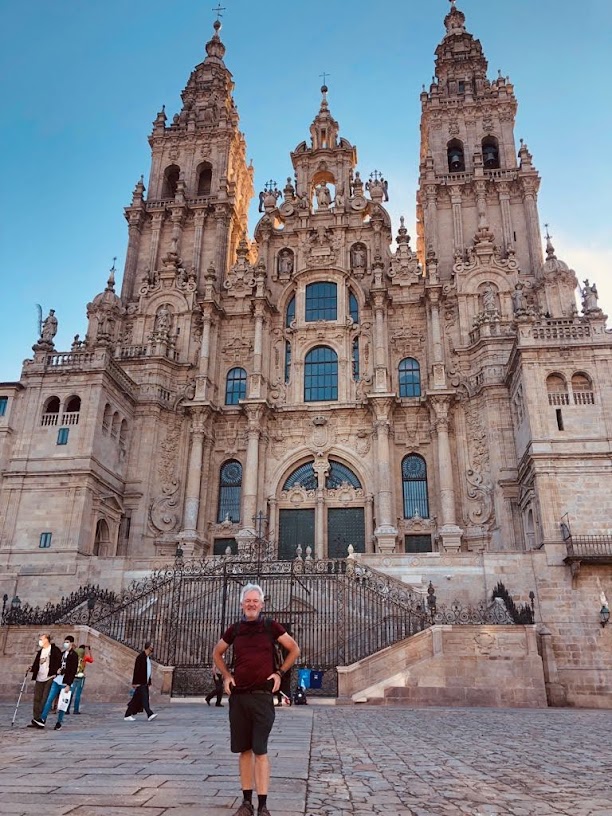
First and foremost the Camino has lost nothing of its magic that has become for hundreds of thousands of modern-day pilgrims, a path of introspection, healing and transformation. About half as many people arrive at the destination in Santiago de Compostela compared to normal years. The good news is that with good planning you can still walk it!

We walked from Porto in Portugal to Santiago, alternating between the coastal and central routes, but booking our accommodation two to three days in advance as most pilgrims’ hostels are still closed and will possibly only reopen next year. Unless you are walking the less popular routes cheap accommodation is very limited for pilgrims with a limited budget.

Can you still stay in a pilgrims’ hostel?

Staying overnight in a pilgrims’ hostel is so much part of the Camino experience where stories are shared over a meal cooked together and often lasting friendships are formed. Although a little more expensive than the municipal albergues, some of the better private albergues are a definite must.

We had one of our most enjoyable evenings with fellow pilgrims at Casa da Fernanda with dancing, singing, great food and good conversations. This was all on a donation basis. Certainly one of the most beautifully run private albergues is the La Cala Pilgrims Inn in Oia run by Tanya Valdes. Tanya is a lovely soul from the U.S. who moved to Spain, fulfilling a heart wish in serving pilgrims in her beautifully renovated albergue, overlooking the monastery in Oia.

The chilling effects of the pandemic

Having had to break off last year’s walk on the Via Francigena in Italy because of another lockdown, walking the Camino Portugues was the first longer walk since 2019. It was at times a chilly experience walking through the small villages where public notice boards bear portraits of locals who have died from Covid and bypassing dozens of closed pilgrims’ hostels, restaurants and curio shops.

Families in the local villages along the Camino route have for centuries earned their income from passing pilgrims and obviously many small businesses have not survived the pandemic. Some had invested all their funds in the expectation of a boom on the Camino for this year’s holy year.

The revival of the Camino pilgrimage in modern days can be largely attributed to Don Elías (1929-1989), the parish priest in O Cebreiro near Lugo. Up to the early 1980s only dozens of pilgrims at the most walked the Camino. But Don Elías had a dream that one day tens of thousands of pilgrims would again be walking the Camino. According to the story Don Elías drove across the whole north of Spain in his old  Citroën packed with tins of yellow paint, marking arrows leading to Santiago.

We were very much aware that this year we were also walking the Camino on behalf of the many pilgrims from other countries who could not walk the path this year because of Covid-related travel restrictions. The Camino can become an addictive ritual and many walkers on the Camino have been doing it several times over. Many pilgrims, who have been unable to walk this year, have been reliving their past walks in the popular Camino forums and social media groups.

Arriving in Santiago

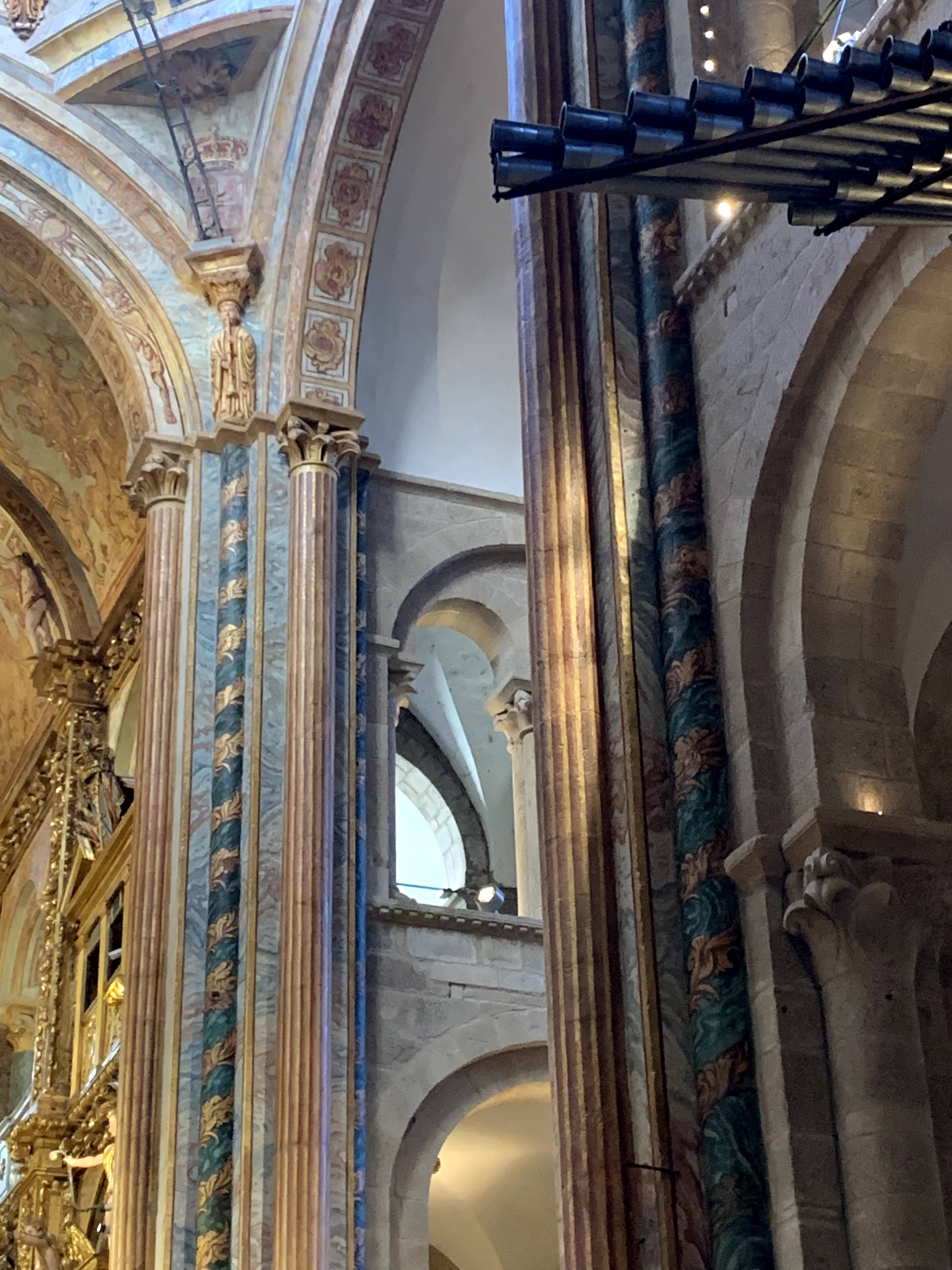
Arriving at the destination in Santiago is always a special occasion. The Cathedral can be seen in all its glory with most of exterior scaffolding removed after years of painstaking renovation work. The interior is especially stunning: Based on the candle-light from medieval times the naves, transept and the Pórtico de la Gloria have been fitted with new lighting. Social distancing still applies and the number of visitors are limited.

The journey begins after the journey

Every journey at some point has to end. You return home but you will not be the same person. A pilgrimage on the Camino takes months to digest. The real transformation begins at home. Life takes on a different meaning when you are in a different rhythm and feel connected to your higher-self. As Marcel Proust is quoted as saying: “My destination is no longer a place, rather a new way of seeing.”

Reino Gevers – Author – Mentor – Speaker

One more thing...If you have found this article interesting you might want to check out our courses, retreats and books and ask others to also subscribe to this Blog.

2 Comments

Filed under Camino de Santiago, mental health, mental-health, spirituality, Uncategorized

Another hill to climb

Strength and growth come only through continuous effort and struggle.” – Napoleon Hill –

It is much easier to climb a mountain if you take it one step at a time instead of looking at the steep peak ahead of you.

Several times I had to tell myself this during the last couple of days walking the Camino de Santiago in northwestern Spain.

There is also a saying on the Camino that the last few kilometers are the hardest. You climb one hill and then you find you have to climb another at the next bend.

Obstacles – the blessings in disguise

Just reflect a little on your life so far. It is mostly the obstacles, the setbacks, and those down on the ground moments that have triggered the biggest transformation.

Sadly, we often throw in the towel before we have learned the lesson or just before we are about to achieve the biggest breakthrough.

Life is not meant to be easy. We whither and die spiritually and physically if we procrastinate in a comfort zone.

A crisis, whether in an institution, in the job or in a personal relationship, is a message from the universe telling us that something is out of balance and needs to change.

The journey has to continue

We can for a moment look back on the winding steep road that we have climbed, appreciating the view and the accomplishment. But at some point we will have to continue the journey.

We human beings are hardwired to explore, and discover. As long as we live on this earth we will constantly be challenged to redefine purpose and meaning.

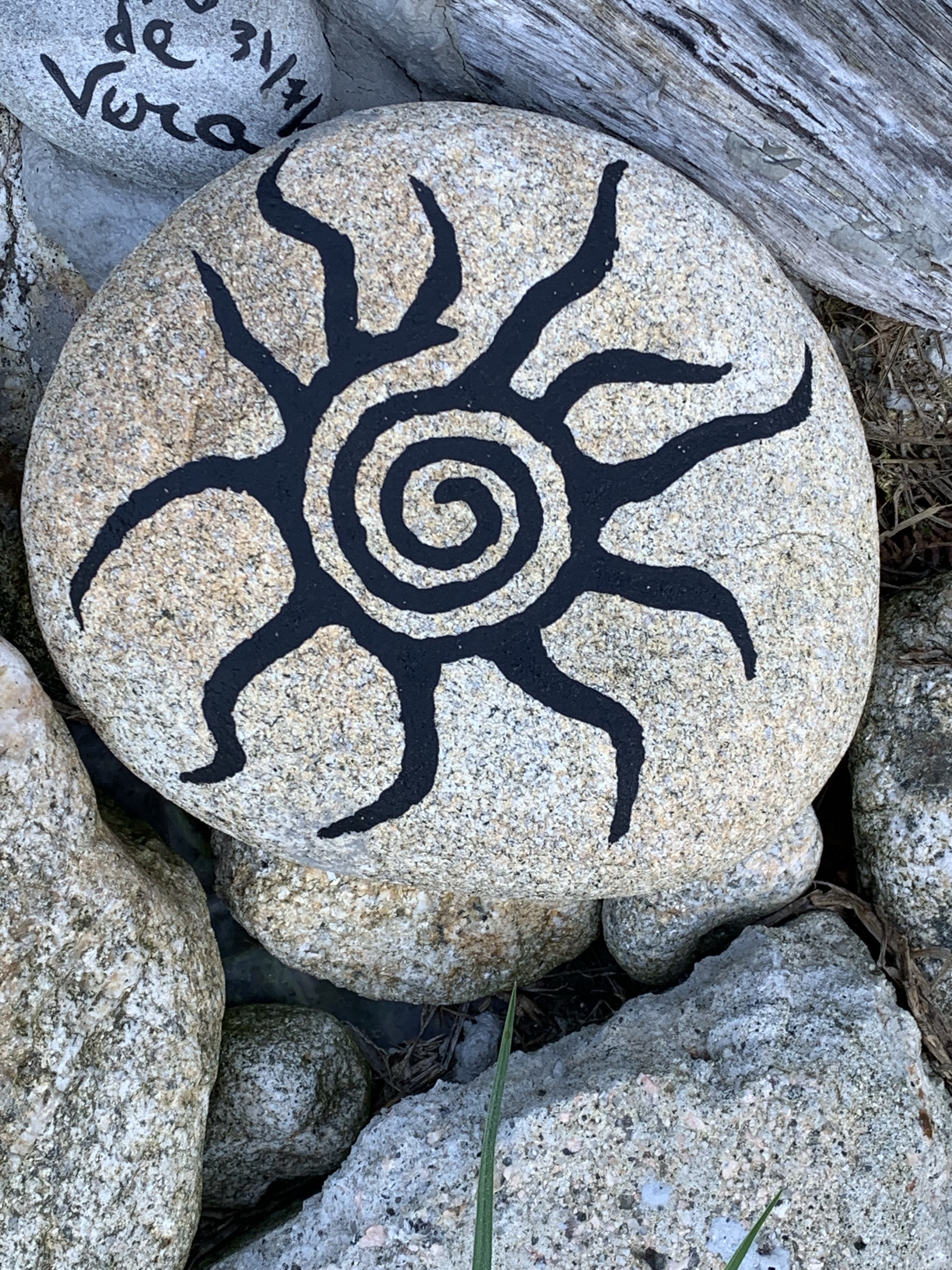
This morning I found a spiral etched into stone by the ancient Celtic inhabitants of Galicia. The rock site was perfectly aligned to the rising morning sun. Obviously the area had been a place of religious significance eons ago.

The ancient people were acutely aware of the laws of the seasons, closely studying nature. Beyond the perceived chaos of natural phenomenon lies a naural order of all things. The spiral is found in miniscule shells and flowers, and our DNA but also in the shape of our expanding galaxy.

Spiritually the spiral motif represents the path of the soul from the outer ego personality to the divine unity. It is the symbol of constant evolution and growth – a divine song of renewal moving from age to age.

Reino Gevers – Author – Mentor – Speaker

One more thing...If you have found this article interesting you might want to check out our courses, retreats and books

and ask others to also subscribe to this Blog.

Leave a comment

Filed under mental health, mental-health, Pilgrimage, self-development, Uncategorized

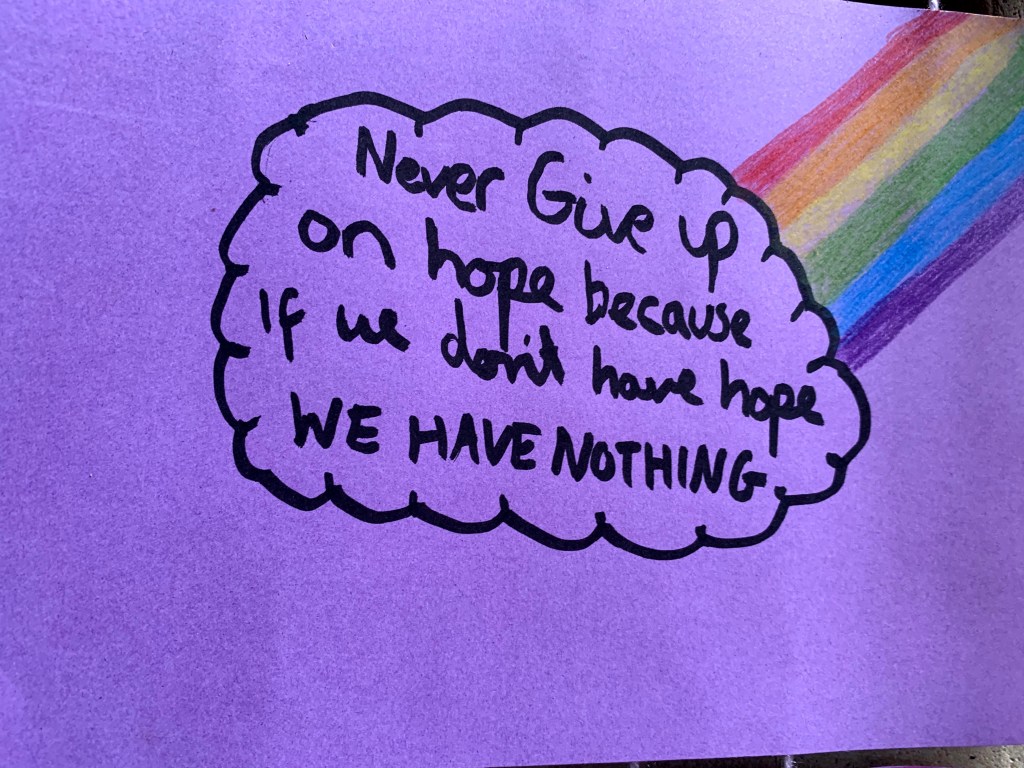
Never giving up on hope

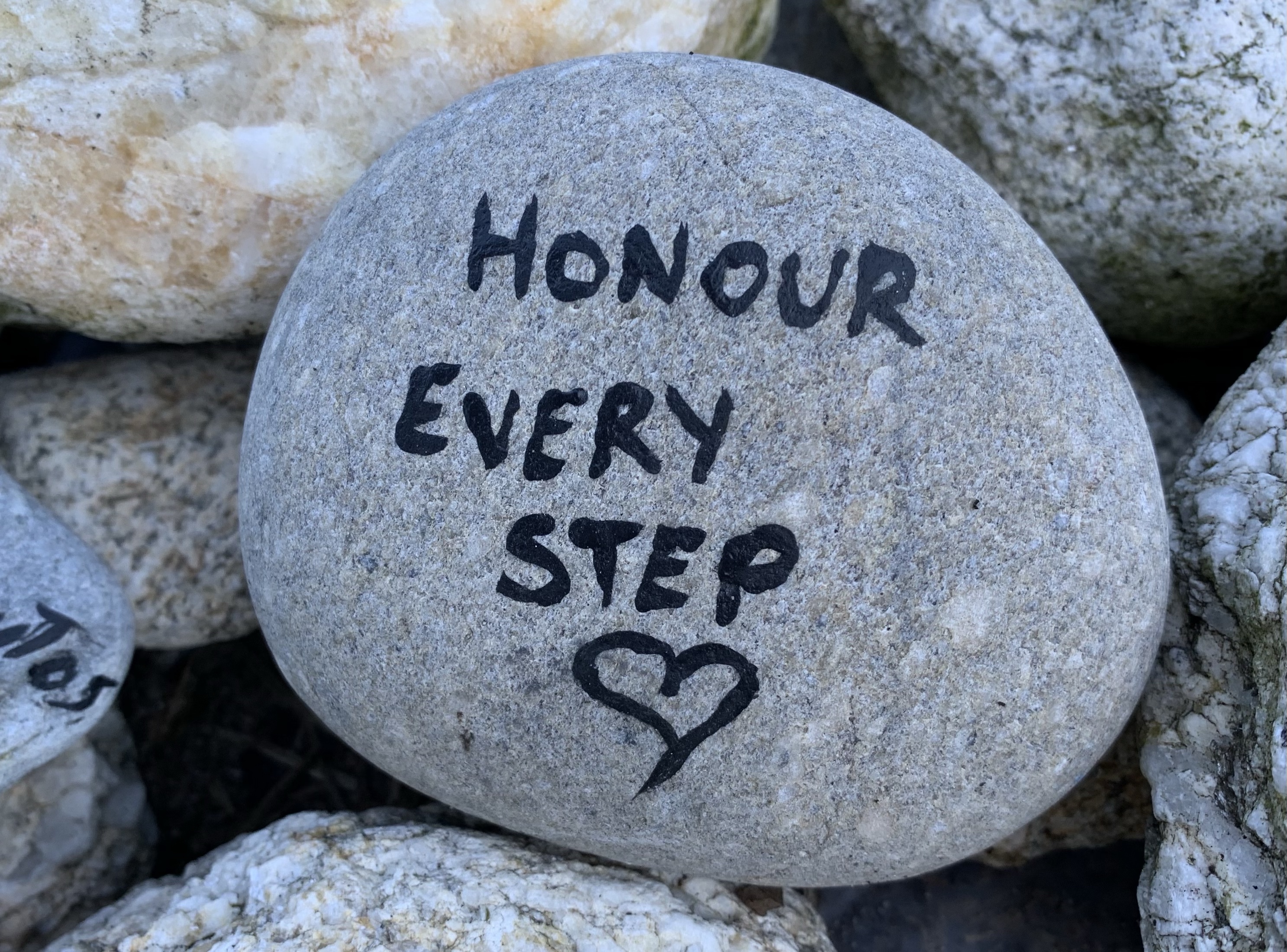
While on my current pilgrimage walk to Santiago de Compostela I was given the gift of a hand-painted stone with the word „Hope“ on it.

I thought it was a fitting message sent by the universe. During these times hope is such an important antidote to negativity and hopelessness.

The hope left by a child in the Cathedral of Guildford, UK.
It seems they follow me around. This one was placed at a waymarker by a pilgrim in Muxia

Our thoughts, beliefs and habits determine so much of who we are. My greatest hopes are:

  • An elevation of consciousness moves humanity from the false belief that one religion, belief, ideology or other „ism“ can ever be imposed and enforced onto others.
  • Humanity realizes that we are part of and not separate from nature. May we move from exploitation to restoration of natural ecosystems. May we have a future where the oceans are teeming with fish and healthy coral reefs. May many newly planted forests across the world echo with the sounds of countless birds, wild animals and rushing crystal-clear streams.
  • May truth and the voice of reason, peace, love, harmony and holistic thinking prevail in the public discourse.

Hope has the power to move us from paralysis and the depths of despair to optimism, trust and faith.

Quoting the American virologist Jonas Salk: „Hope lies in dreams, in imagination, and in the courage of those who dare to make dreams into reality.“

Reino Gevers – Author – Mentor – Speaker

One more thing...If you have found this article interesting you might want to check out our courses, retreats and books

and ask others to also subscribe to this Blog.

Leave a comment

Filed under Uncategorized

Finding truth and beauty within

“Beauty is truth, truth beauty – that is all ye know on earth and all ye need to know.”

– John Keats –

In his mysterious poem “Ode on a Grecian Urn” the 19th-century poet John Keats reflects on the contradiction between mortality and eternity, equating truth with beauty, portraying how the external perception of beauty is closely linked to the beauty within.

How we perceive our external world is shaped by momentary feelings and thoughts. It is a difficult endeavor for the modern mind suffering from information overload.

The mind is pulled from one distraction to the next. And, if your attention is focused on a grievance or hurt going back weeks, months or years, you will not appreciate the beauty around you. You will miss the way markers sent by the universe and lose your way.

Empty yourself of everything

The Chinese philosopher Lao Tze one said: “The usefulness of a pot comes from its emptiness,” meaning we have to empty our mind of everything and become still. If we are preoccupied with thoughts of the past or the future we miss out on the present moment of real human experience. Thoughts of the past are colored by imagination and have only partial relevance to truth.

Photo by Steve Johnson on Pexels.com

According to Lao Tze we cannot force the boat to go upstream. Everything happens in its own time and place. We cannot control external events or a calamities, but we can control how we respond to them. His teaching emphasized “effortless action” and the acceptance of the “wu wei” which ultimately seeks harmony.

Living according to the Dao means living without attachment. Life itself is the objective and the motivation. Behind a seemingly chaotic exterior lies a natural order of things. Nature has its seasons and cycles. We need to accept the impermanence of all things. There is always change, growth, death, and rebirth.

But as we are all imperfect beings on a path of learning, keeping the mind still can be a lofty undertaking. Toxic emotions such as anger are easily triggered by anything from a news broadcast of an event thousands of kilometers away or finding yourself having to wait in line at a supermarket.

Alignment through stillness

When we are aligned we get into touch with ourselves and our feelings. The first step is acceptance of the momentary feeling be it sadness, anger or anxiousness. The next step is replacing that thought or feeling with a positive experience or an expression of gratitude.

One of the simplest methods of alignment is the act of mindful breathing and mindful deep walking. Inhale to the count of four and exhale to the count of five. Inhale and on exhaling hum one of the most powerful mantras: “Om Mani Padme Hung”. When you practice such meditation methods regularly you will gradually sense a greater calmness and alignment of body and mind.

More than ever during these times we need to practice self-care and self-love. By becoming aware of the divine spark within we become aware of the beauty that is embedded within all things such as in the vibrant images that the poet John Keats saw in the simple contemplation of an ancient Greek urn. It is what inspired the great Dutch painters in the contemplation of everyday objects that led to the creation of some of the world’s greatest works of art.

By learning to BE in the present we learn to simply see things as they are without attaching to them comparisons with the past and giving them a definitive label.

Reino Gevers – Author – Mentor – Speaker

One more thing...If you have found this article interesting you might want to check out our courses, retreats and books

Leave a comment

Filed under mental health, mental-health, Uncategorized

Light from a dark age

It was a “dark age” in the western Europe of the 13th century when pandemics, population decline and economic degradation prevailed. Most people had moved into villages and towns sharing crowded rooms with family members and livestock. With little or no sanitation or semblance of hygiene the stench would have been unbearable for sensitive modern noses.

The exodus from the countryside was exacerbated by repeated crop failures caused by the Little Ice Age triggered by volcanic eruptions and changes in Arctic ice cover. With temperatures dropping for centuries this meant that the winters were particularly long and harsh.

Periods of crisis and challenging external circumstances sometimes force humanity into introspection with the dark ages having brought forth some of the greatest Mystics at the forefront of an individual inward-looking spirituality. The popes and bishops were meanwhile offering little comfort to ordinary people, preoccupied with political power struggles and worldly pleasures.

Pilgrimage walks to Santiago de Compostela

During these times pilgrimages to Santiago de Compostela became popular as an inner journey of penance, spiritual rebirth and renewal. The modern-day pilgrim on the Camino is in many respects no different. Spirituality as opposed to religious doctrine is by far the primary motivation, based on my own research and conversations with hundreds of pilgrims on my more than dozen walks on pilgrimage routes in northwestern Spain.

The wise teachings of the 13th-century Dominican monk Meister Eckart (1260-1328), Catherine of Genoa (1447-1510) and Hildegard of Bingen (1098-1179) are timeless and more topical than ever during these pandemic times. They were the eco-warriors and holistic healers of their time, addressing issues of personal health, nutrition and the environment.

It took the disruption of a global pandemic to remind us that we can be exposed overnight to entirely new circumstances beyond our control. Life can be extremely fragile and uncertain. The mental health repercussions resulting from isolation and lockdowns are only gradually coming to the fore.

A formula for a life of bliss

The Mystics are clear on how to lead a life of bliss. Meister Eckart describes at least five stages of evolution in elevation of consciousness to the “new” man – the “birth of the son” or “birth of God” in the soul. The entire purpose of life he describes as the journey to self-realization and meaning:

  • Contemplation and meditation
  • Doing what is right and acting accordingly
  • Dedication and Love of God
  • Recognition and Differentiation
  • Alignment and surrender of ego

All these Mystics did not retreat to an isolated monastic lifestyle but were engaged in the world. Catherine of Genoa gave selfless service to the sick while at the same time serving as director and treasurer of a hospital. Hildegard of Bingen was engaged in many fields including religion, medicine, music and cosmology, At the same time she was a mentor for many famous personalities of her time.

The common thread is that we are one humanity and that a life of service and dedication for the betterment of all provides solace to inner turmoil during times of crisis.

Reino Gevers – Author – Mentor – Speaker

One more thing…

If you have found this article useful please share to spread the message. I’ve also recently compiled brand new online courses that you can download onto your computer or smartphone on ways of how you can transform your life on multiple levels. Also check out the recent reviews of my book “Deep Walking for Body, Mind and Soul.

Leave a comment

Filed under Camino de Santiago, spirituality, Uncategorized

Are you in a spiral of negativity?

As our world rapidly changes on multiple levels the divide between those who adapt and go into elevation of consciousness and those left behind will grow.

When major shifts like the one we are going through occur, the divide between the extremes also becomes more pronounced. The one side sees opportunity for adaptation, learning, progress and awareness while the other falls ever more into the negativity spiral, and lamenting the “good times” of the past.

Falling into the negativity trap will deplete you on all levels

The emotional fallout from those in the shadow can be seen in uncontrolled anger, fear, and anxiety. Falling into the negativity trap will deplete your energy, make you grumpy and harm your immune system. During this disruptive time of distraction it is important to remain conscious and aware.

The first stage when hit by a catastrophic event out of our control like an accident, life-threatening medical diagnosis, mental breakdown, job loss or the current pandemic will be shock, fear or flight. The process of transmuting such a flat-on-the-ground moment starts with the realistic acceptance of the situation. The Mystics call it “turning the soul around into the light.”

Within suffering is the seed of transmutation

As the soul gradually moves out of the negativity spiral it becomes the greatest agent for spiritual renewal, growth and creativity.

“In the midst of conscious suffering, there is already the transmutation. The fire of suffering becomes the light of consciousness,” Eckart Tolle writes in his book “A New Earth”

In “primitive” consciousness a natural catastrophe, and all forms of suffering were seen as acts of the Gods punishing humans for their “sins.” During the bubonic plague and famines of the Middle Ages the clergy reacted by punishing with the Inquisition the “heretics” and “witches” whom they blamed for angering God with their “sins.”

Why do good people have to suffer and the evil are rewarded?

In contrast the 4th century philosopher St. Augustine answers the age-old question why “good people” so often suffer a calamity while “the wicked” seem to be rewarded for their actions. In the “City of God” he writes that though both suffer alike “the same violence of affliction proves, purges, clarifies the good, but damns, ruins, exterminates the wicked. And thus it is that in the same affliction the wicked detest God and blaspheme, while the good pray and praise.”

Though suffering may be triggered by an external event or person, we have been given by God the power of choice, according to Augustine: “In the first place, suffering is the action of another person, not of the sufferer.”

External image is a root cause of suffering

Suffering is often related to identity. This is especially the case when material possessions, job positions, political office, fame are lost or threatened or when identity fused with physical appearance fades. Tolle describes the root of insanity as the complete identification with negative thought and emotion.

A general stressed out impatience, irritability and “fed-up” attitude seems to be the predominant inner mindset of much of the world around us. Negativity and gossip becomes an addiction and the general topic of office small-talk. You are suffering and creating suffering without realizing it.

The point is however, that we don’t need to suffer to be awakened. Conscious living begins with presence of mind in building a healthy boundary to the onslaught of negativity that comes in over dosage of negative media. A healthy body getting enough sleep, nutrition and exercise is less irritable.

Much of our ego-driven society is caught in the shadow of self-aggrandizement and immediate gratification. When you are unclear and disconnected from your core values, you will always get caught up in the tentacles of the shadow. The question that needs to be asked with everything that comes your way is:

  • Is this serving my higher purpose or destiny?
  • Is this information or meeting enhancing or depleting my energy?

When you embrace yourself with loving care you are embracing the diving within you and will no longer be in need of suffering.

When you liberate yourself from the thought that external form brings happiness you can finally enjoy the continuous ebb-and flow of creation and the dance of life. Spiritual consciousness alone can bring true meaning and happiness. The more you deviate from your true purpose and inner core values the more discontent you will be.

External purpose can be infused with spiritual meaning if it is in alignment with the higher evolutionary path of the universe or God.

Reino Gevers – Author. Mentor. Speaker

One more thing…

You might want to check out my latest book “Deep Walking for Body, Mind and Soul”. It is available at all major outlets or at a discount from my my own store.  Check out all the latest five-star reviews on Goodreads.

My choice of the ten best spiritual books can be found here.

This image has an empty alt attribute; its file name is bookcovers_sideview.jpg
This image has an empty alt attribute; its file name is applepodcast.png

Leave a comment

Filed under spirituality, Uncategorized